



GLP Receptor
GLP Receptor
The GLP receptors contain two family members, GLP-1 receptor (GLP1R, or GLP-1R) and GLP-2 receptor (GLP2R or GLP-1R), activated by the glucagon-like peptides (GLPs). GLPs are s secreted by intestinal cells; causes insulin release; inhibits glucagon secretion, appetite, and energy intake; and delays gastric emptying because GLP receptors are located on the gut, pancreas, brainstem, hypothalamus, and vagal-afferent nerves. GLP-1 has only one known receptor, GLP1R, and regulates gut motility, appetite, islet function, and glucose homeostasis, whereas GLP-2, the agonist of GLP2R, enhances intestinal nutrient absorption. GLP-1R agonists are used to treat diabetes and obesity, and a GLP-2R agonist is approved to treat short bowel syndrome. An investigation of the actions of GLP receptor activation on gallbladder motility has demonstrated that GLP-2 receptor activation increases gallbladder volume in vivo and decreases spontaneous activity in GBSM bundles ex vivo. Like the inhibitory transmitters, which elicit their actions via an adenylate cyclase-protein kinase A-KATP channel pathway, the GLP-2 receptor signals through this same pathway.
All Product Categories
-
GLP Receptor Inhibitors
(17)
View all products
-
GLP Receptor Agonists
(149)
View all products
-
GLP Receptor Antagonists
(9)
View all products
-
GLP Receptor Activators
(14)
View all products
-
GLP Receptor Modulators
(8)
View all products
-
GLP Receptor Inducer
(1)
View all products
-
GLP Receptor Degrader
(1)
View all products
-
GLP Receptor Controls
(2)
View all products
-
GLP Receptor Ligands
(2)
View all products
-
GLP Receptor Related Products (233)
Related Products (233)

-
Antibodies (1)
-
Exendin-4 (Leu-13C6,15N) TFA
 0 ImagesCat. No.: HY-13443SSynonyms: Exenatide (Leu-13C6,15N) TFAExendin-4 (Leu-13C6,15N) TFA (Exenatide (Leu-13C6,15N) TFA) is the 13C, 15N-labeled Exendin-4 (HY-13443). Exendin‑4 (Exenatide) is an orally active, blood-brain barrier-permeable glucagon-like peptide-1 receptor (GLP‑1 receptor) agonist that resists degradation mediated by dipeptidyl peptidase IV. Exendin‑4 mediates multiple glucose-regulating effects, including stimulation of glucose-dependent insulin secretion, inhibition of glucagon production, increase in β-cell mass, delay of gastric emptying, reduction of food intake, improvement of peripheral insulin sensitivity, and restoration of normal islet structure. Exendin‑4 inhibits oxidative stress, alleviates inflammatory responses, and reduces neuronal apoptosis. Exendin‑4 reduces the aggregation level of mutant huntingtin, improves motor function, prolongs survival time, and regulates the expression levels of leptin and ghrelin. Exendin‑4 can be used in research related to type 2 diabetes, acute ischemic stroke, and Huntington's disease.
-
GLP-1R agonist 16
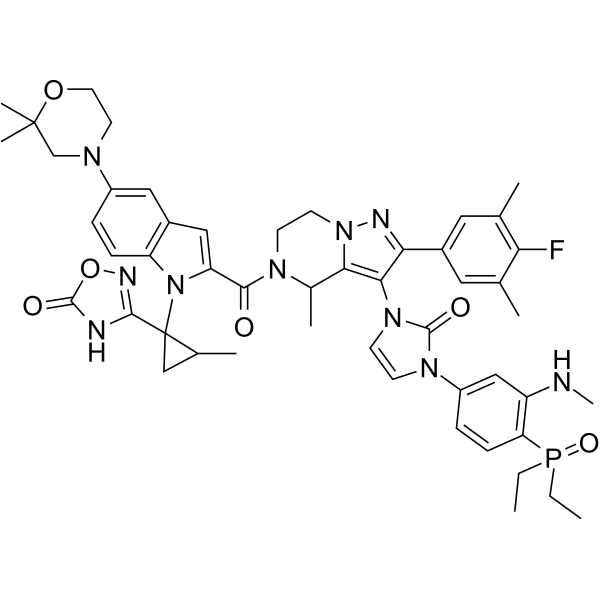 0 ImagesCat. No.: HY-147629CAS No.: 2763329-13-9GLP-1R agonist 16 (Compound 115a) is a GLP-1 receptor agonist with an EC50 of 0.15 nM.
-
GLP-1R agonist 14
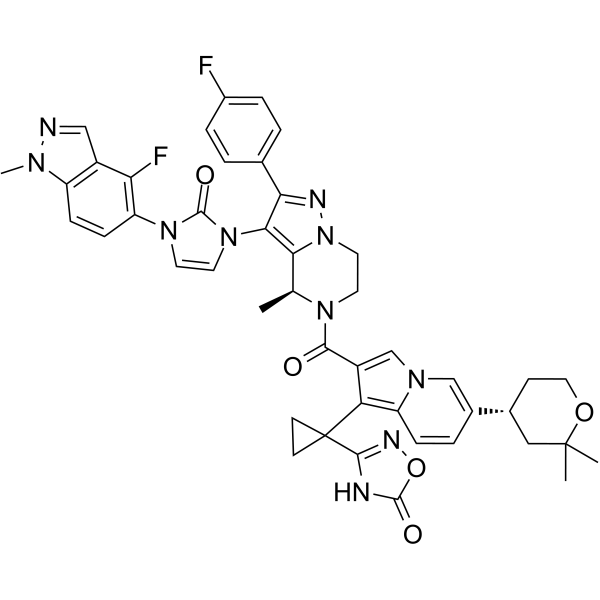 0 ImagesCat. No.: HY-147627CAS No.: 2758666-01-0GLP-1R agonist 14 (Compound 14) is a GLP-1 receptor agonist with an EC50 of 0-20 nM against h-GLP-1.
-
DS79932728
 0 ImagesCat. No.: HY-170831CAS No.: 2757191-62-9DS79932728 is an orally active inhibitor for G9a and GLP with IC50 of 12.6 nM and 75.7 nM. DS79932728 induces the production of γ-globin, thereby increasing the level of fetal hemoglobin (HbF). DS79932728 increases F-reticulocytes (F-rets) proportion and exhibits good oral absorption characteristics in cynomolgus monkey models.
-
GIPR antagonist 1
 0 ImagesCat. No.: HY-179332CAS No.: 3059497-30-9GIPR antagonist 1 is a GIPR antagonist with an IC50 of 4.8 nM. GIPR antagonist 1 inhibits glucose-dependent insulinotropic polypeptide receptor signaling. GIPR antagonist 1 can be used for the research of type 2 diabetes and obesity.
-
GLP-1R agonist 41
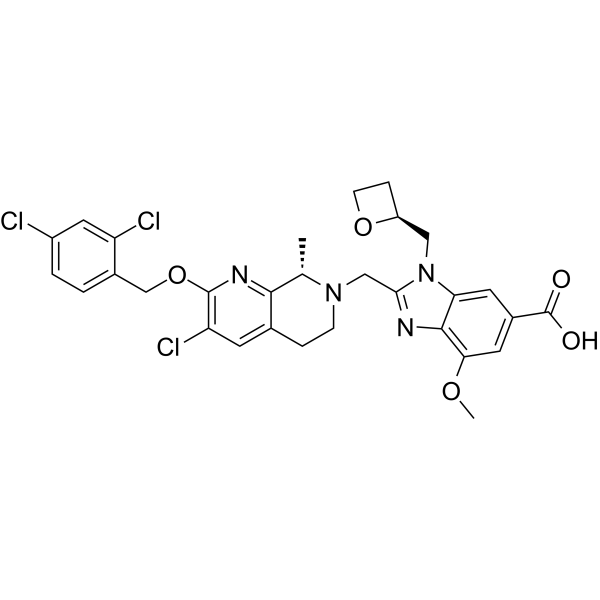 0 ImagesCat. No.: HY-162433CAS No.: 3033287-66-7GLP-1R agonist 41 is an agonist for glucagon-like peptide-1 receptor (GLP-1 receptor), with EC50 of 0.0187 nM.
-
Tirzepatide (crude)
 0 ImagesCat. No.: HY-P1731CPCAS No.: 2023788-19-2Tirzepatide (LY3298176) (crude) is the crude form of Tirzepatide (HY-P1731).Tirzepatide (LY3298176) is a dual glucose-dependent insulinotropic polypeptide (GIP) and glucagon-like peptide-1 (GLP-1) receptor agonist. Tirzepatide exerts anti-apoptotic and pro-differentiation effects via the pAkt/CREB/BDNF cascade and miRNA in neurons; in the heart, it promotes BCAA catabolism and inhibits the mTOR pathway by mediating the dephosphorylation of BCKDHA; meanwhile, it effectively reduces insulin and leptin levels and suppresses inflammatory responses at the systemic level. Tirzepatide can be used for research on myocardial infarction, colon cancer, diabetes, diabetic cognitive impairment, neurodegeneration, diabetes-related neuropathy, and obesity.
-
GLP-1R agonist 22
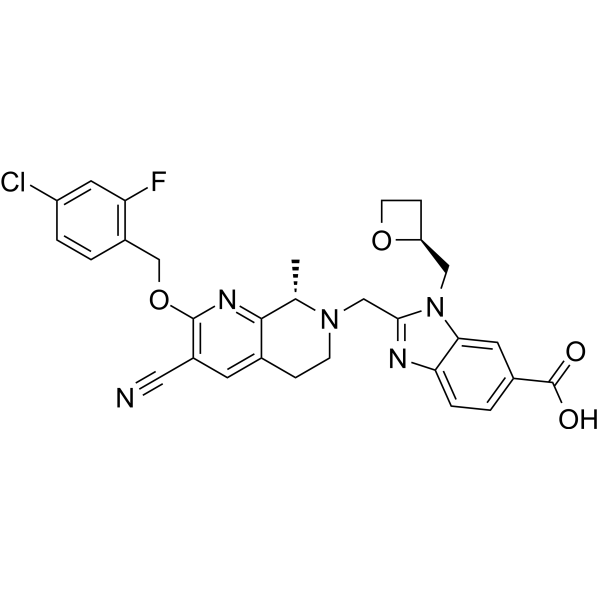 0 ImagesCat. No.: HY-162437CAS No.: 3033288-34-2GLP-1R agonist 22 (Compound I-135) is an agonist for glucagon-like peptide-1 receptor (GLP-1 receptor), with EC50 of 0.0165 nM.
-
Sitagliptin-d4
 0 ImagesCat. No.: HY-13749S2Synonyms: MK-0431-d4Sitagliptin-d4 (MK-0431-d4) is deuterium labeled Sitagliptin (HY-13749). Sitagliptin is an orally active and highly selective DPP4 inhibitor with an IC50 value of 19 nM. Sitagliptin blocks the degradation of glucagon-like peptide-1 (GLP-1) and glucose-dependent insulinotropic peptide (GIP) by competing inhibition mechanism (Kᵢ = 1 nM), thereby increasing the level of active incretin. Sitagliptin can also directly stimulate the secretion of GLP-1 by intestinal L cells by activating the cAMP/PKA and ERK1/2 pathways, and this effect is independent of DPP-4. Sitagliptin shows protective effects on pancreatic islet grafts in 1-type diabetes models. Sitagliptin can be used for the study of 1-type and 2-type diabetes.
-
Astepatide
 0 ImagesCat. No.: HY-P10952CAS No.: 2959444-13-2Astepatide is a gastric inhibitory peptide (GIP) receptor and glucagon-like peptide-1 (GLP-1) receptor agonist that can be used in anti-diabetic research.
-
TC4
 0 ImagesCat. No.: HY-P11275TC4 is a highly balanced single-molecule quadruple agonist that can respectively activate GIPR, GLP-1R, GcgR, and Y2R with IC50 values of 0.95, 31, 81, and 1100 nM respectively. TC4 exhibits extremely strong signal bias on GLP-1R and has very low recruitment efficacy for β-inhibitor protein 2 (βArr2) and this strong cAMP preference is believed to maximize metabolic benefits (such as weight loss and hypoglycemia) while possibly minimizing side effects mediated by β-inhibitor protein recruitment (such as receptor desensitization). TC4 can be used for research on obesity and diabetes.
-
GLP2 (rat) (11-33)
 0 ImagesCat. No.: HY-P12211GLP2 (rat) (11-33) is a glucagon-like peptide-2 receptor (GLP-2 receptor) antagonist. GLP2 (rat) (11-33) has weak intrinsic agonistic activity on human GLP-2R; it can synergistically enhance the activity of agonistic allosteric regulators on human, cynomolgus monkey, dog and Syrian hamster GLP-2R, but reduces this activity on rat GLP-2R. GLP2 (rat) (11-33) can be used for GLP-2R related research.
-
JWU-A021
 0 ImagesCat. No.: HY-118092CAS No.: 1403610-23-0JWU-A021 is a GLP-1 secretagogue with an EC50 of 1.9 μM. JWU-A021 activates the TRPA1 cation channel to promote calcium ion influx and increase intracellular calcium levels in enteroendocrine cells and TRPA1-transfected cells. By activating the TRPA1 channel, JWU-A021 stimulates the secretion of GLP-1 from intestinal enteroendocrine cells and intestinal L cells. JWU-A021 is applicable to research related to type 2 diabetes.
-
IUB288
 0 ImagesCat. No.: HY-P11881Purity: 98.88%IUB288 is a stable and long-acting glucagon-modified peptide, as well as a highly selective Glucagon Receptor agonist. IUB288 stimulates the production of cAMP, increases the expression levels of FGF21 in plasma and liver, regulates bile acid metabolism, and inhibits the expression of hepatic HMGCR. IUB288 improves hypercholesterolemia, enhances insulin sensitivity, increases core body temperature, boosts energy expenditure, suppresses food intake, and can also induce hyperglycemia and glucose intolerance. IUB288 is applicable to the research of diet-induced obesity, type 2 diabetes, and obesity-related glucose intolerance.
-
GLP‐1 receptor agonist D13
 0 ImagesCat. No.: HY-P12142GLP-1 receptor agonist D13 is a long-acting GLP-1R agonist peptide conjugated with a C20 fatty acid chain. It activates GLP-1R-mediated cAMP signaling in HEK293 cells, with an EC50 of 0.036 nM. GLP-1 receptor agonist D13 can be used in studies related to type 2 diabetes, diabetic nephropathy and obesity.
-
GLP-1R agonist 33
 0 ImagesCat. No.: HY-176493CAS No.: 2428641-93-2GLP-1R agonist 33 (Compound 224) is a GLP-1 receptor agonist. GLP-1R agonist 33 has the potential to study diabetes, obesity and non-alcoholic fatty liver disease (NAFLD).
-
GIP/GLP-1 dual receptor agonist-1
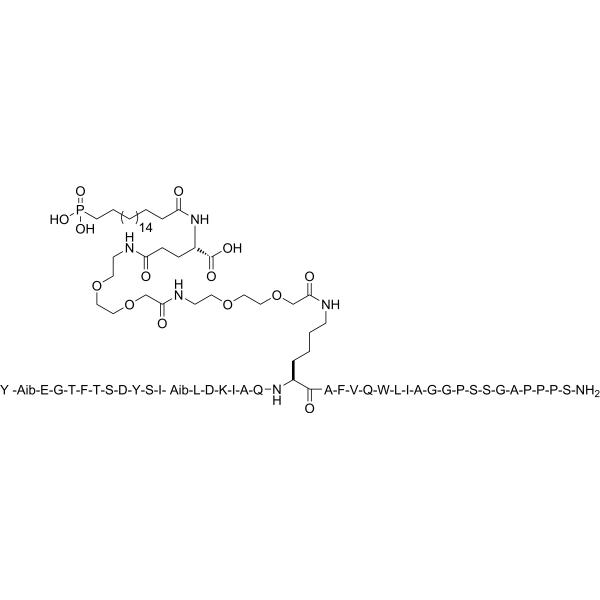 0 ImagesGIP/GLP-1 dual receptor agonist-1 is a GIP/GLP-1 dual receptor agonist. GIP/GLP-1 dual receptor agonist-1 is used in the research of metabolic disorders and fatty liver diseases, including non-alcoholic steatohepatitis (NASH) and non-alcoholic fatty liver disease (NAFLD).
-
GIPR/GLP-1R/GCGR agonist-1
 0 ImagesCat. No.: HY-P11818GIPR/GLP-1R/GCGR agonist-1 (compound 686) is a triple receptor agonist with activity at GLP-1R, GIPR, and GCGR. GIPR/GLP-1R/GCGR agonist-1 functionally modulates target receptors to drive cAMP generation. GIPR/GLP-1R/GCGR agonist-1 can be used for the research of type 2 diabetes mellitus, obesity, nonalcoholic fatty liver disease.
-
GUB021794
 0 ImagesCat. No.: HY-P11262GUB021794 is a potent and highly selective glucagon-like peptide-1 receptor (GLP-1R) agonist developed using the streaMLine platform with an EC50 value of 18 pM. GUB021794 has a very weak activity against SCTR, with an EC50 value of 190 nM. GUB021794 can significantly reduce the body weight, food intake, and total fat mass of mice in a diet-induced obesity (DIO) model. GUB021794 can be used for research on obesity/diabetes.
-
Acmopatide
 0 ImagesCat. No.: HY-P11233CAS No.: 2377239-31-9Acmopatide (Compound E-153) is a dual-acting GIP/GLP-1 receptor agonist. Acmopatide is used in anti-diabetic research.




