



Insecticide
Insecticide
Insecticides refer to any toxic substances used to kill insects, which exert toxic effects on pests through different mechanisms, thereby achieving the purpose of controlling pest populations and protecting crops and human health. Insecticides have both chemical and biological origins and can be classified into organochlorine insecticides, organophosphorus insecticides, carbamate insecticides, and mineral insecticides based on their chemical properties. Insecticides interact with different target and non-target sites, including receptors, enzymes, and many other known and unknown molecules. Most insecticides are neurotoxicants that target the nervous system, but they can also affect other organs and body systems. Insecticides are metabolized through different metabolic pathways and often serve as biomarkers of exposure in the form of their parent compounds or metabolites. The toxicity of insecticides can be acute, subacute, or chronic, depending on the duration of exposure and the dose involved. Therefore, selecting sensitive, accurate, and validated biomarkers of exposure, effects, and susceptibility appears to be a challenging task.
Insecticides are widely used in agriculture, horticulture, forestry, gardening, homes, offices, and other fields[1][2].
All Product Categories
-
Insecticide Related Products (529)
Related Products (529)

-
cis-?Jasmone (Standard)
 0 Imagescis-Jasmone (Standard) is the analytical standard of cis-Jasmone. This product is intended for research and analytical applications. Cis-Jasmone is a plant-derived natural product. Cis-Jasmone is a plant-derived natural product. Cis-Jasmone is constitutively released by many flowers and sometimes by leaves as an attractant for pollinators or as a chemical cue for host location by insect flower herbivores. Cis-Jasmone treatment of crop plants not only induces direct defense against herbivores, but also induces indirect defense by releasing VOCs that attract natural enemies.
-
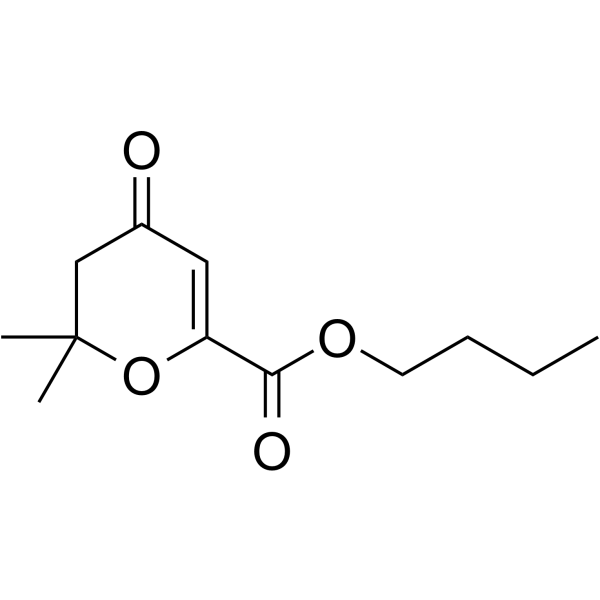
Piperitone (Standard)
 0 ImagesPiperitone (Standard) is the analytical standard of Piperitone. This product is intended for research and analytical applications. Piperitone is as a powerful repellent and antiappetent agent. Piperitone is very toxic to Cymbopogon schoenanthus (C. schoenanthus) adults, newly laid eggs and to neonate larvae. Insecticidal activity.
-
Spirotetramat
 0 ImagesCat. No.: HY-120253CAS No.: 203313-25-1Synonyms: BY-108330Spirotetramat (BY-108330) is an orally active Insecticide and lipid biosynthesis inhibitor. Spirotetramat regulates the activities of superoxide dismutase (SOD) and glutathione peroxidase (GSH-Px), with short-term exposure increasing their activities and long-term exposure altering their activities. Spirotetramat induces the activity and mRNA expression of carboxylesterase (CarE). Spirotetramat induces oxidative stress and lipid peroxidation in tadpoles. Spirotetramat is toxic to amphibian tadpoles and exhibits sublethal/non-lethal toxicity to amphibians. Spirotetramat causes death in immature psyllids, aphids, scale insects, mealybugs, whiteflies and thrips, and shows a high lethal rate against Cacopsylla pyri nymphs. Spirotetramat reduces the fecundity of Aphis gossypii. Spirotetramat induces tolerance in the offspring of exposed Aphis gossypii, and acts on Myzus persicae, Bemisia tabaci and Tetranychus urticae.
-
Gluconasturtiin potassium
 0 ImagesGluconasturtiin potassium is an orally active glucosinolate found in the roots of Brassica juncea and Brassica hirta. Gluconasturtiin potassium acts as a feeding activator for P. maculipennis larvae at low concentrations, while it exhibits toxicity to the larvae at high concentrations.

-
Spiropidion
 0 ImagesCat. No.: HY-167826CAS No.: 1229023-00-0Spiropidion is a novel tetrameric acid pesticide with highly effective insecticidal and acaricidal activity.
-
(+)-trans-Chrysanthemic acid
 0 Images(+)-trans-Chrysanthemic acid is a component of pyrethroids that inhibits Orlando strain mosquitoes.
-
Clothianidin (Standard)
 0 ImagesClothianidin (Standard) is the analytical standard of Clothianidin. This product is intended for research and analytical applications. Clothianidin is a neonicotinoid insecticide. Clothianidin shows excellent long-term control effect in small doses against various insect pests such as Coleoptera, Thysanoptera, Lepidoptera, Diptera, Homoptera, Heteroptera, Orthoptera and Isoptera families. Clothianidin has various application methods and high safety for crops.
-
Chitinase-IN-2 hydrochloride
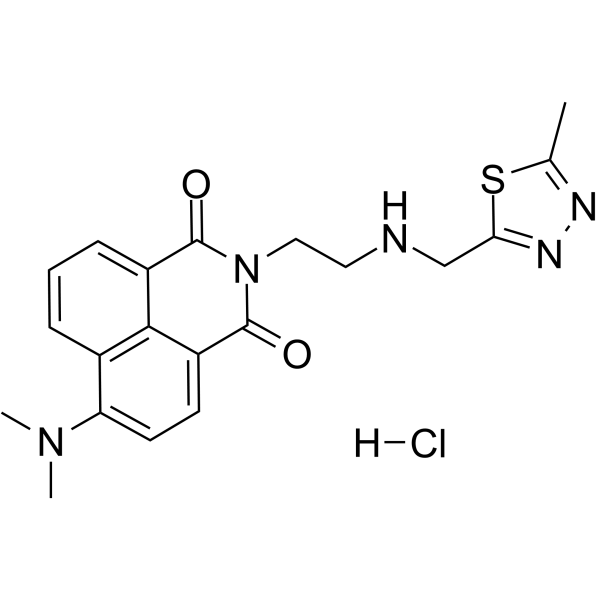 0 ImagesChitinase-IN-2 hydrochloride is an inhibitor of insect chitinase and N-acetylhexosaminidase.
-
Cyhalothrin
 0 ImagesCyhalothrin is a pyrethroid, a class of man-made insecticides that mimic the structure and insecticidal properties of the naturally-occurring insecticide pyrethrum which comes from the flowers of chrysanthemums.
-
Metoxadiazone (Standard)
 0 ImagesSynonyms: S-21074 (Standard)Metoxadiazone (Standard) is the analytical standard of Metoxadiazone. This product is intended for research and analytical applications. Metoxadiazone is a type of insecticide that effectively controls a wide range of insects, including cockroaches and ants. Metoxadiazone exerts its insecticidal effect by impacting the nervous system of insects. Metoxadiazone can be used for research into its potential toxicity to humans and other non-target organisms.
-
7-Oxodehydroabietic acid
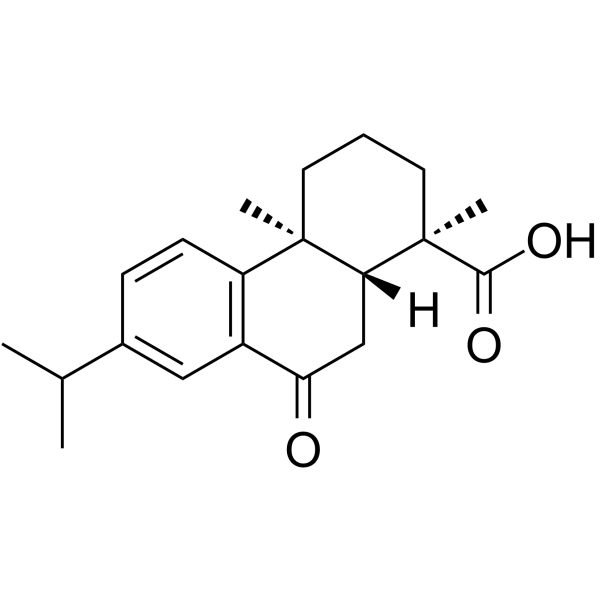 0 Images7-Oxodehydroabietic acid is a diterpene resin acid isolated from the roots of the pine Pinus densiflora. 7-Oxodehydroabietic acid play a defensive role against herbivorous insects via insect endocrine-disrupting activity.
-
Paraherquamide E
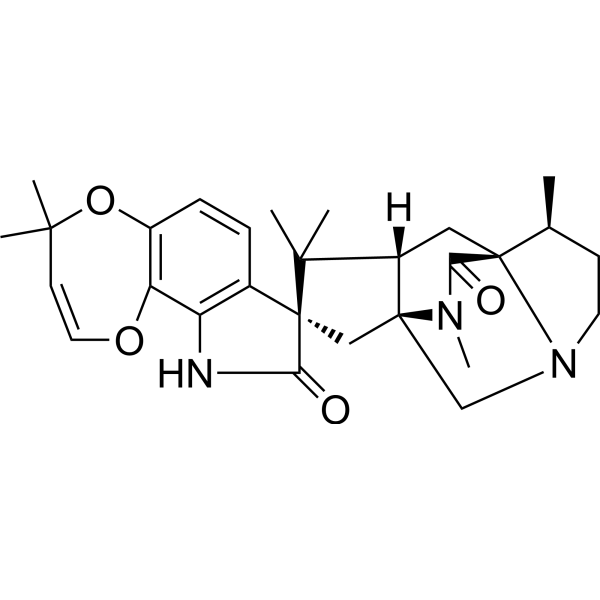 0 ImagesCat. No.: HY-N10220CAS No.: 125600-53-5Paraherquamide E is a paraherquamide alkaloid and 14C-deshydroxy paraherquamide analog found in Aspergillus aculeatus GC-147‑5 and Penicillium charlesii, with insecticidal and reproductive toxicant activity, high selectivity, and negligible toxicity to nontarget ladybugs.Paraherquamide E disrupts fatty acid synthesis, inhibits vitellogenin production, alters metabolic homeostasis, induces ovarian abnormalities, and causes Asian citrus psyllid mortality, while remaining inactive against Asian citrus psyllid cholinergic systems.
-
o,p'-DDE
 0 ImagesSynonyms: 2,4'-DDE; 2,4-Dichlorodiphenyldichloroethylene; 2,4'-DDE; o,p'-Dichlorodiphenyldichloroethyleneo,p'-DDE (2,4-Dichlorodiphenyldichloroethylene) is a metabolite and degradation product of the organochlorine pesticide DDT. It accumulates in smallmouth buffalo, channel catfish, and largemouth bass, and in sediments from DDT manufacturing plants around the Huntsville Spring Branch-Indian Creek tributary system, where it is considered a persistent organic pollutant (POP). o,p'-DDE inhibits estrogen binding to the rainbow trout estrogen receptor (rtER) with an IC50 value of 3.2 μM. It induces concentration-dependent estradiol secretion in co-cultures of granulosa and theca cells isolated from porcine follicles. In ovo exposure to o,p'-DDE increases follicular degeneration and reduces testis size in Japanese medaka (O. latipes).
-
4-Hydroxyhygric acid
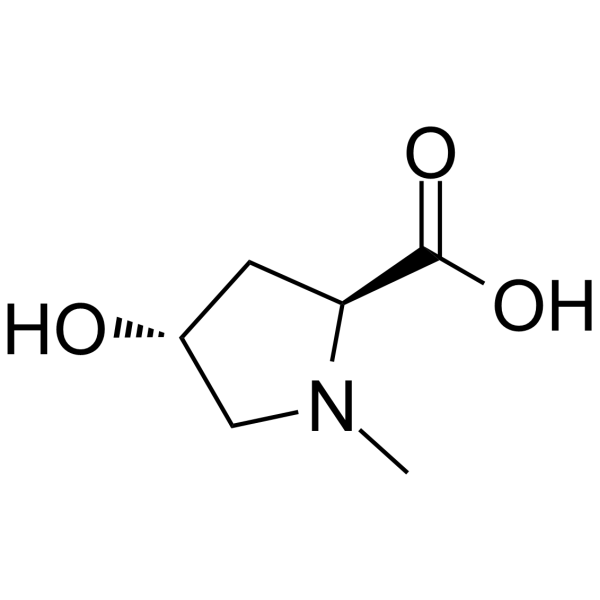 0 ImagesCat. No.: HY-W098556CAS No.: 4252-82-84-Hydroxyhygric acid is a compound isolated from leaves of five species of the leguminous tropical tree Copuiferq. 4-Hydroxyhygric acid is the inhibitor of larval development of the seed-feeding bruchid beetle Callosobruchus maculatus and to have significant feeding deterrence of the leaf-feeding lepidopteran Spodoprera littoralis.
-
Carbosulfan-d18
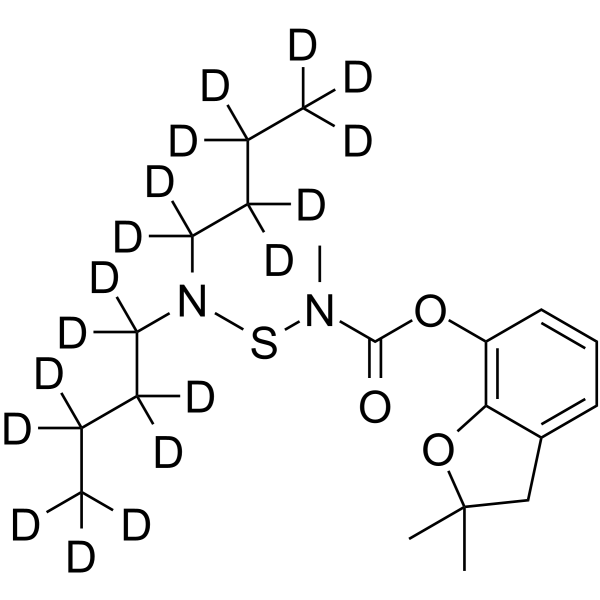 0 ImagesCat. No.: HY-B2015SCAS No.: 1189903-75-0Carbosulfan-d18 is the deuterium labeled Carbosulfan. Carbosulfan is an orally active AChE inhibitor that hydrolyzes to Carbofuran in organisms to exert insecticidal effects. Carbosulfan exhibits broad-spectrum insecticidal activity, and it also induces severe oxidative stress by enhancing lipid peroxidation and impairing the antioxidant defense system. Carbosulfan causes reproductive toxicity in male rats and developmental disorders in their offspring. Carbosulfan shows persistence in paddy field environments and potential hazards to non-target organisms, and it is commonly used in studies related to reproductive toxicity and environmental risk assessment.
-
7-Oxogedunin
 0 ImagesCat. No.: HY-178898CAS No.: 13072-74-77-Oxogedunin (Compound 7DG; Compound 16) is a small molecule that protects macrophages from cell pyroptosis induced by anthrax lethal toxin (LT). Its target is protein kinase R (PKR). 7-Oxogedunin can widely inhibit the assembly of various inflammasomes (NLRP1 and NLRP3) and the activation of caspase-1 by inhibiting the kinase-independent function of PKR. 7-Oxogedunin has growth inhibitory activity on European corn borer larvae. 7-Oxogedunin can be used for LT toxicity inhibition and pest control research.
-
Fenoxycarb (Standard)
 0 ImagesCat. No.: HY-122062RCAS No.: 72490-01-8Erythromycin C (Standard) is the analytical standard of Erythromycin C. This product is intended for research and analytical applications. Erythromycin C is an antibiotic. Erythromycin C could be isolated from the fermentation process of the penicillium Streptomyces erythreus.
-
Shearinine B
 0 ImagesCat. No.: HY-N19134CAS No.: 163136-25-2Synonyms: (+)-Shearinine BShearinine B ((+)-Shearinine B) is an indole-diterpenoid alkaloid that can be found in the marine-derived fungus Penicillium janthinellum Biourge and Eupenicillium shearii. Shearinine B causes mortality in fall armyworm Spodoptera frugiperda and reduces growth rate of Helicoverpa zea larvae.



