



Isotope-Labeled Compounds
Isotope-labeled compounds are chemical substances in which some atoms in their molecules are replaced by isotope atoms. The range of stable isotope products can cover from gases to complex molecules. Isotope-labeled compounds could provide a site-specific investigation of structures, making molecules easily detectable by mass spectrometry and NMR, and maintaining the physico-chemical properties of the target molecule at the same time.
MCE isotope-labeled compounds are all stable isotope-labeled compounds and are non-radioactive labeled substances. MCE isotope-labeled compounds are unique tools for identifying and understanding biological and chemical processes. Stable isotope-labeled products are now getting more and more popular among scientists. The scope of application is gradually penetrating into various scientific fields, such as life sciences, food and medicine, agriculture, environment, geology, etc. Stable isotope-labeled compounds have a wide range of applications in the Life Science areas, such as Metabolomics, Proteomics, Clinical studies, Deuterium drugs, etc.
All Product Categories
-
Isotope-Labeled Compounds Related Products (11128)
Related Products (11128)

-
N-Acetyl-L-glutamic acid-d5
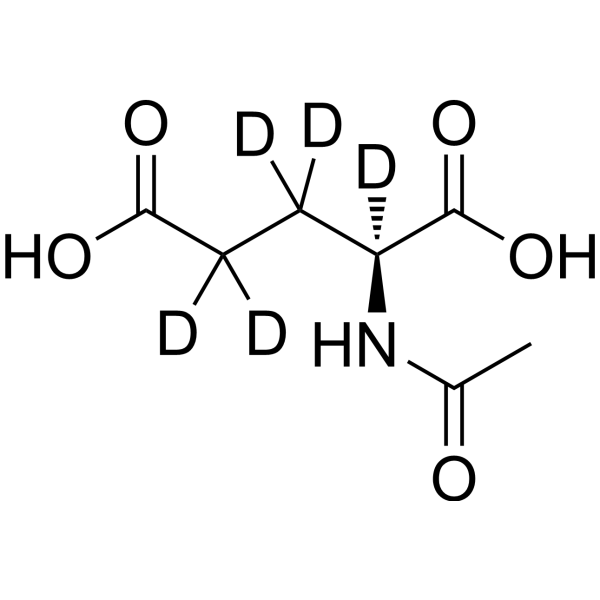 0 ImagesCat. No.: HY-W015240SPurity: 98.96%N-Acetyl-L-glutamic acid-d5 is the deuterium labeled N-Acetyl-L-glutamic acid (HY-W015240). N-Acetyl-L-glutamic acid is a type of glutamic acid that can serve as a component of cell culture media. When combined with media containing inorganic salts, carbohydrates, vitamins, and amino acids, N-Acetyl-L-glutamic acid plays roles in promoting cell growth, enhancing antibody production, etc. N-Acetyl-L-glutamic acid is also an endogenous metabolite that can be found in the brain. Additionally, as an IgE blocker, N-Acetyl-L-glutamic acid can be used in the research of allergic diseases.
-
Anandamide-d4
 0 ImagesSynonyms: AEA-d4; Arachidonoyl ethanolamide-d4Anandamide-d4 (AEA-d4) is the deuterium labeled Anandamide.
-
THAM-d11 (for molecular biology)
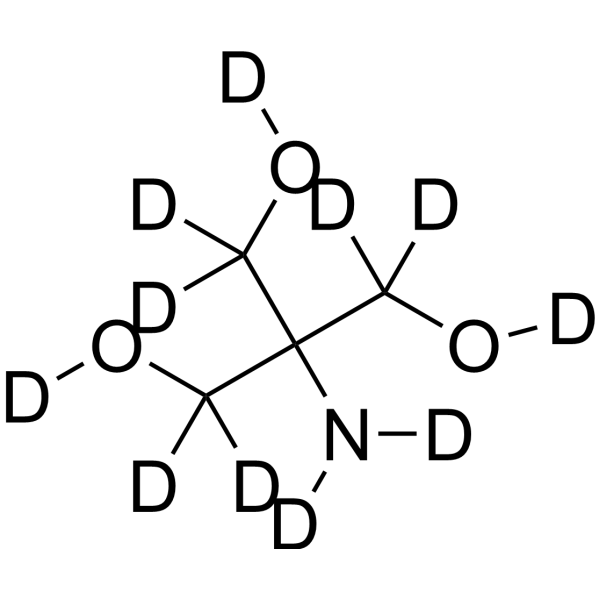 0 ImagesSynonyms: Tris-d11 (for molecular biology); Tris(hydroxymethyl)aminomethane-d11 (for molecular biology)Trometamol(Tris),for molecular biology-d11 is the deuterium labeled Trometamol(Tris),for molecular biology.
-
N-Nitrosodibutylamine-d18
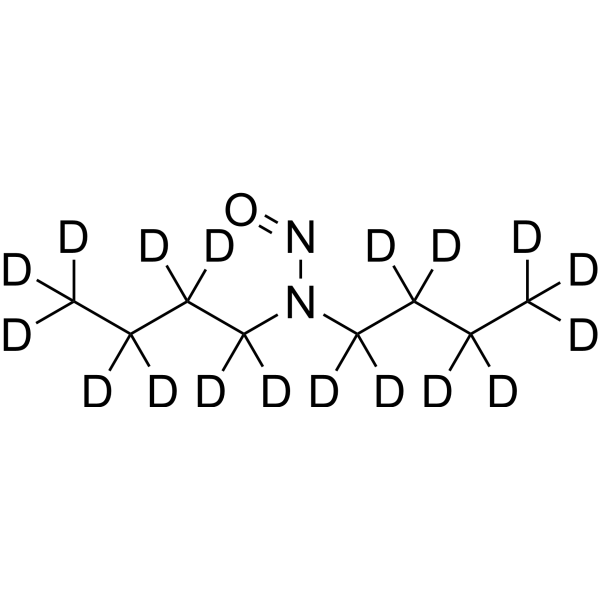 0 ImagesSynonyms: N-Nitroso-di-n-butylamine-d18N-Nitrosodibutylamine-d18 is the deuterium labeled N-Nitrosodibutylamine. N-Nitrosodibutylamine (N-Nitroso-di-n-butylamine) is a nitrosamine enriched in the drinking water.
-
7-Hydroxymethyl-10,11-MDCPT-d5
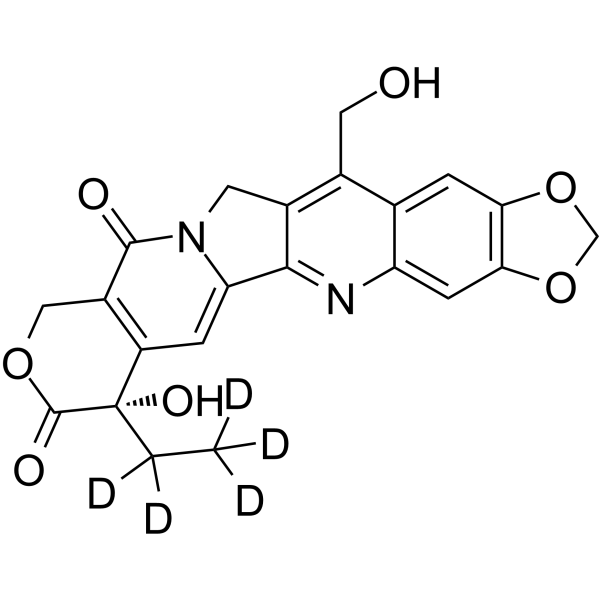 0 ImagesCat. No.: HY-156756SPurity: 98.03%7-Hydroxymethyl-10,11-MDCPT-d5 is deuterium labeled 7-Hydroxymethyl-10,11-MDCPT, which is a is a payload that can be used for ADC synthesis.
-
6PPD-d5
 0 ImagesCat. No.: HY-W754950Synonyms: N-(1,3-Dimethylbutyl)-N'-phenyl-1,4-phenylenediamine-d56PPD-d5 (N-(1,3-Dimethylbutyl)-N'-phenyl-1,4-phenylenediamine-d5) is deuterium labeled 6PPD.
-
N-Desethyl amodiaquine-d5 dihydrochloride
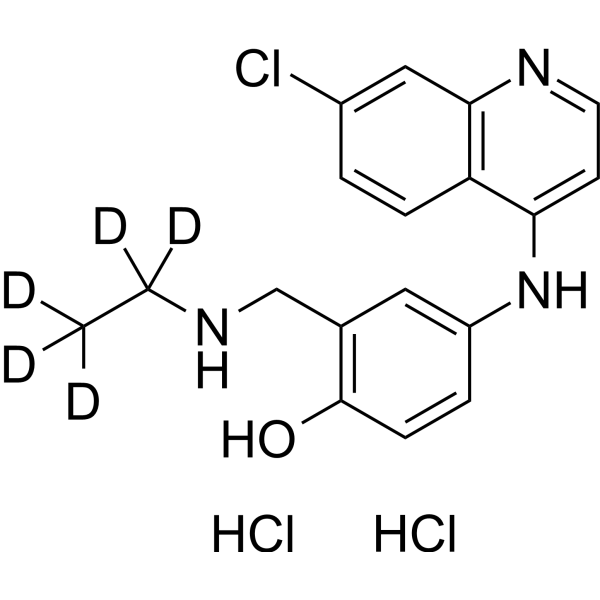 0 ImagesN-Desethyl amodiaquine-d5 dihydrochloride is the deuterium labeled N-Desethyl amodiaquine dihydrochloride. N-Desethyl amodiaquine dihydrochloride is the major biologically active metabolite of Amodiaquine. N-Desethyl amodiaquine dihydrochloride is an antiparasitic agent. IC50 values for strains V1/S and 3D7 are 97 nM and 25 nM, respectively.
-
Salcaprozate-d4 sodium
 0 ImagesCat. No.: HY-114299SPurity: 99.72%Synonyms: SNAC-d4 sodiumSalcaprozate-d4 (sodium) is a deuterated labeled Salcaprozate (sodium). Salcaprozate sodium (SNAC), an oral absorption promoter, and has the potential as a delivery agent for oral forms of heparin and insulin. Salcaprozate sodium could increase passive transcellular permeation across small intestinal epithelia based on increased lipophilicity arising from non-covalent macromolecule complexation.
-
Diethyl succinate-13C4
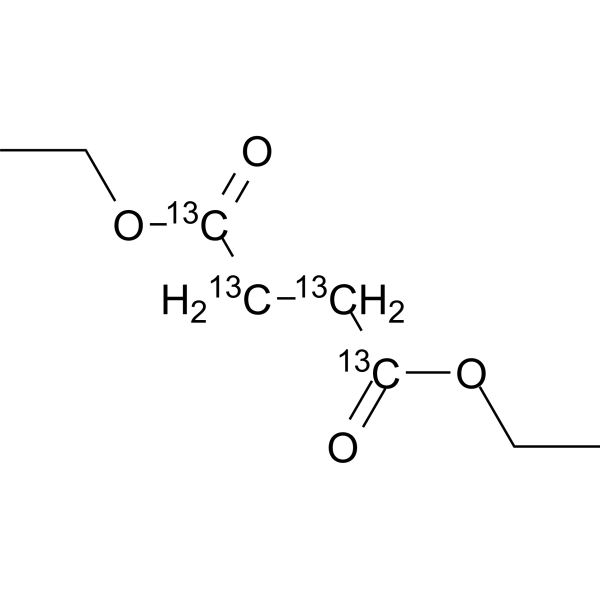 0 ImagesCat. No.: HY-Y0836SCAS No.: 1628796-56-4Synonyms: 1,4-Diethyl butanedioate-1,2,3,4-13C4Diethyl succinate-13C4 is the 13C labeled Diethyl succinate. Diethyl succinate (Diethyl Butanedioate) is used at physiological pH and crosses biological membranes, incorporates into cells in tissue culture and is metabolized by the TCA cycle. Diethyl succinate is known to be non-toxic and used in fragrances and flavoring.
-
4-Pyridoxic acid-d3
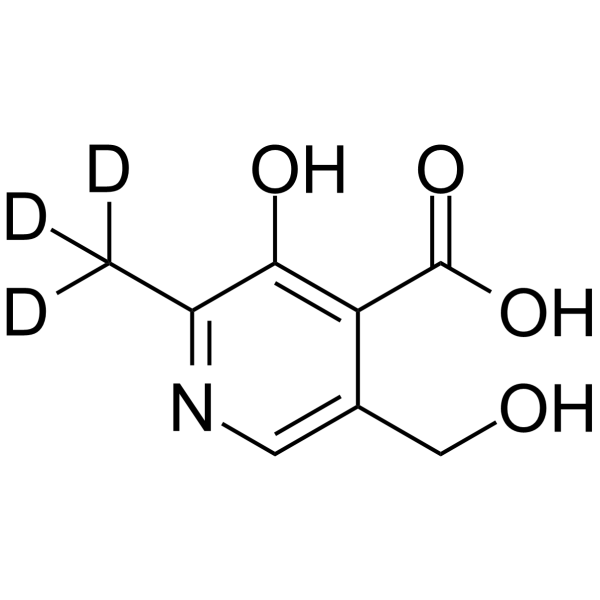 0 Images4-Pyridoxic acid-d3 is the deuterium labeled 4-Pyridoxic acid. 4-Pyridoxic acid is a catabolic product of vitamin B6 which is excreted in the urine.
-
Lignoceric acid-d47
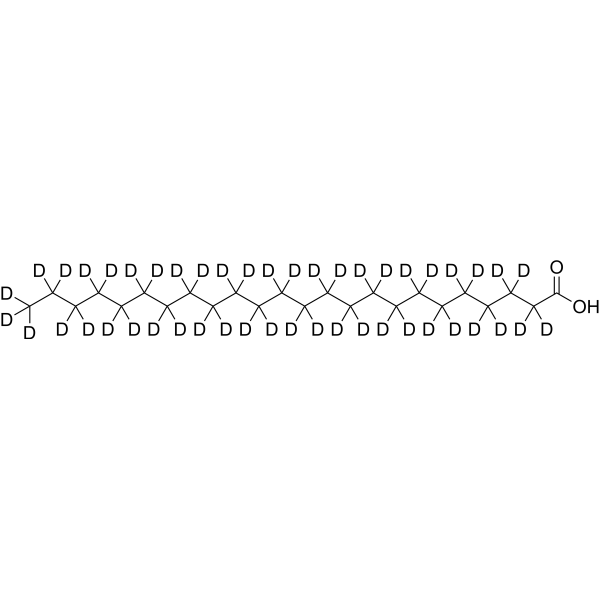 0 ImagesSynonyms: Tetracosanoic acid-d47Lignoceric acid-d47 is the deuterium labeled Lignoceric acid. Lignoceric acid (Tetracosanoic acid) is a 24-carbon saturated (24:0) fatty acid, which is synthesized in the developing brain. Lignoceric acid is also a by-product of lignin production. Lignoceric acid can be used for Zellweger cerebro‐hepato‐renal syndrome and adrenoleukodystrophy research.
-
2-Ketoglutaric acid-d4
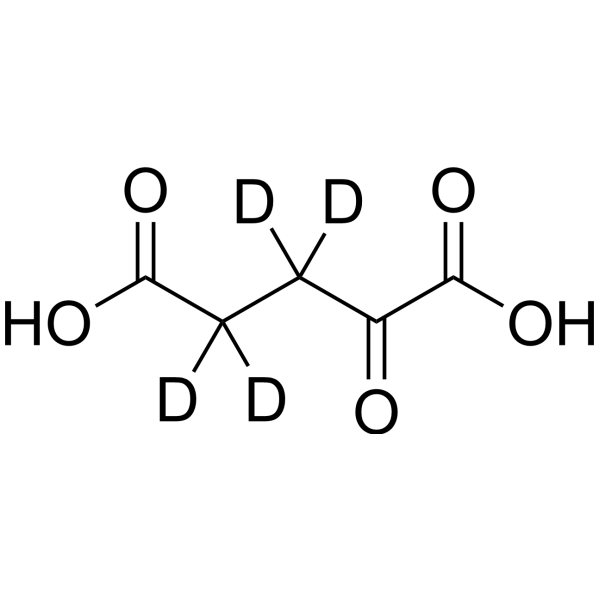 0 ImagesCat. No.: HY-W013636S1CAS No.: 1381759-60-9Synonyms: Alpha-Ketoglutaric acid-d42-Ketoglutaric acid-d4 (Alpha-Ketoglutaric acid-d4) is the deuterium labeled 2-Ketoglutaric acid (HY-W013636). 2-Ketoglutaric acid Sodium is an intermediate in the production of ATP or GTP in the Krebs cycle. 2-Ketoglutaric acid Sodium also acts as the major carbon skeleton for nitrogen-assimilatory reactions. 2-Ketoglutaric acid Sodium is a reversible inhibitor of tyrosinase (IC50=15 mM).
-
Thymidine 5'-monophosphate-13C10,15N2 dilithium
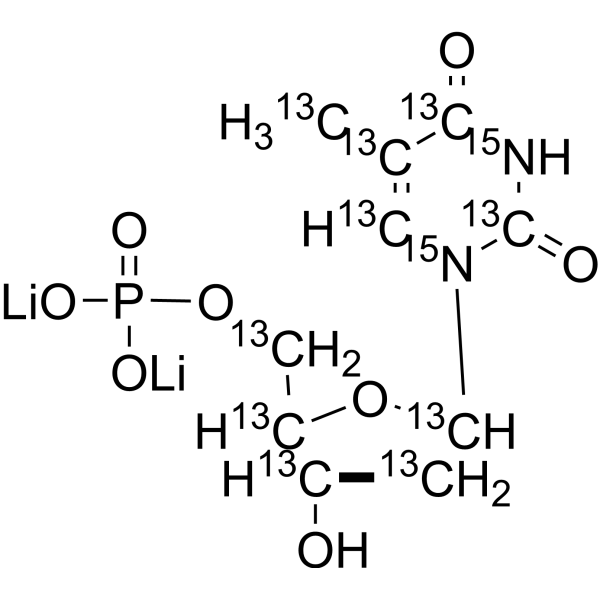 0 ImagesSynonyms: Thymidine-5'-phosphate-13C10,15N2 dilithium
-
5-Hydroxyindole-3-acetic acid-d5
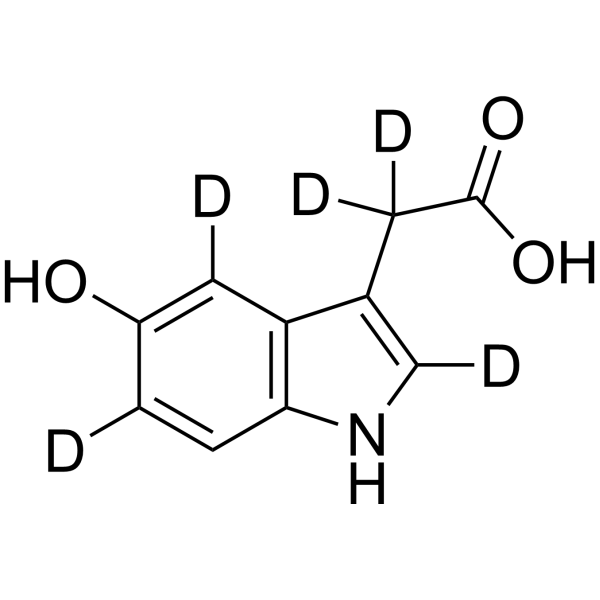 0 Images5-Hydroxyindole-3-acetic acid-d5 is the deuterium labeled 5-Hydroxyindole-3-acetic acid (HY-W008253). 5-Hydroxyindole-3-acetic acid is the main metabolite of serotonin or metanephrines, which can be used as a biomarker of neuroendocrine tumors.
-
L-Alanine-13C3,15N
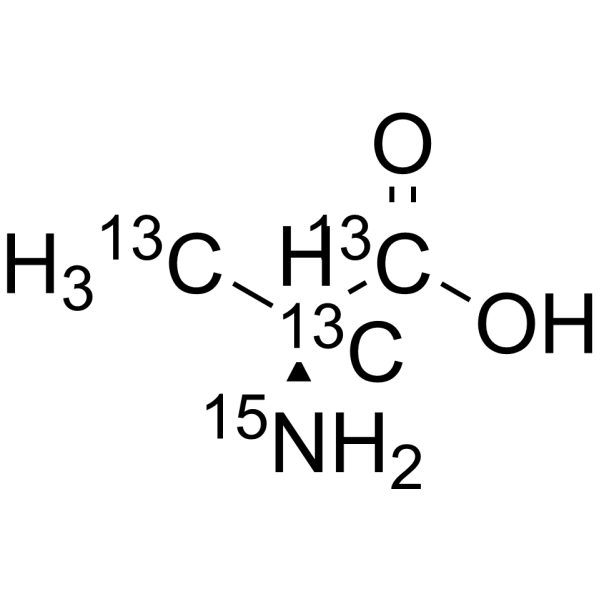 0 ImagesSynonyms: L-2-Aminopropionic acid-13C3,15NL-Alanine-13C3,15N is the 13C- and 15N-labeled L-Alanine. L-Alanine is a non-essential amino acid, involved in sugar and acid metabolism, increases immunity, and provides energy for muscle tissue, brain, and central nervous system.
-
Tranexamic acid-d2-1
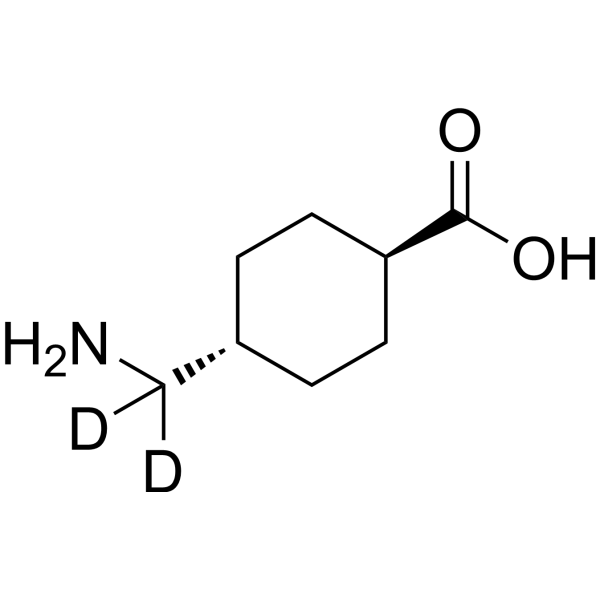 0 ImagesTranexamic acid-d2-1 is the deuterium labeled Tranexamic acid. Tranexamic acid (Transamin) is an antifibrinolytic for blocking lysine-binding sites of plasmin and elastase-derived plasminogen fragments with IC50 of 5 mM.
-
Trifluoroacetic acid-13C sodium
 0 ImagesCat. No.: HY-W754811CAS No.: 286425-32-9Trifluoroacetic acid-13C sodium is the 13C labeled isotope of Trifluoroacetic acid sodium.
-
Tazobactam-15N3 sodium
 0 ImagesCat. No.: HY-W654023Purity: 98.79%Tazobactam-15N3 sodium is the 15N labeled isotope of Tazobactam sodium (HY-W009168). Tazobactam sodium is an antibiotic of the beta-lactamase inhibitor class.
-
L-Lactic acid-13C-1 sodium (20% w/w in water)
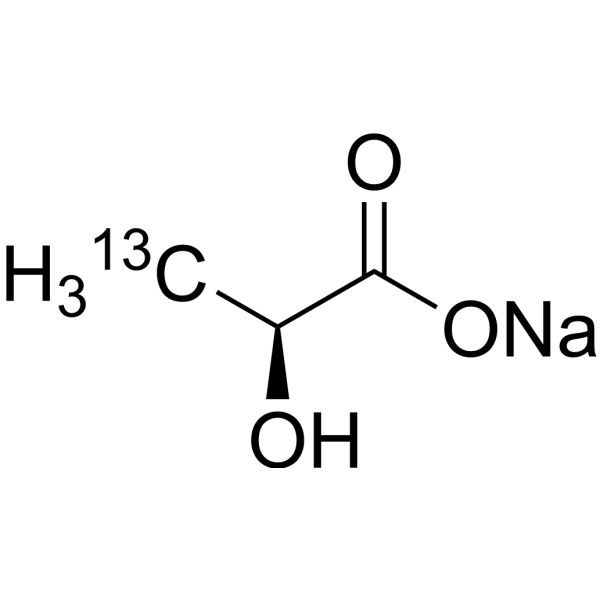 0 ImagesSynonyms: L-E-270-13C-1 sodiumL-Lactic acid-13C1 (L-E-270-13C1) sodium (20% in water) is the 13C-labeled L-Lactic acid sodium (HY-W040233). L-lactate Sodium is a buildiing block which can be used as a precursor for the production of the bioplastic polymer poly-lactic acid. L-Lactic acid Sodium has antiproliferative activityy.
-
Angiotensin I-13C6,15N (human, mouse, rat) TFA
 0 ImagesCat. No.: HY-P1032S2Purity: 99.76%Angiotensin I-13C6,15N (human, mouse, rat) TFA is 13C and 15N labeled Angiotensin I (human, mouse, rat) TFA. Angiotensin I-13C6,15N (human, mouse, rat) TFA is a precursor of angiotensin II and is cleaved into angiotensin II by angiotensin converting enzyme (ACE).



