



Molecular Glues
Protein degradation agents based on the ubiquitin-proteasome pathway include a part of molecular glues. Molecular glues are a class of small molecule compounds that can induce or stabilize the interaction between proteins. If one of the protein is ubiquitin ligase, molecular glue can cause another protein to undergo ubiquitin modification and degradation through the proteasome pathway, which is similar to PROTAC. However, these molecules are classified as ligand for E3 ligase as functional molecules in subsequent classification. Older drugs, thalidomide, lenalidomide, and pomalidomide, together with CC-90009 and CC-92480 reported later all belong to this category.
All Product Categories
-
Molecular Glues Related Products (372)
Related Products (372)

-
Related Compound Screening Libraries (1)
-
VVD 065
 0 ImagesVVD 065 is an orally active KEAP1-dependent NRF2 molecular glue degrader with a KEAP1 KD of 65 nM. VVD 065 covalently engages KEAP1 at Cys151, allosterically stabilizes KEAP1-CUL3 complex formation and enhances NRF2 polyubiquitination and proteasomal degradation. VVD 065 can be used for the research of esophageal squamous cell carcinoma, lung cancer, head-and-neck cancer, uterine cancers.
-
SP3N hydrochloride
 0 ImagesCat. No.: HY-161794APurity: 99.84%SP3N hydrochloride is a specific degrader of the prolyl isomerase FKBP12. As a prodrug, SP3N hydrochloride is metabolized by Diamine oxidase into the active aldehyde metabolite SP3CHO (HY-161795). SP3N hydrochloride induces the proximity of FKBP12 to the SCFFBXO22 E3 ligase complex, thereby triggering the polyubiquitination and proteasomal degradation of FKBP12. SP3N hydrochloride can be used in cancer research.
-
TMX-4113
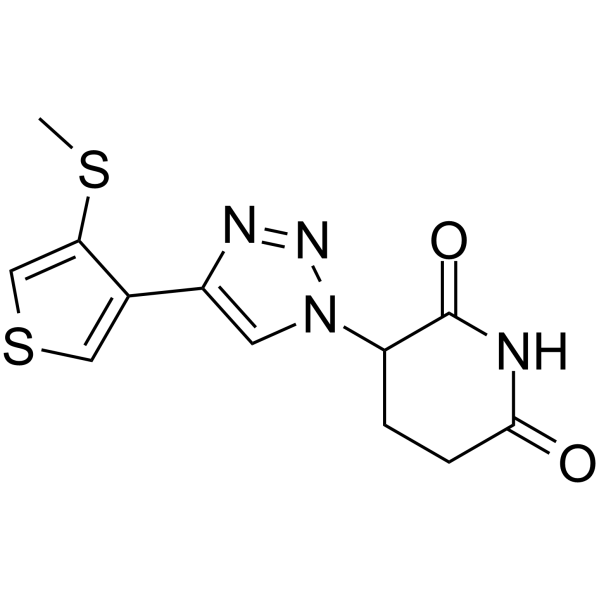 0 ImagesTMX-4113 is a FPFT-2216 (HY-145319) (Molecular glue) analog and degrader of PDE6D and CK1α. TMX-4113 does not inhibit the growth of KRASG12C-dependent cancer cells. TMX-4113 can be used in the research of multiple myeloma, pancreatic ductal adenocarcinoma, non-small cell lung cancer and gastric adenocarcinoma.
-
NRX-1933
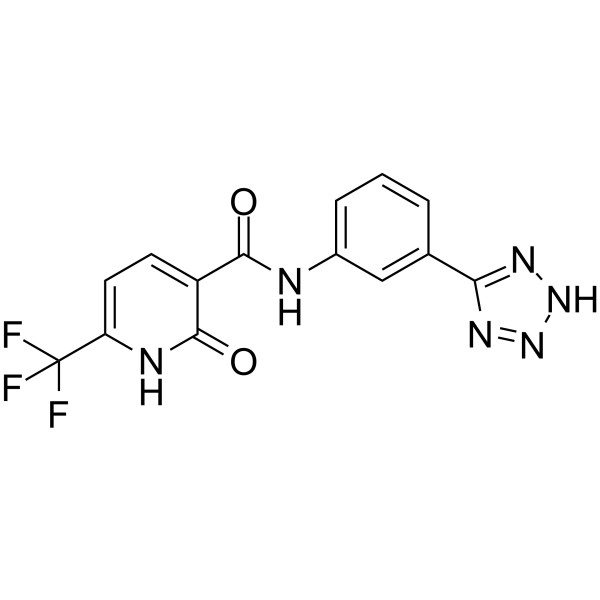 0 ImagesNRX-1933 is a molecular glue (molecular glue) that enhances the interaction between β-catenin and β-TrCP. NRX-1933 promotes the ubiquitination and subsequent degradation of mutant β-catenin. NRX-1933 can be applied to tumor research involving aberrant activation of the Wnt/β-catenin signaling pathway.
-
NF-κB p105 degrader-1
 0 ImagesCat. No.: HY-174138Purity: 99.92%NF-κB p105 degrader-1 is a non-covalent, selective Molecular glue-like degrader targeting the NF-κB p105 subunit. NF-κB p105 degrader-1 induces proteasome-mediated degradation via the Cullin-RING ligase SCFβTrCP. NF-κB p105 degrader-1 inhibits LPS-induced production of NO and TNF-α. NF-κB p105 degrader-1 can be used in inflammation-related research.
-
LXH-3-71
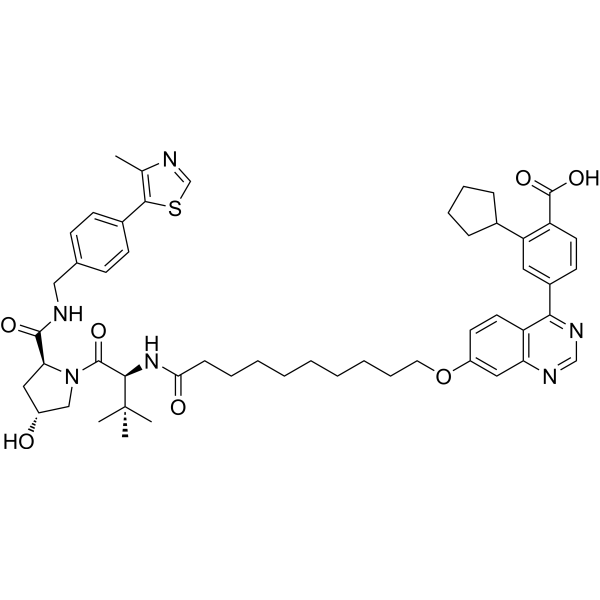
 0 ImagesCat. No.: HY-177742CAS No.: 2251753-65-6LXH-3-71 is a PHGDH degrader. LXH-3-71 acts as a molecular glue to enhance the interaction of the PHGDH-DDB1-CRL E3 ligase complex, triggering ubiquitination and proteasomal degradation of PHGDH. LXH-3-71 regulates the stemness of colorectal cancer cells and inhibits tumor proliferation and colony formation. LXH-3-71 can be used in the research of colorectal cancer.
-
dCeMM1
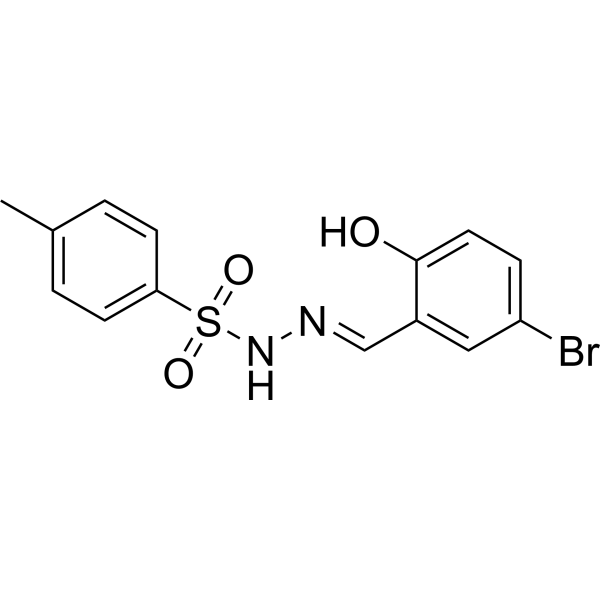 0 ImagesdCeMM1 is a molecular glue degrader that targets RBM39. dCeMM1 serves as a positive control for the screening of DCAF15-dependent molecular glue degraders. dCeMM1 promotes the DCAF15-RBM39 interaction, thereby recruiting RBM39 to the CRL4DCAF15 E3 ubiquitin ligase complex, inducing ubiquitination and subsequent proteasomal degradation of RBM39. Meanwhile, dCeMM1 stabilizes DCAF15 by mediating neo-substrate recruitment to protect DCAF15 from autodegradation. dCeMM1 reduces the viability of leukemia cells in a neddylation-dependent and proteasome-dependent manner, and can be applied in leukemia-related research.
-
VNPP433-3β
 0 ImagesSynonyms: Galeterone 3β-imidazoleVNPP433-3β (Galeterone 3β-imidazole) is an orally active molecular glue degrader, which degrades androgen receptor (AR) and its splice variants (AR-Vs) and MAP kinase-interacting serine/threonine protein kinase Mnk1/2. VNPP433-3β induces cell apoptosis. VNPP433-3β inhibits tumor growth in the CWR22Rv1 xenograft mouse model. VNPP433-3β can be used for the study of castration resistant prostate cancer (CRPC) and pancreatic ductal adenocarcinoma (PDAC).
-
SJPYT-195
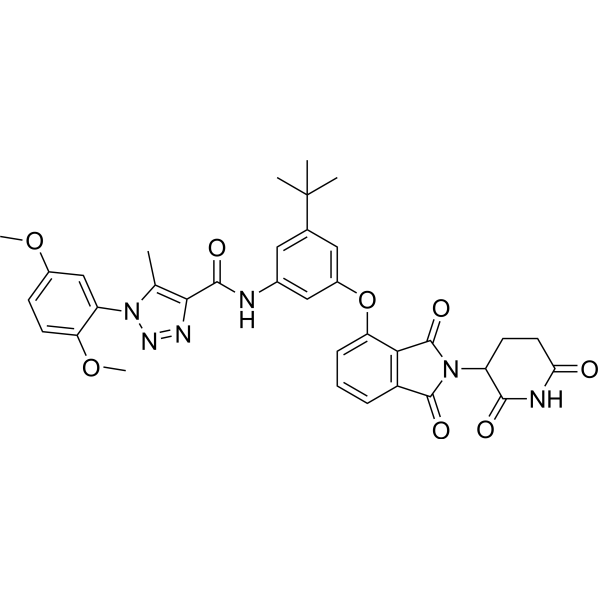 0 ImagesSJPYT-195 is a molecular glue degrader targeting GSPT1, with a DC50 of 310 nM. SJPYT-195 mediates CRBN-dependent and proteasome-dependent degradation of GSPT1 by forming a stable ternary complex with CRBN and GSPT1. As a secondary effect of GSPT1 degradation, SJPYT-195 induces a decrease in PXR protein levels. SJPYT-195 is applicable to research related to acute myeloid leukemia.
-
GSPT1 degrader-19
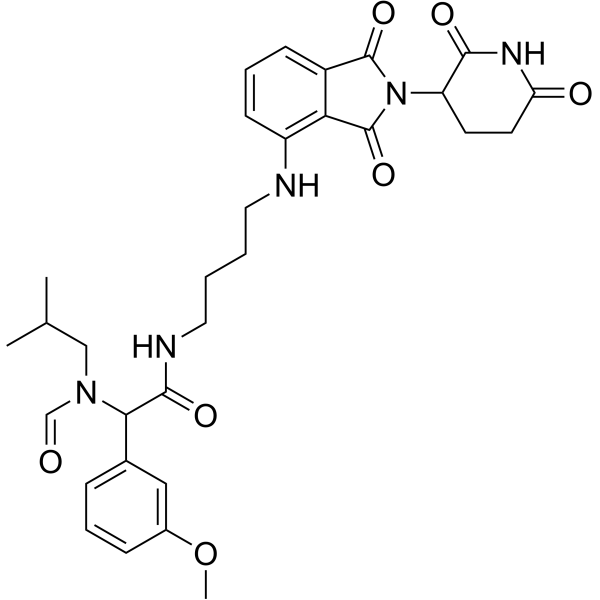 0 ImagesCat. No.: HY-161101Purity: 99.30%GSPT1 degrader-19 is a molecular glue degrader targeting GSPT1, IKZF1 and IKZF3, with DC50 values of 0.88 nM, 11.54 nM and 13.84 nM, respectively, in MM.1S multiple myeloma cells. GSPT1 degrader-19 induces cereblon (CRBN)-dependent ubiquitination and proteasomal degradation of IKZF1, IKZF3, GSPT1 and GSPT2, and also reduces ZFP91 protein levels via a CRBN-dependent pathway. GSPT1 degrader-19 exerts antiproliferative effects on cancer cells, induces global proteomic changes including downregulation of novel substrates, and exhibits activity against multiple myeloma and leukemia cell lines. GSPT1 degrader-19 can be used in research related to multiple myeloma and leukemia.
-
Pomalidomide (Standard)
 0 ImagesSynonyms: CC-4047 (Standard)Pomalidomide (Standard) is the analytical standard of Pomalidomide. This product is intended for research and analytical applications. Pomalidomide, the third-generation immunomodulatory agent, acts as molecular glue. Pomalidomide interacts with the E3 ligase cereblon and induces degradation of essential Ikaros transcription factors.
-
WIZ degrader 8 TFA
 0 ImagesCat. No.: HY-169955APurity: 99.41%WIZ degrader 8 (TFA) is the trifluoroacetic acid of WIZ degrader 8 (HY-169955). WIZ degrader 8 (compound 10) is a potent and selective degrader of the transcription factor WIZ, which can potently induce HbF expression. WIZ degrader 8 can lead to WIZ degradation and induce HbF expression, and has the potential to be an inhibitor of sickle cell disease.
-
Rapamycin (GMP Like)
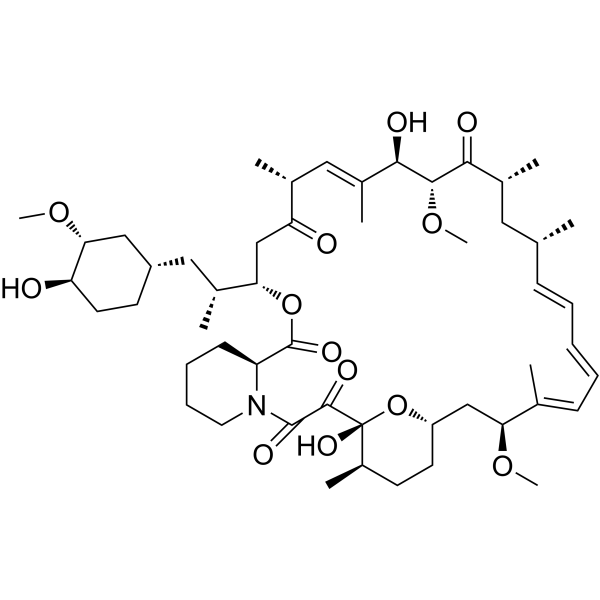 0 ImagesSynonyms: Sirolimus (GMP Like); AY-22989 (GMP Like); NSC 226080 (GMP Like)Rapamycin (Sirolimus) GMP Like is Rapamycin (HY-10219) produced by using GMP like guidelines. GMP Like small molecules works appropriately as an auxiliary reagent for cell therapy manufacture. Rapamycin (Sirolimus; AY 22989) is a potent and specific blood-brain barrier-transmissible mTOR inhibitor with an IC50 of 0.1 nM in HEK293 cells. Rapamycin is a molecular glue that binds FKBP12 and mTOR proteins together, thereby inhibiting mTOR kinase activity. Rapamycin binds to FKBP12 and specifically acts as an allosteric inhibitor of mTORC1. Rapamycin is an autophagy activator, an immunosuppressant.
-
(R)-Zelebrudomide
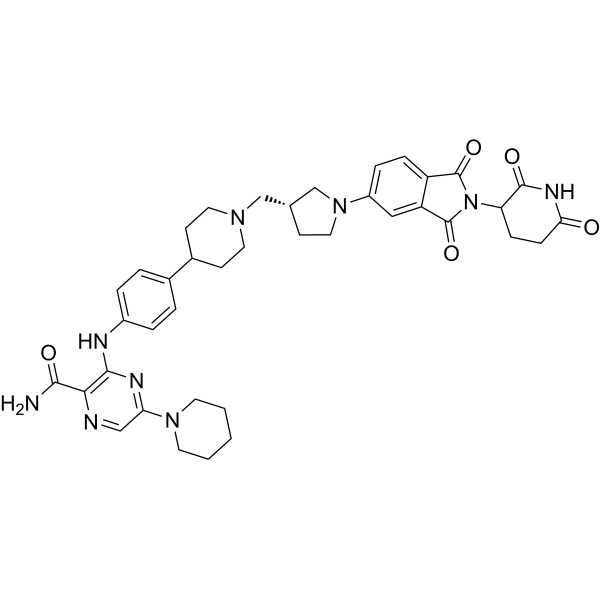 0 ImagesSynonyms: (R)-NX-2127(R)-Zelebrudomide ((R)-NX-2127) is an isomer of Zelebrudomide (HY-153220). Zelebrudomide is an orally active BTK-targeting PROTAC degrader, with DC50 values of 4.5 nM and 31 nM against wild-type BTK and BTKC481S mutant, respectively. Zelebrudomide recruits the cereblon E3 ubiquitin ligase complex to mediate the degradation of BTK. Zelebrudomide also acts as a molecular glue to bind the cereblon E3 ubiquitin ligase complex, mediating the degradation of IKZF1 and IKZF3. Zelebrudomide can be used in the research of B-cell malignancies.
-
TNG961
 0 ImagesTNG961 is a selective and orally active CRBN-mediated HBS1L molecular glue degrader. TNG961 induces formation of an HBS1L-TNG961-CRBN ternary complex, leading to potent degradation of HBS1L and secondary destabilization of its binding partner PELO. TNG961 can reduce HBS1L protein levels, thereby disrupting the PELO region involved in ribosome rescue. TNG961 can be used for the study of FOCAD-deficient cancers, such as pancreatic cancer.
-
MGD-28
 0 ImagesMGD-28 is an orally effective cereblon-dependent molecular glue degrader that potently degrades CK1α, IKZF1, IKZF2, and IKZF3, with respective DC50 values of 7.8, 3.8, 56.3, and 7.1 nM. MGD-28 also induces the degradation of multiple novel substrate proteins including ZFP91, DTWD1, ZNFX1, MBD1, and MBD3 via a CRBN/Cullin- and proteasome-dependent mechanism. MGD-28 induces cell apoptosis. MGD-28 is used in the research of multiple myeloma, acute myeloid leukemia, diffuse large B-cell lymphoma, and related malignancies.
-
(Rac)-BMS-986449
 0 ImagesCat. No.: HY-173630APurity: 99.05%(R)-BMS-986449 is the racemic mixture of BMS-986449 (HY-173630). BMS-986449 is a CELMoD molecular glue and an IKZF2/IKZF4 degrader. BMS-986449 targets the degradation of transcription factors Helios (IKZF2) and Eos (IKZF4) in regulatory T (Treg) cells. BMS-986449 redirects the E3 ubiquitin ligase Cereblon to induce the degradation of Helios and Eos, reprogramming Treg cells and enhancing antitumor immunity. BMS-986449 is promising for research of advanced solid tumors.
-
Naphthyridine carbamate dimer
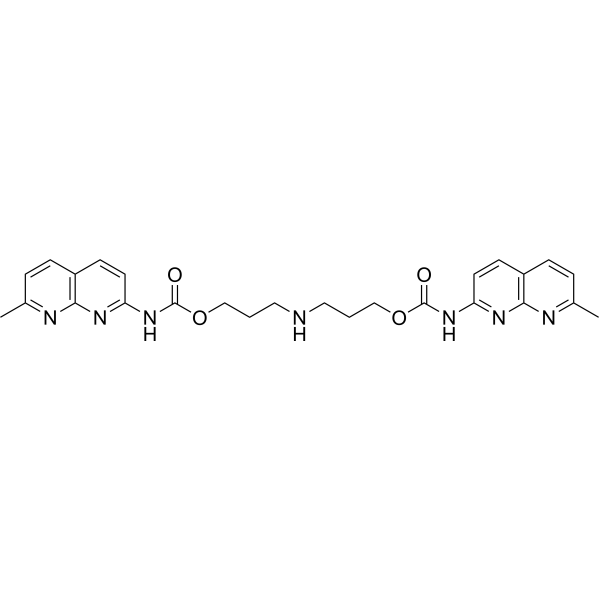 0 ImagesSynonyms: NCDNaphthyridine carbamate dimer (NCD) is a molecular glue. Naphthyridine carbamate dimer induces designed structural changes in target functional DNA, thereby regulating its function. As a molecular glue, naphthyridine carbamate dimer stabilizes non-spontaneously formed GG homologous mismatched double-stranded DNA. Naphthyridine carbamate dimer reduces the formation of toxic RNA foci and regulates CGG repeat instability associated with fragile X syndrome and spinocerebellar ataxia type 31. Naphthyridine carbamate dimer can be used in research related to fragile X syndrome and spinocerebellar ataxia type 31.
-
CC-647
 0 ImagesCC-647 is a molecular glue-type cereblon modulator and ZBTB16 degrader. CC-647 primarily utilizes the C2H2 ZnF3 degron of ZBTB16 to promote CRL4CRBN-mediated ubiquitination and proteasomal degradation. CC-647 also induces the degradation of the oncogenic RARα-ZBTB16 fusion protein, while exerting a weaker degrading effect on the reciprocal fusion ZBTB16-RARα. CC-647 can be used in studies related to targeted protein degradation and ZBTB16/RARA-rearranged acute promyelocytic leukemia.



