



Tromantadine
Based on 1 publication(s) in Google Scholar
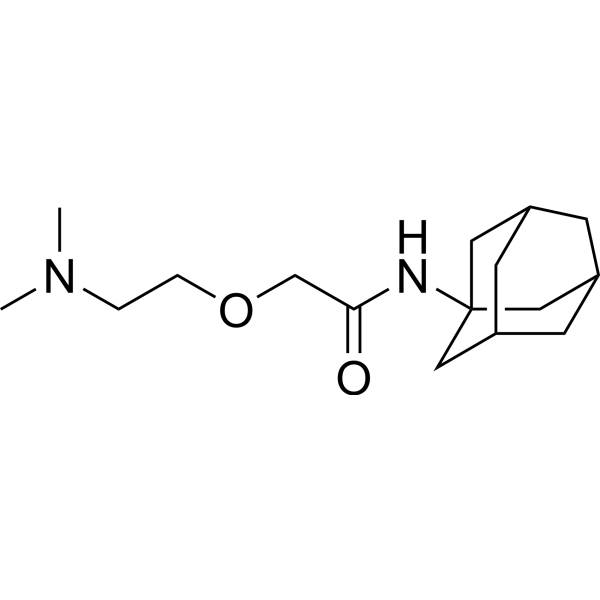
Tromantadine hydrochloride, an Amantadine derivative with antiherpetic activity, inhibits herpes simplex virus type 1 (HSV-1) and HSV-2 replication.
For research use only. We do not sell to patients.
- CAS No.: 53783-83-8
- Formula: C16H28N2O2
- Molecular Weight:280.41
-
Storage:Pure form -20°C, 3 years , 4°C, 2 years ; In solvent -80°C, 6 months , -20°C, 1 month

To place orders, for customer services and technical support, please contact: MedChemExpress USA
Tel: 609-228-6898 E-mail: [email protected] [email protected]


-
 Biological Activity
-
Chemical Information
- Purity & Documentation
- References
-
 Help & FAQs


-
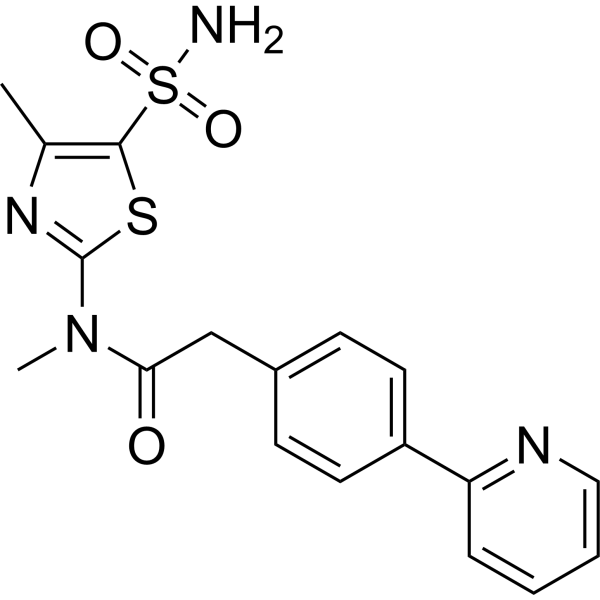
HY-15303
PritelivirHSV Inhibitor -
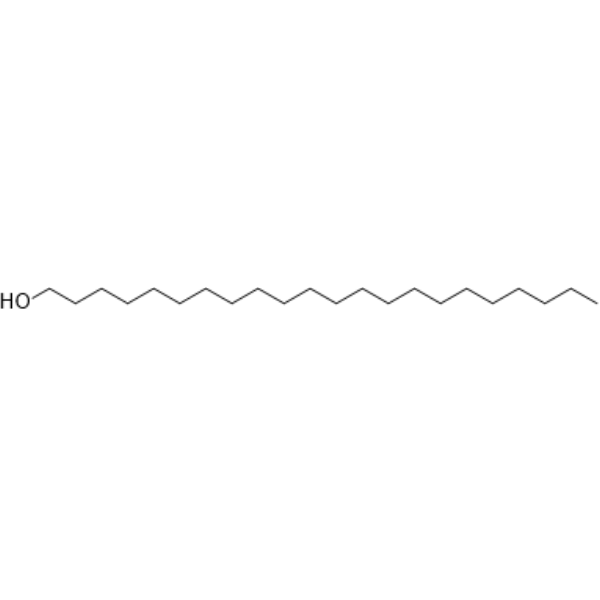
HY-B0222
1-DocosanolHSV Inhibitor -
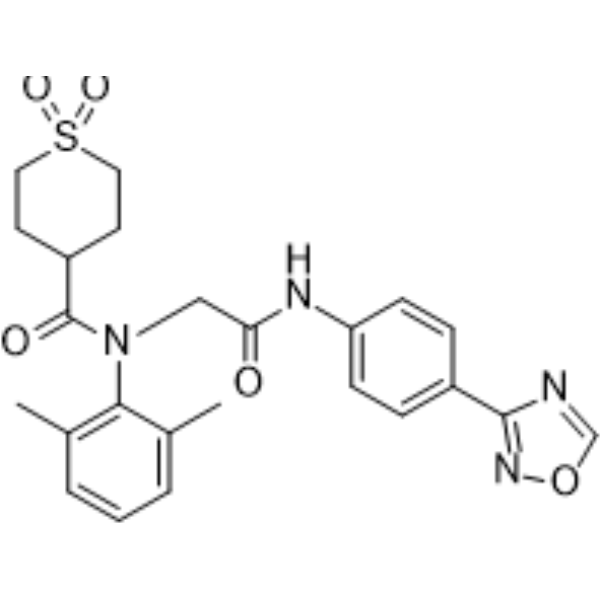
HY-14809
AmenamevirHSV Inhibitor -
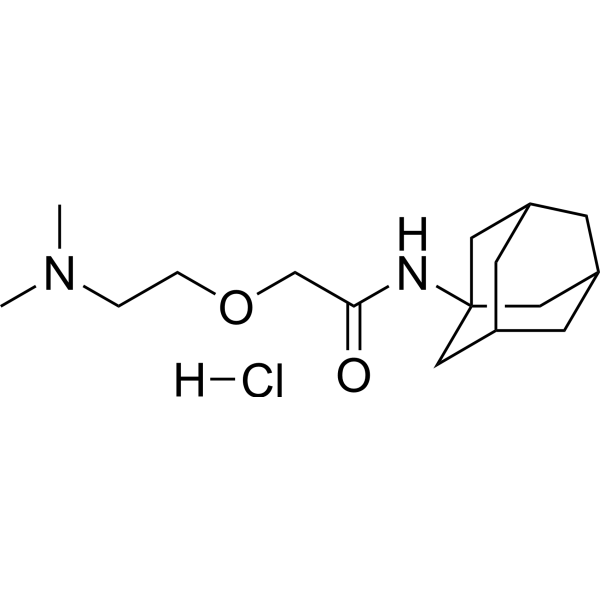
HY-U00124B
Tromantadine hydrochlorideHSV Replication Inhibitor -
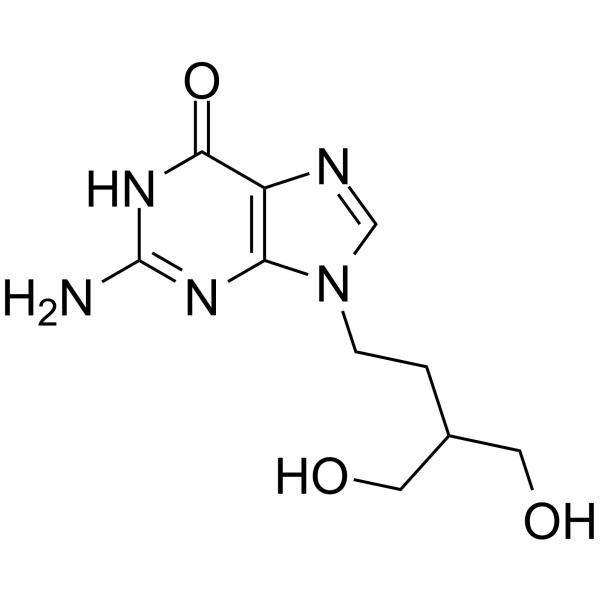
HY-17424
PenciclovirAnti-herpesvirus Agent -
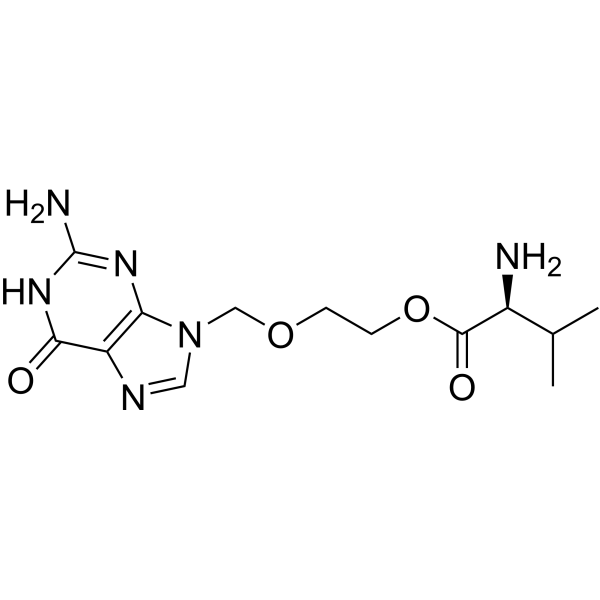
HY-17425
ValacyclovirAntiviral Agent -
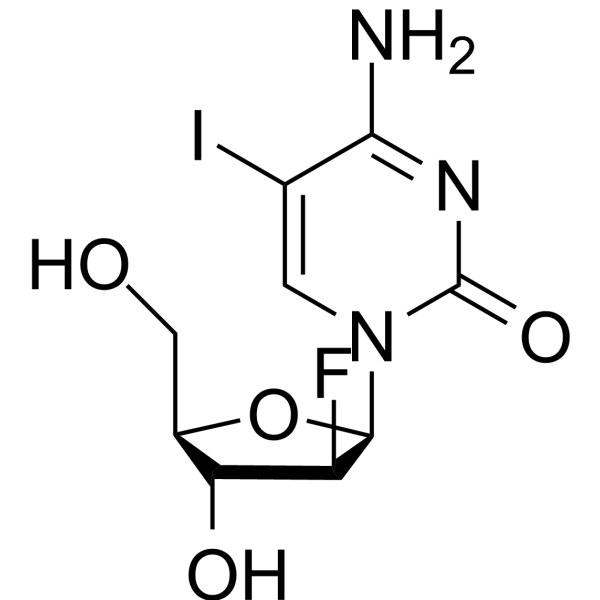
HY-50735
FiacitabineDNA Polymerase Inhibitor -
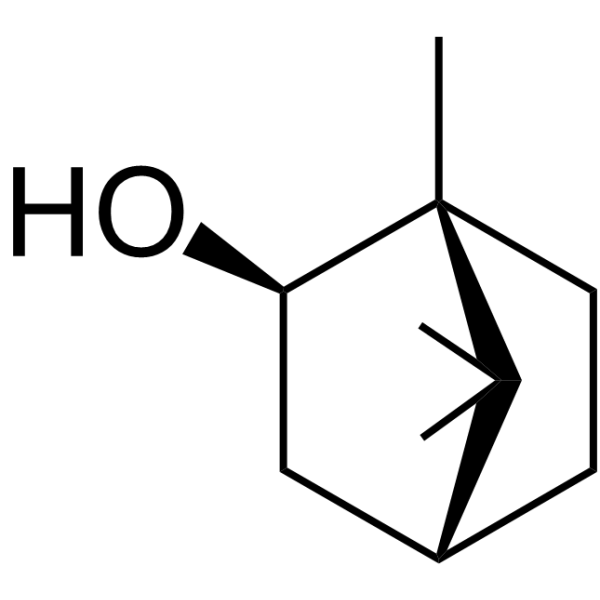
HY-N2004
IsoborneolHSV Inhibitor -

HY-14809R
Amenamevir (Standard)HSV Inhibitor -

HY-15303R
Pritelivir (Standard)HSV Inhibitor -
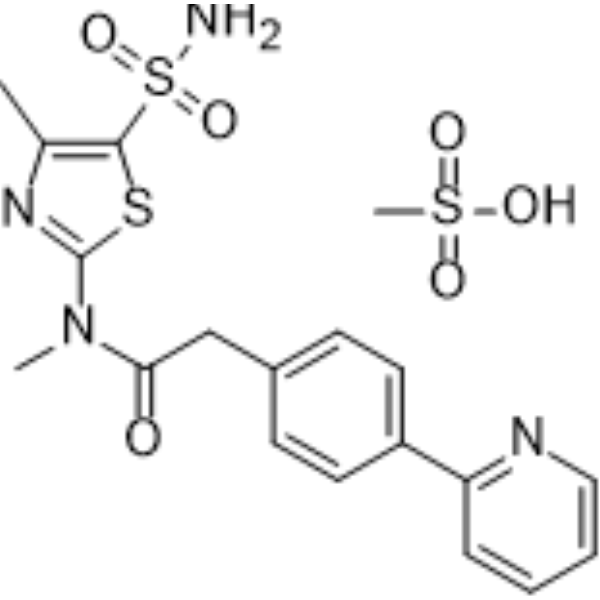
HY-15303A
Pritelivir mesylateHelicase-primase Complex Inhibitor -

HY-17424R
Penciclovir (Standard)Anti-herpesvirus Agent
Publications Citing Use of MedChemExpress (MCE) Tromantadine
More

Biological Activity
Description
IC50 & Target
[1]|
HSV-1 |
HSV-2 |
In Vitro
Tromantadine inhibits herpes simplex virus type 1 (KOS strain)-induced cytopathic effect and virus replication with limited toxicity to the cells. Vero and HEp-2 cells tolerate up to 2 mg of Tromantadine per 2x10⁶ cells for 24-, 48-, or 96-h incubation periods with little change in cell morphology. Treatment of the cells with 10 to 50 μg of Tromantadine reduces herpes simplex virus-induced cytopathic effect. Treatment with 100 to 500 μg of Tromantadine inhibits herpes simplex virus-induced cytopathic effect and reduces virus production. Complete inhibition of virus production is observed with treatments of 500 μg to 1 mg. The antiherpetic activity of Tromantadine is dependent upon the viral inoculum size and the time of addition of the compound with respect to infection. Virion synthesis and viral polypeptide synthesis are inhibited by addition of Tromantadine at the time of infection or 4 h postinfection[1]. Tromantadine raises the bilayer to hexagonal phase transition temperature of synthetic phosphatidylethanolamines and is less disruptive to phospholipid packing. Tromantadine acts similar to cyclosporin A, previously demonstrated to inhibit viral-induced cell-cell fusion[2].
MedChemExpress (MCE) has not independently confirmed the accuracy of these methods. They are for reference only. .


Chemical Information
-
CAS No. 53783-83-8
-
Appearance Oil
-
Molecular Weight 280.41
-
Formula C16H28N2O2
-
Color Colorless to light yellow
-
SMILES
O=C(COCCN(C)C)NC1(C[C@H](C2)C3)C[C@H]3C[C@H]2C1
-
Shipping
Room temperature in continental US; may vary elsewhere.
-
Storage
Pure form -20°C 3 years 4°C 2 years In solvent -80°C 6 months -20°C 1 month


Publications (1)
-
Journal Impact Factor
-
Most Recent
-
COVID
2022 Nov;2(11):1551-1563. PMID: 37274537


Purity & Documentation
-
Data Sheet (270 KB)
-
SDS (252 KB)
- English - EN (252 KB)
- Français - FR (252 KB)
- Deutsch - DE (252 KB)
- Norwegian - NO (252 KB)
- Español - ES (252 KB)
- Swedish - SV (252 KB)
- Italian - IT (252 KB)
- Korean - KR (252 KB)
- Portuguese - PT (252 KB)
-
Handling Instructions (2659 KB)
References
[1]. Rosenthal KS, et al. Tromantadine: inhibitor of early and late events in herpes simplex virus replication. Antimicrob Agents Chemother. 1982 Dec;22(6):1031-6. [Content Brief]
[2]. Cheetham JJ, et al. Comparison of the interaction of the anti-viral chemotherapeutic agents amantadine and tromantadine with model phospholipid membranes. Biosci Rep. 1987 Mar;7(3):225-30. [Content Brief]

Calculators
Concentration (start) × Volume (start) = Concentration (final) × Volume (final)


Tromantadine Related Classifications
HY-U00124 Related Classifications
 Powered by Bioz