1. Antibodies
  2. Primary Antibodies
  3. Polyclonal Antibodies Flow Cytometry Antibodies Modification Specific Antibodies
  4. Phospho-JAK2 (Tyr1007/1008) Antibody

Phospho-JAK2 (Tyr1007/1008) Antibody

Cat. No.: HY-P80829
COA User Guide for Antibodies Technical Support

Phospho-JAK2 (Tyr1007/1008) Antibody is a Rabbit-derived and non-conjugated IgG polyclonal antibody, targeting to Phospho-JAK2 (Tyr1007/1008).

For research use only. We do not sell to patients.

Size Price Stock Quantity
20 μL In-stock
50 μL In-stock
100 μL In-stock
250 μL   Get quote  

* Please select Quantity before adding items.

Top Publications Citing Use of Products
  • WB: Western Blot;
  • IHC-P: Immunohistochemistry-Paraffin;
  • IHC-F: Immunohistochemistry-Frozen;
  • ICC/IF: Immunocytochemistry/Immunofluorescence;
  • IF-Tissue: Immunofluorescence-Tissue;
  • mIHC: Multiplex Immunohistochemical;
  • IP: Immunoprecipitation;
  • ChIP: Chromatin Immunoprecipitation;
  • FC: Flow Cytometry;
  • ELISA: Enzyme Linked Immunosorbent Assay
  • Product Detail

  • Verification Image

  • Background

  • Documentation

Description

Phospho-JAK2 (Tyr1007/1008) Antibody is a Rabbit-derived and non-conjugated IgG polyclonal antibody, targeting to Phospho-JAK2 (Tyr1007/1008).

Host

Rabbit

Clonality

Polyclonal

Molecular Weight
Predicted band size: 131 kDa;
Observed band size: 131 kDa
Note: Due to possible protein modifications or aggregation, the molecular weight should be confirmed by actual measurement, and the predicted value is for reference only.
Species Reactivity
Human, Mouse, Rat
SwissProt ID
Gene ID
Immunogen

Synthetic phosphopeptide corresponding to residues surrounding Tyr1007/1008 of Human Phospho-JAK2.The exact sequence is proprietary to MCE.

Application &
Dilution Ratio
Application Dilution Ratio
WB
WB: Western Blot
1:500-1:1000
IHC-P
IHC-P: Immunohistochemistry-Paraffin
1:50-1:100
ICC/IF
ICC/IF: Immunocytochemistry/Immunofluorescence
1:50-1:200
IP
IP: Immunoprecipitation
1:20
FC
FC: Flow Cytometry
1:50-1:100
Sensitivity Endogenous Purity affinity purified
Conjugation Non-conjugated Modification Phosphorylated
Isotype IgG  
Appearance

Liquid

Formulation

Supplied in Rabbit IgG in 10mM phosphate buffered saline , pH 7.4, 150mM sodium chloride, 0.05% BSA, 0.02% sodium azide and 50% glycerol.

Storage & Stability

Stored at -20°C for 1 year. Avoid repeated freeze / thaw cycles.

Shipping

Shipping with blue ice.

Verification Image
ALL IHC-P mIHC ICC
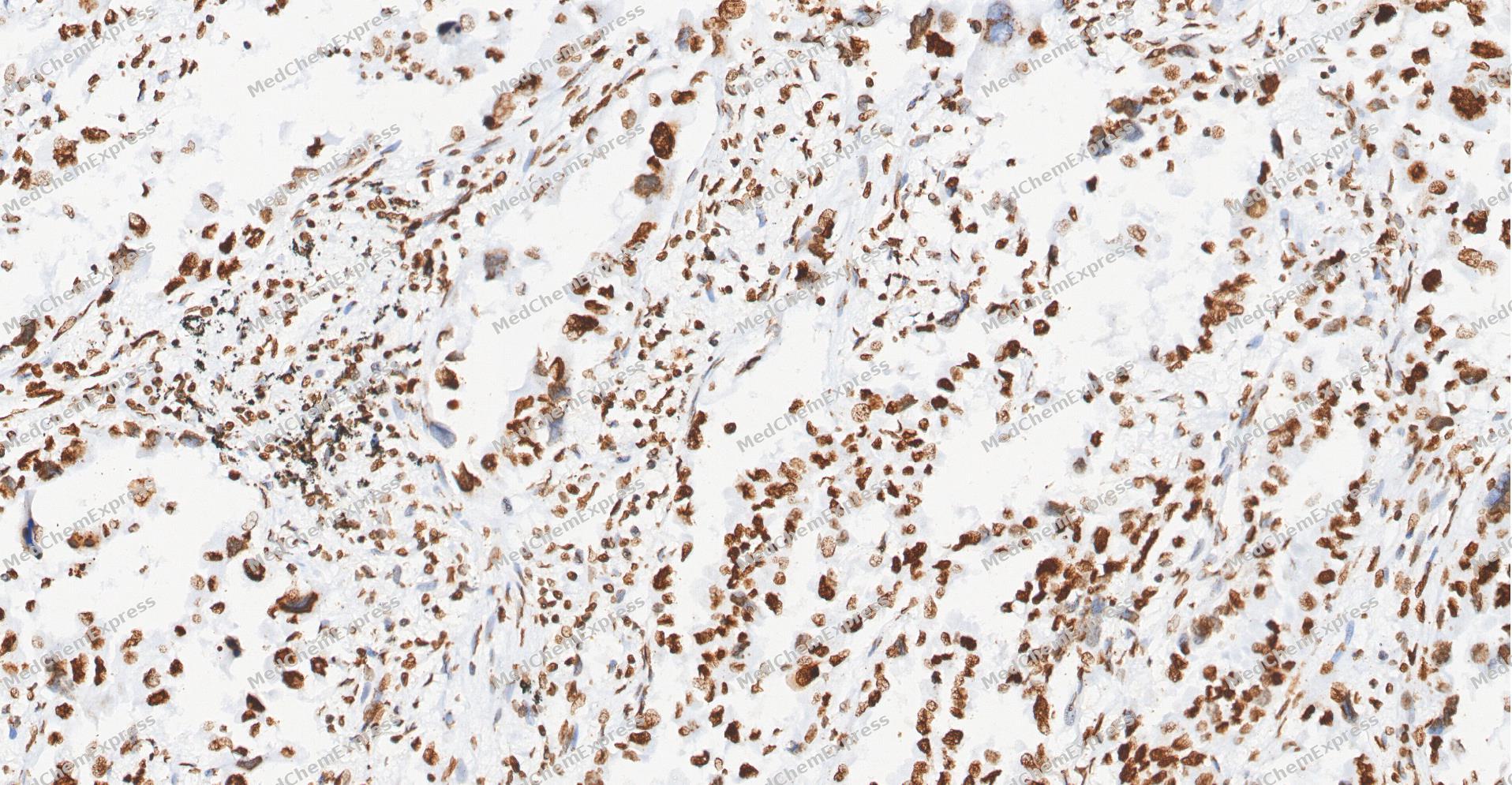
  • Immunohistochemical analysis of paraffin-embedded human Lung Adenocarcinoma tissue using Phospho-JAK2 antibody was performed. The section was pretreated using high-temperature and high-pressure mediated EDTA antigen retrieval buffer (pH 9.0), for 5 minutes. The tissues were incubated with primary antibody (HY-P80829, 1:100 dilution) at room temperature for 60 minutes. Detection was performed using an HRP conjugated compact polymer system. DAB was used as the chromogen. The tissues were counterstained with hematoxylin and mounted with neutral balsam mounting medium.

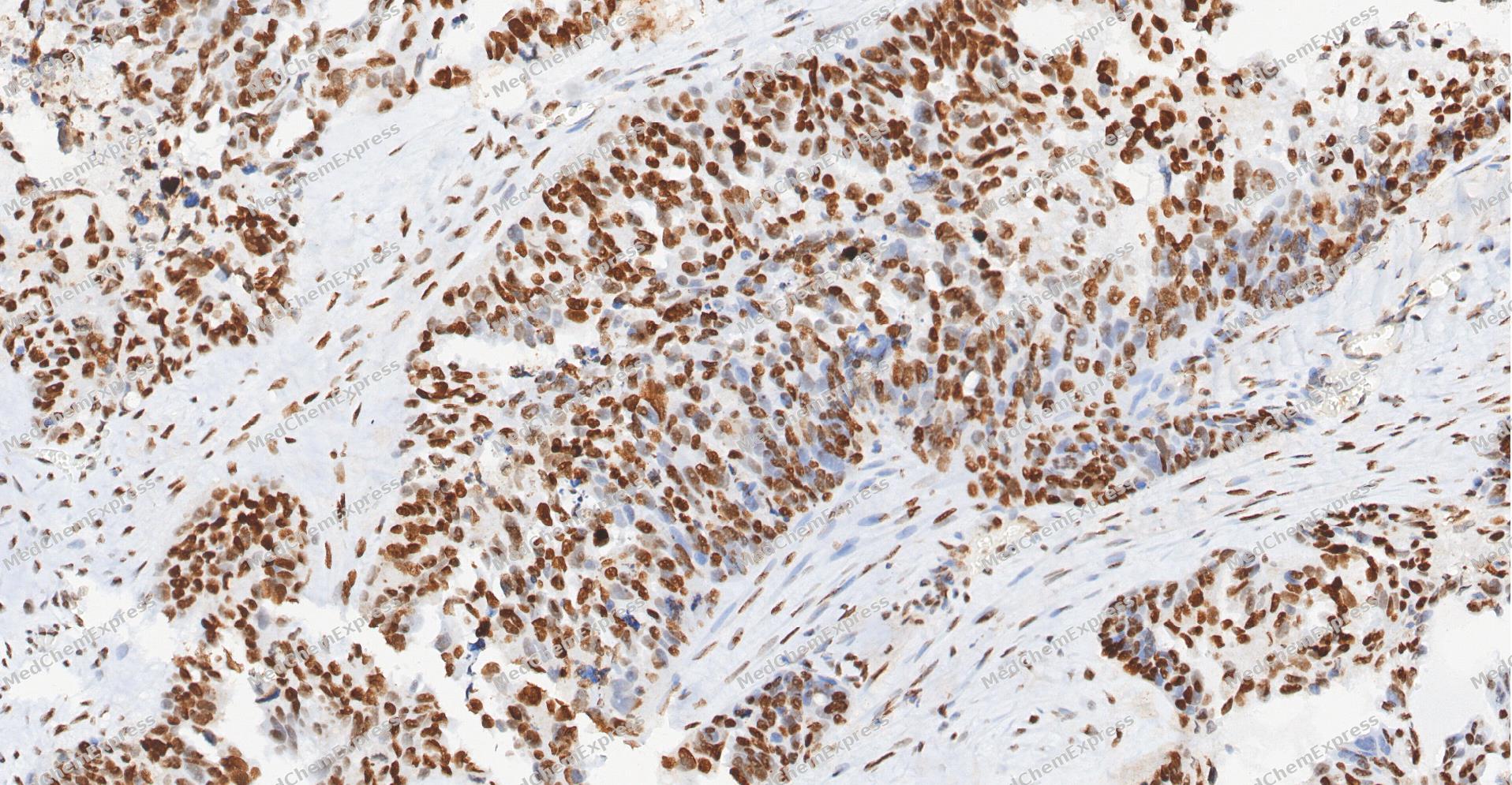
  • Immunohistochemical analysis of paraffin-embedded human Ovarian Cancer‌ tissue using Phospho-JAK2 antibody was performed. The section was pretreated using high-temperature and high-pressure mediated EDTA antigen retrieval buffer (pH 9.0), for 5 minutes. The tissues were incubated with primary antibody (HY-P80829, 1:100 dilution) at room temperature for 60 minutes. Detection was performed using an HRP conjugated compact polymer system. DAB was used as the chromogen. The tissues were counterstained with hematoxylin and mounted with neutral balsam mounting medium.

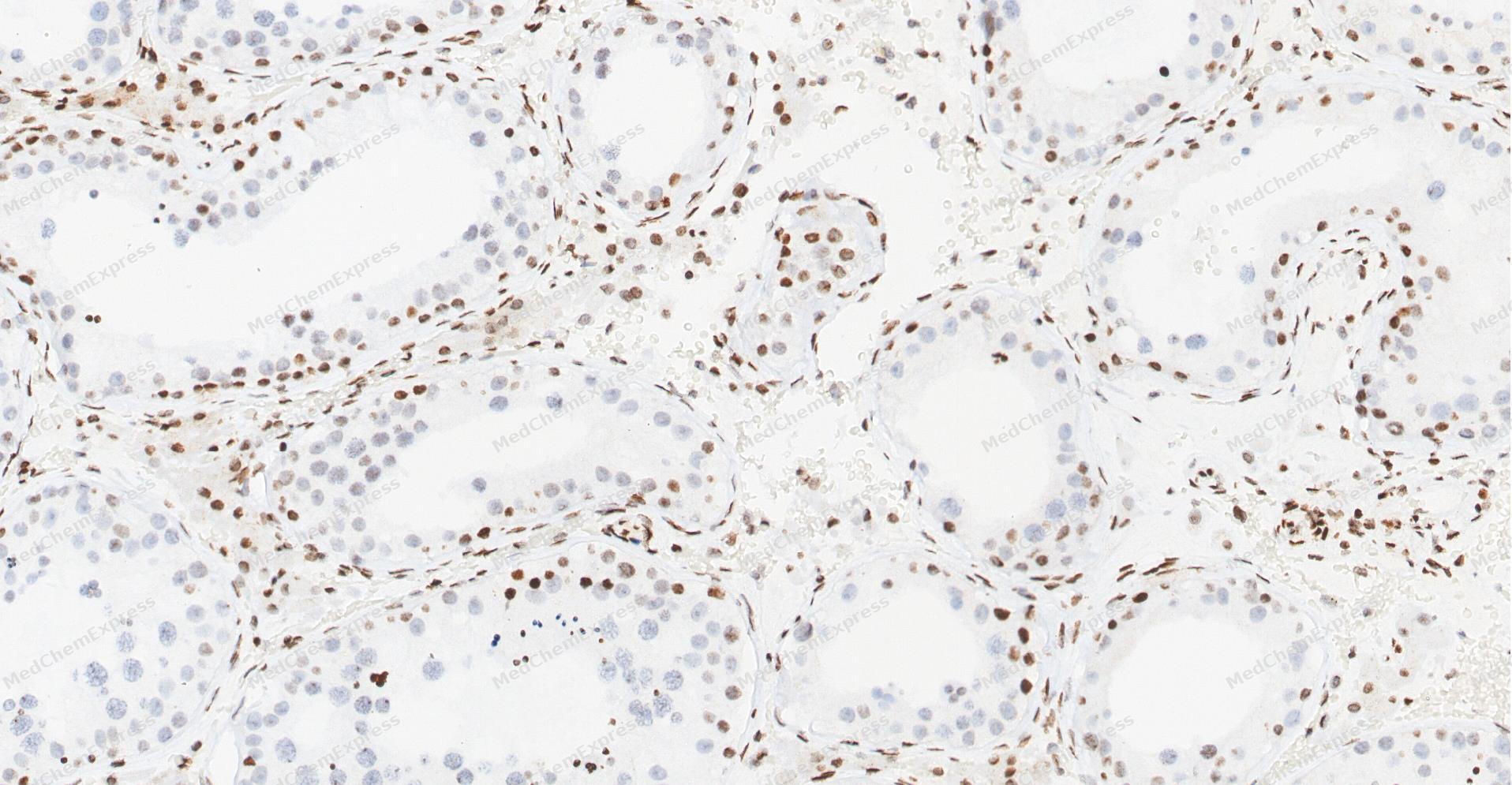
  • Immunohistochemical analysis of paraffin-embedded human Testis tissue using Phospho-JAK2 antibody was performed. The section was pretreated using high-temperature and high-pressure mediated EDTA antigen retrieval buffer (pH 9.0), for 5 minutes. The tissues were incubated with primary antibody (HY-P80829, 1:100 dilution) at room temperature for 60 minutes. Detection was performed using an HRP conjugated compact polymer system. DAB was used as the chromogen. The tissues were counterstained with hematoxylin and mounted with neutral balsam mounting medium.

  • Immunohistochemical analysis of paraffin-embedded human Kidney cancer tissue using Phospho-JAK2 antibody was performed. The section was pretreated using high-temperature and high-pressure mediated EDTA antigen retrieval buffer (pH 9.0), for 5 minutes. The tissues were incubated with primary antibody (HY-P80829, 1:100 dilution) at room temperature for 60 minutes. Detection was performed using an HRP conjugated compact polymer system. DAB was used as the chromogen. The tissues were counterstained with hematoxylin and mounted with neutral balsam mounting medium.

  • Immunohistochemical analysis of paraffin-embedded human Esophageal Carcinoma tissue using Phospho-JAK2 antibody was performed. The section was pretreated using high-temperature and high-pressure mediated EDTA antigen retrieval buffer (pH 9.0), for 5 minutes. The tissues were incubated with primary antibody (HY-P80829, 1:100 dilution) at room temperature for 60 minutes. Detection was performed using an HRP conjugated compact polymer system. DAB was used as the chromogen. The tissues were counterstained with hematoxylin and mounted with neutral balsam mounting medium.

  • Immunohistochemical analysis of paraffin-embedded human Prostate Cancer tissue using Phospho-JAK2 antibody was performed. The section was pretreated using high-temperature and high-pressure mediated EDTA antigen retrieval buffer (pH 9.0), for 5 minutes. The tissues were incubated with primary antibody (HY-P80829, 1:100 dilution) at room temperature for 60 minutes. Detection was performed using an HRP conjugated compact polymer system. DAB was used as the chromogen. The tissues were counterstained with hematoxylin and mounted with neutral balsam mounting medium.

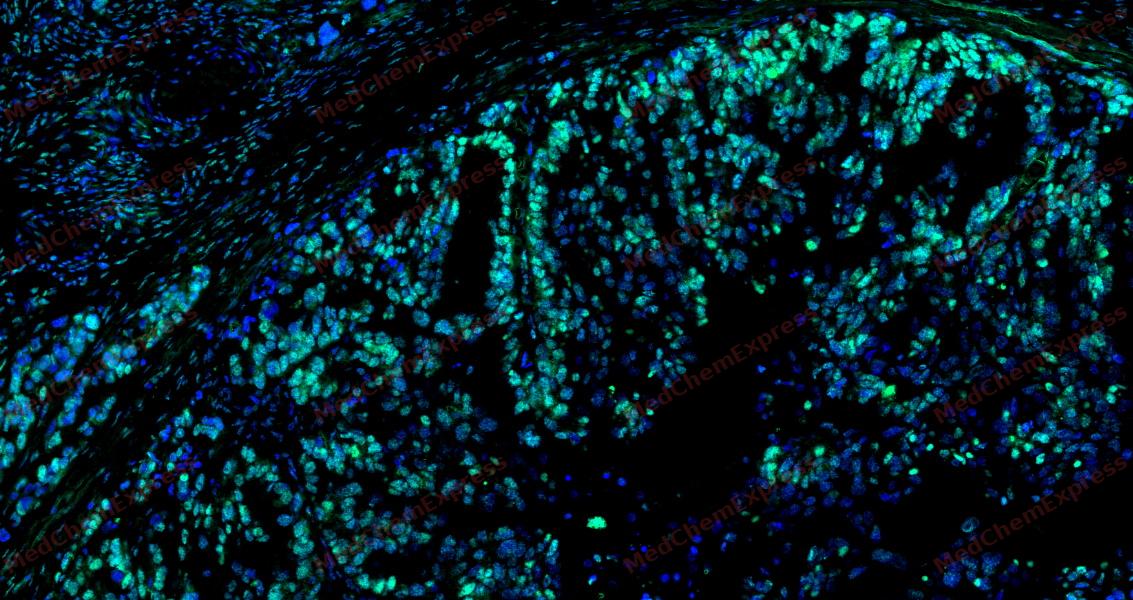
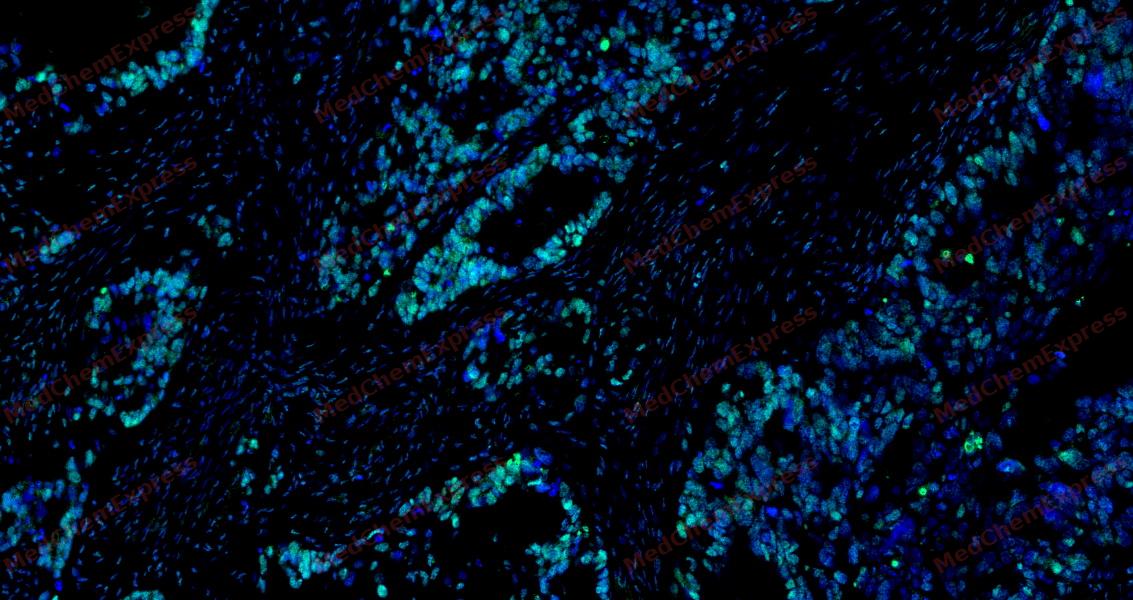
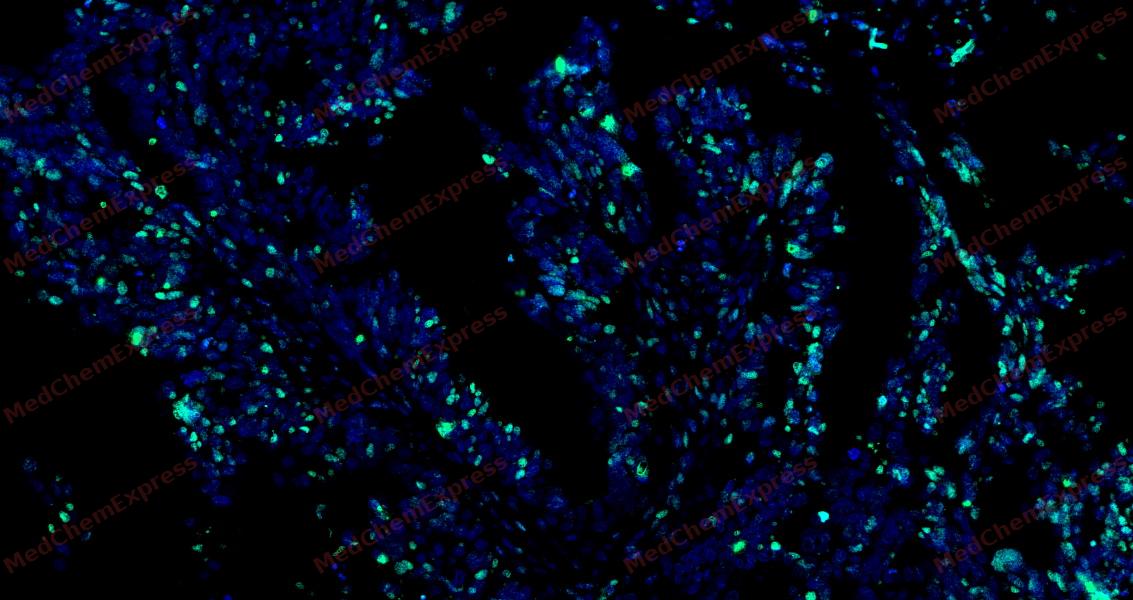
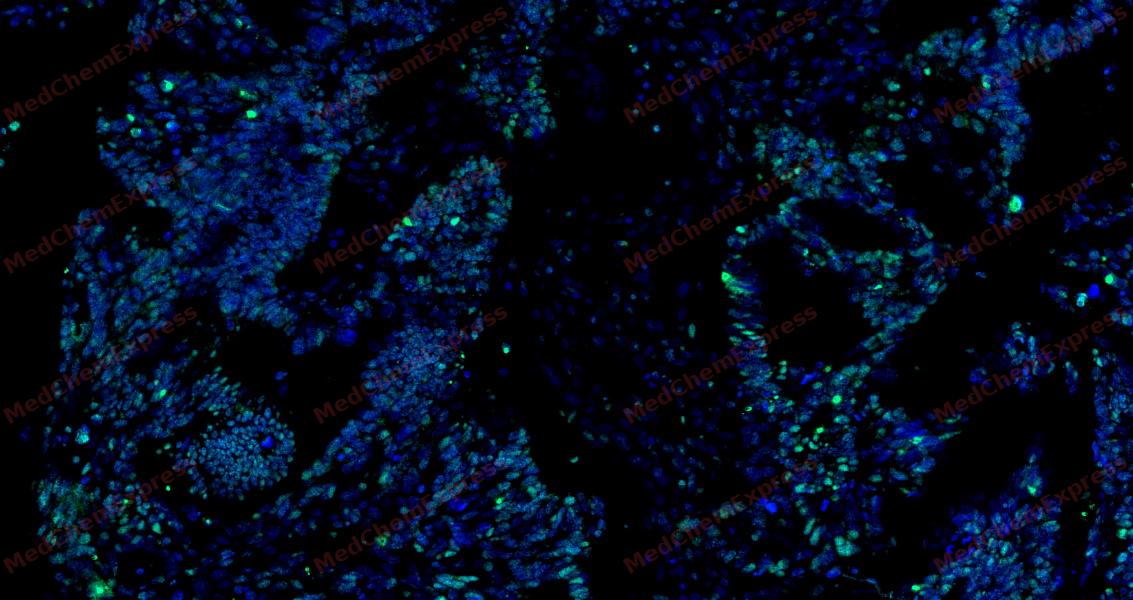
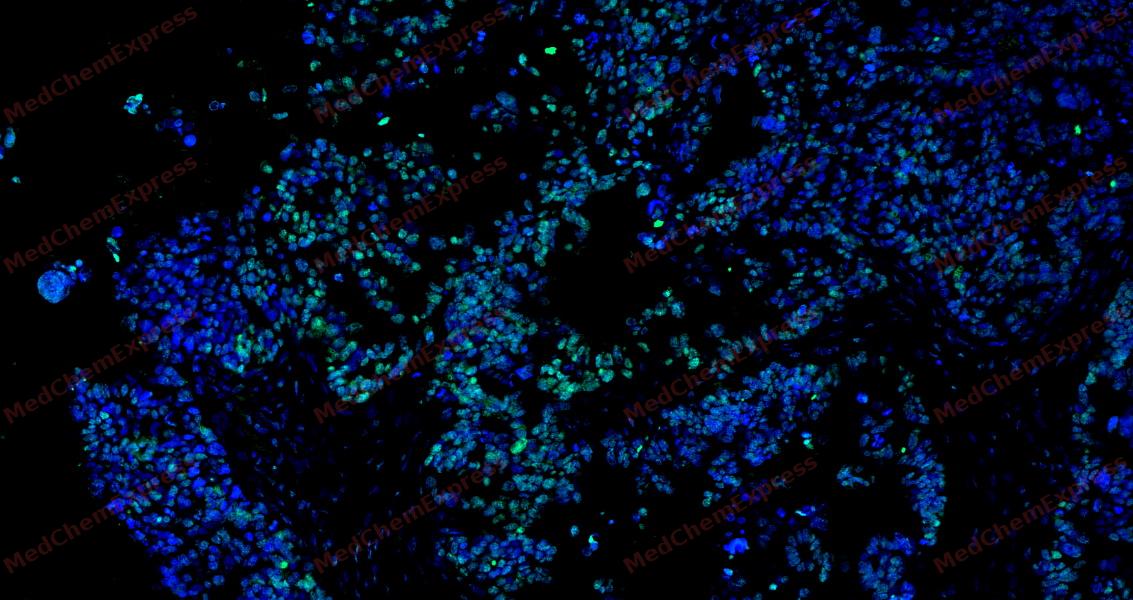
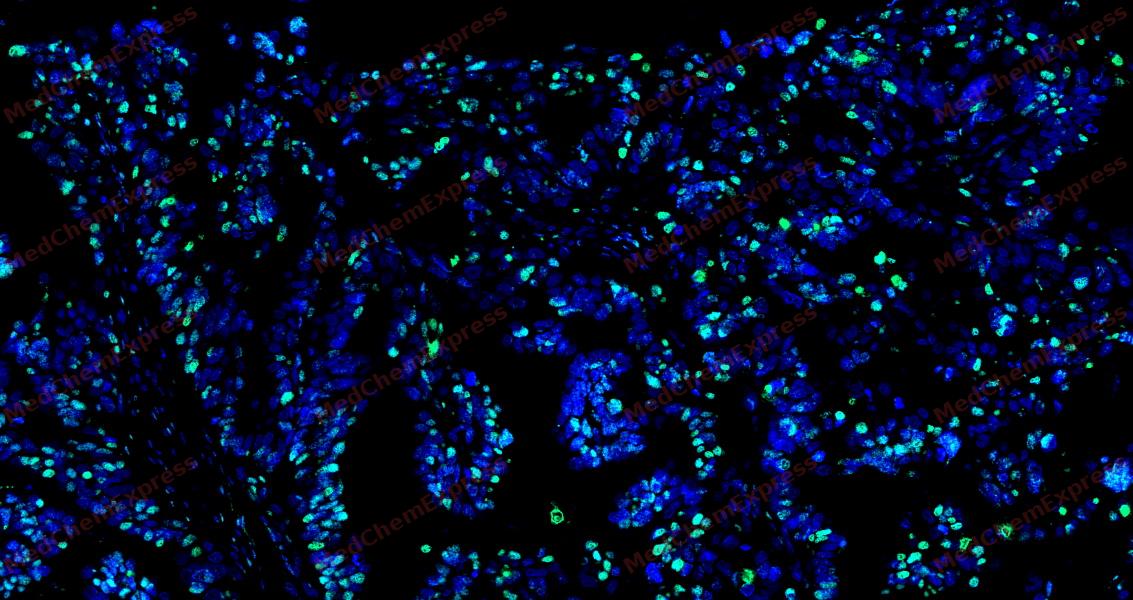
  • Tyramide signaling amplification based immunofluorescence was performed on paraffin-embedded human ovarian carcinoma tissue using Phospho-JAK2 (Tyr1007/1008) antibody. Antigen retrieval was performed in EDTA buffer pH 9.0 (95 °C, 20 min) followed by cooling to RT. Then incubated with primary antibody (HY-P80829, 1:200 dilution) at room temperature for 60 minutes and HRP conjugated secondary antibody for 10 minutes. Fluorescence was then developed with Vari Fluor 532 TSA (200×)(HY-D1832). The tissues were counterstained with DAPI and mounted with Anti-fade mounting medium.

  • Tyramide signaling amplification based immunofluorescence was performed on paraffin-embedded human ovarian carcinoma tissue using Phospho-JAK2 (Tyr1007/1008) antibody. Antigen retrieval was performed in EDTA buffer pH 9.0 (95 °C, 20 min) followed by cooling to RT. Then incubated with primary antibody (HY-P80829, 1:200 dilution) at room temperature for 60 minutes and HRP conjugated secondary antibody for 10 minutes. Fluorescence was then developed with Vari Fluor 532 TSA (200×)(HY-D1832). The tissues were counterstained with DAPI and mounted with Anti-fade mounting medium.

  • Tyramide signaling amplification based immunofluorescence was performed on paraffin-embedded human ovarian carcinoma tissue using Phospho-JAK2 (Tyr1007/1008) antibody. Antigen retrieval was performed in EDTA buffer pH 9.0 (95 °C, 20 min) followed by cooling to RT. Then incubated with primary antibody (HY-P80829, 1:200 dilution) at room temperature for 60 minutes and HRP conjugated secondary antibody for 10 minutes. Fluorescence was then developed with Vari Fluor 532 TSA (200×)(HY-D1832). The tissues were counterstained with DAPI and mounted with Anti-fade mounting medium.

  • Tyramide signaling amplification based immunofluorescence was performed on paraffin-embedded human ovarian carcinoma tissue using Phospho-JAK2 (Tyr1007/1008) antibody. Antigen retrieval was performed in EDTA buffer pH 9.0 (95 °C, 20 min) followed by cooling to RT. Then incubated with primary antibody (HY-P80829, 1:200 dilution) at room temperature for 60 minutes and HRP conjugated secondary antibody for 10 minutes. Fluorescence was then developed with Vari Fluor 532 TSA (200×)(HY-D1832). The tissues were counterstained with DAPI and mounted with Anti-fade mounting medium.

  • Tyramide signaling amplification based immunofluorescence was performed on paraffin-embedded human ovarian carcinoma tissue using Phospho-JAK2 (Tyr1007/1008) antibody. Antigen retrieval was performed in EDTA buffer pH 9.0 (95 °C, 20 min) followed by cooling to RT. Then incubated with primary antibody (HY-P80829, 1:200 dilution) at room temperature for 60 minutes and HRP conjugated secondary antibody for 10 minutes. Fluorescence was then developed with Vari Fluor 532 TSA (200×)(HY-D1832). The tissues were counterstained with DAPI and mounted with Anti-fade mounting medium.

  • Tyramide signaling amplification based immunofluorescence was performed on paraffin-embedded human ovarian carcinoma tissue using Phospho-JAK2 (Tyr1007/1008) antibody. Antigen retrieval was performed in EDTA buffer pH 9.0 (95 °C, 20 min) followed by cooling to RT. Then incubated with primary antibody (HY-P80829, 1:200 dilution) at room temperature for 60 minutes and HRP conjugated secondary antibody for 10 minutes. Fluorescence was then developed with Vari Fluor 532 TSA (200×)(HY-D1832). The tissues were counterstained with DAPI and mounted with Anti-fade mounting medium.

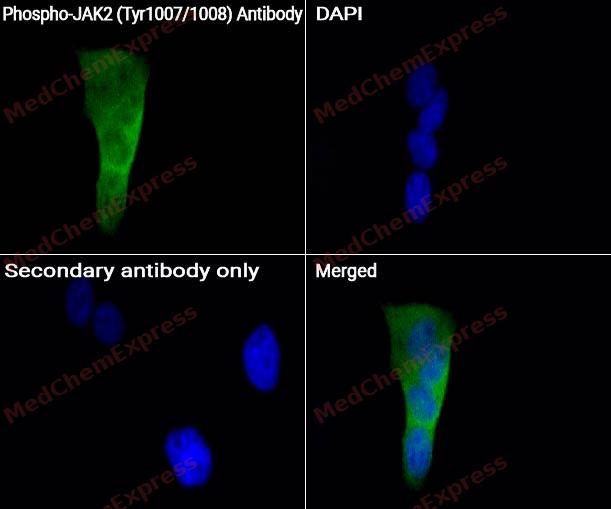
  • Immunocytochemistry analysis of HeLa cells labeling Phospho-JAK2 (Tyr1007/1008) with Phospho-JAK2 (Tyr1007/1008) Antibody (HY-P80829) at 1/50 dilution. Cells were fixed in 4% paraformaldehyde for 15 minutes at room temperature, permeabilized with 0.1% Triton X-100 in PBS for 15 minutes at room temperature, then blocked with quick block buffer for 10 minutes at room temperature. Cells were then incubated with Phospho-JAK2 (Tyr1007/1008) Antibody (HY-P80829) at 1/50 dilution in quick block buffer overnight at 4 ℃. AF488-conjugated Goat Anti-Rabbit IgG H&L(HY-P8002, Green) was used as the secondary antibody at 1/1,000 dilution. PBS instead of the primary antibody was used as the secondary antibody only control. The Nuclear counterstain was DAPI (Blue).

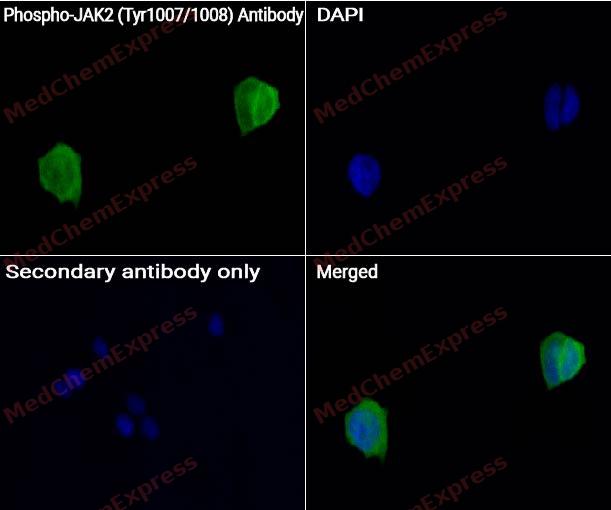
  • Immunocytochemistry analysis of HeLa cells labeling Phospho-JAK2 (Tyr1007/1008) with Phospho-JAK2 (Tyr1007/1008) Antibody (HY-P80829) at 1/100 dilution. Cells were fixed in 4% paraformaldehyde for 15 minutes at room temperature, permeabilized with 0.1% Triton X-100 in PBS for 15 minutes at room temperature, then blocked with quick block buffer for 10 minutes at room temperature. Cells were then incubated with Phospho-JAK2 (Tyr1007/1008) Antibody (HY-P80829) at 1/100 dilution in quick block buffer overnight at 4 ℃. AF488-conjugated Goat Anti-Rabbit IgG H&L(HY-P8002, Green) was used as the secondary antibody at 1/1,000 dilution. PBS instead of the primary antibody was used as the secondary antibody only control. The Nuclear counterstain was DAPI (Blue).

Background
Function:Non-receptor tyrosine kinase involved in various processes such as cell growth, development, differentiation or histone modifications. Mediates essential signaling events in both innate and adaptive immunity. In the cytoplasm, plays a pivotal role in signal transduction via its association with type I receptors such as growth hormone (GHR), prolactin (PRLR), leptin (LEPR), erythropoietin (EPOR), thrombopoietin receptor (MPL/TPOR); or type II receptors including IFN-alpha, IFN-beta, IFN-gamma and multiple interleukins (PubMed:15690087, PubMed:7615558, PubMed:9657743, PubMed:15899890). Following ligand-binding to cell surface receptors, phosphorylates specific tyrosine residues on the cytoplasmic tails of the receptor, creating docking sites for STATs proteins (PubMed:15690087, PubMed:9618263). Subsequently, phosphorylates the STATs proteins once they are recruited to the receptor. Phosphorylated STATs then form homodimer or heterodimers and translocate to the nucleus to activate gene transcription. For example, cell stimulation with erythropoietin (EPO) during erythropoiesis leads to JAK2 autophosphorylation, activation, and its association with erythropoietin receptor (EPOR) that becomes phosphorylated in its cytoplasmic domain (PubMed:9657743). Then, STAT5 (STAT5A or STAT5B) is recruited, phosphorylated and activated by JAK2. Once activated, dimerized STAT5 translocates into the nucleus and promotes the transcription of several essential genes involved in the modulation of erythropoiesis. Part of a signaling cascade that is activated by increased cellular retinol and that leads to the activation of STAT5 (STAT5A or STAT5B) (PubMed:21368206). In addition, JAK2 mediates angiotensin-2-induced ARHGEF1 phosphorylation (PubMed:20098430). Plays a role in cell cycle by phosphorylating CDKN1B (PubMed:21423214). Cooperates with TEC through reciprocal phosphorylation to mediate cytokine-driven activation of FOS transcription. In the nucleus, plays a key role in chromatin by specifically mediating phosphorylation of 'Tyr-41' of histone H3 (H3Y41ph), a specific tag that promotes exclusion of CBX5 (HP1 alpha) from chromatin (PubMed:19783980). Up-regulates the potassium voltage-gated channel activity of KCNA3 (PubMed:25644777)
Subcellular Localization:Endomembrane system; Peripheral membrane protein; Cytoplasm; Nucleus
Expression:
Tissue_specificity:Commonly expressed in most organizations
Subunit:Interacts with EPOR, LYN, SIRPA, SH2B1 and TEC (By similarity). Interacts with IL23R (PubMed:12023369). Interacts with SKB1 (PubMed:10531356). Interacts with STAM2 (PubMed:10899310). Interacts with IFNGR2 (via intracellular domain) (PubMed:7615558, PubMed:7673114). Interacts with LEPR (Isoform B) (By similarity). Interacts with HSP90AB1; promotes functional activation in a heat shock-dependent manner (PubMed:20353823). Interacts with STRA6 (PubMed:21368206). Interacts with RHEX; this interaction occurs in a erythropoietin (EPO)-dependent manner (PubMed:25092874). Interacts with ASB2; the interaction targets JAK2 for Notch-induced proteasomal degradation (PubMed:21119685). Interacts with MPL/TPOR (PubMed:15899890)
RRID
Database
Research Field

Cell Biology

Synonyms
JAK2; Tyrosine-protein kinase JAK2; Janus kinase 2; JAK-2
Documentation
Help & FAQs
  • Do most proteins show cross-species activity?

    Species cross-reactivity must be investigated individually for each product. Many human cytokines will produce a nice response in mouse cell lines, and many mouse proteins will show activity on human cells. Other proteins may have a lower specific activity when used in the opposite species.

Your Recently Viewed Products:

Inquiry Online

Your information is safe with us. * Required Fields.

Product Name


Requested Quantity *

Applicant Name *


Salutation

Email Address *


Phone Number *

Department


Organization Name *

City

State

Country or Region *


Remarks

Bulk Inquiry

Inquiry Information

Product Name:
Phospho-JAK2 (Tyr1007/1008) Antibody
Cat. No.:
HY-P80829
Quantity:
MCE Japan Authorized Agent: