



Aristolochic acid A
Based on 12 publication(s) in Google Scholar
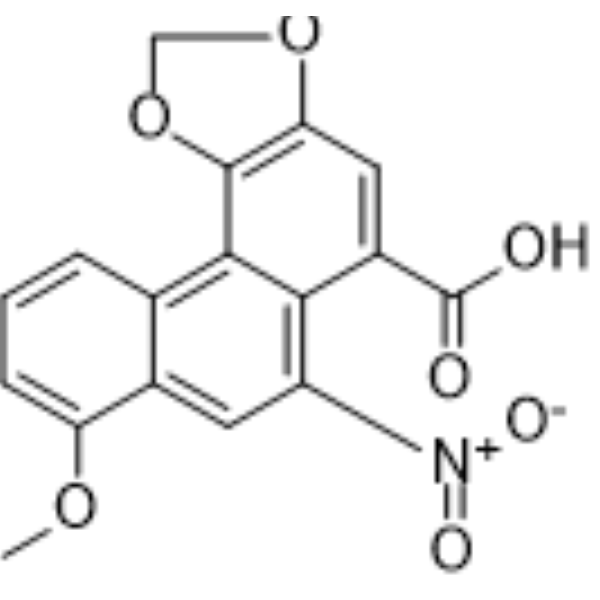
Aristolochic acid A (Aristolochic acid I; TR 1736) is the main component of plant extract Aristolochic acids, which are found in various herbal plants of genus Aristolochia and Asarum. Aristolochic acid A significantly reduces both activator protein 1 (AP-1) and NF-κB activities. Aristolochic acid A reduces BLCAP gene expression in human cell lines.
For research use only. We do not sell to patients.
- Purity : 99.91%
- CAS No.: 313-67-7
- Formula: C17H11NO7
- Molecular Weight:341.27
-
Storage:
4°C, protect from light
* In solvent : -80°C, 1 year; -20°C, 6 months (protect from light)

To place orders, for customer services and technical support, please contact: MedChemExpress USA
Tel: 609-228-6898 E-mail: [email protected] [email protected]


-
 Biological Activity
-
Chemical Information
-
Solvent & Solubility
- Protocols
- Purity & Documentation
- References
-
 Help & FAQs


-
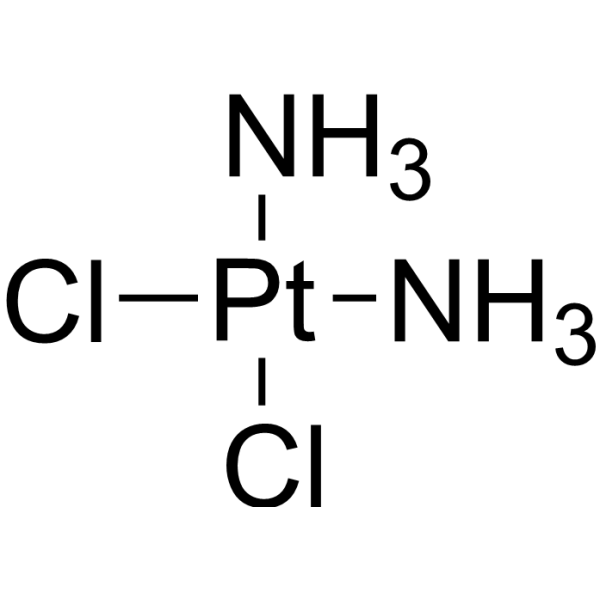
HY-17394
CisplatinDNA Alkylator -
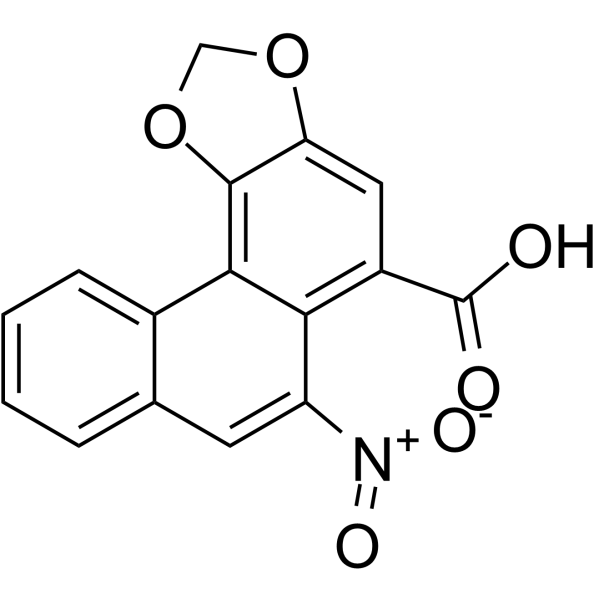
HY-N0511
Aristolochic acid BBioactive Alkaloid -
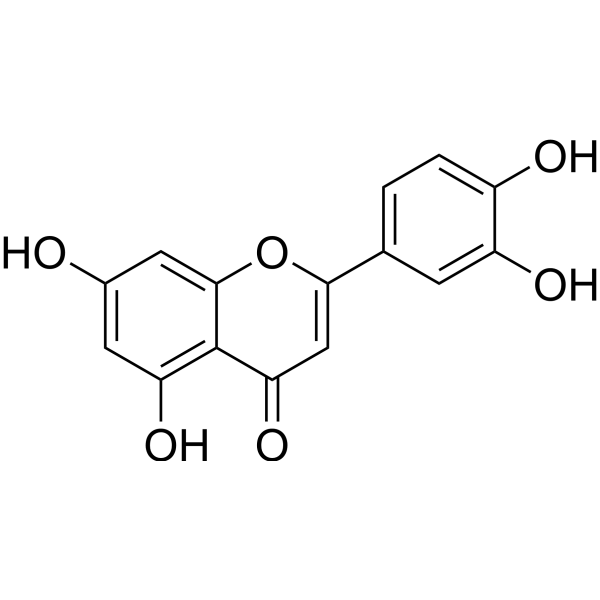
HY-N0162
LuteolinNrf2 Inhibitor -
HY-B0579
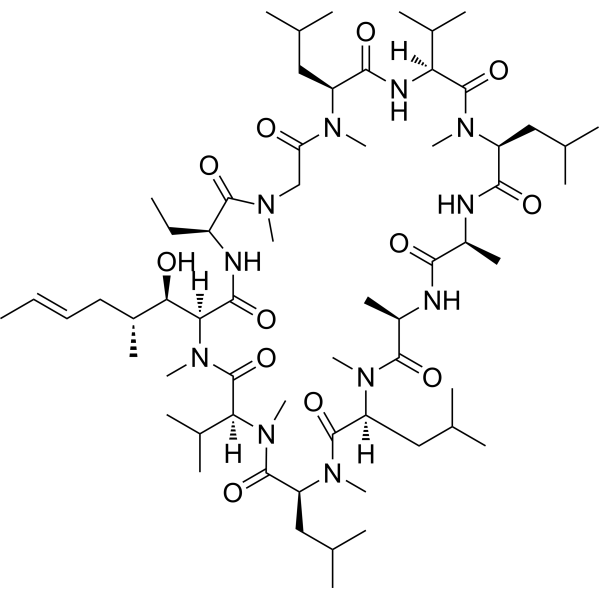
Cyclosporin ACalcineurin Inhibitor -
HY-15142
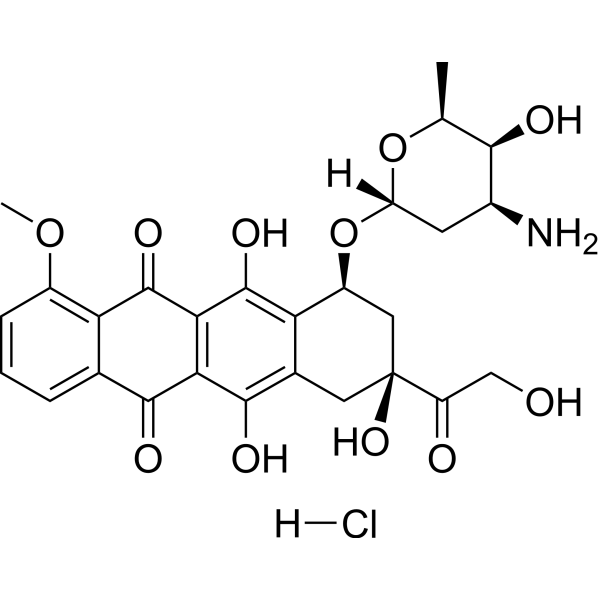
Doxorubicin hydrochlorideTopoisomerase Inhibitor -
HY-10219
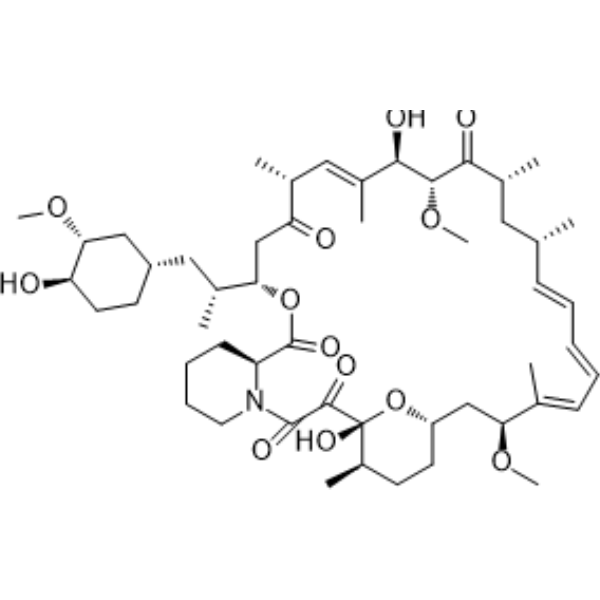
RapamycinmTOR Inhibitor -
HY-B1221
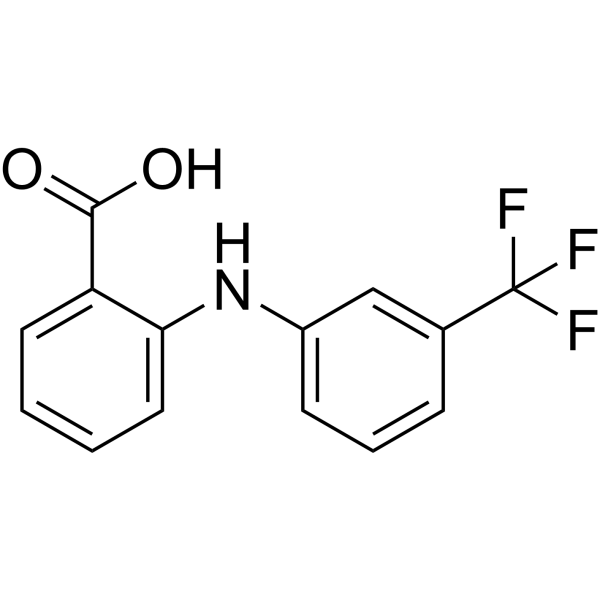
Flufenamic acidCOX Inhibitor -
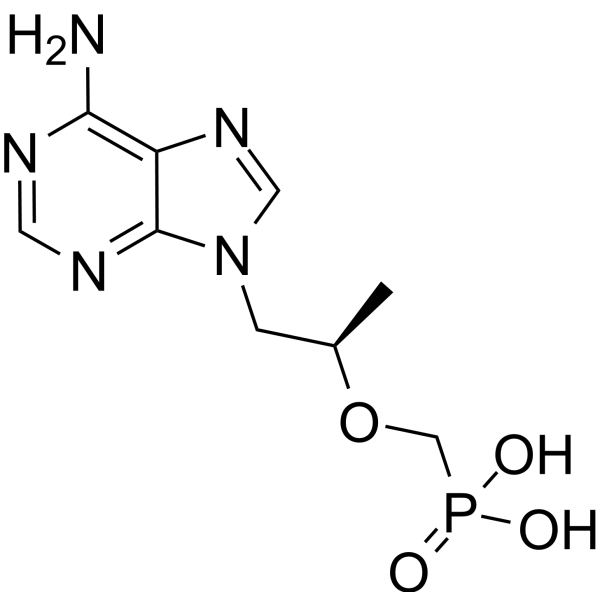
HY-13910
TenofovirNucleotide Reverse Transcriptase Inhibitor -
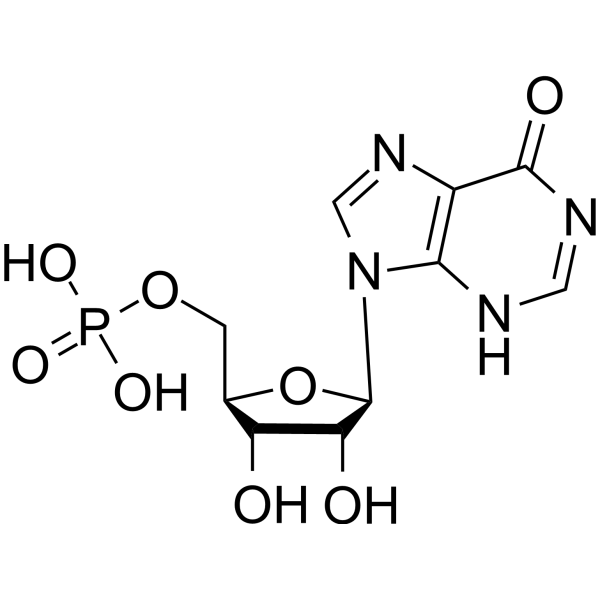
HY-108213
Inosinic acidNatural Product -

HY-N0510R
Aristolochic acid A (Standard)NF-κB Inhibitor -

HY-E0264
Rodent Gnawing BlocksRodent Gnawing Block -
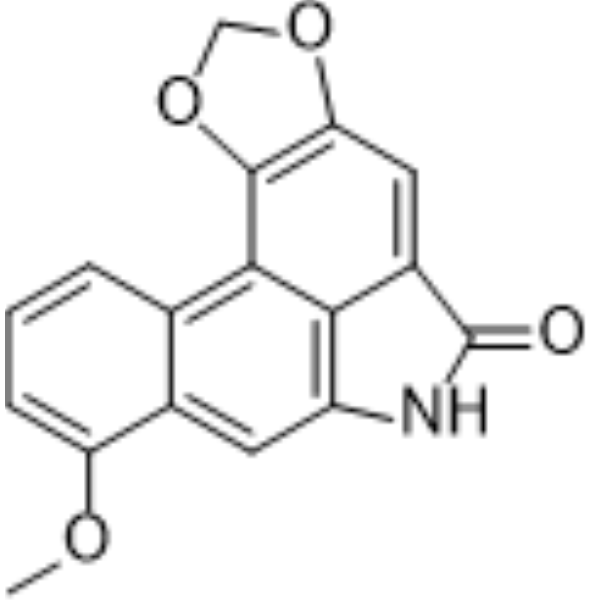
HY-N2013
Aristolactam IAQP1 Inhibitor
Publications Citing Use of MedChemExpress (MCE) Aristolochic acid A
More- Nature. 2024 Jul;631(8020):459-466. [Abstract]
- Cell Rep. 2024 Oct 10;43(10):114830. [Abstract]
- Acupunct Herb Med. 2025 July 31.
- Life Sci. 2026 Jun 27:402:124556. [Abstract]
- Precis Clin Med. 2022 Sep 22;5(4):pbac023. [Abstract]
- Int J Mol Sci. 2024 May 8;25(10):5124. [Abstract]
- Toxicol Lett. 2024 Apr:394:76-91. [Abstract]
- Chin J Integr Med. 2022 Jul;28(7):603-611. [Abstract]
- Front Genet. 2022 Mar 25;13:840961. [Abstract]
- Drug Chem Toxicol. 2026 Jul;49(4):952-966.
- bioRxiv. 2024 Apr 15.
- Authorea. 2023 Feb 17.
 Customer Validation & Images

-
Bio/Physico-chemical Assay
-
In Vivo Efficacy Study
-
Histological Imaging/Staining
-
In Vivo Efficacy Study
-
IF


Biological Activity
Description
Cellular Effect
|
Cell Line

|
Type | Value | Description | References |
|---|---|---|---|---|
| HEK293 | EC50 |
118.34 μM
Compound: Aristolochic acid
|
Cytotoxicity in HEK293 cells assessed as reduction in cell survival incubated for 48 hrs by MTT assay
Cytotoxicity in HEK293 cells assessed as reduction in cell survival incubated for 48 hrs by MTT assay
|
[PMID: 30108751] |
| Neutrophil | IC50 |
>10 μg/mL
Compound: 4
|
Antiinflammatory activity in human neutrophils assessed as inhibition of fMLP/CB-induced elastase release after 5 mins
Antiinflammatory activity in human neutrophils assessed as inhibition of fMLP/CB-induced elastase release after 5 mins
|
[PMID: 21353775] |
| Neutrophil | IC50 |
>10 μg/mL
Compound: 4
|
Antiinflammatory activity in human neutrophils assessed as inhibition of fMLP/CB-induced superoxide anion generation after 5 mins
Antiinflammatory activity in human neutrophils assessed as inhibition of fMLP/CB-induced superoxide anion generation after 5 mins
|
[PMID: 21353775] |
| Panel NCI-60 (60 carcinoma cell lines) | GI50 |
883 nM
Compound: Aristolochic acid
|
Growth inhibitory activity against human cancer cell line in the NCI's anticancer drug screening program
Growth inhibitory activity against human cancer cell line in the NCI's anticancer drug screening program
|
[PMID: 15743190] |
In Vitro
Aristolochic acid A (150, 200 μM, 24 hours) inhibits the cell viabilities of kidney cells HEK293 and HK-2[1].
Aristolochic acid A (100, 200 μM, 24 hours) causes a concentration-dependent decrease in bladder cancer-associated protein (BLCAP) mRNA levels in kidney cells (HEK 293 and HK-2) , and bladder cancer cell line (HT-1376)[1].
Aristolochic acid A (100, 200 μM, 24 hours) weakens the BLCAP protein signals in a dose-dependent manner in both HEK293 and HT-1376 cells[1].
MedChemExpress (MCE) has not independently confirmed the accuracy of these methods. They are for reference only.
-
Cell Line:Kidney cells (HEK 293 and HK-2)
-
Concentration:50, 100, 150, 200 μM
-
Incubation Time:24 hours
-
Result:The cell viabilities of HEK293 and HK-2 were lower than that of vehicle-treated cultures until 150 μM and 200 μM.
-
Cell Line:Kidney cells (HEK 293 and HK-2), and bladder cancer cell line (HT-1376)
-
Concentration:100, 200 μM
-
Incubation Time:24 hours
-
Result:Down regulated the levels of BLCAP mRNA.
-
Cell Line:HEK293 and HT-1376 cells
-
Concentration:100, 200 μM
-
Incubation Time:24 hours
-
Result:Reduced the BLCAP protein expression in a dose-dependent manner.
Induced Disease Models
Please do not refer to only one article to determine the experimental conditions. It is recommended to determine the optimal experimental conditions (animal strain, age, dosage, frequency and cycle, detection time and indicators, etc.) through preliminary experiments before the formal experiment.
Aristolochic acid A can be used to induce nephrotoxicity models. Pharmacokinetic studies show that in male C57BL/6 mice, the concentration of Aristolochic acid A in the kidneys is higher than in the liver 30 minutes after intraperitoneal administration (10 mg/kg). The plasma concentration of Aristolochic acid A also peaks approximately 30 minutes after administration[2].
Administration: 10 mg/kg • i.p. • 3-5 days[3]
Biochemistry changes: Scr and blood urea nitrogen (BUN) contents increases
MedChemExpress (MCE) has not independently confirmed the accuracy of these methods. They are for reference only.


Chemical Information
-
CAS No. 313-67-7
-
Appearance Solid
-
Molecular Weight 341.27
-
Formula C17H11NO7
-
Color Light yellow to orange
-
SMILES
OC(C1=CC2=C(OCO2)C3=C4C(C(OC)=CC=C4)=CC([N+]([O-])=O)=C31)=O
-
Synonyms
Aristolochic acid I; TR 1736
-
Structure Classification
-
Shipping
Room temperature in continental US; may vary elsewhere.
-
Storage
4°C, protect from light
* In solvent : -80°C, 1 year; -20°C, 6 months (protect from light)


Publications (12)
-
Journal Impact Factor
-
Most Recent
-
Nature
2024 Jul;631(8020):459-466. PMID: 38776963
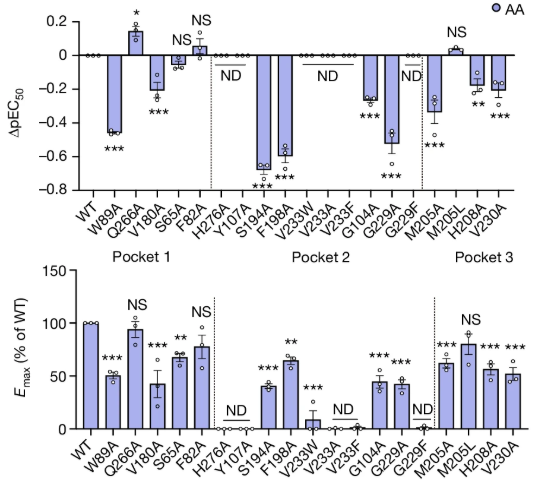
Aristolochic acid A purchased from MedChemExpress. Usage Cited in: Nature. 2024 Jul;631(8020):459-466. [Abstract]
FLIPR Ca2+ assay responses in wild-type (WT) TAS2R14 and mutants in pockets 1, 2 and 3, following Aristolochic acid A (150 μM) stimulation. The negative logarithmic half-maximal effective concentration (pEC50) and the maximum response (Emax) values were calculated from the concentration–response curves.
-
Cell Rep
Gut Bacteroides ovatus ameliorates renal fibrosis by promoting the production of HDCA through upregulation of Clostridium scindens. [Abstract]2024 Oct 10;43(10):114830. PMID: 39392759 -
-
Life Sci
Soluble PD-1 drives renal fibrosis in CKD by disrupting immune homeostasis: Therapeutic mitigation via a targeted sPD-1 sequestration strategy. [Abstract]2026 Jun 27:402:124556. PMID: 42364692 -
Precis Clin Med
Dissection of cellular and molecular mechanisms of aristolochic acid-induced hepatotoxicity via single-cell transcriptomics. [Abstract]2022 Sep 22;5(4):pbac023. PMID: 36349141
Aristolochic acid A purchased from MedChemExpress. Usage Cited in: Precis Clin Med. 2022 Sep 22;5(4):pbac023. [Abstract]
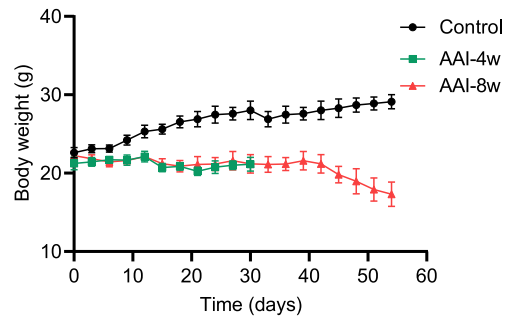
Aristolochic acid A (AAI, 2 mg/kg/day). Body weight of mice in Control, AAI-4w, and AAI-8w groups.
Aristolochic acid A purchased from MedChemExpress. Usage Cited in: Precis Clin Med. 2022 Sep 22;5(4):pbac023. [Abstract]
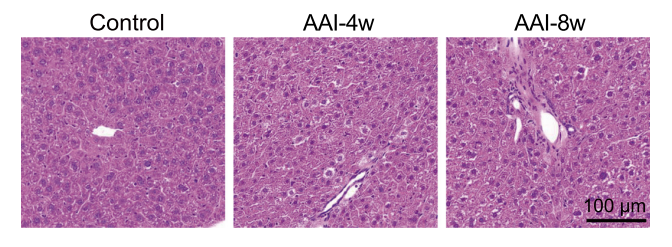
Aristolochic acid A (AAI, 2 mg/kg/day, 4 or 8 weeks). H&E staining showed pathological changes of mice livers after AAI treatment, scale bar = 100 μm.
Aristolochic acid A purchased from MedChemExpress. Usage Cited in: Precis Clin Med. 2022 Sep 22;5(4):pbac023. [Abstract]
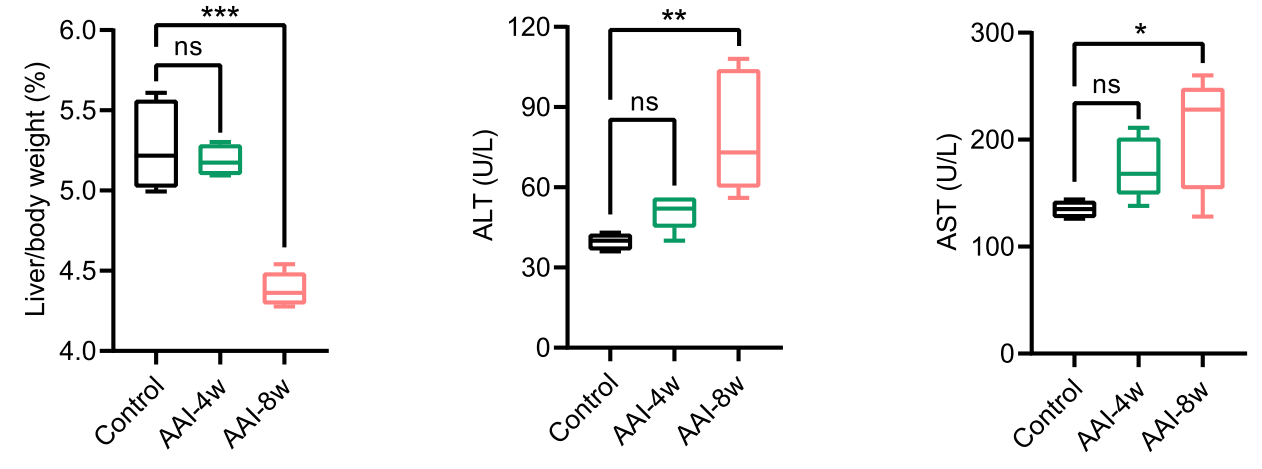
Aristolochic acid A (AAI, 2 mg/kg/day, 4 or 8 weeks). Liver/body weight ratio after AAI treatment (n = 5, ***P < 0.001, ns = not significant). Effects of AAI on the levels of serum ALT and AST in the indicated groups (n = 5, *P < 0.05, **P < 0.01, ns = not significant).
Aristolochic acid A purchased from MedChemExpress. Usage Cited in: Precis Clin Med. 2022 Sep 22;5(4):pbac023. [Abstract]
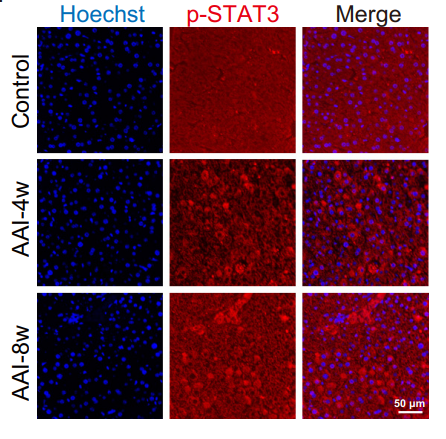
Aristolochic acid A (AAI, 2 mg/kg/day, 4 or 8 weeks). IF staining of p-STAT3 (red) in the three groups, and the nuclei were stained by Hoechst (blue), scale bar = 50 µm.
Aristolochic acid A purchased from MedChemExpress. Usage Cited in: Precis Clin Med. 2022 Sep 22;5(4):pbac023. [Abstract]
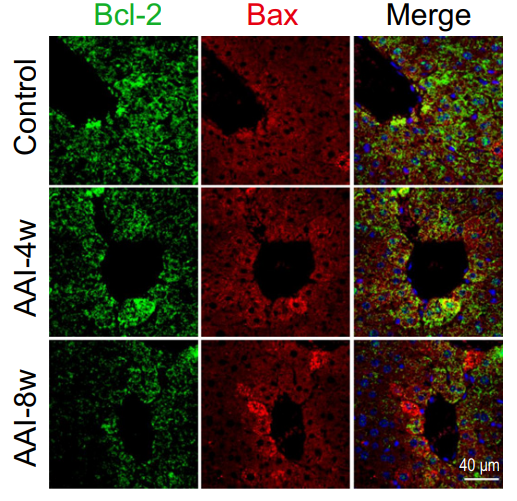
Aristolochic acid A (AAI, 2 mg/kg/day, 4 or 8 weeks). IF staining of Bcl-2 (green) and Bax (Red) to detect endothelial cell apoptosis in the three groups, the nucleus was labelled by Hoechst (blue), scale bar = 40 µm.
Aristolochic acid A purchased from MedChemExpress. Usage Cited in: Precis Clin Med. 2022 Sep 22;5(4):pbac023. [Abstract]
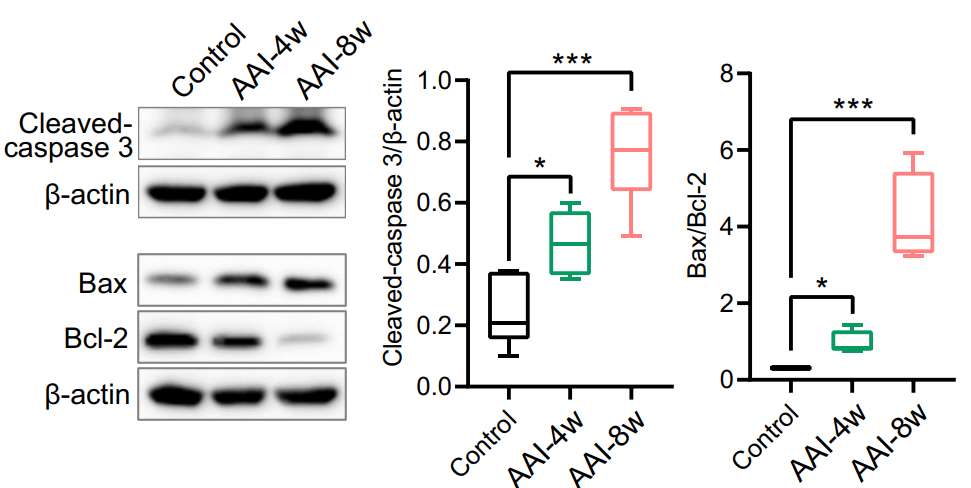
Aristolochic acid A (AAI, 2 mg/kg/day, 4 or 8 weeks). Western blot was used to detect the expression of apoptotic signaling pathway-related markers cleaved-caspase 3, Bax, and Bcl-2 in liver tissues after AAI treatment.
-
Int J Mol Sci
Serum Amyloid A3 Promoter-Luciferase Reporter Mice Are Useful for Early Drug-Induced Nephrotoxicity Detection. [Abstract]2024 May 8;25(10):5124. PMID: 38791162 -
Toxicol Lett
2024 Apr:394:76-91. PMID: 38428544 -
Chin J Integr Med
Schisandra chinensis Oil Attenuates Aristolochic Acid I-Induced Nephrotoxicity in vivo and in vitro. [Abstract]2022 Jul;28(7):603-611. PMID: 35391592 -
Front Genet
Integration of Transcriptomic and Metabolomic Data to Compare the Hepatotoxicity of Neonatal and Adult Mice Exposed to Aristolochic Acid I. [Abstract]2022 Mar 25;13:840961. PMID: 35401701 -
-
-


Solvent & Solubility
In Vitro:
DMSO : 16.67 mg/mL (48.85 mM; Need ultrasonic; Hygroscopic DMSO has a significant impact on the solubility of product, please use newly opened DMSO)
Please refer to the solubility information to select the appropriate solvent. Once prepared, please aliquot and store the solution to prevent product inactivation from repeated freeze-thaw cycles.
Storage method and period of stock solution: -80°C, 1 year; -20°C, 6 months (protect from light). When stored at -80°C, please use it within 1 year. When stored at -20°C, please use it within 6 months.
Please refer to the solubility information to select the appropriate solvent. Once prepared, please aliquot and store the solution to prevent product inactivation from repeated freeze-thaw cycles.
Storage method and period of stock solution: -80°C, 1 year; -20°C, 6 months (protect from light). When stored at -80°C, please use it within 1 year. When stored at -20°C, please use it within 6 months.
Concentration (start) × Volume (start) = Concentration (final) × Volume (final)
In Vivo:
Select the appropriate dissolution method based on your experimental animal and administration route.
- For the following dissolution methods, please ensure to first prepare a clear stock solution using an In Vitro approach and then sequentially add co-solvents:
- To ensure reliable experimental results, the clarified stock solution can be appropriately stored based on storage conditions. As for the working solution for In Vivo experiments, it is recommended to prepare freshly and use it on the same day.
- The percentages shown for the solvents indicate their volumetric ratio in the final prepared solution. If precipitation or phase separation occurs during preparation, heat and/or sonication can be used to aid dissolution.
Add each solvent one by one: 10% DMSO 40% PEG300 5% Tween-80 45% Saline
Solubility: ≥ 2.08 mg/mL (6.09 mM); Clear solution
This protocol yields a clear solution of ≥ 2.08 mg/mL (saturation unknown).
Taking 1 mL working solution as an example, add 100 μL DMSO stock solution (20.8 mg/mL) to 400 μL PEG300, and mix evenly; then add 50 μL Tween-80 and mix evenly; then add 450 μL Saline to adjust the volume to 1 mL.
Preparation of Saline: Dissolve 0.9 g sodium chloride in ddH₂O and dilute to 100 mL to obtain a clear Saline solution.
In Vivo Dissolution Calculator
Please enter the basic information of animal experiments:
-
-
-
-
Recommended: Prepare an additional quantity of animals to account for potential losses during experiments.
Please enter your animal formula composition:
-
%DMSO +
Recommended: Keep the proportion of DMSO in working solution below 2% if your animal is weak.
-
%+
-
+%Tween-80 + +
-
%Saline +
The co-solvents required include: DMSO, . All of co-solvents are available by MedChemExpress (MCE). , Tween 80. All of co-solvents are available by MedChemExpress (MCE).
Working solution concentration: 0.22 mg/mL
Method for preparing stock solution: mg drug dissolved in μL DMSO. Stock solution concentration: mg/mL. * In solvent : -80°C, 1 year; -20°C, 6 months (protect from light)
1. Take μL DMSO stock solution;
2. Add μL .
μL , mix evenly;
3. Then add μL Tween 80, mix evenly;
4. Then add μL
Please ensure that the stock solution in the first step is dissolved to a clear state, and add co-solvents in sequence. You can use ultrasonic heating (ultrasonic cleaner, recommended frequency 20-40 kHz), vortexing, etc. to assist dissolution.


Purity & Documentation
-
Data Sheet (287 KB)
-
SDS (643 KB)
- English - EN (643 KB)
- Français - FR (643 KB)
- Deutsch - DE (643 KB)
- Norwegian - NO (643 KB)
- Español - ES (643 KB)
- Swedish - SV (643 KB)
- Italian - IT (643 KB)
- Korean - KR (643 KB)
- Portuguese - PT (643 KB)
-
Handling Instructions (2659 KB)
References
[1]. Huang YT, et al. Aristolochic acid I interferes with the expression of BLCAP tumor suppressor gene in human cells. Toxicol Lett. 2018 Jul;291:129-137. [Content Brief]
[2]. Chenchen Feng, et al. Tanshinone I protects mice from aristolochic acid I-induced kidney injury by induction of CYP1A. Environ Toxicol Pharmacol. 2013 Nov;36(3):850-7. [Content Brief]
[3]. Youjia Zeng, et al. Autophagy inhibitors promoted aristolochic acid I induced renal tubular epithelial cell apoptosis via mitochondrial pathway but alleviated nonapoptotic cell death in mouse acute aritolochic acid nephropathy model. Apoptosis. 2014 Aug;19(8):1215-24. [Content Brief]


Complete Stock Solution Preparation Table
Please refer to the solubility information to select the appropriate solvent. Once prepared, please aliquot and store the solution to prevent product inactivation from repeated freeze-thaw cycles.
Storage method and period of stock solution: -80°C, 1 year; -20°C, 6 months (protect from light). When stored at -80°C, please use it within 1 year. When stored at -20°C, please use it within 6 months.
| Optional Solvent | Concentration Solvent Mass | 1 mg | 5 mg | 10 mg | 25 mg |
|---|---|---|---|---|---|
| DMSO | 1 mM | 2.9302 mL | 14.6512 mL | 29.3023 mL | 73.2558 mL |
| 5 mM | 0.5860 mL | 2.9302 mL | 5.8605 mL | 14.6512 mL | |
| 10 mM | 0.2930 mL | 1.4651 mL | 2.9302 mL | 7.3256 mL | |
| 15 mM | 0.1953 mL | 0.9767 mL | 1.9535 mL | 4.8837 mL | |
| 20 mM | 0.1465 mL | 0.7326 mL | 1.4651 mL | 3.6628 mL | |
| 25 mM | 0.1172 mL | 0.5860 mL | 1.1721 mL | 2.9302 mL | |
| 30 mM | 0.0977 mL | 0.4884 mL | 0.9767 mL | 2.4419 mL | |
| 40 mM | 0.0733 mL | 0.3663 mL | 0.7326 mL | 1.8314 mL |


Aristolochic acid A Related Classifications
HY-N0510 Related Classifications
 Powered by Bioz
Keywords