



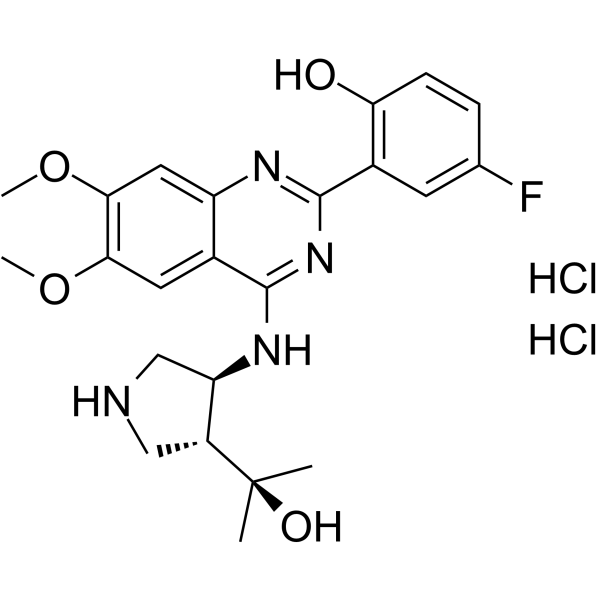
CCT241533 dihydrochloride
Based on 6 publication(s) in Google Scholar
CCT241533 dihydrochloride is a potent and selective ATP competitive inhibitor of CHK2 with an IC50 of 3 nM and Ki of 1.16 nM.
For research use only. We do not sell to patients.
- CAS No.: 1962925-28-5
- Formula: C23H29Cl2FN4O4
- Molecular Weight:515.41
-
Storage:
Please store the product under the recommended conditions in the Certificate of Analysis.

To place orders, for customer services and technical support, please contact: MedChemExpress USA
Tel: 609-228-6898 E-mail: [email protected] [email protected]


-
 Biological Activity
-
Chemical Information
- Protocols
- Purity & Documentation
- References
-
 Help & FAQs


-
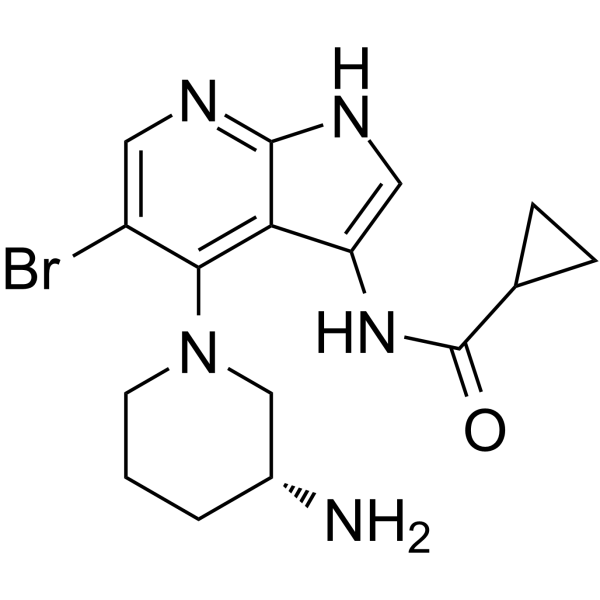
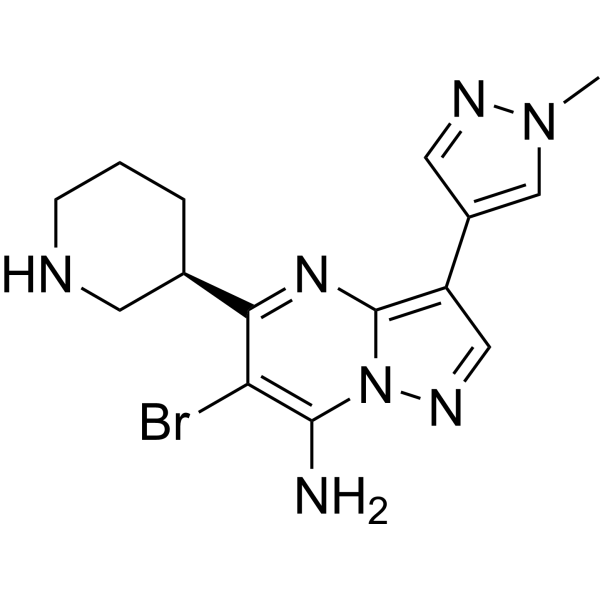
HY-112167
GDC-0575Chk1 Inhibitor -
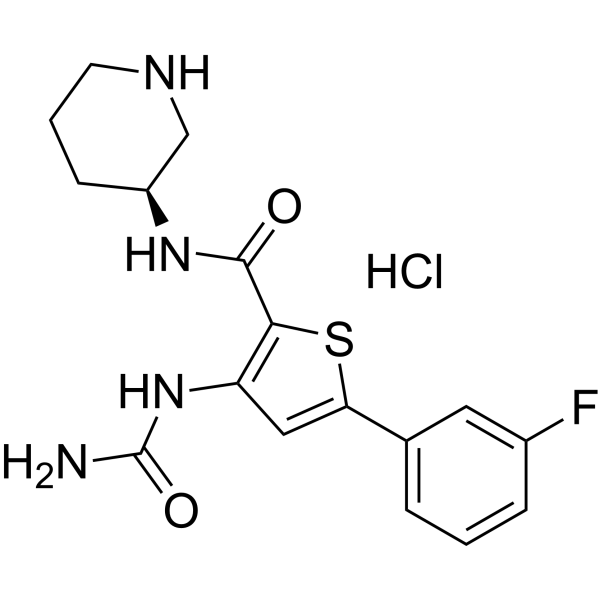
HY-10992A
AZD-7762 hydrochlorideChk Inhibitor -
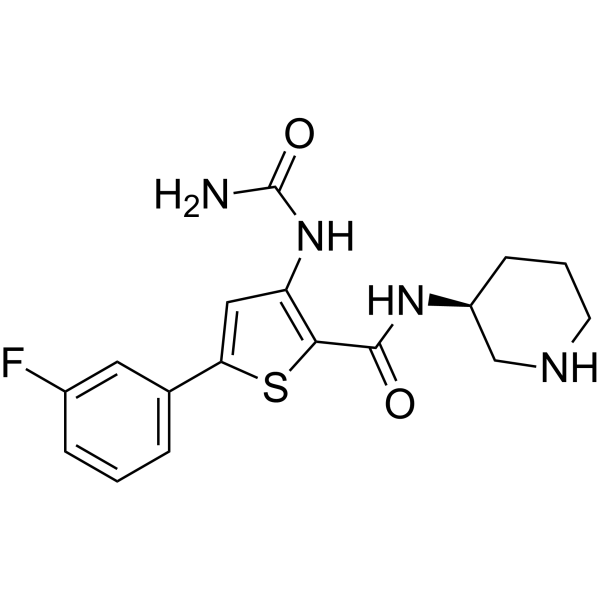
HY-10992
AZD-7762Chk Inhibitor -
HY-14715B
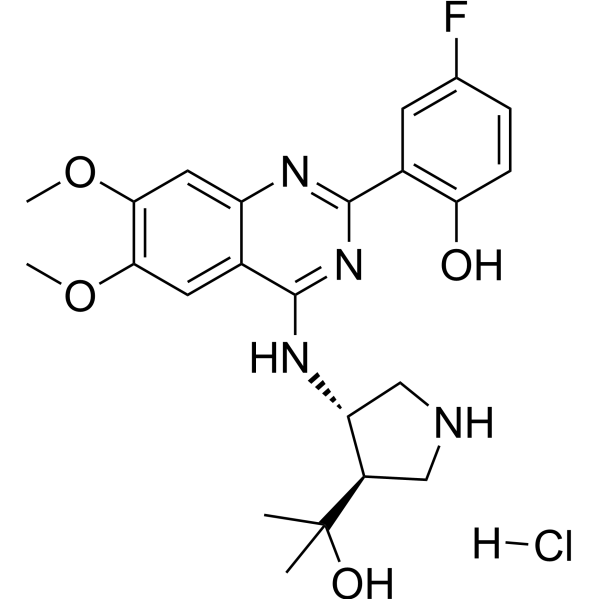
CCT241533 hydrochlorideCHK2 Inhibitor -
HY-18174
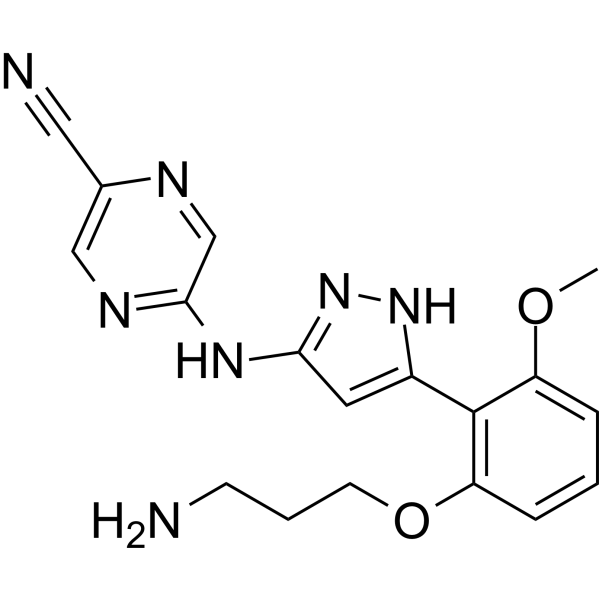
PrexasertibCHK1 Inhibitor -
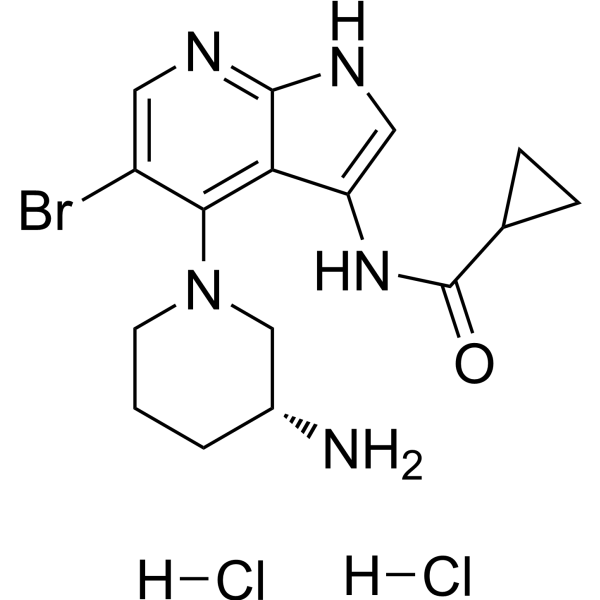
HY-18958
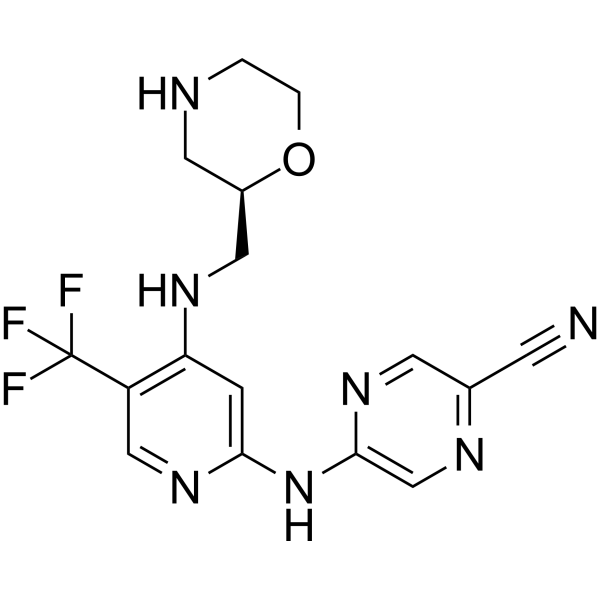
CCT245737CHK1 Inhibitor -
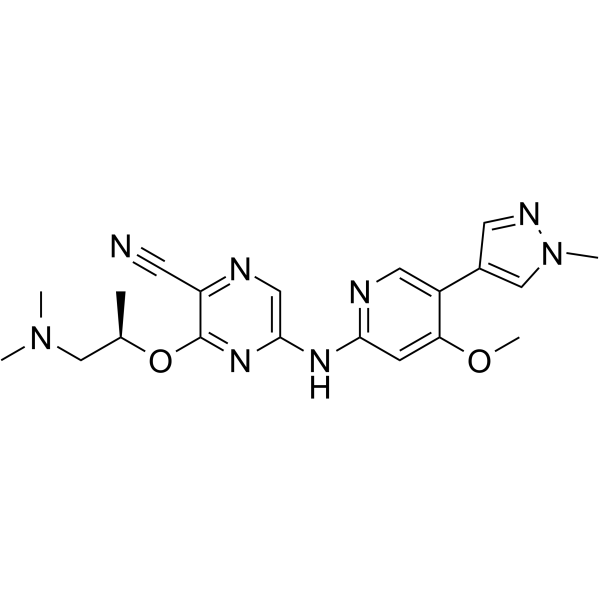
HY-19926
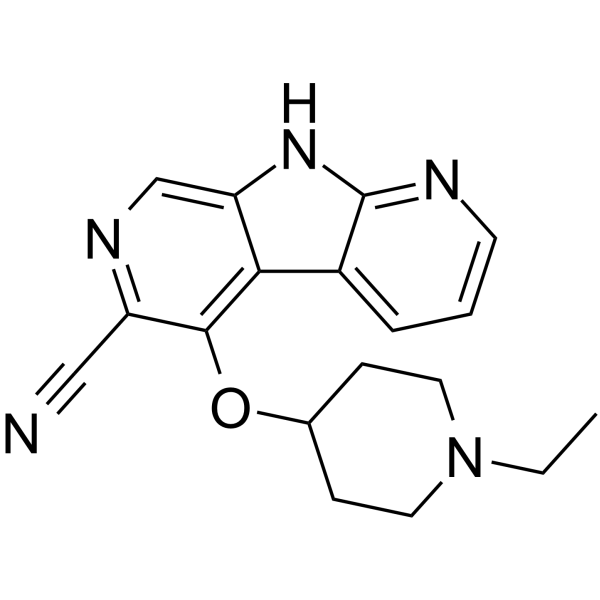
GDC-0425ChK1 Inhibitor -
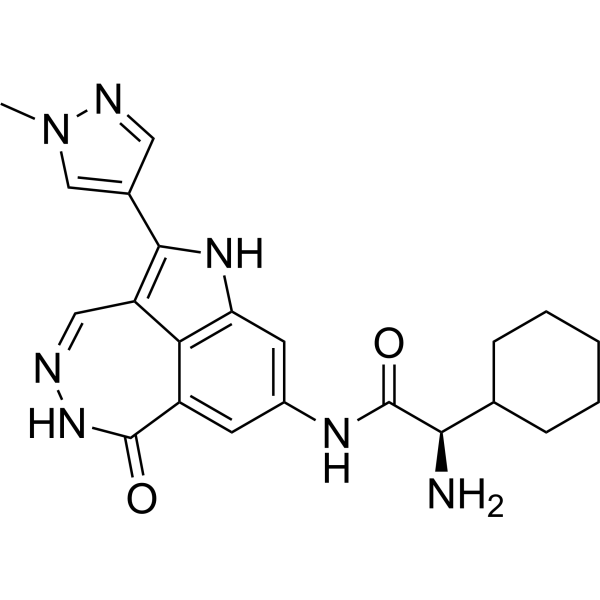
HY-15532
SCH900776CHK1 Inhibitor -
HY-112167A
GDC-0575 dihydrochlorideCHK1 Inhibitor -
HY-10032
PF 477736Chk1 Inhibitor -
HY-18175
CCT244747 -
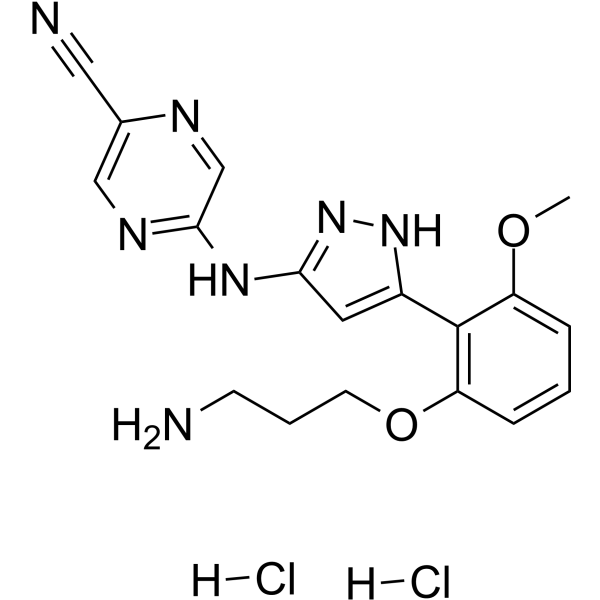
HY-18174A
Prexasertib dihydrochlorideCHK1 Inhibitor
Publications Citing Use of MedChemExpress (MCE) CCT241533 dihydrochloride
More- Nat Commun. 2026 Feb 12;17(1):1214. [Abstract]
- Cell Death Differ. 2021 Jul;28(7):2060-2082. [Abstract]
- J Chem Inf Model. 2017 Nov 27;57(11):2699-2706. [Abstract]
- J Cell Biol. 2021 Feb 1;220(2):e201911025. [Abstract]
- Int J Mol Sci. 2022 Oct 14;23(20):12290. [Abstract]
- University of Califomia San Francisco. 2026.
 Customer Validation & Images

-
Others


Biological Activity
Description
IC50 & Target
[1]|
Chk2 3 nM (IC50) |
Chk1 245 nM (IC50) |
Chk2 1.16 nM (Ki) |
In Vitro
CCT241533 inhibits CHK2 with an IC50 of 3 nM and shows minimal cross reactivity against a panel of kinases at 1 μM. X-ray crystallography confirms that CCT241533 binds to CHK2 in the ATP pocket. CCT241533 blocks CHK2 activity in human tumor cell lines in response to DNA damage, as demonstrated by inhibition of CHK2 autophosphorylation at S516, band-shift mobility changes and HDMX degradation. CCT241533 does not potentiate the cytotoxicity of a selection of genotoxic agents in several cell lines. However, CCT241533 significantly potentiates the cytotoxicity of two structurally distinct PARP inhibitors. Clear induction of the pS516 CHK2 signal is seen with a PARP inhibitor alone and this activation is abolished by CCT241533. The cytotoxicity of CCT241533 in HT-29, HeLa and MCF-7, measured as the growth inhibitory IC50(GI50) by SRB assay, is 1.7, 2.2 and 5.1 μM, respectively[1]. CCT241533 hydrochloride is a potent CHK2 inhibitor (IC50=3 nM), with selectivity (63-fold) over CHK1(IC50=190 nM) and low hERG inhibition (IC50=22 μM)[2].
MedChemExpress (MCE) has not independently confirmed the accuracy of these methods. They are for reference only. Further protocols information, click here.


Chemical Information
-
CAS No. 1962925-28-5
-
Molecular Weight 515.41
-
Formula C23H29Cl2FN4O4
-
SMILES
FC1=CC(C2=NC3=CC(OC)=C(C=C3C(N[C@H]4[C@@H](CNC4)C(O)(C)C)=N2)OC)=C(C=C1)O.Cl.Cl
-
Shipping
Room temperature in continental US; may vary elsewhere.
-
Storage
Please store the product under the recommended conditions in the Certificate of Analysis.


Publications (6)
-
Journal Impact Factor
-
Most Recent
-
Nat Commun
Human iPSC-based Modeling of Pulmonary Fibrosis Reveals p300/CBP Inhibition Suppresses Alveolar Transitional Cell State. [Abstract]2026 Feb 12;17(1):1214. PMID: 41680175 -
Cell Death Differ
Control of replication stress and mitosis in colorectal cancer stem cells through the interplay of PARP1, MRE11 and RAD51. [Abstract]2021 Jul;28(7):2060-2082. PMID: 33531658 -
J Chem Inf Model
2017 Nov 27;57(11):2699-2706. PMID: 29035535 -
J Cell Biol
2021 Feb 1;220(2):e201911025. PMID: 33404607
CCT241533 dihydrochloride purchased from MedChemExpress. Usage Cited in: J Cell Biol. 2021 Feb 1;220(2):e201911025. [Abstract]
G1 cells were preincubated with AKT, CHK1, and CHK2 inhibitors (CCT241533 hydrochloride; 5 µM) for 1 h and then treated with IR. DMSR was determined in these cells 4 h after IR. Quantitation of microtubule length is shown
-
Int J Mol Sci
Checkpoint Kinase 2 Inhibition Can Reverse Tamoxifen Resistance in ER-Positive Breast Cancer. [Abstract]2022 Oct 14;23(20):12290. PMID: 36293165 -

Protocols
-
Cell Cytotoxicity Assay
Cytotoxicity assays are usually based on the assessment of cell membrane damage, which can also be indirectly detected by measuring cell viability. Detection methods include MTT assay, CKK-8 assay, LDH assay and ATP assay, etc.


Purity & Documentation
References
[1]. Anderson VE, et al. CCT241533 is a potent and selective inhibitor of CHK2 that potentiates the cytotoxicity of PARP inhibitors. Cancer Res. 2011 Jan 15;71(2):463-72. [Content Brief]
[2]. Caldwell JJ, et al. Structure-based design of potent and selective 2-(quinazolin-2-yl)phenol inhibitors of checkpoint kinase 2. J Med Chem. 2011 Jan 27;54(2):580-90. [Content Brief]

Calculators
Concentration (start) × Volume (start) = Concentration (final) × Volume (final)


CCT241533 dihydrochloride Related Classifications
HY-110331 Related Classifications
 Powered by Bioz