



Toxoplasma Infection
-
Toxoplasma Infection (12)

- 1
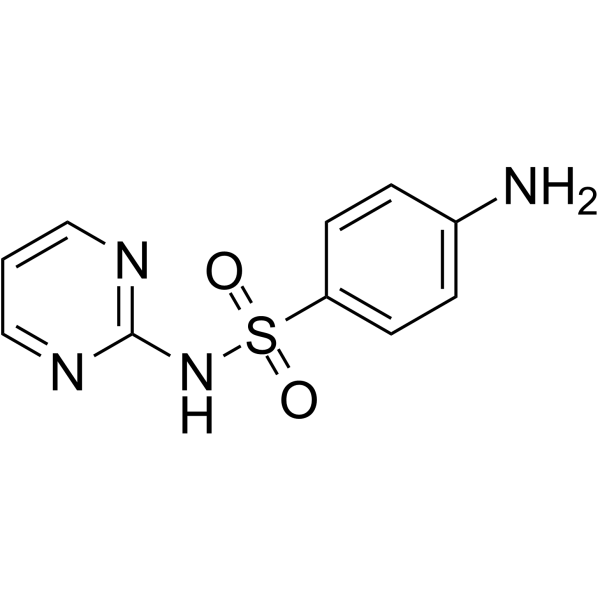
- Formula: C10H10N4O2S
- Molecular Weight: 250.28
Sulfadiazine is an orally active sulfonamide antibiotic. Sulfadiazine competitively inhibits p-aminobenzoic acid in the folic-acid-metabolism cycle, inhibiting multiplication of most Gram-positive and many Gram-negative bacteria. Sulfadiazine persists in soil long-term, and exerts selective pressure for sulfonamide-resistant microbial populations. Sulfadiazine targets Toxoplasma gondii DHPS enzyme. Sulfadiazine can be used for the research of congenital toxoplasmosis and bacterial infection.
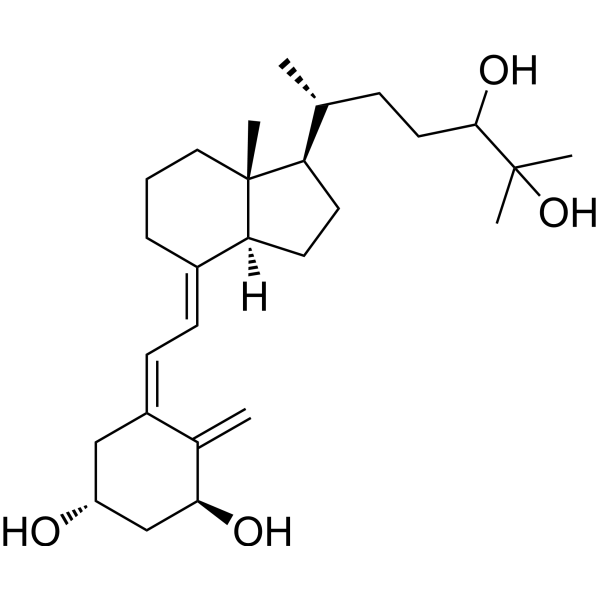
- Formula: C27H44O4
- Molecular Weight: 432.64
Calcitetrol (1α, 24, 25-Trihydroxy VD3), a Vitamin D3 (HY-15398) metabolite, is the hormonally active form of vitamin D. Calcitetrol participates in regulation of Treg cells. Calcitetrol can be used for the research of Toxoplasma gondii infection.
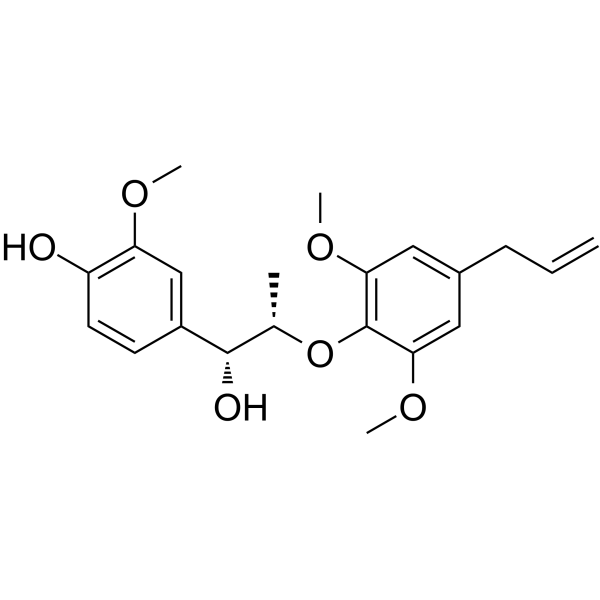
- Formula: C21H26O6
- Molecular Weight: 374.43
Myrislignan is a PI3K/AKT/NF-κB inhibitor that can cross the blood-brain barrier. Myrislignan exerts anticancer activity by inducing apoptosis and ferroptosis. Myrislignan inhibits the replication and invasion of Toxoplasma gondii; it induces reactive oxygen species (ROS) imbalance, autophagy, and the death of Toxoplasma gondii tachyzoites. Myrislignan inhibits mitochondrial function and ERK1/2 phosphorylation to improve ovariectomy-induced osteoporosis. Myrislignan can be used in studies related to gastric cancer, glioblastoma, osteoporosis, and toxoplasmosis.

- Formula: C23H27N3O3
- Molecular Weight: 393.48
CWHM-117 is an orally active aspartic protease inhibitor with selective activity against Toxoplasma gondii. CWHM-117 inhibits the proliferation of Toxoplasma gondii tachyzoites in human fibroblasts, with an EC50 of 2.00 µM. CWHM-117 delays mortality in an acute mouse model of toxoplasmosis. In a chronic mouse model of toxoplasmosis, CWHM-117 reduces brain cyst burden and prolongs survival. CWHM-117 can be used for research on toxoplasmosis.

- Formula: C20H25ClN4O4
- Molecular Weight: 420.89
DHFR-IN-27 (Compound LA4) is an orally active DHFR inhibitor and antimalarial agent, with a Ki value of 1.71 nM against TgDHFR. DHFR-IN-27 reduces the parasitic load of Toxoplasma gondii in infected mice and prolongs the survival time of infected mice. DHFR-IN-27 exerts Antiparasitic effects against Toxoplasma gondii. DHFR-IN-27 can be used in the research of toxoplasmosis.

- Formula: C124H202N48O32S4
- Molecular Weight: 3005.49
NCR247 is a defensin-like nodule cysteine-rich (NCR) peptide and heme chelator. NCR247 induces iron starvation responses in Sinorhizobium meliloti and Medicago truncatula, and supports nitrogenase activity. NCR247 can be used in research related to periodontal disease and toxoplasmosis.

- Formula: C10H10N4O2S
- Molecular Weight: 250.28
Sulfadiazine 100 µg/mL in methanol is an orally active sulfonamide antibiotic. Sulfadiazine 100 µg/mL in methanol competitively inhibits p-aminobenzoic acid in the folic-acid-metabolism cycle, inhibiting multiplication of most Gram-positive and many Gram-negative bacteria. Sulfadiazine 100 µg/mL in methanol persists in soil long-term, and exerts selective pressure for sulfonamide-resistant microbial populations. Sulfadiazine 100 µg/mL in methanol targets Toxoplasma gondii DHPS enzyme. Sulfadiazine 100 µg/mL in methanol can be used for the research of congenital toxoplasmosis and bacterial infection.

- Formula: C2013CH24D2O6
- Molecular Weight: 377.43
Myrislignan-13C,d2 is the 13C, d2 deuterated-labeled Myrislignan (HY-N0608). Myrislignan is a PI3K/AKT/NF-κB inhibitor that can cross the blood-brain barrier. Myrislignan exerts anticancer activity by inducing apoptosis and ferroptosis. Myrislignan inhibits the replication and invasion of Toxoplasma gondii; it induces reactive oxygen species (ROS) imbalance, autophagy, and the death of Toxoplasma gondii tachyzoites. Myrislignan inhibits mitochondrial function and ERK1/2 phosphorylation to improve ovariectomy-induced osteoporosis. Myrislignan can be used in studies related to gastric cancer, glioblastoma, osteoporosis, and toxoplasmosis.

- Formula: C37H64O11
- Molecular Weight: 684.90
Kijimicin is a polyether ionophore antibiotic originally discovered in Actinomadura sp. MI215-NF3. inhibits HIV-1 replication and reduces the infectivity of progeny viral particles. Kijimicin exhibits inhibitory activity against intracellular T. gondii (IC50 = 45.6 nM), extracellular parasites (IC50 = 216.6 pM) and C. parvum (IC50 = 7.7 nM), and controls acute T. gondii infection in mice. Kijimicin can be used for research on HIV, toxoplasmosis, cryptosporidiosis, and bacterial infections.

- Formula: C37H63NaO11
- Molecular Weight: 706.88
Kijimicin sodium is a polyether ionophore antibiotic originally discovered in Actinomadura sp. MI215-NF3. Kijimicin sodium inhibits HIV-1 replication and reduces the infectivity of progeny viral particles. Kijimicin sodium exhibits inhibitory activity against intracellular T. gondii (IC50 = 45.6 nM), extracellular parasites (IC50 = 216.6 pM) and C. parvum (IC50 = 7.7 nM), and controls acute T. gondii infection in mice. Kijimicin sodium can be used for research on HIV, toxoplasmosis, cryptosporidiosis, and bacterial infections.

- Formula: C18H13F3N8O
- Molecular Weight: 414.34
TgCDPK1-IN-1 is an orally active, blood-brain barrier-permeable TgCDPK1 inhibitor (IC50 = 15.7 nM) with antiparasitic activity against Toxoplasma gondii. TgCDPK1-IN-1 inhibits Src and TgCDPKG128M. TgCDPK1-IN-1 cures acute toxoplasmosis in immunocompetent mice and prolongs the survival of immunocompromised mice. TgCDPK1-IN-1 is applicable for research related to toxoplasmosis.

- Formula: C17H16Cl2N6O
- Molecular Weight: 391.26
GSK2188764 is a Toxoplasma gondii rhoptry protein 18 (ROP18) inhibitor with reported IC50 values of 7.49 μM against Toxoplasma gondii. GSK2188764 inhibits serine-threonine kinase activity of ROP18 in vitro.GSK2188764 can be used for the research of toxoplasmosis.
- 1



