Search Result
Results for "
16:0-16:0(Acrylate) PC
" in MedChemExpress (MCE) Product Catalog:
42
Biochemical Assay Reagents
2
Isotope-Labeled Compounds
| Cat. No. |
Product Name |
Target |
Research Areas |
Chemical Structure |
-
- HY-W010860
-
|
|
Environmental Pollutants
Biochemical Assay Reagents
|
Others
|
|
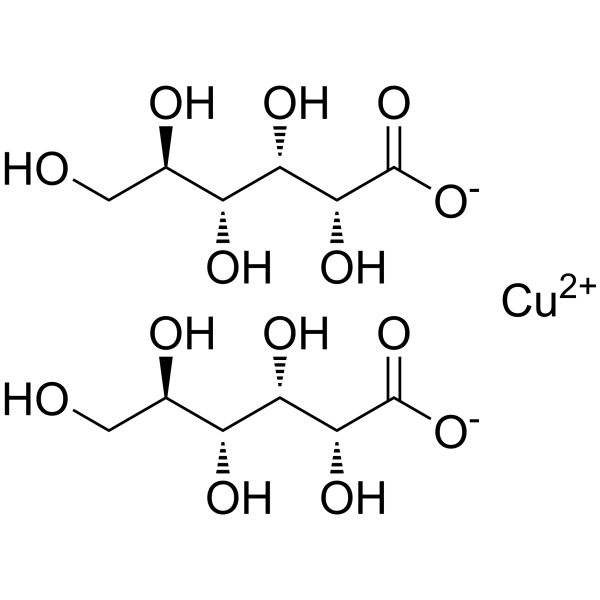
Copper(II) Gluconate is a non-toxic copper supplement aid. Copper(II) Gluconate is the copper salt of D-gluconic acid. Copper(II) Gluconate as a precursor catalyst that can be used in the photo-induced polymerisation of acrylates .
|
-
-
- HY-158231
-
|
F127DA
|
Integrin
FAK
|
Inflammation/Immunology
|
|
Polyether F127 Diacrylate (F127DA) is an acrylated polyethylene glycol-polypropylene glycol-polyethylene glycol triblock copolymer. Polyether F127 Diacrylate rapidly crosslinks and cures into a gel under ultraviolet or visible light with the action of a photoinitiator. Polyether F127 Diacrylate exhibits excellent thermogelation properties and favorable biosafety. Polyether F127 Diacrylate can upregulate the Integrin-FAK pathway, enhance collagen production, increase the protein and gene expression levels of COL-1/SCX, and promote fibroblastic differentiation of periodontal ligament stem cells. Polyether F127 Diacrylate promotes periodontal ligament regeneration and reduces abnormal healing in a rat model of delayed replanted teeth . Polyether F127 Diacrylate promotes functional osteochondral regeneration in a rat model of osteoarthritis. Polyether F127 Diacrylate supports adipose tissue survival, rendering it suitable for breast reconstruction applications. Polyether F127 Diacrylate can be used in studies related to periodontal ligament injury, breast defect and osteoarthritis .
|
-
-
- HY-W043748
-
|
N-Succinimidyl Acrylate
|
Biochemical Assay Reagents
|
Others
|
|
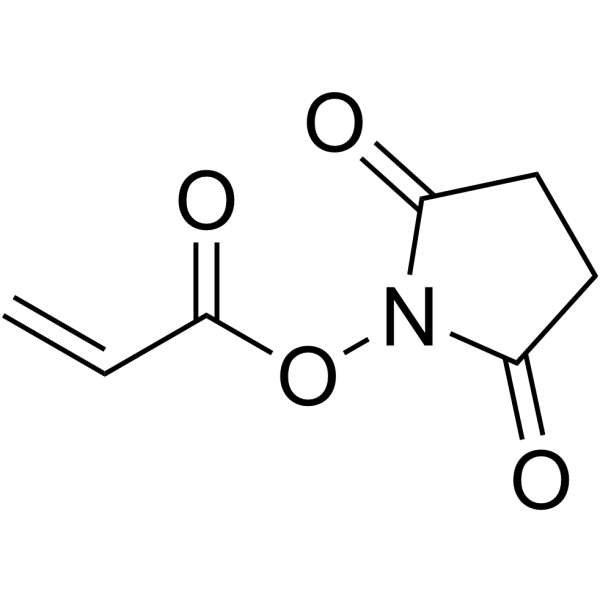
2,5-Dioxopyrrolidin-1-yl acrylate (N-Succinimidyl acrylate) is a protein crosslinker. 2,5-Dioxopyrrolidin-1-yl acrylate can react with a monoclonal anti-horseradish peroxidase IgG antibody (anti-HRP) to modify lysine residues .
|
-
-
- HY-W016582
-
|
|
Biochemical Assay Reagents
|
Cancer
|
|
Methyl 2-(bromomethyl)acrylate is a biochemical Assay Reagents .Methyl 2-(bromomethyl)acrylate inhibits cell proliferation in breast cancer and pancreatic cancer cells. Methyl 2-(bromomethyl)acrylate can be used for the research of breast cancer and pancreatic cancer .
|
-

-
- HY-W096166
-
|
|
PROTAC Linkers
|
Cancer
|
|
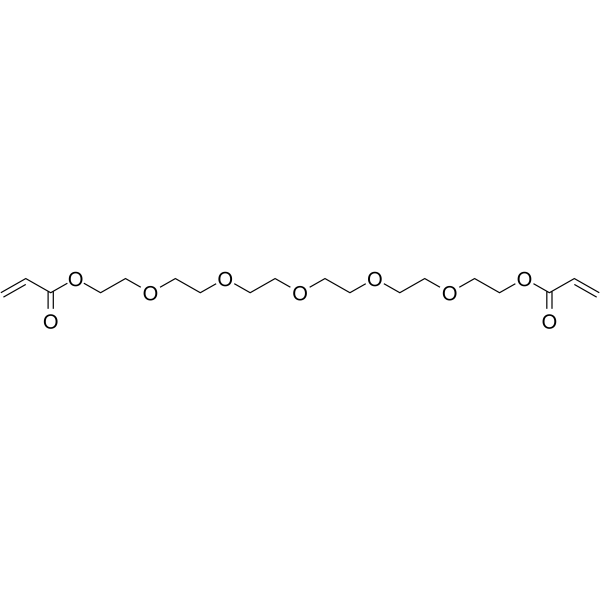
Bis-acrylate-PEG6 is a PEG-based PROTAC linker that can be used in the synthesis of PROTACs .
|
-
-
- HY-174968B
-
|
4-Arm-PEG10000-Acrylate
|
Biochemical Assay Reagents
|
Others
|
|
4-Arm-PEG10000-AC (4-Arm-PEG10000-Acrylate) is a polymer consisting of a four-arm PEG core structure with acrylate groups attached to the ends of each PEG chain by chemical reaction, which can be used for drug delivery .
|
-

-
- HY-W011954
-
-
-
- HY-139446A
-
|
ETPTA (MW 912); TMPETA (MW 912)
|
Biochemical Assay Reagents
|
Others
|
|
Trimethylolpropane ethoxylate triacrylate (MW 912) (ETPTA (MW 912); TMPETA (MW 912)) is a trifunctional acrylate monomer with multiple acrylate functional groups, which can be used in polymerization and crosslinking reactions. Trimethylolpropane ethoxylate triacrylate (MW 912) is widely used in the preparation of cured resins for 3D printing, optical coatings for display devices, and dental composite restorative materials .
|
-

-
- HY-W110166
-
|
|
Biochemical Assay Reagents
|
Others
|
|
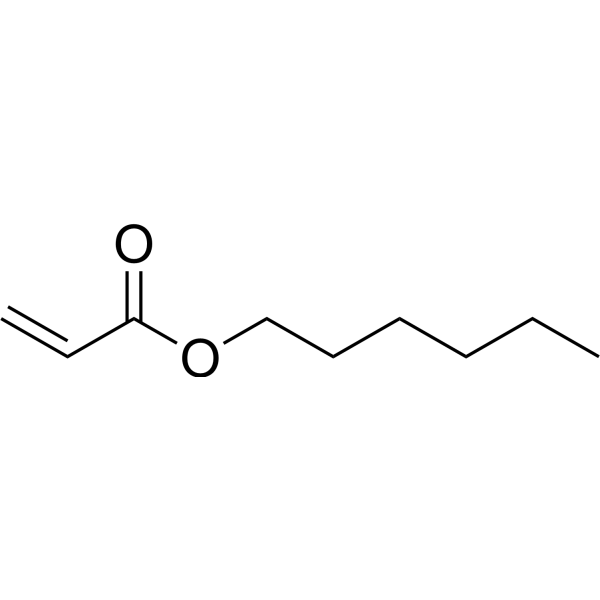
Hexyl acrylate is a photoinitiator. Hexyl acrylate undergoes self-polymerization via piCVD under 254 nm UV radiation. Hexyl acrylate can be polymerized by atom transfer radical polymerization technology .
|
-
-
- HY-W017050
-
|
|
Biochemical Assay Reagents
|
Others
|
|
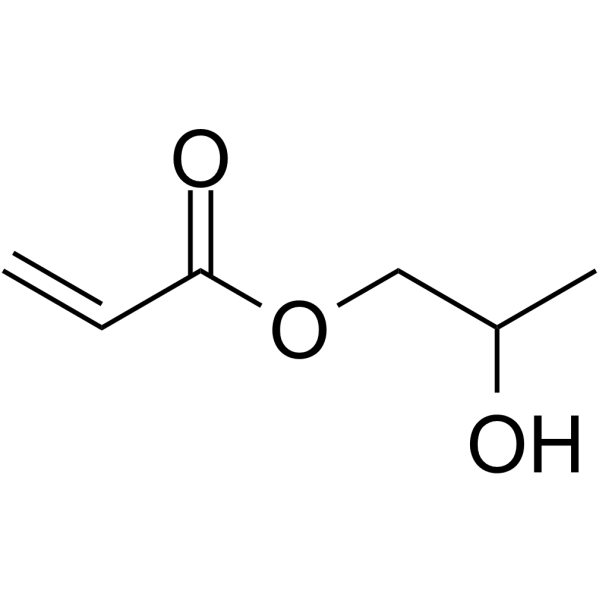
2-Hydroxypropyl acrylate (HPA) is a severe irritant and corrosive to the skin. 2-Hydroxypropyl acrylate (HPA) is extensively applied in fibre, adhesives, rubber industry, paints and coatings industry .
|
-
-
- HY-W011954R
-
|
|
Biochemical Assay Reagents
Reference Standards
|
Inflammation/Immunology
|
|
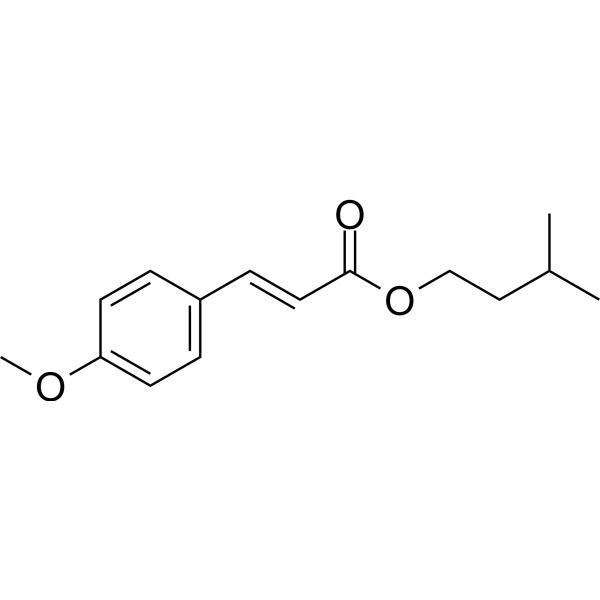
Isopentyl 3-(4-methoxyphenyl)acrylate (Standard) is the analytical standard of Isopentyl 3-(4-methoxyphenyl)acrylate (HY-W011954). This product is intended for research and analytical applications. Isopentyl 3-(4-methoxyphenyl)acrylate, a derivative of cinnamon acid ester, is a UV-filter with anti-inflammatory activity .
|
-

-
- HY-172354
-
|
|
Biochemical Assay Reagents
|
Others
|
|
Acrylate-PEG2000-NHS is a photosensitive PEG compound that can be cross-linked when exposed to ultraviolet light and is used to synthesize PEG hydrogels .
|
-

-
- HY-W763597
-
-

-
- HY-153137
-
|
304O13
|
Liposome
|
Cancer
|
|
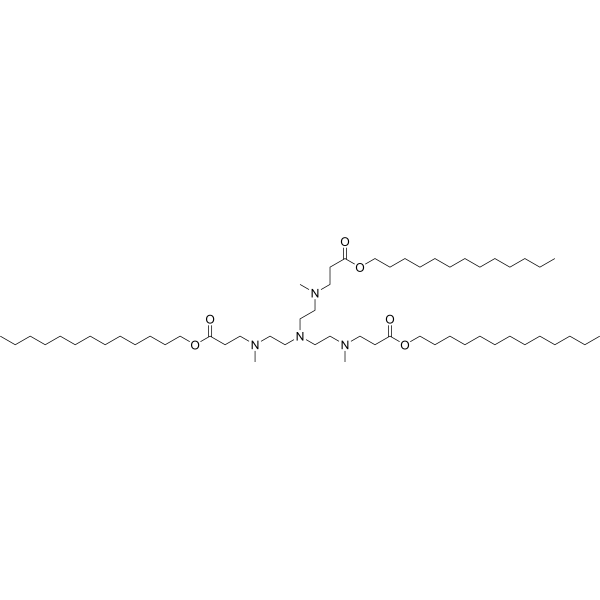
Tri-N-tridecyl 3-(ethyl(methyl)amino)propanoate is a biodegradable lipid prepared by the conjugate addition of alkylamines to acrylates. Tri-N-tridecyl 3-(ethyl(methyl)amino)propanoate can be used in various drug delivery systems to deliver polynucleotides, siRNA for example .
|
-
-
- HY-W097734
-
-

-
- HY-172354A
-
|
|
Biochemical Assay Reagents
|
Others
|
|
Acrylate-PEG3500-NHS is a photosensitive PEG compound that can be cross-linked when exposed to ultraviolet light and is used to synthesize PEG hydrogels .
|
-

-
- HY-140064
-
|
|
PROTAC Linkers
|
Cancer
|
|
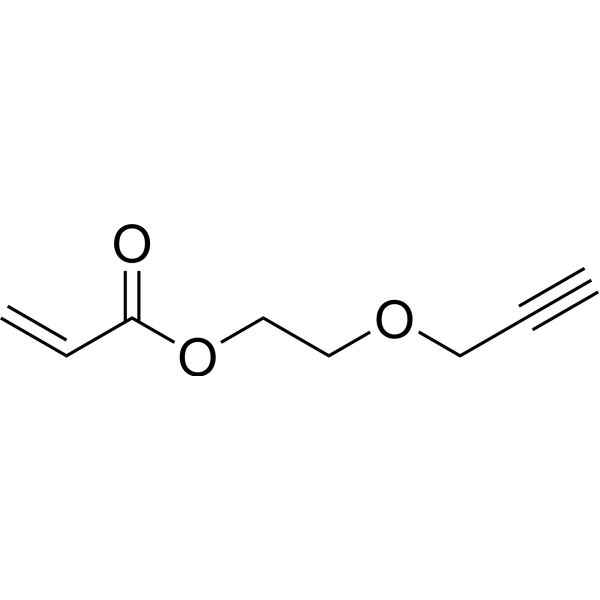
Propargyl-PEG1-acrylate is a PEG-based PROTAC linker that can be used in the synthesis of PROTACs . Propargyl-PEG1-acrylate is a click chemistry reagent, it contains an Alkyne group and can undergo copper-catalyzed azide-alkyne cycloaddition (CuAAc) with molecules containing Azide groups.
|
-
-
- HY-174885B
-
|
|
Biochemical Assay Reagents
|
Others
|
|
Acrylate-PEG3400-Maleimide is a PEG derivative containing an acrylate functional group, a PEG chain, and a maleimide group, which can be used for drug delivery .
|
-

-
- HY-140638
-
|
|
PROTAC Linkers
|
Cancer
|
|
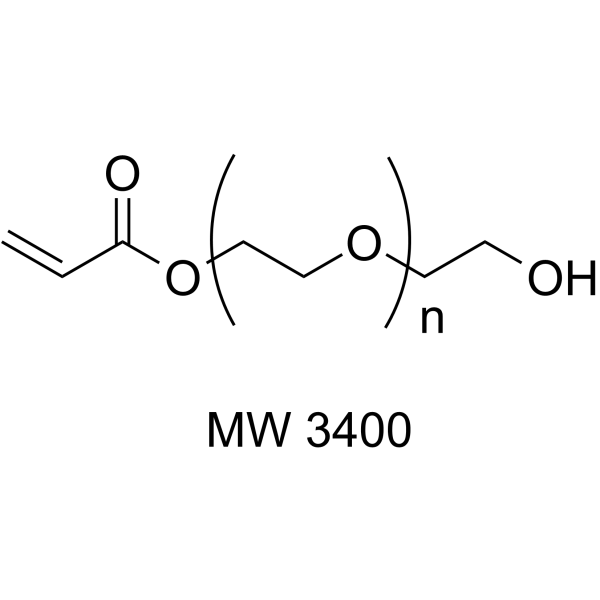
Acrylate-PEG3400-OH is a PEG-based PROTAC linker that can be used in the synthesis of PROTACs .
|
-
-
- HY-140007
-
|
|
PROTAC Linkers
|
Cancer
|
|
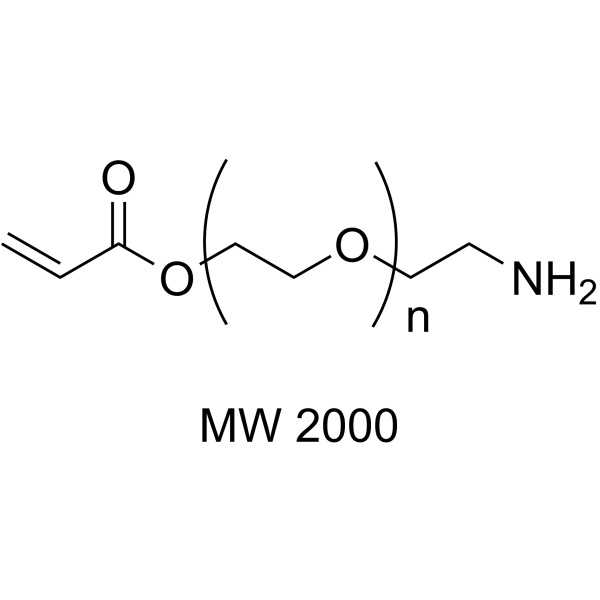
Acrylate-PEG2000-NH2 is a PEG-based PROTAC linker that can be used in the synthesis of PROTACs .
|
-
-
- HY-W923132
-
|
Acryloyloxy fluorescein
|
Fluorescent Dye
Endogenous Metabolite
|
Others
|
|
Fluorescein O-acrylate (Acryloyloxy fluorescein) is a highly efficient fluorescent monomer that exhibits strong quantum yield in aqueous solutions, with its excitation and emission wavelengths situated within the visible light spectrum. This versatile monomer can be copolymerized with various compounds, including styrene, and acrylamide, enhancing its ability to bond with macromolecules.
|
-

-
- HY-27979
-
|
|
Biochemical Assay Reagents
|
Others
|
|
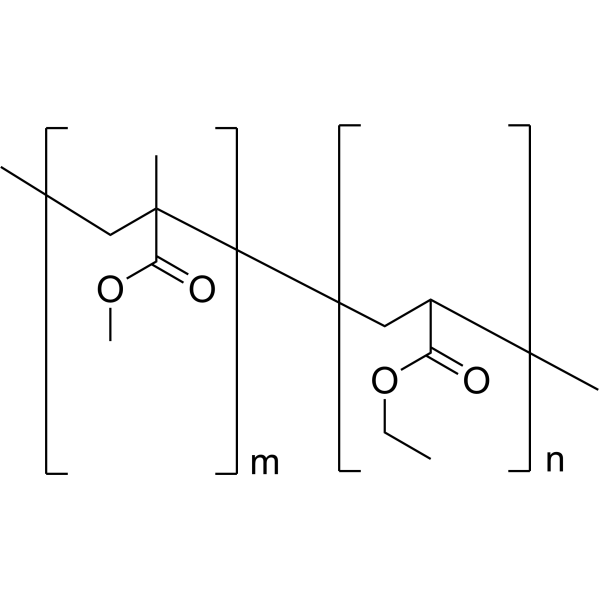
Ethyl acrylate-methyl methacrylate copolymer can be used as an excipient, such as sustained-release coating materials, matrix sustained-release tablet binders and retarders. Pharmaceutical excipients, or pharmaceutical auxiliaries, refer to other chemical substances used in the pharmaceutical process other than pharmaceutical ingredients. Pharmaceutical excipients generally refer to inactive ingredients in pharmaceutical preparations, which can improve the stability, solubility and processability of pharmaceutical preparations. Pharmaceutical excipients also affect the absorption, distribution, metabolism, and elimination (ADME) processes of co-administered drugs .
|
-
-
- HY-W010354
-
|
|
Drug Intermediate
|
Infection
|
|
2,2-Diethoxyethanol is a drug intermediate used in research related to Plasmodium falciparum infection .
|
-

-
- HY-Y0531
-
|
Tricyclo[3.3.1.1~3,7~]decan-1-ol
|
Drug Intermediate
Bacterial
|
Infection
|
|
1-Adamantanol (Tricyclo[3.3.1.1~3,7~]decan-1-ol) is a hydroxylated derivative of Adamantane (HY-N2427). 1-Adamantanol serves as a substrate for regioselective hydroxylation reactions in Streptomyces strain SA8. 1-Adamantanol can form acrylate derivatives, which are used as photoresist layer materials .
|
-

-
- HY-W591485
-
|
|
Biochemical Assay Reagents
|
Others
|
|
Acrylate-PEG1000-acrylate is a linear polymer formed by connecting acrylate groups at both ends of a PEG molecule and can be used for drug delivery .
|
-

-
- HY-W591489A
-
-

-
- HY-140672
-
|
|
PROTAC Linkers
|
Cancer
|
|
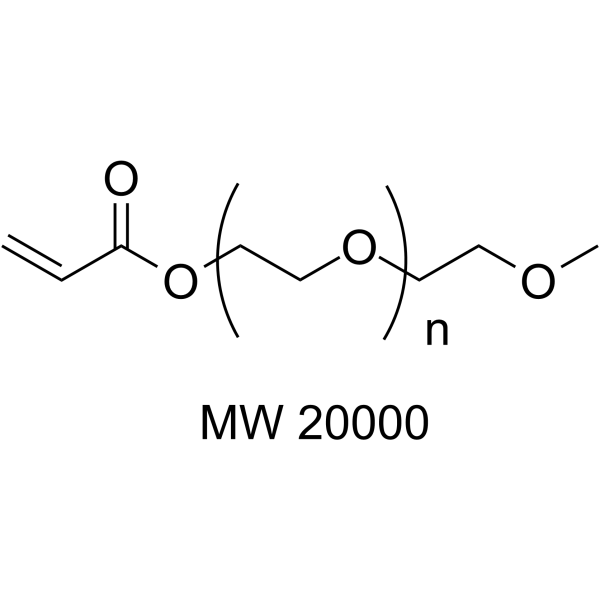
m-PEG20000-acrylate is a PEG-based PROTAC linker that can be used in the synthesis of PROTACs .
|
-
-
- HY-140673
-
|
|
PROTAC Linkers
|
Cancer
|
|
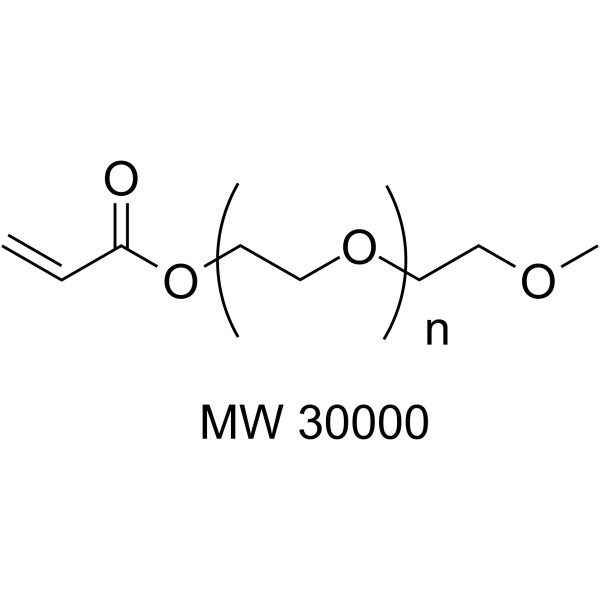
m-PEG30000-acrylate is a PEG-based PROTAC linker that can be used in the synthesis of PROTACs .
|
-
-
- HY-141244
-
|
|
PROTAC Linkers
|
Cancer
|
|
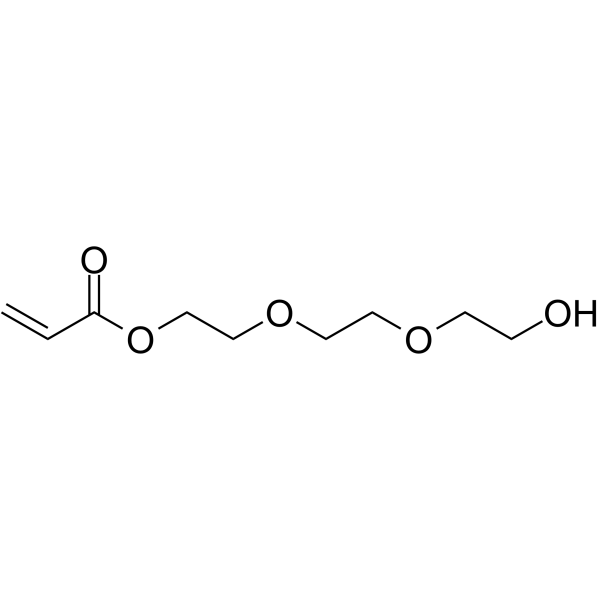
Hydroxy-PEG3-acrylate is a PEG-based PROTAC linker that can be used in the synthesis of PROTACs .
|
-
-
- HY-140670
-
|
|
PROTAC Linkers
|
Cancer
|
|
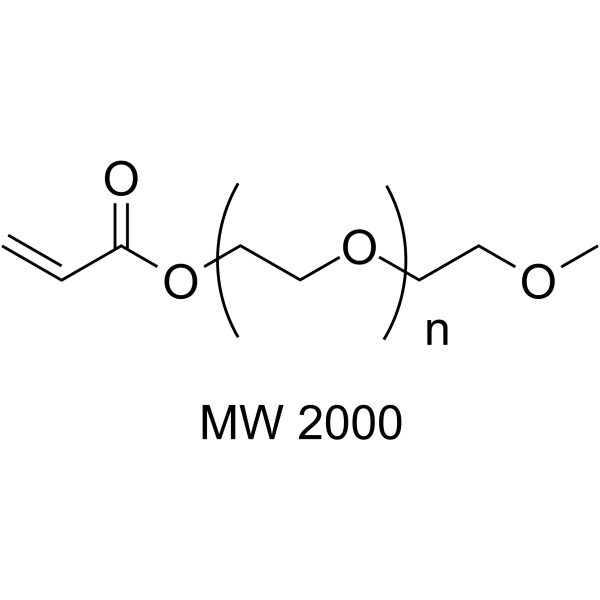
m-PEG2000-acrylate is a PEG-based PROTAC linker that can be used in the synthesis of PROTACs .
|
-
-
- HY-140671
-
|
|
PROTAC Linkers
|
Cancer
|
|
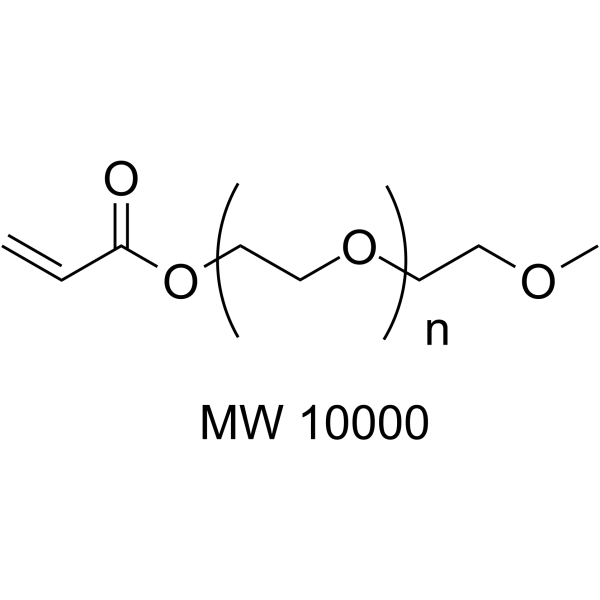
m-PEG10000-acrylate is a PEG-based PROTAC linker that can be used in the synthesis of PROTACs .
|
-
-
- HY-164164
-
-

-
- HY-174885C
-
|
|
Biochemical Assay Reagents
|
Others
|
|
Acrylate-PEG5000-Maleimide is a PEG derivative containing an acrylate functional group, a PEG chain, and a maleimide group, which can be used for drug delivery .
|
-

-
- HY-174885
-
|
|
Biochemical Assay Reagents
|
Others
|
|
Acrylate-PEG1000-Maleimide is a PEG derivative containing an acrylate functional group, a PEG chain, and a maleimide group, which can be used for drug delivery .
|
-

-
- HY-174885A
-
|
|
Biochemical Assay Reagents
|
Others
|
|
Acrylate-PEG2000-Maleimide is a PEG derivative containing an acrylate functional group, a PEG chain, and a maleimide group, which can be used for drug delivery .
|
-

-
- HY-W096160
-
|
|
PROTAC Linkers
|
Cancer
|
|
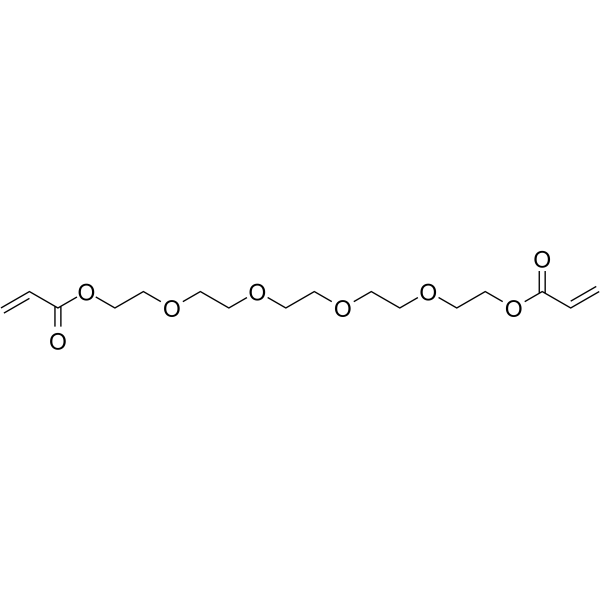
Bis-acrylate-PEG5 is a PEG-based PROTAC linker that can be used in the synthesis of PROTACs .
|
-
-
- HY-W927157
-
-

-
- HY-140640
-
|
|
PROTAC Linkers
|
Cancer
|
|
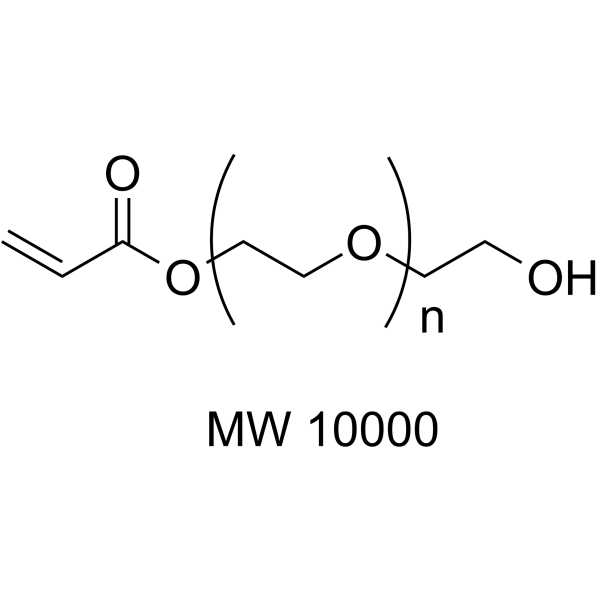
Acrylate-PEG10000-OH is a PEG-based PROTAC linker that can be used in the synthesis of PROTACs .
|
-
-
- HY-140639
-
|
|
PROTAC Linkers
|
Cancer
|
|
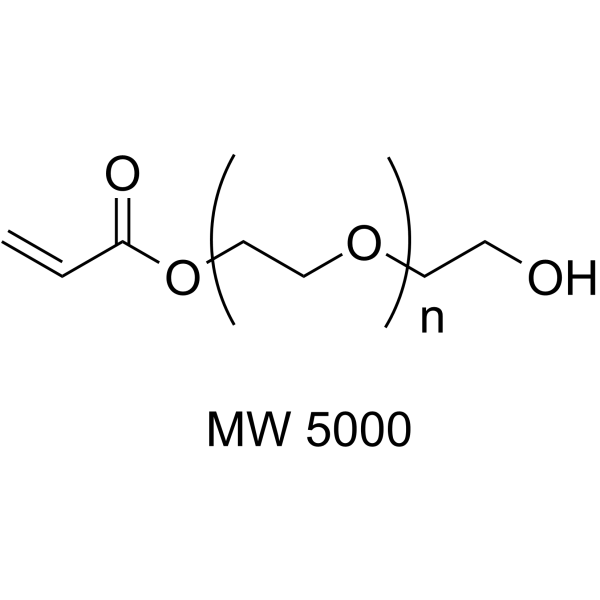
Acrylate-PEG5000-OH is a PEG-based PROTAC linker that can be used in the synthesis of PROTACs .
|
-
-
- HY-174968A
-
|
4-Arm-PEG5000-Acrylate
|
Biochemical Assay Reagents
|
Others
|
|
4-Arm-PEG5000-AC (4-Arm-PEG5000-Acrylate) is a polymer consisting of a four-arm PEG core structure with acrylate groups attached to the ends of each PEG chain by chemical reaction, which can be used for drug delivery .
|
-

-
- HY-140637
-
|
|
PROTAC Linkers
|
Cancer
|
|
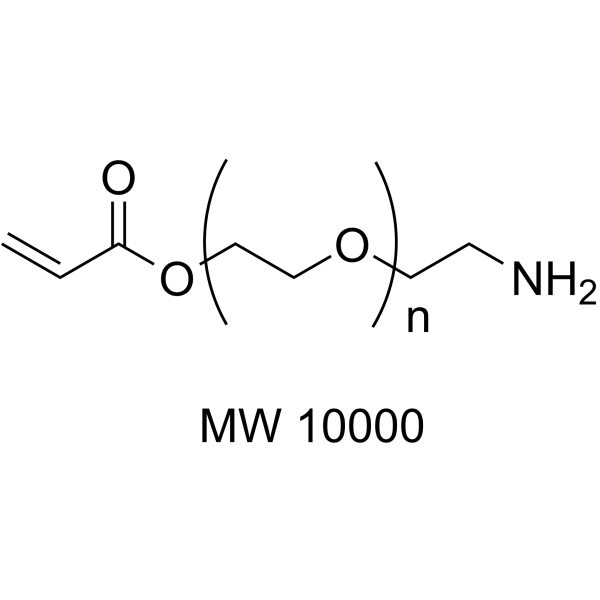
Acrylate-PEG10000-NH2 is a PEG-based PROTAC linker that can be used in the synthesis of PROTACs .
|
-
-
- HY-172354B
-
|
|
Biochemical Assay Reagents
|
Others
|
|
Acrylate-PEG5000-NHS is a photosensitive PEG compound that can be cross-linked when exposed to ultraviolet light and is used to synthesize PEG hydrogels .
|
-

-
- HY-W713284
-
|
|
Isotope-Labeled Compounds
Cytochrome P450
Estrogen Receptor/ERR
Androgen Receptor
Thyroid Hormone Receptor
|
Endocrinology
|
|
2-Ethylhexyl (E)-3-(4-(methoxy-d3)phenyl)acrylate is the deuterium labeled Octinoxate (HY-B1234). Octinoxate (Octyl methoxycinnamate) is a thyroid hormone receptor agonist, reducing the levels of triiodothyronine (T3) and thyroxine (T4) and transcription levels of genes related to type II deiodinase (deio2) in Japanese Medaka. Octinoxate is commonly used as a safe ultraviolet (UV) filter used in the aquatic environment. Octinoxate inhibits CYP1A1 and CYP1B1 to regulate hyaluronan (HA) (HY-B0633A) metabolism in a PI3K pathway-dependent manner in human keratinocytes. Octinoxate also exhibits an anti-estrogenic and anti-androgenic effect in vitro and in vivo .
|
-

-
- HY-174954E
-
|
|
Biochemical Assay Reagents
|
Others
|
|
6-Arm-PEG5000-DA is a polymer consisting of a four-arm PEG core structure with acrylate groups attached to the ends of each PEG chain by chemical reaction, which can be used for drug delivery .
|
-

-
- HY-174954D
-
|
|
Biochemical Assay Reagents
|
Others
|
|
6-Arm-PEG3400-DA is a polymer consisting of a four-arm PEG core structure with acrylate groups attached to the ends of each PEG chain by chemical reaction, which can be used for drug delivery .
|
-

-
- HY-W591425A
-
|
|
Biochemical Assay Reagents
|
Others
|
|
Acrylate-PEG3400-acrylate is a linear polymer formed by connecting acrylate groups at both ends of a PEG molecule and can be used for drug delivery .
|
-

-
- HY-W591425
-
|
|
Biochemical Assay Reagents
|
Others
|
|
Acrylate-PEG2000-acrylate is a linear polymer formed by connecting acrylate groups at both ends of a PEG molecule and can be used for drug delivery .
|
-

-
- HY-W591427
-
|
|
Biochemical Assay Reagents
|
Others
|
|
Acrylate-PEG10000-acrylate is a linear polymer formed by connecting acrylate groups at both ends of a PEG molecule and can be used for drug delivery .
|
-

-
- HY-W591426
-
|
|
Biochemical Assay Reagents
|
Others
|
|
Acrylate-PEG5000-acrylate is a linear polymer formed by connecting acrylate groups at both ends of a PEG molecule and can be used for drug delivery .
|
-

-
- HY-136675
-
|
|
Fluorescent Dye
|
Others
|
|
ASMI is a ratiometric, two-photon excited fluorescent probe, composed of a highly two-photon active and biocompatible merocyanine fluorophore and an acrylate moiety as a thiol reactive site. ASMI is able to selectively detect and monitor mitochondrial Cys with rapid responsiveness, imaging living cells and intact tissues with high contrast and brightness at a depth of 150 μm. The two-photon action cross section (Φσmax) of ASMI is 65.2 GM, corresponding to an excitation wavelength (λex) of 740 nm.
|
-

- HY-W591489B
-
-

- HY-W591489
-
-

- HY-W591489C
-
-

- HY-Y1686R
-
|
|
Reference Standards
|
|
|
Ethyl 3-(dimethylamino)acrylate (Standard) is the analytical standard of Ethyl 3-(dimethylamino)acrylate. This product is intended for research and analytical applications.
|
-

- HY-182837A
-
|
8-Arm-PEG20000-AC
|
Biochemical Assay Reagents
|
Others
|
|
8-Arm-PEG20000-Acrylate (8-Arm-PEG20000-AC) is an eight-arm PEG derivative. The core structure of 8-Arm-PEG20000-Acrylate consists of eight PEG chains, each modified at the end with an acrylate (acrylate) group. 8-Arm-PEG20000-Acrylate can be used for research on hydrogel preparation and drug delivery.
|
-

- HY-182837
-
|
8-Arm-PEG10000-AC
|
Biochemical Assay Reagents
|
Others
|
|
8-Arm-PEG10000-Acrylate (8-Arm-PEG10000-AC) is an eight-arm PEG derivative. The core structure of 8-Arm-PEG10000-Acrylate consists of eight PEG chains, each modified at the end with an acrylate (acrylate) group. 8-Arm-PEG10000-Acrylate can be used for research on hydrogel preparation and drug delivery.
|
-

- HY-182837B
-
|
8-Arm-PEG40000-AC
|
Biochemical Assay Reagents
|
Others
|
|
8-Arm-PEG40000-Acrylate (8-Arm-PEG40000-AC) is an eight-arm PEG derivative. The core structure of 8-Arm-PEG40000-Acrylate consists of eight PEG chains, each modified at the end with an acrylate (acrylate) group. 8-Arm-PEG40000-Acrylate can be used for research on hydrogel preparation and drug delivery.
|
-

- HY-174884C
-
|
|
Biochemical Assay Reagents
|
Others
|
|
Acrylate-PEG3400-Biotin is a PEG derivative that contains an acrylate functional group, a PEG chain, and a biotin group. The biotin group can be used for specific binding to streptavidin, etc .
|
-

- HY-174884
-
|
|
Biochemical Assay Reagents
|
Others
|
|
Acrylate-PEG5000-Biotin is a PEG derivative that contains an acrylate functional group, a PEG chain, and a biotin group. The biotin group can be used for specific binding to streptavidin, etc .
|
-

- HY-174884B
-
|
|
Biochemical Assay Reagents
|
Others
|
|
Acrylate-PEG2000-Biotin is a PEG derivative that contains an acrylate functional group, a PEG chain, and a biotin group. The biotin group can be used for specific binding to streptavidin, etc .
|
-

- HY-174884A
-
|
|
Biochemical Assay Reagents
|
Others
|
|
Acrylate-PEG1000-Biotin is a PEG derivative that contains an acrylate functional group, a PEG chain, and a biotin group. The biotin group can be used for specific binding to streptavidin, etc .
|
-

- HY-W123053
-
|
Acrylated epoxidized soybean oil
|
Others
|
Others
|
|
Soybean oil, epoxidized acrylate (acrylated epoxidized soybean oil) can be used as plasticizers and food packaging materials. Soybean oil, epoxidized acrylate can also be used to prepare novel nanocomposite biomaterials for bone tissue repair.
|
-

- HY-174968
-
|
4-Arm-PEG2000-Acrylate
|
Biochemical Assay Reagents
|
Others
|
|
4-Arm-PEG2000-AC (4-Arm-PEG2000-Acrylate) is a polymer consisting of a four-arm PEG core structure with acrylate groups attached to the ends of each PEG chain by chemical reaction, which can be used for drug delivery .
|
-

- HY-174968C
-
|
4-Arm-PEG20000-Acrylate
|
Biochemical Assay Reagents
|
Others
|
|
4-Arm-PEG20000-AC (4-Arm-PEG20000-Acrylate) is a polymer consisting of a four-arm PEG core structure with acrylate groups attached to the ends of each PEG chain by chemical reaction, which can be used for drug delivery .
|
-

- HY-182839B
-
|
8-Arm-PEG40000-MAc
|
Biochemical Assay Reagents
|
Others
|
|
8-Arm-PEG40000-Methyl acrylate (8-Arm-PEG40000-MAc) is an eight-arm PEG derivative. The core structure of 8-Arm-PEG40000-Methyl acrylate consists of eight PEG chains, each modified at the end with a methyl acrylate group. 8-Arm-PEG40000-Methyl acrylate can be used in research on the preparation of hydrogels and drug delivery.
|
-

- HY-182839
-
|
8-Arm-PEG10000-MAc
|
Biochemical Assay Reagents
|
Others
|
|
8-Arm-PEG10000-Methyl acrylate (8-Arm-PEG10000-MAc) is an eight-arm PEG derivative. The core structure of 8-Arm-PEG10000-Methyl acrylate consists of eight PEG chains, each modified at the end with a methyl acrylate group. 8-Arm-PEG10000-Methyl acrylate can be used in research on the preparation of hydrogels and drug delivery.
|
-

- HY-182839A
-
|
8-Arm-PEG20000-MAc
|
Biochemical Assay Reagents
|
Others
|
|
8-Arm-PEG20000-Methyl acrylate (8-Arm-PEG20000-MAc) is an eight-arm PEG derivative. The core structure of 8-Arm-PEG20000-Methyl acrylate consists of eight PEG chains, each modified at the end with a methyl acrylate group. 8-Arm-PEG20000-Methyl acrylate can be used in research on the preparation of hydrogels and drug delivery.
|
-

- HY-W004645R
-
|
|
Reference Standards
|
|
|
(E)-methyl 3-(4-((1H-imidazol-1-yl)methyl)phenyl)acrylate (Standard) is the analytical standard of (E)-methyl 3-(4-((1H-imidazol-1-yl)methyl)phenyl)acrylate. This product is intended for research and analytical applications.
|
-

- HY-174954
-
|
|
Biochemical Assay Reagents
|
Others
|
|
6-Arm-PEG400-DA is a polymer consisting of a four-arm PEG core structure with acrylate groups attached to the ends of each PEG chain by chemical reaction, which can be used for drug delivery .
|
-

- HY-174954A
-
|
|
Biochemical Assay Reagents
|
Others
|
|
6-Arm-PEG600-DA is a polymer consisting of a four-arm PEG core structure with acrylate groups attached to the ends of each PEG chain by chemical reaction, which can be used for drug delivery .
|
-

- HY-174954B
-
|
|
Biochemical Assay Reagents
|
Others
|
|
6-Arm-PEG1000-DA is a polymer consisting of a four-arm PEG core structure with acrylate groups attached to the ends of each PEG chain by chemical reaction, which can be used for drug delivery .
|
-

- HY-174954C
-
|
|
Biochemical Assay Reagents
|
Others
|
|
6-Arm-PEG2000-DA is a polymer consisting of a four-arm PEG core structure with acrylate groups attached to the ends of each PEG chain by chemical reaction, which can be used for drug delivery .
|
-

- HY-174954H
-
|
|
Biochemical Assay Reagents
|
Others
|
|
6-Arm-PEG10000-DA is a polymer consisting of a four-arm PEG core structure with acrylate groups attached to the ends of each PEG chain by chemical reaction, which can be used for drug delivery .
|
-

- HY-Y0531S
-
|
Tricyclo[3.3.1.1~3,7~]decan-1-ol-d15
|
Isotope-Labeled Compounds
Drug Intermediate
Bacterial
|
Infection
|
|
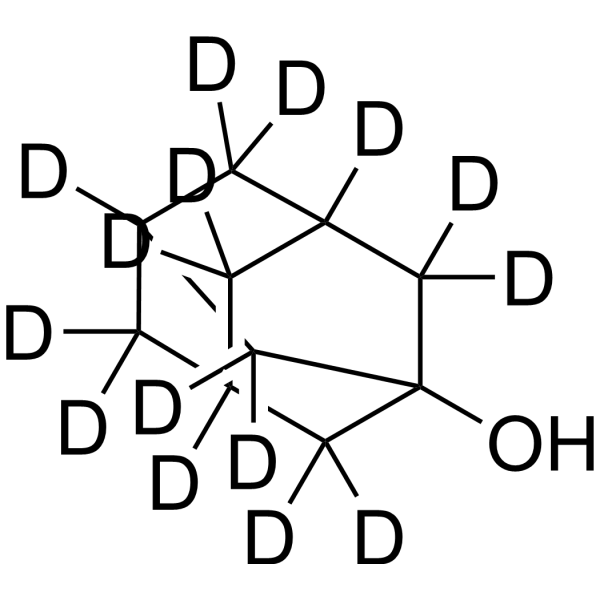
1-Adamantanol-d15 (Tricyclo[3.3.1.1~3,7~]decan-1-ol-d15) is the deuterium labeled 1-Adamantanol (HY-Y0531). 1-Adamantanol (Tricyclo[3.3.1.1~3,7~]decan-1-ol) is a hydroxylated derivative of Adamantane (HY-N2427). 1-Adamantanol serves as a substrate for regioselective hydroxylation reactions in Streptomyces strain SA8. 1-Adamantanol can form acrylate derivatives, which are used as photoresist layer materials .
|
-
| Cat. No. |
Product Name |
Type |
-
- HY-W923132
-
|
Acryloyloxy fluorescein
|
Fluorescent Dyes
|
|
Fluorescein O-acrylate (Acryloyloxy fluorescein) is a highly efficient fluorescent monomer that exhibits strong quantum yield in aqueous solutions, with its excitation and emission wavelengths situated within the visible light spectrum. This versatile monomer can be copolymerized with various compounds, including styrene, and acrylamide, enhancing its ability to bond with macromolecules.
|
| Cat. No. |
Product Name |
Type |
-
- HY-158231
-
|
F127DA
|
Biochemical Assay Reagents
|
|
Polyether F127 Diacrylate (F127DA) is an acrylated polyethylene glycol-polypropylene glycol-polyethylene glycol triblock copolymer. Polyether F127 Diacrylate rapidly crosslinks and cures into a gel under ultraviolet or visible light with the action of a photoinitiator. Polyether F127 Diacrylate exhibits excellent thermogelation properties and favorable biosafety. Polyether F127 Diacrylate can upregulate the Integrin-FAK pathway, enhance collagen production, increase the protein and gene expression levels of COL-1/SCX, and promote fibroblastic differentiation of periodontal ligament stem cells. Polyether F127 Diacrylate promotes periodontal ligament regeneration and reduces abnormal healing in a rat model of delayed replanted teeth . Polyether F127 Diacrylate promotes functional osteochondral regeneration in a rat model of osteoarthritis. Polyether F127 Diacrylate supports adipose tissue survival, rendering it suitable for breast reconstruction applications. Polyether F127 Diacrylate can be used in studies related to periodontal ligament injury, breast defect and osteoarthritis .
|
-
- HY-174968B
-
|
4-Arm-PEG10000-Acrylate
|
Biochemical Assay Reagents
|
|
4-Arm-PEG10000-AC (4-Arm-PEG10000-Acrylate) is a polymer consisting of a four-arm PEG core structure with acrylate groups attached to the ends of each PEG chain by chemical reaction, which can be used for drug delivery .
|
-
- HY-139446A
-
|
ETPTA (MW 912); TMPETA (MW 912)
|
Biochemical Assay Reagents
|
|
Trimethylolpropane ethoxylate triacrylate (MW 912) (ETPTA (MW 912); TMPETA (MW 912)) is a trifunctional acrylate monomer with multiple acrylate functional groups, which can be used in polymerization and crosslinking reactions. Trimethylolpropane ethoxylate triacrylate (MW 912) is widely used in the preparation of cured resins for 3D printing, optical coatings for display devices, and dental composite restorative materials .
|
-
- HY-172354
-
|
|
Biochemical Assay Reagents
|
|
Acrylate-PEG2000-NHS is a photosensitive PEG compound that can be cross-linked when exposed to ultraviolet light and is used to synthesize PEG hydrogels .
|
-
- HY-W763597
-
-
- HY-153137
-
|
304O13
|
Biochemical Assay Reagents
|
|
Tri-N-tridecyl 3-(ethyl(methyl)amino)propanoate is a biodegradable lipid prepared by the conjugate addition of alkylamines to acrylates. Tri-N-tridecyl 3-(ethyl(methyl)amino)propanoate can be used in various drug delivery systems to deliver polynucleotides, siRNA for example .
|
-
- HY-172354A
-
|
|
Biochemical Assay Reagents
|
|
Acrylate-PEG3500-NHS is a photosensitive PEG compound that can be cross-linked when exposed to ultraviolet light and is used to synthesize PEG hydrogels .
|
-
- HY-174885B
-
|
|
Biochemical Assay Reagents
|
|
Acrylate-PEG3400-Maleimide is a PEG derivative containing an acrylate functional group, a PEG chain, and a maleimide group, which can be used for drug delivery .
|
-
- HY-Y0531
-
|
Tricyclo[3.3.1.1~3,7~]decan-1-ol
|
Biochemical Assay Reagents
|
|
1-Adamantanol (Tricyclo[3.3.1.1~3,7~]decan-1-ol) is a hydroxylated derivative of Adamantane (HY-N2427). 1-Adamantanol serves as a substrate for regioselective hydroxylation reactions in Streptomyces strain SA8. 1-Adamantanol can form acrylate derivatives, which are used as photoresist layer materials .
|
-
- HY-W591485
-
|
|
Biochemical Assay Reagents
|
|
Acrylate-PEG1000-acrylate is a linear polymer formed by connecting acrylate groups at both ends of a PEG molecule and can be used for drug delivery .
|
-
- HY-W591489A
-
-
- HY-174885C
-
|
|
Biochemical Assay Reagents
|
|
Acrylate-PEG5000-Maleimide is a PEG derivative containing an acrylate functional group, a PEG chain, and a maleimide group, which can be used for drug delivery .
|
-
- HY-174885
-
|
|
Biochemical Assay Reagents
|
|
Acrylate-PEG1000-Maleimide is a PEG derivative containing an acrylate functional group, a PEG chain, and a maleimide group, which can be used for drug delivery .
|
-
- HY-174885A
-
|
|
Biochemical Assay Reagents
|
|
Acrylate-PEG2000-Maleimide is a PEG derivative containing an acrylate functional group, a PEG chain, and a maleimide group, which can be used for drug delivery .
|
-
- HY-174968A
-
|
4-Arm-PEG5000-Acrylate
|
Biochemical Assay Reagents
|
|
4-Arm-PEG5000-AC (4-Arm-PEG5000-Acrylate) is a polymer consisting of a four-arm PEG core structure with acrylate groups attached to the ends of each PEG chain by chemical reaction, which can be used for drug delivery .
|
-
- HY-172354B
-
|
|
Biochemical Assay Reagents
|
|
Acrylate-PEG5000-NHS is a photosensitive PEG compound that can be cross-linked when exposed to ultraviolet light and is used to synthesize PEG hydrogels .
|
-
- HY-174954E
-
|
|
Biochemical Assay Reagents
|
|
6-Arm-PEG5000-DA is a polymer consisting of a four-arm PEG core structure with acrylate groups attached to the ends of each PEG chain by chemical reaction, which can be used for drug delivery .
|
-
- HY-174954D
-
|
|
Biochemical Assay Reagents
|
|
6-Arm-PEG3400-DA is a polymer consisting of a four-arm PEG core structure with acrylate groups attached to the ends of each PEG chain by chemical reaction, which can be used for drug delivery .
|
-
- HY-W591425A
-
|
|
Biochemical Assay Reagents
|
|
Acrylate-PEG3400-acrylate is a linear polymer formed by connecting acrylate groups at both ends of a PEG molecule and can be used for drug delivery .
|
-
- HY-W591425
-
|
|
Biochemical Assay Reagents
|
|
Acrylate-PEG2000-acrylate is a linear polymer formed by connecting acrylate groups at both ends of a PEG molecule and can be used for drug delivery .
|
-
- HY-W591427
-
|
|
Biochemical Assay Reagents
|
|
Acrylate-PEG10000-acrylate is a linear polymer formed by connecting acrylate groups at both ends of a PEG molecule and can be used for drug delivery .
|
-
- HY-W591426
-
|
|
Biochemical Assay Reagents
|
|
Acrylate-PEG5000-acrylate is a linear polymer formed by connecting acrylate groups at both ends of a PEG molecule and can be used for drug delivery .
|
-
- HY-W591489B
-
-
- HY-W591489
-
-
- HY-W591489C
-
-
- HY-182837A
-
|
8-Arm-PEG20000-AC
|
Biochemical Assay Reagents
|
|
8-Arm-PEG20000-Acrylate (8-Arm-PEG20000-AC) is an eight-arm PEG derivative. The core structure of 8-Arm-PEG20000-Acrylate consists of eight PEG chains, each modified at the end with an acrylate (acrylate) group. 8-Arm-PEG20000-Acrylate can be used for research on hydrogel preparation and drug delivery.
|
-
- HY-182837
-
|
8-Arm-PEG10000-AC
|
Biochemical Assay Reagents
|
|
8-Arm-PEG10000-Acrylate (8-Arm-PEG10000-AC) is an eight-arm PEG derivative. The core structure of 8-Arm-PEG10000-Acrylate consists of eight PEG chains, each modified at the end with an acrylate (acrylate) group. 8-Arm-PEG10000-Acrylate can be used for research on hydrogel preparation and drug delivery.
|
-
- HY-182837B
-
|
8-Arm-PEG40000-AC
|
Biochemical Assay Reagents
|
|
8-Arm-PEG40000-Acrylate (8-Arm-PEG40000-AC) is an eight-arm PEG derivative. The core structure of 8-Arm-PEG40000-Acrylate consists of eight PEG chains, each modified at the end with an acrylate (acrylate) group. 8-Arm-PEG40000-Acrylate can be used for research on hydrogel preparation and drug delivery.
|
-
- HY-174884C
-
|
|
Biochemical Assay Reagents
|
|
Acrylate-PEG3400-Biotin is a PEG derivative that contains an acrylate functional group, a PEG chain, and a biotin group. The biotin group can be used for specific binding to streptavidin, etc .
|
-
- HY-174884
-
|
|
Biochemical Assay Reagents
|
|
Acrylate-PEG5000-Biotin is a PEG derivative that contains an acrylate functional group, a PEG chain, and a biotin group. The biotin group can be used for specific binding to streptavidin, etc .
|
-
- HY-174884B
-
|
|
Biochemical Assay Reagents
|
|
Acrylate-PEG2000-Biotin is a PEG derivative that contains an acrylate functional group, a PEG chain, and a biotin group. The biotin group can be used for specific binding to streptavidin, etc .
|
-
- HY-174884A
-
|
|
Biochemical Assay Reagents
|
|
Acrylate-PEG1000-Biotin is a PEG derivative that contains an acrylate functional group, a PEG chain, and a biotin group. The biotin group can be used for specific binding to streptavidin, etc .
|
-
- HY-174968
-
|
4-Arm-PEG2000-Acrylate
|
Biochemical Assay Reagents
|
|
4-Arm-PEG2000-AC (4-Arm-PEG2000-Acrylate) is a polymer consisting of a four-arm PEG core structure with acrylate groups attached to the ends of each PEG chain by chemical reaction, which can be used for drug delivery .
|
-
- HY-174968C
-
|
4-Arm-PEG20000-Acrylate
|
Biochemical Assay Reagents
|
|
4-Arm-PEG20000-AC (4-Arm-PEG20000-Acrylate) is a polymer consisting of a four-arm PEG core structure with acrylate groups attached to the ends of each PEG chain by chemical reaction, which can be used for drug delivery .
|
-
- HY-182839B
-
|
8-Arm-PEG40000-MAc
|
Biochemical Assay Reagents
|
|
8-Arm-PEG40000-Methyl acrylate (8-Arm-PEG40000-MAc) is an eight-arm PEG derivative. The core structure of 8-Arm-PEG40000-Methyl acrylate consists of eight PEG chains, each modified at the end with a methyl acrylate group. 8-Arm-PEG40000-Methyl acrylate can be used in research on the preparation of hydrogels and drug delivery.
|
-
- HY-182839
-
|
8-Arm-PEG10000-MAc
|
Biochemical Assay Reagents
|
|
8-Arm-PEG10000-Methyl acrylate (8-Arm-PEG10000-MAc) is an eight-arm PEG derivative. The core structure of 8-Arm-PEG10000-Methyl acrylate consists of eight PEG chains, each modified at the end with a methyl acrylate group. 8-Arm-PEG10000-Methyl acrylate can be used in research on the preparation of hydrogels and drug delivery.
|
-
- HY-182839A
-
|
8-Arm-PEG20000-MAc
|
Biochemical Assay Reagents
|
|
8-Arm-PEG20000-Methyl acrylate (8-Arm-PEG20000-MAc) is an eight-arm PEG derivative. The core structure of 8-Arm-PEG20000-Methyl acrylate consists of eight PEG chains, each modified at the end with a methyl acrylate group. 8-Arm-PEG20000-Methyl acrylate can be used in research on the preparation of hydrogels and drug delivery.
|
-
- HY-174954
-
|
|
Biochemical Assay Reagents
|
|
6-Arm-PEG400-DA is a polymer consisting of a four-arm PEG core structure with acrylate groups attached to the ends of each PEG chain by chemical reaction, which can be used for drug delivery .
|
-
- HY-174954A
-
|
|
Biochemical Assay Reagents
|
|
6-Arm-PEG600-DA is a polymer consisting of a four-arm PEG core structure with acrylate groups attached to the ends of each PEG chain by chemical reaction, which can be used for drug delivery .
|
-
- HY-174954B
-
|
|
Biochemical Assay Reagents
|
|
6-Arm-PEG1000-DA is a polymer consisting of a four-arm PEG core structure with acrylate groups attached to the ends of each PEG chain by chemical reaction, which can be used for drug delivery .
|
-
- HY-174954C
-
|
|
Biochemical Assay Reagents
|
|
6-Arm-PEG2000-DA is a polymer consisting of a four-arm PEG core structure with acrylate groups attached to the ends of each PEG chain by chemical reaction, which can be used for drug delivery .
|
-
- HY-174954H
-
|
|
Biochemical Assay Reagents
|
|
6-Arm-PEG10000-DA is a polymer consisting of a four-arm PEG core structure with acrylate groups attached to the ends of each PEG chain by chemical reaction, which can be used for drug delivery .
|
| Cat. No. |
Product Name |
Category |
Target |
Chemical Structure |
| Cat. No. |
Product Name |
Chemical Structure |
-
- HY-W713284
-
|
|
|
2-Ethylhexyl (E)-3-(4-(methoxy-d3)phenyl)acrylate is the deuterium labeled Octinoxate (HY-B1234). Octinoxate (Octyl methoxycinnamate) is a thyroid hormone receptor agonist, reducing the levels of triiodothyronine (T3) and thyroxine (T4) and transcription levels of genes related to type II deiodinase (deio2) in Japanese Medaka. Octinoxate is commonly used as a safe ultraviolet (UV) filter used in the aquatic environment. Octinoxate inhibits CYP1A1 and CYP1B1 to regulate hyaluronan (HA) (HY-B0633A) metabolism in a PI3K pathway-dependent manner in human keratinocytes. Octinoxate also exhibits an anti-estrogenic and anti-androgenic effect in vitro and in vivo .
|
-
-
- HY-Y0531S
-
|
|
|
1-Adamantanol-d15 (Tricyclo[3.3.1.1~3,7~]decan-1-ol-d15) is the deuterium labeled 1-Adamantanol (HY-Y0531). 1-Adamantanol (Tricyclo[3.3.1.1~3,7~]decan-1-ol) is a hydroxylated derivative of Adamantane (HY-N2427). 1-Adamantanol serves as a substrate for regioselective hydroxylation reactions in Streptomyces strain SA8. 1-Adamantanol can form acrylate derivatives, which are used as photoresist layer materials .
|
-
| Cat. No. |
Product Name |
|
Classification |
-
- HY-140064
-
|
|
|
Alkynes
PROTAC Synthesis
|
|
Propargyl-PEG1-acrylate is a PEG-based PROTAC linker that can be used in the synthesis of PROTACs . Propargyl-PEG1-acrylate is a click chemistry reagent, it contains an Alkyne group and can undergo copper-catalyzed azide-alkyne cycloaddition (CuAAc) with molecules containing Azide groups.
|
| Cat. No. |
Product Name |
|
Classification |
-
- HY-153137
-
|
304O13
|
|
Cationic Lipids
|
|
Tri-N-tridecyl 3-(ethyl(methyl)amino)propanoate is a biodegradable lipid prepared by the conjugate addition of alkylamines to acrylates. Tri-N-tridecyl 3-(ethyl(methyl)amino)propanoate can be used in various drug delivery systems to deliver polynucleotides, siRNA for example .
|
Your information is safe with us. * Required Fields.
Inquiry Information
- Product Name:
- Cat. No.:
- Quantity:
- MCE Japan Authorized Agent:








