1. Search Result
Search Result
Results for "

Ctgf Inhibitors

" in MedChemExpress (MCE) Product Catalog:

19

Inhibitors & Agonists

1

Inhibitory Antibodies

Targets Recommended:
Cat. No. Product Name Target Research Areas Chemical Structure
  • HY-15472

    5-HT Receptor p38 MAPK TGF-β Receptor FGFR Apoptosis Caspase Cardiovascular Disease Neurological Disease Cancer
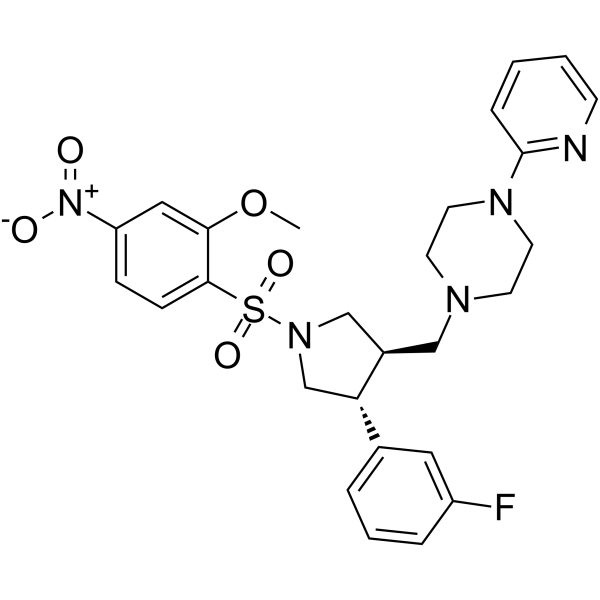
    PRX-08066 is a selective and orally active 5-hydroxytryptamine receptor 2B (5-HT2BR) antagonist with a Ki of 3.4 nM. PRX-08066 inhibits the MAPK pathway, 5-HT release and fibrotic factor (TGFβ1, CTGF and FGF2) expression. PRX-08066 inhibits the proliferation of KRJ-I cells and induces apoptosis (caspase-3 activation). PRX-08066 inhibits pulmonary vascular remodeling. PRX-08066 can be used of pulmonary Arterial Hypertension (PAH) and neuroendocrine tumor (NET) .
    PRX-08066
  • HY-120006A
    (rel)-AR234960
    1 Publications Verification

    ERK Cardiovascular Disease
    (rel)-AR234960 is a selective and competitive agonist of the G protein-coupled receptor MAS. (rel)-AR234960 binds to the MAS receptor to activate the downstream ERK1/2 signaling pathway, inducing the expression of connective tissue growth factor (CTGF) and its downstream collagen subtype genes (such as COL1A1, COL3A1). (rel)-AR234960 promotes collagen synthesis in cardiac fibroblasts through the MAS-ERK1/2-CTGF pathway and aggravates extracellular matrix remodeling. (rel)-AR234960's in vitro effect can be blocked by the MAS inverse agonist AR244555 and MEK1 inhibitor. (rel)-AR234960 regulates the expression of cardiac fibrosis-related genes and can be used in the study of heart failure .
    (rel)-AR234960
  • HY-155310

    YAP Cancer
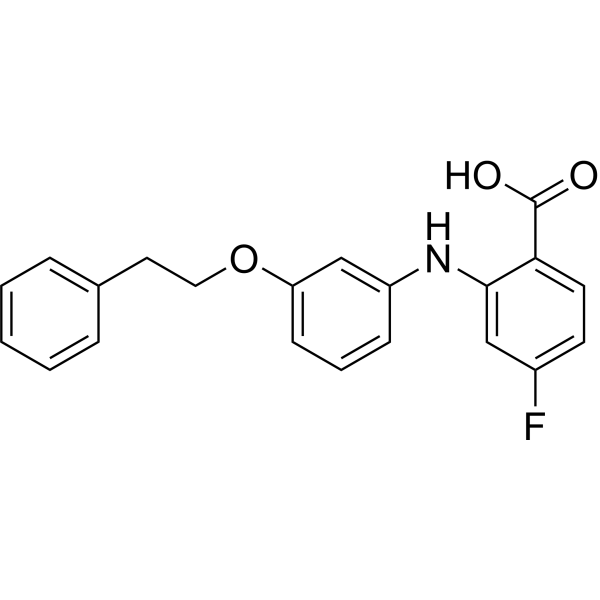
    AF-2112 is a Flufenamic acid-derived TEAD inhibitor hat strongly reduce the expression of CTGF, Cyr61, Axl and NF2.
    AF-2112
  • HY-155309

    YAP Cancer
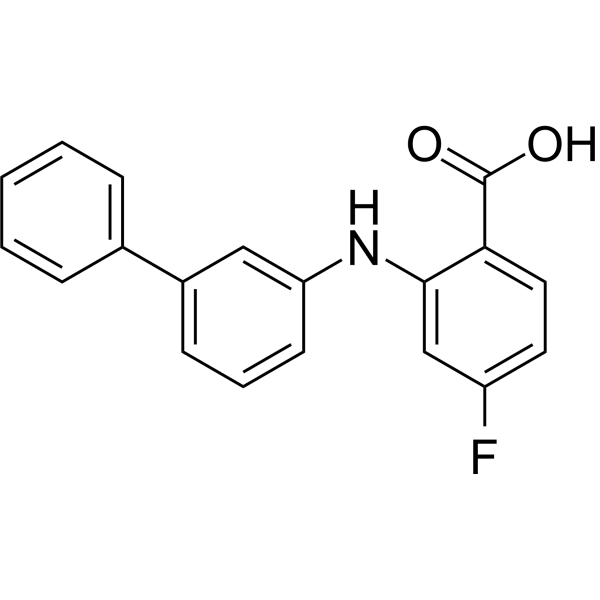
    LM-41 is a Flufenamic acid-derived TEAD inhibitor hat strongly reduce the expression of CTGF, Cyr61, Axl and NF2. LM-41 inhibits migration of human MDA-MB-231 breast cancer cells .
    LM-41
  • HY-179505

    YAP Cancer
    OPN-9652 is a potent, orally active, and covalent TEAD inhibitor (MSTO-211H TEAD IC50 = 0.005 µM) targeting the central palmitate binding pocket of TEADs. OPN-9652 reduces TEAD-dependent reporter activity and expression of TEAD targets (CTGF and CYR61). OPN-9652 resensitizes drug-tolerant SOX10 KO cells to BRAFi + MAPKi. OPN-9652 delays the onset of tumor resistance to BRAFi + MEKi from minimal residual disease (MRD) in a BRAF mutant A375 xenograft mouse model. OPN-9652 can be used for melanoma research .
    OPN-9652
  • HY-120409

    LPL Receptor Apoptosis Cancer
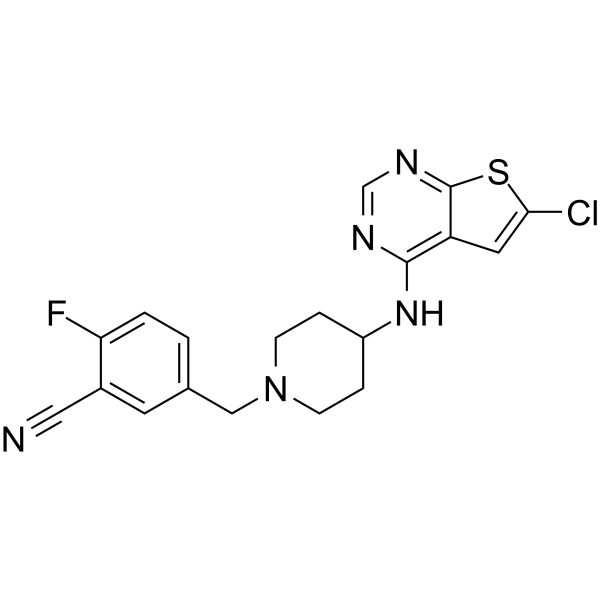
    AB1 is a highly selective S1P2 receptor antagonist (IC50=3.5 nM). AB1 inhibits sphingosine-1-phosphate (S1P) signaling, suppressing tumor cell migration, angiogenesis, and profibrotic mediator CTGF expression while inducing apoptosis. AB1 is promising for research of solid tumors .
    AB1
  • HY-168704

    YAP TAM Receptor Survivin Cancer
    YAP/TAZ-TEAD-IN-2 (Compound 51) is a YAP/TAZ-TEAD inhibitor that inhibits the interaction between YAP/TAZ and TEAD. YAP/TAZ-TEAD-IN-2 suppresses the transcriptional activity of TEAD, with an IC50 of 1.2 nM. YAP/TAZ-TEAD-IN-2 inhibits YAP/TAZ-TEAD target genes expression (Cyr61, CTGF, AXL and Survivin) and breast cancer cell proliferation .
    YAP/TAZ-TEAD-IN-2
  • HY-179440

    YAP Cancer
    EA-C15 is a potent and selective TEAD inhibitor with an IC50 of 0.34 μM. EA-C15 covalently binds to the TEAD palmitoylation site, blocks palmitoylation and transcriptional activity, and inhibits YAP-dependent cancer cell proliferation and YAP-TEAD target gene (CTGF and CYR61) transcription. EA-C15 can be used for cancer research .
    EA-C15
  • HY-159912

    YAP Cancer
    pan-TEAD-IN-1 (Compound 3) is an orally active pan-TEAD inhibitor targeting the palmitoylation site of TEAD, disrupting its interaction with the coactivators YAP/TAZ, thereby suppressing the transcriptional upregulation of oncogenes (e.g., Ctgf and Cyr61) in the Hippo signaling pathway. pan-TEAD-IN-1 exhibits excellent activity with a luciferase IC50 of 0.36 nM and an H226 cell IC50 of 1.52 nM. It also shows favorable pharmacokinetics (AUC0–∞ = 228.7 μg/mL·min, T1/2 = 183.9 min). In TEAD-dependent xenograft mouse models, pan-TEAD-IN-1 significantly inhibited tumor growth, showing promise for research in TEAD-dependent cancers .
    pan-TEAD-IN-1
  • HY-130011

    ROCK Ras Neurological Disease Cancer
    CCG-232964 is an orally active inhibitor of Rho/MRTF/SRF. CCG-232964 inhibits LPA-induced CTGF gene expression .
    CCG-232964
  • HY-162012

    YAP Cancer
    HC-258 (compound 26) binds with the cysteine in TEAD’s PA pocket. HC-258 reduces the CTGF, CYR61, AXL, and NF2 transcript levels and inhibits the migration of MDA-MB-231 breast cancer cells .
    HC-258
  • HY-168085

    YAP Apoptosis Cancer
    CV-4-26 (Compound 22) is a covalent inhibitor of TEAD. CV-4-26 inhibits YAP/TEAD-based transcription, leading to the reduction of CTGF and CYR61 expression. CV-4-26 inhibits Huh7 and HepG2 cell colony formation, induces cell cycle arrest, and apoptosis. CV-4-26 shows antitumor activity against hepatocellular carcinoma (HCC) and hepatoblastoma (HB) .
    CV-4-26
  • HY-15472A

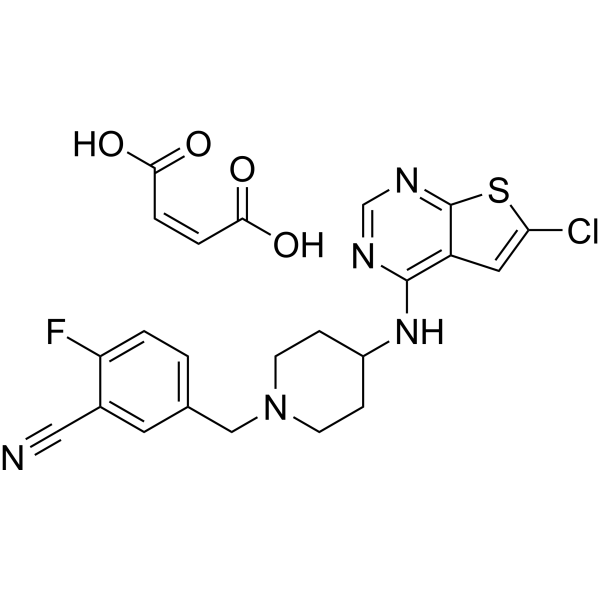
    5-HT Receptor p38 MAPK TGF-β Receptor FGFR Apoptosis Caspase Cardiovascular Disease Neurological Disease Cancer
    PRX-08066 maleate is a selective and orally active 5-hydroxytryptamine receptor 2B (5-HT2BR) antagonist with a Ki of 3.4 nM. PRX-08066 maleate inhibits the MAPK pathway, 5-HT release and fibrotic factor (TGFβ1, CTGF and FGF2) expression. PRX-08066 maleate inhibits the proliferation of KRJ-I cells and induces apoptosis (caspase-3 activation). PRX-08066 maleate inhibits pulmonary vascular remodeling. PRX-08066 maleate can be used of pulmonary Arterial Hypertension (PAH) and neuroendocrine tumor (NET) .
    PRX-08066 maleate
  • HY-179559

    YAP Cancer
    OPN-9643 is a covalent inhibitor targeting the central palmitate binding pocket of TEADs with an IC50 of 15 nM, preventing autopalmitoylation and reducing TEAD-driven luciferase activity and canonical TEAD targets, CTGF and CYR61. OPN-9643 can be used for the research of cancer, such as melanoma .
    OPN-9643
  • HY-P991950

    TGF-beta/Smad Inflammation/Immunology
    SHR-1906 is a selective fully humanized monoclonal IgG1 inhibitory antibody targeting CTGF. SHR-1906 specifically binds to CTGF, thereby blocking the interaction between CTGF and TGF-B1 with an inhibition rate of 55%. SHR-1906increases the survival rate in a pulmonary fibrosis model by reducing TGF-β1 levels and inhibiting fibrotic lesions in lung tissue in Bleomycin (HY-108345)-induced pulmonary fibrosis.SHR-1906 can be used for pulmonary fibrosis (IPF) research. Recommend Isotype Controls: Human IgG1 kappa, Isotype Control (HY-P99001) .
    SHR-1906
  • HY-186148

    Hippo (MST) YAP Apoptosis Cancer
    YL-602 is an orally active Hippo pathway activator. YL-602 activates the Hippo pathway via MST1/2, with downstream pathway activation. YL-602 inhibits YAP and CTGF expression in cells irrespective of cell density and serum presence. YL-602 induces tumor cell apoptosis and inhibits colony formation. YL-602 suppresses tumor growth in mice. YL-602 can be used for the research of cancer, such as breast cancer .
    YL-602
  • HY-181594

    PROTACs SNIPERs YAP Cancer
    PROTAC TEAD/IAP degrader-1 is a TEAD/IAP PROTAC degrader. PROTAC TEAD/IAP degrader-1 is also a specific and Nongenetic inhibitor of apoptosis protein (IAP)-dependent protein eraser (SNIPERs). PROTAC TEAD/IAP degrader-1 recruits cIAP1 to form ternary complexes, induces ubiquitination, proteasomal TEAD1, TEAD4 degradation. PROTAC TEAD/IAP degrader-1 inhibits TEAD transcriptional activity, reduces CTGF expression, and reduces cell proliferation. PROTAC TEAD/IAP degrader-1 can be used for the research of mesothelioma .
    PROTAC TEAD/IAP degrader-1
  • HY-181537

    PROTACs SNIPERs YAP IAP Cancer
    PROTAC TEAD1/IAP degrader-2 is an IAP-harnessing TEAD1 PROTAC degrader, with a DC50 of 170 nM against TEAD1 in NCI-H2052 cells. PROTAC TEAD1/IAP degrader-2 exhibits moderate antiproliferative activity in Hippo pathway-dependent mesothelioma cells. PROTAC TEAD1/IAP degrader-2 inhibits the expression of CTGF, but with a weaker effect than the TEAD inhibitor VT-107 (HY-134957). PROTAC TEAD1/IAP degrader-2 can be used in mesothelioma-related research .
    PROTAC TEAD1/IAP degrader-2
  • HY-181590

    PROTACs SNIPERs YAP IAP Cancer
    PROTAC TEAD1/IAP degrader-3 is a TEAD1/IAP PROTAC degrader. PROTAC TEAD1/IAP degrader-3 recruits the cIAP1 and XIAP E3 ligases to form a ternary complex, drives proteasomal degradation of TEAD1, and triggers autoubiquitination and proteasomal degradation of cIAP1. PROTAC TEAD1/IAP degrader-3 inhibits cell proliferation. PROTAC TEAD1/IAP degrader-3 regulates Hippo pathway activity by downregulating CTGF gene expression in a TEAD-dependent manner. PROTAC TEAD1/IAP degrader-3 is applicable to the research of mesothelioma .
    PROTAC TEAD1/IAP degrader-3

Inquiry Online

Your information is safe with us. * Required Fields.

Salutation


Country or Region *

Applicant Name *


Organization Name *

Department *


Email Address *


Product Name *

Cat. No.


Requested quantity *

Phone Number *


Remarks

Inquiry Online

Inquiry Information

Product Name:
Cat. No.:
Quantity:
MCE Japan Authorized Agent:

