10 Results for "

IC50 prediction

" in MedChemExpress (MCE) Product Catalog:
Products (10)

10 Results for "IC50 prediction" in MCE Product Catalog:

Cat. No.: HY-147027
CAS No.: 684234-55-7
Purity:  99.48%
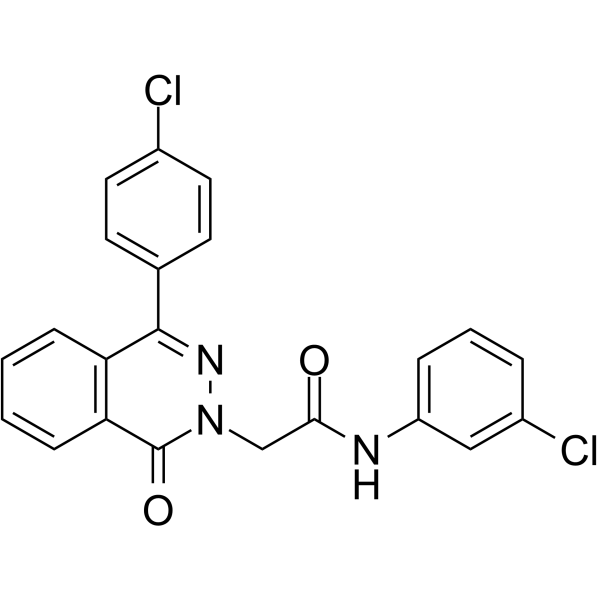
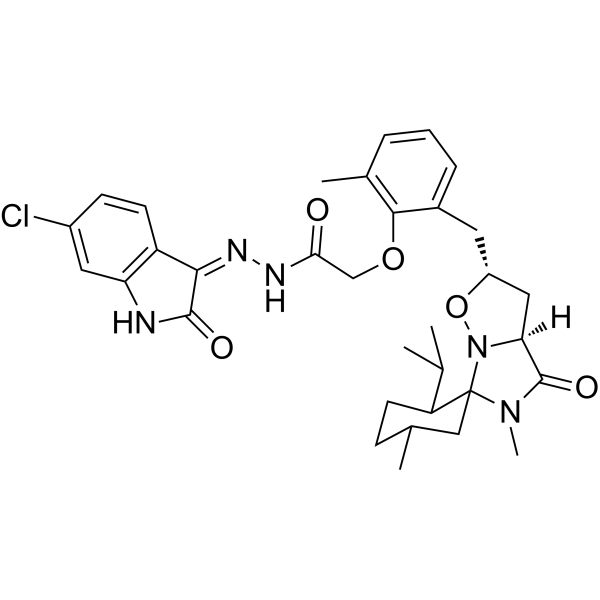
PARP-1-IN-2 (compound 11g) is a potent PARP1 inhibitor, with an IC50 of 149 nM, and ADME prediction indicates it has high blood-brain barrier permeability. PARP1-IN-2 shows significantly potent anti-proliferative activity against Human lung adenocarcinoma epithelial cell line A549. PARP1-IN-2 can induce A549 cells apoptosis .
loading...
    loading...
Cat. No.: HY-173313
CAS No.: 3025114-13-7
Target:  

Ferroptosis

Research Areas:  

Cardiovascular Disease

Ferroptosis-IN-19 (compound C18) is a strong cellular ferroptosis inhibitor with an IC50 value of 0.097 μM. Ferroptosis-IN-19 shows high metabolic stability and favorable BBB permeability prediction. Ferroptosis-IN-19 has in vivo neuroprotection against ischemic brain injury in mice .
loading...
    loading...
Cat. No.: HY-163380
CAS No.: 3038173-64-4
Target:  

Carbonic Anhydrase

Research Areas:  

Neurological Disease

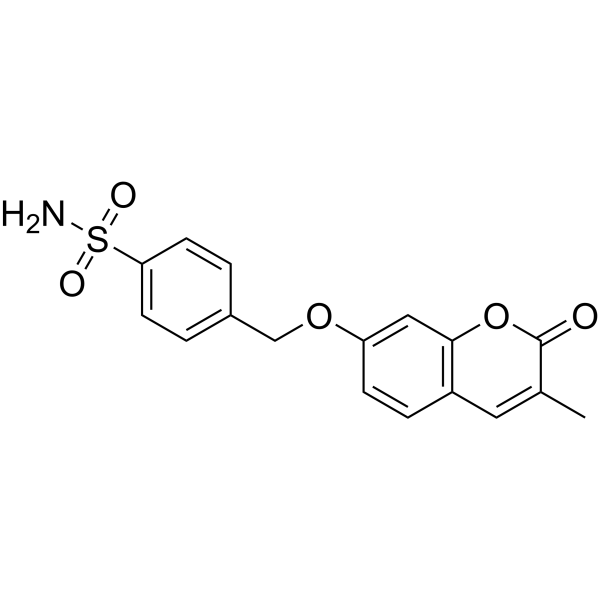
CA/MAO-B-IN-1 (Compound 78) is a dual inhibitor for human brain carbonic anhydrases (CA) and Monoamine Oxidase-B (MAO-B), with IC50s of 8.8 and 7.0 nM, respectively. CA/MAO-B-IN-1 reveals a human oral absorption of 71.9% through in silico prediction .
loading...
    loading...
Cat. No.: HY-172678
CAS No.: 2064126-76-5
Research Areas:  

Neurological Disease

PUC-10 is a 5-HT6 receptor antagonist with a Ki of 14.6 nM and an IC50 of 32 nM. In silico predictions suggest that PUC-10 is orally active and can cross the blood-brain barrier. PUC-10 can induce autophagy in SH-SY5Y cells by inhibiting the mTOR pathway. PUC-10 can be used in the research of neurological disorders .
loading...
    loading...
Cat. No.: HY-146113
CAS No.: 2667681-85-6
Target:  

IRAK

Research Areas:  

Cancer

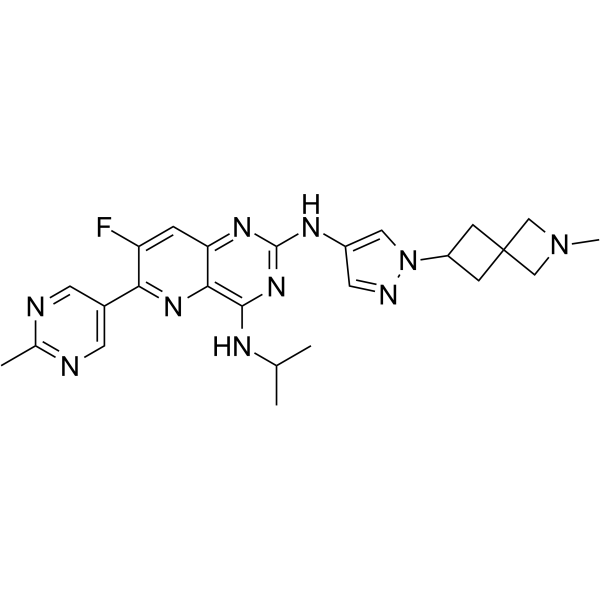
IRAK4-IN-15 (compound 35) is a potent and selective IRAK4 inhibitor with an IC50 of 0.002 µM. IRAK4-IN-15 shows good human PK predictions with low intrinsic clearance. IRAK4-IN-15 shows great synergistic in vitro activity against MyD88/CD79 double mutant ABC-DLBCL in combination with Acalabrutinib. .
loading...
    loading...
Cat. No.: HY-155416
CAS No.: 1101867-17-7
Target:  

SARS-CoV

Research Areas:  

Infection

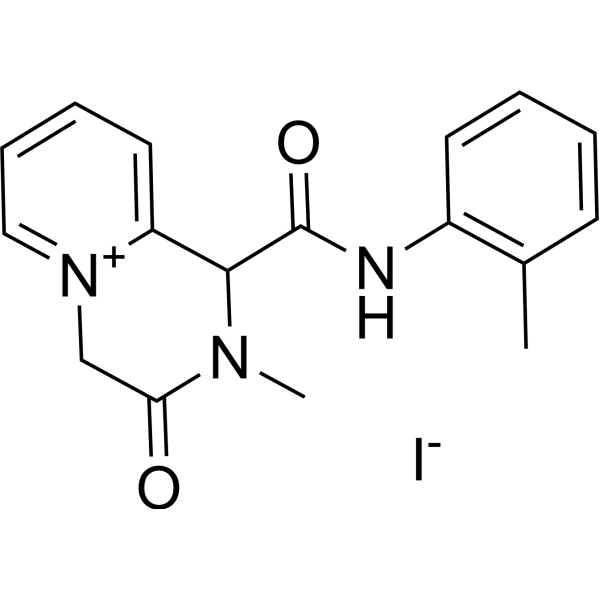
M56-S2 iodide is a SARS-CoV-2 M pro inhibitor (IC50=4.0 μM). M56-S2 iodide showed good oral bioavailability and low toxicity in ADMET prediction. M56-S2 iodide has good drug potential and can be used in antiviral (such as SARS-CoV-2) research .
loading...
    loading...
Cat. No.: HY-162373
Research Areas:  

Metabolic Disease

α-Amylase/α-Glucosidase-IN-10 (compound 5d) is an α-amylase and α-glucosidase inhibitor (IC50: 30.39 μM and 65.1 μM) with potential diabetes inhibitory effects. α-Amylase/α-Glucosidase-IN-10 exhibits high gastrointestinal (GI) absorption in ADMET (Absorption, Distribution, Metabolism, Excretion and Toxicity) prediction. While α-Amylase/α-Glucosidase-IN-10 acts as a substrate for P-gp and does not cross the blood-brain barrier (BBB), there may be a risk of central nervous system side effects .
loading...
    loading...
Cat. No.: HY-163879
hMAO-B-IN-9 (Compound 25c) is a non-competitive inhibitor for monoamine oxidase B (MAO-B) with an IC50 of 1.58 µM (hMAO-B). hMAO-B-IN-9 forms complex with iron ions as a chelator, and inhibits Erastin (HY-15763)-induced ferroptosis. hMAO-B-IN-9 exhibits antioxidant activity by downregulating the level of reactive oxygen species (ROS). hMAO-B-IN-9 improves cognitive function in mice, without significant toxicity (30 mg/kg). hMAO-B-IN-9 is blood-brain barrier permeable, according to the in silico prediction .
loading...
    loading...
Cat. No.: HY-148584
CAS No.: 2170788-98-2
Target:  

Btk

Research Areas:  

Inflammation/Immunology Cancer

BTK-IN-21 (Compound 12) is a BTK inhibitor with an IC50 of 33 nM. BTK-IN-21 can be used for research in cancer and autoimmunity therapies .
loading...
    loading...
Cat. No.: HY-L922
25000 compounds

A diverse compound library with favorable ADMET properties (Absorption, Distribution, Metabolism, Excretion, and Toxicity) is crucial in drug discovery. Early evaluation of ADMET properties allows for the exclusion of molecules with unfavorable profiles at the initial stages, thereby reducing the risk of late-stage development failures, lowering R&D costs, and accelerating optimization of lead compounds. Based on predictions from ADMET-related AI algorithms, the compounds in this library are predicted to exhibit favorable oral bioavailability (F > 30%), reasonable plasma protein binding (PPB < 98%), minimized CYP3A4 inhibition potential (inhibition probability < 50%, CYP3A4 is the most critical drug-metabolizing enzyme in the cytochrome P450 family) , low toxicity profiles, with 140 potentially toxic substructures pre-identified and excluded via substructure searching to eliminate compounds containing hazardous fragments. The diversity library enables broad applicability in high-throughput screening (HTS) and high-content screening (HCS).

