



Amylases
Amylases are crucial enzymes which hydrolyze internal glycosidic linkages in starch and produce as primary products dextrins and oligosaccharides. Amylases are classified into α-amylase, β-amylase, and glucoamylase based on their three-dimensional structures, reaction mechanisms, and amino acid sequences. Amylases have innumerable applications in clinical, medical, and analytical chemistries as well as in food, detergent, textile, brewing, and distilling industries.
All Product Categories
-
Amylases Produits associés (113)
Produits associés (113)


-
Docosapentaenoic acid (22n-3)
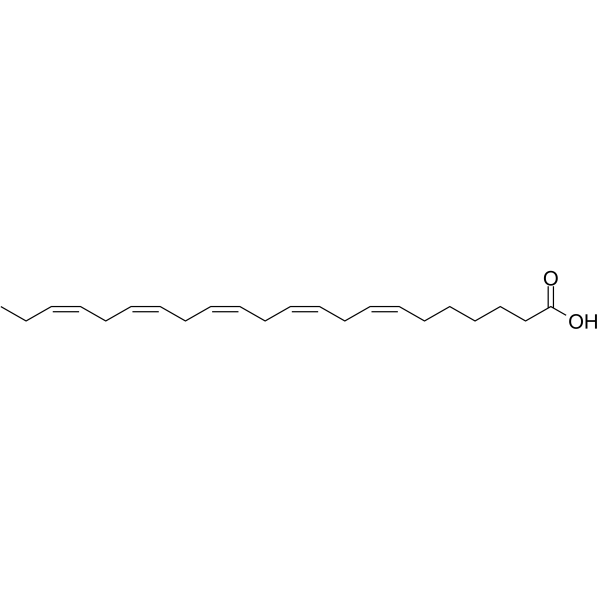 0 ImagesSynonyms: Clupanodonic acidDocosapentaenoic acid (22n-3) is a component of phospholipids. Docosapentaenoic acid 22n-3 has inhibitory activity against α-amylase and α-glucosidase, with IC50s value of 17 μg/mL and 22 μg/mL, respectively. Docosapentaenoic acid 22n-3 increases cell vitality. Docosapentaenoic acid 22n-3 has a weak anti-inflammatory effect.
-
Dehydrocholic acid
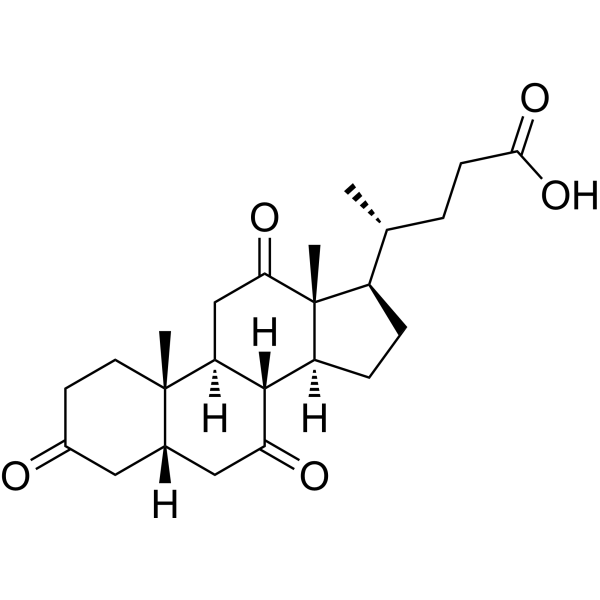 0 ImagesDehydrocholic acid (Dehydrocholate) is an orally active hydrocholeretic agent. Dehydrocholic acid modulates Autophagy, reduces serum amylase and lipase levels. Dehydrocholic acid has the effects of promoting choleretic function, protecting the liver, reducing pancreatic damage, and regulating cholesterol metabolism. Dehydrocholic acid can be used in the study of acute biliary pancreatitis and obstructive jaundice.
-
Maltopentaose
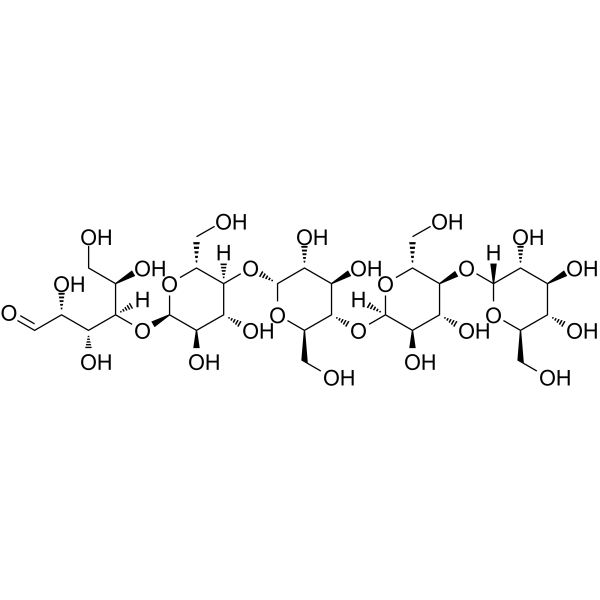 0 ImagesSynonyms: MaltopentoseMaltopentaose is the shortest chain oligosaccharide. Maltopentaose is a substrate for α-amylases. Maltopentaose can be classified as maltodextrin and is also used in a study to investigate glycation and phosphorylation of α-lactalbumin. Maltopentaose is used to study the inhibition kinetics of human pancreatic α-amylase by dehydrodieugenol B.
-
Rubusoside
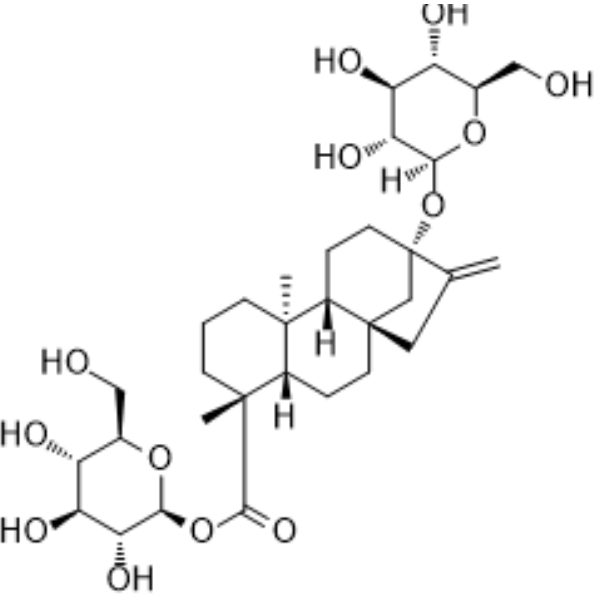 0 ImagesRubusoside is a diterpene glycoside that is also a sweetener and solubilizer with anti-angiogenic, anti-cancer, anti-obesity, anti-allergic and anti-asthmatic effects. Rubusoside attenuates airway hyperresponsiveness and reduces inflammatory cells in bronchoalveolar lavage fluid (BALF), reducing OVA (HY-W250978)-induced airway inflammation. Rubusoside also prevents palmitic acid-induced lipotoxicity in pancreatic INS-1 cells, reduces the transport of human glucose transporters GLUT-1 and fructose GLUT-5, and inhibits NF-κB and α-amylase (α-amylase).
-
Carveol
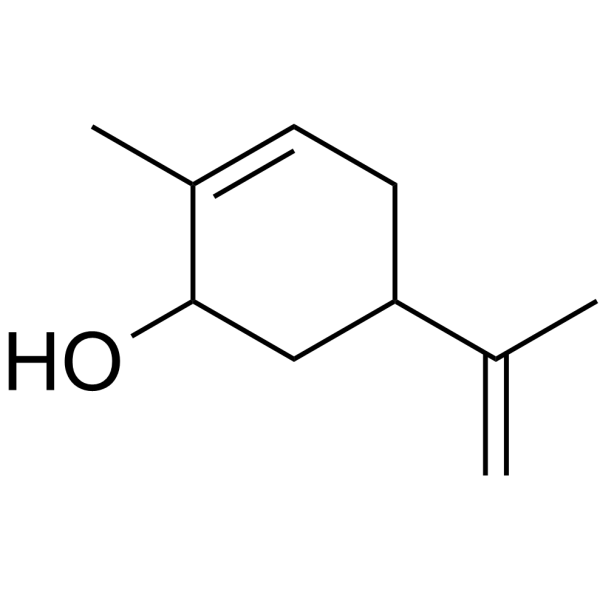 0 ImagesCarveol is an orally active monoterpenoid alcohol with neuroprotective, antioxidant, anti-inflammatory, anticonvulsant, antidiabetic, hypolipidemic and hepatoprotective activities. Carveol upregulates the expression of Bcl2, downregulates the expression of caspase-3, TNF-α, IL1β and IL6, activates the Nrf2/HO-1 antioxidant signaling pathway, inhibits the RAGE/NF-κB signaling pathway, and suppresses neuroinflammation and neuronal apoptosis. Carveol inhibits α-synuclein aggregation, improves cognitive ability, and inhibits α-amylase activity. Carveol exerts neuroprotective effects in a rat model of Parkinson's disease. Carveol exhibits antidiabetic effects in alloxan-induced diabetic rats. Carveol alleviates PTZ-induced seizures in rats. Carveol can be used in research related to Parkinson's disease, epilepsy, diabetes and ischemic stroke.
-
Ethylidene-4-nitrophenyl-a-D-Maltoheptaoside
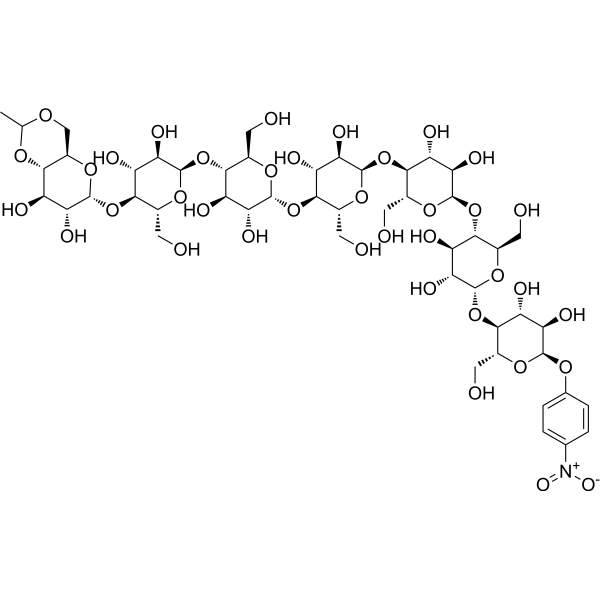 0 ImagesSynonyms: pNP-G7Ethylidene-4-nitrophenyl-α-D-Maltoheptaoside (EPS; pNP-G7) serves as a substrate for α-amylase. In the presence of an auxiliary enzyme such as α-glucosidase (α-glucosidase), Ethylidene-4-nitrophenyl-α-D-Maltoheptaoside is degraded by amylase (Amylase) to release a chromophore, enabling the measurement of amylase activity. Ethylidene-4-nitrophenyl-α-D-Maltoheptaoside is applicable for the diagnosis of pancreatitis[2].
-
1-Hydroxyphenazine
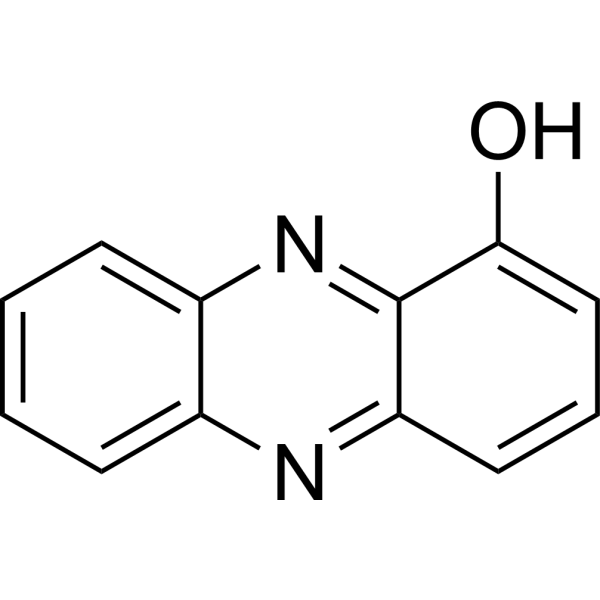 0 ImagesSynonyms: Hemipyocyanine; 1-Phenazinol; Hemi-pyocyanin1-Hydroxyphenazine (Hemipyocyanine; 1-Phenazinol; Hemi-pyocyanin) is an inhibitor for α-Amylase with an IC50 of 3.1 μg/mL. 1-Hydroxyphenazine exhibits anticancer and anti-inflammatory activity against cells A549, 1321N1 and RAW264.7, antifungal and antibacterial activity against strains Candida albicans, Aspergillus fumigatus, Escherichia coli and Xanthomonas campestris.
-
Quinoline-2-carboxylic acid
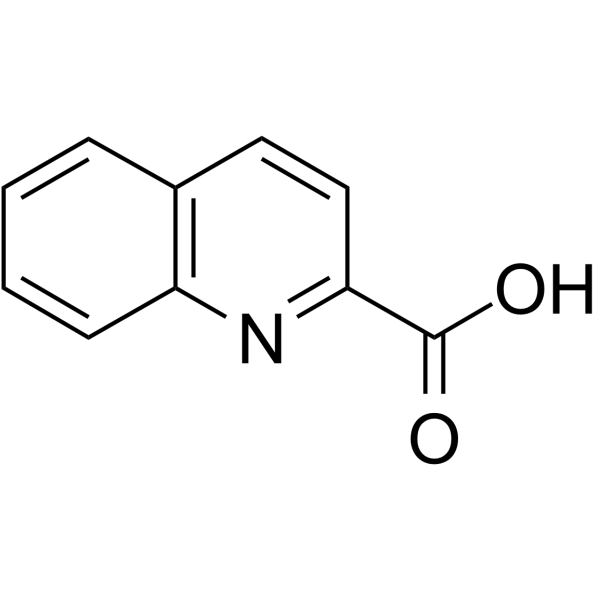 0 ImagesQuinoline-2-carboxylic acid exhibits antidiabetic activity. Quinoline-2-carboxylic acid can be used as drug intermediate for synthesis of various active compounds.
-
Dehydrocholic acid sodium
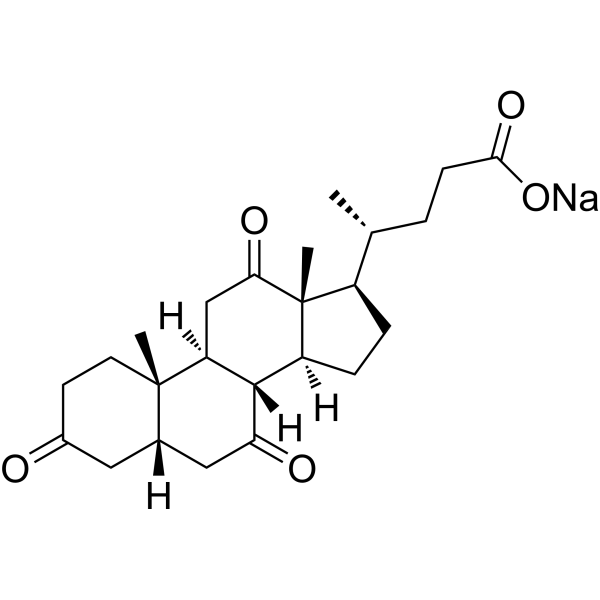 0 ImagesDehydrocholic acid (Dehydrocholate) sodium is an orally active hydrocholeretic agent. Dehydrocholic acid sodium modulates Autophagy, reduces serum amylase and lipase levels. Dehydrocholic acid sodium has the effects of promoting choleretic function, protecting the liver, reducing pancreatic damage, and regulating cholesterol metabolism. Dehydrocholic acid sodium can be used in the study of acute biliary pancreatitis and obstructive jaundice.
-
Chrysin-7-O-glucuronide
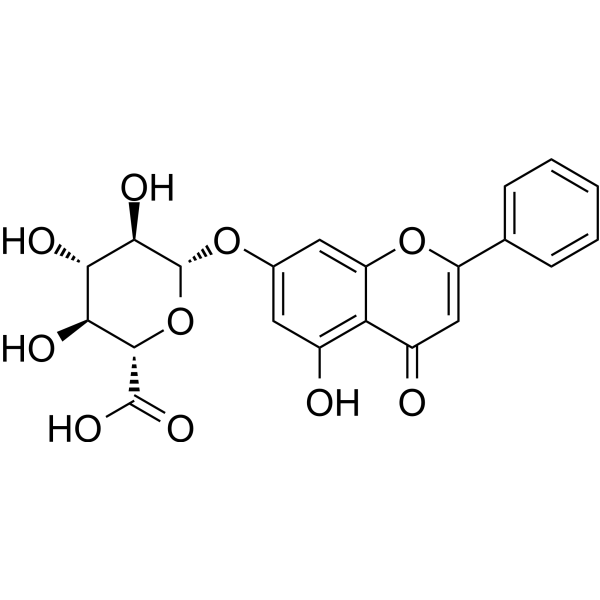 0 ImagesChrysin-7-O-glucuronide is a flavonoid found in Scutellaria baicalensis. Chrysin-7-O-glucuronide inhibits α-glucosidase and α-amylase with IC50 values of 612.13 and 980.73 μg/mL. Chrysin-7-O-glucuronide suppresses NF-κB signaling activity. Chrysin-7-O-glucuronide scavenges free radicals, acts as a tight junction protector, and mitigates intestinal mucosal barrier injury. Chrysin-7-O-glucuronide can be used for the research of type 2 diabetes and severe acute pancreatitis-induced intestinal mucosal barrier injury.
-
Glycogen, Oysters
 0 ImagesCat. No.: HY-113511ACAS No.: 9005-79-2Glycogen, Oysters is a polysaccharide extracted from oysters and serves as the storage form of glucose in oysters. Glycogen, Oysters belongs to the intermediate products of glycolysis and high-energy phosphates, and is also an endogenous metabolite.

-
2-Hydroxyquinoline
 0 Images2-Hydroxyquinoline is an α-glucosidase inhibitor (IC50 = 64.4 µg/mL) and an α-amylase inhibitor (IC50 = 130.5 µg/mL). 2-Hydroxyquinoline inhibits α-glucosidase and α-amylase activities. 2-Hydroxyquinoline exhibits antidiabetic effects. 2-Hydroxyquinoline can be used for research on diabetes.
-
Gardenia yellow
 0 ImagesCat. No.: HY-N6675CAS No.: 94238-00-3Gardenia yellow is a competitive inhibitor of α-Amylase (HY-B2193) and α-glucosidase. Gardenia yellow can bind to the catalytic sites of α-Amylase and α-glucosidase, inhibit starch digestion, and significantly increase the contents of resistant starch and slowly digestible starch in starch-based systems. Gardenia yellow reduces the glycemic index and hydrolysis index. Gardenia yellow can be used in diabetes-related research.
-
2,3,4-Trihydroxybenzoic acid
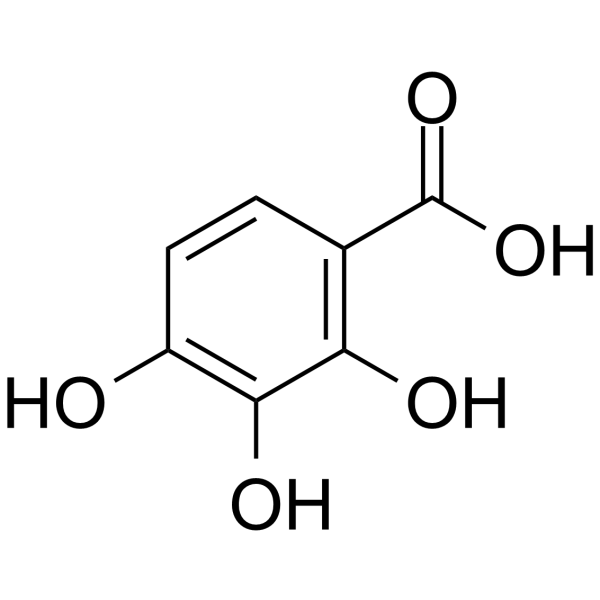 0 Images2,3,4-Trihydroxybenzoic acid is an α-amylase inhibitor with an IC50 of 17.30 mM against porcine α-amylase. 2,3,4-Trihydroxybenzoic acid increases cellular p21 and p27 protein levels. 2,3,4-Trihydroxybenzoic acid inhibits cancer cell growth and delays starch digestion to suppress postprandial hyperglycemia. 2,3,4-Trihydroxybenzoic acid can be used in research related to colorectal cancer, breast cancer and type 2 diabetes.
-
Cichoriin
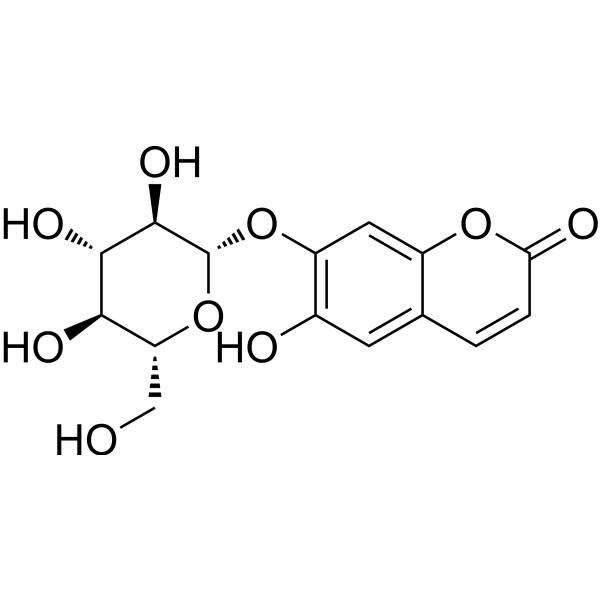 0 ImagesCichoriin is an orally active coumarin glycoside with broad biological activities. Cichoriin exhibits inhibitory activities against α-amylase, α-glucosidase, pancreatic lipase and DPP-IV, with IC50 values of 5.76, 2.94, 16.83 and 9.16 μg/mL, respectively. Cichoriin significantly improves metabolic dysfunction-associated steatohepatitis (MASH) in mice by activating the AMPK signaling pathway. Cichoriin upregulates PPAR-γ in adipose tissue and alleviates obesity and associated cardiorenal injury in rats. Cichoriin blocks monosodium urate crystal-induced activation of the NLRP3 inflammasome and cell pyroptosis by inhibiting P2Y14R (IC50 = 8.47 nM). In silico virtual screening reveals that Cichoriin has a strong binding affinity for SARS-CoV-2.



