

Search Result
Results for "
Palm oil
" in MedChemExpress (MCE) Product Catalog:
5
Biochemical Assay Reagents
2
Isotope-Labeled Compounds
| Cat. No. |
Product Name |
Target |
Research Areas |
Chemical Structure |
-
- HY-N2041
-
-
-
- HY-P0064
-
|
Palmitoyl Tetrapeptide-7
|
Interleukin Related
|
Inflammation/Immunology
|
|
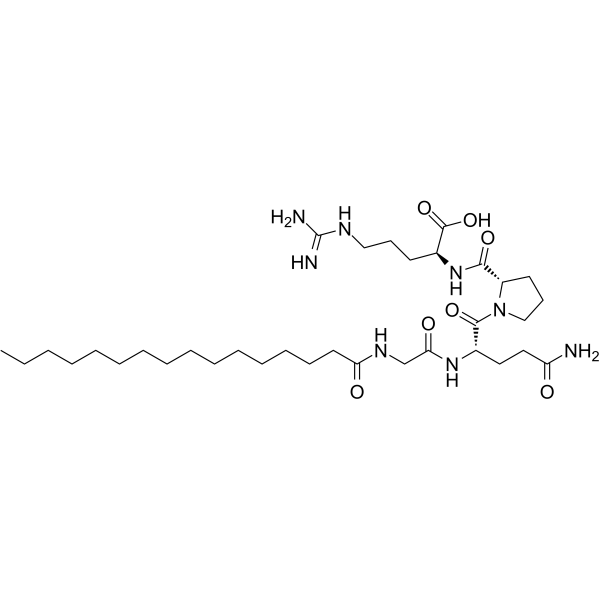
Palmitoyl Tetrapeptide-3 (Palmitoyl Tetrapeptide-7) is a synthetic peptide corresponding to amino acids 341-344 of the human immunoglobulin heavy chain, with the ability to stimulate phagocytosis. Palmitoyl tetrapeptide-3 reduces interleukin-6 (IL-6) secretion in keratinocytes and inhibits the UVB radiation-exposure inflammatory response of skin. Palmitoyl tetrapeptide-3 It also has anti-inflammatory and anti-aging effects, reducing skin wrinkles by promoting the production of elastic fibers in the papillary dermis .
|
-
-
- HY-P10932A
-
|
|
Fluorescent Dye
|
Neurological Disease
|
|
pGk13a TFA is an azide (azide group can be combined with fluorophore)-containing amphiphilic membrane labeling probe. pGk13a TFA enables high-resolution imaging of cell membranes in the ultrastructural membrane expansion microscopy (umExM) technique, facilitating the observation of membrane-associated structures and proteins. pGk13a TFA can be used for neuronal structural studies .
|
-
-
- HY-108693
-
|
|
Leukotriene Receptor
Apoptosis
|
Inflammation/Immunology
|
|
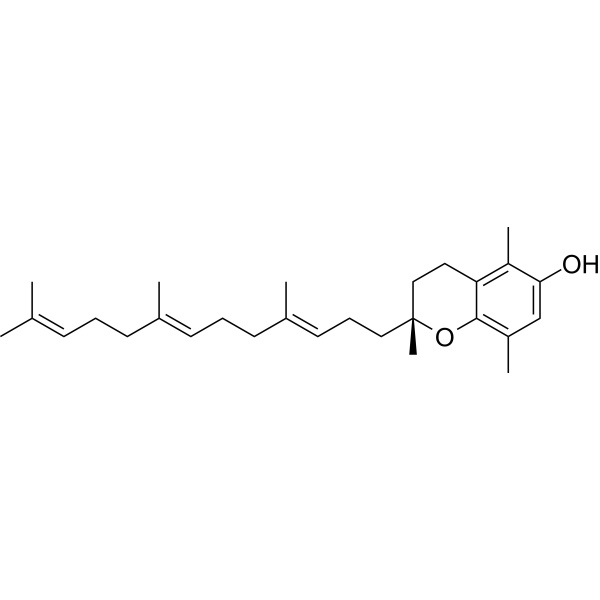
β-Tocotrienol is an isomer of vitamin E. β-Tocotrienol is a less potent antioxidant than α-tocotrienol. β-Tocotrienol can be found in the tocotrienol-rich fraction (TRF) of palm oil, which possesses anti-carcinogenic effects in vitro on human colon carcinoma and prostate cancer cells. β-Tocotrienol inhibits the growth of A549 (GI50 = 1.38 μM) and U87MG (GI50 = 2.53 μM) cells. β-Tocotrienol also induces apoptosis in cancer cells. β-Tocotrienol can inhibit PD-L1 expression and mitigates PD-L1-mediated immune suppression in vitro and in vivo .
|
-
-
- HY-P10031
-
|
|
GLP Receptor
GCGR
|
Metabolic Disease
|
|
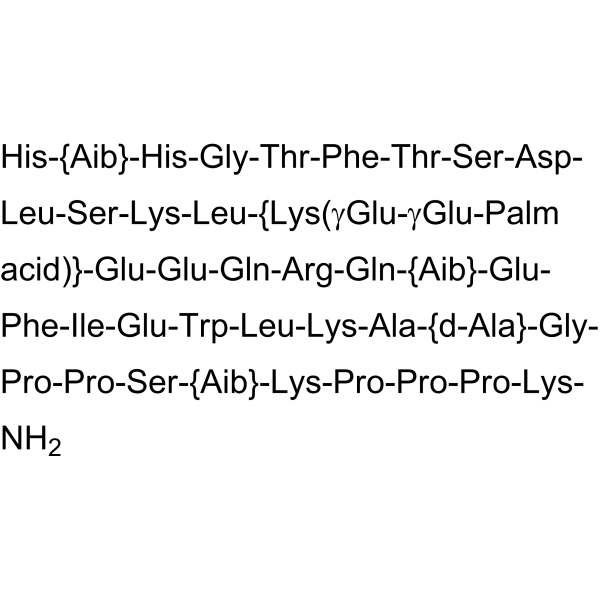
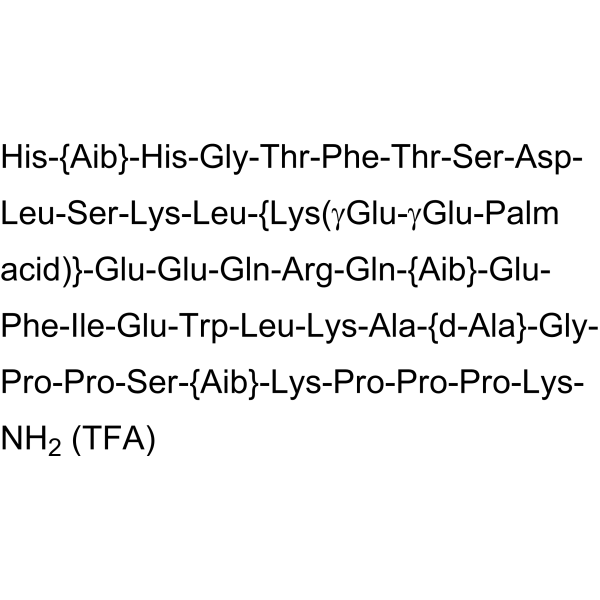
SAR441255 is a GLP-1R/GCGR/GIPR agonist, with human EC50 values of 1.03 pM, 1.01 pM, and 0.73 pM, respectively. SAR441255 stimulates receptor activity and drives cAMP accumulation. SAR441255 can be used for the research of type 2 diabetes, obesity .
|
-
-
- HY-148702
-
|
|
Liposome
|
Cancer
|
|
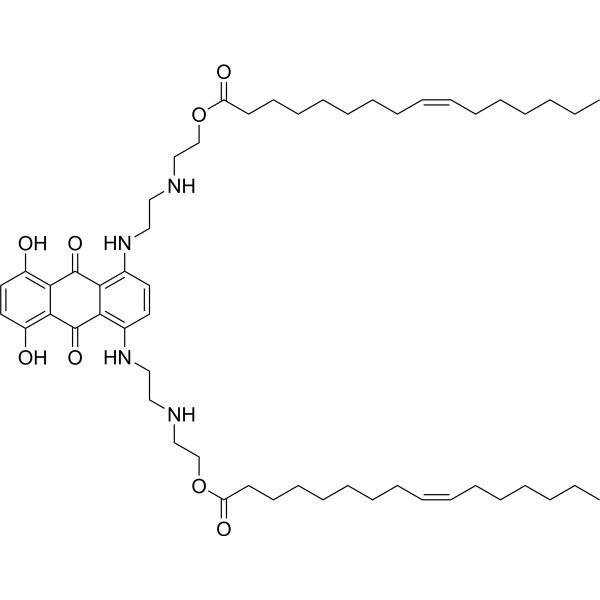
di-Pal-MTO is a palm oil-based lipid produced by combining the anticancer agent mitoxantrone (MTO) with palmitoleic acid. When nanoparticles of mono-Pal-MTO and di-Pal-MTO are combined in a molar ratio of 1:1, they show effective siRNA cell delivery and enhance anticancer activity .
|
-
-
- HY-W250170
-
|
Octyldecyl glucoside
|
Environmental Pollutants
Biochemical Assay Reagents
|
Others
|
|
Decyl glucoside is a mild nonionic surfactant. Decyl glucoside can be derived from renewable raw materials such as glucose and fatty alcohols from coconut oil or palm kernel oil. Decyl glucoside is known for its excellent foaming and cleaning properties.
|
-
-
- HY-N2041R
-
|
|
Reference Standards
Endogenous Metabolite
NF-κB
Bacterial
|
Infection
Inflammation/Immunology
|
|
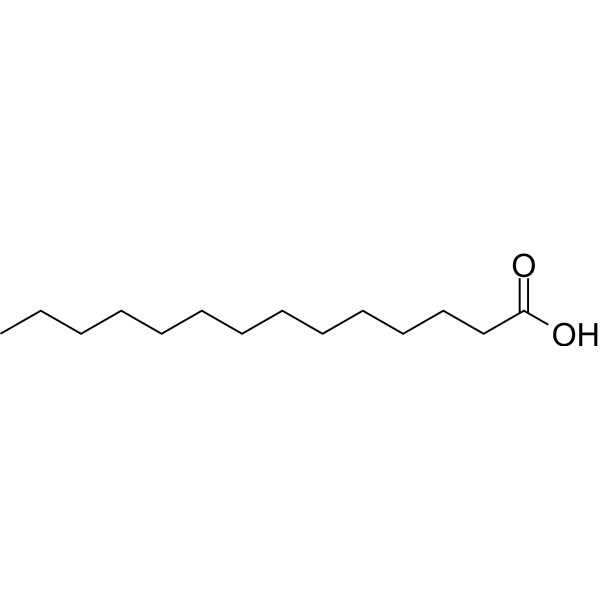
Myristic acid (Standard) is the analytical standard of Myristic acid. This product is intended for research and analytical applications. Myristic acid is an orally active saturated 14-carbon fatty acid found in most animal and plant fats, especially milk fat coconut oil, palm oil and nutmeg oil. Myristic acid exerts anti-inflammatory activity through the NF-κB pathway. Myristic acid has antibacterial, anti-inflammatory and analgesic properties .
|
-
-
- HY-P10932
-
|
|
Fluorescent Dye
|
Neurological Disease
|
|
pGk13a is an amphipathic membrane-labeling probe containing an azide group, which can bind to fluorophores. pGk13a enables high-resolution imaging of cell membranes in the ultrastructure expansion microscopy (umExM) technique, facilitating the observation of membrane-associated structures and proteins. pGk13a is applicable to neuronal structure research .
|
-
-
- HY-W099600
-
|
Bisdodecanoic anhydride
|
Biochemical Assay Reagents
|
Others
|
|
Lauric anhydride is a white waxy solid used as an intermediate in the production of various chemicals. It is primarily used in the synthesis of surfactants, emulsifiers, and lubricants, and as a raw material for other important industrial chemicals such as plasticizers and flavoring agents. It can be obtained from natural sources such as palm kernel oil and coconut oil, and its unique chemical structure allows it to be used to create compounds with specific surface and interfacial properties.
|
-
-
- HY-P10380
-
|
|
Neuropeptide FF Receptor
|
Neurological Disease
Metabolic Disease
|
|
palm11-PrRP31 is a lipidized endogenous appetite inhibitory neuropeptide (PrRP) analogue. palm11-PrRP31 is GPR10 (EC50=39 pM) and NPFF-R2 effective dual agonists. palm11-PrRP31 is able to mimic the natural function of PrRP by binding to these receptors to reduce food intake. palm11-PrRP31 can be used as a potential anti-obesity agent and for the study of neuropeptide-receptor interaction .
|
-
-
- HY-170223
-
-
-
- HY-P10031A
-
|
|
GLP Receptor
GCGR
|
Metabolic Disease
|
|
SAR441255 TFA is a GLP-1R/GCGR/GIPR agonist, with human EC50 values of 1.03 pM, 1.01 pM, and 0.73 pM, respectively. SAR441255 TFA stimulates receptor activity and drives cAMP accumulation. SAR441255 TFA can be used for the research of type 2 diabetes, obesity .
|
-
-
- HY-N7813
-
|
|
Others
|
Others
|
|
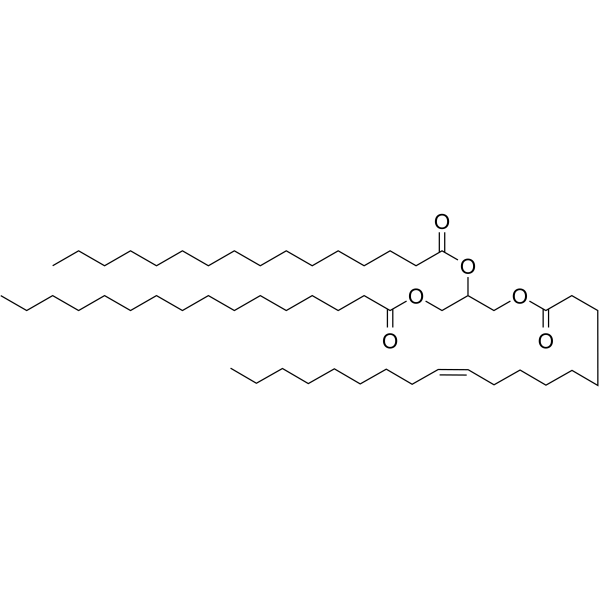
1,2-Dipalmitoyl-3-oleoylglycerol, a major P-containing triacylglycerol, can be found in palm oil, palm stearin, cocoa butter, and lard .
|
-
-
- HY-W710399
-
|
DG(16:0/0:0/18:0); 1-Palmitin-3-Stearin
|
Endogenous Metabolite
|
Metabolic Disease
|
|
1-Palmitoyl-3-stearoyl-rac-glycerol is a diacylglycerol that contains palmitic acid (HY-N0830) at the sn-1 position and stearic acid (HY-B2219) at the sn-3 position. It has been found in palm-based diacylglycerols produced from palm stearin, palm mid fraction, palm oil, and palm olein, as well as in wheat bran and brewer’s spent grain extracts.
|
-
-
- HY-N2041S8
-
-
-
- HY-B0828
-
|
|
Parasite
Cholinesterase (ChE)
|
Others
|
|
Triazophos, a non-systemic insecticide and acaricide that acts as an acetylcholinesterase (AChE) inhibitor, covalently and irreversibly binds to the acetylcholine binding site, thus blocking the hydrolysis of acetylcholine and leading to hyperexcitability; it is effective against a variety of soil insects and mites, including aphids, thrips, midges, beetles, Lepidoptera larvae, cutworms, and spider mites in crops such as ornamentals, cotton, rice, maize, soybeans, oil palms, olives, and coffee.
|
-
-
- HY-P10380A
-
|
|
Neuropeptide FF Receptor
|
Neurological Disease
Metabolic Disease
|
|
palm11-PrRP31 TFA is a lipidized endogenous appetite inhibitory neuropeptide (PrRP) analogue. palm11-PrRP31 TFA is GPR10 (EC50=39 pM) and NPFF-R2 effective dual agonists. palm11-PrRP31 TFA is able to mimic the natural function of PrRP by binding to these receptors to reduce food intake. palm11-PrRP31 TFA can be used as a potential anti-obesity agent and for the study of neuropeptide-receptor interaction .
|
-
-
- HY-179357
-
-
-
- HY-179358
-
-
-
- HY-148701
-
|
|
Liposome
|
Cancer
|
|
mono-Pal-MTO is a palm oil-based lipid produced by combining the anticancer agent mitoxantrone (MTO) with palmitoleic acid. When nanoparticles of mono-Pal-MTO and di-Pal-MTO are combined in a molar ratio of 1:1, they show effective siRNA cell delivery and enhance anticancer activity .
|
-
-
- HY-100196AR
-
|
PQQ disodium salt (Standard); Methoxatin disodium salt (Standard)
|
Reference Standards
Endogenous Metabolite
|
Inflammation/Immunology
|
|
Triazophos (Standard) is the analytical standard of Triazophos. This product is intended for research and analytical applications. Triazophos, a non-systemic insecticide and acaricide that acts as an acetylcholinesterase (AChE) inhibitor, covalently and irreversibly binds to the acetylcholine binding site, thus blocking the hydrolysis of acetylcholine and leading to hyperexcitability; it is effective against a variety of soil insects and mites, including aphids, thrips, midges, beetles, Lepidoptera larvae, cutworms, and spider mites in crops such as ornamentals, cotton, rice, maize, soybeans, oil palms, olives, and coffee.
|
-
-
- HY-B0828R
-
|
|
Parasite
Reference Standards
|
Others
|
|
Triazophos (Standard) is the analytical standard of Triazophos. This product is intended for research and analytical applications. Triazophos, a non-systemic insecticide and acaricide that acts as an acetylcholinesterase (AChE) inhibitor, covalently and irreversibly binds to the acetylcholine binding site, thus blocking the hydrolysis of acetylcholine and leading to hyperexcitability; it is effective against a variety of soil insects and mites, including aphids, thrips, midges, beetles, Lepidoptera larvae, cutworms, and spider mites in crops such as ornamentals, cotton, rice, maize, soybeans, oil palms, olives, and coffee.
|
-
-
- HY-108693R
-
|
|
Leukotriene Receptor
Reference Standards
Apoptosis
|
Inflammation/Immunology
|
|
β-Tocotrienol (Standard) is the analytical standard of β-Tocotrienol. This product is intended for research and analytical applications. β-Tocotrienol is an isomer of vitamin E. β-Tocotrienol is a less potent antioxidant than α-tocotrienol. β-Tocotrienol can be found in the tocotrienol-rich fraction (TRF) of palm oil, which possesses anti-carcinogenic effects in vitro on human colon carcinoma and prostate cancer cells. β-Tocotrienol inhibits the growth of A549 (GI50 = 1.38 μM) and U87MG (GI50 = 2.53 μM) cells. β-Tocotrienol also induces apoptosis in cancer cells. β-Tocotrienol can inhibit PD-L1 expression and mitigates PD-L1-mediated immune suppression in vitro and in vivo .
|
-
-
- HY-P10379
-
|
|
Neuropeptide FF Receptor
|
Others
Neurological Disease
|
|
palm-PrRP31 is a potent dual receptor agonist for both GPR10 (EC50=72 pM) and NPFF-R2. palm-PrRP31 activates downstream signaling pathways through binding to its receptors, GPR10 and NPFF-R2, which results in reduced appetite and increased energy expenditure. Utilizing palm-PrRP31 facilitates the study of the mechanism of action in the nervous system, thereby elucidating the complex biological processes that regulate appetite and energy expenditure .
|
-
-
- HY-W714197
-
|
|
Fungal
|
Infection
|
|
Methfuroxam is a fungicide that exhibits extremely high inhibitory activity against three important pathogenic fungi (C. salmonicolor, R. lignosus, Ganoderma sp.) of rubber trees and oil palms .
|
-
-
- HY-W010667
-
|
1,3-DiPalmitoyl-2-oleoylglycerol; ?1,3-Palmitin-2-Olein; TG(16:0/18:1/16:0)
|
Endogenous Metabolite
|
Metabolic Disease
|
|
1,3-Dipalmitoyl-2-oleoyl glycerol (1,3-Palmitin-2-Olein; TG(16:0/18:1/16:0)) is a triacylglycerol that contains palmitic acid (HY-N0830) at the sn-1 and sn-3 positions and oleic acid (HY-N1446) at the sn-2 position. It has been found in cocoa butter, Chinese tallow butter, and the palm stearin fraction of palm oil.
|
-
-
- HY-B0828S
-
|
Hostathion 40EC-d5; Hostathion-d5; Hostation-d5
|
Isotope-Labeled Compounds
Parasite
Cholinesterase (ChE)
|
Others
|
|
Triazophos-d5 (Hostathion 40EC-d5) is the deuterium labeled Triazophos(HY-B0828) . Triazophos, a non-systemic insecticide and acaricide that acts as an acetylcholinesterase (AChE) inhibitor, covalently and irreversibly binds to the acetylcholine binding site, thus blocking the hydrolysis of acetylcholine and leading to hyperexcitability; it is effective against a variety of soil insects and mites, including aphids, thrips, midges, beetles, Lepidoptera larvae, cutworms, and spider mites in crops such as ornamentals, cotton, rice, maize, soybeans, oil palms, olives, and coffee.
|
-
-
- HY-W111403
-
|
|
Environmental Pollutants
Biochemical Assay Reagents
|
Others
|
|
Calcium oxide (CaO) acts as a heterogeneous base catalyst. Calcium oxide can be extracted not only from waste materials such as oyster shells, eggshells and crab shells, but also exhibits tolerance to low to moderate oil quality, free fatty acid and water content in raw materials. Calcium oxide can be used in biodiesel production, where it effectively catalyzes the transesterification of vegetable oils or animal fats to produce alkyl esters .
|
-
| Cat. No. |
Product Name |
Type |
-
- HY-148702
-
|
|
Biochemical Assay Reagents
|
|
di-Pal-MTO is a palm oil-based lipid produced by combining the anticancer agent mitoxantrone (MTO) with palmitoleic acid. When nanoparticles of mono-Pal-MTO and di-Pal-MTO are combined in a molar ratio of 1:1, they show effective siRNA cell delivery and enhance anticancer activity .
|
-
- HY-W250170
-
|
Octyldecyl glucoside
|
Biochemical Assay Reagents
|
|
Decyl glucoside is a mild nonionic surfactant. Decyl glucoside can be derived from renewable raw materials such as glucose and fatty alcohols from coconut oil or palm kernel oil. Decyl glucoside is known for its excellent foaming and cleaning properties.
|
-
- HY-W099600
-
|
Bisdodecanoic anhydride
|
Biochemical Assay Reagents
|
|
Lauric anhydride is a white waxy solid used as an intermediate in the production of various chemicals. It is primarily used in the synthesis of surfactants, emulsifiers, and lubricants, and as a raw material for other important industrial chemicals such as plasticizers and flavoring agents. It can be obtained from natural sources such as palm kernel oil and coconut oil, and its unique chemical structure allows it to be used to create compounds with specific surface and interfacial properties.
|
-
- HY-170223
-
-
- HY-148701
-
|
|
Biochemical Assay Reagents
|
|
mono-Pal-MTO is a palm oil-based lipid produced by combining the anticancer agent mitoxantrone (MTO) with palmitoleic acid. When nanoparticles of mono-Pal-MTO and di-Pal-MTO are combined in a molar ratio of 1:1, they show effective siRNA cell delivery and enhance anticancer activity .
|
| Cat. No. |
Product Name |
Target |
Research Area |
-
- HY-P0064
-
|
Palmitoyl Tetrapeptide-7
|
Interleukin Related
|
Inflammation/Immunology
|
|
Palmitoyl Tetrapeptide-3 (Palmitoyl Tetrapeptide-7) is a synthetic peptide corresponding to amino acids 341-344 of the human immunoglobulin heavy chain, with the ability to stimulate phagocytosis. Palmitoyl tetrapeptide-3 reduces interleukin-6 (IL-6) secretion in keratinocytes and inhibits the UVB radiation-exposure inflammatory response of skin. Palmitoyl tetrapeptide-3 It also has anti-inflammatory and anti-aging effects, reducing skin wrinkles by promoting the production of elastic fibers in the papillary dermis .
|
-
- HY-P10932A
-
|
|
Fluorescent Dye
|
Neurological Disease
|
|
pGk13a TFA is an azide (azide group can be combined with fluorophore)-containing amphiphilic membrane labeling probe. pGk13a TFA enables high-resolution imaging of cell membranes in the ultrastructural membrane expansion microscopy (umExM) technique, facilitating the observation of membrane-associated structures and proteins. pGk13a TFA can be used for neuronal structural studies .
|
-
- HY-P10031
-
|
|
GLP Receptor
GCGR
|
Metabolic Disease
|
|
SAR441255 is a GLP-1R/GCGR/GIPR agonist, with human EC50 values of 1.03 pM, 1.01 pM, and 0.73 pM, respectively. SAR441255 stimulates receptor activity and drives cAMP accumulation. SAR441255 can be used for the research of type 2 diabetes, obesity .
|
-
- HY-P10932
-
|
|
Fluorescent Dye
|
Neurological Disease
|
|
pGk13a is an amphipathic membrane-labeling probe containing an azide group, which can bind to fluorophores. pGk13a enables high-resolution imaging of cell membranes in the ultrastructure expansion microscopy (umExM) technique, facilitating the observation of membrane-associated structures and proteins. pGk13a is applicable to neuronal structure research .
|
-
- HY-P10441A
-
|
|
Peptides
|
Inflammation/Immunology
|
|
S-palm P0(180–199) (TFA) is a peptide that enhances MHC II-restricted responses. S-palm P0(180–199) (TFA) can be used to establish models of chronic inflammatory demyelinating polyneuropathy (CIDP) and chronic experimental autoimmune neuritis (c-EAN). S-palm P0(180–199) (TFA) is used for studying autoimmune-mediated neuroinflammatory diseases .
|
-
- HY-P10380
-
|
|
Neuropeptide FF Receptor
|
Neurological Disease
Metabolic Disease
|
|
palm11-PrRP31 is a lipidized endogenous appetite inhibitory neuropeptide (PrRP) analogue. palm11-PrRP31 is GPR10 (EC50=39 pM) and NPFF-R2 effective dual agonists. palm11-PrRP31 is able to mimic the natural function of PrRP by binding to these receptors to reduce food intake. palm11-PrRP31 can be used as a potential anti-obesity agent and for the study of neuropeptide-receptor interaction .
|
-
- HY-P10031A
-
|
|
GLP Receptor
GCGR
|
Metabolic Disease
|
|
SAR441255 TFA is a GLP-1R/GCGR/GIPR agonist, with human EC50 values of 1.03 pM, 1.01 pM, and 0.73 pM, respectively. SAR441255 TFA stimulates receptor activity and drives cAMP accumulation. SAR441255 TFA can be used for the research of type 2 diabetes, obesity .
|
-
- HY-P10380A
-
|
|
Neuropeptide FF Receptor
|
Neurological Disease
Metabolic Disease
|
|
palm11-PrRP31 TFA is a lipidized endogenous appetite inhibitory neuropeptide (PrRP) analogue. palm11-PrRP31 TFA is GPR10 (EC50=39 pM) and NPFF-R2 effective dual agonists. palm11-PrRP31 TFA is able to mimic the natural function of PrRP by binding to these receptors to reduce food intake. palm11-PrRP31 TFA can be used as a potential anti-obesity agent and for the study of neuropeptide-receptor interaction .
|
-
- HY-P10441
-
|
|
Peptides
|
Inflammation/Immunology
|
|
S-palm P0(180-199) is a polypeptide that increases MHC Class II limiting reactions. S-palm P0(180-199) can be used to establish a model of chronic inflammatory demyelinating multiple radiculopathy (CIDP) .
|
-
- HY-P10379
-
|
|
Neuropeptide FF Receptor
|
Others
Neurological Disease
|
|
palm-PrRP31 is a potent dual receptor agonist for both GPR10 (EC50=72 pM) and NPFF-R2. palm-PrRP31 activates downstream signaling pathways through binding to its receptors, GPR10 and NPFF-R2, which results in reduced appetite and increased energy expenditure. Utilizing palm-PrRP31 facilitates the study of the mechanism of action in the nervous system, thereby elucidating the complex biological processes that regulate appetite and energy expenditure .
|
-
- HY-P10381
-
|
|
Peptides
|
Others
|
|
palm11-TTDS-PrRP31 is a strong agonist of GPR10 (EC50: 84 pM). palm11-TTDS-PrRP31 has long-lasting anorexigenic effects .
|
| Cat. No. |
Product Name |
Category |
Target |
Chemical Structure |
-
- HY-N2041
-
-
-
- HY-N2041R
-
-
-
- HY-N7813
-
-
-
- HY-100196AR
-
|
PQQ disodium salt (Standard); Methoxatin disodium salt (Standard)
|
Quinones
Structural Classification
Microorganisms
Benzene Quinones
Endogenous metabolite
Source Classification
|
Reference Standards
Endogenous Metabolite
|
|
Triazophos (Standard) is the analytical standard of Triazophos. This product is intended for research and analytical applications. Triazophos, a non-systemic insecticide and acaricide that acts as an acetylcholinesterase (AChE) inhibitor, covalently and irreversibly binds to the acetylcholine binding site, thus blocking the hydrolysis of acetylcholine and leading to hyperexcitability; it is effective against a variety of soil insects and mites, including aphids, thrips, midges, beetles, Lepidoptera larvae, cutworms, and spider mites in crops such as ornamentals, cotton, rice, maize, soybeans, oil palms, olives, and coffee.
|
-
| Cat. No. |
Product Name |
Chemical Structure |
-
- HY-N2041S8
-
|
|
|
Myristic acid- 13C2 is the 13C-labeled Myristic acid (HY-N2041). Myristic acid is an orally active saturated 14-carbon fatty acid found in most animal and plant fats, especially milk fat coconut oil, palm oil and nutmeg oil. Myristic acid exerts anti-inflammatory activity through the NF-κB pathway. Myristic acid has antibacterial, anti-inflammatory and analgesic properties .
|
-
-
- HY-B0828S
-
|
|
|
Triazophos-d5 (Hostathion 40EC-d5) is the deuterium labeled Triazophos(HY-B0828) . Triazophos, a non-systemic insecticide and acaricide that acts as an acetylcholinesterase (AChE) inhibitor, covalently and irreversibly binds to the acetylcholine binding site, thus blocking the hydrolysis of acetylcholine and leading to hyperexcitability; it is effective against a variety of soil insects and mites, including aphids, thrips, midges, beetles, Lepidoptera larvae, cutworms, and spider mites in crops such as ornamentals, cotton, rice, maize, soybeans, oil palms, olives, and coffee.
|
-
| Cat. No. |
Product Name |
|
Classification |
-
- HY-P10932
-
|
|
|
Azide
|
|
pGk13a is an amphipathic membrane-labeling probe containing an azide group, which can bind to fluorophores. pGk13a enables high-resolution imaging of cell membranes in the ultrastructure expansion microscopy (umExM) technique, facilitating the observation of membrane-associated structures and proteins. pGk13a is applicable to neuronal structure research .
|
| Cat. No. |
Product Name |
|
Classification |
-
- HY-N2041
-
|
|
|
Emulsifiers
|
|
Myristic acid is an orally active saturated 14-carbon fatty acid found in most animal and plant fats, especially milk fat coconut oil, palm oil and nutmeg oil. Myristic acid exerts anti-inflammatory activity through the NF-κB pathway. Myristic acid has antibacterial, anti-inflammatory and analgesic properties .
|
Your information is safe with us. * Required Fields.
Inquiry Information
- Product Name:
- Cat. No.:
- Quantity:
- MCE Japan Authorized Agent:

