



Myristic acid
Based on 7 publication(s) in Google Scholar
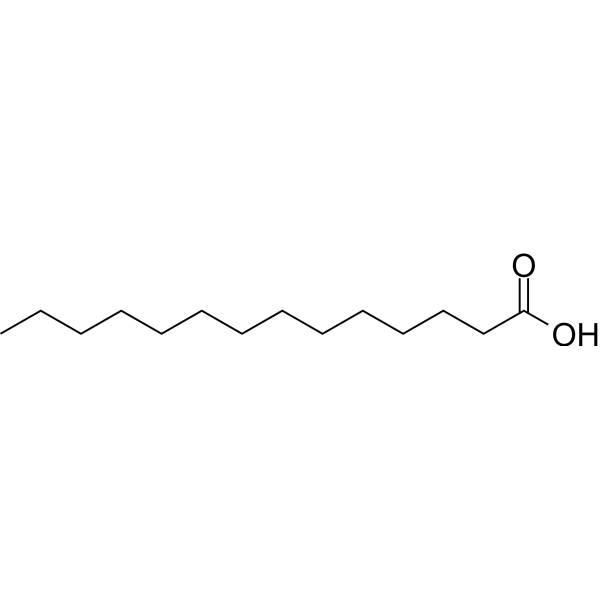
Myristic acid is an orally active saturated 14-carbon fatty acid found in most animal and plant fats, especially milk fat coconut oil, palm oil and nutmeg oil. Myristic acid exerts anti-inflammatory activity through the NF-κB pathway. Myristic acid has antibacterial, anti-inflammatory and analgesic properties.
For research use only. We do not sell to patients.
- Purity : 99.88%
- CAS No.: 544-63-8
- Formula: C14H28O2
- Molecular Weight:228.37
-
Storage:
Store at room temperature 3 years.
In solvent -80°C, 2 years , -20°C, 1 year

To place orders, for customer services and technical support, please contact: MedChemExpress USA
Tel: 609-228-6898 E-mail: [email protected] [email protected]


-
 Biological Activity
-
Chemical Information
-
Solvent & Solubility
- Protocols
- Purity & Documentation
- References
-
 Help & FAQs


-
HY-N0830
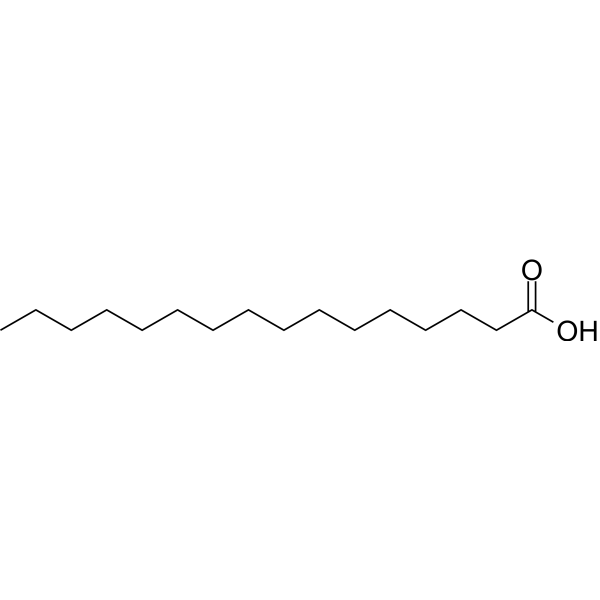
Palmitic acidEndogenous Metabolite -
HY-Y0366
Lauric acidMiddle Chain-free Fatty Acid -
HY-N0729
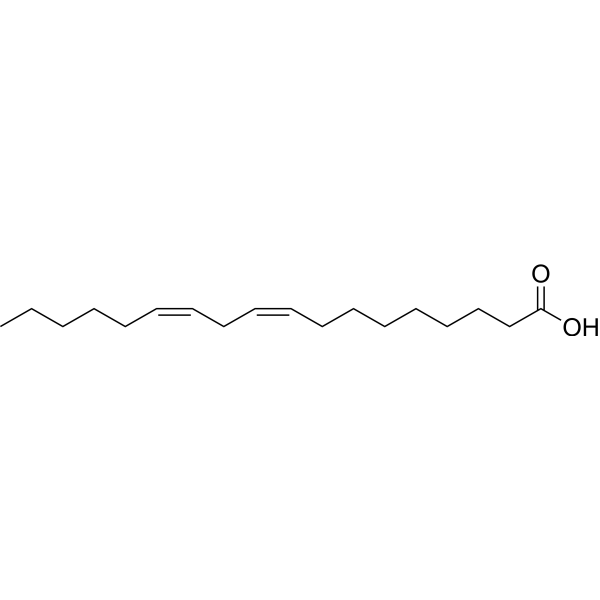
Linoleic acidHuman Endogenous Metabolite -
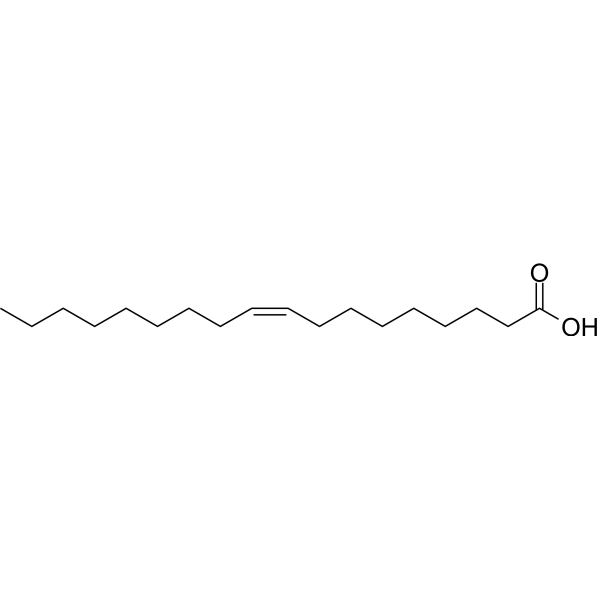
HY-N1446
Oleic acidMonounsaturated Fatty Acid -
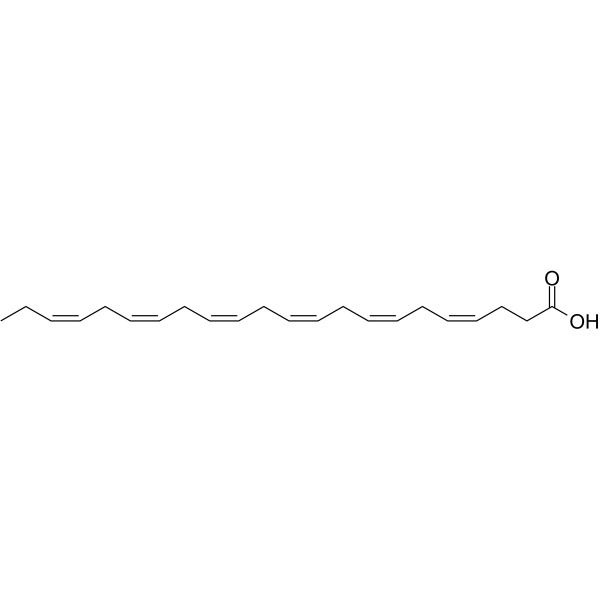
HY-B2167
Docosahexaenoic acidomega-3 Fatty Acid -
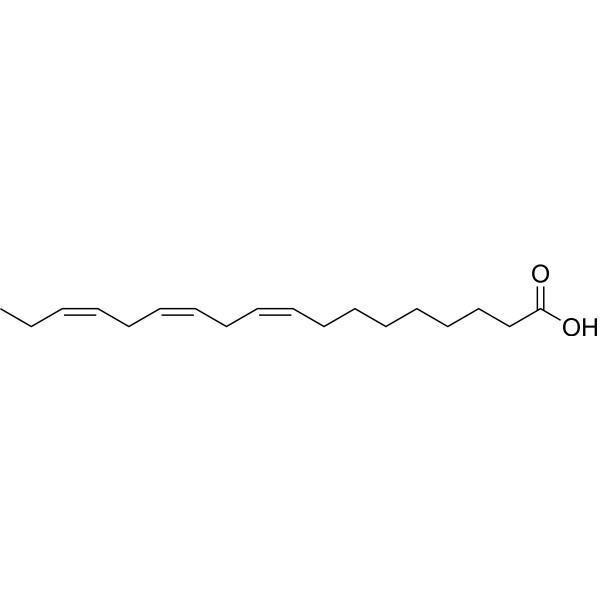
HY-N0728
α-Linolenic acidEssential Fatty Acid -
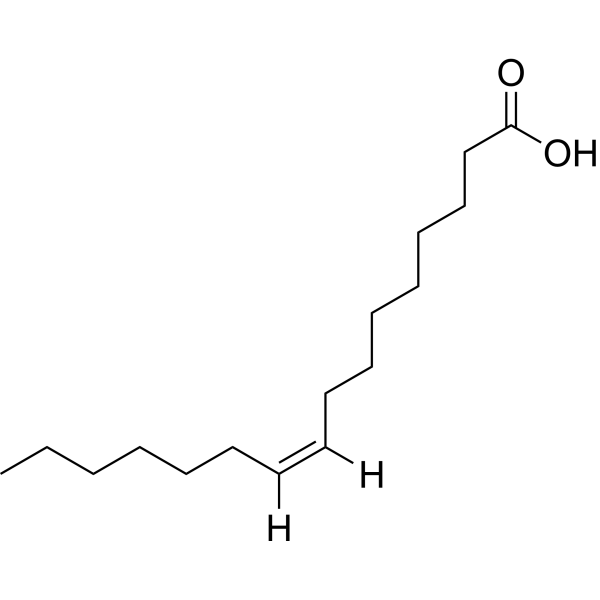
HY-W011873
Palmitoleic acid -
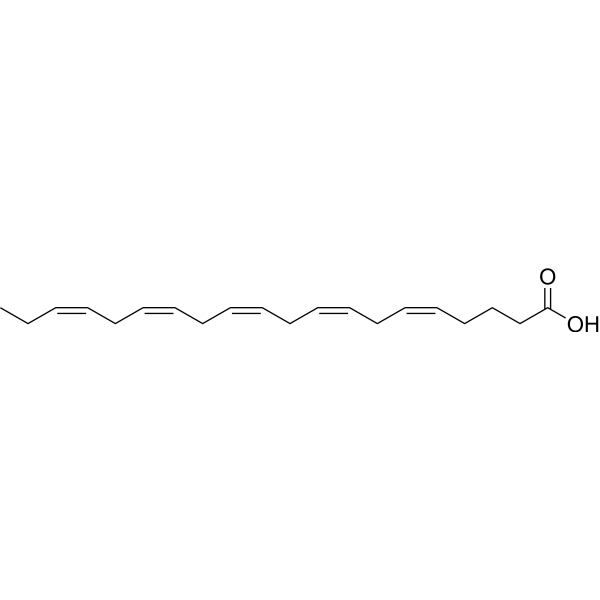
HY-B0660
Eicosapentaenoic AcidLC-PUFA -
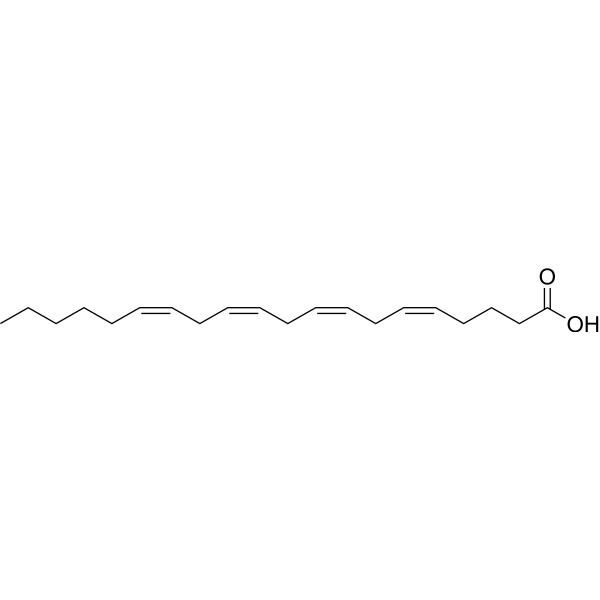
HY-109590
Arachidonic acidPolyunsaturated Fatty Acid -
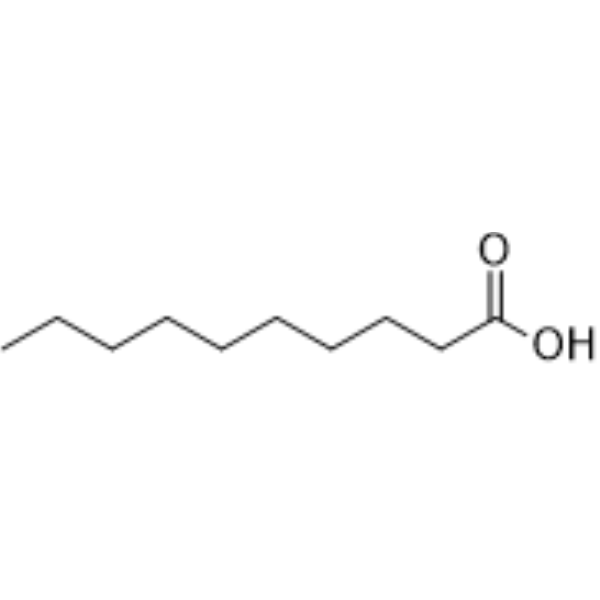
HY-W015309
Decanoic acidTyrosinase Inhibitor; Melanosome Inhibitor; mTORC1 Signaling Inhibitor -
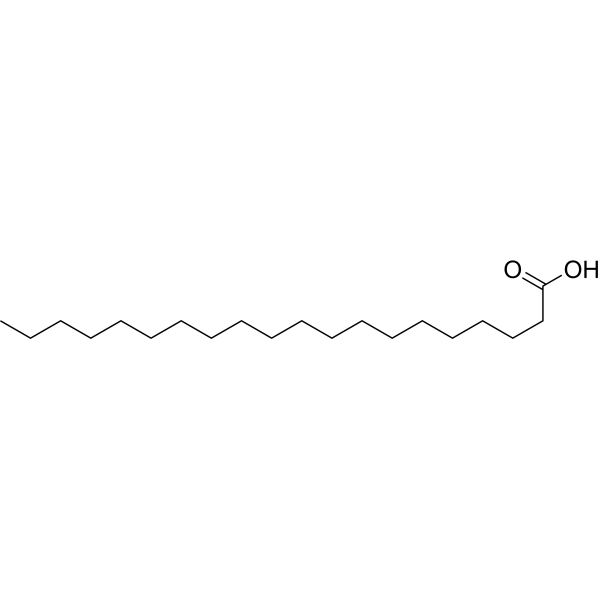
HY-W004260
Arachidic acidReceptor/Ion Channel Effector
Publications Citing Use of MedChemExpress (MCE) Myristic acid
More- Nature. 2025 Jul;643(8070):192-200. [Abstract]
- Redox Biol. 2025 Mar:80:103528. [Abstract]
- Cell Rep Med. 2025 Aug 19;6(8):102260. [Abstract]
- Cell Rep. 2025 Oct 15;44(10):116429. [Abstract]
- Commun Biol. 2024 Apr 27;7(1):505. [Abstract]
- Front Cell Dev Biol. 2021 Jun 11:9:684393. [Abstract]
- Eur J Lipid Sci Technol. 2023 Feb 25.
 Customer Validation & Images

-
Cell Proliferation/Viability Assay
-
Bio/Physico-chemical Assay
-
In Vivo Efficacy Study
-
In Vivo Efficacy Study
-
Bio/Physico-chemical Assay
All Endogenous Metabolite Isoforms
More

Biological Activity
Description
IC50 & Target
|
Human Endogenous Metabolite |
Cellular Effect
|
Cell Line

|
Type | Value | Description | References |
|---|---|---|---|---|
| A549 | IC50 |
2 x 10² μM
Compound: MA
|
Cytotoxicity against human A549 cells assessed as inhibition of cell growth incubated for 72 hrs by CCK-8 assay
Cytotoxicity against human A549 cells assessed as inhibition of cell growth incubated for 72 hrs by CCK-8 assay
|
[PMID: 37462318] |
| Caco-2 | IC50 |
>1 x 10³ μM
Compound: MA
|
Cytotoxicity against human Caco-2 cells assessed as inhibition of cell growth incubated for 72 hrs by CCK-8 assay
Cytotoxicity against human Caco-2 cells assessed as inhibition of cell growth incubated for 72 hrs by CCK-8 assay
|
[PMID: 37462318] |
| CHO | EC50 |
11.4 μM
Compound: 20
|
Agonist activity at recombinant human GPR84 expressed in CHO cell membranes co-expressing beta-arrestin2 assessed as inhibition of forskolin-stimulated [3H]cAMP accumulation preincubated for 5 mins followed by forskolin stimulation and measured after 15 m
Agonist activity at recombinant human GPR84 expressed in CHO cell membranes co-expressing beta-arrestin2 assessed as inhibition of forskolin-stimulated [3H]cAMP accumulation preincubated for 5 mins followed by forskolin stimulation and measured after 15 m
|
[PMID: 31721581] |
| CHO | EC50 |
7.01 μM
Compound: 20
|
Agonist activity at recombinant human GPR84 expressed in CHO cell membranes co-expressing beta-arrestin2 assessed as beta-arrestin 2 recruitment measured after 90 mins by beta-galactosidase based PathHunter assay
Agonist activity at recombinant human GPR84 expressed in CHO cell membranes co-expressing beta-arrestin2 assessed as beta-arrestin 2 recruitment measured after 90 mins by beta-galactosidase based PathHunter assay
|
[PMID: 31721581] |
| Huh-7 | CC50 |
>50 μM
Compound: Myristic acid
|
Cytotoxicity against human Huh-7 cells assessed as reduction in cell viability measured after 24 hrs by CellTiter-Glo analysis
Cytotoxicity against human Huh-7 cells assessed as reduction in cell viability measured after 24 hrs by CellTiter-Glo analysis
|
[PMID: 34583312] |
| THP-1 | IC50 |
5 μM
Compound: myristic acid
|
Inhibition of TLR2 agonist Pam3Cys-Ser-(Lys)4-OH-mediated IL8 secretion in THP1 cells
Inhibition of TLR2 agonist Pam3Cys-Ser-(Lys)4-OH-mediated IL8 secretion in THP1 cells
|
[PMID: 16509590] |
In Vitro
Myristic acid (100, 150, 200 μM, 24 h) regulates the production of triglyceride in bovine mammary epithelial cells through ubiquitination pathway[1].
Myristic acid (3-1000 μM, 10 min) can inhibit the activity of bacterial ABC transporter BmrA[2].
Myristic acid (12.5-200 μg/mL, 24 h) exerts in vitro anti-inflammatory activity by increasing (58%) IL-10 production in LPS (HY-D1056)-stimulated macrophages[3].
MedChemExpress (MCE) has not independently confirmed the accuracy of these methods. They are for reference only.
-
Cell Line:MAC-T
-
Concentration:100, 150, 200 μM
-
Incubation Time:24 h
-
Result:Increased the level of protein ubiquitination.
-
Cell Line:J774A.1 macrophages
-
Concentration:12.5, 25, 50, 100,200 μg/mL
-
Incubation Time:24 h
-
Result:Showed non-cytotoxic effects in LPS-stimulated J774A.1 macrophages at 25 μg/mL.
In Vivo
MedChemExpress (MCE) has not independently confirmed the accuracy of these methods. They are for reference only.
-
Animal Model:TPA-induced ear edema in mice[3]
-
Dosage:12.5, 25, 50, 100 mg/kg
-
Administration:p.o.
-
Result:Decreased ear edema inflammation in the acute and chronic TPA assays with IC50 values of 62 and 77 mg/kg, respectively in a dose-dependent manner.
Attenuated the acetic acid-induced abdominal contortions with ED50 values of 32 mg/kg.


Chemical Information
-
CAS No. 544-63-8
-
Appearance Solid
-
Molecular Weight 228.37
-
Formula C14H28O2
-
Color White to off-white
-
SMILES
CCCCCCCCCCCCCC(O)=O
-
Structure Classification
-
Initial Source
-
Shipping
Room temperature in continental US; may vary elsewhere.
-
Storage
Store at room temperature 3 years
In solvent -80°C 2 years -20°C 1 year


Publications (7)
-
Journal Impact Factor
-
Most Recent
-
Nature
2025 Jul;643(8070):192-200. PMID: 39695227 -
Redox Biol
Niraparib restricts intraperitoneal metastases of ovarian cancer by eliciting CD36-dependent ferroptosis. [Abstract]2025 Mar:80:103528. PMID: 39922130
Myristic acid purchased from MedChemExpress. Usage Cited in: Redox Biol. 2025 Mar:80:103528. [Abstract]
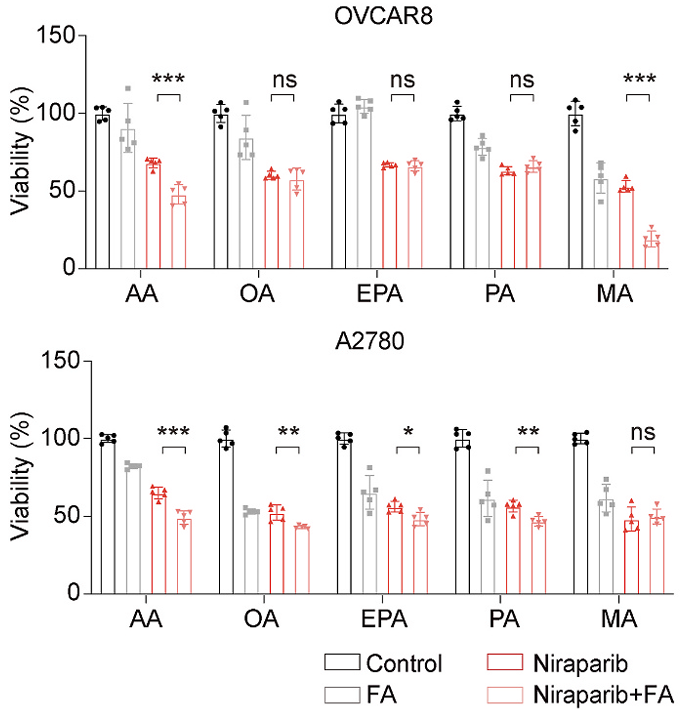
OVCAR8 and A2780 cells were cultured in fatty acid-free media supplemented with 50 μM AA (arachidonic acid), 50 μM OA (oleic acid), 50 μM EPA (eicosapentaenoic acid), 50 μM PA (Palmitic acid), and 50 μM MA (myristic acid) with the treatment of 10 μM niraparib for 72 h, and the cell viability was determined.
-
Cell Rep Med
High-fat diet increases circulating palmitic acid produced by gut Bacteroides thetaiotaomicron to promote thrombosis. [Abstract]2025 Aug 19;6(8):102260. PMID: 40749683
Myristic acid purchased from MedChemExpress. Usage Cited in: Cell Rep Med. 2025 Aug 19;6(8):102260. [Abstract]
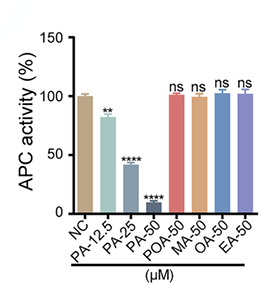
Myristic acid (20 μg/mL; 4-6 h). PA inhibited the amidolysis of APC on the chromogen substrate S-2366, whereas POA, MA, OA, and EA had no effect on APC activity (n = 3).
Myristic acid purchased from MedChemExpress. Usage Cited in: Cell Rep Med. 2025 Aug 19;6(8):102260. [Abstract]
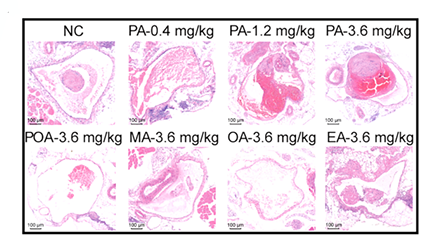
Intravenous administration of PA promoted venous thrombosis in the model of venous thrombosis induced by ligating the inferior vena cava, whereas POA, MA, OA, and EA had no effect on venous thrombosis. The inferior vena cava was removed 24 h later for H&E staining to observe thrombosis (left), and the weight of venous thrombus in each group was counted (right) (n = 6).
Myristic acid purchased from MedChemExpress. Usage Cited in: Cell Rep Med. 2025 Aug 19;6(8):102260. [Abstract]
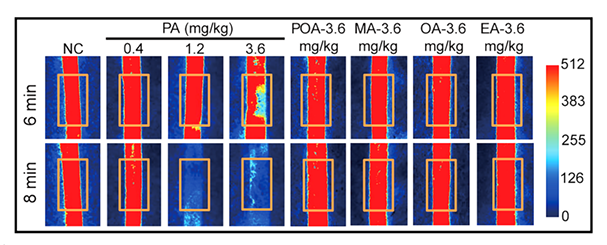
Intravenous administration of PA promoted arterial thrombosis in the model of carotid artery thrombosis induced by 10% FeCl₃, whereas POA, MA, OA, and EA had no effect on arterial thrombosis. Representative images of carotid artery blood flow (top) by laser speckle perfusion imaging were shown, and the region of interest (orange rectangle) was placed in the carotid artery to quantify blood flow change. Blood flow change in the region of interest was shown (bottom) by using perfusion units (n = 6).
Myristic acid purchased from MedChemExpress. Usage Cited in: Cell Rep Med. 2025 Aug 19;6(8):102260. [Abstract]
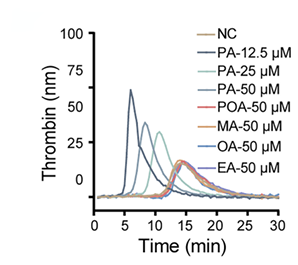
PA promoted thrombin generation as evaluated by thrombin generation assays (TGA) in human plasma, including the thrombin generation curve.
-
Cell Rep
STBD1 mediates the crosstalk between glycogen and lipid droplets in clear cell renal cell carcinoma. [Abstract]2025 Oct 15;44(10):116429. PMID: 41105508 -
Commun Biol
Structural characteristics of alpha-fetoprotein, including N-glycosylation, metal ion and fatty acid binding sites. [Abstract]2024 Apr 27;7(1):505. PMID: 38678117 -
Front Cell Dev Biol
Licarin-B Exhibits Activity Against the Toxoplasma gondii RH Strain by Damaging Mitochondria and Activating Autophagy. [Abstract]2021 Jun 11:9:684393. PMID: 34179016 -


Solvent & Solubility
In Vitro:
DMSO : 200 mg/mL (875.77 mM; Need ultrasonic; Hygroscopic DMSO has a significant impact on the solubility of product, please use newly opened DMSO)
Ethanol : 100 mg/mL (437.89 mM; Need ultrasonic)
Please refer to the solubility information to select the appropriate solvent. Once prepared, please aliquot and store the solution to prevent product inactivation from repeated freeze-thaw cycles.
Storage method and period of stock solution: -80°C, 2 years; -20°C, 1 year. When stored at -80°C, please use it within 2 years. When stored at -20°C, please use it within 1 year.
Please refer to the solubility information to select the appropriate solvent. Once prepared, please aliquot and store the solution to prevent product inactivation from repeated freeze-thaw cycles.
Storage method and period of stock solution: -80°C, 2 years; -20°C, 1 year. When stored at -80°C, please use it within 2 years. When stored at -20°C, please use it within 1 year.
Concentration (start) × Volume (start) = Concentration (final) × Volume (final)
In Vivo:
Select the appropriate dissolution method based on your experimental animal and administration route.
- For the following dissolution methods, please ensure to first prepare a clear stock solution using an In Vitro approach and then sequentially add co-solvents:
- To ensure reliable experimental results, the clarified stock solution can be appropriately stored based on storage conditions. As for the working solution for In Vivo experiments, it is recommended to prepare freshly and use it on the same day.
- The percentages shown for the solvents indicate their volumetric ratio in the final prepared solution. If precipitation or phase separation occurs during preparation, heat and/or sonication can be used to aid dissolution.
Add each solvent one by one: 10% DMSO 90% (20% SBE-β-CD in Saline)
Solubility: ≥ 5 mg/mL (21.89 mM); Clear solution
This protocol yields a clear solution of ≥ 5 mg/mL (saturation unknown).
Taking 1 mL working solution as an example, add 100 μL DMSO stock solution (50.0 mg/mL) to 900 μL 20% SBE-β-CD in Saline, and mix evenly.
Preparation of 20% SBE-β-CD in Saline (4°C, storage for one week): 2 g SBE-β-CD powder is dissolved in 10 mL Saline, completely dissolve until clear.
Add each solvent one by one: 10% EtOH 40% PEG300 5% Tween-80 45% Saline
Solubility: ≥ 2.5 mg/mL (10.95 mM); Clear solution
This protocol yields a clear solution of ≥ 2.5 mg/mL (saturation unknown).
Taking 1 mL working solution as an example, add 100 μL EtOH stock solution (25.0 mg/mL) to 400 μL PEG300, and mix evenly; then add 50 μL Tween-80 and mix evenly; then add 450 μL Saline to adjust the volume to 1 mL.
Preparation of Saline: Dissolve 0.9 g sodium chloride in ddH₂O and dilute to 100 mL to obtain a clear Saline solution.
For the following dissolution methods, please prepare the working solution directly:
It is recommended to prepare fresh solutions and use them promptly within a short period of time.
The percentages shown for the solvents indicate their volumetric ratio in the final prepared solution. If precipitation or phase separation occurs during preparation, heat and/or sonication can be used to aid dissolution.
Add each solvent one by one: Cremophor EL
Solubility: 40 mg/mL (175.15 mM); Clear solution; Need ultrasonic
In Vivo Dissolution Calculator
Please enter the basic information of animal experiments:
-
-
-
-
Recommended: Prepare an additional quantity of animals to account for potential losses during experiments.
Please enter your animal formula composition:
-
%DMSO +
Recommended: Keep the proportion of DMSO in working solution below 2% if your animal is weak.
-
%+
-
+%Tween-80 + +
-
%Saline +
The co-solvents required include: DMSO, . All of co-solvents are available by MedChemExpress (MCE). , Tween 80. All of co-solvents are available by MedChemExpress (MCE).
Working solution concentration: 0.22 mg/mL
Method for preparing stock solution: mg drug dissolved in μL DMSO. Stock solution concentration: mg/mL.
1. Take μL DMSO stock solution;
2. Add μL .
μL , mix evenly;
3. Then add μL Tween 80, mix evenly;
4. Then add μL
Please ensure that the stock solution in the first step is dissolved to a clear state, and add co-solvents in sequence. You can use ultrasonic heating (ultrasonic cleaner, recommended frequency 20-40 kHz), vortexing, etc. to assist dissolution.


Purity & Documentation
-
Data Sheet (273 KB)
-
SDS (394 KB)
- English - EN (394 KB)
- Français - FR (394 KB)
- Deutsch - DE (394 KB)
- Norwegian - NO (394 KB)
- Español - ES (394 KB)
- Swedish - SV (394 KB)
- Italian - IT (394 KB)
- Korean - KR (394 KB)
- Portuguese - PT (394 KB)
-
Handling Instructions (2659 KB)
References
[2]. Oepen K, et al. Myristic Acid Inhibits the Activity of the Bacterial ABC Transporter BmrA. Int J Mol Sci. 2021 Dec 17;22(24):13565. [Content Brief]
[3]. Alonso-Castro AJ, et al. Myristic acid reduces skin inflammation and nociception. J Food Biochem. 2022 Jan;46(1):e14013. [Content Brief]
[4]. Huang Q, et al. Anti-inflammatory effects of myristic acid mediated by the NF-κB pathway in lipopolysaccharide-induced BV-2 microglial cells. Mol Omics. 2023 Oct 30;19(9):726-734. [Content Brief]


Complete Stock Solution Preparation Table
Please refer to the solubility information to select the appropriate solvent. Once prepared, please aliquot and store the solution to prevent product inactivation from repeated freeze-thaw cycles.
Storage method and period of stock solution: -80°C, 2 years; -20°C, 1 year. When stored at -80°C, please use it within 2 years. When stored at -20°C, please use it within 1 year.
| Optional Solvent | Concentration Solvent Mass | 1 mg | 5 mg | 10 mg | 25 mg |
|---|---|---|---|---|---|
| Ethanol / DMSO | 1 mM | 4.3789 mL | 21.8943 mL | 43.7886 mL | 109.4715 mL |
| 5 mM | 0.8758 mL | 4.3789 mL | 8.7577 mL | 21.8943 mL | |
| 10 mM | 0.4379 mL | 2.1894 mL | 4.3789 mL | 10.9471 mL | |
| 15 mM | 0.2919 mL | 1.4596 mL | 2.9192 mL | 7.2981 mL | |
| 20 mM | 0.2189 mL | 1.0947 mL | 2.1894 mL | 5.4736 mL | |
| 25 mM | 0.1752 mL | 0.8758 mL | 1.7515 mL | 4.3789 mL | |
| 30 mM | 0.1460 mL | 0.7298 mL | 1.4596 mL | 3.6490 mL | |
| 40 mM | 0.1095 mL | 0.5474 mL | 1.0947 mL | 2.7368 mL | |
| 50 mM | 0.0876 mL | 0.4379 mL | 0.8758 mL | 2.1894 mL | |
| 60 mM | 0.0730 mL | 0.3649 mL | 0.7298 mL | 1.8245 mL | |
| 80 mM | 0.0547 mL | 0.2737 mL | 0.5474 mL | 1.3684 mL | |
| 100 mM | 0.0438 mL | 0.2189 mL | 0.4379 mL | 1.0947 mL |


Myristic acid Related Classifications
HY-N2041 Related Classifications
 Powered by Bioz