



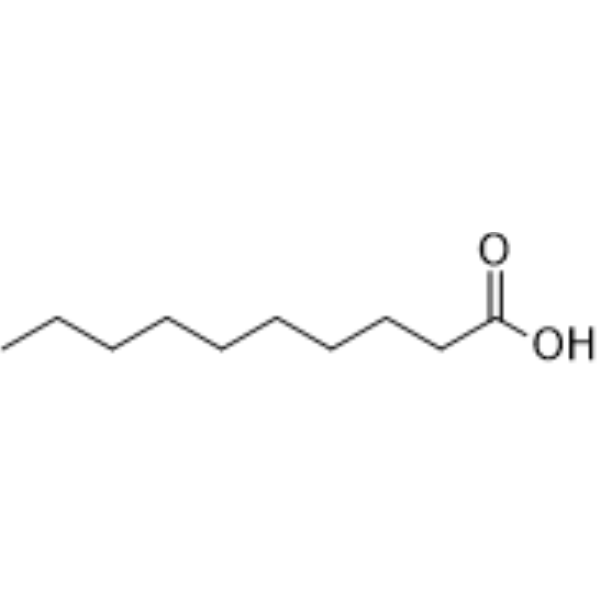
Decanoic acid
Based on 5 publication(s) in Google Scholar
Decanoic acid is a key component of the medium-chain triglyceride (MCT) found in coconut oil. Decanoic acid is a brain-penetrant and non-competitive inhibitor of AMPA receptor showing antiseizure activity in rats. Decanoic acid reduces tyrosinase activity and inhibits melanosome maturation. Decanoic acid suppresses the phosphorylation of c-Met and induced apoptosis in hepatocellular carcinoma (HCC) cells by inhibiting the expression of various oncogenic proteins, which is promising for research in the field of mTORC1 signaling, HCC and epilepsy.
Para uso exclusivo en investigación. No vendemos a pacientes.
- Pureza : 98.0%
- No. CAS: 334-48-5
- Fòrmula: C10H20O2
- Peso molecular:172.27
-
Almacenamiento:
Store at room temperature 3 years.
In solvent -80°C, 2 years , -20°C, 1 year

To place orders, for customer services and technical support, please contact: MedChemExpress USA
Tel: 609-228-6898 E-mail: [email protected] [email protected]


-
 Actividad biológica
-
Chemical Information
-
Solvente y solubilidad
- Protocolo
- Pureza y Documentación
- Referencias
-
 Help & FAQs


-
HY-41417
Octanoic acidAntibacterial Agent -
HY-Y0366
Lauric acidMiddle Chain-free Fatty Acid -
HY-N2041
Myristic acidEndogenous Metabolite -
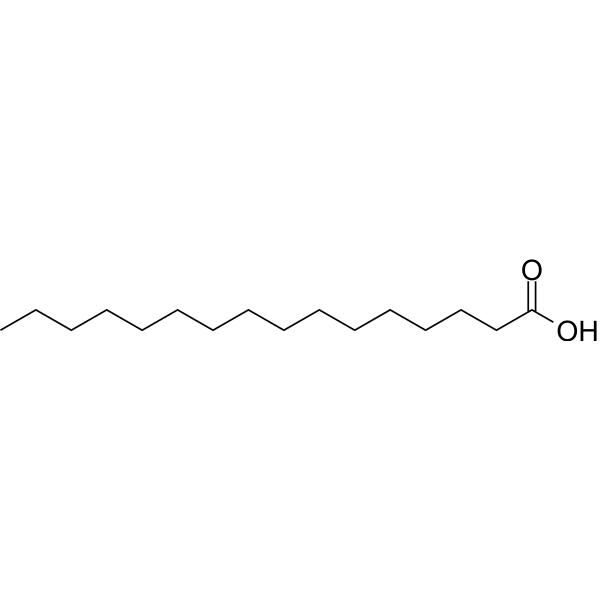
HY-N0830
Palmitic acidEndogenous Metabolite -
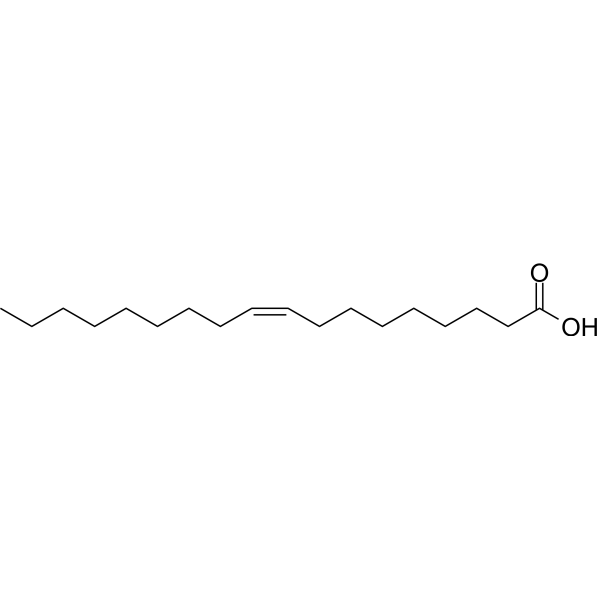
HY-N1446
Oleic acidMonounsaturated Fatty Acid -
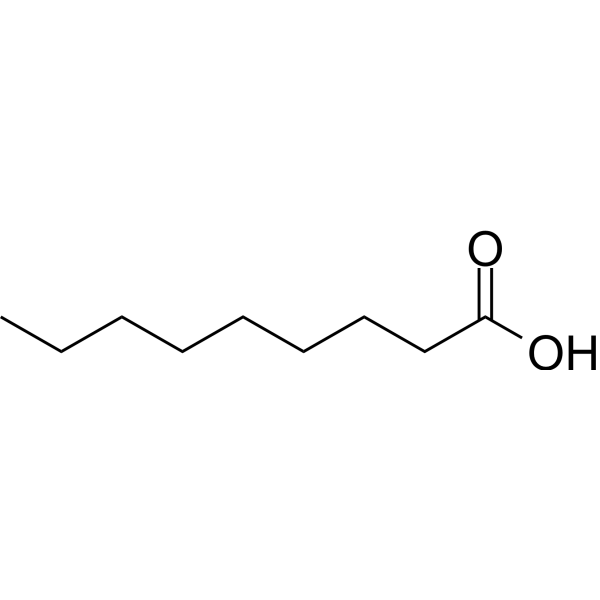
HY-N7057
Nonanoic acidAnti-bacterial Agent -
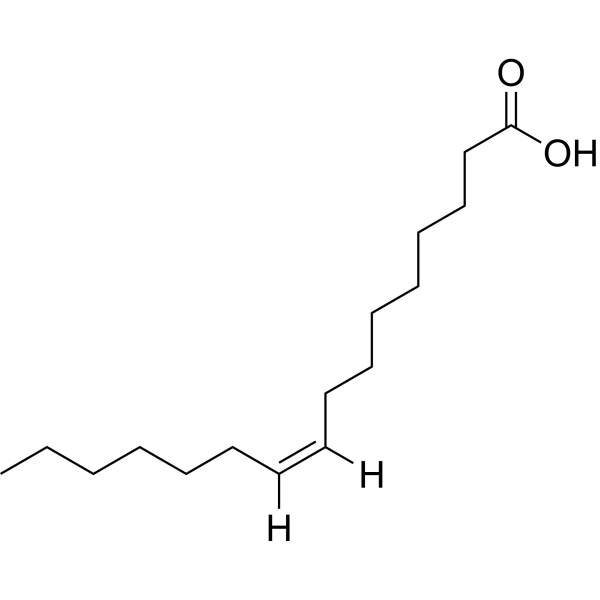
HY-W011873
Palmitoleic acid -
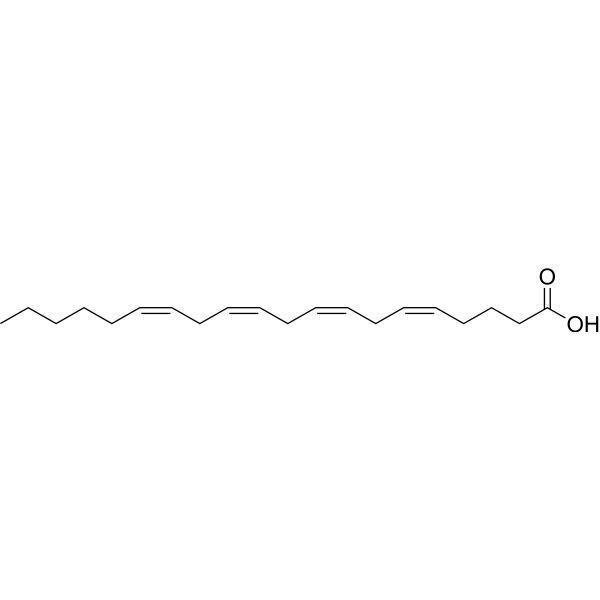
HY-109590
Arachidonic acidPolyunsaturated Fatty Acid -
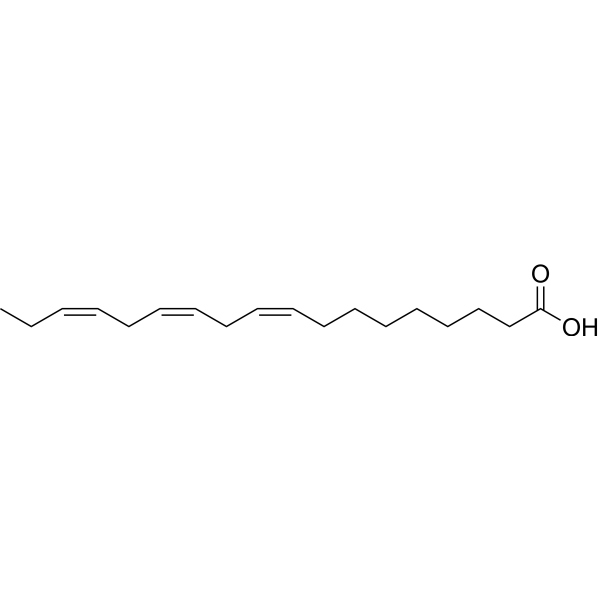
HY-N0728
α-Linolenic acidEssential Fatty Acid -
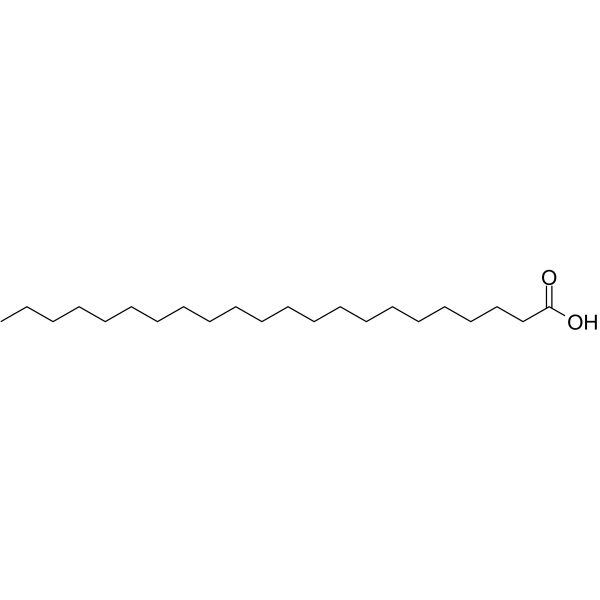
HY-W013049
Docosanoic acidSaturated Fatty Acid -
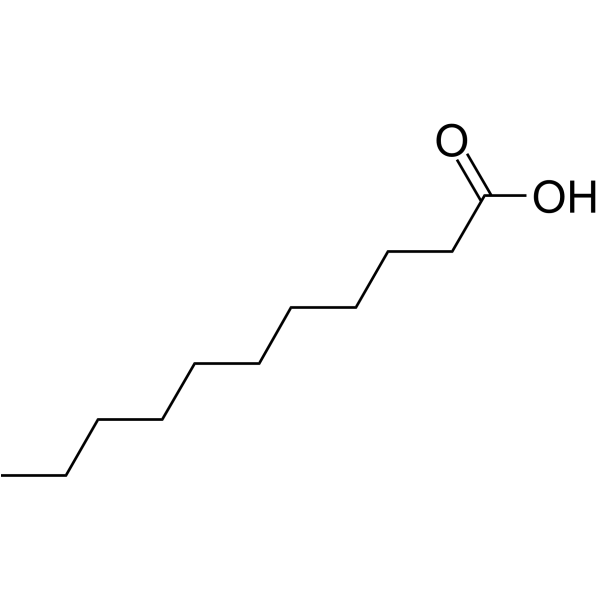
HY-W004282
Undecanoic acidAntifungal Agent
Publications Citing Use of MedChemExpress (MCE) Decanoic acid
More Customer Validation & Images

-
Cell Proliferation/Viability Assay

Ver todos los productos específicos de isoformas iGluR
MoreVer todos los productos específicos de isoformas Endogenous Metabolite
More

Actividad biológica
Descripciòn
IC50 & Target
|
AMPA Receptor |
Human Endogenous Metabolite |
Cellular Effect
|
Cell Line

|
Type | Value | Description | References |
|---|---|---|---|---|
| CHO | EC50 |
30 μM
Compound: 1
|
Agonist activity at recombinant human N-terminally HA-tagged GPR84 expressed in CHO cells co-expressing Gqi5 assessed as inhibition of forskolin-induced cAMP accumulation by fluo-4AM dye based FLIPR assay
Agonist activity at recombinant human N-terminally HA-tagged GPR84 expressed in CHO cells co-expressing Gqi5 assessed as inhibition of forskolin-induced cAMP accumulation by fluo-4AM dye based FLIPR assay
|
[PMID: 31721581] |
| CHO | EC50 |
4.6 μM
Compound: 1
|
Agonist activity at human N-terminal FLAG-tagged GPR84 receptor stably expressed in CHO cell membranes assessed as stimulation of [35S]GTPgammaS binding incubated for 1 hr by liquid scintillation counting method
Agonist activity at human N-terminal FLAG-tagged GPR84 receptor stably expressed in CHO cell membranes assessed as stimulation of [35S]GTPgammaS binding incubated for 1 hr by liquid scintillation counting method
|
[PMID: 31721581] |
| CHO | EC50 |
4.6 μM
Compound: 1
|
Agonist activity at human N-terminal FLAG-tagged GPR84 receptor stably expressed in CHO cells assessed as inhibition of forskolin-induced cAMP production preincubated for 20 mins followed by forskolin addition and measured after 20 mins
Agonist activity at human N-terminal FLAG-tagged GPR84 receptor stably expressed in CHO cells assessed as inhibition of forskolin-induced cAMP production preincubated for 20 mins followed by forskolin addition and measured after 20 mins
|
[PMID: 31721581] |
| CHO | EC50 |
48 μM
Compound: 1
|
Agonist activity at recombinant human GPR84 expressed in CHO cells co-expressing Galpha16/Gqs5/Gqo5/Gqi9 assessed as increase in calcium mobilization measured for 20 secs in presence of coelenterazine by aequorin-reporter gene based luminescence assay
Agonist activity at recombinant human GPR84 expressed in CHO cells co-expressing Galpha16/Gqs5/Gqo5/Gqi9 assessed as increase in calcium mobilization measured for 20 secs in presence of coelenterazine by aequorin-reporter gene based luminescence assay
|
[PMID: 31721581] |
| HEK293 | EC50 |
10 μM
Compound: 1
|
Agonist activity at recombinant human GPR84 expressed in HEK293 cells assessed as beta-arrestin 2 recruitment by beta-galactosidase based PathHunter assay
Agonist activity at recombinant human GPR84 expressed in HEK293 cells assessed as beta-arrestin 2 recruitment by beta-galactosidase based PathHunter assay
|
[PMID: 31721581] |
| MONO-MAC-6 | IC50 |
>200 μM
Compound: Decanoic acid
|
Cytostatic activity against human MONO-MAC-6 cells assessed as reduction in cell viability incubated for 24 hrs by MTT assay
Cytostatic activity against human MONO-MAC-6 cells assessed as reduction in cell viability incubated for 24 hrs by MTT assay
|
[PMID: 28384546] |
| Sf9 | EC50 |
48 μM
Compound: 1
|
Agonist activity at human Gi1alpha-coupled GPR84 expressed in baculovirus infected Sf9 insect cells assessed as stimulation of [35S]GTPgammaS binding measured after 30 mins by liquid scintillation counting method
Agonist activity at human Gi1alpha-coupled GPR84 expressed in baculovirus infected Sf9 insect cells assessed as stimulation of [35S]GTPgammaS binding measured after 30 mins by liquid scintillation counting method
|
[PMID: 31721581] |
In Vitro
Decanoic acid (60 μM, 1 h or 24 h) targets mTORC1 independent of PI3K/AKT, AMPK signaling and inhibits mTORC1 without altering mTORC2 activation , also reduces Ddp97 activity in Dictyostelium[1]. Decanoic acid (300 μM, 24 h) decreases the ratio of p-4E-BP1/total-4E-BP1 and p-S6K/total-S6K to reduce mTORC1 activity in patient-derived astrocytes with tuberous sclerosis complex[1]. Decanoic acid (80 μM, 2 h 30 min) reduces the cell viability, suppresses hepatocyte growth factor (HGF)-induced c-Met phosphorylation in both HCCLM3 and HepG2 cells[2]. Decanoic acid (80 μM, 24 h) triggers apoptosis in HCCLM3, HepG2 and HGF-induced cells[2]. Decanoic acid (0.3 mM or 1 mM, perfuse, 40 min) is a broad spectrum AMPA receptor inhibitor in a subunit dependent, non-competitive and voltage dependent manner in oocytes expressing a homomeric (GluA1 subunit) and heteromeric (GluA1/2 and GluA2/3) AMPA receptors[3].
MedChemExpress (MCE) has not independently confirmed the accuracy of these methods. They are for reference only.
-
Cell Line:Dictyostelium cells
-
Concentration:0 - 80 µM
-
Incubation Time:50 h
-
Result:Decreased p-4E-BP1 levels, but had no significant difference in p-AKT-S and p-AMPK levels at 1 h and 24 h in dictyostelium cells.
-
Cell Line:Astrocytes derived from patients with tuberous sclerosis complex
-
Concentration:300 μM
-
Incubation Time:24 h
-
Result:Reduced the ratio of p-4E-BP1/total-4E-BP1 and p-S6K/total-S6K in astrocytes derived from control patients and patients with mutations in TSC1.
-
Cell Line:HCCLM3 and HepG2 cells
-
Concentration:0 - 80 µM
-
Incubation Time:50 h
-
Result:Reduced the cell viability in HGF-induced/uninduced HCC cells.
-
Cell Line:HCCLM3 and HepG2 cells
-
Concentration:80 µM
-
Incubation Time:2 h 30 min
-
Result:Suppressed constitutive as well as HGF-induced c-Met phosphorylation in both HCCLM3 and HepG2 cells.
-
Cell Line:HCCLM3, HepG2 and HGF-induced cells
-
Concentration:80 µM
-
Incubation Time:24 h
-
Result:Downregulated the levels of antiapoptotic proteins such as Bcl-2, Survivin, IAP-1, Cyclin D1, and COX-2 in HCCLM3, HepG2 and HGF-induced cells.
In Vivo
MedChemExpress (MCE) has not independently confirmed the accuracy of these methods. They are for reference only.
-
Animal Model:Rat Hippocampal Slices[1]
-
Dosage:100 μM and 300 μM
-
Administration:1 h
-
Result:Decreased p-4E-BP1/total-4E-BP1 levels at 300 μM in rat hippocampal slices
-
Animal Model:NCr-nude female mice[2]
-
Dosage:5, 50, 100 mg/kg (0.1% DMSO)
-
Administration:i.p., measured body weight daily for 8 days
-
Result:Caused no substantial effects on body weight and on the levels of various enzymes in the liver and kidney of mice
-
Animal Model:HCC mouse model[2]
-
Dosage:50 mg/kg (0.1% DMSO)
-
Administration:i.p., thrice a week for four weeks
-
Result:Significantly regressed the growth of tumors in the HCC mouse model
- Kinase activity and phosphorylation assays
- Western Blot
- RNA extraction experimental
- Detection of Apoptosis
- TUNEL staining for apoptotic DNA fragmentation
- Annexin V plus membrane-impermeant dye apoptosis staining
- Apoptosis Solutions
- Protocol for Kinase activity and phosphorylation assays
- Liver Cancer Modeling


Chemical Information
-
No. CAS 334-48-5
-
Appearance <27°C Solid,>32°C Liquid
-
Peso molecular 172.27
-
Fòrmula C10H20O2
-
Color White to off-white
-
SMILES
CCCCCCCCCC(O)=O
-
Structure Classification
-
Initial Source
-
Envío
Room temperature in continental US; may vary elsewhere.
-
Almacenamiento
Store at room temperature 3 years
In solvent -80°C 2 years -20°C 1 year


Publications (5)
-
Journal Impact Factor
-
Most Recent
-
Nature
2025 Jul;643(8070):192-200. PMID: 39695227 -
Diabetes
Gut Microbiota-Decanoic Acid-Interleukin-17A Axis Orchestrates Hyperglycemia-Induced Osteoporosis in Male Mice. [Abstract]2025 Oct 27:db250471. PMID: 41144501 -
Nutrients
Medium-Chain Fatty Acids Selectively Sensitize Cancer Cells to Ferroptosis by Inducing CD36 and ACSL4. [Abstract]2025 Feb 25;17(5):794. PMID: 40077664
Decanoic acid purchased from MedChemExpress. Usage Cited in: Nutrients. 2025 Feb 25;17(5):794. [Abstract]
CCK8 was used to determine the viability of U937 human leukemia cells induced by DA-m (Decanoic acid), LA-l, or their combination for 24 h.
-
Biochem Biophys Res Commun
2026 Mar 12:804:153358. PMID: 41619507 -


Solvente y solubilidad
In Vitro:
DMSO : ≥ 130 mg/mL (754.63 mM; Hygroscopic DMSO has a significant impact on the solubility of product, please use newly opened DMSO)
* "≥" means soluble, but saturation unknown.
Please refer to the solubility information to select the appropriate solvent. Once prepared, please aliquot and store the solution to prevent product inactivation from repeated freeze-thaw cycles.
Storage method and period of stock solution: -80°C, 2 years; -20°C, 1 year. When stored at -80°C, please use it within 2 years. When stored at -20°C, please use it within 1 year.
Please refer to the solubility information to select the appropriate solvent. Once prepared, please aliquot and store the solution to prevent product inactivation from repeated freeze-thaw cycles.
Storage method and period of stock solution: -80°C, 2 years; -20°C, 1 year. When stored at -80°C, please use it within 2 years. When stored at -20°C, please use it within 1 year.
Concentration (start) × Volume (start) = Concentration (final) × Volume (final)
In Vivo:
Select the appropriate dissolution method based on your experimental animal and administration route.
- For the following dissolution methods, please ensure to first prepare a clear stock solution using an In Vitro approach and then sequentially add co-solvents:
- To ensure reliable experimental results, the clarified stock solution can be appropriately stored based on storage conditions. As for the working solution for In Vivo experiments, it is recommended to prepare freshly and use it on the same day.
- The percentages shown for the solvents indicate their volumetric ratio in the final prepared solution. If precipitation or phase separation occurs during preparation, heat and/or sonication can be used to aid dissolution.
Add each solvent one by one: 10% DMSO 40% PEG300 5% Tween-80 45% Saline
Solubility: ≥ 2.17 mg/mL (12.60 mM); Clear solution
This protocol yields a clear solution of ≥ 2.17 mg/mL (saturation unknown).
Taking 1 mL working solution as an example, add 100 μL DMSO stock solution (21.7 mg/mL) to 400 μL PEG300, and mix evenly; then add 50 μL Tween-80 and mix evenly; then add 450 μL Saline to adjust the volume to 1 mL.
Preparation of Saline: Dissolve 0.9 g sodium chloride in ddH₂O and dilute to 100 mL to obtain a clear Saline solution.
Add each solvent one by one: 10% DMSO 90% (20% SBE-β-CD in Saline)
Solubility: ≥ 2.17 mg/mL (12.60 mM); Clear solution
This protocol yields a clear solution of ≥ 2.17 mg/mL (saturation unknown).
Taking 1 mL working solution as an example, add 100 μL DMSO stock solution (21.7 mg/mL) to 900 μL 20% SBE-β-CD in Saline, and mix evenly.
Preparation of 20% SBE-β-CD in Saline (4°C, storage for one week): 2 g SBE-β-CD powder is dissolved in 10 mL Saline, completely dissolve until clear.
For the following dissolution methods, please prepare the working solution directly:
It is recommended to prepare fresh solutions and use them promptly within a short period of time.
The percentages shown for the solvents indicate their volumetric ratio in the final prepared solution. If precipitation or phase separation occurs during preparation, heat and/or sonication can be used to aid dissolution.
In Vivo Dissolution Calculator
Please enter the basic information of animal experiments:
-
-
-
-
Recommended: Prepare an additional quantity of animals to account for potential losses during experiments.
Please enter your animal formula composition:
-
%DMSO +
Recommended: Keep the proportion of DMSO in working solution below 2% if your animal is weak.
-
%+
-
+%Tween-80 + +
-
%Saline +
The co-solvents required include: DMSO, . All of co-solvents are available by MedChemExpress (MCE). , Tween 80. All of co-solvents are available by MedChemExpress (MCE).
Working solution concentration: 0.22 mg/mL
Method for preparing stock solution: mg drug dissolved in μL DMSO. Stock solution concentration: mg/mL.
1. Take μL DMSO stock solution;
2. Add μL .
μL , mix evenly;
3. Then add μL Tween 80, mix evenly;
4. Then add μL
Please ensure that the stock solution in the first step is dissolved to a clear state, and add co-solvents in sequence. You can use ultrasonic heating (ultrasonic cleaner, recommended frequency 20-40 kHz), vortexing, etc. to assist dissolution.


Pureza y Documentación
-
Ficha de datos (279 KB)
-
SDS (393 KB)
- English - EN (393 KB)
- Français - FR (393 KB)
- Deutsch - DE (393 KB)
- Norwegian - NO (393 KB)
- Español - ES (393 KB)
- Swedish - SV (393 KB)
- Italian - IT (393 KB)
- Korean - KR (393 KB)
- Portuguese - PT (393 KB)
-
Instrucciones de manejo (2659 KB)
Referencias
[1]. Boison D, et, al. New insights into the mechanisms of the ketogenic diet. Curr Opin Neurol. 2017 Apr;30(2):187-192. [Content Brief]
[2]. Warren EC, et al. Decanoic acid inhibits mTORC1 activity independent of glucose and insulin signaling[J]. Proc Natl Acad Sci U S A. 2020 Sep 22;117(38):23617-23625. [Content Brief]
[3]. Yang MH, et al. Decanoic Acid Exerts Its Anti-Tumor Effects via Targeting c-Met Signaling Cascades in Hepatocellular Carcinoma Model[J]. Cancers (Basel). 2023 Sep 22;15(19):4681. [Content Brief]
[4]. Chang P, et al. Seizure control by decanoic acid through direct AMPA receptor inhibition. Brain. 2016 Feb;139(Pt 2):431-43. [Content Brief]
[5]. Kim S, et, al. Selective production of decanoic acid from iterative reversal of β-oxidation pathway. Biotechnol Bioeng. 2018 May;115(5):1311-1320. [Content Brief]


Complete Stock Solution Preparation Table
Please refer to the solubility information to select the appropriate solvent. Once prepared, please aliquot and store the solution to prevent product inactivation from repeated freeze-thaw cycles.
Storage method and period of stock solution: -80°C, 2 years; -20°C, 1 year. When stored at -80°C, please use it within 2 years. When stored at -20°C, please use it within 1 year.
| Optional Solvent | Concentration Solvent Mass | 1 mg | 5 mg | 10 mg | 25 mg |
|---|---|---|---|---|---|
| DMSO | 1 mM | 5.8048 mL | 29.0242 mL | 58.0484 mL | 145.1210 mL |
| 5 mM | 1.1610 mL | 5.8048 mL | 11.6097 mL | 29.0242 mL | |
| 10 mM | 0.5805 mL | 2.9024 mL | 5.8048 mL | 14.5121 mL | |
| 15 mM | 0.3870 mL | 1.9349 mL | 3.8699 mL | 9.6747 mL | |
| 20 mM | 0.2902 mL | 1.4512 mL | 2.9024 mL | 7.2561 mL | |
| 25 mM | 0.2322 mL | 1.1610 mL | 2.3219 mL | 5.8048 mL | |
| 30 mM | 0.1935 mL | 0.9675 mL | 1.9349 mL | 4.8374 mL | |
| 40 mM | 0.1451 mL | 0.7256 mL | 1.4512 mL | 3.6280 mL | |
| 50 mM | 0.1161 mL | 0.5805 mL | 1.1610 mL | 2.9024 mL | |
| 60 mM | 0.0967 mL | 0.4837 mL | 0.9675 mL | 2.4187 mL | |
| 80 mM | 0.0726 mL | 0.3628 mL | 0.7256 mL | 1.8140 mL | |
| 100 mM | 0.0580 mL | 0.2902 mL | 0.5805 mL | 1.4512 mL |


Decanoic acid Related Classifications
HY-W015309 Related Classifications
 Powered by Bioz