



Palmitoleic acid
Based on 10 publication(s) in Google Scholar
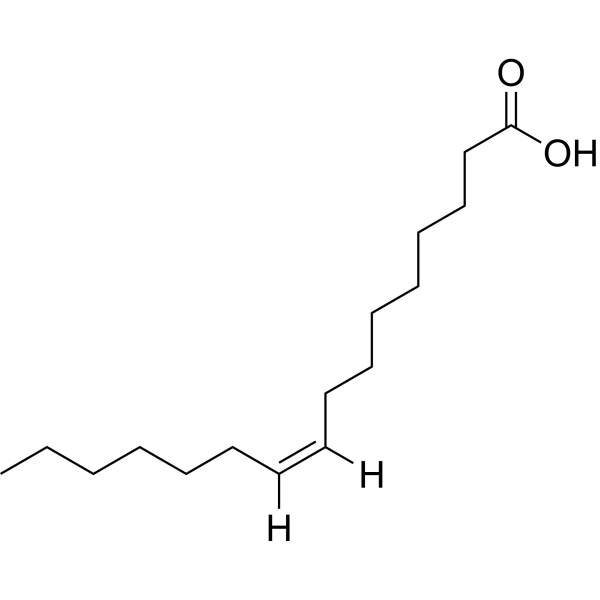
Palmitoleic acid, a composition of fatty acid, is implicated in the prevention of death from cerebrovascular disorders in SHRSP rats.
For research use only. We do not sell to patients.
- Purity: 99.89%
- CAS No.: 373-49-9
- Formula: C16H30O2
- Molecular Weight:254.41
-
Storage:Pure form -20°C, 3 years , 4°C, 2 years ; In solvent -80°C, 6 months , -20°C, 1 month

To place orders, for customer services and technical support, please contact: MedChemExpress USA
Tel: 609-228-6898 E-mail: [email protected] [email protected]


-
 Biological Activity
-
Chemical Information
-
Solvent & Solubility
- Purity & Documentation
- References
-
 Help & FAQs


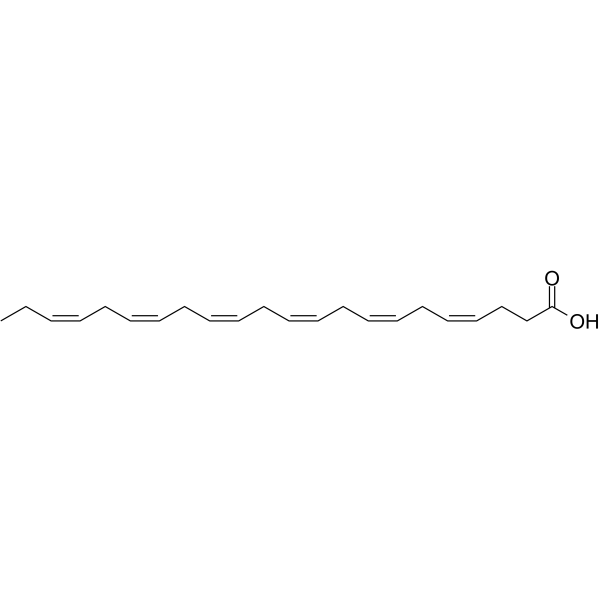
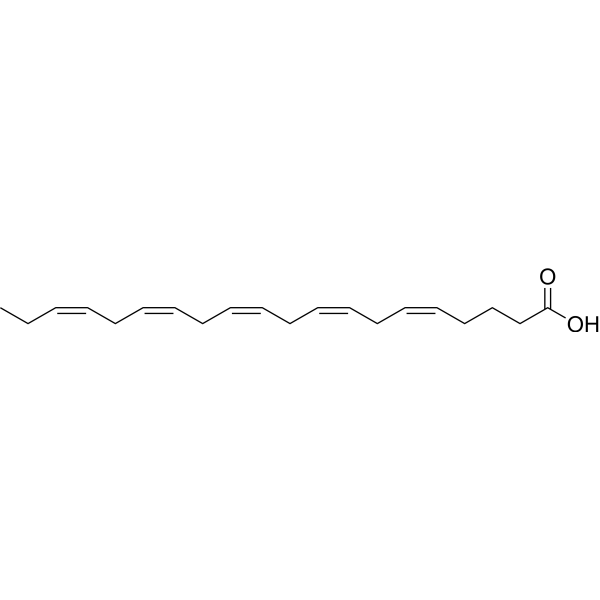
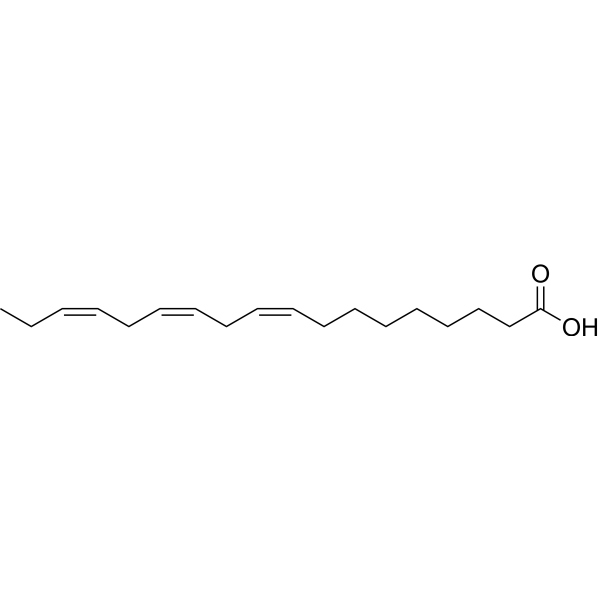
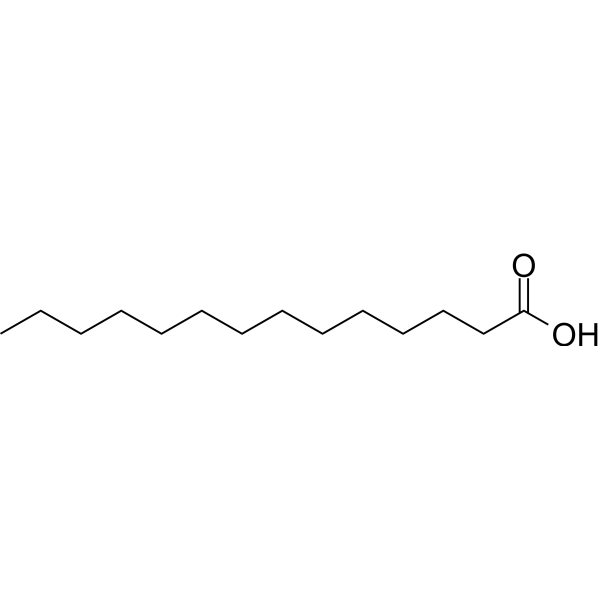
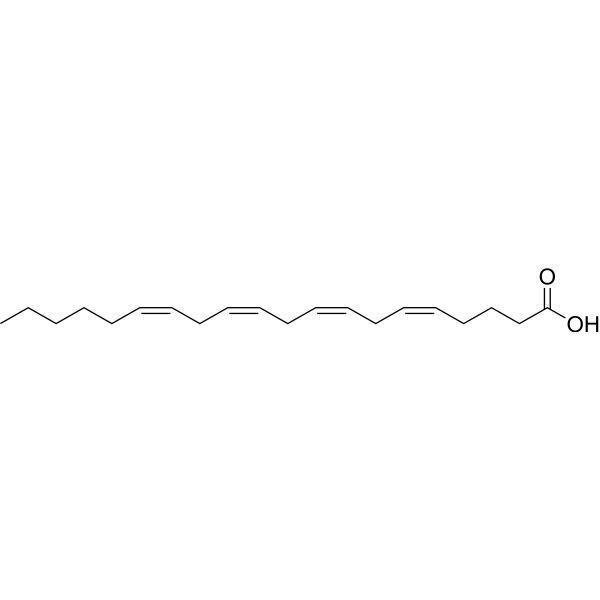
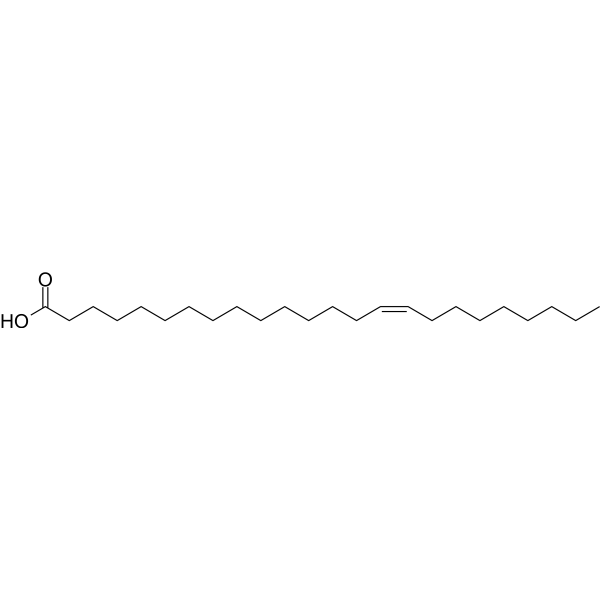
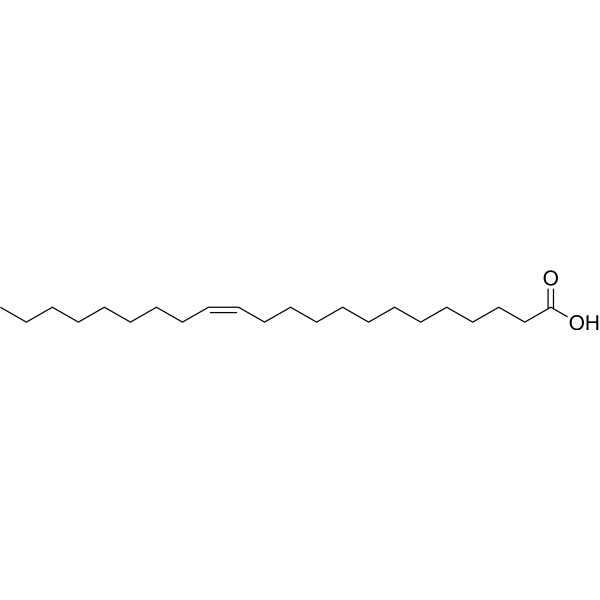
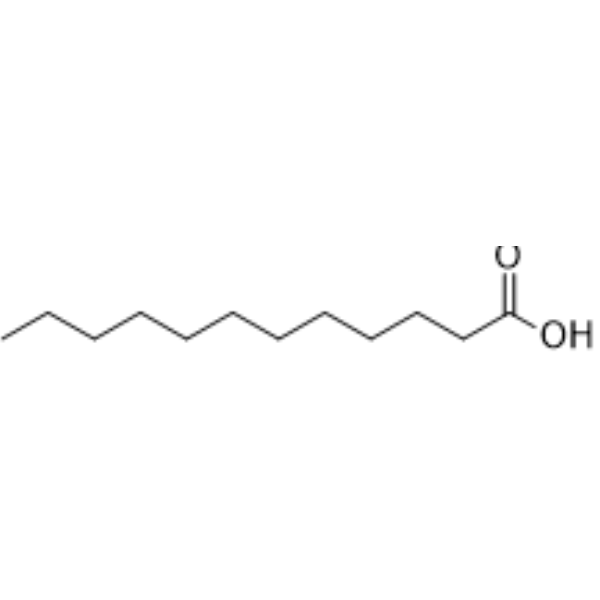
Publications Citing Use of MedChemExpress (MCE) Palmitoleic acid
More- Redox Biol. 2021 Jan:38:101807. [Abstract]
- Biomark Res. 2025 Jan 23;13(1):17. [Abstract]
- Adv Sci (Weinh). 2026 Jul 13:e76141.
- Cell Rep Med. 2025 Aug 19;6(8):102260. [Abstract]
- Cancer Lett. 2026 Sep 28:656:218655. [Abstract]
- Free Radic Biol Med. 2023 Jun:202:110-120. [Abstract]
- Cell Rep. 2022 Sep 20;40(12):111381. [Abstract]
- FASEB J. 2024 Jul 15;38(13):e23806. [Abstract]
- Eur J Lipid Sci Technol. 2023 Feb 25.
- bioRxiv. 2026 Jul 10:2026.07.06.736331.
 Customer Validation & Images

-
Bio/Physico-chemical Assay
-
Bio/Physico-chemical Assay
-
Flow Cytometry
-
Cell Imaging/Staining
-
Cell Proliferation/Viability Assay
All Endogenous Metabolite Isoforms
More

Biological Activity
Description
IC50 & Target
|
Human Endogenous Metabolite |
In Vitro
Palmitoleic acid is a kind of fatty acid in human milk[1]. Among SHRSP given various fatty acids, a diet containing 1% Palmitoleic acid significantly improves the survival rate, with concomitant reduction in the incidence of stroke in spite of their excess NaCl intake through 1% NaCl water for drinking[2].
MedChemExpress (MCE) has not independently confirmed the accuracy of these methods. They are for reference only.
Clinical Trial
| NCT Number | Sponsor | Condition | Start Date |
Phase

|
|---|---|---|---|---|
| NCT01329991 | Plexxikon| | 2011-05 | PHASE1 |


Chemical Information
-
CAS No. 373-49-9
-
Appearance Liquid (Density: 0.894 g/cm3)
-
Molecular Weight 254.41
-
Formula C16H30O2
-
Color Colorless to light yellow
-
SMILES
CCCCCC/C=C\CCCCCCCC(O)=O
-
Structure Classification
-
Initial Source
-
Shipping
Room temperature in continental US; may vary elsewhere.
-
Storage
Pure form -20°C 3 years 4°C 2 years In solvent -80°C 6 months -20°C 1 month


Publications (10)
-
Journal Impact Factor
-
Most Recent
-
Redox Biol
FBW7-NRA41-SCD1 axis synchronously regulates apoptosis and ferroptosis in pancreatic cancer cells. [Abstract]2021 Jan:38:101807. PMID: 33271455 -
Biomark Res
2025 Jan 23;13(1):17. PMID: 39849645 -
-
Cell Rep Med
High-fat diet increases circulating palmitic acid produced by gut Bacteroides thetaiotaomicron to promote thrombosis. [Abstract]2025 Aug 19;6(8):102260. PMID: 40749683 -
Cancer Lett
Targeting C/EBPβ/SCD1/C16:1 loop-driven macrophage M2 polarization by Bruceine D improves anti-PD-1 immunotherapy in colorectal cancer. [Abstract]2026 Sep 28:656:218655. PMID: 42250753 -
Free Radic Biol Med
Ferroptosis signaling promotes the release of misfolded proteins via exosomes to rescue ER stress in hepatocellular carcinoma. [Abstract]2023 Jun:202:110-120. PMID: 36997100 -
Cell Rep
Early-life vitamin B12 orchestrates lipid peroxidation to ensure reproductive success via SBP-1/SREBP1 in Caenorhabditis elegans. [Abstract]2022 Sep 20;40(12):111381. PMID: 36130518 -
FASEB J
SREBP-1-mediated lipogenesis confers resistance to ferroptosis and improves endothelial injury. [Abstract]2024 Jul 15;38(13):e23806. PMID: 38970404
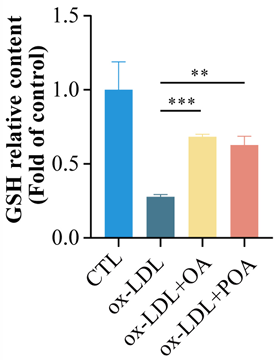
Palmitoleic acid purchased from MedChemExpress. Usage Cited in: FASEB J. 2024 Jul 15;38(13):e23806. [Abstract]
Palmitoleic acid (POA; 20 μM; 24 h). The changes in cellular GSH levels were assessed using the GSH content kit.
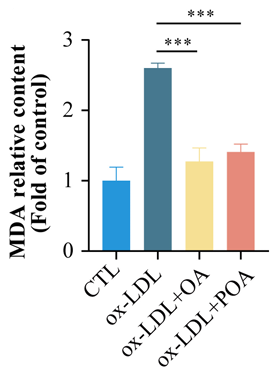
Palmitoleic acid purchased from MedChemExpress. Usage Cited in: FASEB J. 2024 Jul 15;38(13):e23806. [Abstract]
Palmitoleic acid (POA; 20 μM; 24 h). The alterations in cellular MDA levels were measured using the MDA content kit.
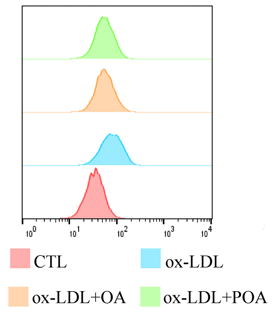
Palmitoleic acid purchased from MedChemExpress. Usage Cited in: FASEB J. 2024 Jul 15;38(13):e23806. [Abstract]
Palmitoleic acid (POA; 20 μM; 24 h). The cellular lipid ROS was detected using C11- BODIPY 581/591 and analyzed by flow cytometry.
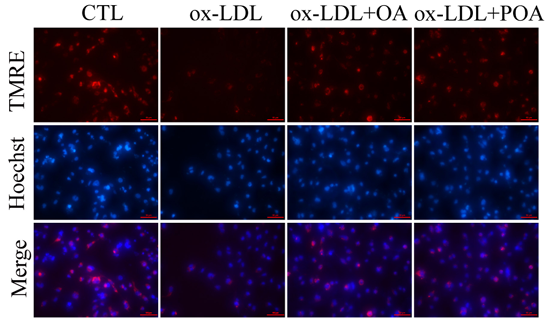
Palmitoleic acid purchased from MedChemExpress. Usage Cited in: FASEB J. 2024 Jul 15;38(13):e23806. [Abstract]
Palmitoleic acid (POA; 20 μM; 24 h). Alterations to the mitochondrial membrane potential assessed using fluorescence microscopy.
Palmitoleic acid purchased from MedChemExpress. Usage Cited in: FASEB J. 2024 Jul 15;38(13):e23806. [Abstract]
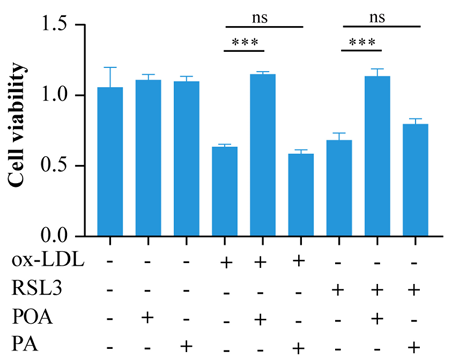
Palmitoleic acid (POA; 20 μM; 24 h). HUVEC cells were treated with POA, and cell viability was assessed using the CCK8 assay.
-
-


Solvent & Solubility
In Vitro:
DMSO : 100 mg/mL (393.07 mM; Need ultrasonic; Hygroscopic DMSO has a significant impact on the solubility of product, please use newly opened DMSO)
Please refer to the solubility information to select the appropriate solvent. Once prepared, please aliquot and store the solution to prevent product inactivation from repeated freeze-thaw cycles.
Storage method and period of stock solution: -80°C, 6 months; -20°C, 1 month. When stored at -80°C, please use it within 6 months. When stored at -20°C, please use it within 1 month.
Please refer to the solubility information to select the appropriate solvent. Once prepared, please aliquot and store the solution to prevent product inactivation from repeated freeze-thaw cycles.
Storage method and period of stock solution: -80°C, 6 months; -20°C, 1 month. When stored at -80°C, please use it within 6 months. When stored at -20°C, please use it within 1 month.
Concentration (start) × Volume (start) = Concentration (final) × Volume (final)
In Vivo:
Select the appropriate dissolution method based on your experimental animal and administration route.
- For the following dissolution methods, please ensure to first prepare a clear stock solution using an In Vitro approach and then sequentially add co-solvents:
- To ensure reliable experimental results, the clarified stock solution can be appropriately stored based on storage conditions. As for the working solution for In Vivo experiments, it is recommended to prepare freshly and use it on the same day.
- The percentages shown for the solvents indicate their volumetric ratio in the final prepared solution. If precipitation or phase separation occurs during preparation, heat and/or sonication can be used to aid dissolution.
Add each solvent one by one: 10% DMSO 40% PEG300 5% Tween-80 45% Saline
Solubility: ≥ 2.5 mg/mL (9.83 mM); Clear solution
This protocol yields a clear solution of ≥ 2.5 mg/mL (saturation unknown).
Taking 1 mL working solution as an example, add 100 μL DMSO stock solution (25.0 mg/mL) to 400 μL PEG300, and mix evenly; then add 50 μL Tween-80 and mix evenly; then add 450 μL Saline to adjust the volume to 1 mL.
Preparation of Saline: Dissolve 0.9 g sodium chloride in ddH₂O and dilute to 100 mL to obtain a clear Saline solution.
Add each solvent one by one: 10% DMSO 90% (20% SBE-β-CD in Saline)
Solubility: ≥ 2.5 mg/mL (9.83 mM); Clear solution
This protocol yields a clear solution of ≥ 2.5 mg/mL (saturation unknown).
Taking 1 mL working solution as an example, add 100 μL DMSO stock solution (25.0 mg/mL) to 900 μL 20% SBE-β-CD in Saline, and mix evenly.
Preparation of 20% SBE-β-CD in Saline (4°C, storage for one week): 2 g SBE-β-CD powder is dissolved in 10 mL Saline, completely dissolve until clear.
For the following dissolution methods, please prepare the working solution directly:
It is recommended to prepare fresh solutions and use them promptly within a short period of time.
The percentages shown for the solvents indicate their volumetric ratio in the final prepared solution. If precipitation or phase separation occurs during preparation, heat and/or sonication can be used to aid dissolution.
Add each solvent one by one: 0.5% CMC-Na/saline water
Solubility: 20 mg/mL (78.61 mM); Suspended solution; Need ultrasonic
In Vivo Dissolution Calculator
Please enter the basic information of animal experiments:
-
-
-
-
Recommended: Prepare an additional quantity of animals to account for potential losses during experiments.
Please enter your animal formula composition:
-
%DMSO +
Recommended: Keep the proportion of DMSO in working solution below 2% if your animal is weak.
-
%+
-
+%Tween-80 + +
-
%Saline +
The co-solvents required include: DMSO, . All of co-solvents are available by MedChemExpress (MCE). , Tween 80. All of co-solvents are available by MedChemExpress (MCE).
Working solution concentration: 0.22 mg/mL
Method for preparing stock solution: mg drug dissolved in μL DMSO. Stock solution concentration: mg/mL.
1. Take μL DMSO stock solution;
2. Add μL .
μL , mix evenly;
3. Then add μL Tween 80, mix evenly;
4. Then add μL
Please ensure that the stock solution in the first step is dissolved to a clear state, and add co-solvents in sequence. You can use ultrasonic heating (ultrasonic cleaner, recommended frequency 20-40 kHz), vortexing, etc. to assist dissolution.


Purity & Documentation
-
Data Sheet (269 KB)
-
SDS (394 KB)
- English - EN (394 KB)
- Français - FR (394 KB)
- Deutsch - DE (394 KB)
- Norwegian - NO (394 KB)
- Español - ES (394 KB)
- Swedish - SV (394 KB)
- Italian - IT (394 KB)
- Korean - KR (394 KB)
- Portuguese - PT (394 KB)
-
Handling Instructions (2659 KB)
References
[1]. Ogunleye A, et al. Fatty acid composition of breast milk from Nigerian and Japanese women. J Nutr Sci Vitaminol (Tokyo). 1991 Aug;37(4):435-42. [Content Brief]
[2]. Yamori Y, et al. Dietary prevention of stroke and its mechanisms in stroke-prone spontaneously hypertensive rats--preventive effect of dietary fibre and palmitoleic acid. J Hypertens Suppl. 1986 Oct;4(3):S449-52. [Content Brief]


Complete Stock Solution Preparation Table
Please refer to the solubility information to select the appropriate solvent. Once prepared, please aliquot and store the solution to prevent product inactivation from repeated freeze-thaw cycles.
Storage method and period of stock solution: -80°C, 6 months; -20°C, 1 month. When stored at -80°C, please use it within 6 months. When stored at -20°C, please use it within 1 month.
| Optional Solvent | Concentration Solvent Mass | 1 mg | 5 mg | 10 mg | 25 mg |
|---|---|---|---|---|---|
| DMSO | 1 mM | 3.9307 mL | 19.6533 mL | 39.3066 mL | 98.2666 mL |
| 5 mM | 0.7861 mL | 3.9307 mL | 7.8613 mL | 19.6533 mL | |
| 10 mM | 0.3931 mL | 1.9653 mL | 3.9307 mL | 9.8267 mL | |
| 15 mM | 0.2620 mL | 1.3102 mL | 2.6204 mL | 6.5511 mL | |
| 20 mM | 0.1965 mL | 0.9827 mL | 1.9653 mL | 4.9133 mL | |
| 25 mM | 0.1572 mL | 0.7861 mL | 1.5723 mL | 3.9307 mL | |
| 30 mM | 0.1310 mL | 0.6551 mL | 1.3102 mL | 3.2756 mL | |
| 40 mM | 0.0983 mL | 0.4913 mL | 0.9827 mL | 2.4567 mL | |
| 50 mM | 0.0786 mL | 0.3931 mL | 0.7861 mL | 1.9653 mL | |
| 60 mM | 0.0655 mL | 0.3276 mL | 0.6551 mL | 1.6378 mL | |
| 80 mM | 0.0491 mL | 0.2457 mL | 0.4913 mL | 1.2283 mL | |
| 100 mM | 0.0393 mL | 0.1965 mL | 0.3931 mL | 0.9827 mL |


Palmitoleic acid Related Classifications
HY-W011873 Related Classifications
 Powered by Bioz