1. Search Result
Search Result
Pathways Recommended: Protein Tyrosine Kinase/RTK
Results for "

RET receptor tyrosine kinase

" in MedChemExpress (MCE) Product Catalog:

30

Inhibitors & Agonists

15

Recombinant Proteins

1

Isotope-Labeled Compounds

1

Antibodies

Cat. No. Product Name Target Research Areas Chemical Structure
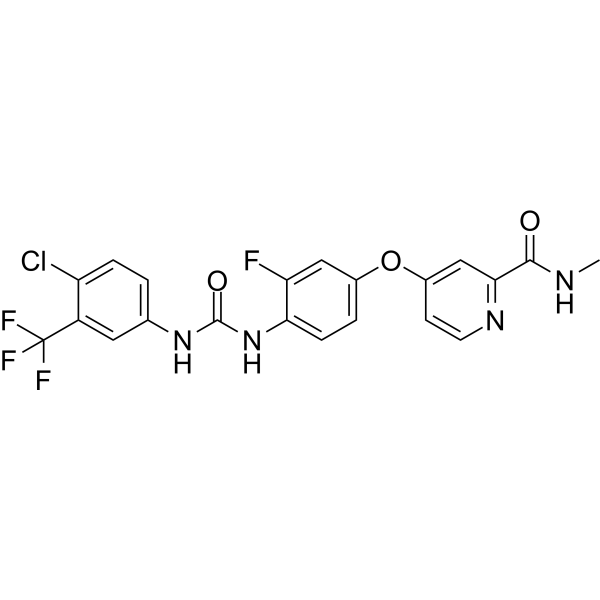
  • HY-10331
    Regorafenib
    Maximum Cited Publications
    87 Publications Verification

    BAY 73-4506

    VEGFR Autophagy PDGFR Raf RET c-Kit FGFR Tie Cancer
    Regorafenib (BAY 73-4506) is an orally active and potent multi-targeted receptor tyrosine kinase inhibitor, with IC50 values of 13/4.2/46, 22, 7, 1.5 and 2.5 nM for VEGFR1/2/3, PDGFRβ, Kit, RET and Raf-1, respectively. Regorafenib shows very robust antitumor and antiangiogenic activity .
    Regorafenib
  • HY-18840
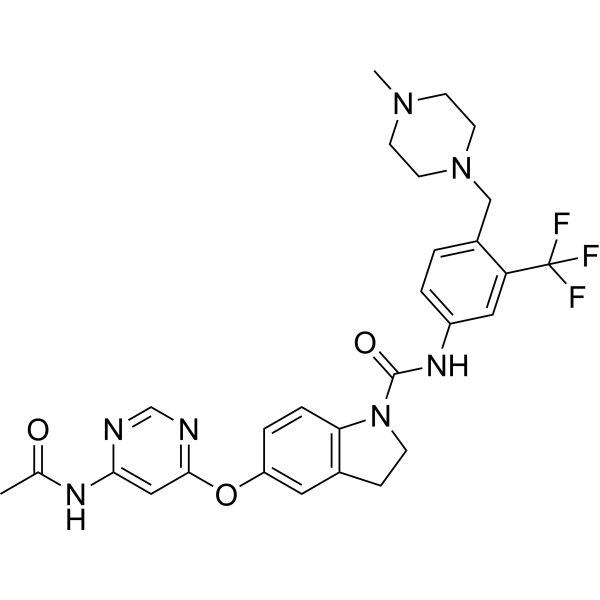
    BBT594
    2 Publications Verification

    NVP-BBT594

    RET Cancer
    BBT594 is a potent receptor tyrosine kinase RET inhibitor, used for cancer treatment.
    BBT594
  • HY-10331A
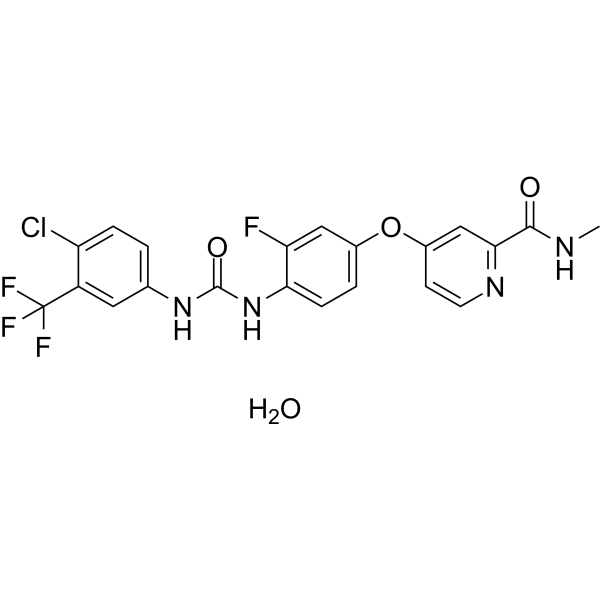
    Regorafenib monohydrate
    Maximum Cited Publications
    87 Publications Verification

    BAY 73-4506 monohydrate

    VEGFR Autophagy PDGFR Raf RET FGFR c-Kit Tie Cancer
    Regorafenib (BAY 73-4506) monohydrate is an orally active and potent multi-targeted receptor tyrosine kinase inhibitor, with IC50 values of 13/4.2/46, 22, 7, 1.5 and 2.5 nM for VEGFR1/2/3, PDGFRβ, Kit, RET and Raf-1, respectively. Regorafenib monohydrate shows very robust antitumor and antiangiogenic activity .
    Regorafenib monohydrate
  • HY-111969
    BT18
    1 Publications Verification

    GDNF Receptor Neurological Disease
    BT18 is a molecule mimic with function similar to glial cell line-derived neurotrophic factor (GDNF) . BT18 shows an effect on GDNF family receptor GFRα1 and RET receptor tyrosine kinase RetA function .
    BT18
  • HY-110193
    SPP-86
    2 Publications Verification

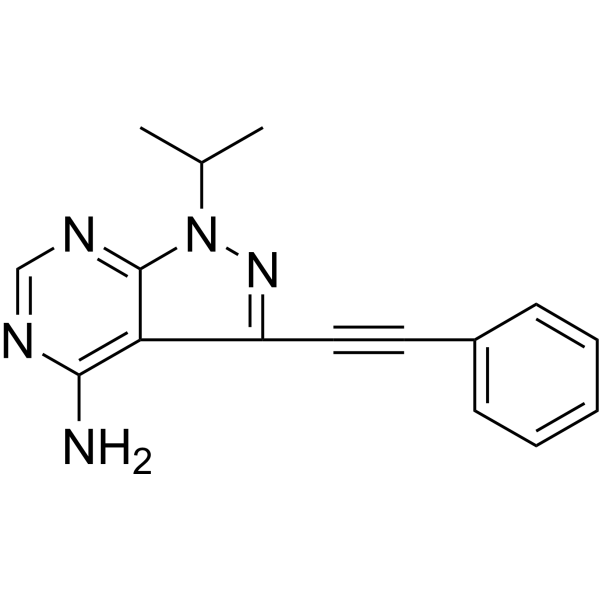
    RET Cancer
    SPP-86 is a potent and selective cell permeable inhibitor of RET tyrosine kinase, with an IC50 of 8 nM. SPP-86 inhibits RET-induced phosphatidylinositide 3-kinases (PI3K)/Akt and MAPK signaling, also inhibits RET-induced estrogen receptorα (ERα) phosphorylation in MCF7 cells . SPP-86 is a click chemistry reagent, it contains an Alkyne group and can undergo copper-catalyzed azide-alkyne cycloaddition (CuAAc) with molecules containing Azide groups.
    SPP-86
  • HY-116116

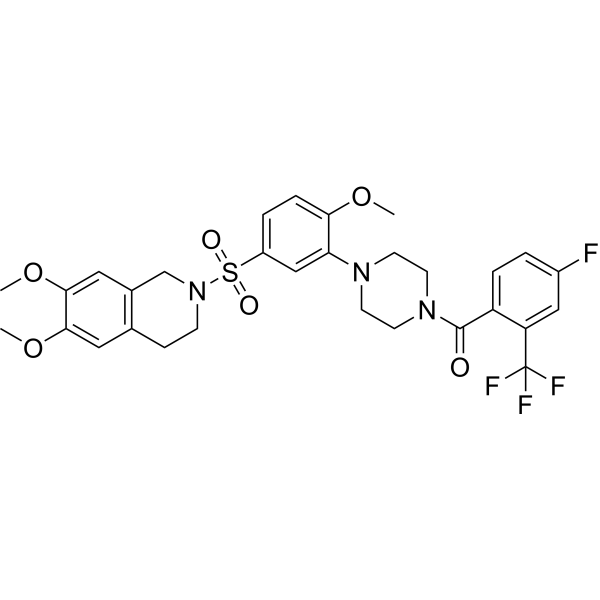
    SIM010603

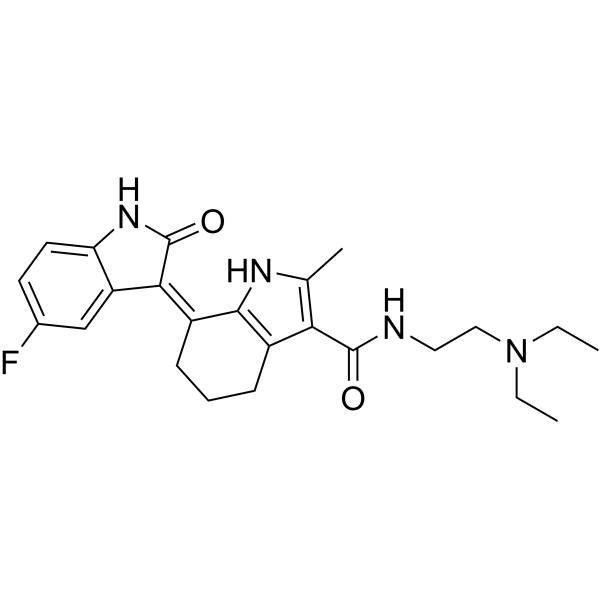
    c-Kit RET VEGFR Cancer
    Tafetinib (SIM010603) is an oral multi-targets receptor tyrosine kinases inhibitor. Tafetinib inhibitsstem cell factor receptor (Kit),vascular endothelial growth factor receptor-2 (VEGFR-2),platelet-derived growth factor receptor-β (PDGFR-β),glial cell line-derived neurotrophic factor receptor (Rearranged during Transfection; RET), andFms-like tyrosine kinase-3 (FLT3)withIC50values between 5.0 and 68.1 nmol/l. Tafetinib inhibits the phosphorylation ofPDGFR-βandVEGFR-2. Tafetinib inhibits endothelial cell proliferation, endothelial cells chemotaxis, and corneal angiogenesis .
    Tafetinib
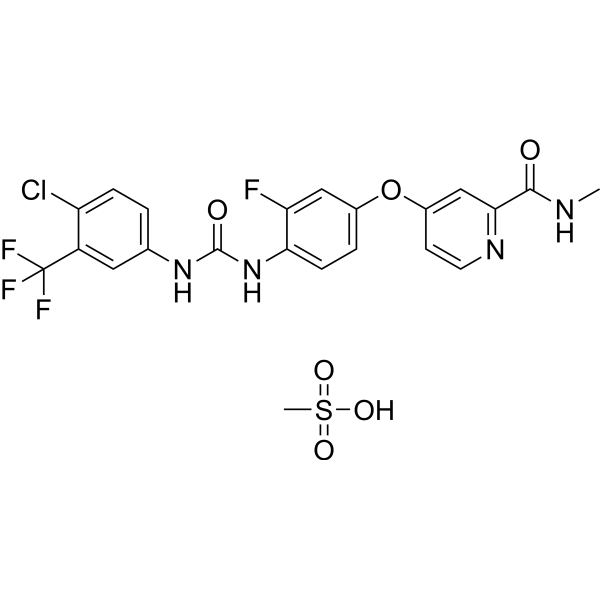
  • HY-10331B

    BAY 73-4506 mesylate

    VEGFR PDGFR RET Raf c-Kit FGFR Autophagy Tie Cancer
    Regorafenib (BAY 73-4506) mesylate is an orally active and potent multi-targeted receptor tyrosine kinase inhibitor, with IC50 values of 13/4.2/46, 22, 7, 1.5 and 2.5 nM for VEGFR1/2/3, PDGFRβ, Kit, RET and Raf-1, respectively. Regorafenib mesylate shows very robust antitumor and antiangiogenic activity .
    Regorafenib mesylate
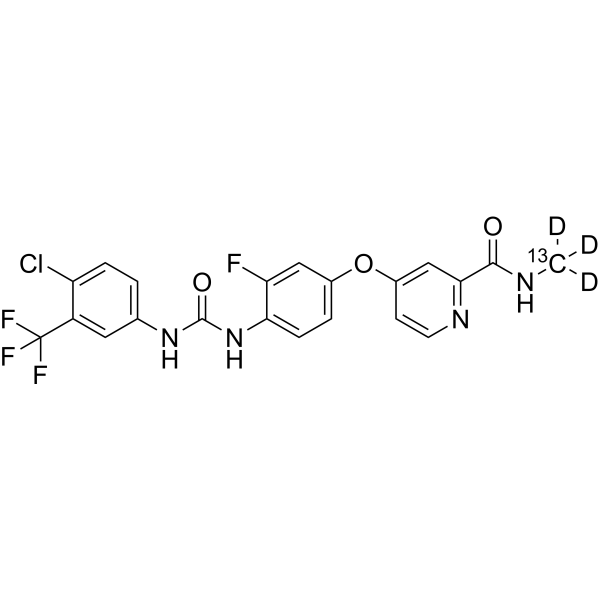
  • HY-10331S1

    BAY 73-4506-13C,d3

    VEGFR Autophagy PDGFR Raf RET Cancer
    Regorafenib- 13C,d3 is the 13C- and deuterium labeled Regorafenib. Regorafenib (BAY 73-4506) is a multi-targeted receptor tyrosine kinase inhibitor with IC50s of 13/4.2/46, 22, 7, 1.5 and 2.5 nM for VEGFR1/2/3, PDGFRβ, Kit, RET and Raf-1, respectively.
    Regorafenib-13C,d3
  • HY-10331R

    BAY 73-4506 (Standard)

    Reference Standards VEGFR Autophagy PDGFR Raf RET c-Kit FGFR Tie Cancer
    Regorafenib (Standard) is the analytical standard of Regorafenib. This product is intended for research and analytical applications. Regorafenib (BAY 73-4506) is an orally active and potent multi-targeted receptor tyrosine kinase inhibitor, with IC50 values of 13/4.2/46, 22, 7, 1.5 and 2.5 nM for VEGFR1/2/3, PDGFRβ, Kit, RET and Raf-1, respectively. Regorafenib shows very robust antitumor and antiangiogenic activity .
    Regorafenib (Standard)
  • HY-10331AR

    BAY 73-4506 monohydrate (Standard)

    Reference Standards VEGFR Autophagy PDGFR Raf RET FGFR c-Kit Tie Cancer
    Regorafenib (monohydrate) (Standard) is the analytical standard of Regorafenib (monohydrate). This product is intended for research and analytical applications. Regorafenib (BAY 73-4506) monohydrate is an orally active and potent multi-targeted receptor tyrosine kinase inhibitor, with IC50 values of 13/4.2/46, 22, 7, 1.5 and 2.5 nM for VEGFR1/2/3, PDGFRβ, Kit, RET and Raf-1, respectively. Regorafenib monohydrate shows very robust antitumor and antiangiogenic activity .
    Regorafenib monohydrate (Standard)
  • HY-170019

    RET Cancer
    RET-IN-28 (Compound 16) is a RET (transmembrane receptor tyrosine protein kinase) inhibitor. RET-IN-28 inhibits the activity of the mutant RET enzyme (RET-V804M), and can be applied to cancer research .
    RET-IN-28
  • HY-E70776

    RET Cancer
    Rearranged during transfection (RET) is a transmembrane receptor protein tyrosine kinase (PTK) activated normally by forming ternary complexes with its cognate ligands and co-receptors. RET alterations by point mutations and gene fusions were found in diverse cancers. RET S891A is a mutant of RET. RET S891A Recombinant Human Active Protein Kinase is a recombinant RET S891A protein that can be used to study RET S891A-related functions .
    RET S891A Recombinant Human Active Protein Kinase
  • HY-E70778

    RET Cancer
    Rearranged during transfection (RET) is a transmembrane receptor protein tyrosine kinase (PTK) activated normally by forming ternary complexes with its cognate ligands and co-receptors. RET alterations by point mutations and gene fusions were found in diverse cancers. RET V804L is a mutant of RET. RET V804L Recombinant Human Active Protein Kinase is a recombinant RET V804L protein that can be used to study RET V804L-related functions .
    RET V804L Recombinant Human Active Protein Kinase
  • HY-E70777

    RET Cancer
    Rearranged during transfection (RET) is a transmembrane receptor protein tyrosine kinase (PTK) activated normally by forming ternary complexes with its cognate ligands and co-receptors. RET alterations by point mutations and gene fusions were found in diverse cancers. RET V804E is a mutant of RET. RET V804E Recombinant Human Active Protein Kinase is a recombinant RET V804E protein that can be used to study RET V804E-related functions .
    RET V804E Recombinant Human Active Protein Kinase
  • HY-E70859

    RET Cancer
    Rearranged during transfection (RET) is a transmembrane receptor protein tyrosine kinase (PTK) activated normally by forming ternary complexes with its cognate ligands and co-receptors. RET alterations by point mutations and gene fusions were found in diverse cancers. RET L790F is a mutant of RET. RET L790F Recombinant Human Active Protein Kinase is a recombinant RET L790F protein that can be used to study RET L790F-related functions .
    RET L790F Recombinant Human Active Protein Kinase
  • HY-E70771

    RET Cancer
    Rearranged during transfection (RET) is a transmembrane receptor protein tyrosine kinase (PTK) activated normally by forming ternary complexes with its cognate ligands and co-receptors. RET alterations by point mutations and gene fusions were found in diverse cancers. RET L730I is a mutant of RET. RET L730I Recombinant Human Active Protein Kinase is a recombinant RET L730I protein that can be used to study RET L730I-related functions .
    RET L730I Recombinant Human Active Protein Kinase
  • HY-E70779

    RET Cancer
    Rearranged during transfection (RET) is a transmembrane receptor protein tyrosine kinase (PTK) activated normally by forming ternary complexes with its cognate ligands and co-receptors. RET alterations by point mutations and gene fusions were found in diverse cancers. RET V804M is a mutant of RET. RET V804M Recombinant Human Active Protein Kinase is a recombinant RET V804M protein that can be used to study RET V804M-related functions .
    RET V804M Recombinant Human Active Protein Kinase
  • HY-E70767

    RET Cancer
    Rearranged during transfection (RET) is a transmembrane receptor protein tyrosine kinase (PTK) activated normally by forming ternary complexes with its cognate ligands and co-receptors. RET alterations by point mutations and gene fusions were found in diverse cancers. RET G691S is a mutant of RET. RET G691S Recombinant Human Active Protein Kinase is a recombinant RET G691S protein that can be used to study RET G691S-related functions .
    RET G691S Recombinant Human Active Protein Kinase
  • HY-E70768

    RET Cancer
    Rearranged during transfection (RET) is a transmembrane receptor protein tyrosine kinase (PTK) activated normally by forming ternary complexes with its cognate ligands and co-receptors. RET alterations by point mutations and gene fusions were found in diverse cancers. RET G810C is a mutant of RET. RET G810C Recombinant Human Active Protein Kinase is a recombinant RET G810C protein that can be used to study RET G810C-related functions .
    RET G810C Recombinant Human Active Protein Kinase
  • HY-E70773

    RET Cancer
    Rearranged during transfection (RET) is a transmembrane receptor protein tyrosine kinase (PTK) activated normally by forming ternary complexes with its cognate ligands and co-receptors. RET alterations by point mutations and gene fusions were found in diverse cancers. RET M918T is a mutant of RET. RET M918T Recombinant Human Active Protein Kinase is a recombinant RET M918T protein that can be used to study RET M918T-related functions .
    RET M918T Recombinant Human Active Protein Kinase
  • HY-E70775

    RET Cancer
    Rearranged during transfection (RET) is a transmembrane receptor protein tyrosine kinase (PTK) activated normally by forming ternary complexes with its cognate ligands and co-receptors. RET alterations by point mutations and gene fusions were found in diverse cancers. RET R813Q is a mutant of RET. RET R813Q Recombinant Human Active Protein Kinase is a recombinant RET R813Q protein that can be used to study RET R813Q-related functions .
    RET R813Q Recombinant Human Active Protein Kinase
  • HY-E70772

    RET Cancer
    Rearranged during transfection (RET) is a transmembrane receptor protein tyrosine kinase (PTK) activated normally by forming ternary complexes with its cognate ligands and co-receptors. RET alterations by point mutations and gene fusions were found in diverse cancers. RET L730M is a mutant of RET. RET L730M Recombinant Human Active Protein Kinase is a recombinant RET L730M protein that can be used to study RET L730M-related functions .
    RET L730M Recombinant Human Active Protein Kinase
  • HY-E70774

    RET Cancer
    Rearranged during transfection (RET) is a transmembrane receptor protein tyrosine kinase (PTK) activated normally by forming ternary complexes with its cognate ligands and co-receptors. RET alterations by point mutations and gene fusions were found in diverse cancers. RET R749T is a mutant of RET. RET R749T Recombinant Human Active Protein Kinase is a recombinant RET R749T protein that can be used to study RET R749T-related functions .
    RET R749T Recombinant Human Active Protein Kinase
  • HY-E70769

    RET Cancer
    Rearranged during transfection (RET) is a transmembrane receptor protein tyrosine kinase (PTK) activated normally by forming ternary complexes with its cognate ligands and co-receptors. RET alterations by point mutations and gene fusions were found in diverse cancers. RET G810R is a mutant of RET. RET G810R Recombinant Human Active Protein Kinase is a recombinant RET G810R protein that can be used to study RET G810R-related functions .
    RET G810R Recombinant Human Active Protein Kinase
  • HY-E70766

    RET Cancer
    Rearranged during transfection (RET) is a transmembrane receptor protein tyrosine kinase (PTK) activated normally by forming ternary complexes with its cognate ligands and co-receptors. RET alterations by point mutations and gene fusions were found in diverse cancers. RET E762Q is a mutant of RET. RET E762Q Recombinant Human Active Protein Kinase is a recombinant RET E762Q protein that can be used to study RET E762Q-related functions .
    RET E762Q Recombinant Human Active Protein Kinase
  • HY-E70780

    RET Cancer
    Rearranged during transfection (RET) is a transmembrane receptor protein tyrosine kinase (PTK) activated normally by forming ternary complexes with its cognate ligands and co-receptors. RET alterations by point mutations and gene fusions were found in diverse cancers. RET Y791F is a mutant of RET. RET Y791F Recombinant Human Active Protein Kinase is a recombinant RET Y791F protein that can be used to study RET Y791F-related functions .
    RET Y791F Recombinant Human Active Protein Kinase
  • HY-E70781

    RET Cancer
    Rearranged during transfection (RET) is a transmembrane receptor protein tyrosine kinase (PTK) activated normally by forming ternary complexes with its cognate ligands and co-receptors. RET alterations by point mutations and gene fusions were found in diverse cancers. RET Y806H is a mutant of RET. RET Y806H Recombinant Human Active Protein Kinase is a recombinant RET Y806H protein that can be used to study RET Y806H-related functions .
    RET Y806H Recombinant Human Active Protein Kinase
  • HY-E70770

    RET Cancer
    Rearranged during transfection (RET) is a transmembrane receptor protein tyrosine kinase (PTK) activated normally by forming ternary complexes with its cognate ligands and co-receptors. RET alterations by point mutations and gene fusions were found in diverse cancers. RET G810S is a mutant of RET. RET G810S Recombinant Human Active Protein Kinase is a recombinant RET G810S protein that can be used to study RET G810S-related functions .
    RET G810S Recombinant Human Active Protein Kinase
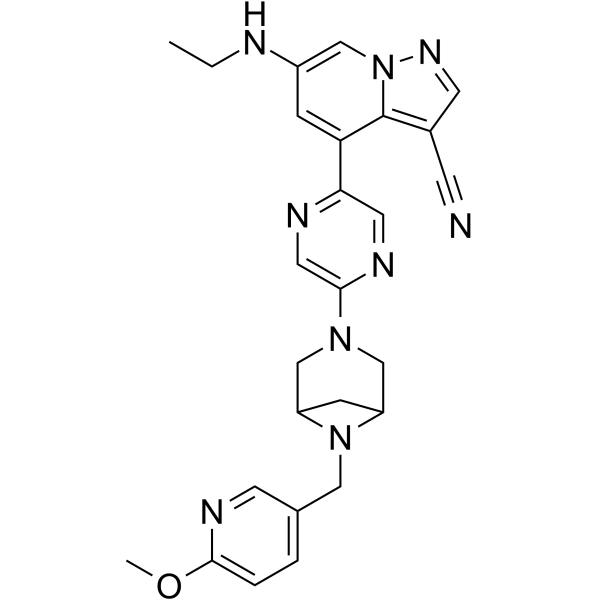
  • HY-143546

    RET Cancer
    RET-IN-9 is a potent inhibitor of RET. RET kinase is a single-pass transmembrane receptor tyrosine kinase that plays an important role in the development of the kidney and enteric nervous system, and the maintenance of homeostasis in the nervous, endocrine, hematopoietic, and male reproductive systems. RET-IN-9 has the potential for the research of RET-related disease including non-small cell lung cancer and medullary thyroid cancer (extracted from patent WO2021115457A1, compound 29) .
    RET-IN-9
  • HY-183931

    RET VEGFR Trk Receptor c-Fms Cancer
    NPA101.3 is an orally active RET receptor tyrosine kinase and VEGFR2 inhibitor (RET IC50 = 0.001 μM, RET V804M IC50 = 0.008 μM, VEGFR2 IC50 = 0.003 μM). NPA101.3 inhibits purified TRKA (IC50 = 32 nM) and CSF1R (IC50 = 46 nM). NPA101.3 completely suppresses tumor formation in RET /C634Y-transformed cells and also attenuates tumor formation in HRAS /G12V-transformed cells. NPA101.3 can be used in the research of RET-driven cancers .
    NPA101.3

Inquiry Online

Your information is safe with us. * Required Fields.

Salutation


Country or Region *

Applicant Name *


Organization Name *

Department *


Email Address *


Product Name *

Cat. No.


Requested quantity *

Phone Number *


Remarks

Inquiry Online

Inquiry Information

Product Name:
Cat. No.:
Quantity:
MCE Japan Authorized Agent: