



BBT594
Based on 2 publication(s) in Google Scholar
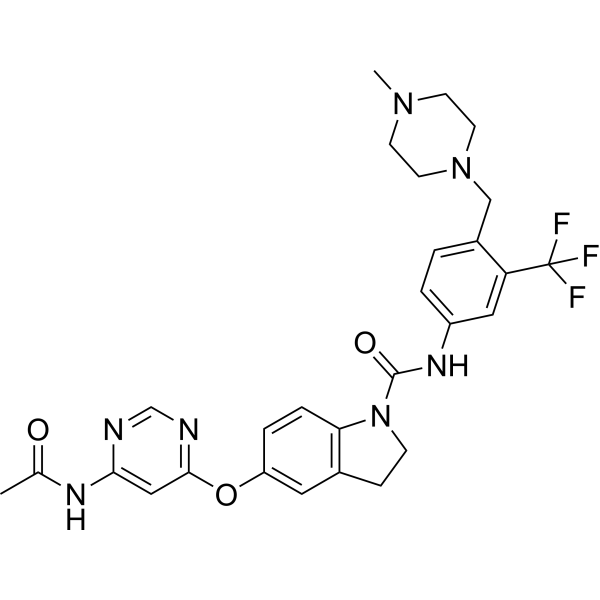
BBT594 is a potent receptor tyrosine kinase RET inhibitor, used for cancer treatment.
For research use only. We do not sell to patients.
- Purity : 99.93%
- CAS No.: 882405-89-2
- Formula: C28H30F3N7O3
- Molecular Weight:569.58
-
Storage:Powder -20°C, 3 years , 4°C, 2 years ; In solvent -80°C, 2 years , -20°C, 1 year

To place orders, for customer services and technical support, please contact: MedChemExpress USA
Tel: 609-228-6898 E-mail: [email protected] [email protected]


-
 Biological Activity
-
Chemical Information
-
Solvent & Solubility
- Purity & Documentation
- References
-
 Help & FAQs


-
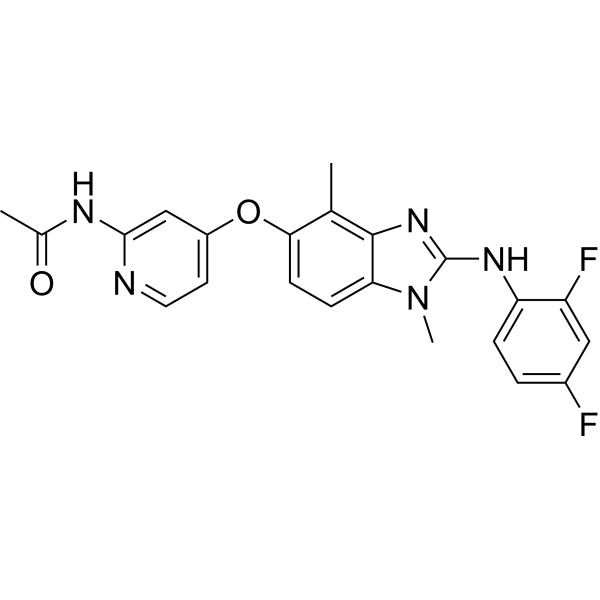
HY-18960
CHZ868JAK2 Inhibitor -
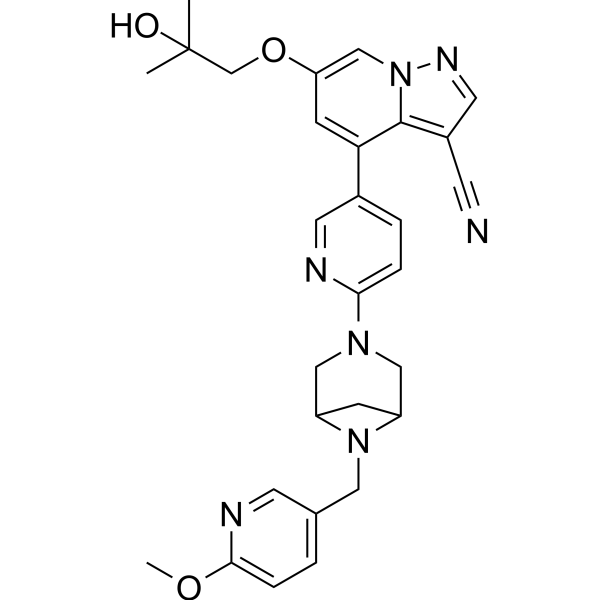
HY-114370
SelpercatinibRET Kinase Inhibitor -
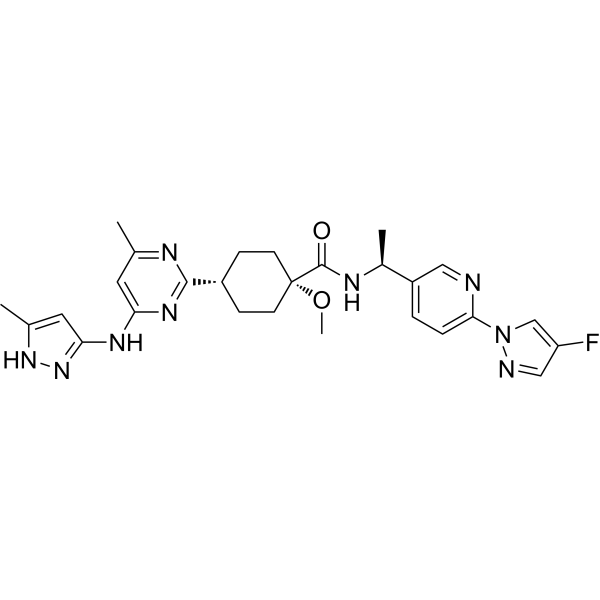
HY-112301
PralsetinibRET Inhibitor -
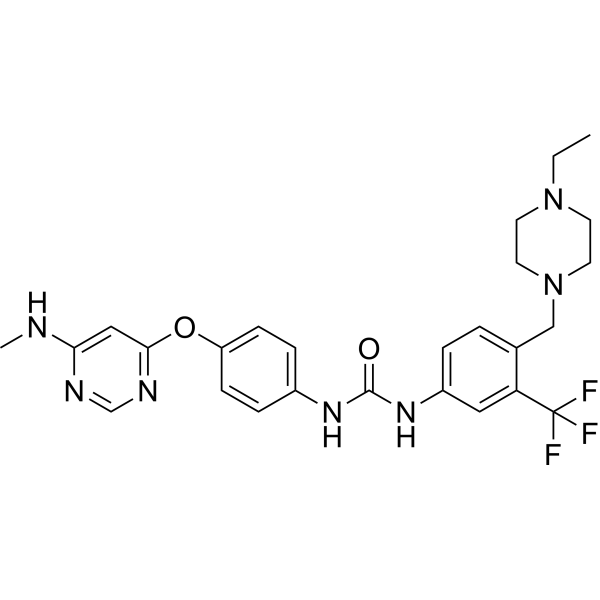
HY-15002
AST 487c-Kit Inhibitor -
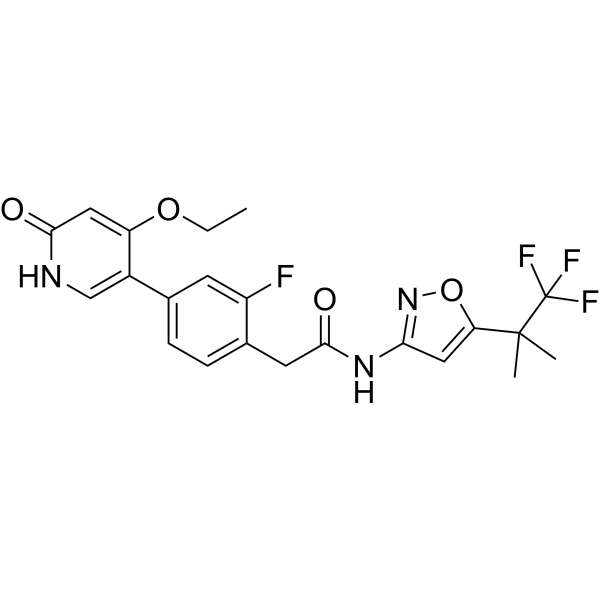
HY-100459
GSK3179106RET Kinase Inhibitor -
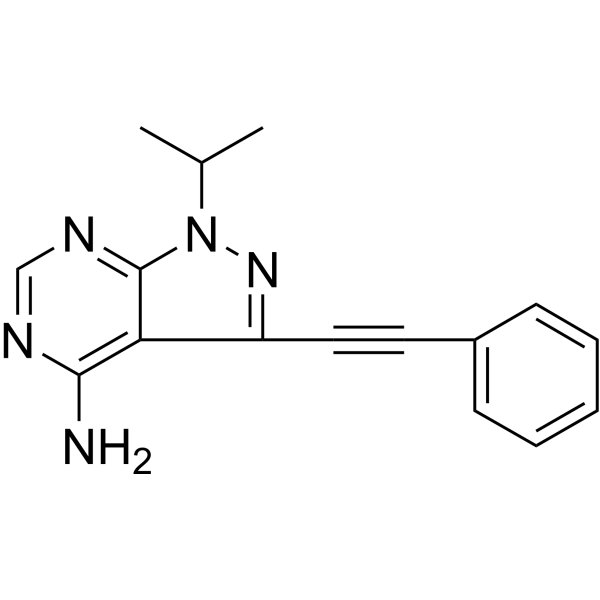
HY-110193
SPP-86RET Inhibitor -
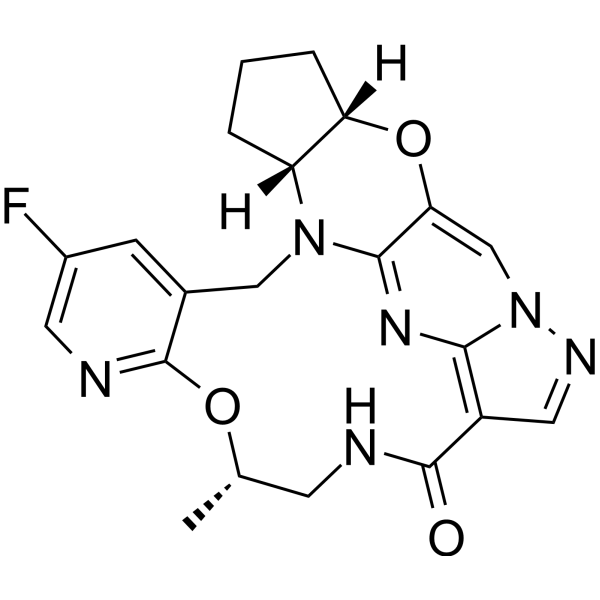
HY-145565
EnbezotinibRET Inhibitor -
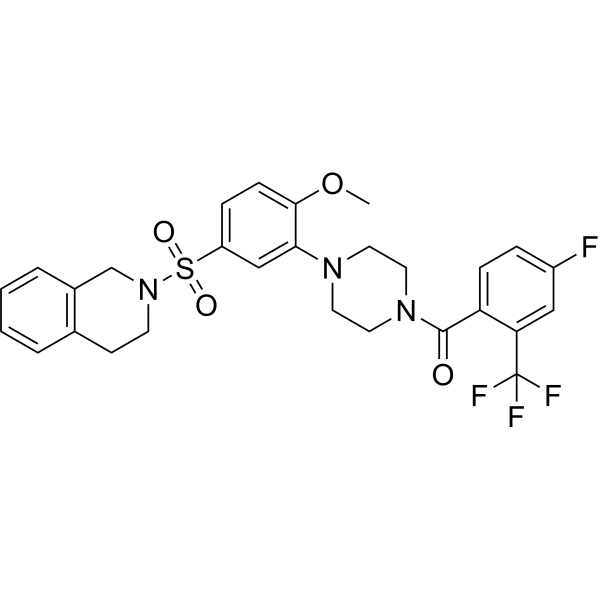
HY-153175
BT44RET Activator -
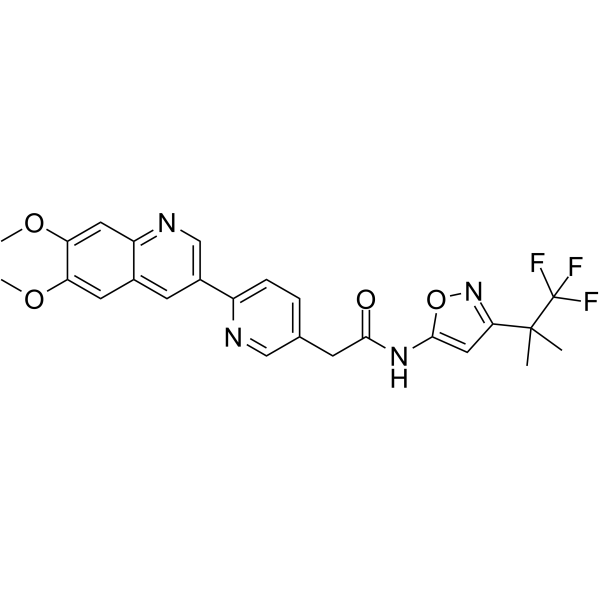
HY-139590
ZeteletinibRET Kinase Inhibitor -
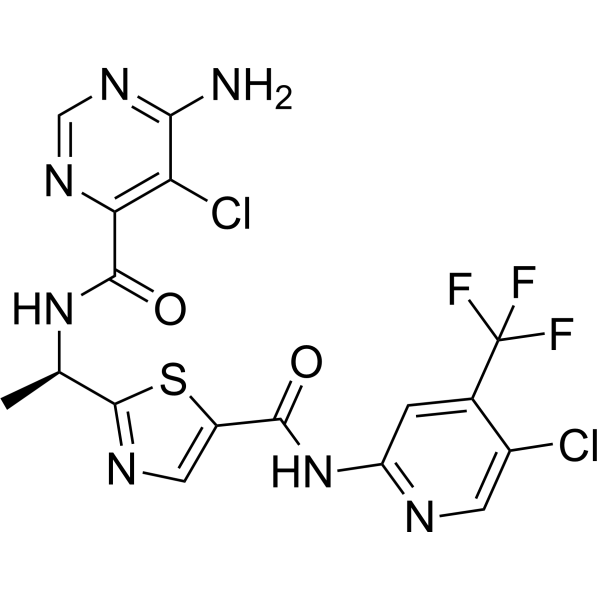
HY-15246
TovorafenibRaf Kinase Inhibitor -
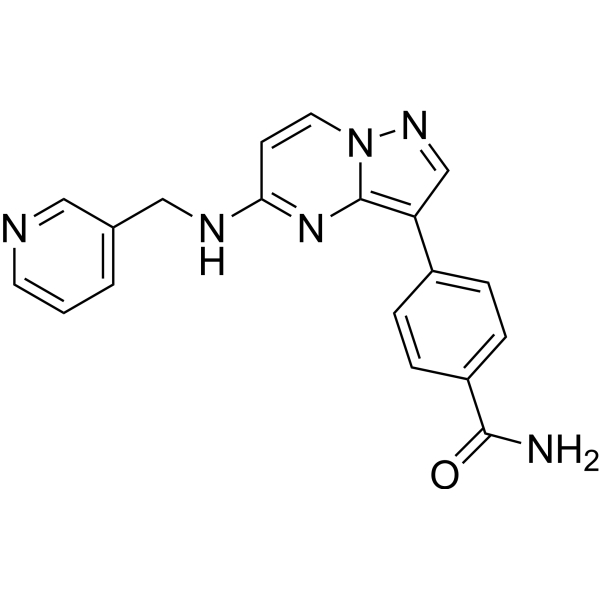
HY-136534
RET V804M-IN-1RET Inhibitor
Publications Citing Use of MedChemExpress (MCE) BBT594
More

Biological Activity
Description
In Vitro
NVP-BBT594 blocks the GDNF-mediated enhancement of MCF7-LTED cell viability in 2D culture and 3D colony formation. The addition of 10 pM E2, to mimic the E2 level in post-menopausal patients that have relapsed on AI treatment and ceased AI therapy, increases 3D colony formation of both MCF7 and MCF7-LTED cells, and this effect is efficiently reverted by NVP-BBT594. Parental T47D cells cultured in presence of low level E2, GFRα1/GDNF stimulation results in increased 3D colony formation, which is significantly reverted by NVP-BBT594. NVP-BBT594 targets GDNF-RET signaling and sensitizes MCF7-2A cells to letrozole treatment. NVP-BBT594 impairs GDNF-mediated RET downstream signaling and significantly enhances the antiproliferative effects of letrozole[1]. NVP-BBT594 shows the highest suppression of GDNF-induced RET signaling, as assessed by RET, ERK1/2, AKT and ER phosphorylation. NVP-AST487 and NVP-BBT594 have comparable RET inhibitory activity in wild-type MCF7 cells[2].
MedChemExpress (MCE) has not independently confirmed the accuracy of these methods. They are for reference only. .


Chemical Information
-
CAS No. 882405-89-2
-
Appearance Solid
-
Molecular Weight 569.58
-
Formula C28H30F3N7O3
-
Color White to yellow
-
SMILES
O=C(N1CCC2=C1C=CC(OC3=NC=NC(NC(C)=O)=C3)=C2)NC4=CC=C(CN5CCN(C)CC5)C(C(F)(F)F)=C4
-
Synonyms
NVP-BBT594
-
Shipping
Room temperature in continental US; may vary elsewhere.
-
Storage
Powder -20°C 3 years 4°C 2 years In solvent -80°C 2 years -20°C 1 year


Publications (2)
-
Journal Impact Factor
-
Most Recent
-
Nat Metab
Colchicine acts selectively in the liver to induce hepatokines that inhibit myeloid cell activation. [Abstract]2021 Apr;3(4):513-522. PMID: 33846641 -


Solvent & Solubility
In Vitro:
DMSO : 100 mg/mL (175.57 mM; Need ultrasonic; Hygroscopic DMSO has a significant impact on the solubility of product, please use newly opened DMSO)
Please refer to the solubility information to select the appropriate solvent. Once prepared, please aliquot and store the solution to prevent product inactivation from repeated freeze-thaw cycles.
Storage method and period of stock solution: -80°C, 2 years; -20°C, 1 year. When stored at -80°C, please use it within 2 years. When stored at -20°C, please use it within 1 year.
Please refer to the solubility information to select the appropriate solvent. Once prepared, please aliquot and store the solution to prevent product inactivation from repeated freeze-thaw cycles.
Storage method and period of stock solution: -80°C, 2 years; -20°C, 1 year. When stored at -80°C, please use it within 2 years. When stored at -20°C, please use it within 1 year.
Concentration (start) × Volume (start) = Concentration (final) × Volume (final)
In Vivo:
Select the appropriate dissolution method based on your experimental animal and administration route.
- For the following dissolution methods, please ensure to first prepare a clear stock solution using an In Vitro approach and then sequentially add co-solvents:
- To ensure reliable experimental results, the clarified stock solution can be appropriately stored based on storage conditions. As for the working solution for In Vivo experiments, it is recommended to prepare freshly and use it on the same day.
- The percentages shown for the solvents indicate their volumetric ratio in the final prepared solution. If precipitation or phase separation occurs during preparation, heat and/or sonication can be used to aid dissolution.
Add each solvent one by one: 10% DMSO 40% PEG300 5% Tween-80 45% Saline
Solubility: ≥ 2.5 mg/mL (4.39 mM); Clear solution
This protocol yields a clear solution of ≥ 2.5 mg/mL (saturation unknown).
Taking 1 mL working solution as an example, add 100 μL DMSO stock solution (25.0 mg/mL) to 400 μL PEG300, and mix evenly; then add 50 μL Tween-80 and mix evenly; then add 450 μL Saline to adjust the volume to 1 mL.
Preparation of Saline: Dissolve 0.9 g sodium chloride in ddH₂O and dilute to 100 mL to obtain a clear Saline solution.
Add each solvent one by one: 10% DMSO 90% (20% SBE-β-CD in Saline)
Solubility: ≥ 2.5 mg/mL (4.39 mM); Clear solution
This protocol yields a clear solution of ≥ 2.5 mg/mL (saturation unknown).
Taking 1 mL working solution as an example, add 100 μL DMSO stock solution (25.0 mg/mL) to 900 μL 20% SBE-β-CD in Saline, and mix evenly.
Preparation of 20% SBE-β-CD in Saline (4°C, storage for one week): 2 g SBE-β-CD powder is dissolved in 10 mL Saline, completely dissolve until clear.
In Vivo Dissolution Calculator
Please enter the basic information of animal experiments:
-
-
-
-
Recommended: Prepare an additional quantity of animals to account for potential losses during experiments.
Please enter your animal formula composition:
-
%DMSO +
Recommended: Keep the proportion of DMSO in working solution below 2% if your animal is weak.
-
%+
-
+%Tween-80 + +
-
%Saline +
The co-solvents required include: DMSO, . All of co-solvents are available by MedChemExpress (MCE). , Tween 80. All of co-solvents are available by MedChemExpress (MCE).
Working solution concentration: 0.22 mg/mL
Method for preparing stock solution: mg drug dissolved in μL DMSO. Stock solution concentration: mg/mL.
1. Take μL DMSO stock solution;
2. Add μL .
μL , mix evenly;
3. Then add μL Tween 80, mix evenly;
4. Then add μL
Please ensure that the stock solution in the first step is dissolved to a clear state, and add co-solvents in sequence. You can use ultrasonic heating (ultrasonic cleaner, recommended frequency 20-40 kHz), vortexing, etc. to assist dissolution.


Purity & Documentation
-
Data Sheet (275 KB)
-
SDS (584 KB)
- English - EN (584 KB)
- Français - FR (584 KB)
- Deutsch - DE (584 KB)
- Norwegian - NO (584 KB)
- Español - ES (584 KB)
- Swedish - SV (584 KB)
- Italian - IT (584 KB)
- Korean - KR (584 KB)
- Portuguese - PT (584 KB)
-
Handling Instructions (2659 KB)
References
[1]. Morandi A, et al. GDNF-RET signaling in ER-positive breast cancers is a key determinant of response and resistance to aromatase inhibitors. Cancer Res. 2013 Jun 15;73(12):3783-95 [Content Brief]
[2]. Andreucci E, et al. Targeting the receptor tyrosine kinase RET in combination with aromatase inhibitors in ER positive breast cancer xenografts. Oncotarget. 2016 Sep 2. doi: 10.18632/oncotarget.11826. [Epub ahead of print] [Content Brief]


Complete Stock Solution Preparation Table
Please refer to the solubility information to select the appropriate solvent. Once prepared, please aliquot and store the solution to prevent product inactivation from repeated freeze-thaw cycles.
Storage method and period of stock solution: -80°C, 2 years; -20°C, 1 year. When stored at -80°C, please use it within 2 years. When stored at -20°C, please use it within 1 year.
| Optional Solvent | Concentration Solvent Mass | 1 mg | 5 mg | 10 mg | 25 mg |
|---|---|---|---|---|---|
| DMSO | 1 mM | 1.7557 mL | 8.7784 mL | 17.5568 mL | 43.8920 mL |
| 5 mM | 0.3511 mL | 1.7557 mL | 3.5114 mL | 8.7784 mL | |
| 10 mM | 0.1756 mL | 0.8778 mL | 1.7557 mL | 4.3892 mL | |
| 15 mM | 0.1170 mL | 0.5852 mL | 1.1705 mL | 2.9261 mL | |
| 20 mM | 0.0878 mL | 0.4389 mL | 0.8778 mL | 2.1946 mL | |
| 25 mM | 0.0702 mL | 0.3511 mL | 0.7023 mL | 1.7557 mL | |
| 30 mM | 0.0585 mL | 0.2926 mL | 0.5852 mL | 1.4631 mL | |
| 40 mM | 0.0439 mL | 0.2195 mL | 0.4389 mL | 1.0973 mL | |
| 50 mM | 0.0351 mL | 0.1756 mL | 0.3511 mL | 0.8778 mL | |
| 60 mM | 0.0293 mL | 0.1463 mL | 0.2926 mL | 0.7315 mL | |
| 80 mM | 0.0219 mL | 0.1097 mL | 0.2195 mL | 0.5486 mL | |
| 100 mM | 0.0176 mL | 0.0878 mL | 0.1756 mL | 0.4389 mL |


BBT594 Related Classifications
HY-18840 Related Classifications
 Powered by Bioz