1. Search Result
Search Result
Results for "

analgesic action

" in MedChemExpress (MCE) Product Catalog:

20

Inhibitors & Agonists

1

Screening Libraries

1

Peptides

2

Natural
Products

3

Isotope-Labeled Compounds

Cat. No. Product Name Target Research Areas Chemical Structure
  • HY-18342
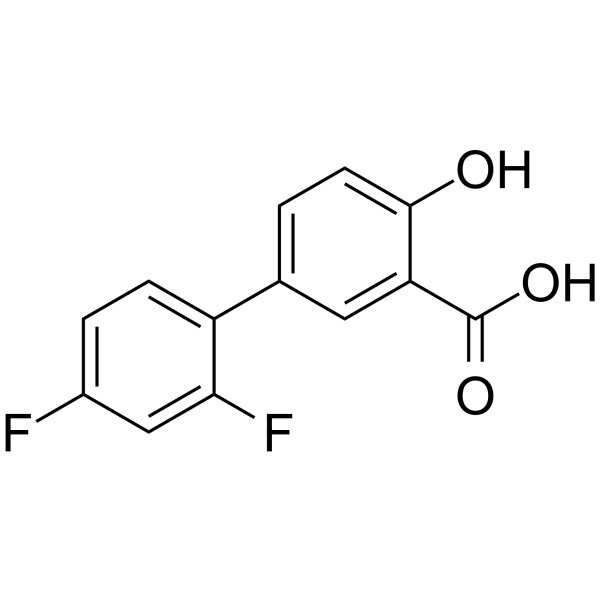
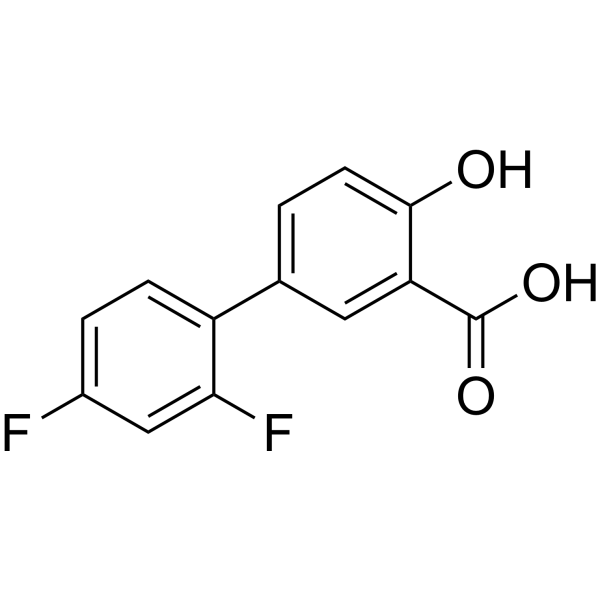
    Diflunisal
    1 Publications Verification

    MK-647

    COX Inflammation/Immunology Cancer
    Diflunisal (MK-647) is a salicylate derivative with nonsteroidal anti-inflammatory and uricosuric properties, which is used alone as an analgesic and in rheumatoid arthritis patients. The mechanism of action of diflunisal is as a Cyclooxygenase (COX) Inhibitor.
    Diflunisal
  • HY-13106
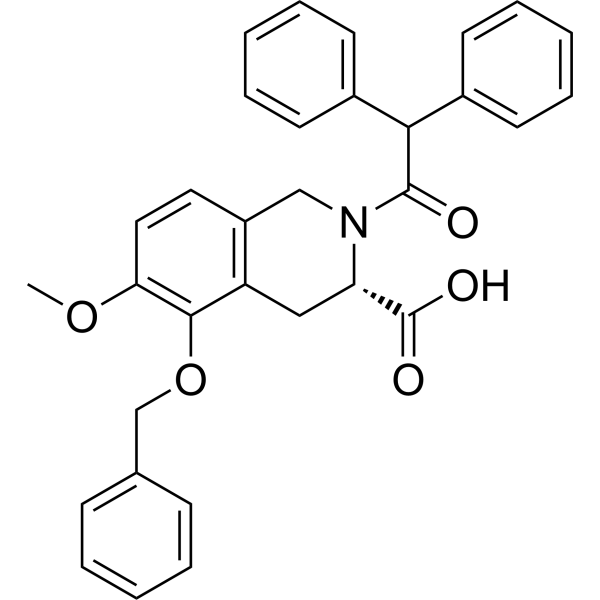
    Olodanrigan
    4 Publications Verification

    EMA401; PD-126055; (S)-EMA400

    Angiotensin Receptor Cardiovascular Disease Neurological Disease Endocrinology
    Olodanrigan (EMA401) is a highly selective, orally active, peripherally restricted angiotensin II type 2 receptor (AT2R) antagonist. It is under development as a neuropathic pain therapeutic agent. Olodanrigan (EMA401) analgesic action appears to involve inhibition of augmented AngII/AT2R induced p38 and p42/p44 MAPK activation, and hence inhibition of DRG neuron hyperexcitability and sprouting of DRG neurons .
    Olodanrigan
  • HY-121222

    PI3K Apoptosis Cancer
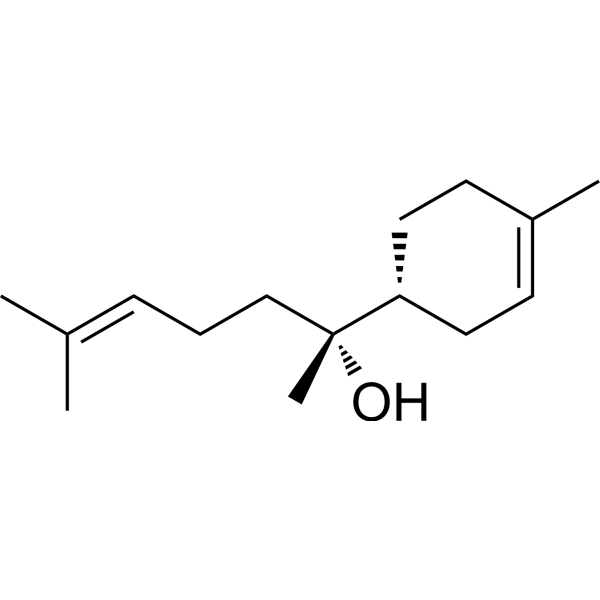
    alpha-Bisabolol, an orally active sesquiterpene alcohol, induces cell cycle arrest, mitochondrial apoptosis and inhibition of PI3K/Akt signalling pathways. alpha-Bisabolol exerts a protective action against Cisplatin (HY-17394)-induced nephrotoxicity by mitigating inflammation and oxidative stress through the inhibition of NFκB activation. alpha-Bisabolol exhibits anti-inflammatory, analgesic, antibiotic and anticancer activities .
    alpha-Bisabolol
  • HY-B0619
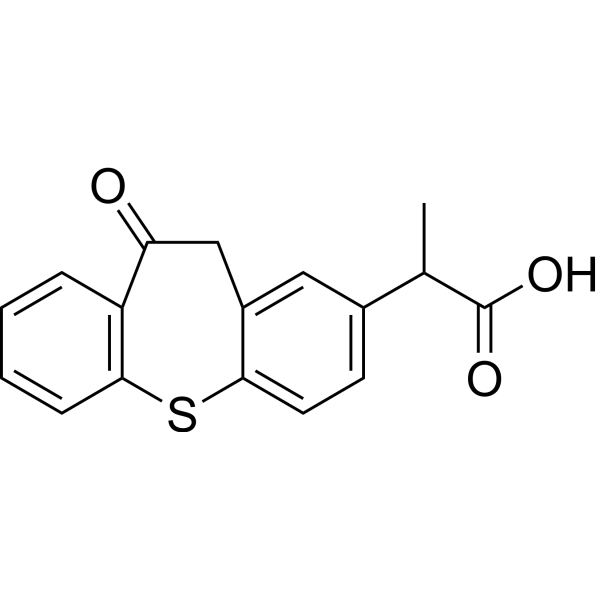
    Zaltoprofen
    2 Publications Verification

    CN100

    COX Inflammation/Immunology
    Zaltoprofen (CN100), a non-steroidal anti-inflammatory drug (NSAID), is a preferential and orally active COX-2 inhibitor, with IC50s of 1.3 and 0.34 μM for COX-1 and COX-2, respectively. Zaltoprofen exhibits powerful anti-inflammatory effects as well as an analgesic action on inflammatory pain .
    Zaltoprofen
  • HY-18342S

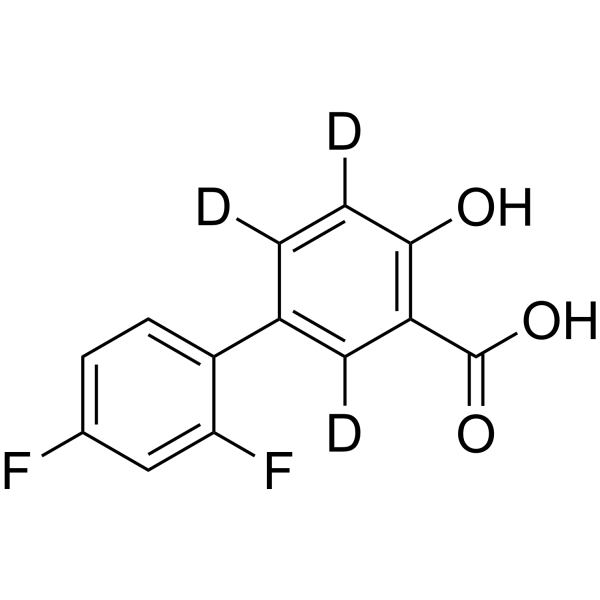
    MK-647-d3

    Isotope-Labeled Compounds COX Inflammation/Immunology Cancer
    Diflunisal-d3 is the deuterium labeled Diflunisal. Diflunisal (MK-647) is a salicylate derivative with nonsteroidal anti-inflammatory and uricosuric properties, which is used alone as an analgesic and in rheumatoid arthritis patients. The mechanism of action of diflunisal is as a Cyclooxygenase (COX) Inhibitor.
    Diflunisal-d3
  • HY-13106A

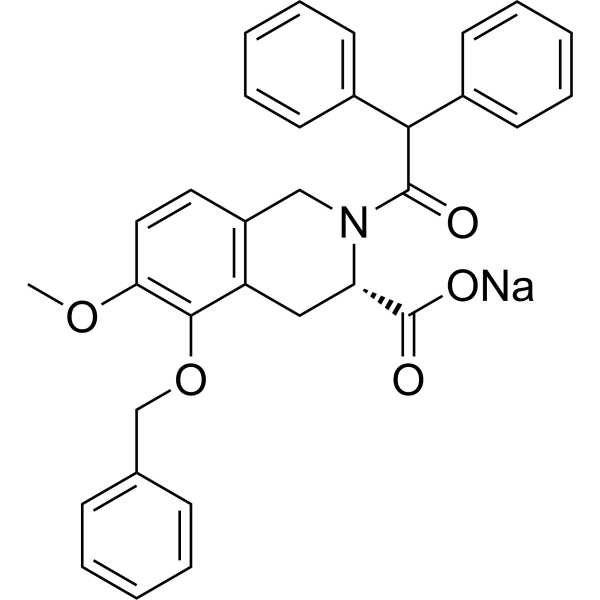
    EMA401 sodium; PD-126055 sodium

    Angiotensin Receptor Neurological Disease Endocrinology
    Olodanrigan (EMA401) sodium is a highly selective, orally active, peripherally restricted angiotensin II type 2 receptor (AT2R) antagonist. Olodanrigan sodium is under development as a neuropathic pain therapeutic agent. Olodanrigan sodium analgesic action appears to involve inhibition of augmented AngII/AT2R induced p38 and p42/p44 MAPK activation, and hence inhibition of DRG neuron hyperexcitability and sprouting of DRG neurons .
    Olodanrigan sodium
  • HY-19699

    NAAM; 1-Naphthaleneacetamide; α-Naphthylacetamide

    Environmental Pollutants Phytohormone Neurological Disease Endocrinology
    1-Naphthylacetamide is an orally active nonsteroidal anti-inflammatory agent (NAIA) and also an indole-type auxin plant growth regulator. 1-Naphthylacetamide inhibits inflammatory response-related pathways and modulates plant hormone signaling, exhibiting anti-inflammatory, local anesthetic, antispasmodic, analgesic, and diuretic activities. 1-Naphthylacetamide promotes plant cell expansion, differentiation, and fruit enlargement. Additionally, 1-Naphthylacetamide induces central nervous system (CNS) depression in mice, characterized by reduced spontaneous activity, decreased irritability, decreased muscle tone, and attenuated ear-cuff reflex, ipsilateral flexor reflex, and corneal reflex [1][2].
    1-Naphthylacetamide
  • HY-U00333

    Adrenergic Receptor Neurological Disease Endocrinology
    α1 adrenoceptor-MO-1, an S enantiomer, has affinity at alpha 1 adrenergic receptor, shows alphalytic activity, and possesses analgesic action; more active than R enantiomer.
    α1 adrenoceptor-MO-1
  • HY-P1617

    Endogenous Metabolite Neurological Disease
    LY 190388 is a penicillamine-containing enkefa peptide analog with μ receptor agonist activity. LY 190388 showed analgesic effect in inhibiting the writhing response in mice after intracerebroventricular administration. The analgesic effect of LY 190388 is not caused by its δ receptor agonist action, but by its μ receptor agonist activity. When LY 190388 is used together with the δ receptor antagonist ICI 174864, an additive analgesic effect is produced .
    LY 190388
  • HY-174845

    Sodium Channel Neurological Disease
    Nav1.8-IN-20 (Compound I) is an orally active and potent voltage-gated sodium channel Nav1.8 inhibitor with an IC50 value of 14 nM. Nav1.8-IN-20 blocks the generation and conduction of action potentials in peripheral nociceptive neurons, exerting analgesic effects. Nav1.8-IN-20 is promising for research of various pain types such as acute pain, chronic pain, inflammatory pain, and neuropathic pain .
    Nav1.8-IN-20
  • HY-18342R

    MK-647 (Standard)

    Reference Standards COX Inflammation/Immunology Cancer
    Diflunisal (Standard) is the analytical standard of Diflunisal. This product is intended for research and analytical applications. Diflunisal (MK-647) is a salicylate derivative with nonsteroidal anti-inflammatory and uricosuric properties, which is used alone as an analgesic and in rheumatoid arthritis patients. The mechanism of action of diflunisal is as a Cyclooxygenase (COX) Inhibitor.
    Diflunisal (Standard)
  • HY-18342S1

    MK-647-13C6

    Isotope-Labeled Compounds COX Inflammation/Immunology Cancer
    Diflunisal- 13C6 (MK-647- 13C6) is 13C labeled Diflunisal. Diflunisal (MK-647) is a salicylate derivative with nonsteroidal anti-inflammatory and uricosuric properties, which is used alone as an analgesic and in rheumatoid arthritis patients. The mechanism of action of diflunisal is as a Cyclooxygenase (COX) Inhibitor.
    Diflunisal-13C6
  • HY-121886

    Endogenous Metabolite Neurological Disease
    Bucricaine is an anesthetic compound with analgesic activity. Bucricaine is used in clinical anesthesia to reduce pain during surgery. The mechanism of action of Bucricaine involves inhibition of nerve signaling. Bucricaine's applications include local anesthesia and dental anesthesia. Bucricaine is widely used during surgery and other medical procedures to improve patient comfort .
    Bucricaine
  • HY-106935A

    Drug Derivative Neurological Disease
    CGP 29030A is an orally effective and specific analgesic agent. CGP 29030A inhibits nociceptive spinal cord neurons without affecting normal sensory functions. CGP 29030A also inhibits gamma motor neurons, which may be beneficial for studying pain disorders that occur concurrently due to increased motor activity (such as cramp, spasm) .
    CGP 29030A
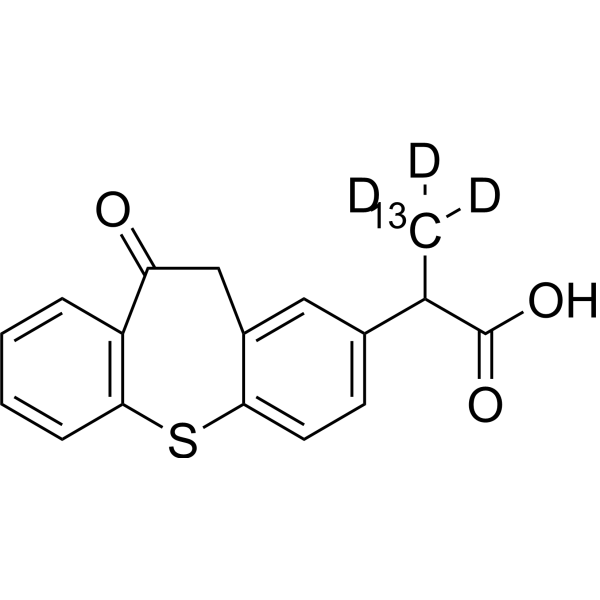
  • HY-B0619S1

    Isotope-Labeled Compounds COX Inflammation/Immunology
    Zaltoprofen- 13C,d3 is the 13C- and deuterium labeled Zaltoprofen. Zaltoprofen (CN100), a non-steroidal anti-inflammatory drug (NSAID), is a preferential and orally active COX-2 inhibitor, with IC50s of 1.3 and 0.34 μM for COX-1 and COX-2, respectively. Zaltoprofen exhibits powerful anti-inflammatory effects as well as an analgesic action on inflammatory pain .
    Zaltoprofen-13C,d3
  • HY-N3074R

    6,10,14-Trimethyl-2-pentadecanone (Standard)

    Reference Standards Bacterial Antibiotic Infection Inflammation/Immunology Cancer
    alpha-Bisabolol (Standard) is the analytical standard of alpha-Bisabolol. This product is intended for research and analytical applications. alpha-Bisabolol, an orally active sesquiterpene alcohol, induces cell cycle arrest, mitochondrial apoptosis and inhibition of PI3K/Akt signalling pathways. alpha-Bisabolol exerts a protective action against Cisplatin (HY-17394)-induced nephrotoxicity by mitigating inflammation and oxidative stress through the inhibition of NFκB activation. alpha-Bisabolol exhibits anti-inflammatory, analgesic, antibiotic and anticancer activities .
    Hexahydrofarnesyl acetone (Standard)
  • HY-127141

    E-4018

    Adenosine Receptor 5-HT Receptor CGRP Receptor Neurological Disease
    Cizolirtine citrate (E-4018) is an analgesic agent. Cizolirtine citrate has significant analgesic and anti-hyperalgesic action in neuropathic pain models .
    Cizolirtine citrate
  • HY-19086

    COX Lipoxygenase Inflammation/Immunology
    SKF-105809 is a dual-action inhibitor of lipoxygenase and COX. SKF-105809 inhibits edema and inflammatory cell infiltration in mouse models of ear, paw, and peritoneum inflammation. SKF-105809 inhibits the production of relevant acute-phase reactive proteins in a mouse model of arthritis. SKF-105809 exhibits analgesic activity in a mouse abdominal contraction test and inhibits ulceration. SKF-105809 can be used in research on inflammatory and immune system diseases such as peritonitis and arthritis .
    SKF-105809
  • HY-W982689

    Biochemical Assay Reagents Metabolic Disease
    Fluindarol is a phenylindandione derivative and an orally active anticoagulant. Fluindarol acts as a toxicant that induces organ and tissue haemorrhages and liver parenchymal necrosis in rats. Fluindarol exhibits acute and cumulative preclinical toxicity in rats, rabbits, and dogs, with higher toxicity in female rats than male rats. Fluindarol lacks analgesic action, produces only minor blood pressure effects, and does not alter circulation, respiration, CNS, or cardiac activity. Fluindarol is considered too toxic for clinical use based on preclinical data .
    Fluindarol
  • HY-181722

    Sigma Receptor Histamine Receptor Neurological Disease
    σ1R/H3R ligand-1 is a dual σ1R/H3R antagonist with a σ1R Ki of 8.8 nM and an H3R Ki of 31.2 nM. Through the dual action of simultaneously antagonizing σ1R and H3R, σ1R/H3R ligand-1 exhibits potent dose-dependent analgesic activity in mouse models of visceral pain and neuropathic pain. σ1R/H3R ligand-1 can be used for the research of visceral pain and neuropathic pain .
    σ1R/H3R ligand-1

Inquiry Online

Your information is safe with us. * Required Fields.

Salutation


Country or Region *

Applicant Name *


Organization Name *

Department *


Email Address *


Product Name *

Cat. No.


Requested quantity *

Phone Number *


Remarks

Inquiry Online

Inquiry Information

Product Name:
Cat. No.:
Quantity:
MCE Japan Authorized Agent:

