
1. Search Result
Search Result
Pathways Recommended: Metabolic Enzyme/Protease
Results for "

bacterial protease

" in MedChemExpress (MCE) Product Catalog:

19

Inhibitors & Agonists

4

Peptides

3

Natural
Products

Cat. No. Product Name Target Research Areas Chemical Structure
  • HY-P2729

    EC 3.4.21.14

    Ser/Thr Protease Apoptosis Interleukin Related Bacterial Inflammation/Immunology Cancer
    Subtilisin (EC 3.4.21.14) is a bacterial serine protease. Subtilisin induces Apoptosis. Subtilisin stimulates the expression of pro-allergic cytokines (IL-1α, IL-33). Subtilisin induces prototypic allergic lung inflammation. Subtilisin exhibits anticancer activity against breast and colon cancer. Subtilisin shows antifouling activity. Subtilisin can be used as a detergent additive .
    Subtilisin
  • HY-W012572

    Mitochondrial Metabolism Bacterial Infection Metabolic Disease
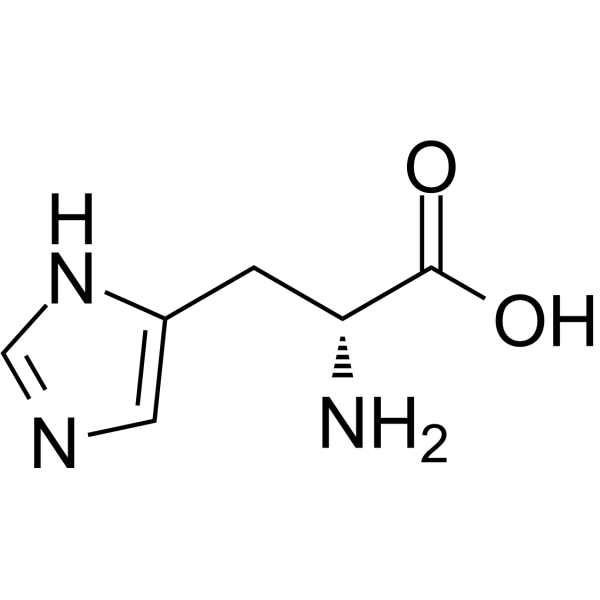
    D-Histidine is an anti-biofilm agent that targets bacterial quorum sensing systems (such as RhlI/RhlR pathway) and has antibacterial activity. D-Histidine works by non-covalently binding to bacterial regulatory factors or copper ion complexes, selectively inhibiting bacterial biofilm formation and motility. D-Histidine downregulates quorum sensing-related gene expression, reduces the synthesis of virulence factors (such as alginate and proteases), and interferes with bacterial membrane stability, inhibiting biofilm formation, promoting the disintegration of mature biofilms, and enhancing antibiotic sensitivity. D-Histidine is also an efficient catalyst for the salt-induced peptide formation (SIPF) reaction, which promotes the condensation of amino acids to form dipeptides (such as dialanine and dilysine) by forming a complex with copper ions (Cu 2+) .
    D-Histidine
  • HY-N1341

    HCV HCV Protease DNA/RNA Synthesis Bacterial Infection
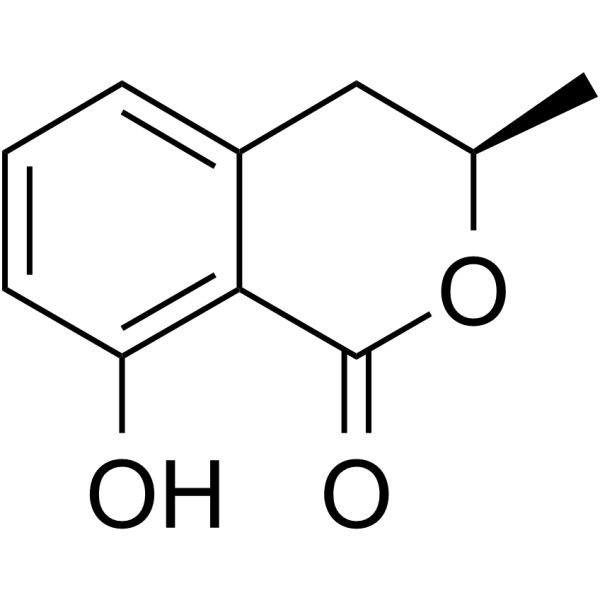
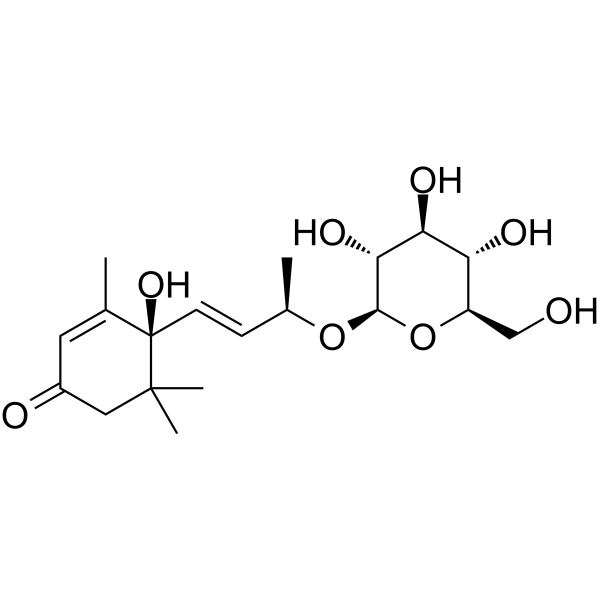
    Roseoside is an inhibitor of DNA gyrase and HAV 3C protease, and also inhibits HCV NS5A/B replicase in human systems with an IC50 of 20 μM. Roseoside binds to the active site of enzymes and stabilizes the interaction by forming hydrogen bonds with key amino acid residues. Roseoside inhibits the growth of Gram-positive bacteria, Gram-negative bacteria, and Candida albicans, and interferes with HCV RNA replication in vitro by inhibiting HCV NS5A/B replicase (IC50=20 μM). Roseoside shows no cytotoxicity and serves as a research tool for studies related to bacterial infections, candidiasis, HAV and HCV .
    Roseoside
  • HY-149677

    Mitochondrial Metabolism Cancer
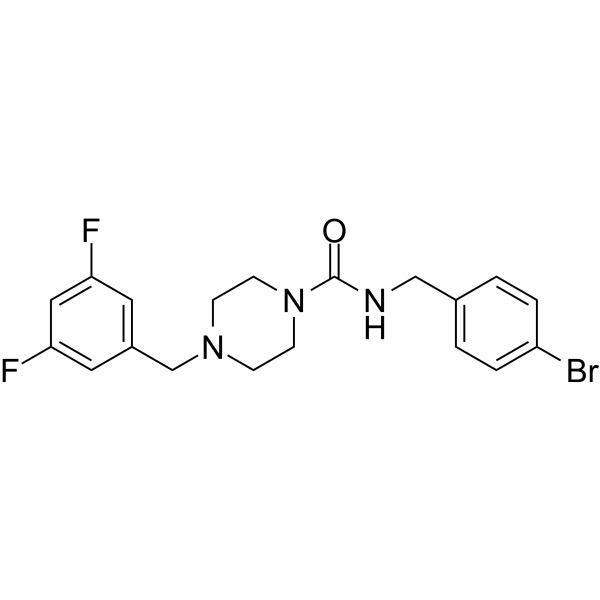
    ZK53 is a selective activator of mitochondrial caseinolytic protease P (HsClpP) (EC50: 1.37?μM for α-casein hydrolysis by HsClpP). ZK53 is is inactive toward bacterial ClpP proteins. ZK53 induces apoptosis in H1703, H520 and SK-MES-1 cells. ZK53 induces dysregulation of mitochondrial functions in lung squamous cell carcinoma (LUSC) cells. ZK53 inhibits tumor growth in H1703 xenograft mouse model .
    ZK53
  • HY-W004812

    (1S,3S)-3-[(tert-Butoxycarbonyl)amino]cyclopentanecarboxylic acid

    Drug Intermediate SARS-CoV Infection
    BOC-(1R,3S)-3-aminocyclopentane carboxylic acid ((1S,3S)-3-[(tert-Butoxycarbonyl)amino]cyclopentanecarboxylic acid) is a conformationally constrained peptide building block and a key component of SARS-CoV-2 main protease (Mpro) inhibitors. When incorporated into macrocyclic peptides, BOC-(1R,3S)-3-aminocyclopentane carboxylic acid not only helps generate high-affinity Mpro inhibitors by preorganizing the secondary structure of peptides, but also exerts sequence-dependent functional inhibition on the hydrolytic activity of Mpro. BOC-(1R,3S)-3-aminocyclopentane carboxylic is widely used in COVID-19-related research .
    BOC-(1R,3S)-3-aminocyclopentane carboxylic acid
  • HY-144820

    Ser/Thr Protease Infection
    JO146 is a Chlamydia trachomatis high temperature requirement A (CtHtrA) protease inhibitor with IC50s of 21.86 and 1.15 μM for CtHtrA and human neutrophil elastase (HNE), respectively. JO146 can be used to inhibits bacterial infections .
    JO146
  • HY-E70420

    Bacterial Inflammation/Immunology
    SpeB cysteine protease is a potent modifier of immunologically important host and bacterial proteins. SpeB cysteine protease degrades streptolysin O (SLO) in extracellular vesicles .
    SpeB cysteine protease
  • HY-P3947

    Ser/Thr Protease Infection
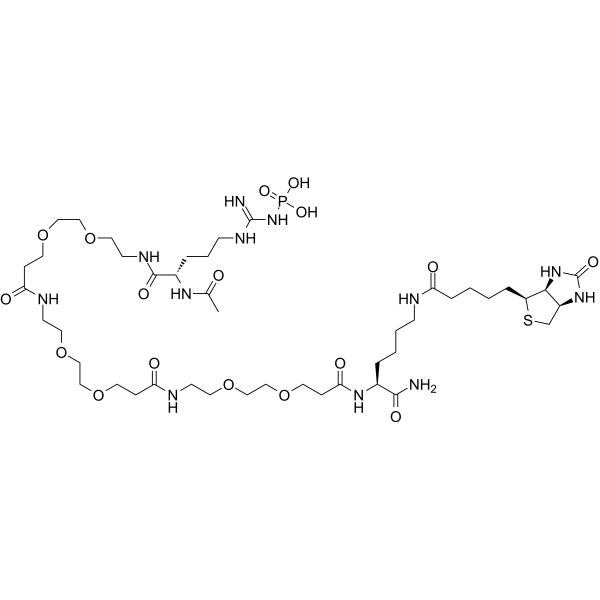
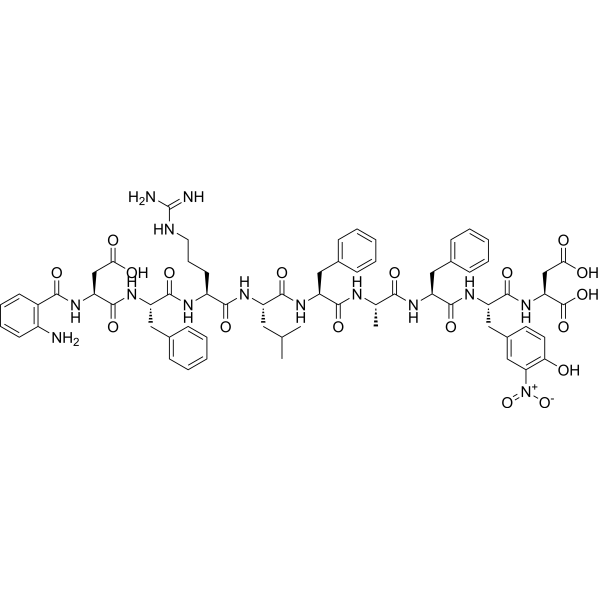
    Fluorescent Substrate for Subtillsin can be used to detect the enzyme activity of subtillsin. Subtilisin is a bacterial serine protease .
    Fluorescent Substrate for Subtillsin
  • HY-175596

    ClpP Bacterial Infection
    ACP1-01 is a bacterial ClpP activator with EC50s of 3.4 and 2.6  μM for Neisseria meningitides ClpP (NmClpP) and Escherichia coli ClpP (EcClpP). ACP1-01 noncovalently binds to ClpP C sites and activates the protease. ACP1-01 has antibacterial activity. ACP1-01 can be used for bacterial infections research .
    ACP1-01
  • HY-W012572A

    Mitochondrial Metabolism Bacterial Infection Metabolic Disease
    D-Histidine hydrochloride hydrate is an anti-biofilm agent that targets bacterial quorum sensing systems (such as RhlI/RhlR pathway) and has antibacterial activity. D-Histidine hydrochloride hydrate works by non-covalently binding to bacterial regulatory factors or copper ion complexes, selectively inhibiting bacterial biofilm formation and motility. D-Histidine hydrochloride hydrate downregulates quorum sensing-related gene expression, reduces the synthesis of virulence factors (such as alginate and proteases), and interferes with bacterial membrane stability, inhibiting biofilm formation, promoting the disintegration of mature biofilms, and enhancing antibiotic sensitivity. D-Histidine hydrochloride hydrate is also an efficient catalyst for the salt-induced peptide formation (SIPF) reaction, which promotes the condensation of amino acids to form dipeptides (such as dialanine and dilysine) by forming a complex with copper ions (Cu 2+) .
    D-Histidine hydrochloride hydrate
  • HY-120659

    Fluorescent Dye Others
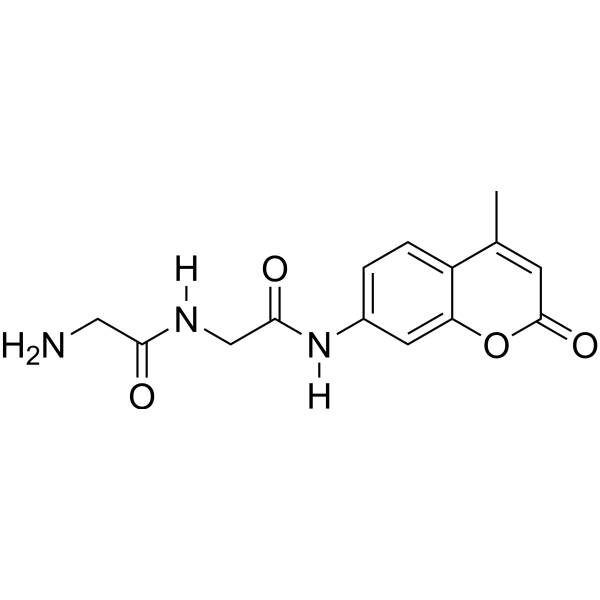
    Gly-Gly-AMC is a fluorogenic peptide substrate. Gly-Gly-AMC can be used to assess bacterial protease activity of P. aeruginosa and S. aureus .
    Gly-Gly-AMC
  • HY-178912

    Reactive Oxygen Species (ROS) Bacterial ClpP Infection Inflammation/Immunology
    Anti-MRSA agent 39 is an orally active ClpX modulator that binds Staphylococcus aureus caseinolytic protease X (SaClpX) with high affinity (Kd = 3.6 μM). Anti-MRSA agent 39 exerts antibacterial effects through temperature-dependent inhibition of cell division. Anti-MRSA agent 39 elicits profound metabolic dysregulation in methicillin-resistant Staphylococcus aureus (MRSA), manifesting as significantly reduced ATP levels, elevated reactive oxygen species (ROS), and decreased NAD+/NADH ratio, and accelerates bacterial lysis rates in MRSA ATCC 33591. Anti-MRSA agent 39 significantly increases the proportion of MRSA cells in the mitotic phase, and the cells exhibit obvious morphological abnormalities. Anti-MRSA agent 39 can be used for the study of invasive MRSA infections .
    Anti-MRSA agent 39
  • HY-P5924A

    Bacterial Infection
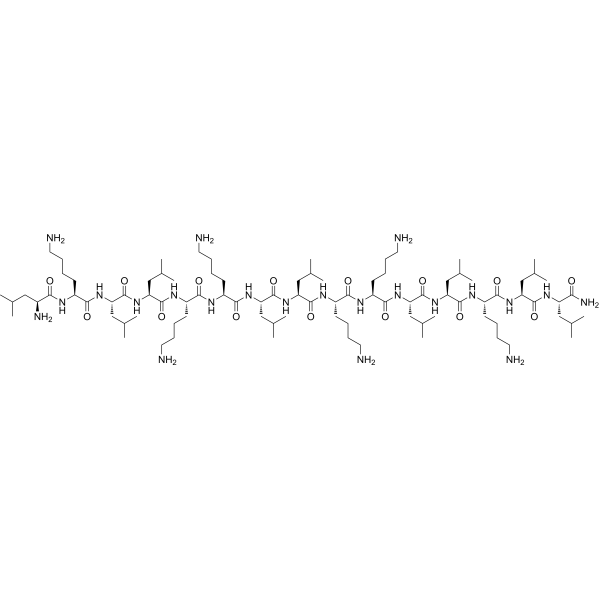
    D-K6L9 shows antimicrobial and antibiofilm activities against P. aeruginosa from cystic fibrosis patients. D-K6L9 is stable and resistant to degradation by cystic fibrosis sputum proteases and will not induce bacterial resistance .
    D-K6L9
  • HY-P5924

    Bacterial Infection
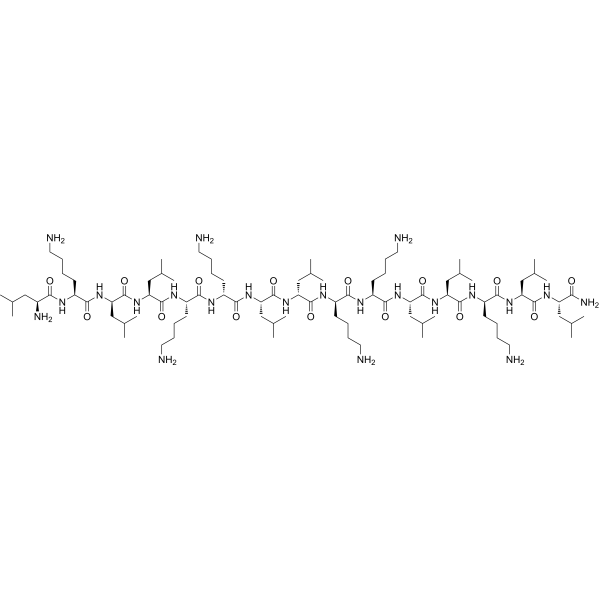
    L-K6L9 shows antimicrobial and antibiofilm activities against P. aeruginosa from cystic fibrosis patients. L-K6L9 is stable and resistant to degradation by cystic fibrosis sputum proteases and will not induce bacterial resistance .
    L-K6L9
  • HY-W012572R

    Reference Standards Mitochondrial Metabolism Bacterial Infection Metabolic Disease
    D-Histidine (Standard) is the analytical standard of D-Histidine (HY-W012572). This product is intended for research and analytical applications. D-Histidine is an anti-biofilm agent that targets bacterial quorum sensing systems (such as RhlI/RhlR pathway) and has antibacterial activity. D-Histidine works by non-covalently binding to bacterial regulatory factors or copper ion complexes, selectively inhibiting bacterial biofilm formation and motility. D-Histidine downregulates quorum sensing-related gene expression, reduces the synthesis of virulence factors (such as alginate and proteases), and interferes with bacterial membrane stability, inhibiting biofilm formation, promoting the disintegration of mature biofilms, and enhancing antibiotic sensitivity. D-Histidine is also an efficient catalyst for the salt-induced peptide formation (SIPF) reaction, which promotes the condensation of amino acids to form dipeptides (such as dialanine and dilysine) by forming a complex with copper ions (Cu 2+) .
    D-Histidine (Standard)
  • HY-124469

    Bacterial Infection
    UM-C162, a benzimidazole derivative, can rescue nematodes from a S. aureus infection. UM-C162 prevents the formation of biofilm without interfering with bacterial viability. UM-C162 mediates the disruption of S. aureus hemolysins, proteases and clumping factors production. UM-C162 has the potential to be used as an anti-virulence agent to control S. aureus infections .
    UM-C162
  • HY-174985

    Bacterial Infection
    Anti-MRSA agent 32 (Compound 26) is an orally active and selective SaClpP (Staphylococcus aureus ClpP protease) activator with an EC50 value of 0.98 μM. Anti-MRSA agent 32 activates SaClpP to abnormally degrade bacterial proteins, inhibiting the proliferation of Staphylococcus aureus. Anti-MRSA agent 32 promotes wound healing in a murine skin infection model. Anti-MRSA agent 32 is promising for research of infectious diseases such as methicillin-resistant Staphylococcus aureus (MRSA) infections .
    Anti-MRSA agent 32
  • HY-183851

    Bacterial mRNA Infection
    KKL-55 is a broad-spectrum antibacterial agent that inhibits the trans-translation pathway and the ClpXP protease. KKL-55 suppresses trans-translation of non-stop mRNA, interferes with the binding of EF-Tu to tmRNA, and inhibits the proteolysis of substrates by ClpXP. KKL-55 blocks spore germination of Bacillus anthracis and protects macrophages from damage induced by anthrax toxin. By virtue of its inhibitory effect on ClpXP, KKL-55 synergistically enhances the antibacterial activity of antibiotics against drug-resistant Staphylococcus aureus. KKL-55 can be used in studies related to bacterial infections .
    KKL-55
  • HY-N19612

    Ser/Thr Protease Others
    Proteasefrom aspergillus oryzae is a serine protease identified in the non-transgenic Aspergillus ochraceus strain AE-P. Proteasefrom aspergillus oryzae functions as a food enzyme and catalyzes protein hydrolysis with broad-spectrum specificity .
    Proteasefrom aspergillus oryzae

Inquiry Online

Your information is safe with us. * Required Fields.

Salutation


Country or Region *

Applicant Name *


Organization Name *

Department *


Email Address *


Product Name *

Cat. No.


Requested quantity *

Phone Number *


Remarks

Inquiry Online

Inquiry Information

Product Name:
Cat. No.:
Quantity:
MCE Japan Authorized Agent:

