
1. Search Result
Search Result
Pathways Recommended: Neuronal Signaling JAK/STAT Signaling
Results for "

cholinergic signaling

" in MedChemExpress (MCE) Product Catalog:

12

Inhibitors & Agonists

1

Biochemical Assay Reagents

1

Peptides

2

Natural
Products

Targets Recommended:
Cat. No. Product Name Target Research Areas Chemical Structure
  • HY-P2860

    ACHE; EC 3.1.1.7

    Cholinesterase (ChE) Neurological Disease
    Acetylcholinesterase, Fly head (ACHE; EC 3.1.1.7) is a cholinergic enzyme mainly found in neuromuscular junctions and cholinergic type chemical synapses used in biochemical research. Acetylcholinesterase, Fly head catalyzes the breakdown or hydrolysis of acetylcholine and some other choline esters that act as neurotransmitters into acetate and choline. Acetylcholinesterase, Fly head's main role is to terminate neuronal transmission and signaling between synapses to prevent ACh spread and activation of nearby receptors .
    Acetylcholinesterase, Fly head
  • HY-P2860A

    Cholinesterase (ChE) Neurological Disease
    Acetylcholinesterase, Electric eel is a cholinergic enzyme that is mainly found in neuromuscular junctions and cholinergic chemical synapses and is often used in biochemical research. Acetylcholinesterase, Electric eel can catalyze the decomposition or hydrolysis of acetylcholine and some other choline esters that act as neurotransmitters into acetic acid and choline. The main function of Acetylcholinesterase, Electric eel is to terminate neuronal transmission and signal conduction between synapses to prevent ACh diffusion and activation of nearby receptors .
    Acetylcholinesterase, Electric eel
  • HY-114269

    nAChR Neurological Disease Inflammation/Immunology
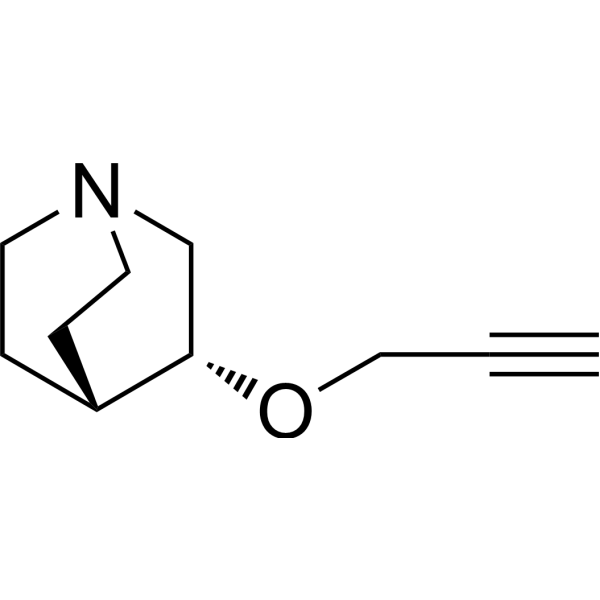
    (-)-(S)-B-973B is an allosteric activator of α7 nicotinic acetylcholine receptor (α7 nAChR). (-)-(S)-B-973B alleviates pain behaviors. (-)-(S)-B-973B can be used for the research of inflammatory pain .
    (-)-(S)-B-973B
  • HY-W127699

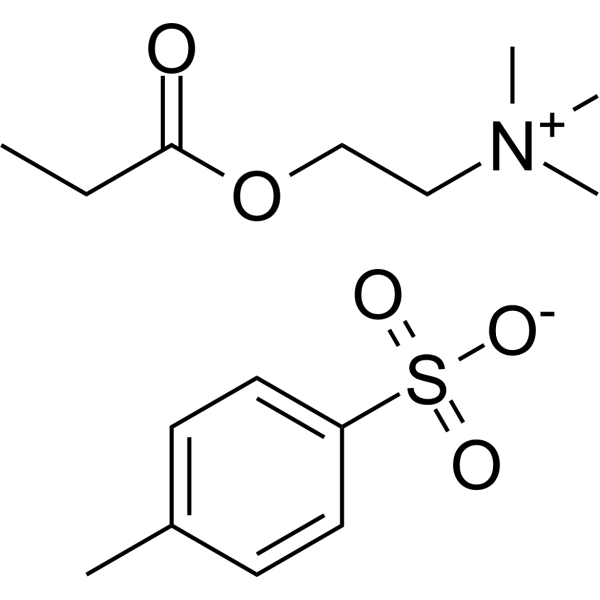
    N,N,N-Trimethyl-2-(propionyloxy)ethanaminium (p-toluenesulfonate)

    Biochemical Assay Reagents Others
    Propionylcholine (p-toluenesulfonate) is an organic compound commonly used in biochemical research and neuroscience research. It can be used to study cholinergic signal transduction and esterase activity, and is widely used in biomedical research and pharmacological research. In addition, this compound is also used as a substrate or catalyst in certain biochemical reactions.
    Propionylcholine (p-toluenesulfonate)
  • HY-118646

    nAChR TNF Receptor Neurological Disease Inflammation/Immunology
    NS-6740 is a partial agonist of α7 nicotinic acetylcholine receptor (α7 nAChR) with an IC50 of 3 nM. NS-6740 also acts as a potent modulator of the cholinergic anti-inflammatory pathway. NS-6740 alters the signaling pattern of α7 in an ion channel-independent manner, thereby reducing synaptic function. NS-6740 induces the desensitized state of α7 nAChR. NS-6740 generates robust nAChR-mediated currents. NS-6740 reduces LPS (HY-D1056)-induced TNF-α release from microglia. NS-6740 can be used in the research of neuroinflammation and neuropathic pain .
    NS-6740
  • HY-N11872

    Others Neurological Disease
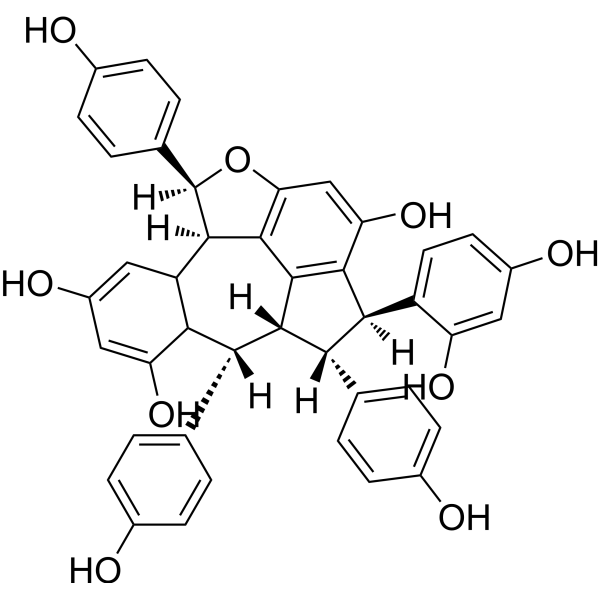
    Suffruticosol A is a neuroprotective agent that restores scopolamine-induced cellular neurodegenerative damage. Suffruticosol A ameliorates hippocampal cholinergic deficits and partially enhances BDNF signaling. Suffruticosol A has neuromodulatory effects in a Scopolamine (HY-N0296)-induced model, restoring memory and cognitive performance in mice. Suffruticosol A can be isolated from seeds of P. lactiflora .
    Suffruticosol A
  • HY-P5876

    ProADM N20(bovine, porcine); PAMP-20(bovine, porcine)

    nAChR Neurological Disease
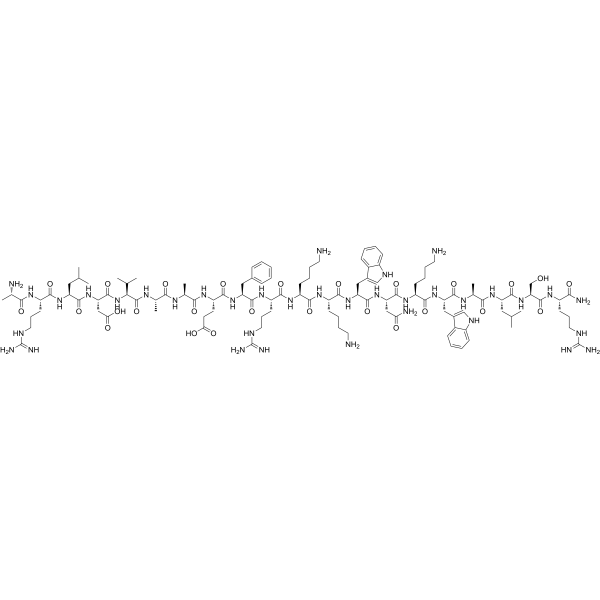
    Proadrenomedullin (N-20) (ProADM N20) (bovine, porcine) is a potent and noncompetitive hypotensive and catecholamine release-inhibitory peptide released from chromaffin cells. Proadrenomedullin (N-20) (bovine, porcine) inhibits catecholamine secretion with an IC50 of 350 nM in PC12 pheochromocytoma cells. Proadrenomedullin (N-20) (bovine, porcine) also blocks (EC50≈270 nM) nicotinic cholinergic agonist desensitization of catecholamine release, as well as desensitization of nicotinic signal transduction ( 22Na + uptake) .
    Proadrenomedullin (N-20) (bovine, porcine)
  • HY-15116

    Prolyl Endopeptidase (PREP) Neurological Disease
    ONO 1603, a novel prolyl endopeptidase inhibitor investigated as a potential antidementia drug, demonstrated neuroprotective and neurotrophic effects in cerebellar granule cells similar to tetrahydroaminoacridine (THA). At a concentration of 0.03 microM, ONO 1603 promoted neuronal survival, enhanced neurite outgrowth, increased m3-muscarinic acetylcholine receptor (mAChR) mRNA levels, and stimulated mAChR-mediated signaling pathways. These findings suggest that ONO 1603 shares pharmacological similarities with THA, indicating its potential as a therapeutic agent for Alzheimer's disease by enhancing cholinergic neurotransmission and neuronal function .
    ONO 1603
  • HY-184140

    Insecticide nAChR Cholinesterase (ChE) Others
    AChE-IN-117 is an AChE/nAChR inhibitor with larvicidal activity against Culex pipiens third-instar larvae. AChE-IN-117 forms stable catalytic site interactions to disrupt cholinergic signaling. AChE-IN-117 binds to its receptor via hydrogen bonding and π-cation interactions to interfere with cholinergic synaptic transmission. AChE-IN-117 induces neurotoxic symptoms including hyperactivity, erratic movement, tremors, paralysis, and larval mortality. AChE-IN-117 can be used for the research of mosquito-borne infectious diseases .
    AChE-IN-117
  • HY-107042

    NRM-331

    Tau Protein Amyloid-β Neurological Disease
    trans-Sobrerol (NRM-331) is a potent mucofluidifying agent. trans-Sobrerol demonstrates an anti-amnesic effect by enhancing hippocampal cholinergic signaling, alongside exhibiting anti-tau and anti- synthesis properties. trans-Sobrerol mitigates memory impairment induced by Scopolamine (HY-N0296). trans-Sobrerol can be used in the research of Alzheimer's disease .
    trans-Sobrerol
  • HY-182581

    Histamine Receptor Neurological Disease
    MK-3134 is an orally active, brain-penetrant and selective histamine H3 receptor inverse agonist. MK-3134 modulates histaminergic neurotransmission, decreases constitutive H3 receptor signaling, releases tonic inhibition of neurotransmitter release, potentiates neurotransmission, and may enhance cholinergic neurotransmission. MK-3134 can be used for the research of Alzheimer's disease .
    MK-3134
  • HY-118646A

    nAChR TNF Receptor Neurological Disease Inflammation/Immunology
    NS-6740 hydrochloride is a partial agonist of α7 nicotinic acetylcholine receptor (α7 nAChR) with an IC50 of 3 nM. NS-6740 hydrochloride also acts as a potent modulator of the cholinergic anti-inflammatory pathway. NS-6740 hydrochloride alters the signaling pattern of α7 in an ion channel-independent manner, thereby reducing synaptic function. NS-6740 hydrochloride induces the desensitized state of α7 nAChR. NS-6740 hydrochloride generates robust nAChR-mediated currents. NS-6740 hydrochloride reduces LPS (HY-D1056)-induced TNF-α release from microglia. NS-6740 hydrochloride can be used in the research of neuroinflammation and neuropathic pain .
    NS-6740 hydrochloride

Inquiry Online

Your information is safe with us. * Required Fields.

Salutation


Country or Region *

Applicant Name *


Organization Name *

Department *


Email Address *


Product Name *

Cat. No.


Requested quantity *

Phone Number *


Remarks

Inquiry Online

Inquiry Information

Product Name:
Cat. No.:
Quantity:
MCE Japan Authorized Agent:

