1. Search Result
Search Result
Results for "

chronic obstructive pulmonary disease model

" in MedChemExpress (MCE) Product Catalog:

15

Inhibitors & Agonists

1

Peptides

Cat. No. Product Name Target Research Areas Chemical Structure
  • HY-P4846
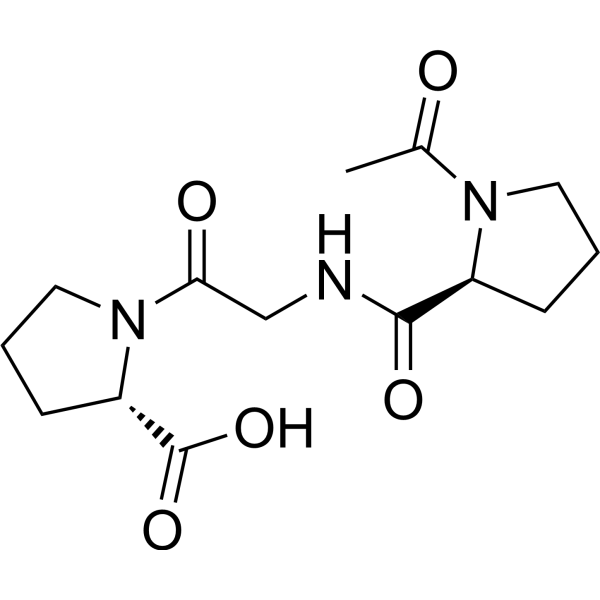
    Ac-Pro-Gly-Pro-OH
    2 Publications Verification

    CXCR Apoptosis IFNAR TNF Receptor Interleukin Related Infection Inflammation/Immunology
    Ac-Pro-Gly-Pro-OH is an endogenous degradation product of extracellular collagen and acts as a CXCR2 agonist . Ac-Pro-Gly-Pro-OH exerts bactericidal activity by generating hydrogen peroxide, inhibits pulmonary inflammation, and reduces immune cell apoptosis (apoptosis). Ac-Pro-Gly-Pro-OH promotes the production of IFN-γ and inhibits the production of TNF-α and IL-6 in leukocytes. Ac-Pro-Gly-Pro-OH increases the survival rate of mice in sepsis models, enhances the bactericidal activity of neutrophils, acts as a neutrophil chemoattractant, induces neutrophil polarization, and regulates inflammatory and repair processes. Ac-Pro-Gly-Pro-OH induces chronic inflammation and tissue remodeling through sustained action. Ac-Pro-Gly-Pro-OH is released via alkaline hydrolysis of corneal proteins in alkali-injured eyes, thereby driving the early infiltration of neutrophils into the cornea. Ac-Pro-Gly-Pro-OH is applicable to research related to sepsis, chronic obstructive pulmonary disease, cystic fibrosis, bronchiolitis obliterans syndrome, severe asthma, idiopathic pulmonary fibrosis, and corneal ulcer .
    Ac-Pro-Gly-Pro-OH
  • HY-165407

    Elastase CFTR Inflammation/Immunology
    Neltenexine, a mucolytic agent, is an Elastase inhibitor. Neltenexine diminishes anion secretion in in bronchial epithelial cells by inhibiting the Cl− and HCO3- uptake via Na/K/2Cl++− and Na+/HCO3- cotransporter without blockade of the CFTR channel, and also diminishes anion secretion via stimulation of Cl−/HCO3- exchanger. Neltenexine significantly prevents pulmonary emphysema with a reduction of alveolar deformation in rat models induced by Elastase. Neltenexine can be used for lung diseases such as chronic obstructive pulmonary disease (COPD) research .
    Neltenexine
  • HY-172135

    p38 MAPK Phosphodiesterase (PDE) Inflammation/Immunology
    PDE4-IN-26 (Compound A5) is an orally active and highly selective PDE4 inhibitor. PDE4-IN-26 has anti-inflammatory activity and can inhibit the phosphorylation of p38 MAPK. In mouse models of acute lung injury and chronic obstructive pulmonary disease, PDE4-IN-26 can improve pulmonary inflammation, injury and fibrosis, promote sputum secretion and relieve cough in mice. PDE4-IN-26 can be used for the research of lung injury-related diseases .
    PDE4-IN-26
  • HY-111135

    IKK Inflammation/Immunology Cancer
    IKK2-IN-3 is an IKK2 inhibitor with an IC50 value of 0.075 μM. IKK2-IN-3 can be used for the research of cancer, rheumatoid arthritis, chronic obstructive pulmonary disease (COPD) .
    IKK2-IN-3
  • HY-167891

    Phosphodiesterase (PDE) Apoptosis Inflammation/Immunology
    GPD-1116 is an orally active Phosphodiesterase (PDE) 4 and PDE1 inhibitor. GPD-1116 can reduce smoke-induced apoptosis of lung cells. GPD-1116 is effective in several disease models in animals, including emphysema, acute lung injury, chronic obstructive pulmonary disease (COPD), asthma and pulmonary hypertension .
    GPD-1116
  • HY-124270

    AR-C68397AA

    Dopamine Receptor Adrenergic Receptor Inflammation/Immunology
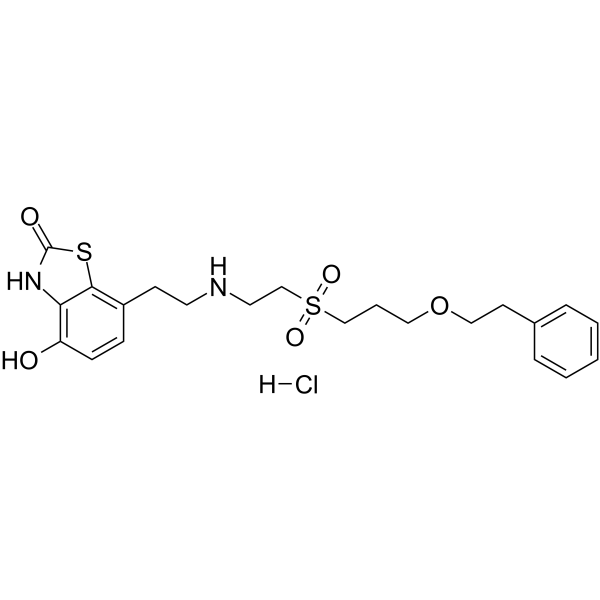
    Sibenadet hydrochloride (AR-C68397AA) is a dual D2 dopamine receptor, beta2-adrenoceptor agonist with bronchodilator activity. Investigation in animal models of key chronic obstructive pulmonary disease (COPD) symptoms has demonstrated that Sibenadet hydrochloride effectively inhibits sensory nerve activity, thereby reducing reflex cough, mucus production and tachypnoea.
    Sibenadet hydrochloride
  • HY-114052

    Phosphodiesterase (PDE) Inflammation/Immunology
    NVP-ABE171 is an efficient, long-lasting and orally active PDE4 inhibitor with IC50 values for PDE4D, PDE4B, PDE4A and PDE4C of 1.5, 34, 602 and 1230 nM respectively. NVP-ABE171 enhances the cAMP accumulation induced by isoproterenol, inhibits the oxidative burst of eosinophils and the release of inflammatory cytokines from T cells and monocytes. NVP-ABE171 exhibits potent anti-inflammatory activity in animal models of asthma and pulmonary inflammation. NVP-ABE171 can be used for research on asthma and chronic obstructive pulmonary disease .
    NVP-ABE171
  • HY-123461

    NF-κB Inflammation/Immunology
    Sul-121 hydrochloride is a novel compound with anti-oxidative capacity that effectively inhibits airway inflammation and hyperresponsiveness (AHR) in experimental models of chronic obstructive pulmonary disease (COPD). Sul-121 hydrochloride prevents lipopolysaccharide-induced airway neutrophilia and AHR in a dose-dependent manner. Sul-121 hydrochloride also demonstrates the ability to reduce oxidative stress markers in human airway smooth muscle cells. Sul-121 hydrochloride inhibits nuclear translocation of the NF-κB subunit, p65, thereby diminishing pro-inflammatory cytokine release.
    Sul-121 hydrochloride
  • HY-120246

    Adrenergic Receptor Phosphodiesterase (PDE) Inflammation/Immunology
    GS-5759 is both a β₂-adrenergic receptor agonist and a PDE4 inhibitor. GS-5759 increases intracellular cAMP levels by activating the β₂ receptor, promoting bronchial dilation. GS-5759 inhibits PDE4 activity, reduces cAMP degradation, and enhances anti-inflammatory effects. GS-5759 exhibits potent bronchial dilation and anti-inflammatory capabilities in animal models. GS-5759 can be used for research on respiratory diseases such as chronic obstructive pulmonary disease (COPD) .
    GS-5759
  • HY-167939

    Adrenergic Receptor Inflammation/Immunology
    (R)-Bambuterol is a β2-receptor agonist with anti-asthmatic and colitis-improving activity. (R)-Bambuterol is indicated for the treatment of asthma and chronic obstructive pulmonary disease and has the advantage of a once-daily dosing and a favorable side effect profile. (R)-Bambuterol significantly reduced disease severity in a mouse model of colitis, more effectively than (RS)-Bambuterol or (S)-Bambuterol. (R)-Bambuterol can significantly reduce the levels of inflammatory cytokines and reduce the infiltration of macrophages in mice with colitis. (R)-Bambuterol also increases β2-adrenoceptor levels and reduces the expression of IL-6, IL-17 and other related proteins in colon tissue in a dose-dependent manner .
    (R)-Bambuterol
  • HY-163982

    NF-κB FOXO Inflammation/Immunology
    FOXJ1 agonist 1 (compound 16c) is an orally effective small molecule that can effectively enhance the expression of FOXJ1. Foxj1-IN-1 acts on the mammalian airway system composed of multiciliated cells (MCC) to prevent the development and onset of chronic obstructive pulmonary disease (COPD). Foxj1-IN-1 can induce the production of motile cilia in the respiratory system of zebrafish and mammals, and inhibit elastase-induced COPD mouse models. Foxj1-IN-1 has good liver microsomal stability, in vivo PK curve and AUC; it has no significant inhibition of CYP and hERG, and does not have significant cytotoxicity .
    FOXJ1 agonist 1
  • HY-110268

    CXCR Inflammation/Immunology
    NVP CXCR2 20 is a selective CXCR2 inhibitor with analgesic and antinociceptive activities. NVP CXCR2 20 selectively blocks CXCR2 signaling and attenuates mechanical and thermal hypersensitivity in rat chronic constriction injury (CCI) models. NVP CXCR2 20 inhibits CXCL3-induced hypersensitivity in naive mice and reduces elevated CXCL3 protein levels in the spinal cord and dorsal root ganglia (DRG) of CCI-exposed rats. NVP CXCR2 20 can be used for the research of neuropathic pain and chronic obstructive pulmonary disease (COPD) .
    NVP CXCR2 20
  • HY-181646

    Phosphodiesterase (PDE) TNF Receptor Inflammation/Immunology
    PDE4-IN-34 is a phosphodiesterase 4 (PDE4) inhibitor, with IC50 values of 19 pM and 14 pM against PDE4B1 and PDE4D2, respectively. PDE4-IN-34 shows weak inhibitory activity against PDE8A1, with an IC50 value of 4.092 μM, and exhibits significant selectivity over other subtypes (IC50 > 10 μM). PDE4-IN-34 improves pulmonary function, reduces inflammatory responses and alleviates lung tissue damage in a rat model induced by cigarette smoke combined with LPS (HY-D1056). PDE4-IN-34 can be used for research related to chronic obstructive pulmonary disease .
    PDE4-IN-34
  • HY-185463

    Ser/Thr Protease Inflammation/Immunology
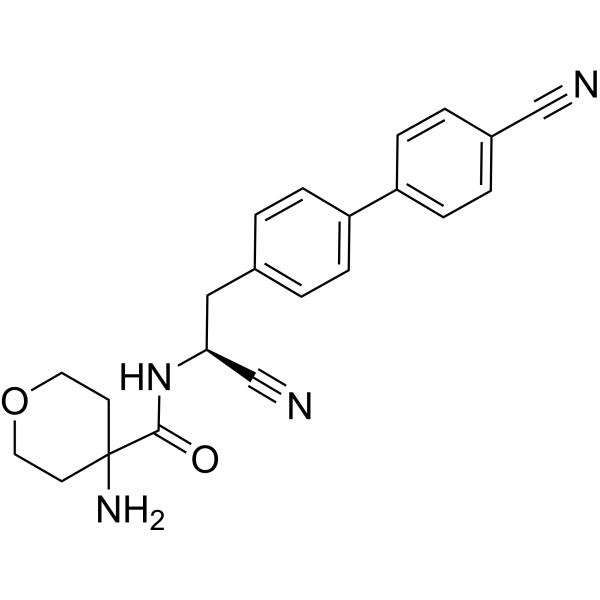
    β-Tryptase-IN-1 is a selective β-tryptase inhibitor with a Ki of 10 nM. β-Tryptase-IN-1 binds to the inducible S4 + pocket unique to β-tryptase. β-Tryptase-IN-1 can be used for the researches of asthma and chronic obstructive pulmonary disease (COPD) .
    β-Tryptase-IN-1
  • HY-181762

    Phosphodiesterase (PDE) TRP Channel NF-κB NOD-like Receptor (NLR) Interleukin Related Inflammation/Immunology
    Multitarget AD-IN-6 (Compound 39) is a multi-target inhibitor, with an IC50 of 15.54 μM against PDE4B, 15.15 μM against PDE7A, 8.39 μM against PDE3A, and a Kd of 37.7 μM against CHIT1. Multitarget AD-IN-6 acts as a TRPA1 antagonist, reduces the level of the NLRP3 inflammasome multiprotein complex to inhibit its activation, while inhibiting PDE4B, PDE7A and CHIT1, and decreasing the phosphorylation of NF-κB. Multitarget AD-IN-6 improves the pathology of elastase-induced emphysema in mice. Multitarget AD-IN-6 is applicable for the research of chronic obstructive pulmonary disease .
    Multitarget AD-IN-6

Inquiry Online

Your information is safe with us. * Required Fields.

Salutation


Country or Region *

Applicant Name *


Organization Name *

Department *


Email Address *


Product Name *

Cat. No.


Requested quantity *

Phone Number *


Remarks

Inquiry Online

Inquiry Information

Product Name:
Cat. No.:
Quantity:
MCE Japan Authorized Agent:

