1. Search Result
Search Result
Results for "

covalent conjugation

" in MedChemExpress (MCE) Product Catalog:

24

Inhibitors & Agonists

4

Fluorescent Dyes

9

Biochemical Assay Reagents

2

Peptides

10

Click Chemistry

Cat. No. Product Name Target Research Areas Chemical Structure
  • HY-128925
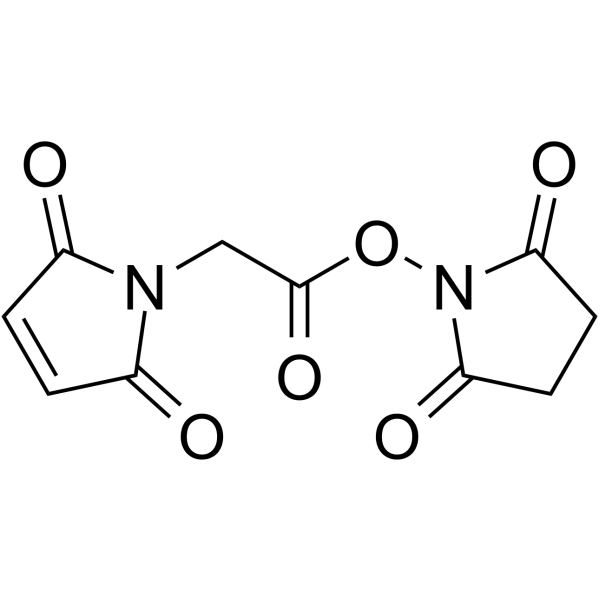
    AMAS
    1 Publications Verification

    ADC Linker Cancer
    AMAS is a nonclaevable heterobifunctional crosslinker with NHS ester and maleimide groups that allows covalent conjugation of amine- and sulfhydryl-containing molecules.
    AMAS
  • HY-48999A
    FSK hydrochloride
    1 Publications Verification

    EGFR Cancer
    FSK hydrochloride is fluorosulfonyloxybenzoyl-L-lysine, which features a long, flexible aryl fluorosulfate-containing side chain that can reach protein sites inaccessible to covalent conjugation. FSK hydrochloride modifies nanomolecules to target epidermal growth factor receptor (EGFR), resulting in irreversibly bound covalent interactions. Through genetically encoded chemical crosslinking, FSK hydrochloride captures unknown enzyme-substrate interactions in living cells, targets residues other than Cys, and mediates crosslinking at the binding periphery. FSK hydrochloride enables the construction of a bioreactive SuFEx system for generating covalent bonds in various proteins both in vitro and in vivo .
    FSK hydrochloride
  • HY-126192

    PiB; 6-OH-BTA-1

    Amyloid-β Neurological Disease
    Pittsburgh Compound B (PiB) is a blood-brain barrier-permeable, specific deposition PET tracer that binds to Aβ(1-40) fibrils with a Ki value of 678.4 nM. Through click chemical modification (a clickable Pittsburgh Compound B derivative is prepared by introducing a PEG3 linker and an alkynyl group at the 6-hydroxy site of Pittsburgh Compound B, followed by covalent conjugation with azide-labeled fluorescent dyes or affinity tags via copper-catalyzed azide-alkyne cycloaddition (CuAAC)), Pittsburgh Compound B and its conjugates can be used for fluorescence imaging, ultrastructural studies, and enrichment and characterization of Aβ complexes. Pittsburgh Compound B is applicable to Alzheimer's disease research .
    Pittsburgh Compound B
  • HY-D1390A

    Fluorescent Dye Others
    Sulfo-Cy5-Mal is a fluorescent dye derivative composed of a CY5 dye and a maleimide functional group. Sulfo-Cy5-Mal specifically covalently binds to thiol-containing (-SH) biomolecules. Sulfo-Cy5-Mal can be used for protein labeling, antibody conjugation, molecular imaging, and drug delivery studies (Ex/Em = 633 nm/670 nm) .
    Sulfo-Cy5-Mal
  • HY-151645

    ADC Linker Others
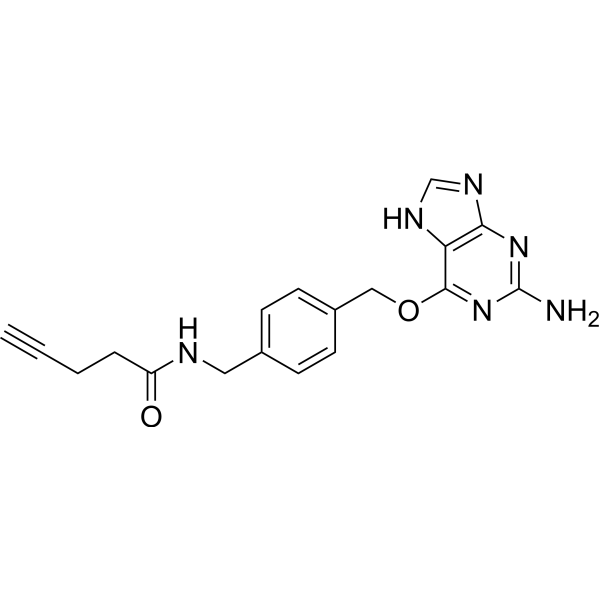
    Alkyne-SNAP (compound 3) is an Alkyne-conjugated benzylguanine. The benzylguanine moiety reacts with the SNAP-tag, allowing irreversible and covalent labeling of SNAP fusion proteins with an additional alkyne functionality for further click chemistry conjugation .
    Alkyne-SNAP
  • HY-140678

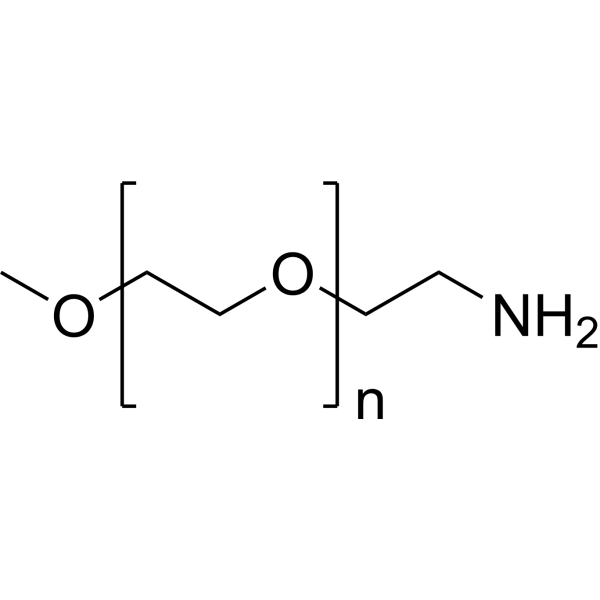
    mPEG10000-NH2

    PROTAC Linkers Cancer
    DBCO-PEG10000-Amine (DBCO-PEG10000-NH2) is a polyethylene glycol derivative containing dibenzocyclooctyne. DBCO-PEG-Amine is a universal, modular "bridge molecule": it forms stable covalent linkage with target materials (e.g., MSN or polymers) via the amino group at one end, while the DBCO group at the other end enables efficient, specific, and biocompatible click chemical conjugation with any azide-bearing biological entities (e.g., bacteria, cells) in subsequent steps .
    mPEG10000-amine
  • HY-171213

    Toll-like Receptor (TLR) Neurological Disease
    NB-3 is a nicotinamide adenine dinucleotide (NAD) hydrolase SARM1 inhibitor. NB-3 intercepts NAD hydrolysis and undergoes covalent conjugation with the reaction product adenosine diphosphate ribose (ADPR). The resulting small-molecule ADPR adducts are highly potent and confer compelling neuroprotection in neurological injury .
    NB-3
  • HY-W106411

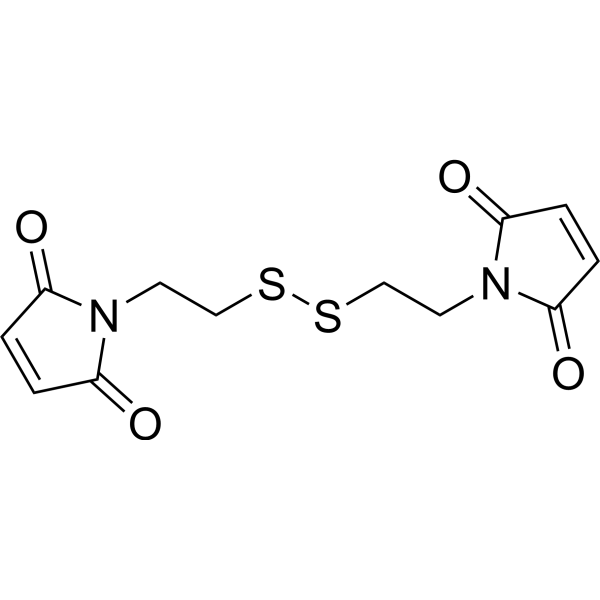
    Dithio-bis-maleimidoethane

    Biochemical Assay Reagents Others
    DTME (dithio-bis-maleimidoethane) is a homobifunctional, maleimide crosslinker specifically designed for conjugation between sulfhydryl groups (-SH). DTME, whose molecular structure consists of two maleimide groups connected by an ethylene disulfide bridge, can specifically react with thiol - containing molecules (such as cysteine residues) to form stable covalent bonds. DTME allows crosslinks that can be cleaved with reducing agents such as DTT (HY-15917). DTME is commonly utilized to explore and characterize protein structure, particularly oligomerization, or protein interactions .
    DTME
  • HY-151646

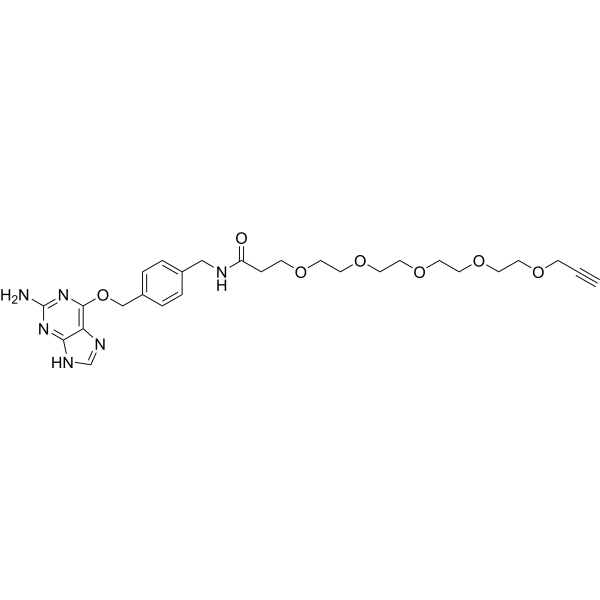
    Alkyne-PEG5-BG

    ADC Linker Others
    Alkyne-PEG5-SNAP is a click chemistry reagent containing an alkyne group. Alkyne-PEG5-SNAP can alkyne conjugated benzylguanine (BG), the BG moiety reacts specifically and rapidly with SNAP-tag, a polypeptide protein tag, allowing irreversible and covalent labeling of SNAP fusion proteins with an additional alkyne functionality suitable for further conjugation . Alkyne-PEG5-SNAP is a click chemistry reagent, it contains an Alkyne group and can undergo copper-catalyzed azide-alkyne cycloaddition (CuAAc) with molecules containing Azide groups.
    Alkyne-PEG5-SNAP
  • HY-121462

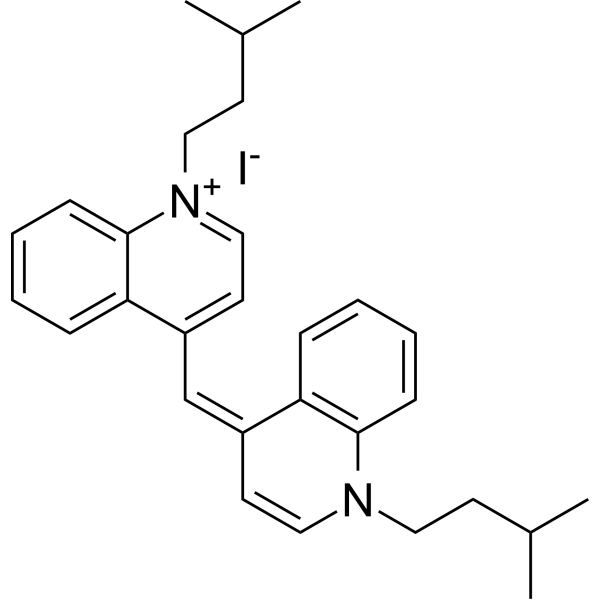
    Quinoline Blue

    Fluorescent Dye Cancer
    Cyanine is an excellent fluorescent core scaffold for constructing fluorescent probes. Covalent conjugation of Cyanine with other potent compounds can not only enhance their efficacy but also expand their application modes. Cyanine supports the development of cancer theranostic agents. Cyanine can be used in cancer research .
    Cyanine
  • HY-174935

    Biochemical Assay Reagents Others
    DBCO-PEG1000-NHS is a dibenzocyclooctyne-conjugated polyethylene glycol derivative bearing an NHS group. DBCO-PEG-NHS forms a stable covalent linkage with the amino group of target molecules via the NHS ester at one end, while introducing a DBCO group at the other end, thus preparing for subsequent click chemical conjugation with any azide-bearing molecule or material .
    DBCO-PEG1000-NHS
  • HY-W012166

    NHS-Bromoacetate

    Biochemical Assay Reagents Infection
    N-Succinimidyl bromoacetate (NHS-Bromoacetate) is a heterobifunctional crosslinking reagent, mainly used to modify the ɛ-amino group of lysine side chains. By covalently linking its bromoacetyl moiety to the ɛ-amino group of lysine in peptidomimetics, N-Succinimidyl bromoacetate enables their conjugation with thiol-modified nanoparticles via thioether bonds. N-Succinimidyl bromoacetate also performs bromoacetylation modification on carrier proteins, which then forms stable thioether bonds with the thiol groups of cysteine in peptides, thus efficiently preparing soluble peptide-protein conjugates with high substitution ratios. N-Succinimidyl bromoacetate can be used to prepare activated Sepharose derivatives for affinity chromatography, protein affinity labeling reagents, and peptide-protein immunogen conjugates with non-immunogenic linkages. N-Succinimidyl bromoacetate is applicable to studies related to HIV-1 infection and glioblastoma multiforme .
    N-Succinimidyl bromoacetate
  • HY-174935A

    Biochemical Assay Reagents Others
    DBCO-PEG2000-NHS is a dibenzocyclooctyne-conjugated polyethylene glycol derivative bearing an NHS group. DBCO-PEG-NHS forms a stable covalent linkage with the amino group of target molecules via the NHS ester at one end, while introducing a DBCO group at the other end, thus preparing for subsequent click chemical conjugation with any azide-bearing molecule or material .
    DBCO-PEG2000-NHS
  • HY-174929A

    DBCO-PEG5000-NH2

    Biochemical Assay Reagents Others
    DBCO-PEG5000-Amine (DBCO-PEG5000-NH2) is a polyethylene glycol derivative containing dibenzocyclooctyne. DBCO-PEG-Amine is a universal, modular "bridge molecule": it forms stable covalent linkage with target materials (e.g., MSN or polymers) via the amino group at one end, while the DBCO group at the other end enables efficient, specific, and biocompatible click chemical conjugation with any azide-bearing biological entities (e.g., bacteria, cells) in subsequent steps .
    DBCO-PEG5000-Amine
  • HY-129655

    ADC Linker Cancer
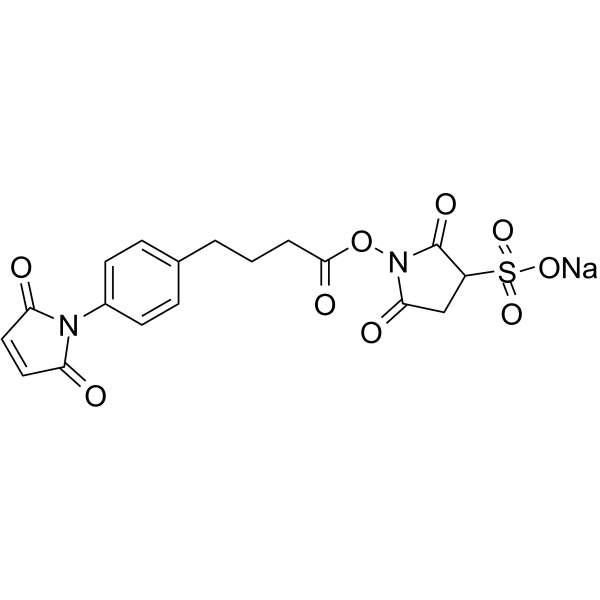
    Sulfo-SMPB sodium is a non-cleavable, heterobifunctional chemical cross-linking reagent which contains N-hydroxysuccinimide (NHS) ester and maleimide groups, allowing covalent conjugation of amine- and sulfhydryl-containing molecules .
    Sulfo-SMPB sodium
  • HY-133883

    Fluorescent Dye Others
    Cyanine7.5 amine is a near-infrared Cy7.5-based dye and also a substrate for amide bond coupling (Ex/Em = 788 nm/808 nm). Cyanine7.5 amine contains a free amino group and can be used for coupling with activated carboxylic acid derivatives .
    Cyanine7.5 amine
  • HY-174935C

    Biochemical Assay Reagents Others
    DBCO-PEG5000-NHS is a dibenzocyclooctyne-conjugated polyethylene glycol derivative bearing an NHS group. DBCO-PEG-NHS forms a stable covalent linkage with the amino group of target molecules via the NHS ester at one end, while introducing a DBCO group at the other end, thus preparing for subsequent click chemical conjugation with any azide-bearing molecule or material .
    DBCO-PEG5000-NHS
  • HY-D1390

    Fluorescent Dye Others
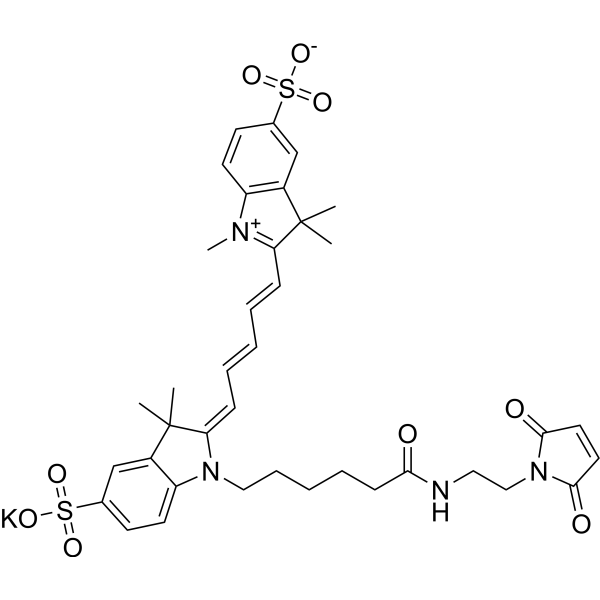
    Sulfo-Cy5-Mal potassium is a fluorescent dye derivative composed of a CY5 dye and a maleimide functional group. Sulfo-Cy5-Mal potassium specifically covalently binds to thiol-containing (-SH) biomolecules. Sulfo-Cy5-Mal potassium can be used for protein labeling, antibody conjugation, molecular imaging, and drug delivery studies (Ex/Em = 633 nm/670 nm) .
    Sulfo-Cy5-Mal potassium
  • HY-174929

    DBCO-PEG3400-NH2

    Biochemical Assay Reagents Others
    DBCO-PEG3400-Amine (DBCO-PEG3400-NH2) is a polyethylene glycol derivative containing dibenzocyclooctyne. DBCO-PEG-Amine is a universal, modular "bridge molecule": it forms stable covalent linkage with target materials (e.g., MSN or polymers) via the amino group at one end, while the DBCO group at the other end enables efficient, specific, and biocompatible click chemical conjugation with any azide-bearing biological entities (e.g., bacteria, cells) in subsequent steps .
    DBCO-PEG3400-Amine
  • HY-W739603

    Fluorescent Dye Others
    Cy5-bifunctional dye potassium is a water soluble bifunctional dye possessing two terminal NHS ester functions. The NHS esters can react specifically and efficiently with primary amines such as the side chain of lysine residue or aminosilane-coated surfaces at neutral or slight basic conditions to form a covalent bond. The dye is useful for the cross-conjugation of amines, and for other advanced labeling applications.
    Cy5-bifunctional dye potassium
  • HY-174935B

    Biochemical Assay Reagents Others
    DBCO-PEG3400-NHS is a dibenzocyclooctyne-conjugated polyethylene glycol derivative bearing an NHS group. DBCO-PEG-NHS forms a stable covalent linkage with the amino group of target molecules via the NHS ester at one end, while introducing a DBCO group at the other end, thus preparing for subsequent click chemical conjugation with any azide-bearing molecule or material .
    DBCO-PEG3400-NHS
  • HY-174935D

    Biochemical Assay Reagents Others
    DBCO-PEG10000-NHS is a dibenzocyclooctyne-conjugated polyethylene glycol derivative bearing an NHS group. DBCO-PEG-NHS forms a stable covalent linkage with the amino group of target molecules via the NHS ester at one end, while introducing a DBCO group at the other end, thus preparing for subsequent click chemical conjugation with any azide-bearing molecule or material .
    DBCO-PEG10000-NHS
  • HY-179404

    Ras Cancer
    KRASG12C IN-18 is an orally active covalent KRAS G12C inhibitor that achieves complete covalent engagement of KRAS G12C in both GDP- and GMPPNP-bound states and displays strong antiproliferative activity against KRAS G12C and resistance-associated variants, including KRAS G12C/R68S, with low-nanomolar IC50 values. KRASG12C IN-18 exhibits marked in vivo efficacy in KRAS G12C-driven solid tumor and KRAS G12C/R68S xenograft models and can be used for colorectal cancer research .
    KRASG12C IN-18
  • HY-P11753

    TGF-beta/Smad Neurological Disease Inflammation/Immunology
    IKVAVC is a derivative peptide of IKVAV with an artificially added cysteine (Cys) at its C-terminus. IKVAVC retains all the biological activities of the original IKVAV, mainly acting as a neural adhesion/differentiation signaling peptide, and is equipped with an engineered linker arm that enables covalent conjugation to molecular materials. IKVAV inhibits the migration and activation of fibroblasts, downregulates the TGF-β1 signaling pathway and endoplasmic reticulum stress, and promotes nerve repair. IKVAV regulates the phenotype of macrophages, shifting them from the pro-inflammatory M1 type to the pro-reparative M2 type .
    IKVAVC

Inquiry Online

Your information is safe with us. * Required Fields.

Salutation


Country or Region *

Applicant Name *


Organization Name *

Department *


Email Address *


Product Name *

Cat. No.


Requested quantity *

Phone Number *


Remarks

Inquiry Online

Inquiry Information

Product Name:
Cat. No.:
Quantity:
MCE Japan Authorized Agent:

