Search Result
Results for "
endo-BCN
" in MedChemExpress (MCE) Product Catalog:
8
Biochemical Assay Reagents
| Cat. No. |
Product Name |
Target |
Research Areas |
Chemical Structure |
-
- HY-W035129
-
|
|
Biochemical Assay Reagents
|
Others
|
|
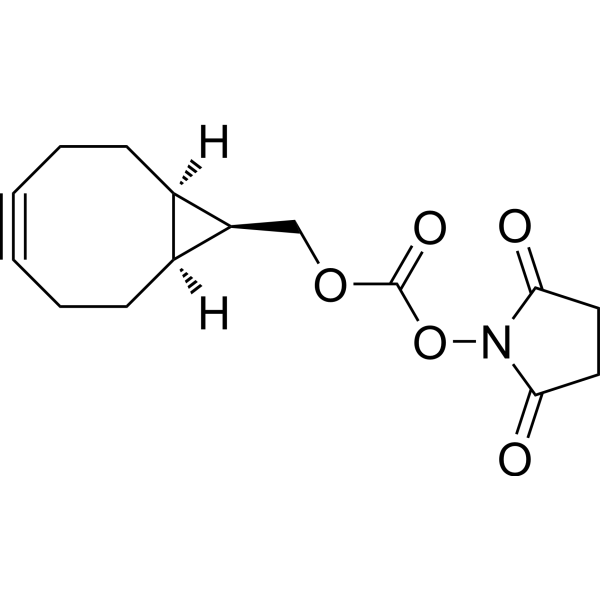
endo-BCN-NHS carbonate is an elastin-like protein (ELP) modification reagent. endo-BCN-NHS carbonate can react with lysine residues in ELP to make ELP carry BCN groups, and then cross-link ELP through strain-promoted azide-alkyne cycloaddition (SPAAC) reaction. endo-BCN-NHS carbonate promotes hydrogel formation. endo-BCN-NHS carbonate is mainly used in cell encapsulation related research .
|
-
-
- HY-43581
-
|
|
PROTAC Linkers
|
Cancer
|
|
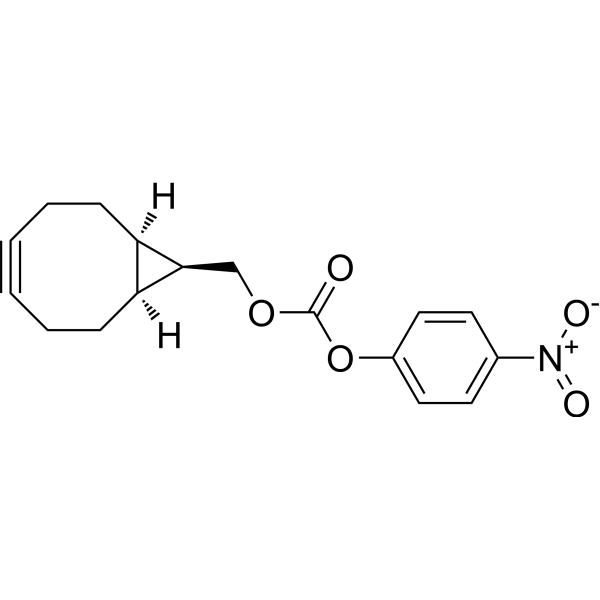
endo-BCN-O-PNB is an alkyl/ether-based PROTAC linker that can be used in the synthesis of PROTACs . endo-BCN-O-PNB is a click chemistry reagent, it contains a BCN group that can undergo strain-promoted alkyne-azide cycloaddition (SPAAC) with molecules containing Azide groups.
|
-
-
- HY-140069
-
|
|
PROTAC Linkers
|
Cancer
|
|
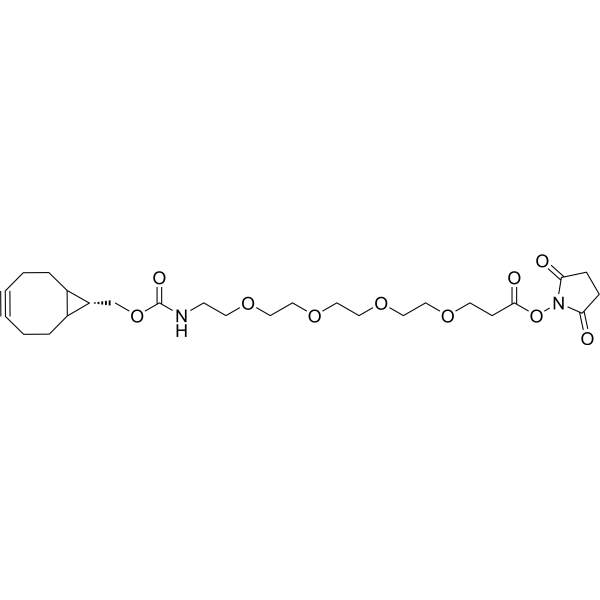
endo-BCN-PEG4-NHS ester is a PEG-based PROTAC linker that can be used in the synthesis of PROTACs . endo-BCN-PEG4-NHS ester is a click chemistry reagent, it contains a BCN group that can undergo strain-promoted alkyne-azide cycloaddition (SPAAC) with molecules containing Azide groups.
|
-
-
- HY-W072752
-
|
|
PROTAC Linkers
|
Cancer
|
|
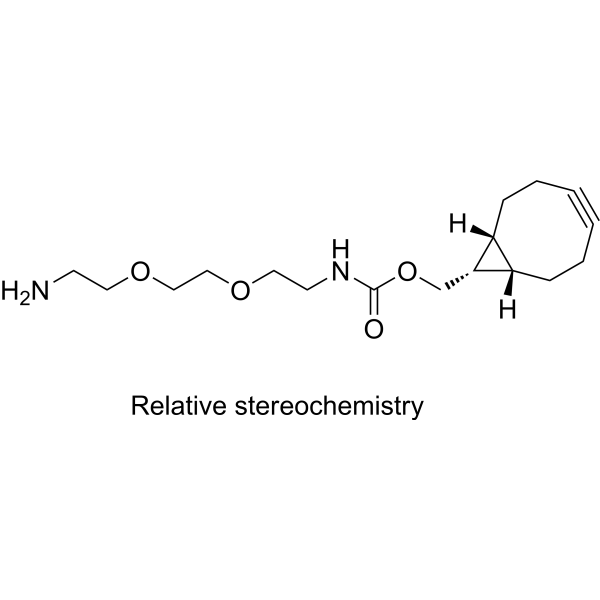
endo-BCN-PEG2-NH2 is a PEG-based PROTAC linker that can be used in the synthesis of PROTACs . endo-BCN-PEG2-NH2 contains a BCN group that can undergo strain-promoted alkyne-azide cycloaddition (SPAAC) with molecules containing Azide groups.
|
-
-
- HY-141155
-
|
|
Drug-Linker Conjugates for ADC
|
Cancer
|
|
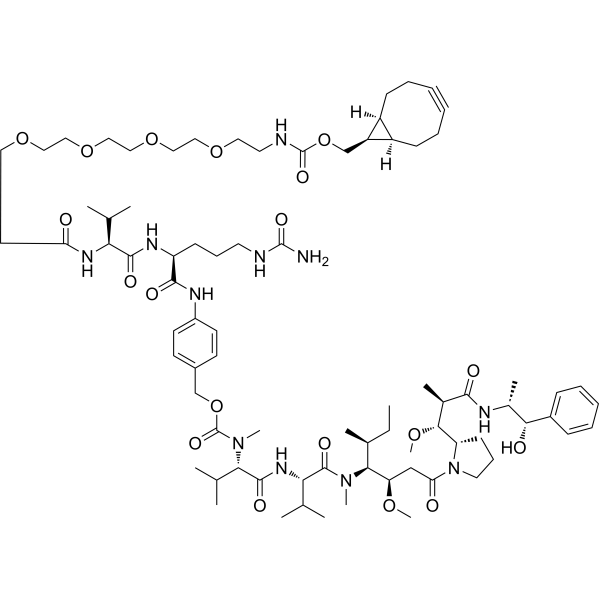
endo-BCN-PEG4-Val-Cit-PAB-MMAE is a cleavable ADC linker conjugated with drug containing 4-unit PEG, which can be used for synthesizing antibody-drug conjugates (ADCs). endo-BCN-PEG4-Val-Cit-PAB-MMAE is a click chemistry reagent, it contains a BCN group that can undergo strain-promoted alkyne-azide cycloaddition (SPAAC) with molecules containing Azide groups .
|
-
-
- HY-133400
-
|
|
PROTAC Linkers
|
Cancer
|
|
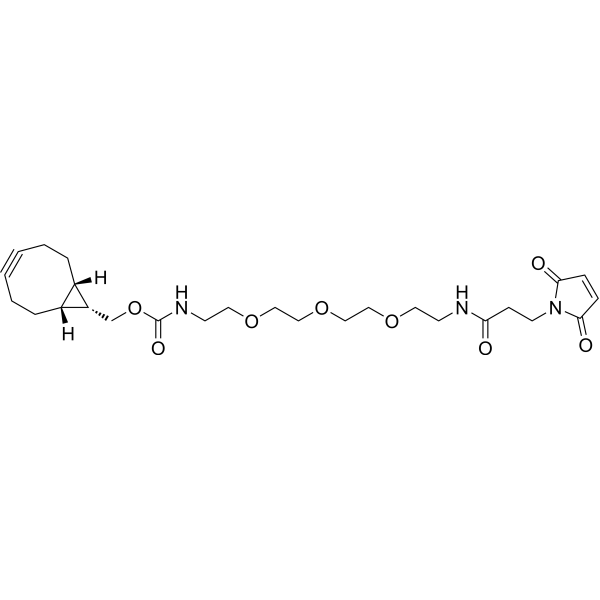
endo-BCN-PEG3-mal is a PEG-based PROTAC linker that can be used in the synthesis of PROTACs . endo-BCN-PEG3-mal is a click chemistry reagent, it contains a BCN group that can undergo strain-promoted alkyne-azide cycloaddition (SPAAC) with molecules containing Azide groups.
|
-
-
- HY-157054
-
|
|
Biochemical Assay Reagents
|
Others
|
|
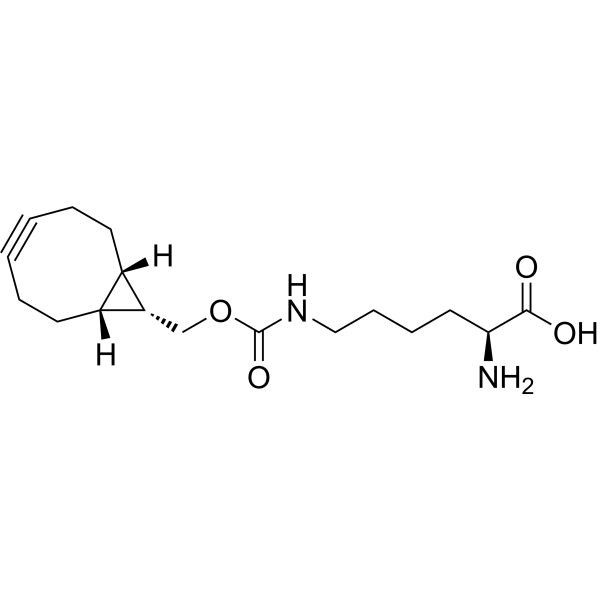
Endo-BCN-L-Lysine is a Click Amino Acid that can be used as a linker in the synthesis of PROTAC molecules. Endo-BCN-L-Lysine contains a BCN group that can undergo strain-promoted alkyne-azide cycloaddition (SPAAC) with molecules containing Azide groups.
|
-
-
- HY-W879045
-
|
endo-BCN-PEG5-NH2
|
Biochemical Assay Reagents
|
Others
|
|
Endo-BCN-PEG5-amine (Endo-BCN-PEG5-NH2) is a click chemistry crosslinker reagent. The BCN groupis very reactive with azide-tagged molecules. The amino group is reactive with carboxylic acids, activated NHS esters, carbonyls (ketone, aldehyde) etc .
|
-

-
- HY-W096079
-
|
|
ADC Linker
|
Cancer
|
|
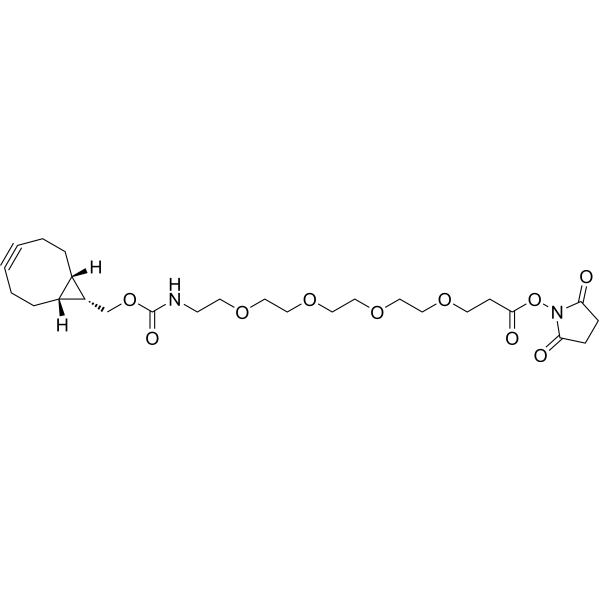
BCN-endo-PEG4-NHS is an ADC Linker containing 4 PEG units. BCN-endo-PEG4-NHS contains the lyophilic bidentate macrocyclic ligand endo-BCN, which allows for further synthesis of macrocyclic complexes. In click chemistry, endo-BCN can react with molecules containing azide groups to form stable triazoles in the absence of catalysts.
|
-
-
- HY-156311
-
|
|
ADC Linker
|
Cancer
|
|
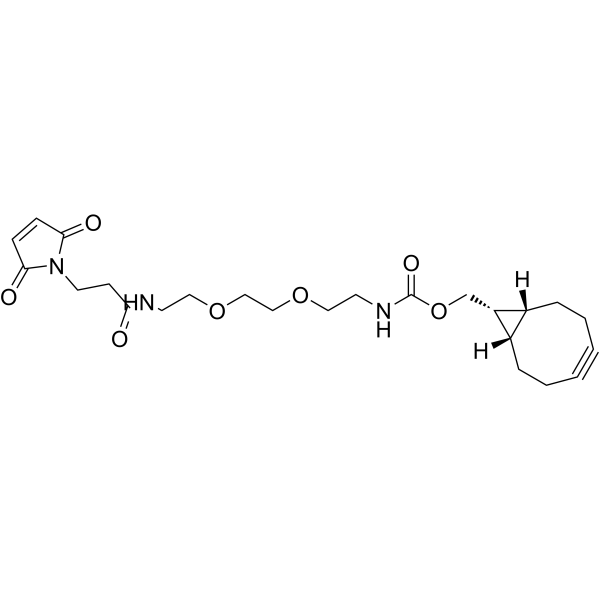
BCN-endo-PEG2-maleimide is an ADC Linker containing 4 PEG units. BCN-endo-PEG2-maleimide contains the lyophilic bidentate macrocyclic ligand endo-BCN, which can further synthesize macrocyclic complexes. In click chemistry, endo-BCN can react with molecules containing azide groups to form stable triazoles in the absence of catalysts. Its maleimide group (-Maleimide) degrades in aqueous media and has been used in drug delivery studies.
|
-
-
- HY-140070
-
|
|
PROTAC Linkers
|
Cancer
|
|
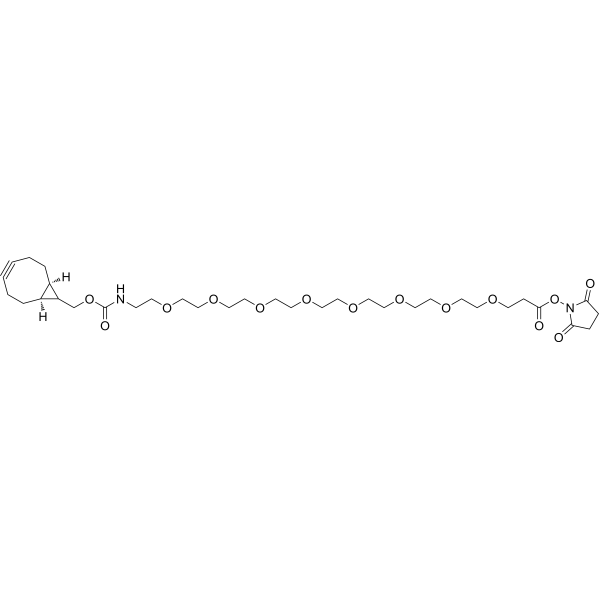
endo-BCN-PEG8-NHS ester is a PEG-based PROTAC linker that can be used in the synthesis of PROTACs . endo-BCN-PEG8-NHS ester is a click chemistry reagent, it contains a BCN group that can undergo strain-promoted alkyne-azide cycloaddition (SPAAC) with molecules containing Azide groups.
|
-
-
- HY-140067
-
|
|
PROTAC Linkers
|
Cancer
|
|
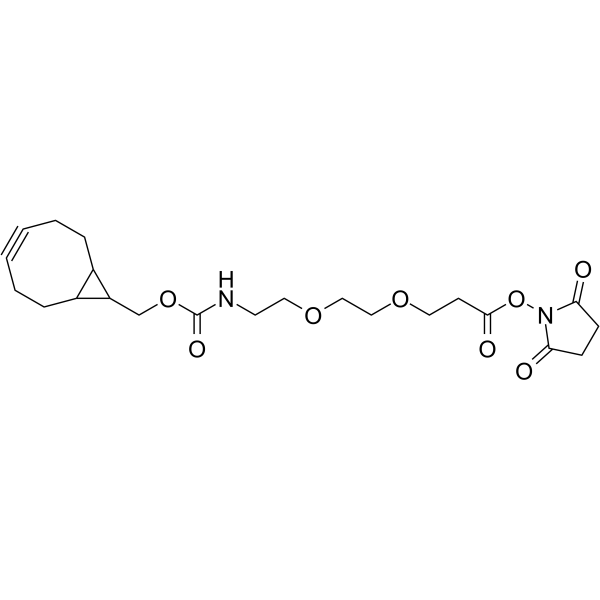
endo-BCN-PEG2-C2-NHS ester is a PEG-based PROTAC linker can be used in the synthesis of PROTACs.
|
-
-
- HY-149618
-
|
|
Fluorescent Dye
|
Others
|
|
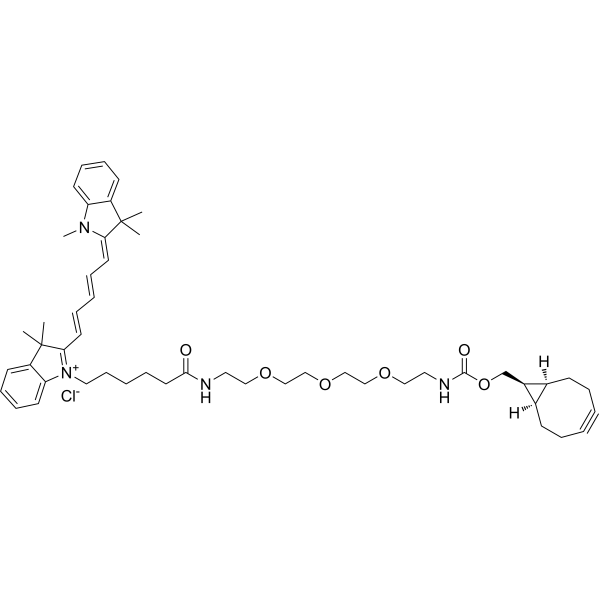
Cy5-PEG3-endo-BCN is a derivative of the Cyanine 5 (Cy5) (HY-D0821) dye bearing 3 PEG units. Cy5-PEG3-endo-BCN contains the lyophilic bidentate macrocyclic ligand endo-BCN, which allows for further synthesis of macrocyclic complexes. In click chemistry, endo-BCN forms stable triazoles with azide-containing molecules under catalyst-free conditions .
|
-
-
- HY-155327B
-
|
|
Fluorescent Dye
|
Others
|
|
Cy3-PEG2-endo-BCN bromide is the bromide salt form of Cy3-PEG2-endo-BCN (HY-155327). Cy3-PEG2-endo-BCN bromide is a dye derivative of Cyanine 3 (Cy3) (HY-D0822) containing 2 PEG units. Cy3-PEG2-endo-BCN bromide contains the lyophilic bidentate macrocyclic ligand endo-BCN, which can further synthesize macrocyclic complexes. In click chemistry, endo-BCN can react with molecules containing azide groups to form stable triazoles in the absence of catalysts .
|
-

-
- HY-135971
-
|
|
ADC Linker
|
Cancer
|
|
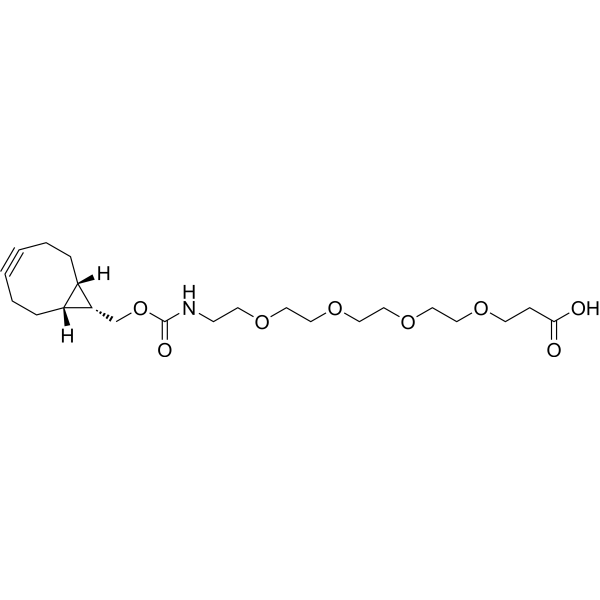
endo-BCN-PEG4-acid is a cleavable 4 unit PEG ADC linker used in the synthesis of antibody-drug conjugates (ADCs) . endo-BCN-PEG4-acid is a click chemistry reagent, it contains a BCN group that can undergo strain-promoted alkyne-azide cycloaddition (SPAAC) with molecules containing Azide groups.
|
-
-
- HY-140076
-
|
|
PROTAC Linkers
|
Cancer
|
|
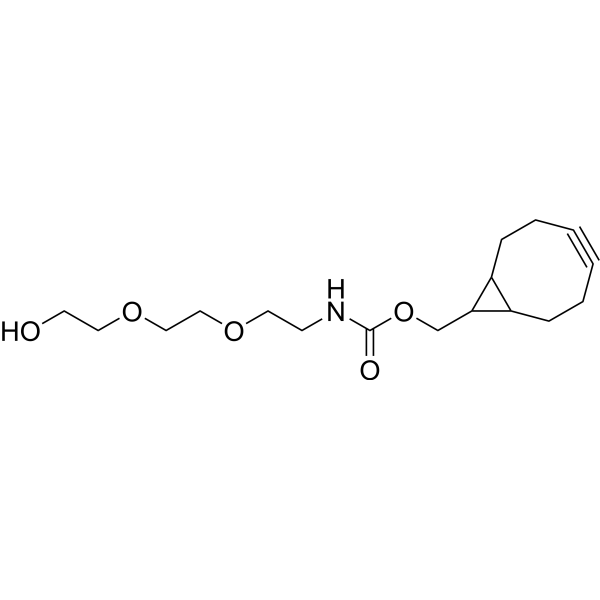
endo-BCN-PEG2-alcohol is a PEG-based PROTAC linker that can be used in the synthesis of PROTACs . endo-BCN-PEG2-alcohol is a click chemistry reagent, it contains a BCN group that can undergo strain-promoted alkyne-azide cycloaddition (SPAAC) with molecules containing Azide groups.
|
-
-
- HY-140073
-
|
|
PROTAC Linkers
|
Cancer
|
|
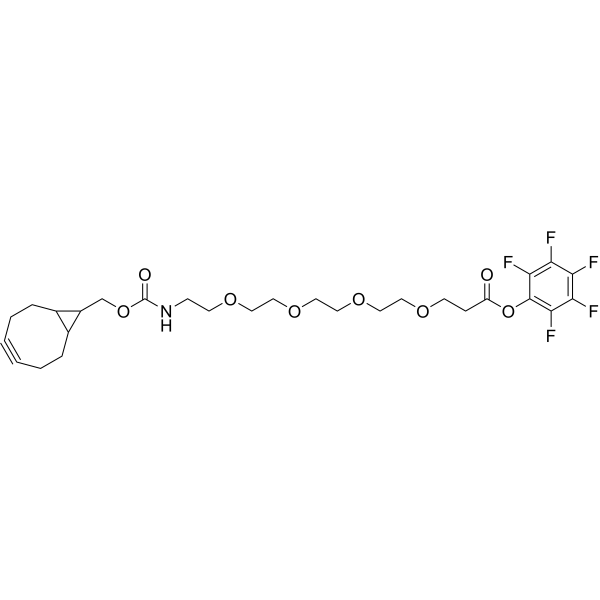
endo-BCN-PEG4-PFP ester is a PEG-based PROTAC linker that can be used in the synthesis of PROTACs . endo-BCN-PEG4-PFP ester is a click chemistry reagent, it contains a BCN group that can undergo strain-promoted alkyne-azide cycloaddition (SPAAC) with molecules containing Azide groups.
|
-
-
- HY-140078
-
|
|
ADC Linker
|
Cancer
|
|
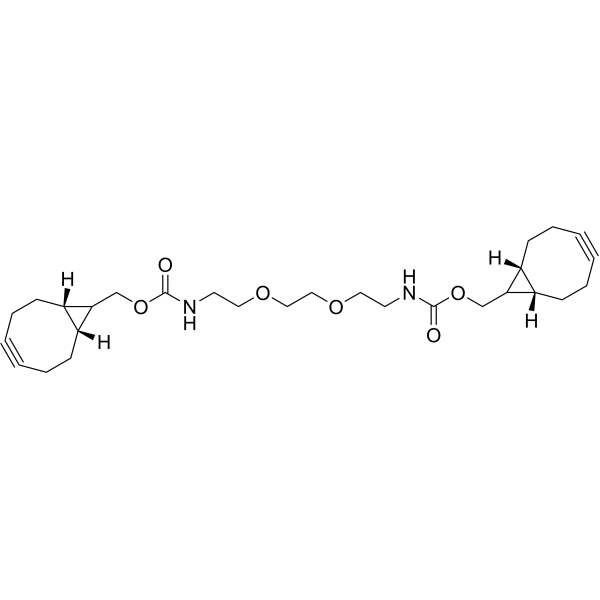
bis-PEG2-endo-BCN is a cleavable 2 unit PEG ADC linker used in the synthesis of antibody-drug conjugates (ADCs) . bis-PEG2-endo-BCN is a click chemistry reagent, it contains a BCN group that can undergo strain-promoted alkyne-azide cycloaddition (SPAAC) with molecules containing Azide groups.
|
-
-
- HY-150311
-
|
|
PROTAC Linkers
|
Others
|
|
endo-BCN-PEG24-NHS ester is composed of a benzocyclonorbornene, a twenty-tetramer of polyethylene glycol (PEG) and an N-hydroxysuccinimide ester. endo-BCN-PEG24-NHS is utilized as linker for synthesis of PROTAC molecule .
|
-

-
- HY-140072
-
|
|
PROTAC Linkers
|
Cancer
|
|
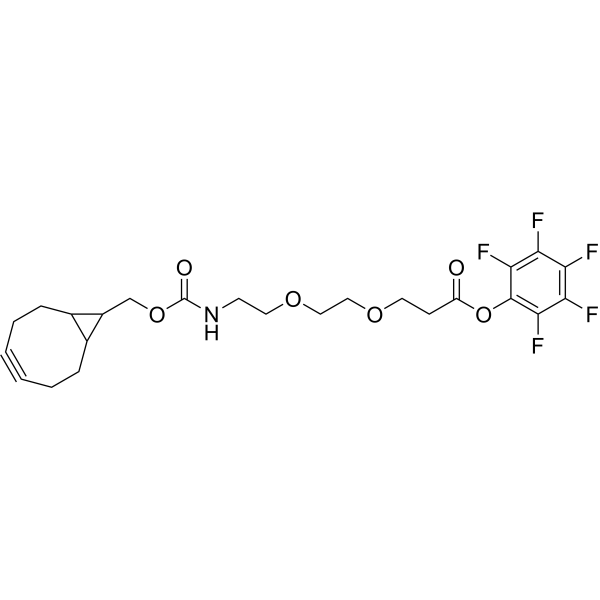
endo-BCN-PEG2-PFP ester is a PEG-based PROTAC linker that can be used in the synthesis of PROTACs . endo-BCN-PEG2-PFP ester is a click chemistry reagent, it contains a BCN group that can undergo strain-promoted alkyne-azide cycloaddition (SPAAC) with molecules containing Azide groups.
|
-
-
- HY-W714234
-
|
|
Biochemical Assay Reagents
|
Others
|
|
Endo-BCN CE-phosphoramidite is a stable and one of the most reactive cyclooctynes for copper-free click chemistry. Unlike dibenzocyclooctyne (DBCO), BCN is reactive both to azides (strain-promoted azyde-alkyne cycloaddition, SPAAC) and tetrazines (inverse electron demand Diels-Alder reaction, IEDDA).
|
-

-
- HY-166874
-
|
|
Biochemical Assay Reagents
|
Others
|
|
DSPE-PEG2000-endo-BCN is a PEG lipid that can improve the delivery efficiency and tissue specificity of poorly soluble drugs. DSPE-PEG2000-endo-BCN can be used in drug delivery research .
|
-

-
- HY-140068
-
|
|
PROTAC Linkers
|
Cancer
|
|
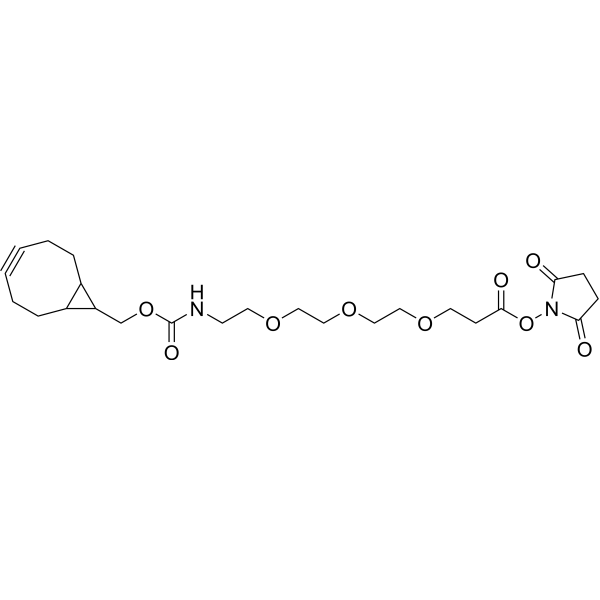
endo-BCN-PEG3-NHS ester is a PEG-based PROTAC linker that can be used in the synthesis of PROTACs . endo-BCN-PEG3-NHS ester is a click chemistry reagent, it contains a BCN group that can undergo strain-promoted alkyne-azide cycloaddition (SPAAC) with molecules containing Azide groups.
|
-
-
- HY-155327
-
|
|
Fluorescent Dye
|
Others
|
|
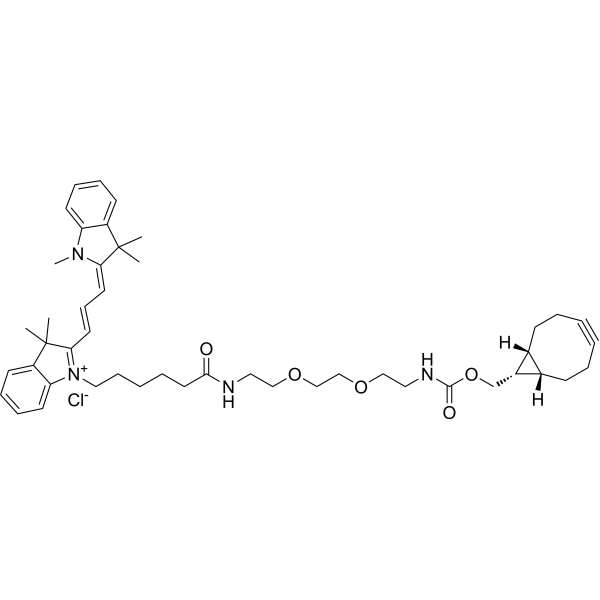
Cy3-PEG2-endo-BCN is a dye derivative of Cyanine 3 (Cy3) (HY-D0822) containing 2 PEG units. Cy3-PEG2-endo-BCN contains the lyophilic bidentate macrocyclic ligand endo-BCN, which can further synthesize macrocyclic complexes. In click chemistry, endo-BCN can react with molecules containing azide groups to form stable triazoles in the absence of catalysts.
|
-
-
- HY-166871
-
|
|
Biochemical Assay Reagents
|
Others
|
|
DSPE-PEG5000-endo-BCN is a PEG lipid that can improve the delivery efficiency and tissue specificity of poorly soluble drugs. DSPE-PEG5000-endo-BCN can be used in drug delivery research .
|
-

-
- HY-156317
-
|
|
ADC Linker
|
Cancer
|
|
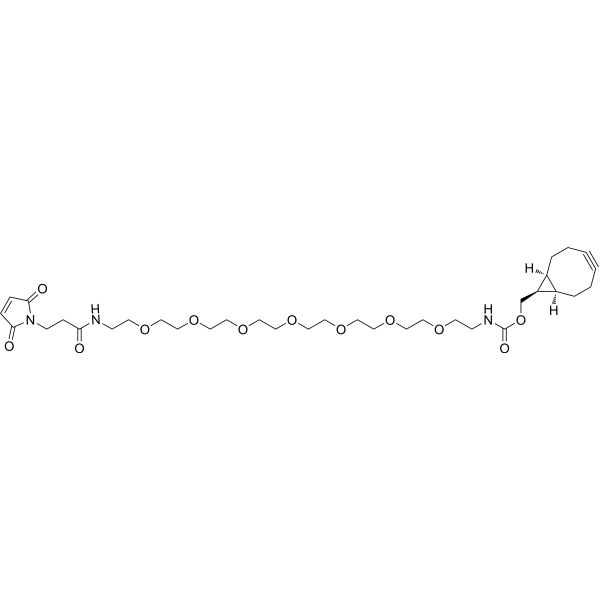
BCN-endo-PEG7-maleimide is an ADC Linker containing 7 PEG units. BCN-endo-PEG7-maleimide contains the lyophilic bidentate macrocyclic ligand endo-BCN, which can further synthesize macrocyclic complexes. In click chemistry, endo-BCN can react with molecules containing azide groups to form stable triazoles in the absence of catalysts.
|
-
-
- HY-140080
-
|
|
PROTAC Linkers
|
Cancer
|
|
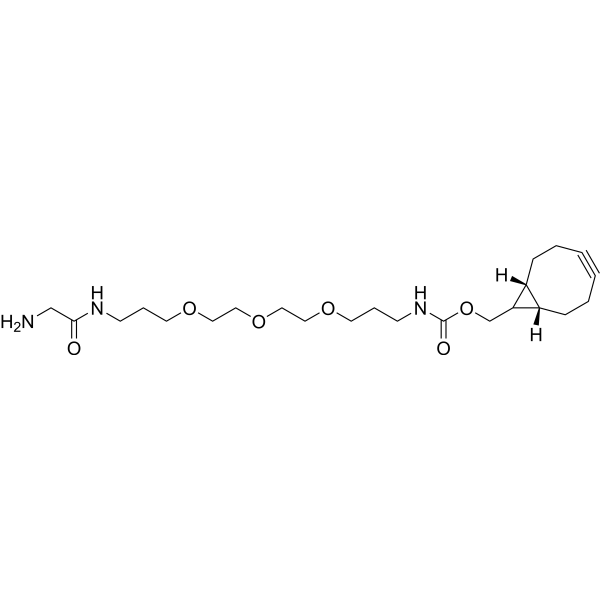
Gly-PEG3-endo-BCN is a PEG-based PROTAC linker that can be used in the synthesis of PROTACs . Gly-PEG3-endo-BCN is a click chemistry reagent, it contains a BCN group that can undergo strain-promoted alkyne-azide cycloaddition (SPAAC) with molecules containing Azide groups.
|
-
-
- HY-140081
-
|
|
PROTAC Linkers
ADC Linker
|
Cancer
|
|
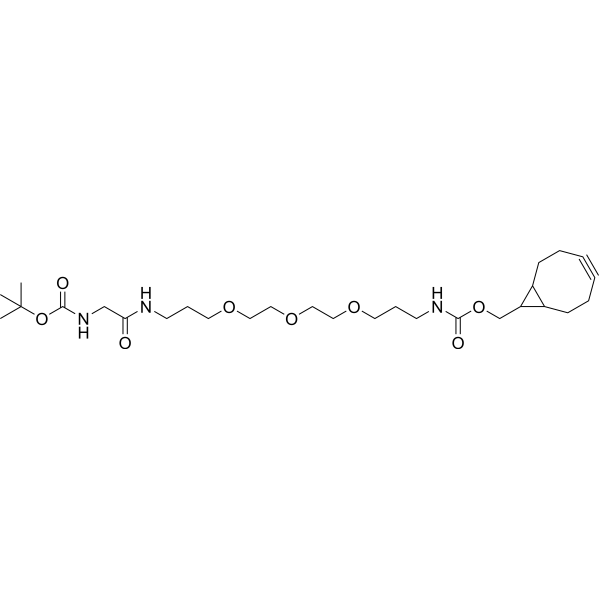
Boc-gly-PEG3-endo-BCN is a PEG-based PROTAC linker that can be used in the synthesis of PROTACs . Boc-gly-PEG3-endo-BCN is also a cleavable 2 unit PEG ADC linker used in the synthesis of antibody-drug conjugates (ADCs) . Boc-gly-PEG3-endo-BCN is a click chemistry reagent, it contains a BCN group that can undergo strain-promoted alkyne-azide cycloaddition (SPAAC) with molecules containing Azide groups.
|
-
-
- HY-177684
-
|
|
Drug-Linker Conjugates for ADC
Topoisomerase
Microtubule/Tubulin
|
Cancer
|
|
N-(endo-BCN-PEG4)-N-(PEG4-Val-Cit-PAB-MMAE)-N-(PEG4-Val-Cit-PAB-Exatecan) is a drug-linker conjugate for ADC (Drug-Linker Conjugate for ADC), consisting of a tubulin polymerization inhibitor MMAE (HY-15162) and a DNA topoisomerase I inhibitor Exatecan (HY-13631), and an ADC linker composition. N-(endo-BCN-PEG4)-N-(PEG4-Val-Cit-PAB-MMAE)-N-(PEG4-Val-Cit-PAB-Exatecan) can be used for synthesis of ADCs and for cancer research.
|
-

-
- HY-W879025
-
|
endo-BCN-PEG8-NH2
|
Biochemical Assay Reagents
|
Others
|
|
Endo-BCN-PEG8-amine (Endo-BCN-PEG8-NH2) is a click chemistry crosslinker reagent. The BCN groupis very reactive with azide-tagged molecules. The amino group is reactive with carboxylic acids, activated NHS esters, carbonyls (ketone, aldehyde) etc .
|
-

-
- HY-130557
-
|
|
PROTAC Linkers
|
Cancer
|
|
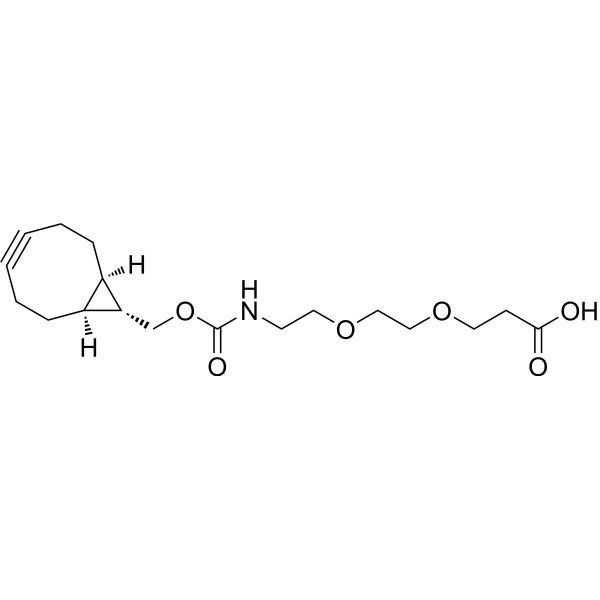
endo-BCN-PEG2-acid is a PEG-based PROTAC linker can be used in the synthesis of PROTACs. endo-BCN-PEG2-acid is a click chemistry reagent, it contains a BCN group that can undergo strain-promoted alkyne-azide cycloaddition (SPAAC) with molecules containing Azide groups.
|
-
-
- HY-140350
-
|
|
PROTAC Linkers
|
Cancer
|
|
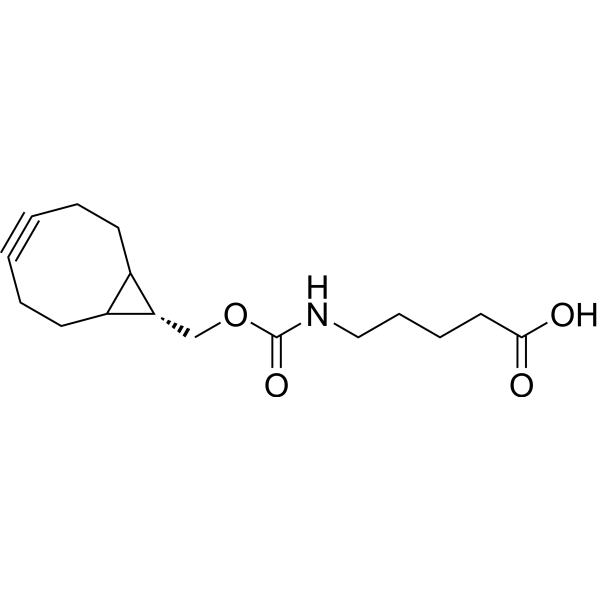
5-endo-BCN-pentanoic acid is an alkyl chain-based PROTAC linker that can be used in the synthesis of PROTACs . 5-endo-BCN-pentanoic acid is a click chemistry reagent, it contains a BCN group that can undergo strain-promoted alkyne-azide cycloaddition (SPAAC) with molecules containing Azide groups.
|
-
-
- HY-133008
-
|
|
PROTAC Linkers
|
Cancer
|
|
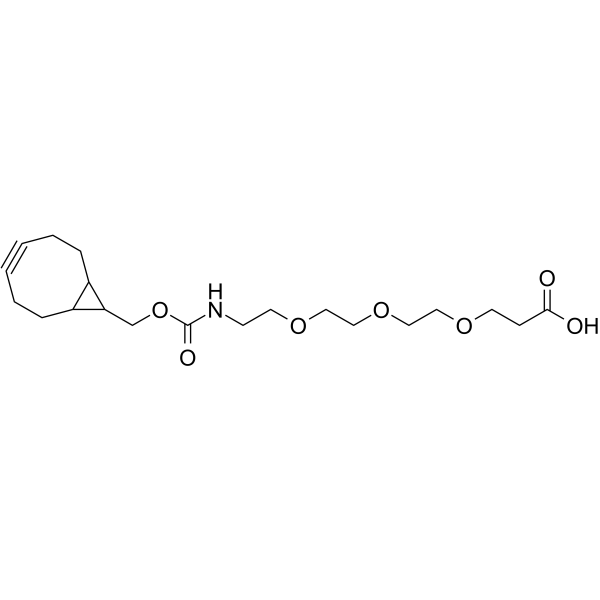
endo-BCN-PEG3-acid is a PEG-based PROTAC linker can be used in the synthesis of PROTACs.
|
-
-
- HY-140075
-
|
|
PROTAC Linkers
|
Cancer
|
|
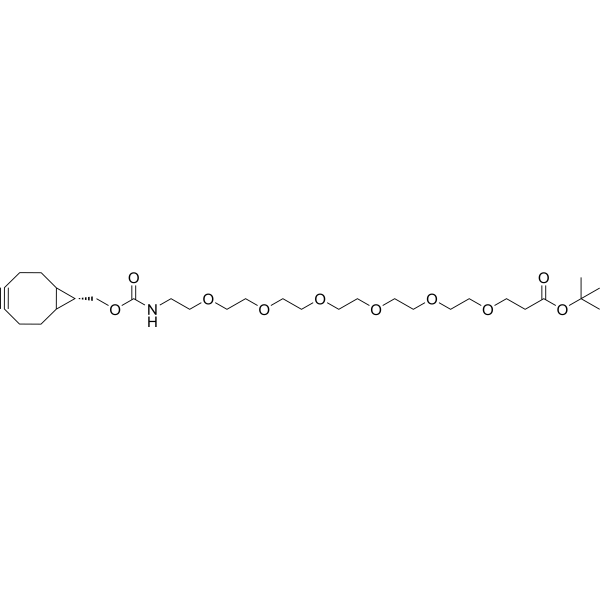
endo-BCN-PEG6-Boc is a PEG-based PROTAC linker that can be used in the synthesis of PROTACs . endo-BCN-PEG6-Boc is a click chemistry reagent, it contains a BCN group that can undergo strain-promoted alkyne-azide cycloaddition (SPAAC) with molecules containing Azide groups.
|
-
-
- HY-140074
-
|
|
PROTAC Linkers
|
Cancer
|
|
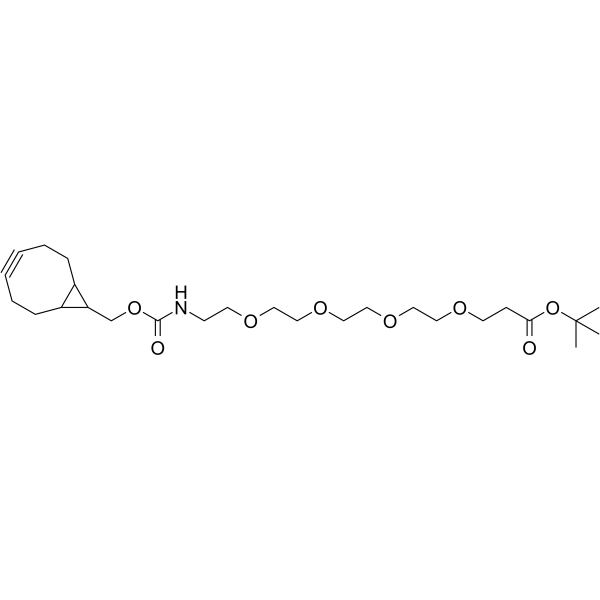
endo-BCN-PEG4-Boc is a PEG-based PROTAC linker can be used in the synthesis of PROTACs.
|
-
-
- HY-133401
-
|
|
PROTAC Linkers
|
Cancer
|
|
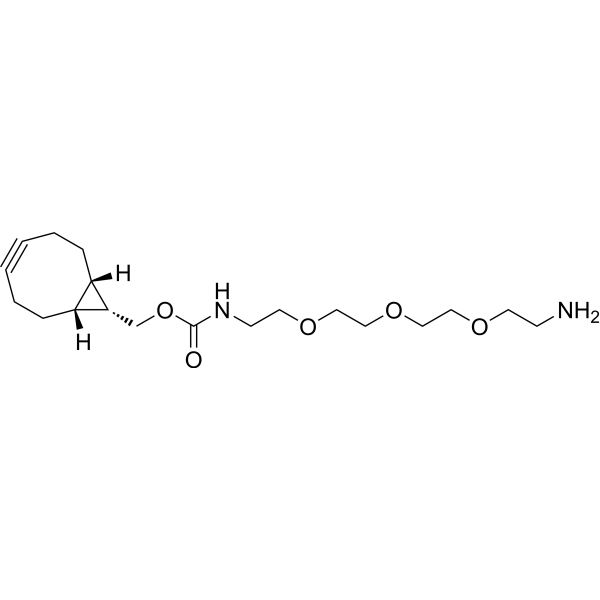
endo-BCN-PEG3-NH2 is a PEG-based PROTAC linker that can be used in the synthesis of PROTACs . endo-BCN-PEG3-NH2 is a click chemistry reagent, it contains a BCN group that can undergo strain-promoted alkyne-azide cycloaddition (SPAAC) with molecules containing Azide groups.
|
-
-
- HY-W190918
-
|
|
Biochemical Assay Reagents
|
Others
|
|
endo-BCN-PEG4-amine is a click chemistry crosslinker reagent. The BCN groupis very reactive with azide-tagged molecules. The amino group is reactive with carboxylic acids, activated NHS esters, carbonyls (ketone, aldehyde) etc.
|
-

-
- HY-W879032
-
|
|
Biochemical Assay Reagents
|
Others
|
|
Endo-BCN-PEG4-Pomalidomide is a PEG derivative composed of BCN, PEG4 and Pomalidomide (HY-10984). The BCN groupis very reactive with azide-tagged molecules. The amino group is reactive with carboxylic acids, activated NHS esters, carbonyls (ketone, aldehyde) etc .
|
-

-
- HY-W540023
-
|
|
ADC Linker
|
Cancer
|
|
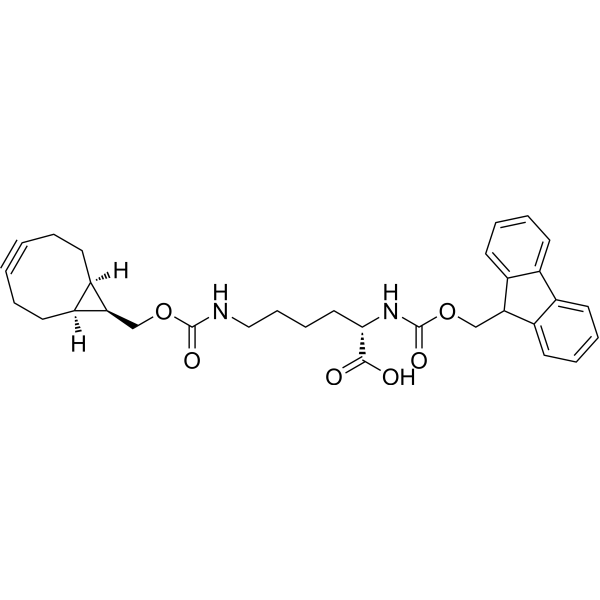
Endo-BCN-Fmoc-L-Lysine is a linker containing the lyophilic bidentate macrocyclic ligand endo-BCN, which can further synthesize macrocyclic complexes. In click chemistry, endo-BCN can react with molecules containing azide groups to form stable triazoles in the absence of catalysts.
|
-
-
- HY-149619
-
|
|
Fluorescent Dye
|
Others
|
|
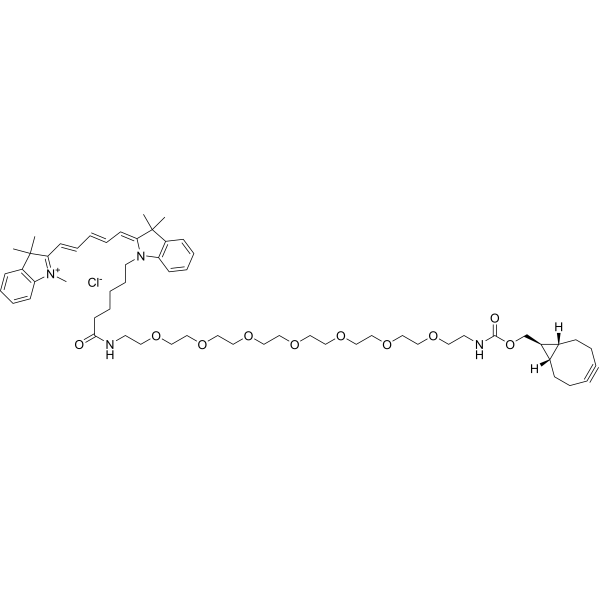
Cy5-PEG7-endo-BCN is a dye derivative of Cyanine 5 (Cy5) (HY-D0821) containing 7 PEG units. Cy5-PEG7-endo-BCN contains the lyophilic bidentate macrocyclic ligand endo-BCN, which can further synthesize macrocyclic complexes. In click chemistry, endo-BCN can react with molecules containing azide groups to form stable triazoles in the absence of catalysts.
|
-
-
- HY-D2121
-
|
|
Fluorescent Dye
|
Others
|
|
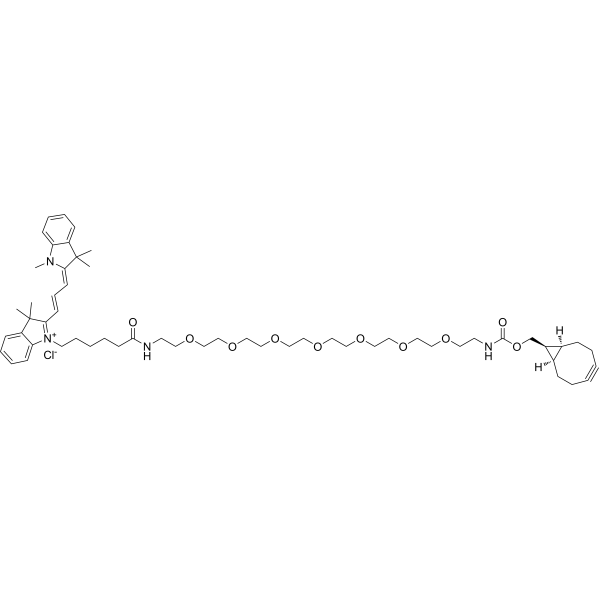
Cy3-PEG7-endo-BCN is a dye derivative of Cyanine 3 (Cy3) (HY-D0822) containing 7 PEG units. Cy3-PEG7-endo-BCN contains the lyophilic bidentate macrocyclic ligand BCN, which can further synthesize macrocyclic complexes. In click chemistry, endo-BCN can react with molecules containing azide groups to form stable triazoles in the absence of catalysts.
|
-
-
- HY-D2120
-
|
|
Fluorescent Dye
|
Others
|
|
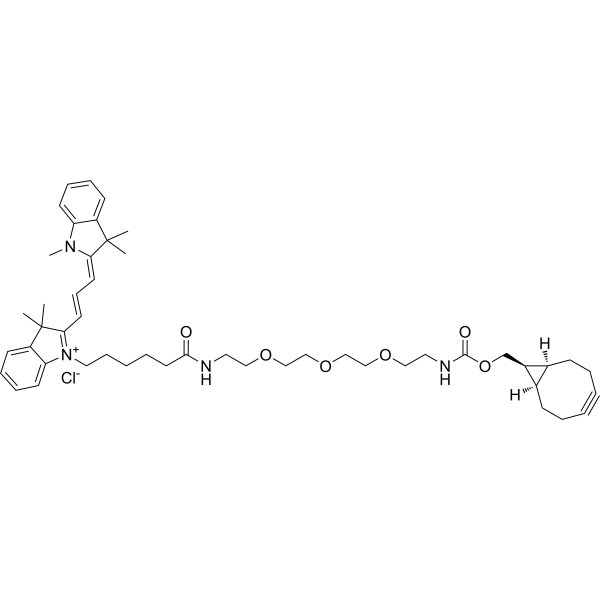
Cy3-PEG3-endo-BCN is a dye derivative of Cyanine 3 (Cy3) (HY-D0822) containing 3 PEG units. Cy3-PEG3-endo-BCN contains the lyophilic bidentate macrocyclic ligand BCN, which can further synthesize macrocyclic complexes. In click chemistry, endo-BCN can react with molecules containing azide groups to form stable triazoles in the absence of catalysts.
|
-
-
- HY-140079
-
|
|
PROTAC Linkers
|
Cancer
|
|
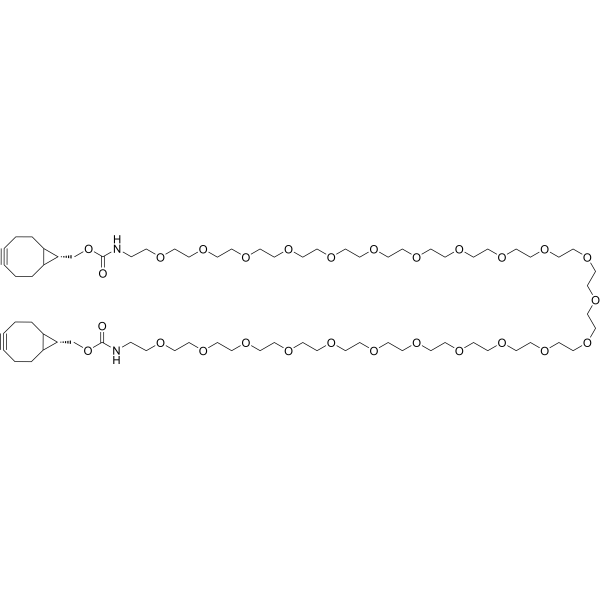
Bis-PEG23-endo-BCN is a PEG-based PROTAC linker that can be used in the synthesis of PROTACs . Bis-PEG23-endo-BCN is a click chemistry reagent, it contains a BCN group that can undergo strain-promoted alkyne-azide cycloaddition (SPAAC) with molecules containing Azide groups.
|
-
-
- HY-139060
-
|
|
PROTAC Linkers
|
Cancer
|
|
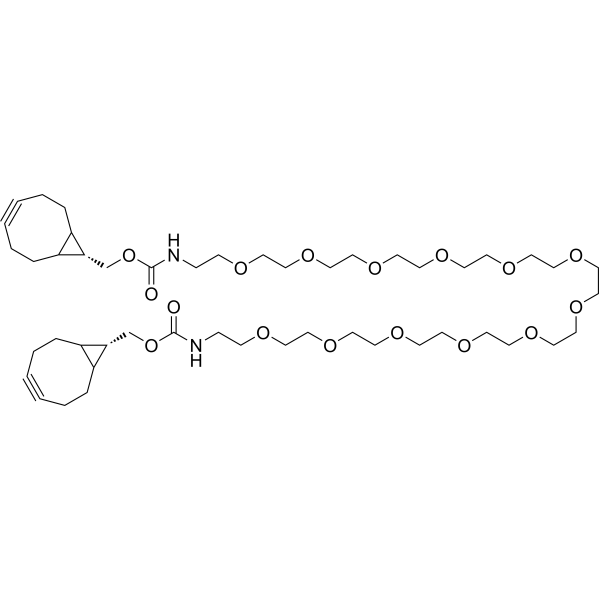
Bis-PEG12-endo-BCN is a PEG-based PROTAC linker that can be used in the synthesis of PROTACs . Bis-PEG12-endo-BCN is a click chemistry reagent, it contains a BCN group that can undergo strain-promoted alkyne-azide cycloaddition (SPAAC) with molecules containing Azide groups.
|
-
-
- HY-156310
-
|
|
ADC Linker
|
Cancer
|
|
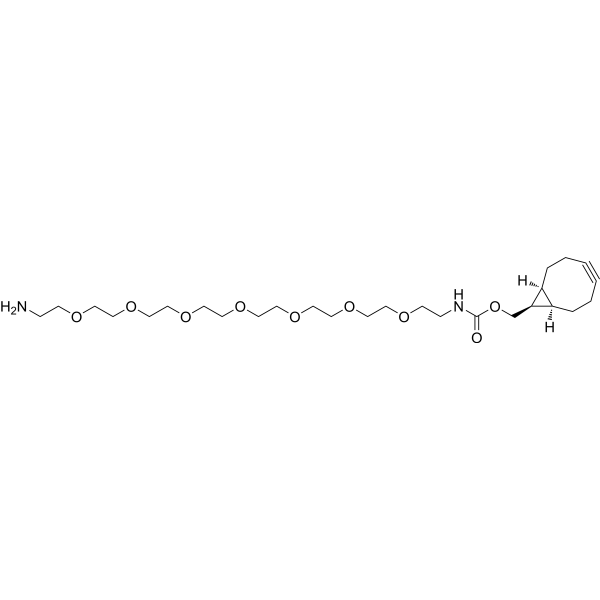
BCN-endo-PEG7-NH2 is an ADC Linker containing 7 PEG units. BCN-endo-PEG7-NH2 contains the lyophilic bidentate macrocyclic ligand endo-BCN, which can further synthesize macrocyclic complexes. In click chemistry, endo-BCN can react with molecules containing azide groups to form stable triazoles in the absence of catalysts.
|
-
-
- HY-W879031
-
|
|
Biochemical Assay Reagents
|
Others
|
|
Endo-BCN-PEG4-Palmitic is a PEG derivative containing an endo-BCN cycloalkyne structure, a tetraethylene glycol (PEG4) linker, and a Palmitic acid (HY-N0830) fatty acid group. Endo-BCN-PEG4-Palmitic can be used for drug delivery, surface modification, and click chemistry reactions .
|
-

-
- HY-W879044
-
|
endo-BCN-PEG15-NH2
|
Biochemical Assay Reagents
|
Others
|
|
Endo-BCN-PEG15-amine (Endo-BCN-PEG15-NH2) is a click chemistry crosslinker reagent. The BCN groupis very reactive with azide-tagged molecules. The amino group is reactive with carboxylic acids, activated NHS esters, carbonyls (ketone, aldehyde) etc .
|
-

-
- HY-140065
-
|
|
PROTAC Linkers
|
Cancer
|
|
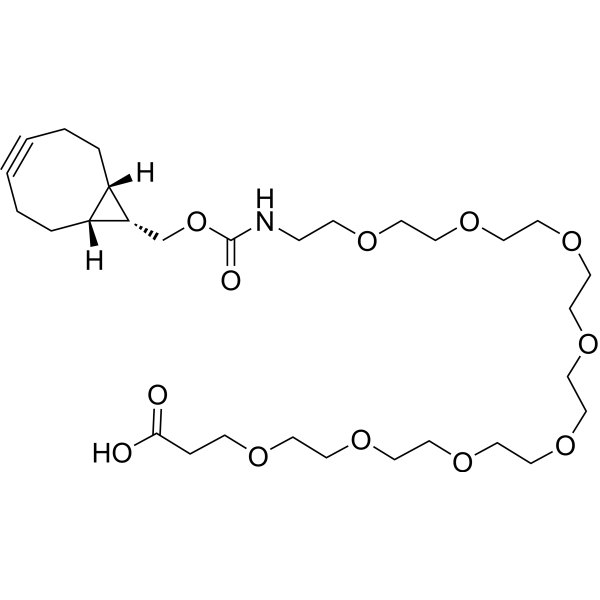
endo-BCN-PEG8-acid is a PEG-based PROTAC linker that can be used in the synthesis of PROTACs . endo-BCN-PEG8-acid is a click chemistry reagent, it contains a BCN group that can undergo strain-promoted alkyne-azide cycloaddition (SPAAC) with molecules containing Azide groups.
|
-
-
- HY-140066
-
|
|
PROTAC Linkers
|
Cancer
|
|
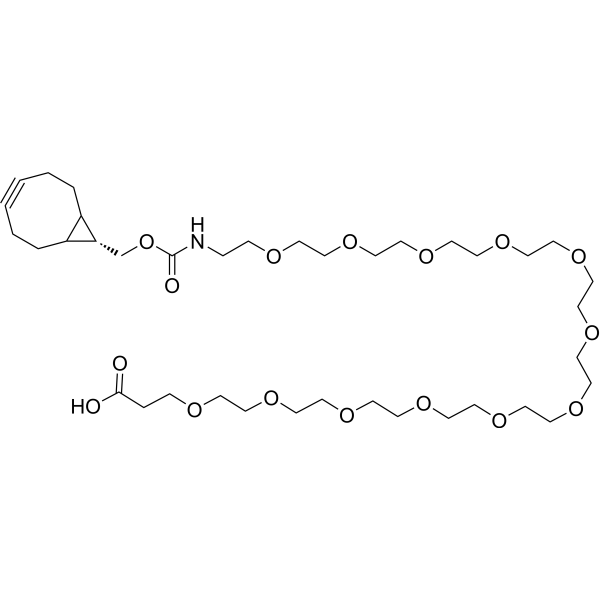
endo-BCN-PEG12-acid is a PEG-based PROTAC linker that can be used in the synthesis of PROTACs . endo-BCN-PEG12-acid is a click chemistry reagent, it contains a BCN group that can undergo strain-promoted alkyne-azide cycloaddition (SPAAC) with molecules containing Azide groups.
|
-
-
- HY-140067A
-
|
|
PROTAC Linkers
|
Cancer
|
|
endo-BCN-PEG2-NHS ester is a PEG-based PROTAC linker that can be used in the synthesis of PROTACs. endo-BCN-PEG2-NHS ester contains a BCN group that can undergo strain-promoted alkyne-azide cycloaddition (SPAAC) with molecules containing Azide groups .
|
-

- HY-138386
-
|
|
PROTAC Linkers
|
Cancer
|
|
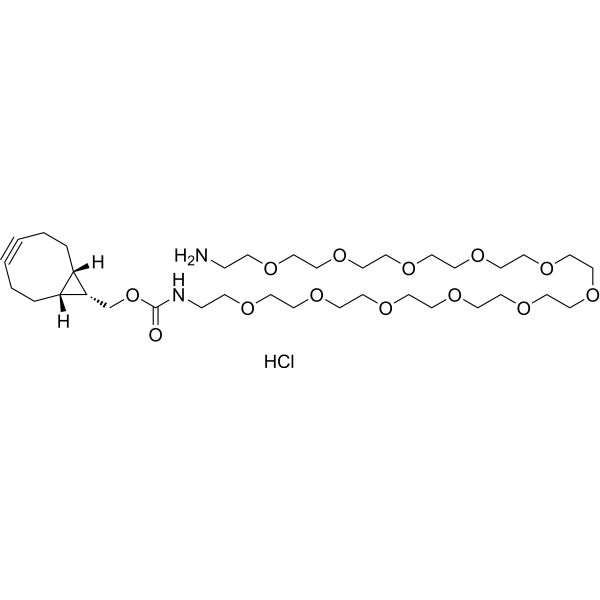
endo-BCN-PEG12-NH2 hydrochloride is a PEG-based PROTAC linker that can be used in the synthesis of PROTACs . endo-BCN-PEG12-NH2 (hydrochloride) is a click chemistry reagent, it contains a BCN group that can undergo strain-promoted alkyne-azide cycloaddition (SPAAC) with molecules containing Azide groups.
|
-
- HY-140077
-
|
|
PROTAC Linkers
|
Cancer
|
|
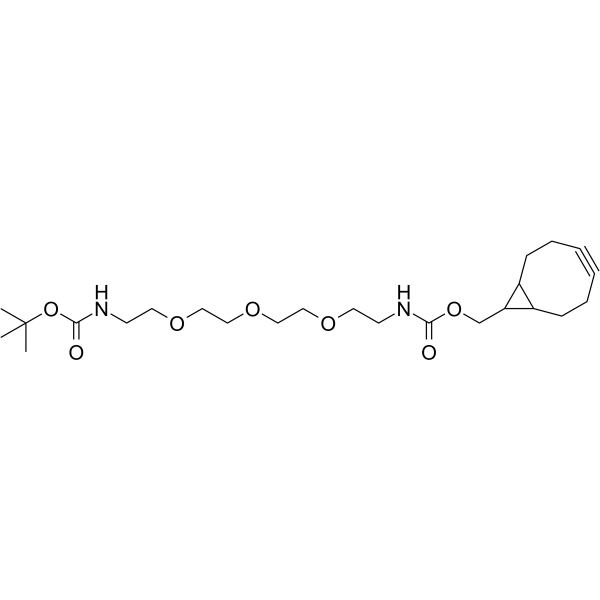
endo-BCN-PEG3-NH-Boc is a PEG-based PROTAC linker can be used in the synthesis of PROTACs.
|
-
- HY-156302
-
|
|
Fluorescent Dye
|
Others
|
|
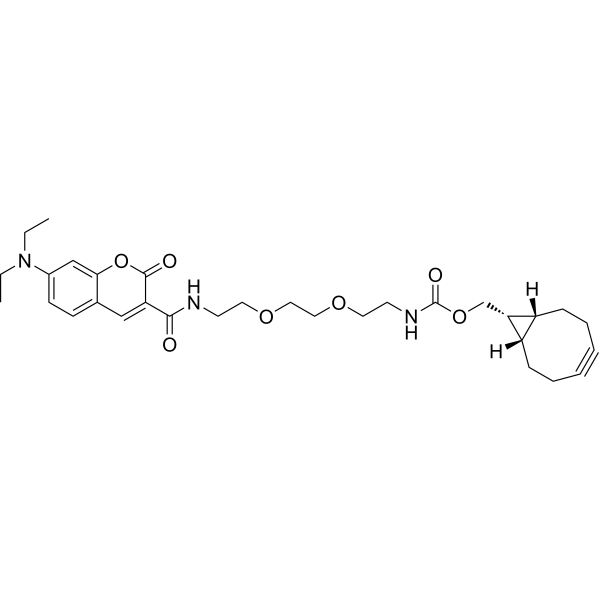
Coumarin-PEG2-endoBCN is a fluorescent dye containing a coumarin fluorophore and can be used as a click chemistry reagent .
|
-
- HY-W793100
-
|
|
Biochemical Assay Reagents
|
Others
|
|
Endo-BCN-PEG2-Biotin is a PEG linker containing a BCN group and a terminal carboxylic acid. The BCN groupis very reactive with azide-tagged molecules. The amino group is reactive with carboxylic acids, activated NHS esters, carbonyls (ketone, aldehyde) etc.
|
-

- HY-W590556
-
|
|
Drug-Linker Conjugates for ADC
|
Cancer
|
|
Endo-BCN-PEG4-Val-Cit-PAB-MMAF is a cleavable ADC linker conjugated with drug containing 4-unit PEG, which can be used for synthesizing antibody-drug conjugates (ADCs). endo-BCN-PEG4-Val-Cit-PAB-MMAF is a click chemistry reagent, it contains a BCN group that can undergo strain-promoted alkyne-azide cycloaddition (SPAAC) with molecules containing Azide groups .
|
-

- HY-W800660
-
|
|
Biochemical Assay Reagents
|
Others
|
|
endo-BCN-PEG4-Boc-amine is a PEG linker containing a BCN group and a Boc-protected amine. The protected amine can be deprotected under mild acidic conditions. The BCN group can react with azide-tagged biomolecules.
|
-

| Cat. No. |
Product Name |
Type |
-
- HY-149618
-
|
|
Fluorescent Dyes
|
|
Cy5-PEG3-endo-BCN is a derivative of the Cyanine 5 (Cy5) (HY-D0821) dye bearing 3 PEG units. Cy5-PEG3-endo-BCN contains the lyophilic bidentate macrocyclic ligand endo-BCN, which allows for further synthesis of macrocyclic complexes. In click chemistry, endo-BCN forms stable triazoles with azide-containing molecules under catalyst-free conditions .
|
-
- HY-155327
-
|
|
Fluorescent Dyes
|
|
Cy3-PEG2-endo-BCN is a dye derivative of Cyanine 3 (Cy3) (HY-D0822) containing 2 PEG units. Cy3-PEG2-endo-BCN contains the lyophilic bidentate macrocyclic ligand endo-BCN, which can further synthesize macrocyclic complexes. In click chemistry, endo-BCN can react with molecules containing azide groups to form stable triazoles in the absence of catalysts.
|
-
- HY-149619
-
|
|
Fluorescent Dyes
|
|
Cy5-PEG7-endo-BCN is a dye derivative of Cyanine 5 (Cy5) (HY-D0821) containing 7 PEG units. Cy5-PEG7-endo-BCN contains the lyophilic bidentate macrocyclic ligand endo-BCN, which can further synthesize macrocyclic complexes. In click chemistry, endo-BCN can react with molecules containing azide groups to form stable triazoles in the absence of catalysts.
|
-
- HY-D2121
-
|
|
Fluorescent Dyes
|
|
Cy3-PEG7-endo-BCN is a dye derivative of Cyanine 3 (Cy3) (HY-D0822) containing 7 PEG units. Cy3-PEG7-endo-BCN contains the lyophilic bidentate macrocyclic ligand BCN, which can further synthesize macrocyclic complexes. In click chemistry, endo-BCN can react with molecules containing azide groups to form stable triazoles in the absence of catalysts.
|
-
- HY-D2120
-
|
|
Fluorescent Dyes
|
|
Cy3-PEG3-endo-BCN is a dye derivative of Cyanine 3 (Cy3) (HY-D0822) containing 3 PEG units. Cy3-PEG3-endo-BCN contains the lyophilic bidentate macrocyclic ligand BCN, which can further synthesize macrocyclic complexes. In click chemistry, endo-BCN can react with molecules containing azide groups to form stable triazoles in the absence of catalysts.
|
-
- HY-156302
-
|
|
Fluorescent Dyes
|
|
Coumarin-PEG2-endoBCN is a fluorescent dye containing a coumarin fluorophore and can be used as a click chemistry reagent .
|
| Cat. No. |
Product Name |
Type |
-
- HY-W879045
-
|
endo-BCN-PEG5-NH2
|
Biochemical Assay Reagents
|
|
Endo-BCN-PEG5-amine (Endo-BCN-PEG5-NH2) is a click chemistry crosslinker reagent. The BCN groupis very reactive with azide-tagged molecules. The amino group is reactive with carboxylic acids, activated NHS esters, carbonyls (ketone, aldehyde) etc .
|
-
- HY-166874
-
|
|
Biochemical Assay Reagents
|
|
DSPE-PEG2000-endo-BCN is a PEG lipid that can improve the delivery efficiency and tissue specificity of poorly soluble drugs. DSPE-PEG2000-endo-BCN can be used in drug delivery research .
|
-
- HY-166871
-
|
|
Biochemical Assay Reagents
|
|
DSPE-PEG5000-endo-BCN is a PEG lipid that can improve the delivery efficiency and tissue specificity of poorly soluble drugs. DSPE-PEG5000-endo-BCN can be used in drug delivery research .
|
-
- HY-W879025
-
|
endo-BCN-PEG8-NH2
|
Biochemical Assay Reagents
|
|
Endo-BCN-PEG8-amine (Endo-BCN-PEG8-NH2) is a click chemistry crosslinker reagent. The BCN groupis very reactive with azide-tagged molecules. The amino group is reactive with carboxylic acids, activated NHS esters, carbonyls (ketone, aldehyde) etc .
|
-
- HY-W879032
-
|
|
Biochemical Assay Reagents
|
|
Endo-BCN-PEG4-Pomalidomide is a PEG derivative composed of BCN, PEG4 and Pomalidomide (HY-10984). The BCN groupis very reactive with azide-tagged molecules. The amino group is reactive with carboxylic acids, activated NHS esters, carbonyls (ketone, aldehyde) etc .
|
-
- HY-W879031
-
|
|
Biochemical Assay Reagents
|
|
Endo-BCN-PEG4-Palmitic is a PEG derivative containing an endo-BCN cycloalkyne structure, a tetraethylene glycol (PEG4) linker, and a Palmitic acid (HY-N0830) fatty acid group. Endo-BCN-PEG4-Palmitic can be used for drug delivery, surface modification, and click chemistry reactions .
|
-
- HY-W879044
-
|
endo-BCN-PEG15-NH2
|
Biochemical Assay Reagents
|
|
Endo-BCN-PEG15-amine (Endo-BCN-PEG15-NH2) is a click chemistry crosslinker reagent. The BCN groupis very reactive with azide-tagged molecules. The amino group is reactive with carboxylic acids, activated NHS esters, carbonyls (ketone, aldehyde) etc .
|
-
- HY-W793100
-
|
|
Biochemical Assay Reagents
|
|
Endo-BCN-PEG2-Biotin is a PEG linker containing a BCN group and a terminal carboxylic acid. The BCN groupis very reactive with azide-tagged molecules. The amino group is reactive with carboxylic acids, activated NHS esters, carbonyls (ketone, aldehyde) etc.
|
| Cat. No. |
Product Name |
|
Classification |
-
- HY-W035129
-
|
|
|
BCN
|
|
endo-BCN-NHS carbonate is an elastin-like protein (ELP) modification reagent. endo-BCN-NHS carbonate can react with lysine residues in ELP to make ELP carry BCN groups, and then cross-link ELP through strain-promoted azide-alkyne cycloaddition (SPAAC) reaction. endo-BCN-NHS carbonate promotes hydrogel formation. endo-BCN-NHS carbonate is mainly used in cell encapsulation related research .
|
-
- HY-43581
-
|
|
|
PROTAC Synthesis
BCN
|
|
endo-BCN-O-PNB is an alkyl/ether-based PROTAC linker that can be used in the synthesis of PROTACs . endo-BCN-O-PNB is a click chemistry reagent, it contains a BCN group that can undergo strain-promoted alkyne-azide cycloaddition (SPAAC) with molecules containing Azide groups.
|
-
- HY-140069
-
|
|
|
PROTAC Synthesis
BCN
|
|
endo-BCN-PEG4-NHS ester is a PEG-based PROTAC linker that can be used in the synthesis of PROTACs . endo-BCN-PEG4-NHS ester is a click chemistry reagent, it contains a BCN group that can undergo strain-promoted alkyne-azide cycloaddition (SPAAC) with molecules containing Azide groups.
|
-
- HY-W072752
-
|
|
|
BCN
|
|
endo-BCN-PEG2-NH2 is a PEG-based PROTAC linker that can be used in the synthesis of PROTACs . endo-BCN-PEG2-NH2 contains a BCN group that can undergo strain-promoted alkyne-azide cycloaddition (SPAAC) with molecules containing Azide groups.
|
-
- HY-141155
-
|
|
|
ADC Synthesis
BCN
|
|
endo-BCN-PEG4-Val-Cit-PAB-MMAE is a cleavable ADC linker conjugated with drug containing 4-unit PEG, which can be used for synthesizing antibody-drug conjugates (ADCs). endo-BCN-PEG4-Val-Cit-PAB-MMAE is a click chemistry reagent, it contains a BCN group that can undergo strain-promoted alkyne-azide cycloaddition (SPAAC) with molecules containing Azide groups .
|
-
- HY-133400
-
|
|
|
PROTAC Synthesis
BCN
|
|
endo-BCN-PEG3-mal is a PEG-based PROTAC linker that can be used in the synthesis of PROTACs . endo-BCN-PEG3-mal is a click chemistry reagent, it contains a BCN group that can undergo strain-promoted alkyne-azide cycloaddition (SPAAC) with molecules containing Azide groups.
|
-
- HY-157054
-
|
|
|
BCN
PROTAC Synthesis
|
|
Endo-BCN-L-Lysine is a Click Amino Acid that can be used as a linker in the synthesis of PROTAC molecules. Endo-BCN-L-Lysine contains a BCN group that can undergo strain-promoted alkyne-azide cycloaddition (SPAAC) with molecules containing Azide groups.
|
-
- HY-W879045
-
|
endo-BCN-PEG5-NH2
|
|
BCN
|
|
Endo-BCN-PEG5-amine (Endo-BCN-PEG5-NH2) is a click chemistry crosslinker reagent. The BCN groupis very reactive with azide-tagged molecules. The amino group is reactive with carboxylic acids, activated NHS esters, carbonyls (ketone, aldehyde) etc .
|
-
- HY-W096079
-
|
|
|
ADC Synthesis
BCN
|
|
BCN-endo-PEG4-NHS is an ADC Linker containing 4 PEG units. BCN-endo-PEG4-NHS contains the lyophilic bidentate macrocyclic ligand endo-BCN, which allows for further synthesis of macrocyclic complexes. In click chemistry, endo-BCN can react with molecules containing azide groups to form stable triazoles in the absence of catalysts.
|
-
- HY-156311
-
|
|
|
ADC Synthesis
BCN
|
|
BCN-endo-PEG2-maleimide is an ADC Linker containing 4 PEG units. BCN-endo-PEG2-maleimide contains the lyophilic bidentate macrocyclic ligand endo-BCN, which can further synthesize macrocyclic complexes. In click chemistry, endo-BCN can react with molecules containing azide groups to form stable triazoles in the absence of catalysts. Its maleimide group (-Maleimide) degrades in aqueous media and has been used in drug delivery studies.
|
-
- HY-140070
-
|
|
|
PROTAC Synthesis
BCN
|
|
endo-BCN-PEG8-NHS ester is a PEG-based PROTAC linker that can be used in the synthesis of PROTACs . endo-BCN-PEG8-NHS ester is a click chemistry reagent, it contains a BCN group that can undergo strain-promoted alkyne-azide cycloaddition (SPAAC) with molecules containing Azide groups.
|
-
- HY-149618
-
|
|
|
BCN
Labeling and Fluorescence Imaging
|
|
Cy5-PEG3-endo-BCN is a derivative of the Cyanine 5 (Cy5) (HY-D0821) dye bearing 3 PEG units. Cy5-PEG3-endo-BCN contains the lyophilic bidentate macrocyclic ligand endo-BCN, which allows for further synthesis of macrocyclic complexes. In click chemistry, endo-BCN forms stable triazoles with azide-containing molecules under catalyst-free conditions .
|
-
- HY-135971
-
|
|
|
ADC Synthesis
BCN
|
|
endo-BCN-PEG4-acid is a cleavable 4 unit PEG ADC linker used in the synthesis of antibody-drug conjugates (ADCs) . endo-BCN-PEG4-acid is a click chemistry reagent, it contains a BCN group that can undergo strain-promoted alkyne-azide cycloaddition (SPAAC) with molecules containing Azide groups.
|
-
- HY-140076
-
|
|
|
BCN
PROTAC Synthesis
|
|
endo-BCN-PEG2-alcohol is a PEG-based PROTAC linker that can be used in the synthesis of PROTACs . endo-BCN-PEG2-alcohol is a click chemistry reagent, it contains a BCN group that can undergo strain-promoted alkyne-azide cycloaddition (SPAAC) with molecules containing Azide groups.
|
-
- HY-140073
-
|
|
|
BCN
PROTAC Synthesis
|
|
endo-BCN-PEG4-PFP ester is a PEG-based PROTAC linker that can be used in the synthesis of PROTACs . endo-BCN-PEG4-PFP ester is a click chemistry reagent, it contains a BCN group that can undergo strain-promoted alkyne-azide cycloaddition (SPAAC) with molecules containing Azide groups.
|
-
- HY-140078
-
|
|
|
BCN
ADC Synthesis
|
|
bis-PEG2-endo-BCN is a cleavable 2 unit PEG ADC linker used in the synthesis of antibody-drug conjugates (ADCs) . bis-PEG2-endo-BCN is a click chemistry reagent, it contains a BCN group that can undergo strain-promoted alkyne-azide cycloaddition (SPAAC) with molecules containing Azide groups.
|
-
- HY-140072
-
|
|
|
BCN
PROTAC Synthesis
|
|
endo-BCN-PEG2-PFP ester is a PEG-based PROTAC linker that can be used in the synthesis of PROTACs . endo-BCN-PEG2-PFP ester is a click chemistry reagent, it contains a BCN group that can undergo strain-promoted alkyne-azide cycloaddition (SPAAC) with molecules containing Azide groups.
|
-
- HY-140068
-
|
|
|
BCN
PROTAC Synthesis
|
|
endo-BCN-PEG3-NHS ester is a PEG-based PROTAC linker that can be used in the synthesis of PROTACs . endo-BCN-PEG3-NHS ester is a click chemistry reagent, it contains a BCN group that can undergo strain-promoted alkyne-azide cycloaddition (SPAAC) with molecules containing Azide groups.
|
-
- HY-155327
-
|
|
|
Labeling and Fluorescence Imaging
BCN
|
|
Cy3-PEG2-endo-BCN is a dye derivative of Cyanine 3 (Cy3) (HY-D0822) containing 2 PEG units. Cy3-PEG2-endo-BCN contains the lyophilic bidentate macrocyclic ligand endo-BCN, which can further synthesize macrocyclic complexes. In click chemistry, endo-BCN can react with molecules containing azide groups to form stable triazoles in the absence of catalysts.
|
-
- HY-156317
-
|
|
|
BCN
|
|
BCN-endo-PEG7-maleimide is an ADC Linker containing 7 PEG units. BCN-endo-PEG7-maleimide contains the lyophilic bidentate macrocyclic ligand endo-BCN, which can further synthesize macrocyclic complexes. In click chemistry, endo-BCN can react with molecules containing azide groups to form stable triazoles in the absence of catalysts.
|
-
- HY-140080
-
|
|
|
BCN
PROTAC Synthesis
|
|
Gly-PEG3-endo-BCN is a PEG-based PROTAC linker that can be used in the synthesis of PROTACs . Gly-PEG3-endo-BCN is a click chemistry reagent, it contains a BCN group that can undergo strain-promoted alkyne-azide cycloaddition (SPAAC) with molecules containing Azide groups.
|
-
- HY-140081
-
|
|
|
BCN
ADC Synthesis
PROTAC Synthesis
|
|
Boc-gly-PEG3-endo-BCN is a PEG-based PROTAC linker that can be used in the synthesis of PROTACs . Boc-gly-PEG3-endo-BCN is also a cleavable 2 unit PEG ADC linker used in the synthesis of antibody-drug conjugates (ADCs) . Boc-gly-PEG3-endo-BCN is a click chemistry reagent, it contains a BCN group that can undergo strain-promoted alkyne-azide cycloaddition (SPAAC) with molecules containing Azide groups.
|
-
- HY-130557
-
|
|
|
BCN
PROTAC Synthesis
|
|
endo-BCN-PEG2-acid is a PEG-based PROTAC linker can be used in the synthesis of PROTACs. endo-BCN-PEG2-acid is a click chemistry reagent, it contains a BCN group that can undergo strain-promoted alkyne-azide cycloaddition (SPAAC) with molecules containing Azide groups.
|
-
- HY-140350
-
|
|
|
BCN
PROTAC Synthesis
|
|
5-endo-BCN-pentanoic acid is an alkyl chain-based PROTAC linker that can be used in the synthesis of PROTACs . 5-endo-BCN-pentanoic acid is a click chemistry reagent, it contains a BCN group that can undergo strain-promoted alkyne-azide cycloaddition (SPAAC) with molecules containing Azide groups.
|
-
- HY-133008
-
|
|
|
BCN
|
|
endo-BCN-PEG3-acid is a PEG-based PROTAC linker can be used in the synthesis of PROTACs.
|
-
- HY-140075
-
|
|
|
BCN
PROTAC Synthesis
|
|
endo-BCN-PEG6-Boc is a PEG-based PROTAC linker that can be used in the synthesis of PROTACs . endo-BCN-PEG6-Boc is a click chemistry reagent, it contains a BCN group that can undergo strain-promoted alkyne-azide cycloaddition (SPAAC) with molecules containing Azide groups.
|
-
- HY-140074
-
|
|
|
BCN
|
|
endo-BCN-PEG4-Boc is a PEG-based PROTAC linker can be used in the synthesis of PROTACs.
|
-
- HY-133401
-
|
|
|
PROTAC Synthesis
BCN
|
|
endo-BCN-PEG3-NH2 is a PEG-based PROTAC linker that can be used in the synthesis of PROTACs . endo-BCN-PEG3-NH2 is a click chemistry reagent, it contains a BCN group that can undergo strain-promoted alkyne-azide cycloaddition (SPAAC) with molecules containing Azide groups.
|
-
- HY-W879032
-
|
|
|
BCN
|
|
Endo-BCN-PEG4-Pomalidomide is a PEG derivative composed of BCN, PEG4 and Pomalidomide (HY-10984). The BCN groupis very reactive with azide-tagged molecules. The amino group is reactive with carboxylic acids, activated NHS esters, carbonyls (ketone, aldehyde) etc .
|
-
- HY-W540023
-
|
|
|
BCN
|
|
Endo-BCN-Fmoc-L-Lysine is a linker containing the lyophilic bidentate macrocyclic ligand endo-BCN, which can further synthesize macrocyclic complexes. In click chemistry, endo-BCN can react with molecules containing azide groups to form stable triazoles in the absence of catalysts.
|
-
- HY-149619
-
|
|
|
Labeling and Fluorescence Imaging
BCN
|
|
Cy5-PEG7-endo-BCN is a dye derivative of Cyanine 5 (Cy5) (HY-D0821) containing 7 PEG units. Cy5-PEG7-endo-BCN contains the lyophilic bidentate macrocyclic ligand endo-BCN, which can further synthesize macrocyclic complexes. In click chemistry, endo-BCN can react with molecules containing azide groups to form stable triazoles in the absence of catalysts.
|
-
- HY-D2121
-
|
|
|
Labeling and Fluorescence Imaging
BCN
|
|
Cy3-PEG7-endo-BCN is a dye derivative of Cyanine 3 (Cy3) (HY-D0822) containing 7 PEG units. Cy3-PEG7-endo-BCN contains the lyophilic bidentate macrocyclic ligand BCN, which can further synthesize macrocyclic complexes. In click chemistry, endo-BCN can react with molecules containing azide groups to form stable triazoles in the absence of catalysts.
|
-
- HY-D2120
-
|
|
|
Labeling and Fluorescence Imaging
BCN
|
|
Cy3-PEG3-endo-BCN is a dye derivative of Cyanine 3 (Cy3) (HY-D0822) containing 3 PEG units. Cy3-PEG3-endo-BCN contains the lyophilic bidentate macrocyclic ligand BCN, which can further synthesize macrocyclic complexes. In click chemistry, endo-BCN can react with molecules containing azide groups to form stable triazoles in the absence of catalysts.
|
-
- HY-140079
-
|
|
|
BCN
PROTAC Synthesis
|
|
Bis-PEG23-endo-BCN is a PEG-based PROTAC linker that can be used in the synthesis of PROTACs . Bis-PEG23-endo-BCN is a click chemistry reagent, it contains a BCN group that can undergo strain-promoted alkyne-azide cycloaddition (SPAAC) with molecules containing Azide groups.
|
-
- HY-139060
-
|
|
|
PROTAC Synthesis
BCN
|
|
Bis-PEG12-endo-BCN is a PEG-based PROTAC linker that can be used in the synthesis of PROTACs . Bis-PEG12-endo-BCN is a click chemistry reagent, it contains a BCN group that can undergo strain-promoted alkyne-azide cycloaddition (SPAAC) with molecules containing Azide groups.
|
-
- HY-156310
-
|
|
|
BCN
|
|
BCN-endo-PEG7-NH2 is an ADC Linker containing 7 PEG units. BCN-endo-PEG7-NH2 contains the lyophilic bidentate macrocyclic ligand endo-BCN, which can further synthesize macrocyclic complexes. In click chemistry, endo-BCN can react with molecules containing azide groups to form stable triazoles in the absence of catalysts.
|
-
- HY-140065
-
|
|
|
BCN
PROTAC Synthesis
|
|
endo-BCN-PEG8-acid is a PEG-based PROTAC linker that can be used in the synthesis of PROTACs . endo-BCN-PEG8-acid is a click chemistry reagent, it contains a BCN group that can undergo strain-promoted alkyne-azide cycloaddition (SPAAC) with molecules containing Azide groups.
|
-
- HY-140066
-
|
|
|
PROTAC Synthesis
BCN
|
|
endo-BCN-PEG12-acid is a PEG-based PROTAC linker that can be used in the synthesis of PROTACs . endo-BCN-PEG12-acid is a click chemistry reagent, it contains a BCN group that can undergo strain-promoted alkyne-azide cycloaddition (SPAAC) with molecules containing Azide groups.
|
-
- HY-138386
-
|
|
|
PROTAC Synthesis
BCN
|
|
endo-BCN-PEG12-NH2 hydrochloride is a PEG-based PROTAC linker that can be used in the synthesis of PROTACs . endo-BCN-PEG12-NH2 (hydrochloride) is a click chemistry reagent, it contains a BCN group that can undergo strain-promoted alkyne-azide cycloaddition (SPAAC) with molecules containing Azide groups.
|
-
- HY-140077
-
|
|
|
BCN
|
|
endo-BCN-PEG3-NH-Boc is a PEG-based PROTAC linker can be used in the synthesis of PROTACs.
|
-
- HY-156302
-
-
- HY-W590556
-
|
|
|
BCN
|
|
Endo-BCN-PEG4-Val-Cit-PAB-MMAF is a cleavable ADC linker conjugated with drug containing 4-unit PEG, which can be used for synthesizing antibody-drug conjugates (ADCs). endo-BCN-PEG4-Val-Cit-PAB-MMAF is a click chemistry reagent, it contains a BCN group that can undergo strain-promoted alkyne-azide cycloaddition (SPAAC) with molecules containing Azide groups .
|
Your information is safe with us. * Required Fields.
Inquiry Information
- Product Name:
- Cat. No.:
- Quantity:
- MCE Japan Authorized Agent:








