1. Search Result
Search Result
Results for "

gastrointestinal side effects

" in MedChemExpress (MCE) Product Catalog:

22

Inhibitors & Agonists

2

Natural
Products

2

Isotope-Labeled Compounds

1

Click Chemistry

Cat. No. Product Name Target Research Areas Chemical Structure
  • HY-107111

    mAChR Neurological Disease
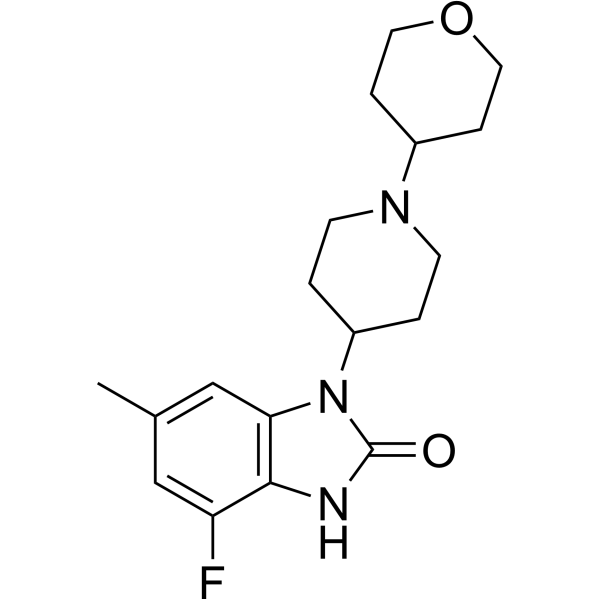
    GSK1034702 is an orally active and allosteric agonist of M1 mAChR (pEC50=8.1) that can cross the blood-brain barrier. GSK1034702 activates the Gq/11 protein-mediated signaling pathway, enhancing neuronal firing and long-term potentiation (LTP) in the CA1 region of the hippocampus. GSK1034702 can modulate hippocampal function, improve memory encoding in the nicotine withdrawal cognitive dysfunction model, and show pro-cognitive effects in rodents. GSK1034702 can be used for the study of the mechanisms of cognitive impairment diseases such as Alzheimer's disease, and has certain peripheral M receptor activation-related side effects (such as gastrointestinal reactions) .
    GSK1034702
  • HY-N1965

    NF-κB p38 MAPK COX Monoamine Oxidase MMP Interleukin Related TNF Receptor Reactive Oxygen Species (ROS) Metabolic Disease Inflammation/Immunology
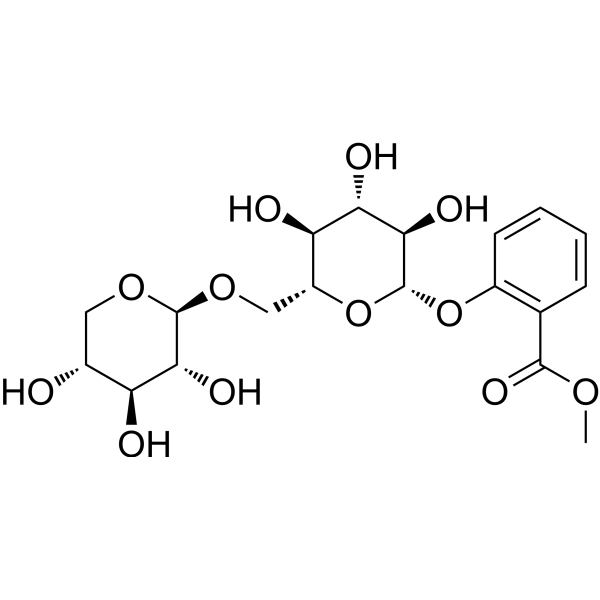
    Gaultherin is an orally active non-steroidal anti-inflammatory agent. Gaultherin selectively inhibits NF-κB, MAPK, COX-2 (IC50 = 0.35 mg/mL), LOX (IC50 = 0.56 mg/mL) and HYAL (IC50 = 28.58 μg/mL) to exert anti-inflammatory, antipyretic and analgesic effects. Gaultherin exhibits modest direct antioxidant capacity, greater in cell-based models. Gaultherin does not affect COX-1 so that avoids the common gastrointestinal side effects of Aspirin (HY-14654) .
    Gaultherin
  • HY-17509
    Deracoxib
    1 Publications Verification

    SC 046; SC 46; SC 59046

    COX Apoptosis Neurological Disease Inflammation/Immunology Cancer
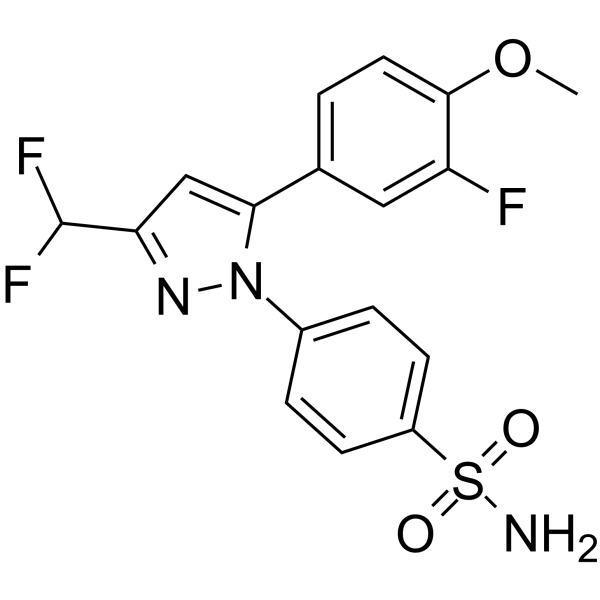
    Deracoxib (SC 046; SC 59046), an orally active COX-2 inhibitor, is a veterinary nonsteroidal anti-inflammatory agent used exclusively in dogs. Deracoxib inhibits the COX-2 enzyme to reduce the production of prostaglandins, effectively controlling pain and inflammation after canine soft tissue surgery. Deracoxib reduces the inhibition of COX-1 and lowers the risk of gastrointestinal side effects. Deracoxib induces tumor cell cycle arrest and apoptosis, and shows anti-tumor activity in canine osteosarcoma, breast tumors and bladder transitional cell carcinomas .
    Deracoxib
  • HY-179511

    Glycosidase Metabolic Disease
    α-Glucosidase-IN-104 (Compound 9s) is an efficient inhibitor of α-glucosidase with an IC50 of 24.32 μM. α-Glucosidase-IN-104 has a weak inhibitory effect on α-amylase and avoids gastrointestinal side effects. α-Glucosidase-IN-104 can be used for research on type 2 diabetes .
    α-Glucosidase-IN-104
  • HY-17509S

    SC 046-d3; SC 46-d3; SC 59046-d3

    Isotope-Labeled Compounds COX Apoptosis Neurological Disease Inflammation/Immunology Cancer
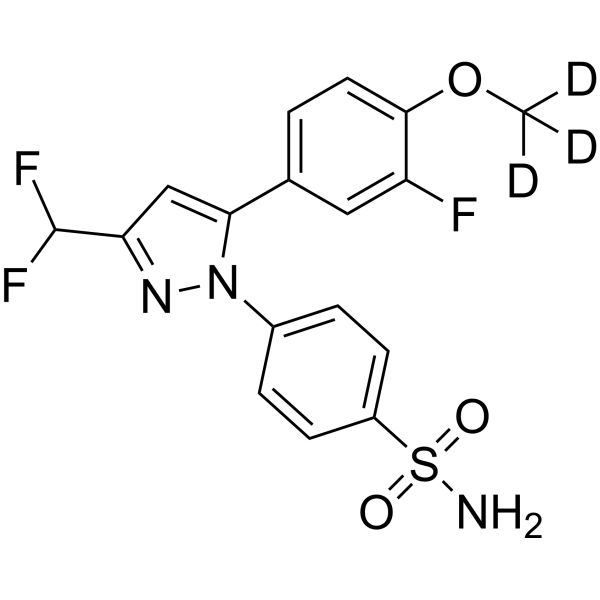
    Deracoxib-d3 (SC 046-d3; SC 59046-d3) is the deuterium labeled Deracoxib (HY-17509). Deracoxib, an orally active COX-2 inhibitor, is a veterinary nonsteroidal anti-inflammatory agent used exclusively in dogs. Deracoxib inhibits the COX-2 enzyme to reduce the production of prostaglandins, effectively controlling pain and inflammation after canine soft tissue surgery. Deracoxib reduces the inhibition of COX-1 and lowers the risk of gastrointestinal side effects. Deracoxib induces tumor cell cycle arrest and apoptosis, and shows anti-tumor activity in canine osteosarcoma, breast tumors and bladder transitional cell carcinomas.
    Deracoxib-d3
  • HY-U00020

    Drug Derivative Metabolic Disease
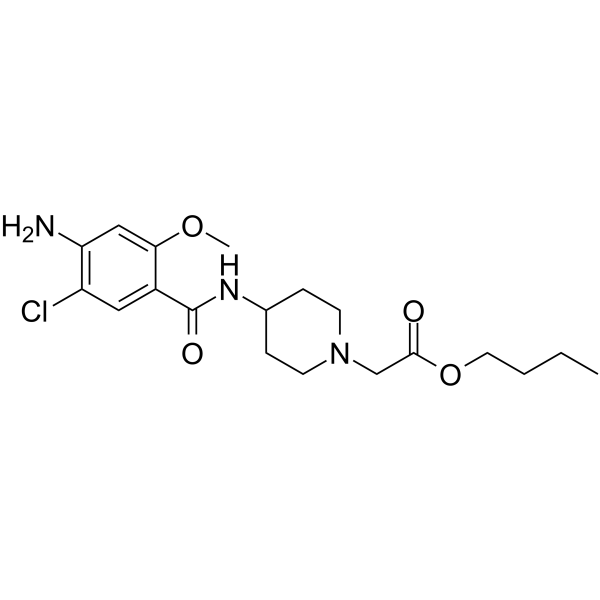
    AU-224 is a benzamide derivative used as a promising gastrointestinal prokinetic agent without significant side effects.
    AU-224
  • HY-118499

    RIV-2093

    Drug Derivative Endocrinology
    Alpiropride (RIV-2093) is a metoclopramide (HY-17382) analog that is effective in reducing the gastrointestinal side effects of cancer chemotherapy drugs. In animal studies, alpiropride showed a stronger antiemetic effect than metoclopramide .
    Alpiropride
  • HY-19846

    PRX-03140 potassium salt

    5-HT Receptor Others
    VRX-03011 (PRX-03140 (potassium salt)) is a compound with the potential to enhance memory and regulate acetylcholine release. It is a 5-HT? agonist that can enhance memory, regulate hippocampal acetylcholine efflux, and regulate APP metabolism without gastrointestinal side effects.
    VRX-03011
  • HY-159923

    Opioid Receptor Neurological Disease
    BPRMU191 is a μ-opioid receptor (MOR) modulator that converts small-molecule morphinan antagonists into G protein-biased MOR agonists, thereby inducing MOR-dependent activation and analgesic effects. Co-administration of BPRMU191 with morphinan antagonists provides analgesia while reducing side effects such as gastrointestinal dysfunction, antinociceptive tolerance, and dependency-related adverse effects. BPRMU191, in combination with morphinan antagonists, offers a potential strategy for studying severe pain management and G protein-coupled receptor modulation .
    BPRMU191
  • HY-159169

    COX Epoxide Hydrolase Lipoxygenase Inflammation/Immunology
    5-LOX/sEH-IN-1 (Compound 8o) is a dual 5-LOX/sEH-IN-1 inhibitor with cardioprotective effects, exhibiting IC50 values of 3.05 μM and 2.20 nM respectively, and 5-LOX/sEH-IN-1 can also inhibit the activity of COX-2 (IC50=10.50 μM). 5-LOX/sEH-IN-1 has analgesic and anti-inflammatory effects, while reducing ulcer pathogenicity, and can be used to develop anti-inflammatory agents with fewer gastrointestinal and cardiovascular side effects .
    5-LOX/sEH-IN-1
  • HY-170585

    COX NF-κB Inflammation/Immunology
    COX-2-IN-51 (E25) is a potent COX-2 inhibitor, with an IC50 of 70.7 nM. COX-2-IN-51 significantly inhibits LPS-induced release of NO and PGE2, expression of COX-2 and iNOS, and activation of NF-κB pathway. COX-2-IN-51 exhibits anti-inflammatory and analgesic effects in diverse murine models through inhibiting NF-κB pathway. COX-2-IN-51 has lower gastrointestinal side effects than Indomethacin (HY-14397) .
    COX-2-IN-51
  • HY-N1965R

    Reference Standards NF-κB p38 MAPK COX Reactive Oxygen Species (ROS) Monoamine Oxidase MMP Interleukin Related TNF Receptor Neurological Disease Inflammation/Immunology
    Gaultherin (Standard) is the analytical standard for Gaultherin (HY-N1965). Gaultherin is an orally active non-steroidal anti-inflammatory agent. Gaultherin selectively inhibits NF-κB, MAPK, COX-2 (IC50 = 0.35 mg/mL), LOX (IC50 = 0.56 mg/mL) and HYAL (IC50 = 28.58 μg/mL) to exert anti-inflammatory, antipyretic and analgesic effects. Gaultherin exhibits modest direct antioxidant capacity, greater in cell-based models. Gaultherin does not affect COX-1 so that avoids the common gastrointestinal side effects of Aspirin (HY-14654) .
    Gaultherin (Standard)
  • HY-162373

    Amylases Glycosidase P-glycoprotein Metabolic Disease
    α-Amylase/α-Glucosidase-IN-10 (compound 5d) is an α-amylase and α-glucosidase inhibitor (IC50: 30.39 μM and 65.1 μM) with potential diabetes inhibitory effects. α-Amylase/α-Glucosidase-IN-10 exhibits high gastrointestinal (GI) absorption in ADMET (Absorption, Distribution, Metabolism, Excretion and Toxicity) prediction. While α-Amylase/α-Glucosidase-IN-10 acts as a substrate for P-gp and does not cross the blood-brain barrier (BBB), there may be a risk of central nervous system side effects .
    α-Amylase/α-Glucosidase-IN-10
  • HY-107111A

    Cholinesterase (ChE) mAChR Neurological Disease
    GSK1034702 hydrochloride is an orally active and allosteric agonist of M1 mAChR (pEC50=8.1) that can cross the blood-brain barrier. GSK1034702 hydrochloride activates the Gq/11 protein-mediated signaling pathway, enhancing neuronal firing and long-term potentiation (LTP) in the CA1 region of the hippocampus. GSK1034702 hydrochloride can modulate hippocampal function, improve memory encoding in the nicotine withdrawal cognitive dysfunction model, and show pro-cognitive effects in rodents. GSK1034702 hydrochloride can be used for the study of the mechanisms of cognitive impairment diseases such as Alzheimer's disease, and has certain peripheral M receptor activation-related side effects (such as gastrointestinal reactions) .
    GSK1034702 hydrochloride
  • HY-17509R

    SC 046 (Standard); SC 46 (Standard); SC 59046 (Standard)

    Reference Standards COX Apoptosis Neurological Disease Inflammation/Immunology Cancer
    Deracoxib (SC 046; SC 59046) (Standard) is the analytical standard of Deracoxib (HY-17509). This product is intended for research and analytical applications. Deracoxib, an orally active COX-2 inhibitor, is a veterinary nonsteroidal anti-inflammatory agent used exclusively in dogs. Deracoxib inhibits the COX-2 enzyme to reduce the production of prostaglandins, effectively controlling pain and inflammation after canine soft tissue surgery. Deracoxib reduces the inhibition of COX-1 and lowers the risk of gastrointestinal side effects. Deracoxib induces tumor cell cycle arrest and apoptosis, and shows anti-tumor activity in canine osteosarcoma, breast tumors and bladder transitional cell carcinomas
    Deracoxib (Standard)
  • HY-W703540

    SC 046-d4; SC 46-d4; SC 59046-d4

    Isotope-Labeled Compounds Apoptosis COX Neurological Disease Inflammation/Immunology Cancer
    Deracoxib-d4 (SC 046-d4; SC 59046--d4) is deuterium labeled Deracoxib (HY-17509). Deracoxib, an orally active COX-2 inhibitor, is a veterinary nonsteroidal anti-inflammatory agent used exclusively in dogs. Deracoxib inhibits the COX-2 enzyme to reduce the production of prostaglandins, effectively controlling pain and inflammation after canine soft tissue surgery. Deracoxib reduces the inhibition of COX-1 and lowers the risk of gastrointestinal side effects. Deracoxib induces tumor cell cycle arrest and apoptosis, and shows anti-tumor activity in canine osteosarcoma, breast tumors and bladder transitional cell carcinomas.
    Deracoxib-d4
  • HY-16778

    Drug Derivative Neurological Disease Metabolic Disease Endocrinology
    Etiguanfacine is a derivative of Guanfacine (HY-17416A). Etiguanfacine can be used for research to reduce the gastrointestinal side effects of Guanfacine .
    Etiguanfacine
  • HY-119200

    Endogenous Metabolite Cancer
    LY-195448 hydrochloride is a phenethanolamine that exhibits anti-tumour activity across various murine tumour models. LY-195448 hydrochloride acts by blocking cells at metaphase. LY-195448 hydrochloride has demonstrated a lack of "standard" side effects commonly associated with cancer treatments, such as myelosuppression and gastrointestinal toxicity. LY-195448 hydrochloride was evaluated in a phase I trial, where it showed only mild and reversible side effects like hypotension, tachycardia, and tremor.
    LY-195448 hydrochloride
  • HY-124470

    Others Cardiovascular Disease
    Amisometradine is an orally active aminouracil diuretic with a diuretic potency approximately 40% that of Mersalyl (HY-108868) (when administered intramuscularly). Amisometradine exerts its effects by promoting the excretion of sodium, chloride and a small amount of potassium, exhibits significant therapeutic effects in heart failure models, and has good tolerance with long-term administration. Compared with drugs of the same class, Amisometradine causes fewer gastrointestinal reactions; its minor side effects mainly include nausea, vomiting, diarrhea, tinnitus and deafness, and are usually not accompanied by proteinuria or abnormalities in blood and urine indicators. Amisometradine is an important tool for the study of heart failure and related diuretic mechanisms .
    Amisometradine
  • HY-180822

    COX TNF Receptor Interleukin Related Inflammation/Immunology
    COX-2-IN-63 (Compound 6k) is an orally active COX-2 inhibitor with an IC50 of 0.89 μM. COX-2-IN-63 reduces the levels of inflammatory mediators PGE2, TNF-α, and IL-6. COX-2-IN-63 can effectively alleviate acute inflammation in a rat paw edema model and has a lower risk of gastrointestinal side effects. COX-2-IN-63 can be used in anti-inflammatory research .
    COX-2-IN-63
  • HY-107111R

    Reference Standards mAChR Neurological Disease
    GSK1034702 (Standard) is the analytical standard of GSK1034702 (HY-107111). This product is intended for research and analytical applications. GSK1034702 is an orally active and allosteric agonist of M1 mAChR (pEC50=8.1) that can cross the blood-brain barrier. GSK1034702 activates the Gq/11 protein-mediated signaling pathway, enhancing neuronal firing and long-term potentiation (LTP) in the CA1 region of the hippocampus. GSK1034702 can modulate hippocampal function, improve memory encoding in the nicotine withdrawal cognitive dysfunction model, and show pro-cognitive effects in rodents. GSK1034702 can be used for the study of the mechanisms of cognitive impairment diseases such as Alzheimer's disease, and has certain peripheral M receptor activation-related side effects (such as gastrointestinal reactions) .
    GSK1034702 (Standard)
  • HY-118418

    Biochemical Assay Reagents Neurological Disease Inflammation/Immunology
    Anti-inflammatory agent 120 is an orally active non-steroidal anti-inflammatory agent. Anti-inflammatory agent 120 can be used in the research of rheumatoid arthritis, osteoarthritis, dysmenorrhea, acute gouty arthritis, ankylosing spondylitis and dementia .
    Anti-inflammatory agent 120

Inquiry Online

Your information is safe with us. * Required Fields.

Salutation


Country or Region *

Applicant Name *


Organization Name *

Department *


Email Address *


Product Name *

Cat. No.


Requested quantity *

Phone Number *


Remarks

Inquiry Online

Inquiry Information

Product Name:
Cat. No.:
Quantity:
MCE Japan Authorized Agent:

