1. Search Result
Search Result
Results for "

ketone body

" in MedChemExpress (MCE) Product Catalog:

16

Inhibitors & Agonists

2

Biochemical Assay Reagents

4

Natural
Products

Cat. No. Product Name Target Research Areas Chemical Structure
  • HY-77490A
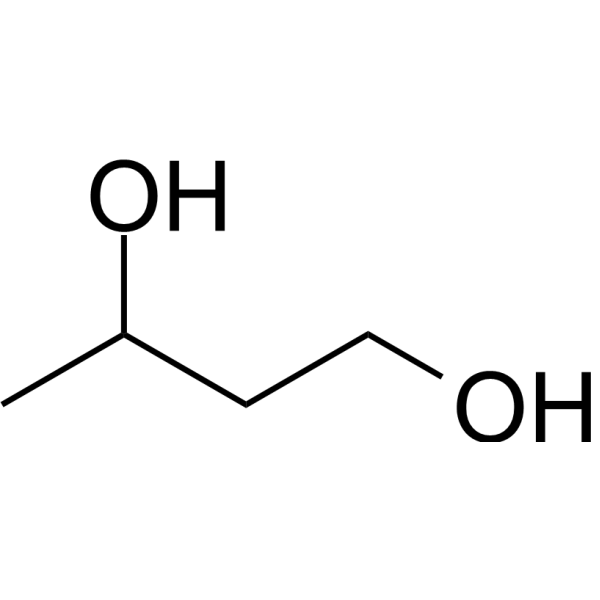
    1,3-Butanediol
    1 Publications Verification

    Environmental Pollutants Endogenous Metabolite Cardiovascular Disease Neurological Disease
    1,3-Butanediol, an orally active ethanol dimer providing a source of calories for human nutrition. 1,3-Butanediol administeration can stimulate the biosynthesis of the ketone body, β-hydroxybutyrate (βHB). 1,3-Butanediol has cerebral protective and hypoglycaemic effect .
    1,3-Butanediol
  • HY-113004

    Endogenous Metabolite Metabolic Disease
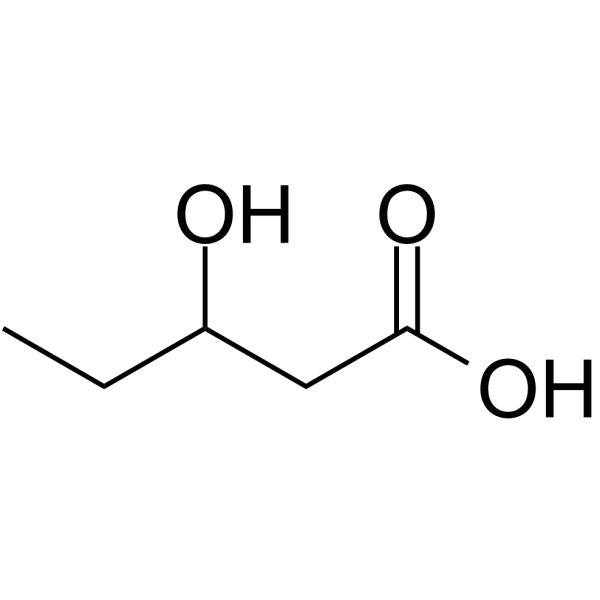
    3-Hydroxyvaleric acid is a five-carbon ketone body byproduct that can undergo an anaplerotic reaction to replenish the intermediates of the tricarboxylic acid cycle. 3-Hydroxyvaleric acid is one of the important monomers for the synthesis of polyhydroxyalkanoates (PHA). PHA is a type of biodegradable plastic that is widely used in environmentally friendly packaging, disposable products, and medical materials .
    3-Hydroxyvaleric acid
  • HY-P2994

    3-HBDH

    Endogenous Metabolite Metabolic Disease
    3-Hydroxybutyrate dehydrogenase (3-HBDH), a mitochondrial enzyme, is a key enzyme in the ketone body metabolism pathway. 3-Hydroxybutyrate dehydrogenase is the last enzyme for ketone synthesis in the liver and the first enzyme for ketone breakdown in extracellular tissues. The absence of 3-Hydroxybutyrate dehydrogenase leads to the inhibition of fatty acid oxidation in the liver during fasting in mice, resulting in lipid accumulation and the development of fatty liver .
    3-Hydroxybutyrate dehydrogenase
  • HY-114294A

    HMG-CoA disodium hydrate

    Biochemical Assay Reagents Metabolic Disease
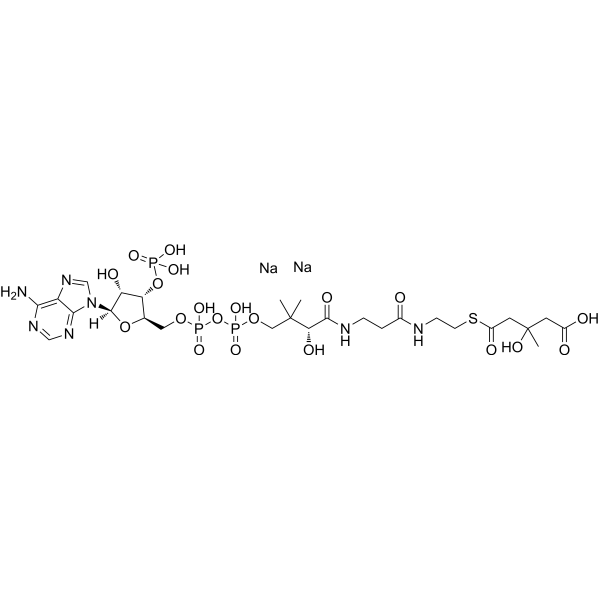
    DL-3-Hydroxy-3-methylglutaryl coenzyme A disodium hydrate is a disodium salt compound of HMG-CoA, is a intermediate of terpenes and ketone bodies. DL-3-Hydroxy-3-methylglutaryl coenzyme A disodium also involves in ester metabolism in vivo, as a precursor for cholesterol synthesis, and regulates cholesterol synthesis by coupling LDL receptor .
    DL-3-Hydroxy-3-methylglutaryl coenzyme A disodium hydrate
  • HY-173527

    Mitochondrial Metabolism Metabolic Disease
    PSSI-51 is an orally active, peripherally selective inhibitor of succinyl-CoA:3-ketoacid-CoA transferase (SCOT). PSSI-51 inhibits SCOT activity in peripheral tissues (such as muscle and kidney) but does not affect SCOT activity in brain tissue. PSSI-51 reduces ketone body oxidation by inhibiting SCOT, thereby improving obesity-related hyperglycemia. PSSI-51 can be used in the study of type 2 diabetes (T2D) and has the potential to improve obesity-related metabolic disorders .
    PSSI-51
  • HY-E70121

    Endogenous Metabolite Mitochondrial Metabolism Neurological Disease Metabolic Disease Inflammation/Immunology
    Succinyl-CoA synthetase is a mitochondrial matrix enzyme and catalyst. Succinyl-CoA synthetase supports TCA, ketone and heme metabolism and is activated by mitochondrial phosphate. Succinyl-CoA synthetase distributes broadly across mammalian tissues with distinct substrate-related biochemical features. Succinyl-CoA synthetase gains structural stability after phosphorylation and relies on SUCLG1-encoded subunit for activity. Succinyl-CoA synthetase malfunction links to metabolic and neurological disorders. Succinyl-CoA synthetase serves as a research tool for mitochondrial hepatoencephalomyopathy .
    Succinyl-CoA synthetase
  • HY-159007

    R,S-1,3-Butanediol acetoacetate diester

    Pyroptosis Cardiovascular Disease Metabolic Disease
    BD-AcAc2 is an orally active antiepileptic. BD-AcAc2 results in body weight loss or maintenance with moderate increases in circulating ketones .
    BD-AcAc2
  • HY-B0399A

    DL-Carnitine; DL-Levocarnitine

    Mitochondrial Metabolism Metabolic Disease
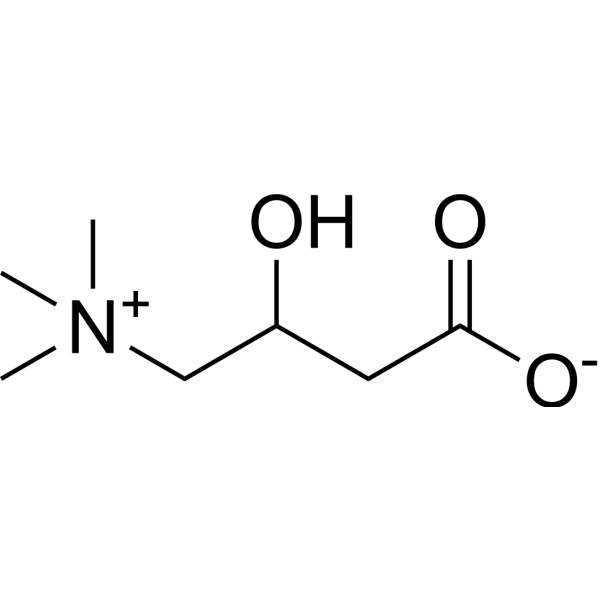
    (±)-Carnitine (DL-Carnitine) is an orally effective racemic mixture of L-Carnitine (HY-B0399) and D-Carnitine. (±)-Carnitine elevates the mitochondrial NAD +/NADH ratio in the presence of 1,3-butanediol (HY-77490A). (±)-Carnitine does not increase glucose and urea production from L-glutamine, but stimulates propionate gluconeogenesis in rat renal cortical slices, and significantly reduces hepatic ketone body levels in rats fed a diet containing 30% high fat plus 20% 1,3-butanediol .
    (±)-Carnitine
  • HY-W127357

    Biochemical Assay Reagents Others
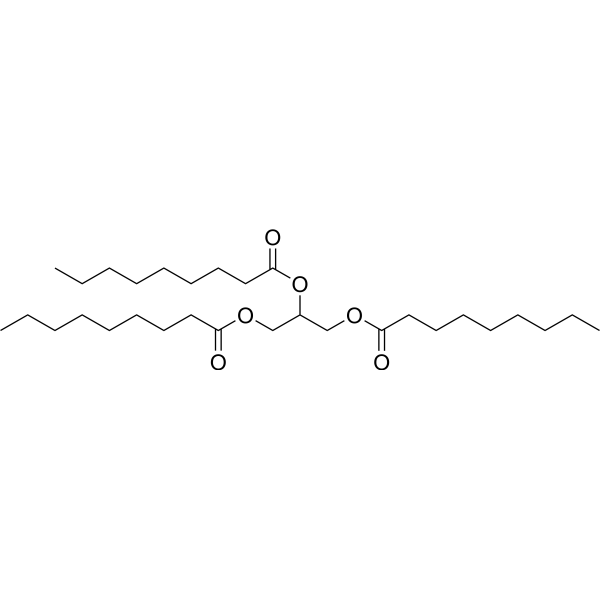
    Glyceryl trinonanoate is a triacylglycerol containing nonanoic acid at the sn-1, sn-2 and sn-3 positions. It has been found in Schizochytrium biomass. 1 1,2,3-Trinonanoyl-rac-glycerol increases blood levels of the ketone body D-(-)-3-hydroxybutyrate in neonatal rhesus monkeys. 2|1. Mioso, R., Toledo Marante, FJ, González, JE, et al. Schizochytrium sp. metabolite analysis. Oleaginous microbial sources of biodiesel by GC-MS. braz. J. Microbiology. 45(2), 403-409 (2014).|2. Tetrick, MA, Greer, FR and Benevenga, NJ Blood D- ( )-3-Hydroxybutyric acid concentration. Compare. medicine. 60(6), 486-490 (2010).
    Tripelargonin
  • HY-W088190

    Cyclohexyl ketone

    Drug Intermediate Biochemical Assay Reagents Others
    Dicyclohexyl ketone (Cyclohexyl ketone) is a toxic compound that causes toxic effects in rats at high doses, including death, decreased activity, staining of the fur on the lower body, reddening of the tears, and reproductive and developmental effects.
    Dicyclohexyl ketone
  • HY-Y1150

    Trimethylmethanecarboxylic acid; Versatic 5 acid; tert-Pentanoic acid

    Antibiotic Inflammation/Immunology
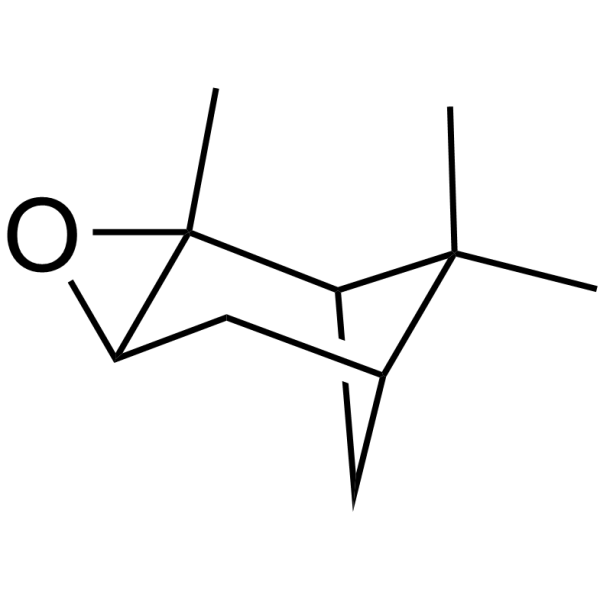
    Pivalic acid (Trimethylmethanecarboxylic acid) is a carboxylic acid. Pivalic acid induces Carnitine deficiency. Pivalic acid conjugated with Antibiotics, such as Pivmecillinam (HY-B0810) and Pivampicillin (HY-119011), are used in urinary tract infection. Pivalic acid can be used in physical exercise research .
    Pivalic acid
  • HY-113004R

    Endogenous Metabolite Reference Standards Metabolic Disease
    3-Hydroxyvaleric acid (Standard) is the analytical standard of 3-Hydroxyvaleric acid. This product is intended for research and analytical applications. 3-Hydroxyvaleric acid is a five-carbon ketone body byproduct that can undergo an anaplerotic reaction to replenish the intermediates of the tricarboxylic acid cycle. 3-Hydroxyvaleric acid is one of the important monomers for the synthesis of polyhydroxyalkanoates (PHA). PHA is a type of biodegradable plastic that is widely used in environmentally friendly packaging, disposable products, and medical materials .
    3-Hydroxyvaleric acid (Standard)
  • HY-E70959

    Endogenous Metabolite Metabolic Disease
    β-Hydroxybutyrate Dehydrogenase, Pseudomonas lemoignei (EC 1.1.1.30) is a soluble cytosolic enzyme that does not require a phospholipid allosteric activator. β-Hydroxybutyrate Dehydrogenase, Pseudomonas lemoignei is required for the utilization of ketone bodies as a source of metabolic energy. β-Hydroxybutyrate Dehydrogenase, Pseudomonas lemoignei catalyzes the oxidation of 3-hydroxybutyrate to acetoacetate, the first step in the conversion of ketone bodies to citric acid, which is then further metabolized via the tricarboxylic acid cycle (Krebs cycle).
    β-Hydroxybutyrate Dehydrogenase, Pseudomonas lemoignei
  • HY-E70947

    Endogenous Metabolite Metabolic Disease
    β-Hydroxybutyrate Dehydrogenase, Rhodopseudomonas sphaeroides (EC 1.1.1.30) is a soluble cytosolic enzyme that does not require a phospholipid allosteric activator. β-Hydroxybutyrate Dehydrogenase, Rhodopseudomonas sphaeroides is required for the utilization of ketone bodies as a source of metabolic energy. β-Hydroxybutyrate Dehydrogenase, Rhodopseudomonas sphaeroides catalyzes the oxidation of 3-hydroxybutyrate to acetoacetate, the first step in the conversion of ketone bodies to citric acid, which is then further metabolized via the tricarboxylic acid cycle (Krebs cycle).
    β-Hydroxybutyrate Dehydrogenase, Rhodopseudomonas sphaeroides
  • HY-P2994B

    Endogenous Metabolite Metabolic Disease
    3-Hydroxybutyrate Dehydrogenase, Alcaligenes faecalis (EC 1.1.1.30) catalyzes the oxidation of 3-hydroxybutyrate to acetoacetate, the first step in the conversion of ketone bodies to citric acid, which is then further metabolized via the tricarboxylic acid cycle (Krebs cycle).
    3-Hydroxybutyrate Dehydrogenase, Alcaligenes faecalis
  • HY-P2994A

    Endogenous Metabolite Metabolic Disease
    D-3-hydroxybutyrate dehydrogenase, Pseudomonas sp. (EC 1.1.1.30) is a redox enzyme that acts on the donor CH-OH group and uses NAD+ or NADP+ as the acceptor. D-3-hydroxybutyrate dehydrogenase is involved in the synthesis and degradation of ketone bodies and butyrate metabolism.
    D-3-hydroxybutyrate dehydrogenase, Pseudomonas sp.

Inquiry Online

Your information is safe with us. * Required Fields.

Salutation


Country or Region *

Applicant Name *


Organization Name *

Department *


Email Address *


Product Name *

Cat. No.


Requested quantity *

Phone Number *


Remarks

Inquiry Online

Inquiry Information

Product Name:
Cat. No.:
Quantity:
MCE Japan Authorized Agent:

