



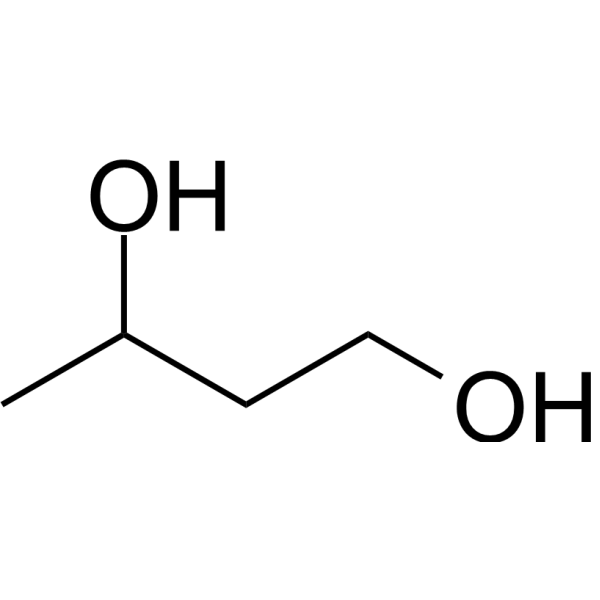
1,3-Butanediol
Based on 1 publication(s) in Google Scholar
1,3-Butanediol, an orally active ethanol dimer providing a source of calories for human nutrition. 1,3-Butanediol administeration can stimulate the biosynthesis of the ketone body, β-hydroxybutyrate (βHB). 1,3-Butanediol has cerebral protective and hypoglycaemic effect.
For research use only. We do not sell to patients.
- Purity : 98.0%
- CAS No.: 107-88-0
- Formula: C4H10O2
- Molecular Weight:90.12
-
Storage:Pure form -20°C, 3 years , 4°C, 2 years ; In solvent -80°C, 6 months , -20°C, 1 month

To place orders, for customer services and technical support, please contact: MedChemExpress USA
Tel: 609-228-6898 E-mail: [email protected] [email protected]


-
 Biological Activity
-
Chemical Information
-
Solvent & Solubility
- Purity & Documentation
- References
-
 Help & FAQs


-

HY-77490AR
1,3-Butanediol (Standard)Endogenous Metabolite -
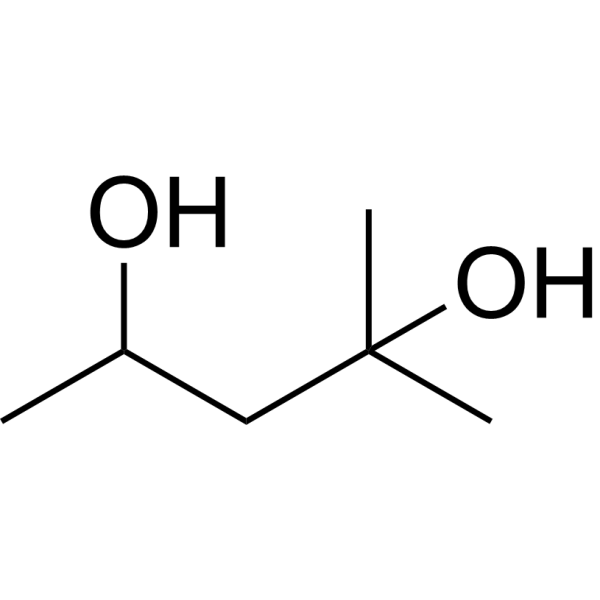
HY-B0903
Hexylene glycolSurfactant -
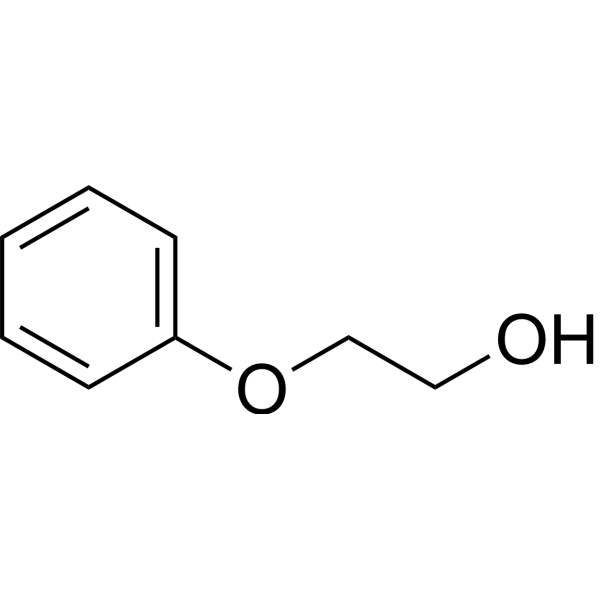
HY-B1729
PhenoxyethanolPreservative -
HY-B1729R
Phenoxyethanol (Standard)Preservative -
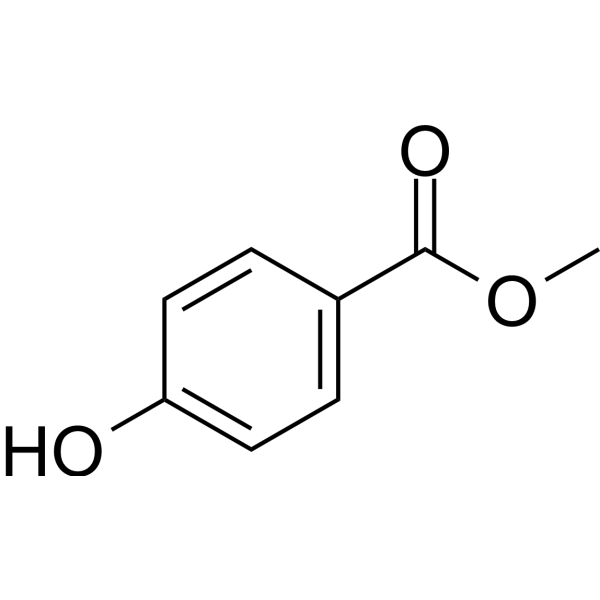
HY-N0349
Methyl parabenBacterial Inhibitor -
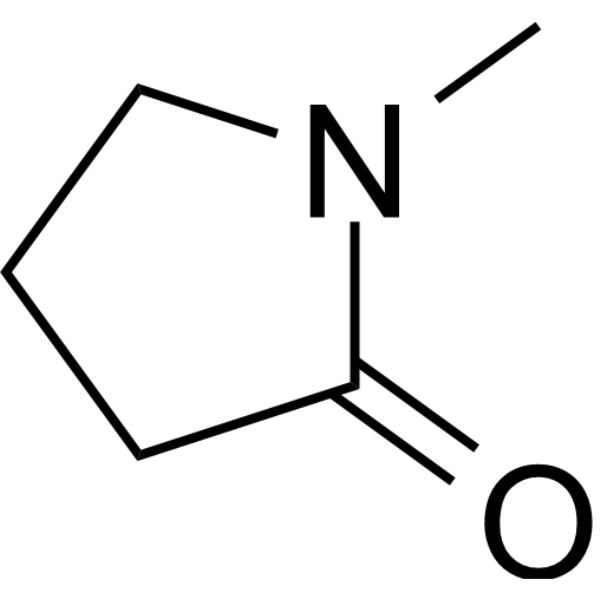
HY-Y1275
N-MethylpyrrolidoneFive-membered Cyclic Amide -
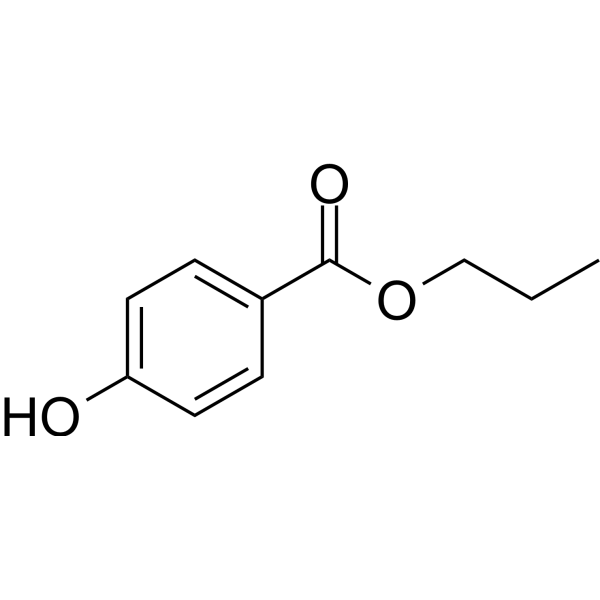
HY-N2026
PropylparabenBacterial Inhibitor -
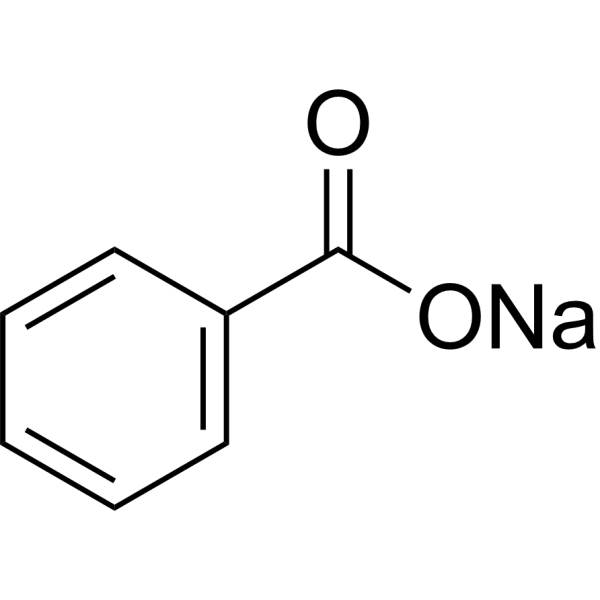
HY-Y1316
Sodium benzoatePharmaceutical Excipient -
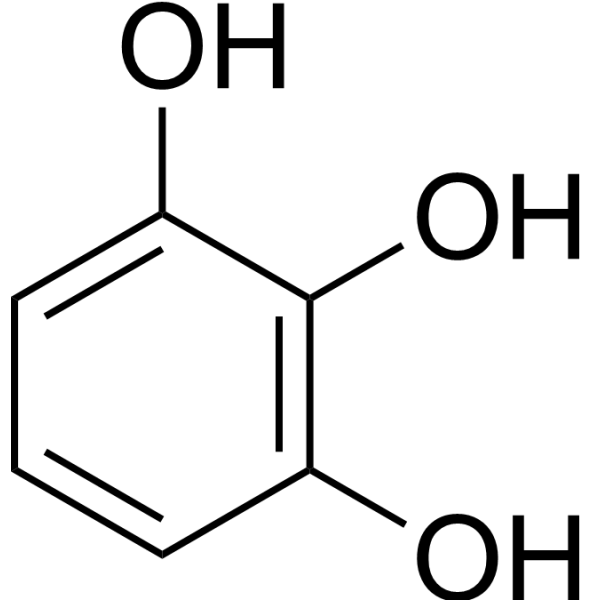
HY-N1579
PyrogallolEndogenous Metabolite -
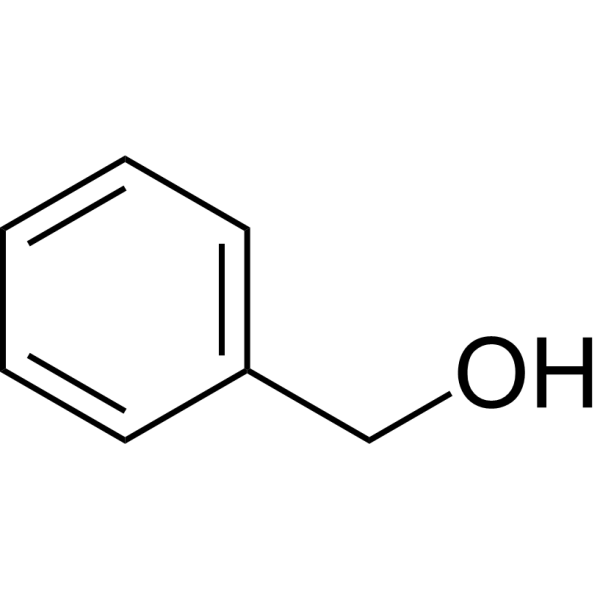
HY-B0892
Benzyl alcoholAromatic Alcohol -

HY-B0903R
Hexylene glycol (Standard)Surfactant
Publications Citing Use of MedChemExpress (MCE) 1,3-Butanediol
MoreAll Endogenous Metabolite Isoforms
More

Biological Activity
Description
In Vivo
1,3-Butanediol (20%, in the drinking water, 4 weeks) increases systemic βHB concentration to a level similar as a 24-hour fast in rats[3].
1,3-Butanediol (5%, in the drinking water, 4 weeks) reverses age-associated endothelium-dependent and -independent vascular dysfunction in old rats[4].
1,3-Butanediol (25 mmol/kg, i.p., every 3 hours for 4 times) increases the plasma level of 3-hydroxybutyrate in rats, associated with a sustained 20% decrease in the plasma level of glucose[5].
MedChemExpress (MCE) has not independently confirmed the accuracy of these methods. They are for reference only.
-
Animal Model:Adult, male Wistar-Kyoto rats[3]
-
Dosage:20%
-
Administration:via the drinking water for four weeks
-
Result:Elevated the systemic and urinary concentrations of βHB.
Had a rapid and sustained reduction in body mass.
Decreased fluid consumption.
Clinical Trial
| NCT Number | Sponsor | Condition | Start Date |
Phase

|
|---|---|---|---|---|
| NCT01329991 | 2011-05 | PHASE1 |


Chemical Information
-
CAS No. 107-88-0
-
Appearance Liquid (Density: 1.0059 g/cm3)
-
Molecular Weight 90.12
-
Formula C4H10O2
-
Color Colorless to light yellow
-
SMILES
CC(O)CCO
-
Structure Classification
-
Initial Source
-
Shipping
Room temperature in continental US; may vary elsewhere.
-
Storage
Pure form -20°C 3 years 4°C 2 years In solvent -80°C 6 months -20°C 1 month


Publications (1)
-
Journal Impact Factor
-
Most Recent
-
Signal Transduct Target Ther
A two-strata energy flux system driven by a stress hormone prioritizes cardiac energetics. [Abstract]2025 Sep 26;10(1):315. PMID: 40998786


Solvent & Solubility
In Vitro:
H2O : ≥ 500 mg/mL (5548.16 mM)
DMSO : 100 mg/mL (1109.63 mM; Need ultrasonic; Hygroscopic DMSO has a significant impact on the solubility of product, please use newly opened DMSO)
* "≥" means soluble, but saturation unknown.
Please refer to the solubility information to select the appropriate solvent. Once prepared, please aliquot and store the solution to prevent product inactivation from repeated freeze-thaw cycles.
Storage method and period of stock solution: -80°C, 6 months; -20°C, 1 month. When stored at -80°C, please use it within 6 months. When stored at -20°C, please use it within 1 month.
* Note: If you choose water as the stock solution, please dilute it to the working solution, then filter and sterilize it with a 0.22 μm filter before use.
Please refer to the solubility information to select the appropriate solvent. Once prepared, please aliquot and store the solution to prevent product inactivation from repeated freeze-thaw cycles.
Storage method and period of stock solution: -80°C, 6 months; -20°C, 1 month. When stored at -80°C, please use it within 6 months. When stored at -20°C, please use it within 1 month.
* Note: If you choose water as the stock solution, please dilute it to the working solution, then filter and sterilize it with a 0.22 μm filter before use.
Concentration (start) × Volume (start) = Concentration (final) × Volume (final)
In Vivo:
Select the appropriate dissolution method based on your experimental animal and administration route.
- For the following dissolution methods, please ensure to first prepare a clear stock solution using an In Vitro approach and then sequentially add co-solvents:
- To ensure reliable experimental results, the clarified stock solution can be appropriately stored based on storage conditions. As for the working solution for In Vivo experiments, it is recommended to prepare freshly and use it on the same day.
- The percentages shown for the solvents indicate their volumetric ratio in the final prepared solution. If precipitation or phase separation occurs during preparation, heat and/or sonication can be used to aid dissolution.
Add each solvent one by one: 10% DMSO 90% (20% SBE-β-CD in Saline)
Solubility: ≥ 2.5 mg/mL (27.74 mM); Clear solution
This protocol yields a clear solution of ≥ 2.5 mg/mL (saturation unknown).
Taking 1 mL working solution as an example, add 100 μL DMSO stock solution (25.0 mg/mL) to 900 μL 20% SBE-β-CD in Saline, and mix evenly.
Preparation of 20% SBE-β-CD in Saline (4°C, storage for one week): 2 g SBE-β-CD powder is dissolved in 10 mL Saline, completely dissolve until clear.
Add each solvent one by one: 10% DMSO 40% PEG300 5% Tween-80 45% Saline
Solubility: ≥ 1.72 mg/mL (19.09 mM); Clear solution
This protocol yields a clear solution of ≥ 1.72 mg/mL (saturation unknown).
Taking 1 mL working solution as an example, add 100 μL DMSO stock solution (17.2 mg/mL) to 400 μL PEG300, and mix evenly; then add 50 μL Tween-80 and mix evenly; then add 450 μL Saline to adjust the volume to 1 mL.
Preparation of Saline: Dissolve 0.9 g sodium chloride in ddH₂O and dilute to 100 mL to obtain a clear Saline solution.
In Vivo Dissolution Calculator
Please enter the basic information of animal experiments:
-
-
-
-
Recommended: Prepare an additional quantity of animals to account for potential losses during experiments.
Working solution concentration: 0.22 mg/mL
This product has good water solubility, please refer to the measured solubility data in water/PBS/Saline for details.


Purity & Documentation
-
Data Sheet (273 KB)
-
SDS (396 KB)
- English - EN (396 KB)
- Français - FR (396 KB)
- Deutsch - DE (396 KB)
- Norwegian - NO (396 KB)
- Español - ES (396 KB)
- Swedish - SV (396 KB)
- Italian - IT (396 KB)
- Korean - KR (396 KB)
- Portuguese - PT (396 KB)
-
Handling Instructions (2659 KB)
References
[1]. C Marie, et al. Protective action of 1,3-butanediol in cerebral ischemia. A neurologic, histologic, and metabolic study. J Cereb Blood Flow Metab. 1987 Dec;7(6):794-800. [Content Brief]
[2]. R B Tobin,et al. Nutritional and metabolic studies in humans with 1,3-butanediol. Fed Proc. 1975 Nov;34(12):2171-6. [Content Brief]
[3]. McCarthy CG, et al. Physiologic, Metabolic, and Toxicologic Profile of 1,3-Butanediol. J Pharmacol Exp Ther. 2021 Nov;379(3):245-252. [Content Brief]
[4]. McCarthy CG, et al. Low-dose 1,3-butanediol reverses age-associated vascular dysfunction independent of ketone body β-hydroxybutyrate. Am J Physiol Heart Circ Physiol. 2022 Mar 1;322(3):H466-H473. [Content Brief]
[5]. Gueldry S, et al. Beneficial effect of 1,3-butanediol on cerebral energy metabolism and edema following brain embolization in rats. Stroke. 1990 Oct;21(10):1458-63. [Content Brief]


Complete Stock Solution Preparation Table
Please refer to the solubility information to select the appropriate solvent. Once prepared, please aliquot and store the solution to prevent product inactivation from repeated freeze-thaw cycles.
Storage method and period of stock solution: -80°C, 6 months; -20°C, 1 month. When stored at -80°C, please use it within 6 months. When stored at -20°C, please use it within 1 month.
| Optional Solvent | Concentration Solvent Mass | 1 mg | 5 mg | 10 mg | 25 mg |
|---|---|---|---|---|---|
| DMSO / H2O | 1 mM | 11.0963 mL | 55.4816 mL | 110.9632 mL | 277.4079 mL |
| 5 mM | 2.2193 mL | 11.0963 mL | 22.1926 mL | 55.4816 mL | |
| 10 mM | 1.1096 mL | 5.5482 mL | 11.0963 mL | 27.7408 mL | |
| 15 mM | 0.7398 mL | 3.6988 mL | 7.3975 mL | 18.4939 mL | |
| 20 mM | 0.5548 mL | 2.7741 mL | 5.5482 mL | 13.8704 mL | |
| 25 mM | 0.4439 mL | 2.2193 mL | 4.4385 mL | 11.0963 mL | |
| 30 mM | 0.3699 mL | 1.8494 mL | 3.6988 mL | 9.2469 mL | |
| 40 mM | 0.2774 mL | 1.3870 mL | 2.7741 mL | 6.9352 mL | |
| 50 mM | 0.2219 mL | 1.1096 mL | 2.2193 mL | 5.5482 mL | |
| 60 mM | 0.1849 mL | 0.9247 mL | 1.8494 mL | 4.6235 mL | |
| 80 mM | 0.1387 mL | 0.6935 mL | 1.3870 mL | 3.4676 mL | |
| 100 mM | 0.1110 mL | 0.5548 mL | 1.1096 mL | 2.7741 mL |
* Note: If you choose water as the stock solution, please dilute it to the working solution, then filter and sterilize it with a 0.22 μm filter before use.


1,3-Butanediol Related Classifications
HY-77490A Related Classifications
 Powered by Bioz