
1. Search Result
Search Result
Pathways Recommended: Neuronal Signaling JAK/STAT Signaling
Results for "

lipid signaling kinase

" in MedChemExpress (MCE) Product Catalog:

13

Inhibitors & Agonists

2

Screening Libraries

1

Isotope-Labeled Compounds

1

Oligonucleotides

Targets Recommended:
Cat. No. Product Name Target Research Areas Chemical Structure
  • HY-18676
    OSU-T315
    10+ Cited Publications

    Integrin Autophagy Apoptosis Cancer
    OSU-T315 (ILK-IN-1) is a small Integrin-linked kinase (ILK) inhibitor with an IC50 of 0.6 μM, inhibiting PI3K/AKT signaling by dephosphorylation of AKT-Ser473 and other ILK targets (GSK-3β and myosin light chain) . OSU-T315 abrogates AKT activation by impeding AKT localization in lipid rafts and triggers caspase-dependent apoptosis in an ILK-independent manner . OSU-T315 causes cell death through apoptosis and autophagy .
    OSU-T315
  • HY-175751

    mTOR Cancer
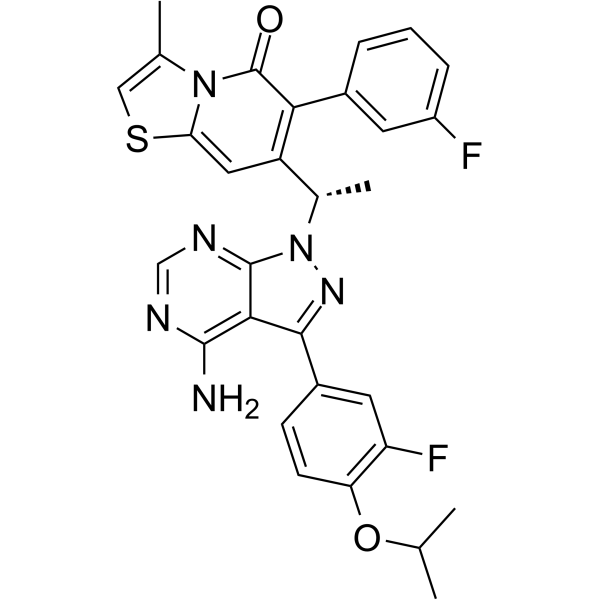
    LRK-4189 is an orally active PIP4K2C (a regulator of mTOR complex) degrader and type 1 immune activator. LRK-4189 induces the degradation of the lipid kinase PIP4K2C. LRK-4189 triggers the interferon signaling pathway in microsatellite-stable (MSS) colorectal cancer cells, activates immunogenic tumor killing, and induces endogenous cell death. LRK-4189 sensitizes microsatellite-stable colorectal cancer tumors to NK cell killing and dendritic cell phagocytosis. LRK-4189 can be used for the research of microsatellite-stable colorectal cancer .
    LRK-4189
  • HY-W355700

    Drug Metabolite Infection
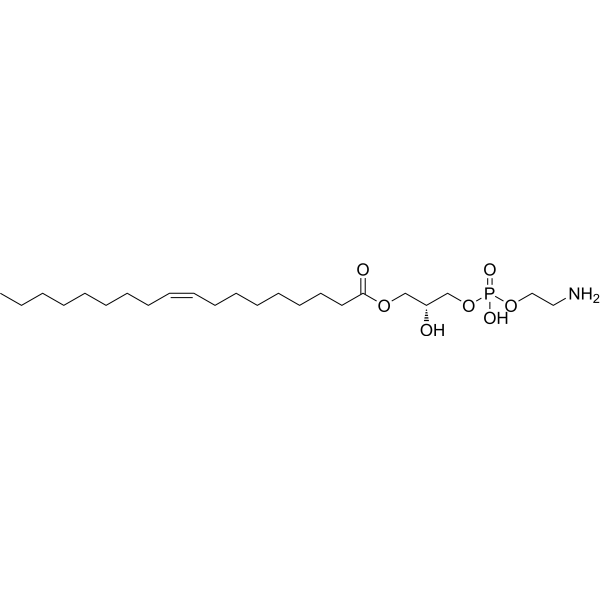
    1-oleoyl-sn-glycero-3-phosphoethanolamine (LysoPE 18:1) is a lysophosphatidylethanolamine molecule involved in phospholipid metabolism, targeting cell membrane receptors (such as G protein-coupled receptors) to regulate cell signaling pathways. 1-oleoyl-sn-glycero-3-phosphoethanolamine may activate mitogen-activated protein kinase (MAPK) signaling, promote cell migration, regulate inflammatory responses and lipid metabolism, and has both pro-inflammatory and anti-inflammatory activities. 1-oleoyl-sn-glycero-3-phosphoethanolamine is mainly used in the screening of biomarkers for metabolic diseases (such as non-alcoholic fatty liver disease and obesity), as well as the study of the mechanism of lysophospholipids in cell membrane homeostasis and signal transduction .
    1-Oleoyl-2-hydroxy-sn-glycero-3-phosphoethanolamine
  • HY-141645

    WS070117

    AMPK TGF-β Receptor NF-κB JNK AP-1 Cardiovascular Disease Metabolic Disease Inflammation/Immunology
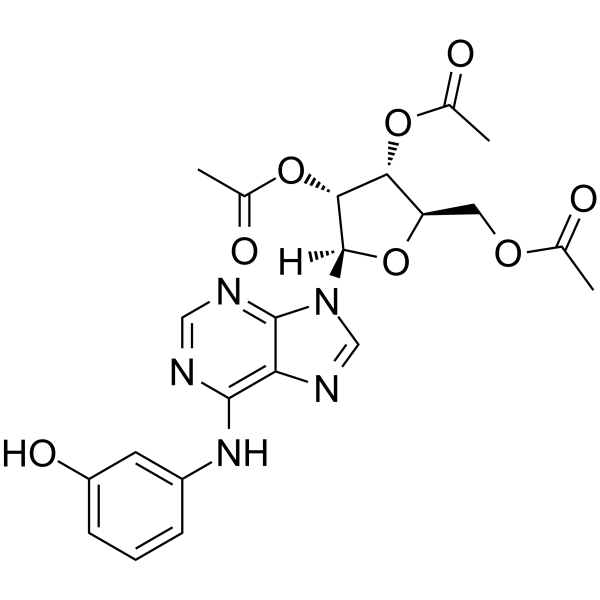
    IMM-H007 (WS070117) is an orally active and potent AMPK (AMP-activated protein kinase) activator and TGFβ1 (transforming growth factor β1) antagonist. IMM-H007 has protective effects in cardiovascular diseases via activation of AMPK. IMM-H007 negatively regulates endothelium inflammation through inactivating NF-κB and JNK/AP1 signaling. IMM-H007 inhibits ABCA1 degradation. IMM-H007 resolves hepatic steatosis in HFD-fed hamsters by the regulation of lipid metabolism. IMM-H007 can be used for the research of nonalcoholic fatty liver disease (NAFLD) and inflammatory atherosclerosis .
    IMM-H007
  • HY-P2881

    Nucleoside 5′-diphosphate kinase

    Biochemical Assay Reagents Cancer
    Nucleoside diphosphate kinase (Nucleoside 5′-diphosphate kinase) belongs to the family of structurally and functionally conserved NDPK (Nucleotide diphosphate kinase) enzymes. Nucleoside diphosphate kinase catalyzes the reversible transfer of γ-phosphates between nucleoside di-(NDP) and triphosphates (NTP) through ping-pong bi-bi reaction kinetics. Nucleoside diphosphate kinase is the essential housekeeping proteins that produces CTP (cytidine triphosphate) for lipid syntheses, UTP (Uridine triphosphate) for polysaccharide syntheses, and GTP (guanosine triphosphate) for protein syntheses, signal transduction, and microtubules polymerization .
    Nucleoside diphosphate kinase
  • HY-142677

    PI3K Inflammation/Immunology Cancer
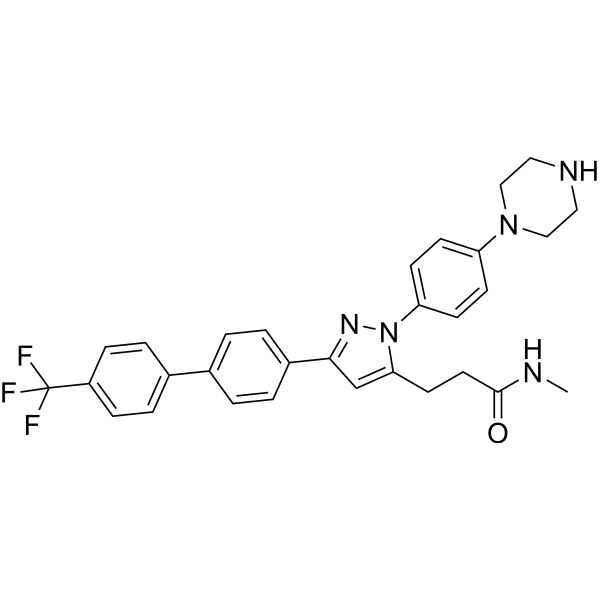
    PI3K-IN-27 is a potent inhibitor of PI3K. PI3K belongs to a large family of lipid signaling kinase that plays key role in cellular process including cell growth, differentiation, migration and apoptosis. PI3K-IN-27 has the potential for the research of hyper-proliferative diseases like cancer and inflammation, or immune and autoimmune diseases (extracted from patent WO2021233227A1, compound 1) .
    PI3K-IN-27
  • HY-E70633

    PI4P5K Neurological Disease
    PIP5K1C Recombinant Human Active Lipid Kinase is a phosphatidylinositol 4-phosphate 5-kinase (PIP5K) with nociceptive sensitization. PIP5K1C Recombinant Human Active Lipid Kinase can be used to study the role of PIP5K1C in nociceptive signaling and sensitization .
    PIP5K1C Recombinant Human Active Lipid Kinase
  • HY-179539

    Eukaryotic Initiation Factor (eIF) Neurological Disease Inflammation/Immunology
    ISR activator 3 (Compound cc81) is the active metabolite of A8. ISR activator 3 activates the integrated stress response (ISR) by binding to RIG-I (KD ≈ 0.55 μM), without inducing lipid droplet clearance. ISR activator 3 enhances the interferon response under viral mimicry signals. ISR activator 3 can be used for research on neurodegenerative diseases and immune stress .
    ISR activator 3
  • HY-E70631

    PI3K Cancer
    PIP5K1A phosphorylates PI4P to synthesize the important signalling phospholipid PI(4,5)P2. This phospholipid also serves as the substrate for PI3K for conversion into PI(3,4,5)P3 to stimulate cell growth and survival. PIP5K1A has been directly implicated in breast cancer and prostate cancer. PIP5K1A Recombinant Human Active Lipid Kinase is a recombinant PIP5K1A protein that can be used to study PIP5K1A-related functions .
    PIP5K1A Recombinant Human Active Lipid Kinase
  • HY-179543

    Endogenous Metabolite Others
    PtdIns-(3,4,5)-P3-(1-stearoyl, 2-arachidonoyl) sodium is a specific molecular form of phosphatidylinositol-3,4,5-trisphosphate (PIP3). PIP3 is the core lipid messenger in the tyrosine kinase pathway, regulating cell proliferation, survival and metabolism by recruiting effector proteins. Its abnormality is associated with cancer. PtdIns-(3,4,5)-P3-(1-stearoyl, 2-arachidonoyl) sodium can be used for studying lipid signal transduction .
    PtdIns-(3,4,5)-P3-(1-stearoyl, 2-arachidonoyl) sodium
  • HY-E70632

    Biochemical Assay Reagents Neurological Disease
    PIP5K1B participates in the biosynthesis of PI(4,5)P2. PIP5K1B is at the crossroad of different signaling pathways, mediating RAC1-dependent reorganization of actin filaments and contributing to the activation of phospholipase D2. PIP5K1B Recombinant Human Active Lipid Kinase can be used for the study of Friedreich’s ataxia (FRDA) .
    PIP5K1B Recombinant Human Active Lipid Kinase
  • HY-180549

    11β-HSD AMPK Metabolic Disease
    11β-HSD1-IN-25 is a selective and orally active 11β-HSD1 inhibitor. 11β-HSD1-IN-25 effectively reduces glucocorticoid levels in vitro and serum, and diminishes lipid accumulation in both vitro and vivo. 11β-HSD1-IN-25 modulates lipid metabolism through dual mechanisms: inhibition of 11β-HSD1 and activation of the AMP-activated protein kinase (AMPK) signaling pathway. 11β-HSD1-IN-25 can be used for obesity and related metabolic disorders research .
    11β-HSD1-IN-25
  • HY-W355700S

    Isotope-Labeled Compounds Infection
    1-Oleoyl-2-hydroxy-sn-glycero-3-phosphoethanolamine-d31 is the deuterium labeled 1-Oleoyl-2-hydroxy-sn-glycero-3-phosphoethanolamine (HY-W355700). 1-oleoyl-sn-glycero-3-phosphoethanolamine (LysoPE 18:1) is a lysophosphatidylethanolamine molecule involved in phospholipid metabolism, targeting cell membrane receptors (such as G protein-coupled receptors) to regulate cell signaling pathways. 1-oleoyl-sn-glycero-3-phosphoethanolamine may activate mitogen-activated protein kinase (MAPK) signaling, promote cell migration, regulate inflammatory responses and lipid metabolism, and has both pro-inflammatory and anti-inflammatory activities. 1-oleoyl-sn-glycero-3-phosphoethanolamine is mainly used in the screening of biomarkers for metabolic diseases (such as non-alcoholic fatty liver disease and obesity), as well as the study of the mechanism of lysophospholipids in cell membrane homeostasis and signal transduction .
    1-Oleoyl-2-hydroxy-sn-glycero-3-phosphoethanolamine-d31

Inquiry Online

Your information is safe with us. * Required Fields.

Salutation


Country or Region *

Applicant Name *


Organization Name *

Department *


Email Address *


Product Name *

Cat. No.


Requested quantity *

Phone Number *


Remarks

Inquiry Online

Inquiry Information

Product Name:
Cat. No.:
Quantity:
MCE Japan Authorized Agent:

