



IMM-H007

Based on 1 Customer Validation
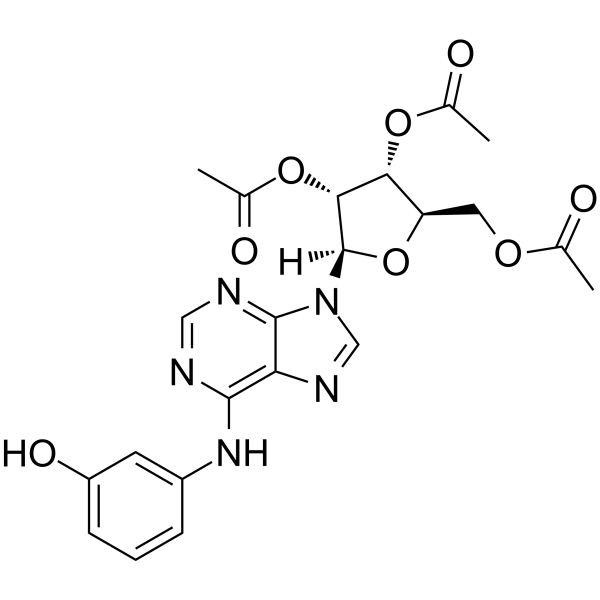
IMM-H007 (WS070117) is an orally active and potent AMPK (AMP-activated protein kinase) activator and TGFβ1 (transforming growth factor β1) antagonist. IMM-H007 has protective effects in cardiovascular diseases via activation of AMPK. IMM-H007 negatively regulates endothelium inflammation through inactivating NF-κB and JNK/AP1 signaling. IMM-H007 inhibits ABCA1 degradation. IMM-H007 resolves hepatic steatosis in HFD-fed hamsters by the regulation of lipid metabolism. IMM-H007 can be used for the research of nonalcoholic fatty liver disease (NAFLD) and inflammatory atherosclerosis.
For research use only. We do not sell to patients.
- Purity : 97.69%
- CAS No.: 1221412-23-2
- Formula: C22H23N5O8
- Molecular Weight:485.45
-
Storage:Powder -20°C, 3 years , 4°C, 2 years ; In solvent -80°C, 6 months , -20°C, 1 month

To place orders, for customer services and technical support, please contact: MedChemExpress USA
Tel: 609-228-6898 E-mail: [email protected] [email protected]


-
 Biological Activity
-
Chemical Information
-
Solvent & Solubility
- Protocols
- Purity & Documentation
- References
-
 Help & FAQs


-
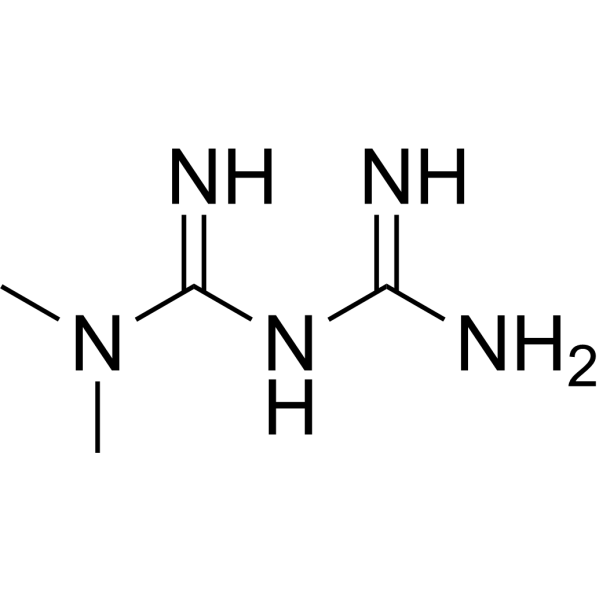
HY-B0627
MetforminAntihyperglycemic Agent -
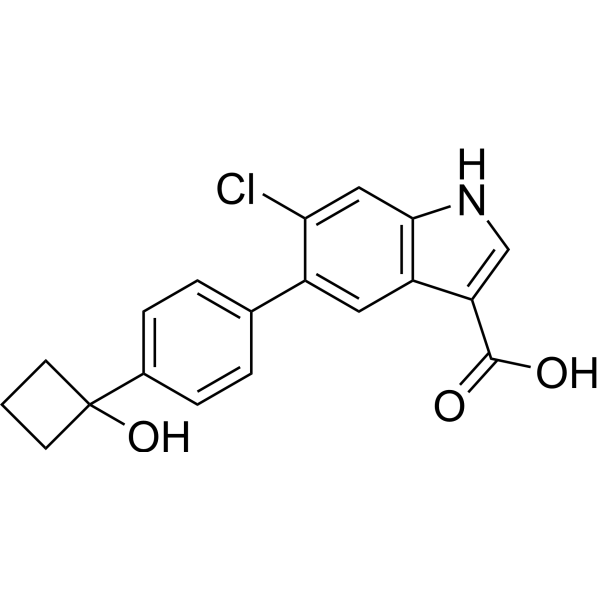
HY-103683
PF-06409577AMPK Activator -
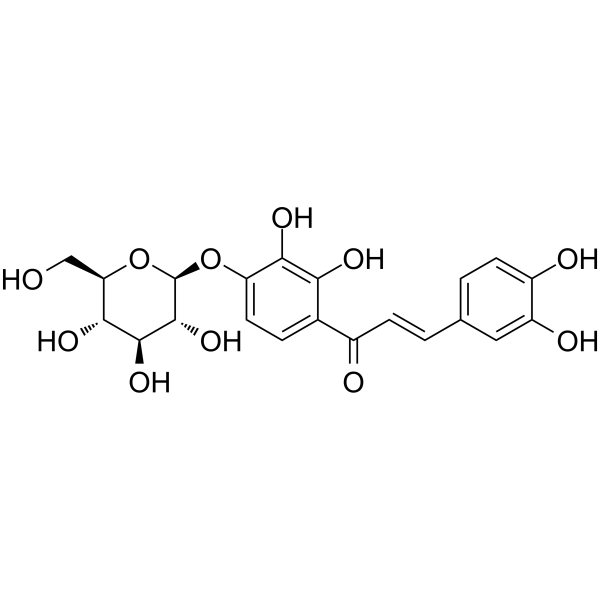
HY-N7676
MareinHDAC Inhibitor -
HY-50662
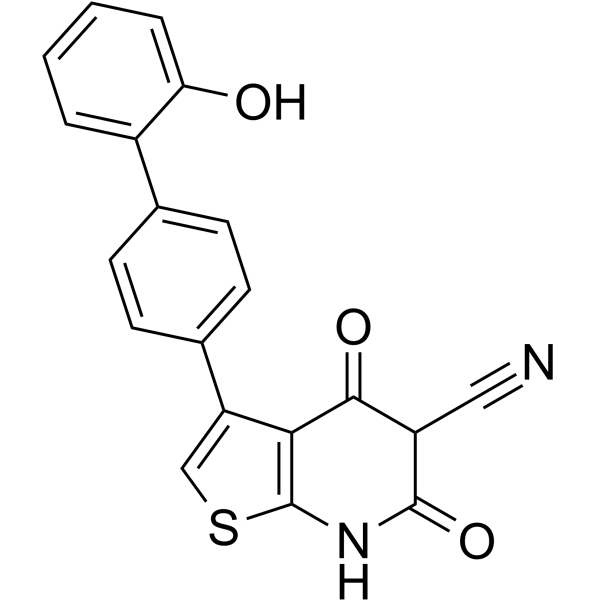
A-769662AMPK Activator -
HY-12357
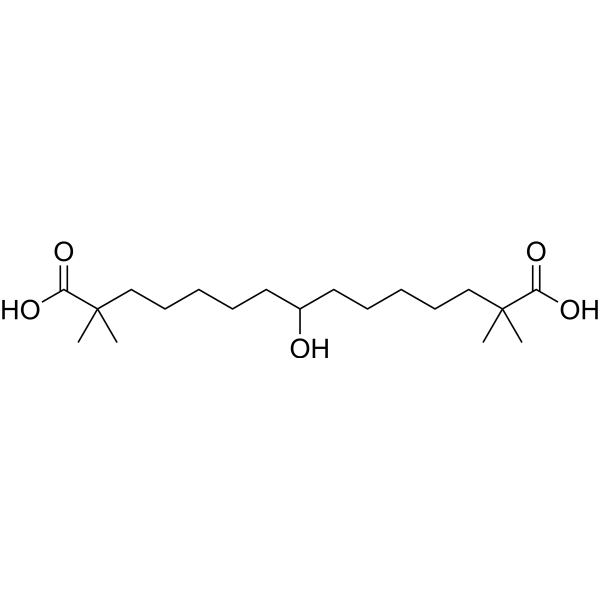
Bempedoic acidACL Inhibitor/AMPK Activator -
HY-111363
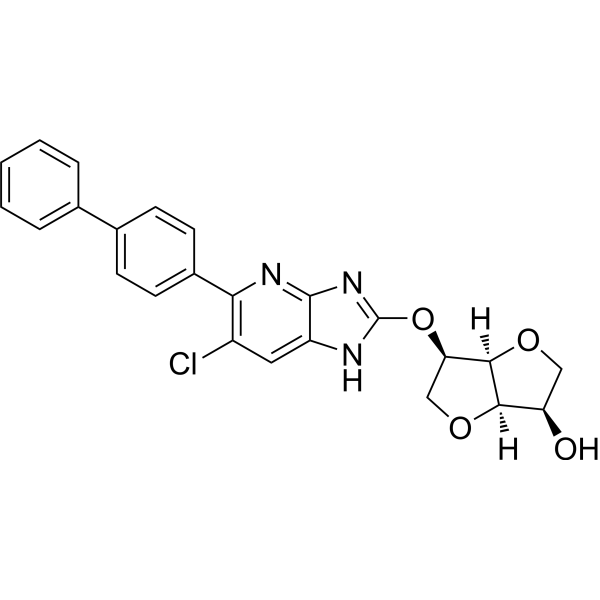
MK8722AMPK Activator -
HY-112769
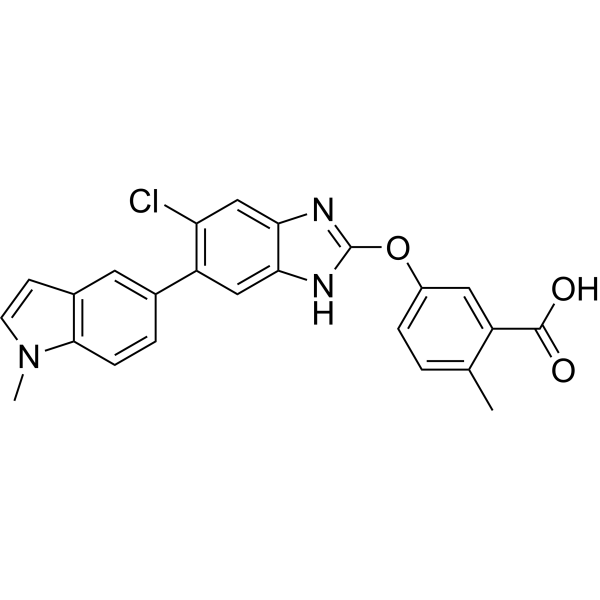
EX229AMPK Activator -
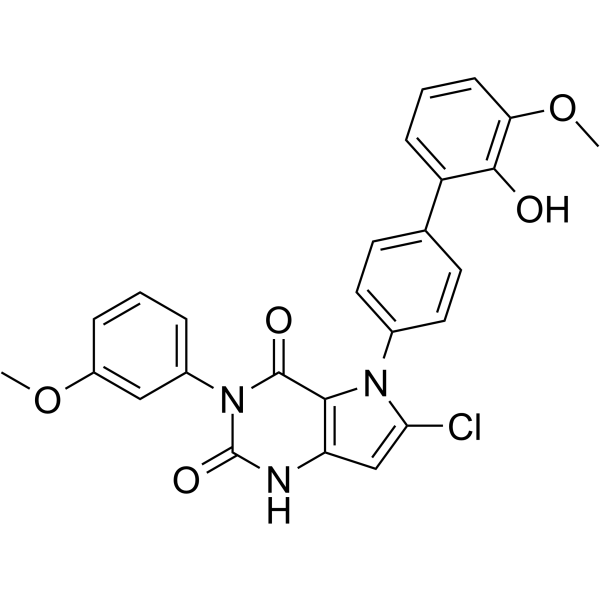
HY-100548
GSK621AMPK Activator -
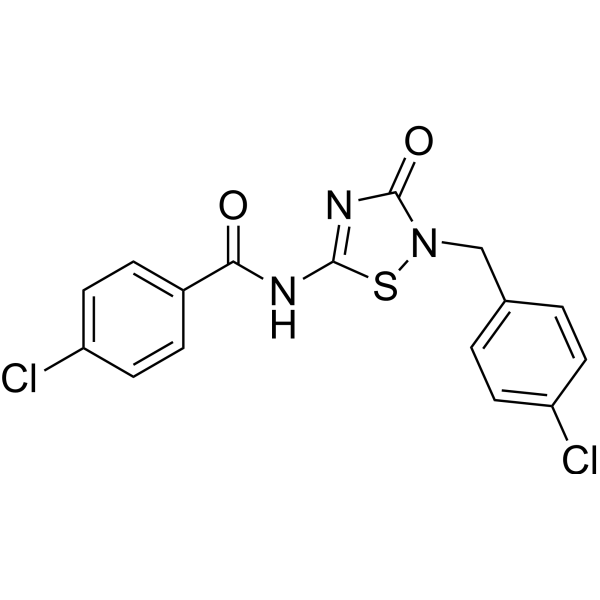
HY-112233
O-304AMPK Activator -
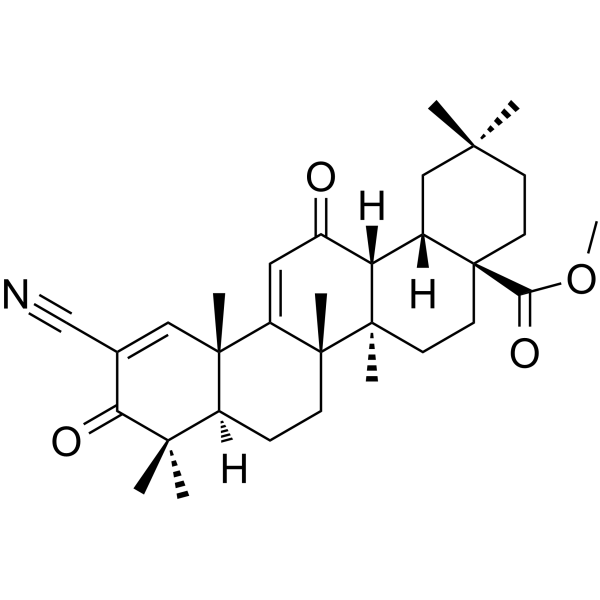
HY-13324
Bardoxolone methylNrf2 Activator -
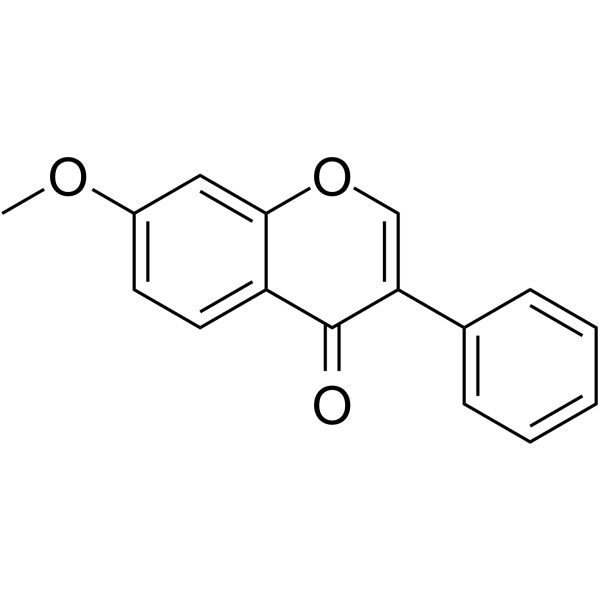
HY-N6631
7-MethoxyisoflavoneAMPK Activator


Biological Activity
Description
In Vivo
IMM-H007 (200 mg/kg, Orally, once per day for 10 days) inhibits ISO-induced cardiac fibrosis and diastolic dysfunction independently of AMPKα2 expression, reduces ISO-induced Smad2/3 phosphorylation downstream of TGFβ1 and cardiac fibrosis via an AMPKα2-independent pathway, but the inhibition of TGFβ1 expression is AMPKα2-dependent[3].
MedChemExpress (MCE) has not independently confirmed the accuracy of these methods. They are for reference only.


Chemical Information
-
CAS No. 1221412-23-2
-
Appearance Solid
-
Molecular Weight 485.45
-
Formula C22H23N5O8
-
Color White to off-white
-
SMILES
CC(O[C@H]1[C@@](N2C3=NC=NC(NC4=CC(O)=CC=C4)=C3N=C2)([H])O[C@@H]([C@H]1OC(C)=O)COC(C)=O)=O
-
Synonyms
WS070117
-
Shipping
Room temperature in continental US; may vary elsewhere.
-
Storage
Powder -20°C 3 years 4°C 2 years In solvent -80°C 6 months -20°C 1 month


Solvent & Solubility
In Vitro:
DMSO : 125 mg/mL (257.49 mM; Need ultrasonic; Hygroscopic DMSO has a significant impact on the solubility of product, please use newly opened DMSO)
Please refer to the solubility information to select the appropriate solvent. Once prepared, please aliquot and store the solution to prevent product inactivation from repeated freeze-thaw cycles.
Storage method and period of stock solution: -80°C, 6 months; -20°C, 1 month. When stored at -80°C, please use it within 6 months. When stored at -20°C, please use it within 1 month.
Please refer to the solubility information to select the appropriate solvent. Once prepared, please aliquot and store the solution to prevent product inactivation from repeated freeze-thaw cycles.
Storage method and period of stock solution: -80°C, 6 months; -20°C, 1 month. When stored at -80°C, please use it within 6 months. When stored at -20°C, please use it within 1 month.
Concentration (start) × Volume (start) = Concentration (final) × Volume (final)


Purity & Documentation
-
Data Sheet (278 KB)
-
SDS (252 KB)
- English - EN (252 KB)
- Français - FR (252 KB)
- Deutsch - DE (252 KB)
- Norwegian - NO (252 KB)
- Español - ES (252 KB)
- Swedish - SV (252 KB)
- Italian - IT (252 KB)
- Korean - KR (252 KB)
- Portuguese - PT (252 KB)
-
Handling Instructions (2659 KB)
References
[1]. Yu J, et al. IMM-H007, a novel small molecule inhibitor for atherosclerosis, represses endothelium inflammation by regulating the activity of NF-κB and JNK/AP1 signaling. Toxicol Appl Pharmacol. 2019 Oct 15;381:114732. [Content Brief]
[2]. Shi H, et al. IMM-H007, a new therapeutic candidate for nonalcoholic fatty liver disease, improves hepatic steatosis in hamsters fed a high-fat diet. FEBS Open Bio. 2017 Aug 29;7(9):1379-1391. [Content Brief]
[3]. Wang SX, et al. IMM-H007 attenuates isoprenaline-induced cardiac fibrosis through targeting TGFβ1 signaling pathway. Acta Pharmacol Sin. 2022 Mar 30. [Content Brief]


Complete Stock Solution Preparation Table
Please refer to the solubility information to select the appropriate solvent. Once prepared, please aliquot and store the solution to prevent product inactivation from repeated freeze-thaw cycles.
Storage method and period of stock solution: -80°C, 6 months; -20°C, 1 month. When stored at -80°C, please use it within 6 months. When stored at -20°C, please use it within 1 month.
| Optional Solvent | Concentration Solvent Mass | 1 mg | 5 mg | 10 mg | 25 mg |
|---|---|---|---|---|---|
| DMSO | 1 mM | 2.0599 mL | 10.2997 mL | 20.5994 mL | 51.4986 mL |
| 5 mM | 0.4120 mL | 2.0599 mL | 4.1199 mL | 10.2997 mL | |
| 10 mM | 0.2060 mL | 1.0300 mL | 2.0599 mL | 5.1499 mL | |
| 15 mM | 0.1373 mL | 0.6866 mL | 1.3733 mL | 3.4332 mL | |
| 20 mM | 0.1030 mL | 0.5150 mL | 1.0300 mL | 2.5749 mL | |
| 25 mM | 0.0824 mL | 0.4120 mL | 0.8240 mL | 2.0599 mL | |
| 30 mM | 0.0687 mL | 0.3433 mL | 0.6866 mL | 1.7166 mL | |
| 40 mM | 0.0515 mL | 0.2575 mL | 0.5150 mL | 1.2875 mL | |
| 50 mM | 0.0412 mL | 0.2060 mL | 0.4120 mL | 1.0300 mL | |
| 60 mM | 0.0343 mL | 0.1717 mL | 0.3433 mL | 0.8583 mL | |
| 80 mM | 0.0257 mL | 0.1287 mL | 0.2575 mL | 0.6437 mL | |
| 100 mM | 0.0206 mL | 0.1030 mL | 0.2060 mL | 0.5150 mL |


IMM-H007 Related Classifications
HY-141645 Related Classifications
 Powered by Bioz