



RelB
RelB is a member of the NF-κB transcription factor family and functions as a key regulator of immune homeostasis, antigen-presenting cell activity, and lymphoid tissue organization[4][1]. Mechanistically, RelB is the principal transcriptional component of the non-canonical NF-κB pathway, where NF-κB-inducing kinase (NIK) and IKKα promote processing of p100 into p52, leading to formation and nuclear translocation of RelB:p52 heterodimers that regulate distinct target genes involved in lymphoid organogenesis, lymphocyte trafficking, and immune regulation[1][5]. In dendritic cells, RelB is highly expressed and is required for dendritic cell maturation, antigen presentation, and T-cell activation, highlighting its central role in adaptive immune responses[2]. Disease relevance arises from the broad involvement of non-canonical NF-κB signaling in inflammatory, autoimmune, and malignant disorders, while RelB-dependent transcriptional programs contribute to the regulation of immune response genes and maintenance of immune homeostasis[1][3][6]. Compared with the closely related NF-κB subunit RelA (p65), which predominantly mediates canonical NF-κB signaling through p50:RelA dimers, RelB preferentially forms transcriptionally active complexes with p52 and controls a distinct set of genes associated with developmental and homeostatic immune functions[1][5]. Experimental studies further indicate that RelB can modulate inflammatory gene expression by competing with RelA for κB-binding sites, providing a mechanistic basis for functional divergence among NF-κB family members[6]. For research applications, pharmacological strategies targeting NF-κB signaling, including inhibitors of upstream kinases and nuclear NF-κB activity, are widely used to investigate RelB-regulated pathways in immunity, inflammation, and cancer models[3].
References:
- [1]. Sun SC. The non-canonical NF-kappaB pathway in immunity and inflammation. Nat Rev Immunol. 2017;17(9):545-558. [Content Brief]
- [2]. Shih VFS, et al. Control of RelB during dendritic cell activation integrates canonical and noncanonical NF-kappaB pathways. Nat Immunol. 2012;13(12):1162-1170. [Content Brief]
- [3]. Guo Q, et al. NF-κB in biology and targeted therapy: new insights and translational implications. Signal Transduct Target Ther. 2024 Mar 4;9(1):53. [Content Brief]
- [4]. Ghosh G, et al. Origin of the Functional Distinctiveness of NF-κB/p52. Front Cell Dev Biol. 2021;9:764164.
- [5]. Basak S, et al. Crosstalk via the NF-kB signaling system. Cytokine Growth Factor Rev. 2008;19(3-4):187-197.
- [6]. Navarro HI, et al. NF-κB RelB suppresses the inflammatory gene expression programs of dendritic cells by competing with RelA for binding to target gene promoters. Cell Discov. 2025;11(1):1.
All Product Categories
-
RelB Related Products (1)
Related Products (1)

-
Antibodies (1)
-
(-)-DHMEQ
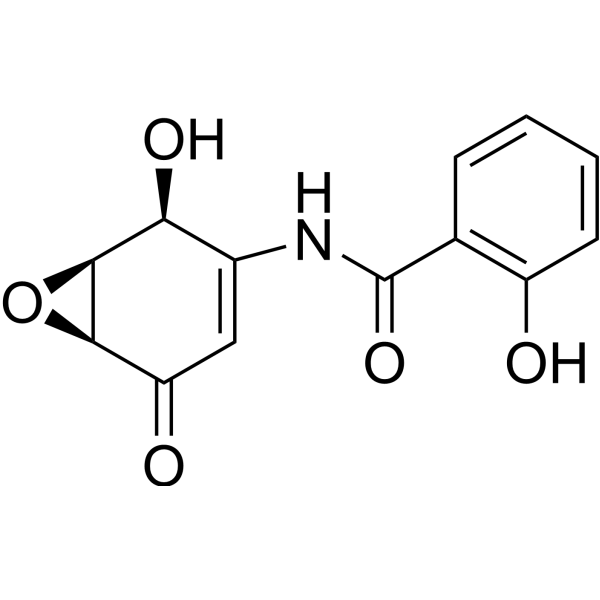 0 ImagesSynonyms: Dehydroxymethylepoxyquinomicin(-)-DHMEQ (Dehydroxymethylepoxyquinomicin) is a potent, selective and irreversible NF-κB inhibitor that covalently binds to a cysteine residue. (-)-DHMEQ inhibits nuclear translocation of NF-κB and shows anti-inflammatory and anticancer activity.




