



NUAK1
NUAK1 (NUAK family SNF1-like kinase 1, also known as ARK5) is a serine/threonine kinase within the AMPK-related kinase family that functions downstream of the tumor suppressor LKB1 and regulates cellular energy homeostasis, cytoskeletal dynamics, and stress-adaptive signaling pathways[1][2]. Mechanistically, NUAK1 participates in metabolic regulation through control of mitochondrial function, mTOR-associated signaling, and ATP maintenance, linking nutrient sensing to cell survival under energetic stress conditions[3]. In neuronal systems, the LKB1-NUAK1 axis regulates cortical axon branching by locally modulating mitochondrial metabolic activity, establishing NUAK1 as a critical mediator of neuronal morphogenesis and neurodevelopmental processes[1]. In cancer models, elevated NUAK1 expression has been associated with tumor progression, migration, invasion, and adaptation to oncogenic stress, particularly through regulation of mTOR signaling and growth factor-dependent Akt activation[3]. Compared with its closest isoform NUAK2, which frequently enhances TGF-β signaling output, NUAK1 can exert distinct and sometimes opposing regulatory effects on TGF-β-dependent cellular responses, highlighting functional divergence within the NUAK kinase family[4]. For experimental applications, pharmacological inhibition of NUAK1 has been used to suppress Akt-mTOR signaling and enhance sensitivity to pathway-targeted therapies, supporting its value as a mechanistic research target in oncology and signaling studies[3].
References:
- [1]. Lanfranchi M, et al. The AMPK-related kinase NUAK1 controls cortical axons branching by locally modulating mitochondrial metabolic functions. Nat Commun. 2024 Mar 21;15(1):2487. [Content Brief]
- [2]. Omini J, et al. Is the TCA cycle malate dehydrogenase-citrate synthase metabolon an illusion? Essays Biochem. 2024 Oct 3;68(2):99-106. [Content Brief]
- [3]. Palma M, et al. NUAK1 coordinates growth factor-dependent activation of mTORC2 and Akt signaling. Cell Biosci. 2023 Dec 22;13(1):232. [Content Brief]
- [4]. van de Vis RAJ, et al. NUAK1 and NUAK2 Fine-Tune TGF-β Signaling. Cancers (Basel). 2021 Jul 5;13(13):3377. [Content Brief]
All Product Categories
-
NUAK1 관련 제품 (10)
관련 제품 (10)

-
MRT199665
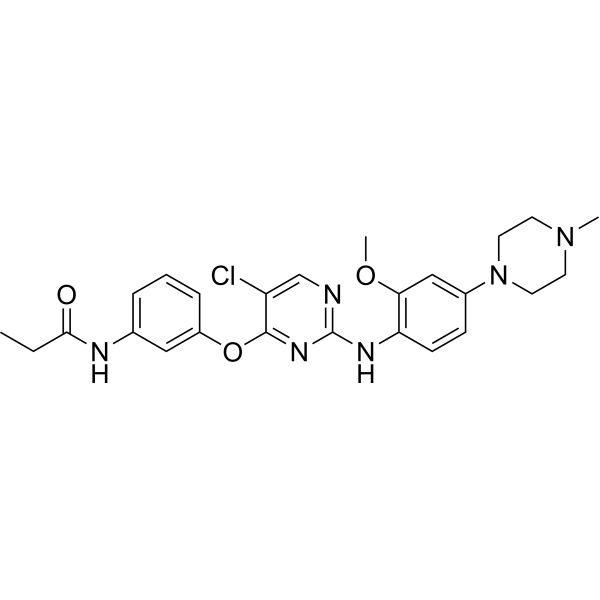
 0 ImagesMRT199665 is a potent and ATP-competitive, selective MARK/SIK/AMPK inhibitor with IC50s of 2/2/3/2 nM, 10/10 nM, and 110/12/43 nM for MARK1/MARK2/MARK3/MARK14, AMPKα1/AMPKα2, and SIK1/SIK2/SIK3, respectively. MRT199665 causes apoptosis in MEF2C-activated human acute myeloid leukemias (AML) cells. MRT199665 inhibits the phosphorylation of SIK substrate CRTC3 at S370.
-
Narazaciclib
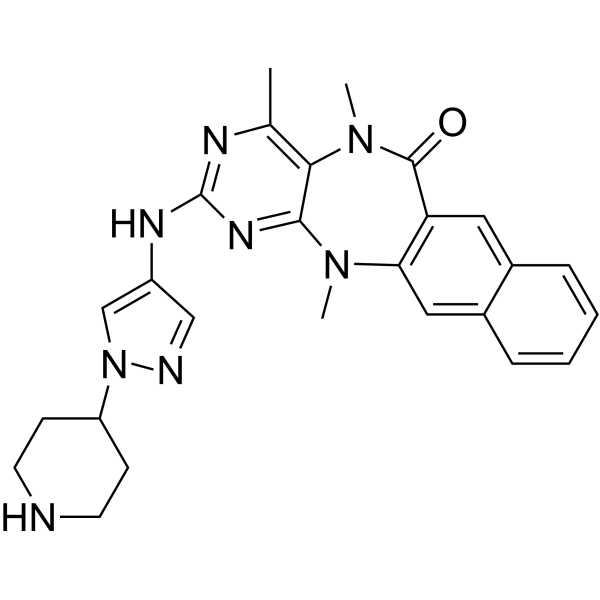
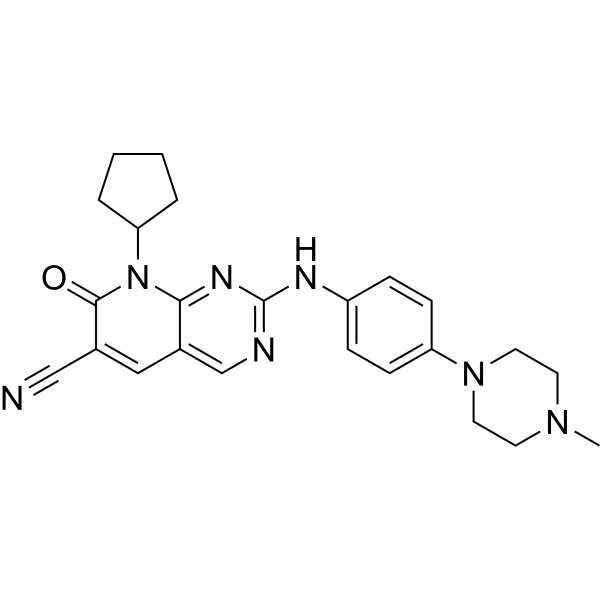 0 ImagesSynonyms: ON123300Narazaciclib (ON123300), a strong and brain-penetrant multi-kinase inhibitor, inhibits CDK4 (IC50=3.9 nM), Ark5 (IC50=5 nM), PDGFRβ (IC50=26 nM), FGFR1 (IC50=26 nM), RET (IC50=9.2 nM), and FYN (IC50=11 nM). Single agent Narazaciclib causes a dose-dependent suppression of phosphorylation of Akt as well as activation of Erk in brain tumors. Narazaciclib inhibits CDK6 with an IC50 of 9.82 nM.
-
NUAK1-IN-3
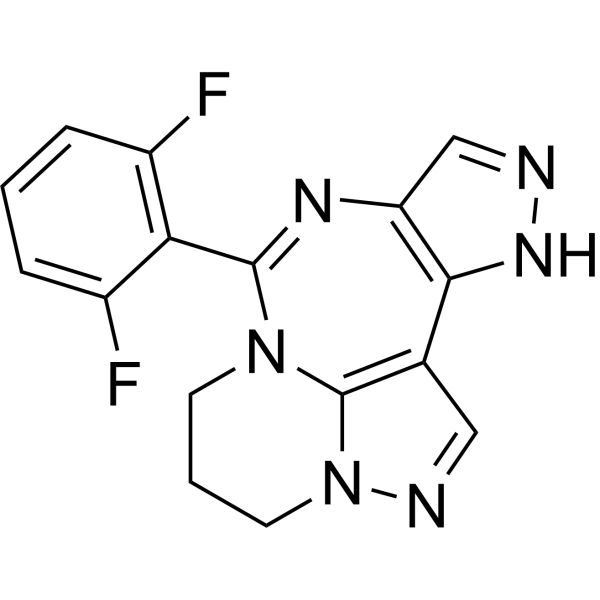
 0 ImagesCat. No.: HY-182361CAS No.: 3097515-05-1NUAK1-IN-3 is a potent and selective NUAK1 inhibitor with an IC50 of 0.49 nM. NUAK1-IN-3 also inhibits NUAK2 and JAK3 with IC50 values of 265 and 225 nM. NUAK1-IN-3 engages Glu139 of NUAK1, forms a salt bridge between its bicyclic ring nitrogen and Asp142, and uses a fluorine atom to enhance hydrophobic binding interactions. NUAK1-IN-3 attenuates MYPT1 phosphorylation, suppresses the NUAK1-MYPT1 signaling axis, and inhibits proliferation, migration, and invasion of triple-negative breast cancer cells. NUAK1-IN-3 reverses TGF-β1-induced epithelial-mesenchymal transition (EMT) marker alterations, downregulates Snail and N-cadherin, and upregulates E-cadherin in tumor tissues. NUAK1-IN-3 suppresses tumor growth in triple-negative breast cancer xenograft models. NUAK1-IN-3 can be used for the research of triple-negative breast cancer.
-
OICR19451
 0 ImagesCat. No.: HY-182743CAS No.: 2803349-61-1OICR19451 is an orally active dual NUAK1/NUAK2 and MARK2/MARK3 kinase inhibitor, with IC50 values of 12 nM and 10 nM against NUAK1 and NUAK2, and 101 nM and 124 nM against MARK2 and MARK3, respectively. OICR19451 modulates the Hippo signaling pathway, increases the phosphorylation level of YAP, enhances the cytoplasmic localization of YAP/TAZ, and inhibits the expression of oncogenes. OICR19451 inhibits cancer cell growth, reduces metastasis, promotes tumor capsule formation, and improves mouse survival in an orthotopic breast cancer model. OICR19451 can be used for research related to triple-negative breast cancer.
-
ARUK2010489
 0 ImagesCat. No.: HY-178171ARUK2010489 (Compound 23) is a potent, selective and brain-penetrant NUAK1 inhibitor with a pIC50 of 8.7. ARUK2010489 also inhibits CDK2, CDK4 and CDK6 activity, with inhibitory rate of 7%, 39% and 26% at 1 μM. ARUK2010489 can be used for the research of neurological disease, such as Alzheimer’s disease (AD).
-
LRRK2/NUAK1/TYK2-IN-1
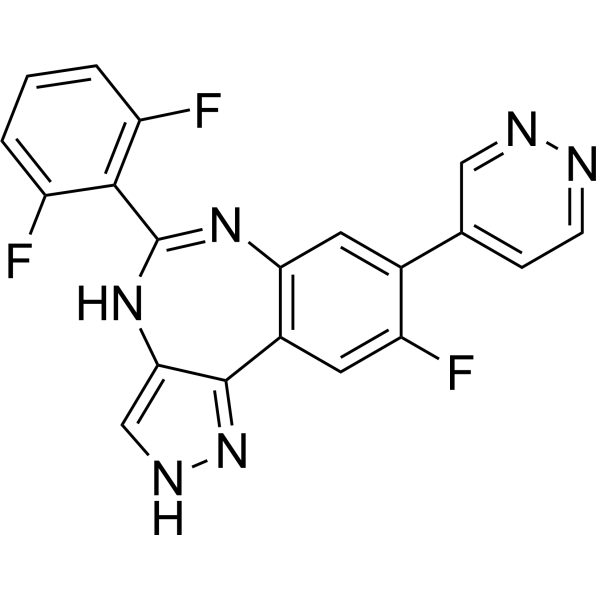 0 ImagesCat. No.: HY-153103CAS No.: 2629192-96-5LRRK2/NUAK1/TYK2-IN-1 (conpound 226) shows inhibitory activity toward LRRK2 (Wt), LRRK2 (G2019), TYK2 and NUAK1, with IC50 values lower than 10 nM. LRRK2/NUAK1/TYK2-IN-1 can be used for autoimmune disease research.
-
ARUK2010694
 0 ImagesCat. No.: HY-178168ARUK2010694 (Compound 20) is a potent and selective NUAK1 inhibitor with a pIC50 of 8.7. ARUK2010694 also inhibits CDK2, CDK4 and CDK6 activity, with inhibitory rate of 13%, 63% and 32% at 1 μM. ARUK2010694 can be used for the research of neurological disease, such as Alzheimer’s disease (AD).



