12 Results for "

murine solid tumors

" in MedChemExpress (MCE) Product Catalog:
Products (12)

12 Results for "murine solid tumors" in MCE Product Catalog:

Cat. No.: HY-160215
CAS No.: 2169299-67-4
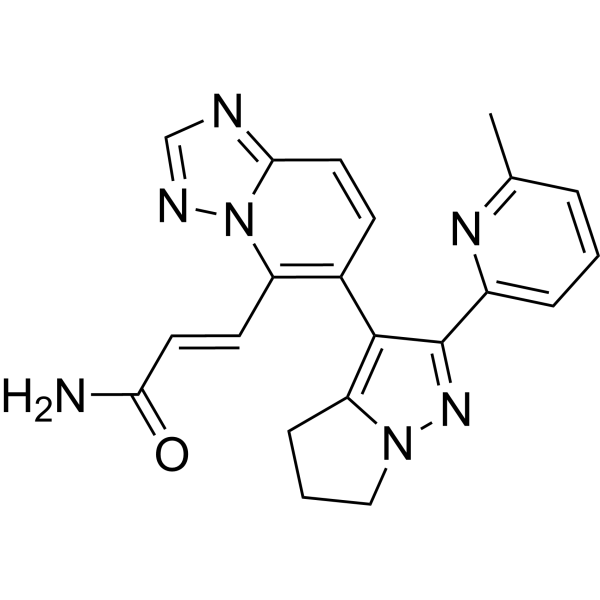
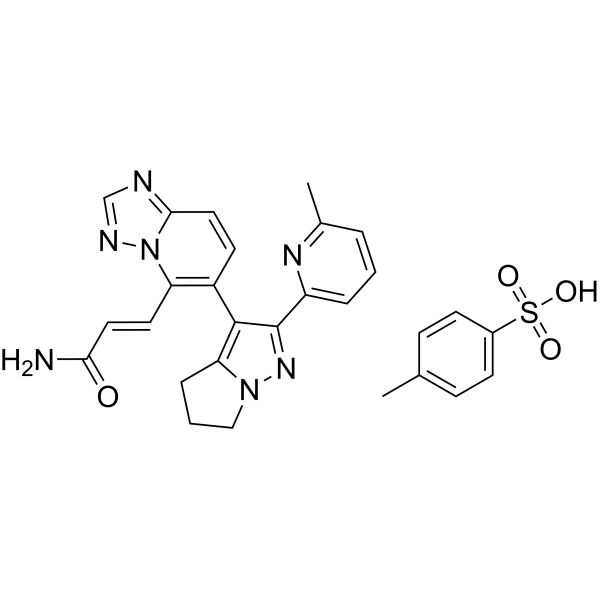
GFH018 is an orally active, selective and ATP-competitive TGF-βR1 inhibitor with an IC50 of 40 nM. GFH018 reactivates the immune system by blocking the immunosuppression mediated by regulatory T cells and M2 macrophages. GFH018 inhibits tumor angiogenesis. GFH018 suppresses tumor growth in mouse tumor models. GFH018 can be used for the research of solid tumors, hepatocellular carcinoma, colorectal cancer, breast cancer, and relapsed/metastatic nasopharyngeal carcinoma .
loading...
    loading...
Cat. No.: HY-119823
CAS No.: 365565-02-2
Purity:  99.69%
Target:  

P-glycoprotein

Research Areas:  

Cancer

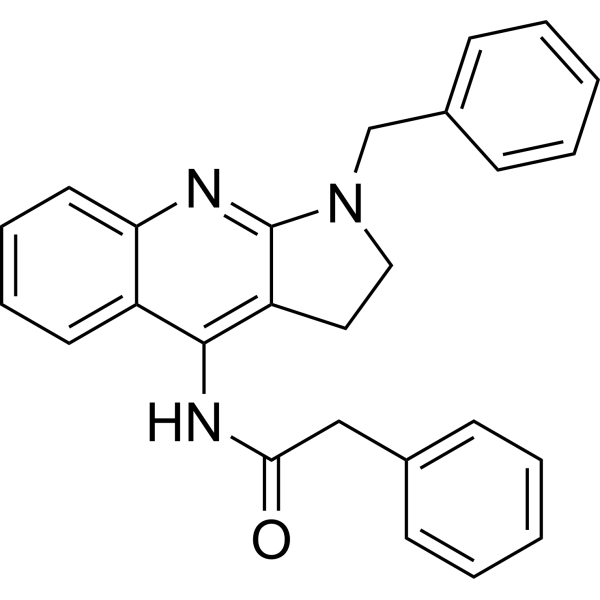
PGP-4008 is a specific P-glycoprotein (Pgp) inhibitor. PGP-4008 inhibits tumor growth in a murine syngeneic Pgp-mediated multiple agent resistance (MDR) solid tumor model when given in combination with Doxorubicin .
loading...
    loading...
Cat. No.: HY-13598
CAS No.: 1188371-47-2
Purity:  98.47%
Synonyms: CKD-516
Target:  

Microtubule/Tubulin

Research Areas:  

Cancer

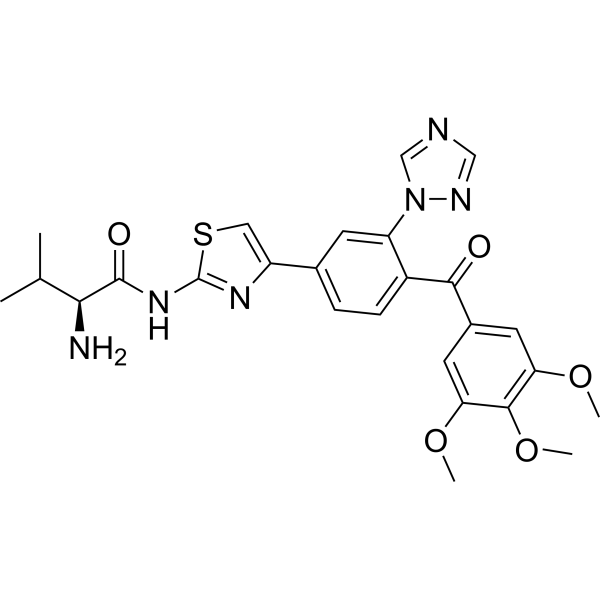
Valecobulin (CKD516) is a valine proagent of (S516) and a vascular disrupting agent (VDA). Valecobulin is a potent β-tubulin polymerization inhibitor with marked antitumor activity against murine and human solid tumors .
loading...
    loading...
Cat. No.: HY-13598A
CAS No.: 1240321-53-2
Purity:  98.46%
Synonyms: CKD-516 hydrochloride
Target:  

Microtubule/Tubulin

Research Areas:  

Cancer

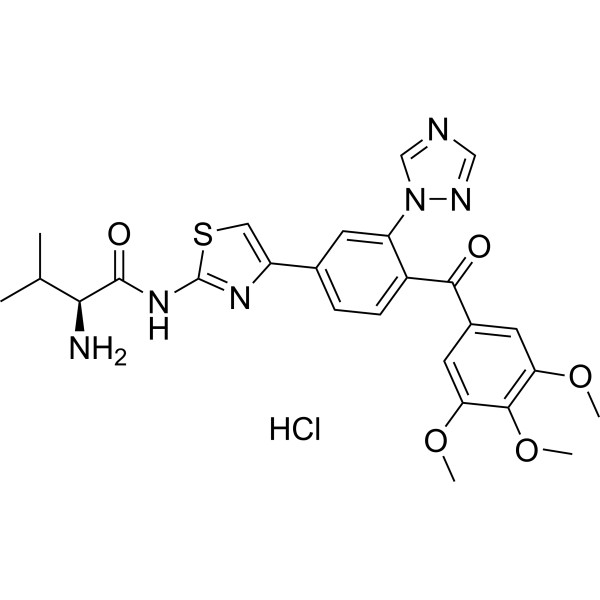
Valecobulin hydrochloride (CKD-516 hydrochloride) is a valine proagent of S516 (HY-130233) and a vascular disrupting agent (VDA). Valecobulin hydrochloride is a potent β-tubulin polymerization inhibitor with marked antitumor activity against murine and human solid tumors .
loading...
    loading...
Cat. No.: HY-P11097
CAS No.: 3056822-31-9
Target:  

CD47

Research Areas:  

Cardiovascular Disease Cancer

Pep-20 is a CD47 binder with a human Kd of 2.91 µM and a murine Kd of 3.63 µM. Pep-20 blocks the interaction between CD47 and SIRPα, with an IC50 of 24.56 µM for human targets and 12.03 µM for murine targets. Pep-20 also acts as a phagocytosis enhancer and an inducer of anti-tumor immune responses. By blocking the CD47/SIRPα interaction, Pep-20 reduces the tyrosine phosphorylation level of SIRPα, disrupts the inhibitory "don't eat me" signaling pathway, enhances macrophage-mediated phagocytosis of solid tumor cells and hematologic tumor cells, and promotes macrophage mobilization of anti-tumor T-cell responses. Pep-20 can be used in research related to solid tumors, hematologic malignancies, breast cancer, and pancreatic cancer .
loading...
    loading...
Cat. No.: HY-160215A
CAS No.: 2345717-52-2
GFH018 is an orally active, selective and ATP-competitive TGF-βR1 inhibitor with an IC50 of 40 nM. GFH018 reactivates the immune system by blocking the immunosuppression mediated by regulatory T cells and M2 macrophages. GFH018 inhibits tumor angiogenesis. GFH018 suppresses tumor growth in mouse tumor models. GFH018 can be used for the research of solid tumors, hepatocellular carcinoma, colorectal cancer, breast cancer, and relapsed/metastatic nasopharyngeal carcinoma .
loading...
    loading...
Cat. No.: HY-16491
CAS No.: 333754-36-2
Synonyms: DJ-927
Target:  

Microtubule/Tubulin

Research Areas:  

Cancer

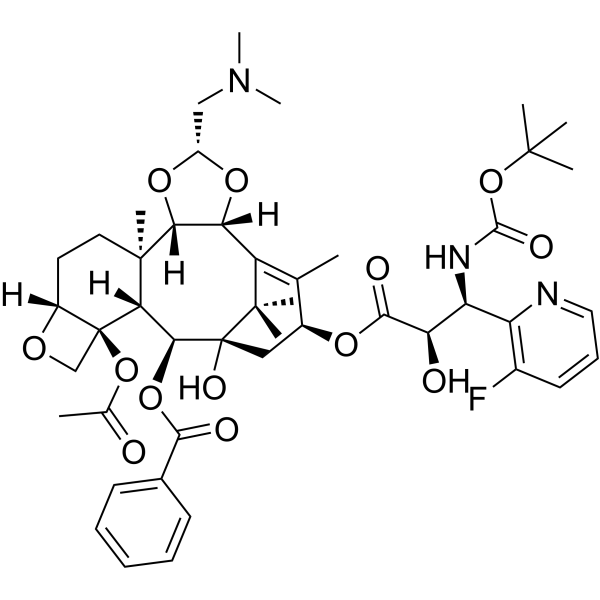
Tesetaxel (DJ-927) is an orally active and brain-penetrant taxane tubulin inhibitor. Tesetaxel inhibits tubulin depolymerization with an IC50 of 0.44 μM. Tesetaxel inhibits cancer cells proliferation and shows potent antitumor activity against P-glycoprotein-positive cancer cells. Tesetaxel can be used for the research of cancer, such as solid tumors, liver metastasis, and advanced breast cancer .
loading...
    loading...
Cat. No.: HY-U00337A
CAS No.: 157000-76-5
Target:  

DNA/RNA Synthesis

Research Areas:  

Cancer

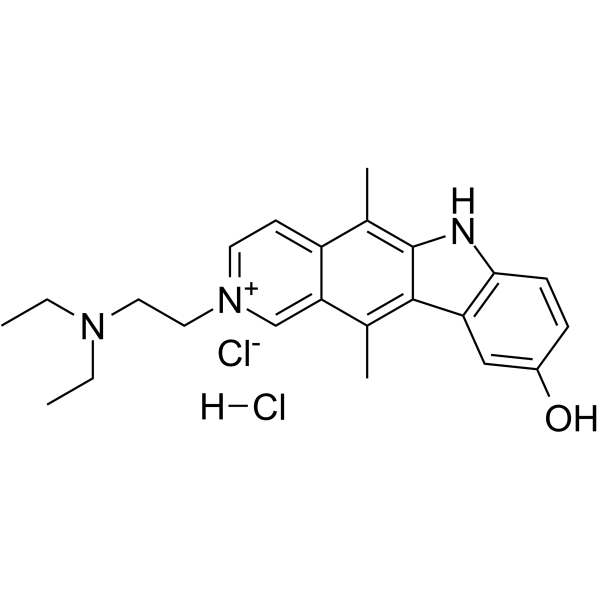
Datelliptium chloride hydrochloride is a DNA-intercalating agent derived from Ellipticine (HY-15753). Datelliptium chloride hydrochloride is effective in vivo against a variety of murine solid tumors .
loading...
    loading...
Cat. No.: HY-P991608
Synonyms: 7F11C7

Target:  

Mucin

Research Areas:  

Cancer

CTM01 is a murine IgG1 (or humanized IgG4) monoclonal antibody inhibitor targeting MUC1. CTM01 has a broad spectrum anticancer activity against solid tumors of epithelial origin, such as breast, lung and ovarian cancer .
loading...
    loading...
Cat. No.: HY-N9382
CAS No.: 60796-70-5
Gnidimacrin is a protein kinase C (PKC) activator. Gnidimacrin inhibits cell growth of human leukemias, stomach cancers and non-small cell lung cancers in vitro, and shows activity against murine leukemias and solid tumors in vivo. Gnidimacrin can be used for leukemias, stomach cancers and non-small cell lung cancers research .
loading...
    loading...
Cat. No.: HY-13552
CAS No.: 80841-48-1
Synonyms: CI-921 isethionate; NSC 343499 isethionate
Asulacrine isethionate (CI-921 isethionate) is a derivative of Amsacrine (HY-13551), a Topoisomerase II inhibitor and an anticancer agent. Asulacrine isethionate binds to DNA via intercalation, forming stable complexes with long residence times at DNA sites. Asulacrine isethionate mediates DNA breakage and DNA-protein cross-linking. Asulacrine isethionate exhibits anticancer activity against leukemia or lung cancer. Asulacrine isethionate can be used in research related to breast cancer, lung cancer, mouse solid tumors and leukemia .
loading...
    loading...
Cat. No.: HY-183480
CAS No.: 80841-47-0
Synonyms: CI-921; NSC 343499
Target:  

Topoisomerase

Research Areas:  

Cancer

Asulacrine (CI-921) is an orally active DNA intercalating topoisomerase II inhibitor. Asulacrine binds to DNA via intercalation, with its acridine chromophore intercalated between base pairs and substituents located in the major/minor grooves, which stabilizes DNA against acid denaturation. Asulacrine acts as a cell cycle inhibitor, disruptor, and arrest inducer, slowing cell progression in late S/G2 phase, causing G2 phase arrest and inducing unbalanced growth. Asulacrine inhibits cell growth, clonogenicity, and colony formation, and leads to histological destruction of tumor cells. Compared to cells in exponential growth phase, Asulacrine exhibits lower toxicity to quiescent cells; its activity depends on cationic properties, and it has better water solubility and metabolic stability. Asulacrine can be used in research related to leukemia, lung cancer, colon cancer, breast cancer, melanoma, adriamycin-resistant mammary adenocarcinoma, and mouse solid tumors .
loading...
    loading...
  • 1

