
1. Search Result
Search Result
Results for "

pigmentosa

" in MedChemExpress (MCE) Product Catalog:

17

Inhibitors & Agonists

1

Biochemical Assay Reagents

2

Peptides

1

Natural
Products

1

Antibodies

4

Oligonucleotides

Cat. No. Product Name Target Research Areas Chemical Structure
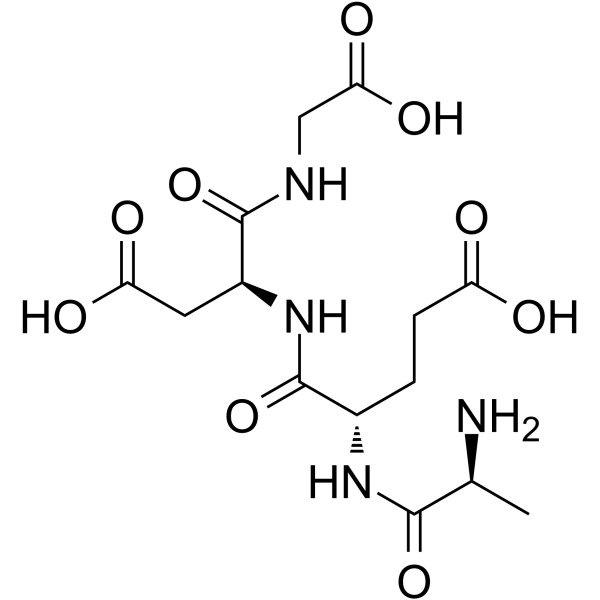
  • HY-P1149

    Epithalon; Epithalamin

    Telomerase Neurological Disease Cancer
    Epitalon is an anti-aging agent and a telomerase activator. Epitalon has an inhibitory effect of the on the development of spontaneous tumors in mice, has geroprotective actions and intranasal administration increases neuronal activity. Epitalon can be used for cancer, old age and Retinitis Pigmentosa .
    Epitalon
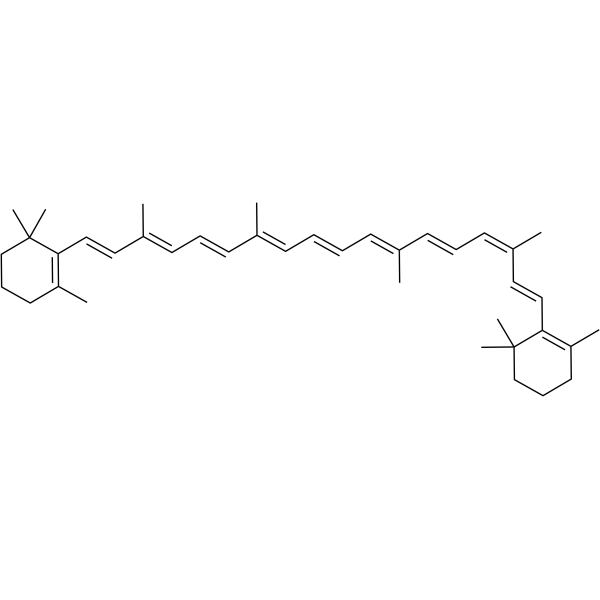
  • HY-136234

    9Z β-Carotene

    Endogenous Metabolite Others
    9-cis-β-Carotene, a precursor of retinal, is cleaved by beta-carotene oxygenase 1 (BCMO1) to produce 9-cis-retinal. 9-cis-β-Carotene inhibits photoreceptor degeneration and restores retinal function in vivo. 9-cis-β-Carotene has the potential for the study of congenital stationary night blindness and fundus albipunctatus .
    9-cis-β-Carotene
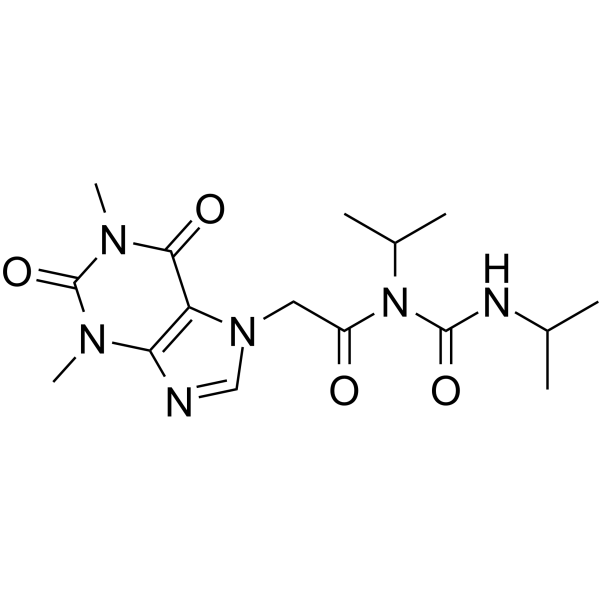
  • HY-137322

    Neurotensin Receptor Neurological Disease Metabolic Disease
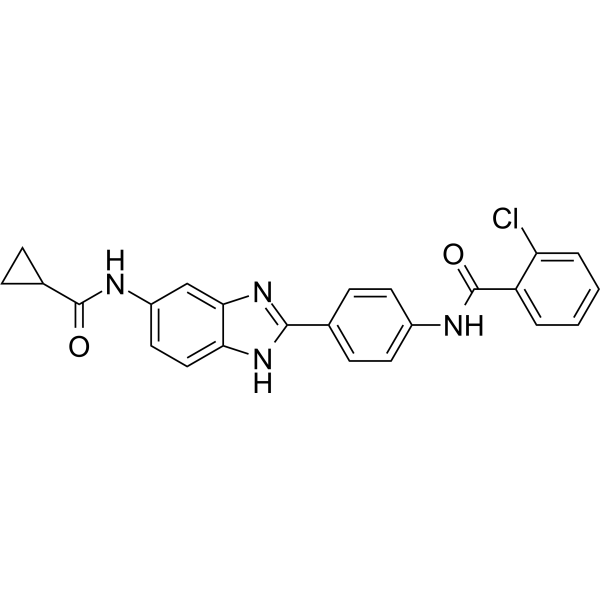
    THX-B is a potent and non-peptidic p75 NTR (neurotrophin receptor p75) antagonist. THX-B can be used in the research of diabetic kidney disease, neurodegenerative and inflammatory disorders .
    THX-B
  • HY-W009123

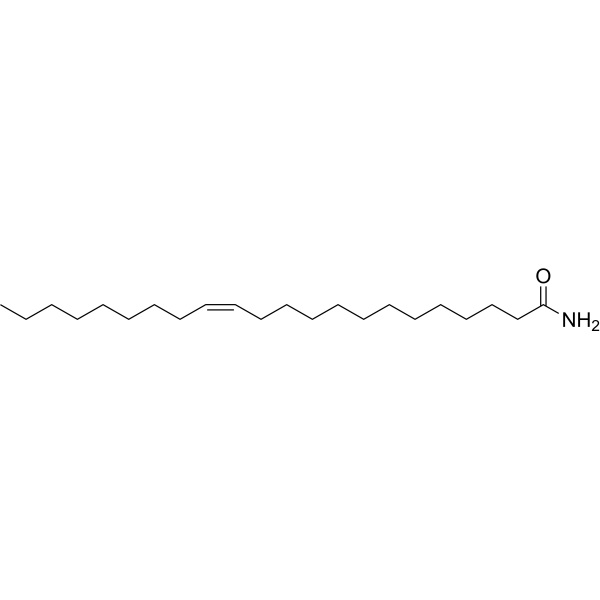
    cis-13-Docosenamide

    Endogenous Metabolite Bacterial Infection Neurological Disease
    Erucamide is an orally active, blood-brain barrier-permeable TMEM19 ligand and T3SS inhibitor. Erucamide exerts retinal neuroprotective effects in mouse models of retinal degeneration. Erucamide attenuates depression- and anxiety-like behaviors in mice.\n\nErucamide binds to the conserved hydrophobic pocket in HrcC, disrupts its outer membrane localization, and blocks T3SS-mediated effector protein secretion in Gram-negative pathogenic bacteria. Erucamide enhances the antimicrobial immunity of plants against pathogenic bacteria. Erucamide can be used in research related to retinitis pigmentosa, anxiety and depression, bacterial wilt, and bacterial blight .
    Erucamide
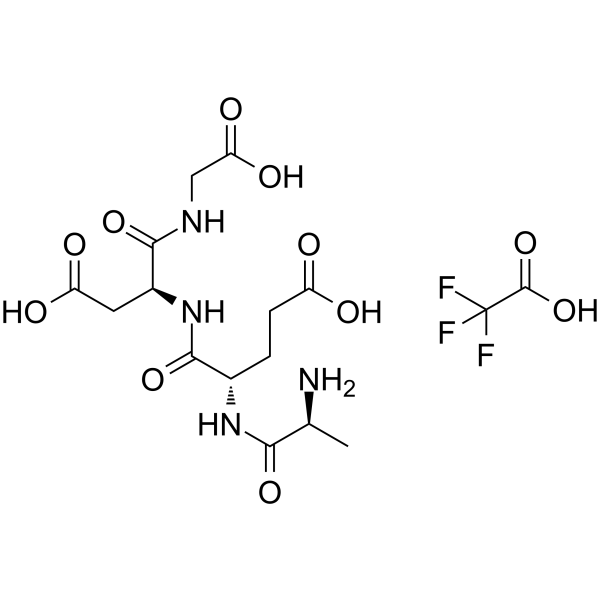
  • HY-P1149A

    Epithalon TFA; Epithalamin TFA

    Telomerase Neurological Disease Cancer
    Epitalon TFA is an anti-aging agent and a telomerase activator. Epitalon TFA has an inhibitory effect of the on the development of spontaneous tumors in mice, has geroprotective actions and intranasal administration increases neuronal activity. Epitalon TFA can be used for cancer, old age and Retinitis Pigmentosa .
    Epitalon TFA
  • HY-N9182

    Physalien

    Adiponectin Receptor P2X Receptor Autophagy Inflammation/Immunology
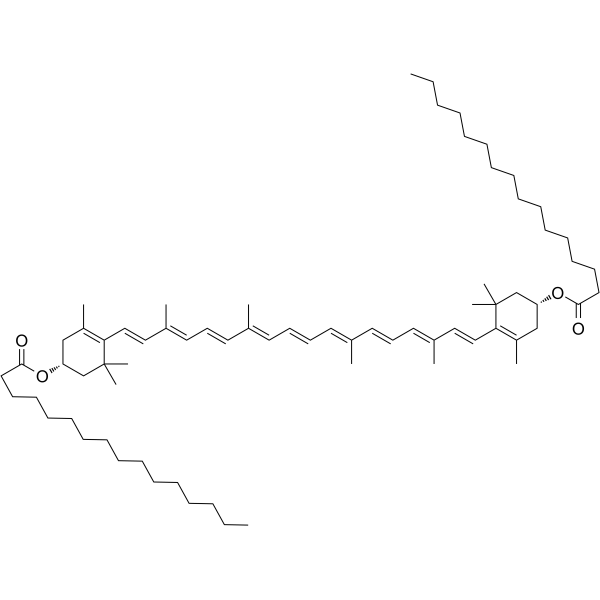
    Zeaxanthin dipalmitate (Physalien) is a wolfberry-derived carotenoid, has anti-inflammatory and anti-oxidative stress effects. Zeaxanthin dipalmitate directly interact with p2X7 receptor (Kd=81.2 nM) and adiponectin receptor 1 (AdipoR1; Kd=533 nM) in a positive dose-dependent manner. Zeaxanthin dipalmitate restores mitochondrial autophagy functions suppressed by ethanol intoxication. Zeaxanthin dipalmitate can be used in the research of alcoholic fatty liver disease (AFLD) and retinitis pigmentosa (RP) .
    Zeaxanthin dipalmitate
  • HY-147412

    QR-421a

    Nucleoside Antimetabolite/Analog DNA/RNA Synthesis Neurological Disease
    Ultevursen (QR-421a) is a splice-modulating antisense oligonucleotide targeting exon 13 of the USH2A gene, which restores the functional expression of Usherin protein by inducing exon skipping. Ultevursen binds to USH2A pre-mRNA and modulates the splicing process to specifically skip exon 13 carrying the pathogenic mutation c.2299delG, generating an in-frame transcript and a truncated yet functionally normal protein. Ultevursen exhibits concentration-dependent exon skipping activity in human cells and retinal organoid models, and restores Usherin expression and retinal function in zebrafish and gene-edited mouse models. Ultevursen can be used for related research on type 2 Usher syndrome and non-syndromic retinitis pigmentosa .
    Ultevursen
  • HY-160209

    HCN Channel Cardiovascular Disease
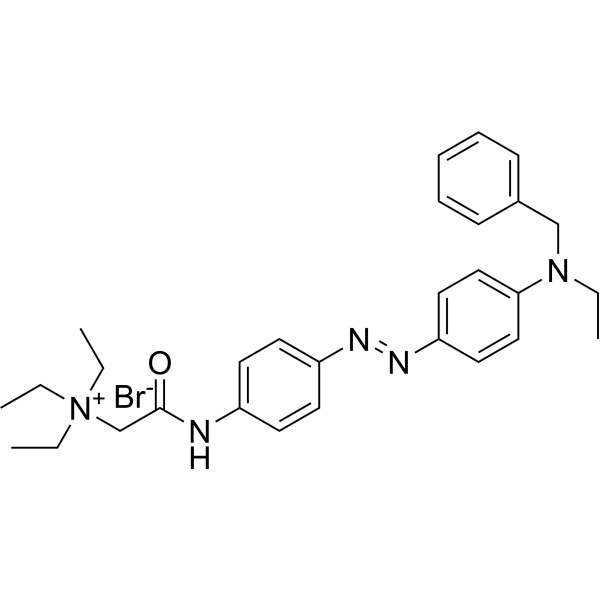
    KIO-301 is a photoswitchable HCN channel blocker, and can be used as the vitreous “light switch” molecule that reactivates retinitis pigmentosa .
    KIO-301
  • HY-178919

    Formyl Peptide Receptor (FPR) Apoptosis Bacterial Inflammation/Immunology
    N-19004 is a FPR1 antagonist. N-19004 shows broad-spectrum antibacterial effects against a variety of pathogens. N-19004 exhibits significant retinal protective effects in the rd10 mouse model of retinitis pigmentosa (RP). N-19004 can attenuate retinal dysfunction, mitigate rod and cone degeneration, and reduce immune cell activation, gliosis, inflammation, oxidative stress, and apoptosis. N-19004 can reduce the size of laser-induced choroidal lesions and promote edema absorption through dual anti-inflammatory and anti-angiogenic effects. N-19004 can be used for the research of retinal degenerative diseases such as retinitis pigmentosa .
    N-19004
  • HY-175671

    HDAC Histone Demethylase Neurological Disease
    LSD1/HDAC-IN-3 is a inhibitor targeting class I HDAC and LSD1 enzymes. LSD1/HDAC-IN-3 inhibits HDAC1, HDAC2, HDAC3, and LSD1 with IC50 values of 1702 nM, 842 nM, 358 nM, and 1074 nM, respectively. LSD1/HDAC-IN-3 exhibits antioxidant effects in H2O2-stressed ARPE-19 and 661W retinal cells, increasing levels of acetylated and methylated histone H3. LSD1/HDAC-IN-3 enhances photoreceptor survival in the rd10 mouse model of retinitis pigmentosa. LSD1/HDAC-IN-3 can be used for the study of inherited retinal diseases such as retinitis pigmentosa (RP) .
    LSD1/HDAC-IN-3
  • HY-161115

    Orphan Nuclear Receptor Inflammation/Immunology
    NR2E3 agonist 1 (Compound 11a) is a small molecule agonist of the photoreceptor-specific nuclear receptor (NR2E3) with an EC50 value of less than 200 nM. NR2E3 agonist 1 can be used in retinitis pigmentosa research .
    NR2E3 agonist 1
  • HY-121892

    TNF Receptor Neurological Disease
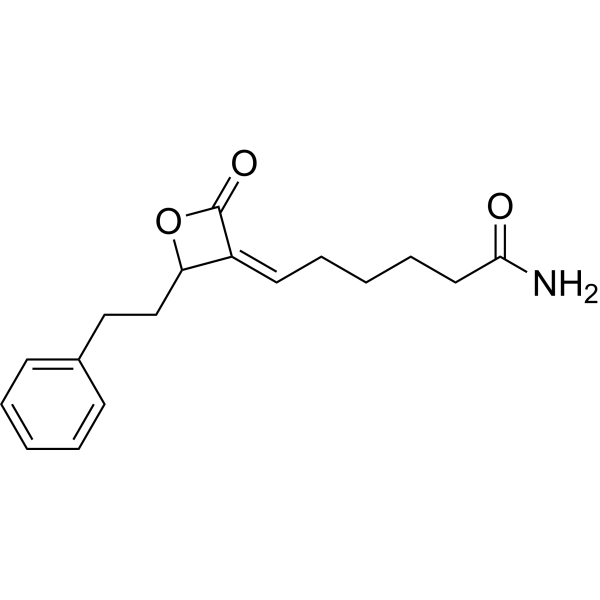
    (Z)-KC02 is an inhibitor of ABHD16A, the phosphatidylserine (PS) lipase that produces lyso-PS. Lysophosphatidylserine (lyso-PS) is a signaling lipid that regulates immune and neurological processes. It is associated with several neurological disorders such as retinitis pigmentosa and cataracts (PHARC). (Z)-KC02 depletes lyso-PS in lymphoblasts from PHARC subjects. (Z)-KC02 also reduces lyso-PS and lipopolysaccharide-induced cytokine production in macrophages and modulates lyso-PS metabolism in vivo .
    (Z)-KC02
  • HY-109869

    Orphan Nuclear Receptor Others
    Photoregulin1 is a compound with the potential to inhibit retinitis pigmentosa that modulates gene expression in retinal cells and slows the degeneration of photoreceptors in a mouse model.
    Photoregulin1
  • HY-161578

    PKG Neurological Disease
    Dithio-CN03 is a compound with the highest neuroprotective efficacy. Dithio-CN03 fights the progression of retinitis pigmentosa (RP) by inhibiting the cGMP mediated signaling pathway and reducing photoreceptor cell death. Dithio-CN03 can be used in research into RP and other retinal degenerative diseases .
    Dithio-CN03
  • HY-106916

    Potassium Channel Chloride Channel Cardiovascular Disease Neurological Disease
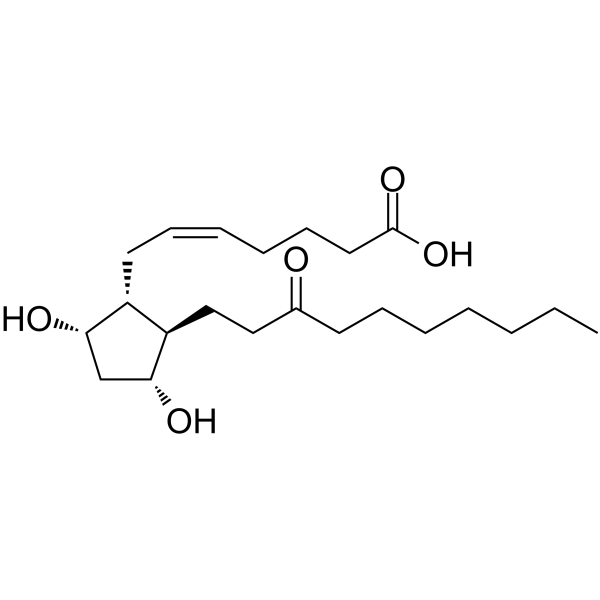
    Unoprostone, a prostaglandin F2α analog, is a large conductance Ca 2+-activated K + (BK) channels and ClC-2 type chloride channels activator. Unoprostone reduces oxidative stress- and light-induced retinal cell death, and phagocytotic dysfunction. Unoprostone reduces intraocular pressure and can be used for the study of glaucoma, ocular hypertension and retinitis pigmentosa .
    Unoprostone
  • HY-147412E

    Fluorescent Dye Neurological Disease
    Cy3 labled Ultevursen sodium is a Cy3 labled Ultevursen sodium (HY-147412A). Ultevursen sodium (QR-421a) is a splice-modulating antisense oligonucleotide targeting exon 13 of the USH2A gene, which restores the functional expression of Usherin protein by inducing exon skipping. Ultevursen sodium binds to USH2A pre-mRNA and modulates the splicing process to specifically skip exon 13 carrying the pathogenic mutation c.2299delG, generating an in-frame transcript and a truncated yet functionally normal protein. Ultevursen sodium exhibits concentration-dependent exon skipping activity in human cells and retinal organoid models, and restores Usherin expression and retinal function in zebrafish and gene-edited mouse models. Ultevursen sodium can be used for related research on type 2 Usher syndrome and non-syndromic retinitis pigmentosa .
    Cy3 labled Ultevursen sodium
  • HY-147412D

    Fluorescent Dye Neurological Disease
    FAM labled Ultevursen sodiumis a FAM labled Ultevursen sodium (HY-147412A). Ultevursen sodium (QR-421a) is a splice-modulating antisense oligonucleotide targeting exon 13 of the USH2A gene, which restores the functional expression of Usherin protein by inducing exon skipping. Ultevursen sodium binds to USH2A pre-mRNA and modulates the splicing process to specifically skip exon 13 carrying the pathogenic mutation c.2299delG, generating an in-frame transcript and a truncated yet functionally normal protein. Ultevursen sodium exhibits concentration-dependent exon skipping activity in human cells and retinal organoid models, and restores Usherin expression and retinal function in zebrafish and gene-edited mouse models. Ultevursen sodium can be used for related research on type 2 Usher syndrome and non-syndromic retinitis pigmentosa .
    FAM labled Ultevursen sodium

Inquiry Online

Your information is safe with us. * Required Fields.

Salutation


Country or Region *

Applicant Name *


Organization Name *

Department *


Email Address *


Product Name *

Cat. No.


Requested quantity *

Phone Number *


Remarks

Inquiry Online

Inquiry Information

Product Name:
Cat. No.:
Quantity:
MCE Japan Authorized Agent:

