1. Search Result
Search Result
Results for "

testicular toxicity

" in MedChemExpress (MCE) Product Catalog:

10

Inhibitors & Agonists

3

Natural
Products

2

Isotope-Labeled Compounds

1

Oligonucleotides

Cat. No. Product Name Target Research Areas Chemical Structure
  • HY-B1066
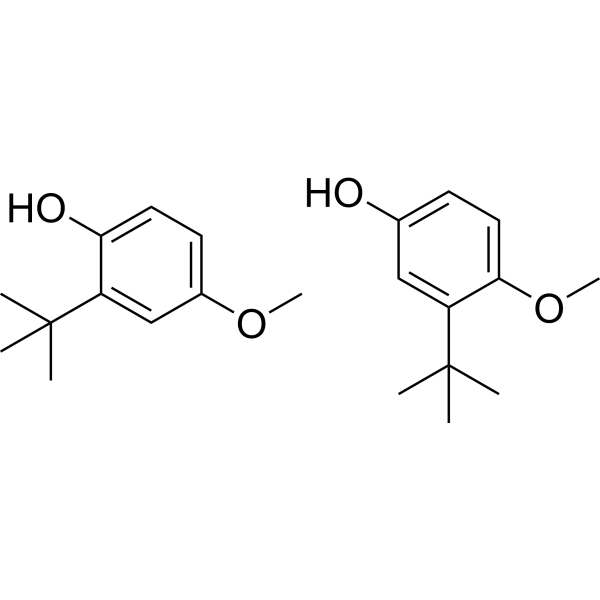
    Butylhydroxyanisole
    5 Publications Verification

    Butylated hydroxyanisole; E320

    Environmental Pollutants Reactive Oxygen Species (ROS) Ferroptosis Neurological Disease Inflammation/Immunology
    Butylhydroxyanisole (Butylated hydroxyanisole) is an antioxidant used as a food additive preservative. Butylhydroxyanisole mediates liver toxicity, retardation in reproductive organ development and learning, and sleep deficit. Butylhydroxyanisole exerts neurotoxic effects and leads to disruption of the brain and nerve development . Butylhydroxyanisole is a ferroptosis inducer .
    Butylhydroxyanisole
  • HY-N2896

    Reactive Oxygen Species (ROS) Apoptosis Fungal Bacterial NF-κB SOD AMPK mTOR Notch Toll-like Receptor (TLR) Wnt MyD88 Sirtuin Infection Neurological Disease Inflammation/Immunology Cancer
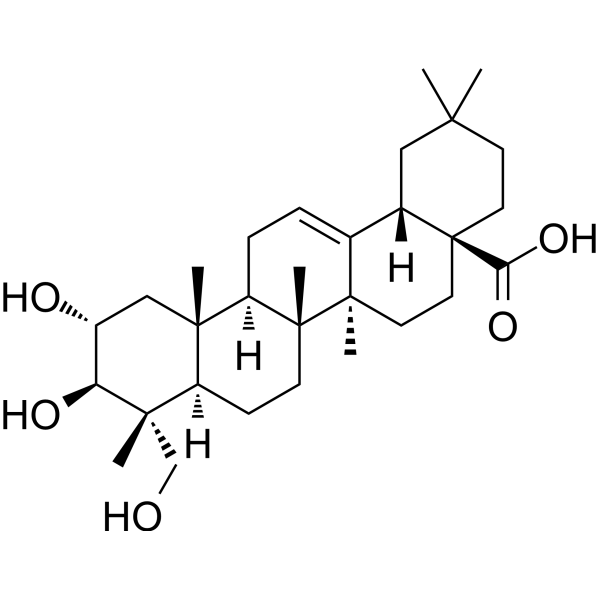
    Arjunolic acid is an orally active, multifunctional bioactive compound. Arjunolic acid exhibits free radical scavenging activity, as well as fungal and bacterial activities. Arjunolic acid induces apoptosis (Apoptosis) in various cancer cells. Arjunolic acid protects hepatocytes against induced oxidative stress and apoptosis by reducing reactive oxygen species and inhibiting NF-κB activation. Arjunolic acid regulates pancreatic dysfunction in type 2 diabetic rats by blocking the activation of the TLR-4/MyD88 and canonical Wnt pathways. Arjunolic acid inhibits neuroinflammation and ameliorates depressive behaviors via the SIRT1/AMPK/Notch1 signaling pathway in microglia. Arjunolic acid improves Crohn's disease-like colitis by restoring gut microbiota composition and inhibiting TLR4 signaling. Arjunolic acid suppresses osteosarcoma progression by inhibiting Wnt3a-mediated M2 polarization of macrophages. Arjunolic acid ameliorates diabetic retinopathy via the autophagy pathway regulated by AMPK/mTOR/HO-1. Arjunolic acid is applicable to research related to type 2 diabetes, organ toxicity, depression, Crohn's disease, osteosarcoma, diabetic retinopathy, and testicular dysfunction .
    Arjunolic acid
  • HY-21197

    Perfluoroheptanoic acid; Tridecafluoroheptanoic acid; PFHpA

    PPAR Neurological Disease Metabolic Disease Inflammation/Immunology
    Perfluoroenanthic acid (Perfluoroheptanoic acid) is a kind of perfluoroalkyl carboxylic acid organic pollutant. Perfluoroenanthic acid has environmental persistence and bioaccumulation, and exposure can occur via oral, dermal and other routes. Perfluoroenanthic acid exhibits reproductive toxicity, neurotoxicity, hepatotoxicity, immunotoxicity and endocrine-disrupting effects. Perfluoroenanthic acid exerts definite adverse effects on development, spermatogenesis, neuronal activity and liver tissue .
    Perfluoroenanthic acid
  • HY-Y1009

    Endogenous Metabolite Metabolic Disease
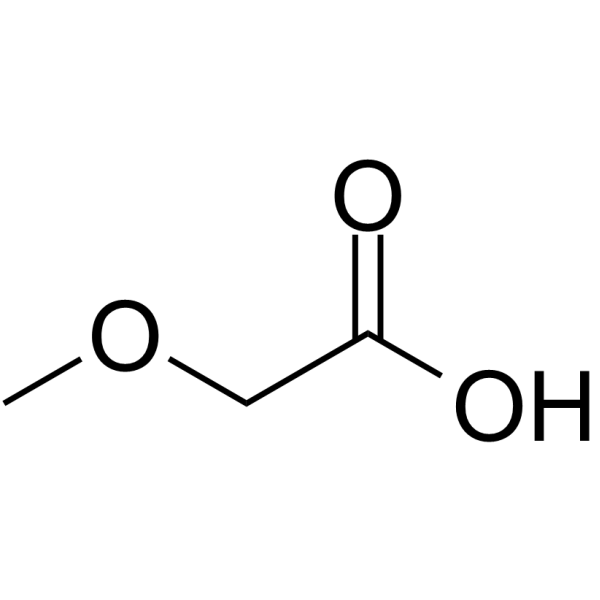
    Methoxyacetic acid is a metabolite of ethylene glycol monomethyl ether. When the concentration of methoxyacetic acid reaches a certain level, it can inhibit the respiratory function of hepatic mitochondria and testicular mitochondria. Methoxyacetic acid is somewhat toxic .
    Methoxyacetic acid
  • HY-Y1009R

    Reference Standards Endogenous Metabolite Metabolic Disease
    Methoxyacetic acid is a metabolite of ethylene glycol monomethyl ether. When the concentration of methoxyacetic acid reaches a certain level, it can inhibit the respiratory function of hepatic mitochondria and testicular mitochondria. Methoxyacetic acid is somewhat toxic .
    Methoxyacetic acid (Standard)
  • HY-130071

    CHIP

    Biochemical Assay Reagents Cardiovascular Disease Metabolic Disease Cancer
    Iproplatin (CHIP) is an anti-cancer agent with reduced toxicity in testicular and ovarian cancers. The major reduced product of Iproplatin by glutathione is chloro-bis (isopropylamine) glutathionatoplatinum (II). Iproplatin is promising for research of Thrombocytopenia and a wide range of cancers .
    Iproplatin
  • HY-Y1009S

    Isotope-Labeled Compounds Endogenous Metabolite Metabolic Disease
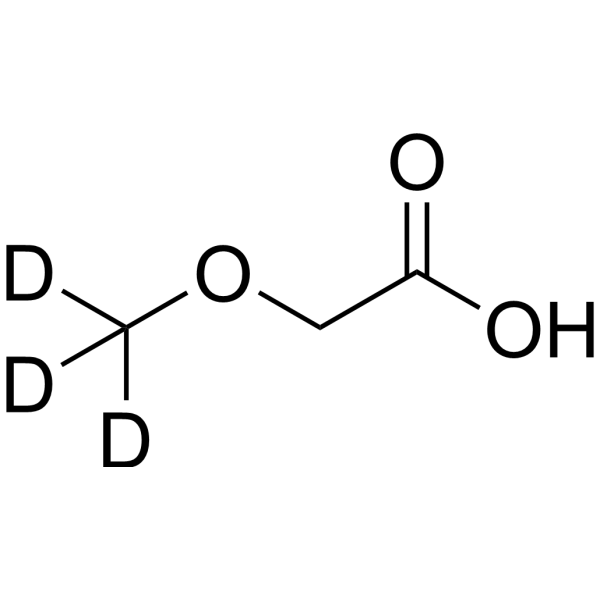
    Methoxyacetic acid-d3 is the deuterium labeled Methoxyacetic acid (HY-Y1009). Methoxyacetic acid is a metabolite of ethylene glycol monomethyl ether. When the concentration of methoxyacetic acid reaches a certain level, it can inhibit the respiratory function of hepatic mitochondria and testicular mitochondria. Methoxyacetic acid is somewhat toxic .
    Methoxyacetic acid-d3
  • HY-124920

    Mercaptodimethur

    Insecticide SOD Glutathione Peroxidase Reactive Oxygen Species (ROS) Cholinesterase (ChE) Infection Inflammation/Immunology
    Methiocarb (Mercaptodimethur) is an orally active carbamate insecticide. Methiocarb exerts dose-dependent toxic effects on onions. In addition to inhibiting acetylcholinesterase to induce cholinergic excitation, Methiocarb can induce lipid peroxidation in liver, kidney, brain and testicular tissues and alter reduced glutathione levels by generating ROS. Methiocarb can be used for agricultural pest control and research on oxidative stress-related cellular damage in mammals .
    Methiocarb
  • HY-124920S

    Mercaptodimethur-d3

    Isotope-Labeled Compounds Infection Inflammation/Immunology
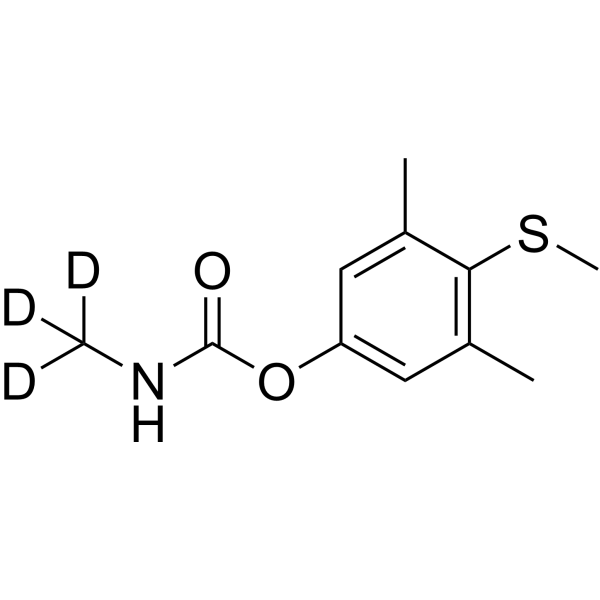
    Methiocarb-d3 is the deuterium labeled Methiocarb (HY-124920). Methiocarb (Mercaptodimethur) is an orally active carbamate insecticide. Methiocarb exerts dose-dependent toxic effects on onions. In addition to inhibiting acetylcholinesterase to induce cholinergic excitation, Methiocarb can induce lipid peroxidation in liver, kidney, brain and testicular tissues and alter reduced glutathione levels by generating ROS. Methiocarb can be used for agricultural pest control and research on oxidative stress-related cellular damage in mammals .
    Methiocarb-d3
  • HY-182438

    Drug Intermediate Metabolic Disease
    SDZ 51641 is an orally active fatty acid oxidation inhibitor. By reducing fatty acid oxidation, SDZ 51641 deprives the gluconeogenesis process of required energy and cofactors, thereby lowering blood glucose levels in diabetic models. SDZ 51641 can be used in diabetes research .
    SDZ 51641

Inquiry Online

Your information is safe with us. * Required Fields.

Salutation


Country or Region *

Applicant Name *


Organization Name *

Department *


Email Address *


Product Name *

Cat. No.


Requested quantity *

Phone Number *


Remarks

Inquiry Online

Inquiry Information

Product Name:
Cat. No.:
Quantity:
MCE Japan Authorized Agent:

