



Methiocarb
Methiocarb (Mercaptodimethur) is an orally active carbamate insecticide. Methiocarb exerts dose-dependent toxic effects on onions. In addition to inhibiting acetylcholinesterase to induce cholinergic excitation, Methiocarb can induce lipid peroxidation in liver, kidney, brain and testicular tissues and alter reduced glutathione levels by generating ROS. Methiocarb can be used for agricultural pest control and research on oxidative stress-related cellular damage in mammals.
Nos produits utilisent uniquement pour la recherche. Nous ne vendons pas aux patients.
- CAS No.: 2032-65-7
- Formule: C11H15NO2S
- Masse moléculaire:225.31
-
Stockage:
Please store the product under the recommended conditions in the Certificate of Analysis.


To place orders, for customer services and technical support, please contact: MedChemExpress USA
Tel: 609-228-6898 E-mail: [email protected] [email protected]


-
 Activité biologique
-
Chemical Information
- Protocole
- Pureté et documentation
- Références
-
 Help & FAQs


-
HY-13324
Bardoxolone methylNrf2 Activator -
HY-118065
FenhexamidAntifungal Agent -
HY-W009300
4-HydroxyestroneEstrogen Metabolite -
HY-128442
Phenyl sulfateGut Microbiota-Derived Metabolite -
HY-N2736
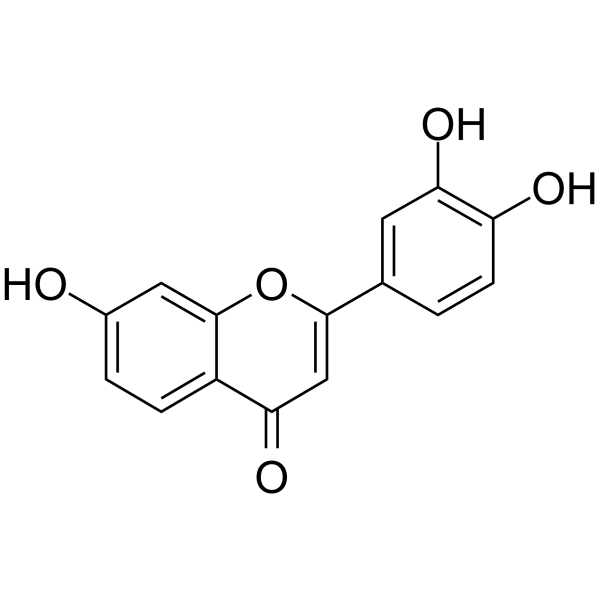
3′,4′,7-Trihydroxyflavoneflavonoid aglycon compound -

HY-135115
Oleuropein AglyconeSecoiridoid -
HY-B0817S
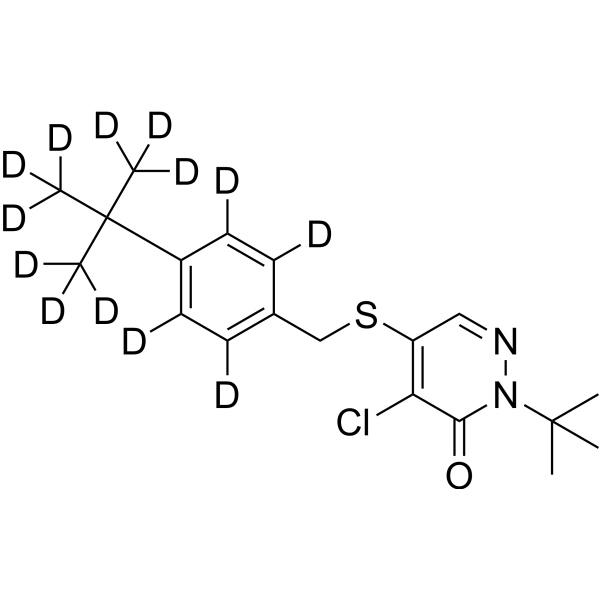
Pyridaben-d13Stable Isotope -
HY-N0512
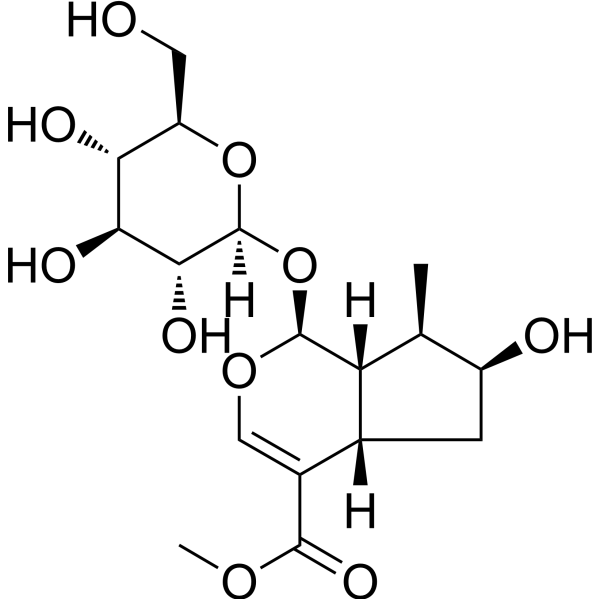
LoganinIiridoid Glycoside -
HY-14248S
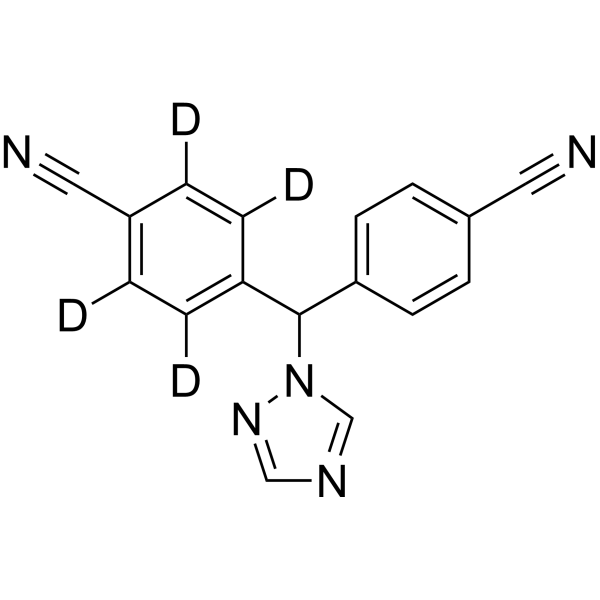
Letrozole-d4Stable Isotope -
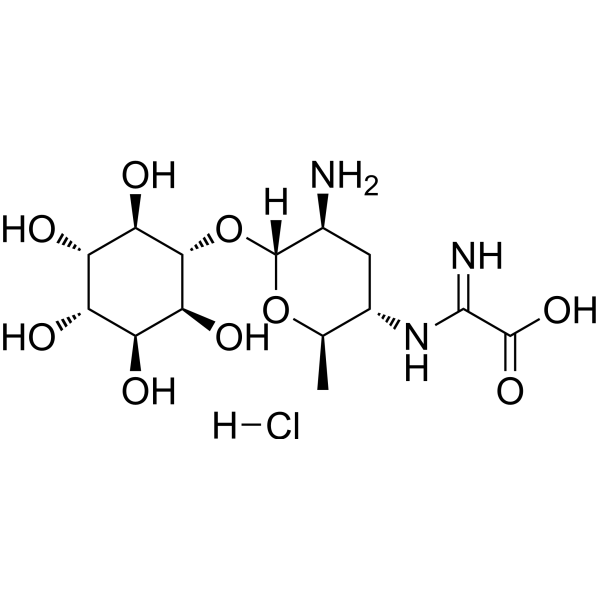
HY-B1864A
Kasugamycin hydrochlorideAntibiotic -

HY-W587861
5β-DihydroprogesteroneTocolytic Agent


Activité biologique
Description
In Vitro
Methiocarb (2.5-7.5 mg/L; 72 h) exerts dose-dependent toxic effects on Allium cepa L. bulbs, including reducing rooting rate, root length and weight gain rate, increasing micronucleus rate, chromosome damage degree and MDA level, decreasing mitotic index, and elevating SOD and CAT activities, with the strongest effects observed at the concentration of 7.5 mg/L[1].
MedChemExpress (MCE) has not independently confirmed the accuracy of these methods. They are for reference only. Further protocols information, click here.
In Vivo
MedChemExpress (MCE) has not independently confirmed the accuracy of these methods. They are for reference only.
-
Animal Model:Wistar Albino (male, 12-13 weeks old, 160 ± 20 g)[2]
-
Dosage:25 mg/kg (1-day treatment); 10 mg/kg (5-day treatment); 2 mg/kg (28-day treatment)
-
Administration:i.g.; once (1-day); daily (5-day, 28-day)
-
Result:Increased LPO in the liver, kidney, brain and testis after 1, 5 and 28 days treatment, with the most significant increase in the brain.
Significantly elevated GSH levels in all the above tissues after 1 day of treatment but significantly decreased after 5 and 28 days of treatment, and the decrease in GSH levels in the kidney, brain and testis was more pronounced than that in the liver.


Chemical Information
-
CAS No. 2032-65-7
-
Masse moléculaire 225.31
-
Formule C11H15NO2S
-
SMILES
O=C(NC)OC1=CC(C)=C(SC)C(C)=C1
-
Synonyms
Mercaptodimethur
-
Livraison
Room temperature in continental US; may vary elsewhere.
-
Stockage
Please store the product under the recommended conditions in the Certificate of Analysis.

Protocole
-
ROS/oxidative-stress fluorescent staining
ROS/oxidative-stress fluorescent staining uses cell-permeant fluorogenic probes that become fluorescent after oxidation inside cells or tissues; commonly used examples include DCFH-DA/DCFDA for broad cellular oxidant detection, DHE for superoxide-related signal detection, MitoSOX for mitochondrial superoxide-related signal detection, and CellROX probes for oxidative-stress-associated fluorescence readouts. The assay detects probe oxidation rather than a single ROS species unless the probe and analysis method have been chemically validated for that species. DCFH-DA enters cells, is deacetylated by intracellular esterases to DCFH, and produces fluorescent DCF after oxidation, so the readout is used as an operational measure of total cellular oxidative stress rather than a species-specific ROS measurement. DHE and MitoSOX can report superoxide-related oxidation, but red fluorescence alone can include non-specific ethidium-like oxidation products; HPLC or optimized spectral approaches are
-
Ferroptosis Solutions
Ferroptosis is an iron-dependent, non-apoptotic form of regulated cell death characterized by lethal lipid peroxidation and sensitivity to suppression by iron chelators or lipophilic radical-trapping antioxidants. The core pathway links cystine uptake through system Xc−, glutathione availability, GPX4-dependent detoxification of phospholipid hydroperoxides, iron-dependent oxidative reactions, and polyunsaturated-phospholipid metabolism into a cell-death program that is biochemically and morphologically distinct from apoptosis, necrosis, and autophagy. The ferroptosis pathway is experimentally linked to phenotype through chemical and genetic perturbation. Erastin induces ferroptosis by inhibiting cystine uptake through system Xc− and weakening antioxidant defenses, while GPX4 inhibition or depletion causes lipid peroxide accumulation and ferroptotic cancer-cell death. ACSL4 and oxidizable arachidonoyl- or adrenoyl-containing phosphatidylethanolamines shape ferroptosis sensitivity by con


Pureté et documentation
Références

Calculators
Concentration (start) × Volume (start) = Concentration (final) × Volume (final)


Methiocarb Related Classifications
HY-124920 Related Classifications
 Powered by Bioz