Search Result
Results for "
textile industry
" in MedChemExpress (MCE) Product Catalog:
5
Biochemical Assay Reagents
6
Isotope-Labeled Compounds
| Cat. No. |
Product Name |
Target |
Research Areas |
Chemical Structure |
-
- HY-125865
-
Casein
2 Publications Verification
|
Environmental Pollutants
Endogenous Metabolite
Casein Kinase
|
Endocrinology
Cancer
|
|
Casein is an orally active phosphoprotein that can be separated into various electrophoretic components, such as α2-Casein, κ-Casein, β-casein, and γ-casein. Casein has also been blended and grafted with other polymers, cross-linkers, or monomers to improve its functional properties. Casein enhances calcium absorption and reduces the extent of fissure as well as smooth-surface caries. Casein promotes proliferation of prostate cancer. Casein has various applications in the paper, leather, textile, and food industries, serving as coatings, adhesives, and packaging materials .
|
-
-
- HY-D0367
-
|
Calcofluor White M2R
|
Fluorescent Dye
|
Others
|
|
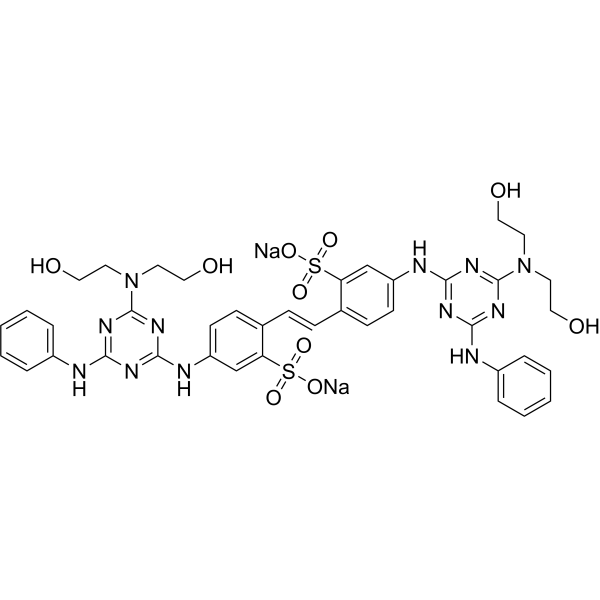
Fluorescent brightener 28 is a fluorescent whitening agent commonly used in the padding process of the textile industry. Fluorescent brightener 28 is capable of staining polysaccharides such as cellulose, and when the plasma membrane ruptures, it also weakly stains the cytoplasm and strongly stains the cell nucleus. Additionally, Fluorescent brightener 28 can be utilized to detect intracellular chitin in living cells. Fluorescent Brightener 28 also is a visible light emitting diode (LED)-light sensitive photoinitiator for free radical photopolymerizations .
|
-
-
- HY-D0259
-
|
Erythrosin extra bluish
|
Environmental Pollutants
Fluorescent Dye
|
Others
|
|
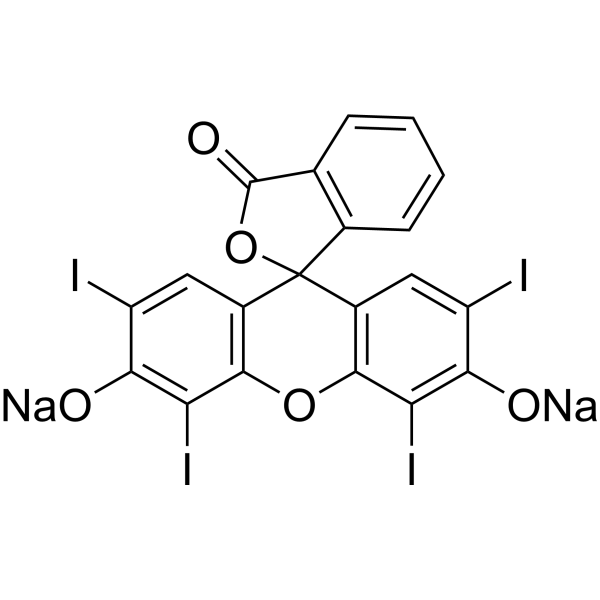
Erythrosine B is an artificial dye widely used in the food and textile industries. Erythrosine B is also a novel photosensitizer which has been used to develop animal models.
|
-
-
- HY-125815
-
|
|
Fluorescent Dye
|
Others
|
|
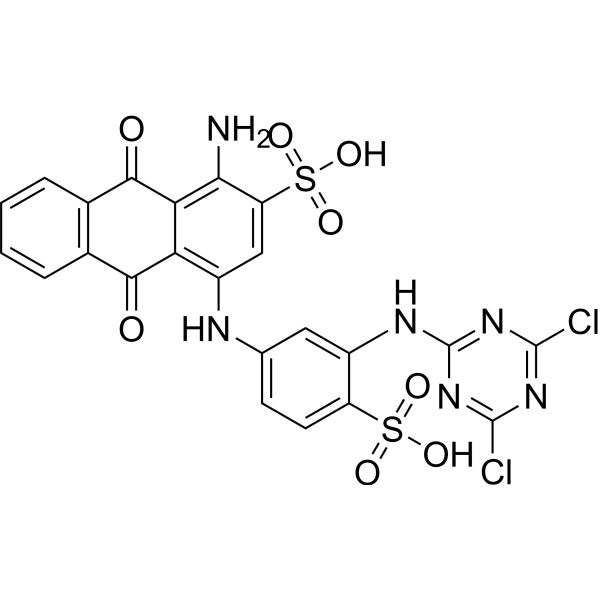
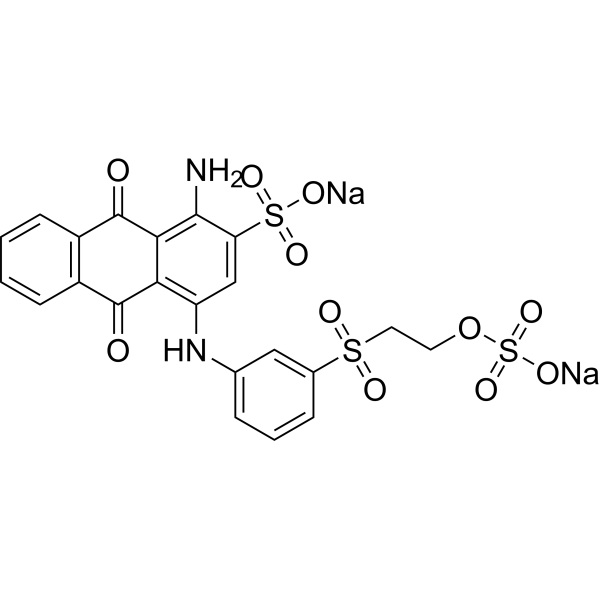
Reactive Blue 4 is an anthraquinone dye used extensively in the textile industry. Reactive Blue 4 is a single colorimetric chemosensor for sequential determination of multiple analytes with different optical responses in aqueous media .
|
-
-
- HY-B2221
-
|
Pectin glycosidase
|
Environmental Pollutants
Endogenous Metabolite
|
Others
Cancer
|
|
Cellulose (Pectin glycosidase) is a natural high molecular weight polysaccharide found in many plants and organisms. It is widely used in manufacturing industries, such as in paper making, textiles, food and medicine, etc. As a renewable resource, Cellulose is biodegradable and sustainable, and can also be used to manufacture chemicals such as Cellulose Esters, Cellulose Acetate and Cellulose Nitrate. In addition, Cellulose is often used as a food additive to increase the stability and quality of food.
|
-
-
- HY-D0342
-
|
|
Fluorescent Dye
|
Others
|
|
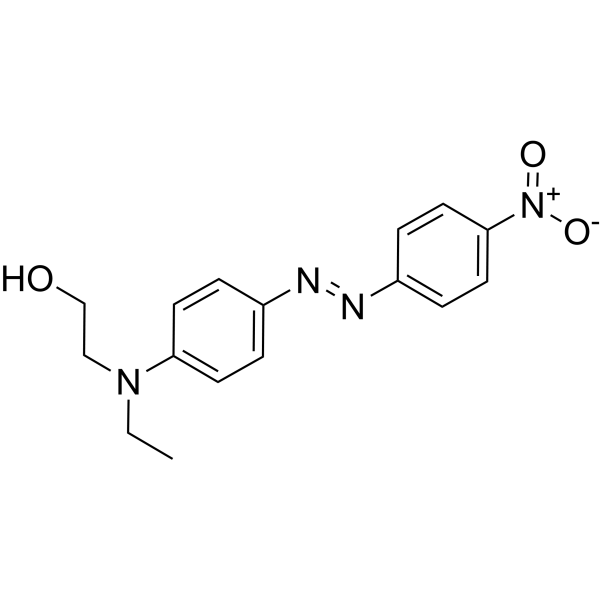
Disperse Red 1, an azobenzene derivative, is an azo textile dye extensively used for dyeing polyester fabrics in textile industry .
|
-
-
- HY-D0331
-
-
-
- HY-N1442
-
|
Orange II; D&C Orange NO. 4
|
Environmental Pollutants
Biochemical Assay Reagents
|
Others
|
|
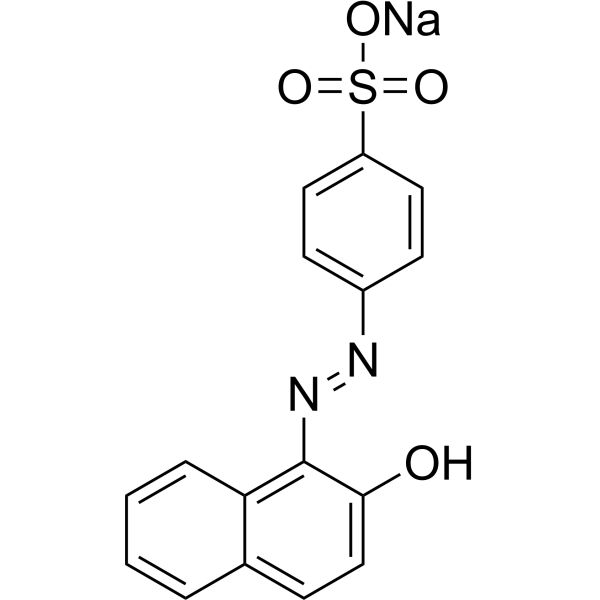
Acid Orange 7 (Orange II; D&C Orange NO. 4) is an azo dye widely used in the textile, food and cosmetic industries. Acid Orange 7 is mainly used as a colorant by combining with fibers and other substances through azo bonds. Acid Orange 7 has a maximum absorption wavelength at 484-485 nm, and the concentration is measured using a UV-visible spectrophotometer. Acid Orange 7 is difficult to degrade and has a certain degree of toxicity. It is often used to study various sewage treatment technologies and photocatalytic degradation reactions, and to evaluate the removal effects of different treatment methods on organic pollutants .
|
-
-
- HY-B1937
-
|
Bio-Soft S 101 sodium
|
Environmental Pollutants
Biochemical Assay Reagents
|
Others
|
|
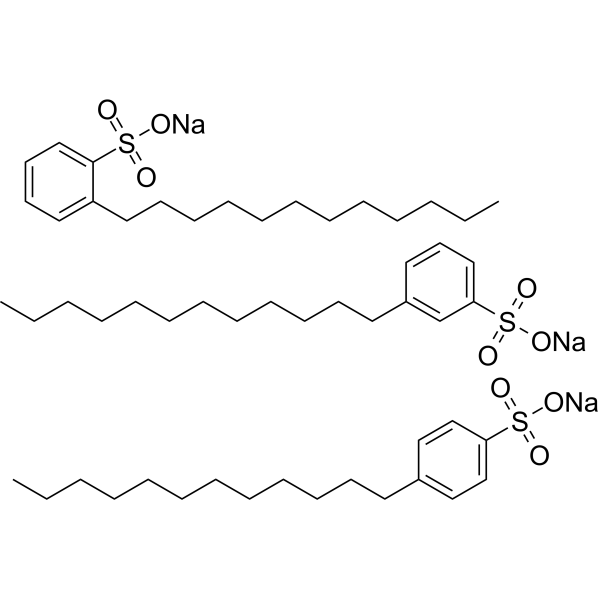
Sodium dodecylbenzenesulfonate (Bio-Soft S 101 sodium) is a nonionic surfactant commonly used in a variety of applications for cleaning and treating industrial equipment. It has good cleaning power and environmental compatibility, and can effectively remove oil, dirt and other forms of contamination. In addition, in textile, paper, leather and other industries, the compound can also be used for fixing and stabilizing dyes and colors. Although the compound has no direct application in the medical field, it plays an important role in industry and laboratory research.
|
-
-
- HY-W127770
-
|
Basic red 9
|
Fluorescent Dye
|
Infection
|
|
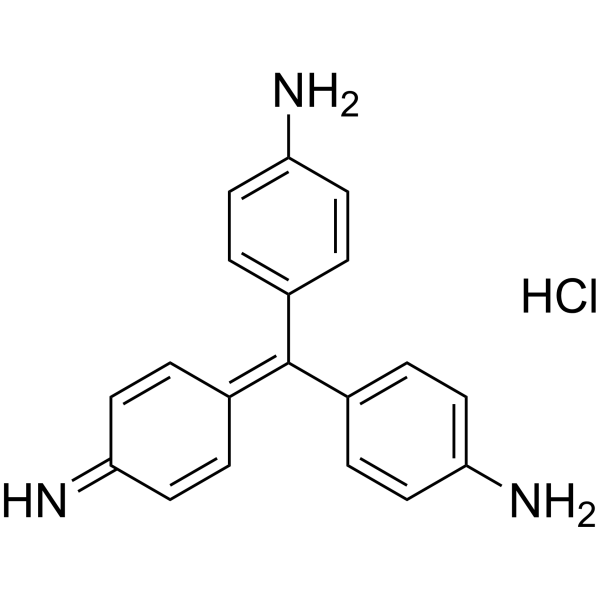
Pararosaniline hydrochloride (Basic red 9) is a pH-responsive basic dye, as a biological stain to track certain proteins. The pH of the acidified Pararosaniline hydrochloride reagent has a significant effect on the color and the maximum absorption wavelength (λmax) of the reaction system, with its optimum pH 0.48 and a λmax at 549 nm. Pararosaniline hydrochloride is also a strong modifier of RNA splicing. Pararosaniline hydrochloride has been used in the analysis of SO2 and formaldehyde and staining of bacteria or other organisms. Pararosaniline hydrochloride is extensively used in industries like textile, printing, paper, cosmetic, and leather .
|
-
-
- HY-W750459
-
|
|
Fluorescent Dye
|
Others
|
|
Fluorescent brightener 28 (Technical Grade) is a fluorescent whitening agent commonly used in the padding process of the textile industry. Fluorescent brightener 28 is capable of staining polysaccharides such as cellulose, and when the plasma membrane ruptures, it also weakly stains the cytoplasm and strongly stains the cell nucleus. Additionally, Fluorescent brightener 28 can be utilized to detect intracellular chitin in living cells. Fluorescent Brightener 28 also is a visible light emitting diode (LED)-light sensitive photoinitiator for free radical photopolymerizations .
|
-
-
- HY-D0411
-
|
Acidyellow 17; Yellow 2G
|
Biochemical Assay Reagents
|
Others
|
|
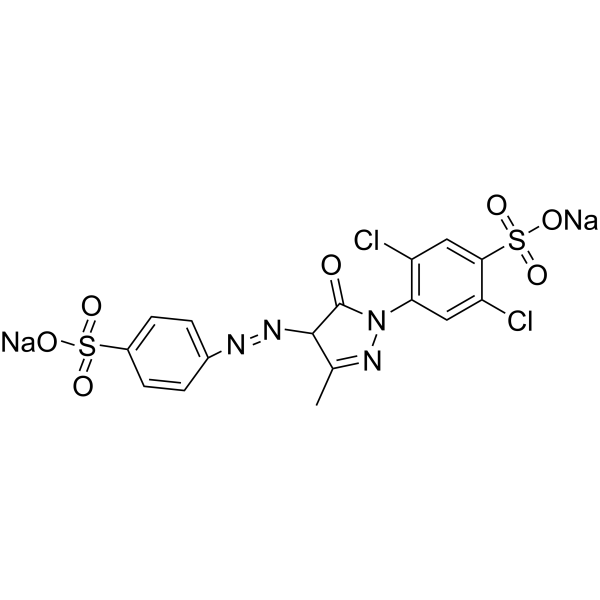
Xylene Fast Yellow 2G is a synthetic dye belonging to the class of azo dyes. It is commonly used in the textile industry to dye natural and synthetic fibers as well as in the paper and ink industries. Xylene Fast Yellow 2G produces a bright yellow color that is fade and wash resistant and can be applied to textiles by a variety of methods including dipping, padding and printing.
|
-
-
- HY-D1137
-
|
|
Fluorescent Dye
|
|
|
C.I. Pigment yellow 110 is the most important colorant used to add color or change the color of something and is chemically essentially unaffected by the carrier or medium into which it is incorporated. It can be widely used in textile, medicine, food, cosmetics, plastics, paint, ink, photography and paper industries.
|
-
-
- HY-128369
-
|
Metanil Yellow
|
Environmental Pollutants
Cytochrome P450
|
Others
|
|
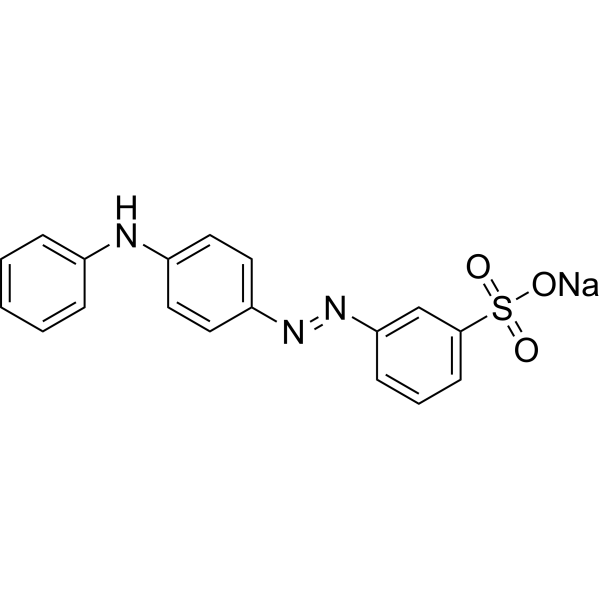
Acid Yellow 36 (Metanil Yellow) is an azo dye and a pH indicator. Acid Yellow 36 changes its color from red at pH 1.2 to yellow at pH 2.3. Acid Yellow 36 is used in the leather, paper and textile industries. Acid Yellow 36 acts as a bifunctional inducer of specific isozymes of P-450 and cytosolic enzymes .
|
-
-
- HY-D0854
-
|
Acid Violet 19; Acid fuchsin sodium
|
Environmental Pollutants
Biochemical Assay Reagents
|
Others
|
|
Acid Red is a class of synthetic dyes commonly used in the textile, paper and ink industries. They are in the category of acid dyes, which means they are water soluble and have acidic properties. Acid Red dye produces bright, vibrant colors that don't fade easily, but are not as durable as some other dyes. They can be used to dye a wide variety of fibers including wool, silk and nylon, as well as paper and leather.
|
-
-
- HY-D0429
-
|
|
Fluorescent Dye
|
|
|
C.I. Pigment red 5 is the most important colorant used to add color or change the color of something and is chemically essentially unaffected by the carrier or medium into which it is incorporated. It can be widely used in textile, medicine, food, cosmetics, plastics, paint, ink, photography and paper industries.
|
-
-
- HY-W206911
-
|
|
Environmental Pollutants
Biochemical Assay Reagents
|
Others
|
|
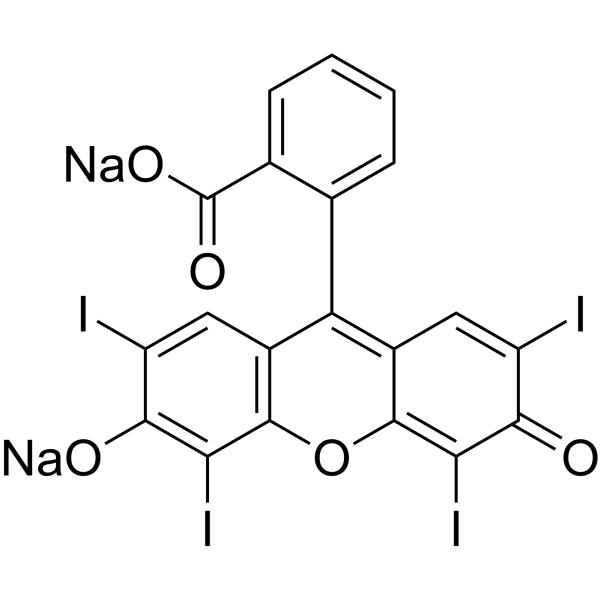
Erythrosin B sodium salt, is a synthetic azo dye commonly used as a food colorant and textile dye. It is a water-soluble compound that produces a bright red color and is often used to improve the appearance of products. Erythrosin B sodium salt is also used in the textile industry for dyeing wool, silk and leather. However, it has been linked to potentially negative health effects, such as allergic reactions and hyperactivity in children.
|
-
-
- HY-D0531
-
|
|
Fluorescent Dye
|
|
|
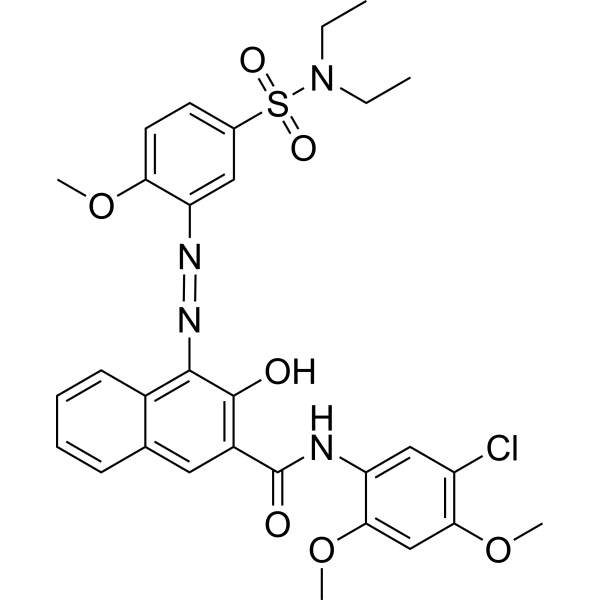
C.I. Pigment red 123 is the most important colorant used to add color or change the color of something and is chemically essentially unaffected by the carrier or medium into which it is incorporated. It can be widely used in textile, medicine, food, cosmetics, plastics, paint, ink, photography and paper industries.
|
-
-
- HY-D0960
-
|
|
Fluorescent Dye
|
|
|
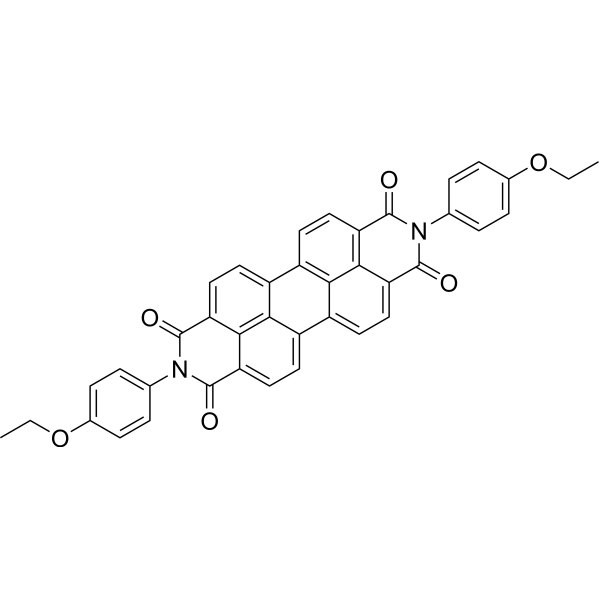
C.I. Solvent Blue 43 is the most important colorant used to add color or change the color of something and is chemically essentially unaffected by the carrier or medium into which it is incorporated. It can be widely used in textile, medicine, food, cosmetics, plastics, paint, ink, photography and paper industries.
|
-
-
- HY-D0374
-
|
|
Fluorescent Dye
|
Others
|
|
Reactive Blue 4 sodium is an anthraquinone dye used extensively in the textile industry. Reactive Blue 4 sodium is a single colorimetric chemosensor for sequential determination of multiple analytes with different optical responses in aqueous media .
|
-
-
- HY-D0421
-
|
|
Fluorescent Dye
|
Others
|
|
C.I. Solvent yellow 18 is a lipid-soluble fluorescent azo dye, which is widely used in industries such as textiles, medicine, food, cosmetics, plastics, paints, inks, photography and papermaking .
|
-
-
- HY-D0312
-
|
Sunchromine Fast Blue MB
|
Biochemical Assay Reagents
|
Others
|
|
Mordant Blue 13 is a synthetic dye used in the textile industry. It belongs to a class of metal complex dyes that are able to form strong bonds with fabrics and other materials. Mordant Blue 13 is commonly used for dyeing cotton, wool and silk fibres, it produces a fast blue color. It can be applied to textiles by a variety of methods including impregnation, padding and printing.
|
-
-
- HY-D0405
-
|
|
Fluorescent Dye
|
|
|
C.I. Pigment yellow 74 is the most important colorant used to add color or change the color of something and is chemically essentially unaffected by the carrier or medium into which it is incorporated. It can be widely used in textile, medicine, food, cosmetics, plastics, paint, ink, photography and paper industries.
|
-
-
- HY-D0457
-
|
|
Fluorescent Dye
|
|
|
C.I. Solvent red 179 is the most important colorant used to add color or change the color of something and is chemically essentially unaffected by the carrier or medium into which it is incorporated. It can be widely used in textile, medicine, food, cosmetics, plastics, paint, ink, photography and paper industries.
|
-
-
- HY-P2890A
-
|
|
Endogenous Metabolite
|
Others
|
|
Laccase, Recombinant Microbial (High activity) is a multicopper oxidase. Laccase, Recombinant Microbial (High activity) catalyzes the oxidation of multiple substrates, including phenolic compounds, polyphenolic compounds, lignin, etc. Laccase, Recombinant Microbial (High activity) is involved in the lignin degradation, cell wall synthesis, pigment synthesis, and antioxidant/immune defense. Laccase, Recombinant Microbial (High activity) can be used in paper/textile/food industry, bioremediation, biomedicine and agriculture .
|
-
-
- HY-B2221S1
-
|
|
Isotope-Labeled Compounds
Endogenous Metabolite
|
Others
|
|
U- 13C Cellulose from chicory is the 13C labeled Cellulose (HY-B2221). Cellulose (Pectin glycosidase) is a natural high molecular weight polysaccharide found in many plants and organisms. It is widely used in manufacturing industries, such as in paper making, textiles, food and medicine, etc. As a renewable resource, Cellulose is biodegradable and sustainable, and can also be used to manufacture chemicals such as Cellulose Esters, Cellulose Acetate and Cellulose Nitrate. In addition, Cellulose is often used as a food additive to increase the stability and quality of food .
|
-
-
- HY-D2424
-
|
|
Fluorescent Dye
|
Others
|
|
Disperse Red 343 is an azo dye widely used in the textile industry for dyeing polyester fabrics .
|
-
-
- HY-D0488
-
|
|
Fluorescent Dye
|
|
|
C.I. Pigment orange 36 is the most important colorant used to add color or change the color of something and is chemically essentially unaffected by the carrier or medium into which it is incorporated. It can be widely used in textile, medicine, food, cosmetics, plastics, paint, ink, photography and paper industries.
|
-
-
- HY-D0489
-
|
|
Fluorescent Dye
|
|
|
C.I. Pigment orange 38 is the most important colorant used to add color or change the color of something and is chemically essentially unaffected by the carrier or medium into which it is incorporated. It can be widely used in textile, medicine, food, cosmetics, plastics, paint, ink, photography and paper industries.
|
-
-
- HY-D0459
-
|
|
Fluorescent Dye
|
|
|
C.I. Pigment brown 25 is the most important colorant used to add color or change the color of something and is chemically essentially unaffected by the carrier or medium into which it is incorporated. It can be widely used in textile, medicine, food, cosmetics, plastics, paint, ink, photography and paper industries.
|
-
-
- HY-D0686
-
|
|
Fluorescent Dye
|
|
|
C.I. Pigment red 221 is the most important colorant used to add color or change the color of something and is chemically essentially unaffected by the carrier or medium into which it is incorporated. It can be widely used in textile, medicine, food, cosmetics, plastics, paint, ink, photography and paper industries.
|
-
-
- HY-D0450
-
|
|
Fluorescent Dye
|
|
|
C.I. Pigment red 112 is the most important colorant used to add color or change the color of something and is chemically essentially unaffected by the carrier or medium into which it is incorporated. It can be widely used in textile, medicine, food, cosmetics, plastics, paint, ink, photography and paper industries.
|
-
-
- HY-D0486
-
|
|
Fluorescent Dye
|
|
|
C.I. Pigment violet 32 is the most important colorant used to add color or change the color of something and is chemically essentially unaffected by the carrier or medium into which it is incorporated. It can be widely used in textile, medicine, food, cosmetics, plastics, paint, ink, photography and paper industries.
|
-
-
- HY-D0442
-
|
|
Fluorescent Dye
|
|
|
C.I. Pigment red 14 is the most important colorant used to add color or change the color of something and is chemically essentially unaffected by the carrier or medium into which it is incorporated. It can be widely used in textile, medicine, food, cosmetics, plastics, paint, ink, photography and paper industries.
|
-
-
- HY-D0510
-
|
|
Fluorescent Dye
|
|
|
C.I. Pigment orange 34 is the most important colorant used to add color or change the color of something and is chemically essentially unaffected by the carrier or medium into which it is incorporated. It can be widely used in textile, medicine, food, cosmetics, plastics, paint, ink, photography and paper industries.
|
-
-
- HY-D0725
-
|
|
Fluorescent Dye
|
|
|
C.I. Pigment yellow 180 is the most important colorant used to add color or change the color of something and is chemically essentially unaffected by the carrier or medium into which it is incorporated. It can be widely used in textile, medicine, food, cosmetics, plastics, paint, ink, photography and paper industries.
|
-
-
- HY-D0445
-
|
|
Fluorescent Dye
|
|
|
C.I. Pigment orange 16 is the most important colorant used to add color or change the color of something and is chemically essentially unaffected by the carrier or medium into which it is incorporated. It can be widely used in textile, medicine, food, cosmetics, plastics, paint, ink, photography and paper industries.
|
-
-
- HY-D0426
-
|
|
Fluorescent Dye
|
|
|
C.I. Pigment red 8 is the most important colorant used to add color or change the color of something and is chemically essentially unaffected by the carrier or medium into which it is incorporated. It can be widely used in textile, medicine, food, cosmetics, plastics, paint, ink, photography and paper industries.
|
-
-
- HY-D0428
-
|
|
Fluorescent Dye
|
|
|
C.I. Pigment red 9 is the most important colorant used to add color or change the color of something and is chemically essentially unaffected by the carrier or medium into which it is incorporated. It can be widely used in textile, medicine, food, cosmetics, plastics, paint, ink, photography and paper industries.
|
-
-
- HY-D0460
-
|
Pigment red 48 calcium salt
|
Fluorescent Dye
|
|
|
C.I. Pigment red 48 is the most important colorant used to add color or change the color of something and is chemically essentially unaffected by the carrier or medium into which it is incorporated. It can be widely used in textile, medicine, food, cosmetics, plastics, paint, ink, photography and paper industries.
|
-
-
- HY-D0394
-
|
|
Fluorescent Dye
|
|
|
C.I. Pigment red 2 is the most important colorant used to add color or change the color of something and is chemically essentially unaffected by the carrier or medium into which it is incorporated. It can be widely used in textile, medicine, food, cosmetics, plastics, paint, ink, photography and paper industries.
|
-
-
- HY-D0519
-
|
|
Fluorescent Dye
|
|
|
C.I. Pigment red 52:1 is the most important colorant used to add color or change the color of something and is chemically essentially unaffected by the carrier or medium into which it is incorporated. It can be widely used in textile, medicine, food, cosmetics, plastics, paint, ink, photography and paper industries.
|
-
-
- HY-B2221S
-
|
|
Isotope-Labeled Compounds
Endogenous Metabolite
|
Others
|
|
U- 13C Cellulose high DP from potato is the 13C labeled Cellulose (HY-B2221). Cellulose (Pectin glycosidase) is a natural high molecular weight polysaccharide found in many plants and organisms. It is widely used in manufacturing industries, such as in paper making, textiles, food and medicine, etc. As a renewable resource, Cellulose is biodegradable and sustainable, and can also be used to manufacture chemicals such as Cellulose Esters, Cellulose Acetate and Cellulose Nitrate. In addition, Cellulose is often used as a food additive to increase the stability and quality of food .
|
-
-
- HY-117860
-
|
|
Fluorescent Dye
|
Others
|
|
Vat Yellow 4 is a synthetic anthraquinone vat dye. Vat Yellow 4 can be used for the dyeing of cotton, rayon, and wool by textile industries .
|
-
-
- HY-W015915R
-
|
Thiourea dioxide (Standard)
|
Reference Standards
Biochemical Assay Reagents
|
Others
|
|
Aminoiminomethanesulphinic acid (Thiourea dioxide) (Standard) is the analytical standard of Aminoiminomethanesulphinic acid. This product is intended for research and analytical applications. Aminoiminomethanesulphinic acid is a solid formaldehyde substitute with both electrophilic and reductive properties. Aminoiminomethanesulphinic acid is commonly used in bleaching processes in the textile industry .
|
-
-
- HY-D0259R
-
|
Erythrosin extra bluish (Standard)
|
Fluorescent Dye
Reference Standards
|
Others
|
|
Erythrosine B (Standard) is the analytical standard of Erythrosine B. This product is intended for research and analytical applications. Erythrosine B is an artificial dye widely used in the food and textile industries. Erythrosine B is also a novel photosensitizer which has been used to develop animal models.
|
-
-
- HY-D0427
-
|
|
Fluorescent Dye
|
|
|
C.I. Pigment red 12 is the most important colorant used to add color or change the color of something and is chemically essentially unaffected by the carrier or medium into which it is incorporated. It can be widely used in textile, medicine, food, cosmetics, plastics, paint, ink, photography and paper industries.
|
-
-
- HY-D0493
-
|
|
Fluorescent Dye
|
|
|
C.I. Pigment yellow 62 is the most important colorant used to add color or change the color of something and is chemically essentially unaffected by the carrier or medium into which it is incorporated. It can be widely used in textile, medicine, food, cosmetics, plastics, paint, ink, photography and paper industries.
|
-
-
- HY-D0408
-
|
|
Fluorescent Dye
|
|
|
C.I. Pigment red 38 is the most important colorant used to add color or change the color of something and is chemically essentially unaffected by the carrier or medium into which it is incorporated. It can be widely used in textile, medicine, food, cosmetics, plastics, paint, ink, photography and paper industries.
|
-
-
- HY-D0392
-
|
|
Fluorescent Dye
|
|
|
C. I. Pigment yellow 16 is the most important colorant used to add color or change the color of something and is chemically essentially unaffected by the carrier or medium into which it is incorporated. It can be widely used in textile, medicine, food, cosmetics, plastics, paint, ink, photography and paper industries.
|
-
- HY-D0433
-
|
Navy Blue G
|
Fluorescent Dye
|
|
|
C.I. Vat Blue 16 is the most important colorant used to add color or change the color of something and is chemically essentially unaffected by the carrier or medium into which it is incorporated. It can be widely used in textile, medicine, food, cosmetics, plastics, paint, ink, photography and paper industries.
|
-
- HY-D0431
-
|
|
Fluorescent Dye
|
|
|
C.I. Pigment blue 56 is the most important colorant used to add color or change the color of something and is chemically essentially unaffected by the carrier or medium into which it is incorporated. It can be widely used in textile, medicine, food, cosmetics, plastics, paint, ink, photography and paper industries.
|
-
- HY-D0415
-
|
|
Fluorescent Dye
|
|
|
C.I. Vat blue 22 is the most important colorant used to add color or change the color of something and is chemically essentially unaffected by the carrier or medium into which it is incorporated. It can be widely used in textile, medicine, food, cosmetics, plastics, paint, ink, photography and paper industries.
|
-
- HY-D0441
-
|
|
Fluorescent Dye
|
|
|
C.I. Pigment red 23 is the most important colorant used to add color or change the color of something and is chemically essentially unaffected by the carrier or medium into which it is incorporated. It can be widely used in textile, medicine, food, cosmetics, plastics, paint, ink, photography and paper industries.
|
-
- HY-B1937R
-
|
Bio-Soft S 101 sodium (Standard)
|
Biochemical Assay Reagents
Reference Standards
|
Others
|
|
Sodium dodecylbenzenesulfonate (Standard) is the analytical standard of Sodium dodecylbenzenesulfonate. This product is intended for research and analytical applications. Sodium dodecylbenzenesulfonate (Bio-Soft S 101 sodium) is a nonionic surfactant commonly used in a variety of applications for cleaning and treating industrial equipment. It has good cleaning power and environmental compatibility, and can effectively remove oil, dirt and other forms of contamination. In addition, in textile, paper, leather and other industries, the compound can also be used for fixing and stabilizing dyes and colors. Although the compound has no direct application in the medical field, it plays an important role in industry and laboratory research.
|
-
- HY-B2221S5
-
|
|
Isotope-Labeled Compounds
Endogenous Metabolite
|
Others
|
|
U- 13C Cellulose from broccoli is the 13C labeled Cellulose (HY-B2221). Cellulose is a natural high molecular weight polysaccharide found in many plants and organisms. It is widely used in manufacturing industries, such as in paper making, textiles, food and medicine, etc. As a renewable resource, Cellulose is biodegradable and sustainable, and can also be used to manufacture chemicals such as Cellulose Esters, Cellulose Acetate and Cellulose Nitrate. In addition, Cellulose is often used as a food additive to increase the stability and quality of food .
|
-
- HY-B2221S3
-
|
|
Isotope-Labeled Compounds
Endogenous Metabolite
|
Others
|
|
U- 13C Cellulose high DP from maize is the 13C labeled Cellulose (HY-B2221). Cellulose (Pectin glycosidase) is a natural high molecular weight polysaccharide found in many plants and organisms. It is widely used in manufacturing industries, such as in paper making, textiles, food and medicine, etc. As a renewable resource, Cellulose is biodegradable and sustainable, and can also be used to manufacture chemicals such as Cellulose Esters, Cellulose Acetate and Cellulose Nitrate. In addition, Cellulose is often used as a food additive to increase the stability and quality of food .
|
-
- HY-P1032S
-
|
|
Isotope-Labeled Compounds
Endogenous Metabolite
|
Others
|
|
Angiotensin I- 13C19, 15N3 (human, mouse, rat) is the 13C and 15N labeled Angiotensin I (human, mouse, rat) (HY-P1032). Cellulose (Pectin glycosidase) is a natural high molecular weight polysaccharide found in many plants and organisms. It is widely used in manufacturing industries, such as in paper making, textiles, food and medicine, etc. As a renewable resource, Cellulose is biodegradable and sustainable, and can also be used to manufacture chemicals such as Cellulose Esters, Cellulose Acetate and Cellulose Nitrate. In addition, Cellulose is often used as a food additive to increase the stability and quality of food .
|
-
- HY-W750212
-
|
Orange II-13C6; D&C Orange NO. 4-13C6
|
Isotope-Labeled Compounds
Biochemical Assay Reagents
|
Others
|
|
Acid Orange 7- 13C6 (Orange II- 13C6) is the 13C-labeled Acid orange 7 (HY-N1442). Acid Orange 7 (Orange II; D&C Orange NO. 4) is an azo dye widely used in the textile, food and cosmetic industries. Acid Orange 7 is mainly used as a colorant by combining with fibers and other substances through azo bonds. Acid Orange 7 has a maximum absorption wavelength at 484-485 nm, and the concentration is measured using a UV-visible spectrophotometer. Acid Orange 7 is difficult to degrade and has a certain degree of toxicity. It is often used to study various sewage treatment technologies and photocatalytic degradation reactions, and to evaluate the removal effects of different treatment methods on organic pollutants .
|
-
- HY-N1442R
-
|
Orange II (Standard); D&C Orange NO. 4 (Standard)
|
Biochemical Assay Reagents
Reference Standards
|
Others
|
|
Acid orange 7 (Standard) is the analytical standard of Acid orange 7 (HY-1442). This product is intended for research and analytical applications. Acid Orange 7 (Orange II; D&C Orange NO. 4) is an azo dye widely used in the textile, food and cosmetic industries. Acid Orange 7 is mainly used as a colorant by combining with fibers and other substances through azo bonds. Acid Orange 7 has a maximum absorption wavelength at 484-485 nm, and the concentration is measured using a UV-visible spectrophotometer. Acid Orange 7 is difficult to degrade and has a certain degree of toxicity. Acid Orange 7 is often used to study various sewage treatment technologies and photocatalytic degradation reactions, and to evaluate the removal effects of different treatment methods on organic pollutants .
|
-
- HY-W761989
-
|
|
Fluorescent Dye
|
Others
|
|
Direct Brown 95, a synthetic dye, finds extensive application in the textile industry for imparting color to fabrics. It serves as a stain in histology and cytology, aiding in the differentiation of diverse cell types. Additionally, it serves as a marker in molecular biology, facilitating the detection of DNA and RNA.
|
-
- HY-W110755
-
|
|
Biochemical Assay Reagents
Bacterial
Fungal
|
Infection
|
|
Poly diallyldimethylammonium chloride is a cationic polymer with quaternary ammonium side groups, which exhibits excellent flocculation performance and thermal stability. Poly diallyldimethylammonium chloride also possesses microbicidal activity. Poly diallyldimethylammonium chloride can be used in studies on bacterial and fungal infections, as well as in research related to water treatment, textile printing and dyeing, papermaking chemical industry and other fields, with a wide range of applications .
|
-
| Cat. No. |
Product Name |
Type |
-
- HY-D0367
-
|
Calcofluor White M2R
|
Fluorescent Dyes
|
|
Fluorescent brightener 28 is a fluorescent whitening agent commonly used in the padding process of the textile industry. Fluorescent brightener 28 is capable of staining polysaccharides such as cellulose, and when the plasma membrane ruptures, it also weakly stains the cytoplasm and strongly stains the cell nucleus. Additionally, Fluorescent brightener 28 can be utilized to detect intracellular chitin in living cells. Fluorescent Brightener 28 also is a visible light emitting diode (LED)-light sensitive photoinitiator for free radical photopolymerizations .
|
-
- HY-D0259
-
|
Erythrosin extra bluish
|
Fluorescent Dyes
|
|
Erythrosine B is an artificial dye widely used in the food and textile industries. Erythrosine B is also a novel photosensitizer which has been used to develop animal models.
|
-
- HY-125815
-
|
|
Fluorescent Dyes
|
|
Reactive Blue 4 is an anthraquinone dye used extensively in the textile industry. Reactive Blue 4 is a single colorimetric chemosensor for sequential determination of multiple analytes with different optical responses in aqueous media .
|
-
- HY-D0342
-
|
|
Fluorescent Dyes
|
|
Disperse Red 1, an azobenzene derivative, is an azo textile dye extensively used for dyeing polyester fabrics in textile industry .
|
-
- HY-D0331
-
|
|
Fluorescent Dyes
|
|
Reactive Blue 19 is an anthraquinone dye that can be used in the textile industry .
|
-
- HY-N1442
-
|
Orange II; D&C Orange NO. 4
|
Fluorescent Dyes
|
|
Acid Orange 7 (Orange II; D&C Orange NO. 4) is an azo dye widely used in the textile, food and cosmetic industries. Acid Orange 7 is mainly used as a colorant by combining with fibers and other substances through azo bonds. Acid Orange 7 has a maximum absorption wavelength at 484-485 nm, and the concentration is measured using a UV-visible spectrophotometer. Acid Orange 7 is difficult to degrade and has a certain degree of toxicity. It is often used to study various sewage treatment technologies and photocatalytic degradation reactions, and to evaluate the removal effects of different treatment methods on organic pollutants .
|
-
- HY-D0411
-
|
Acidyellow 17; Yellow 2G
|
Fluorescent Dyes
|
|
Xylene Fast Yellow 2G is a synthetic dye belonging to the class of azo dyes. It is commonly used in the textile industry to dye natural and synthetic fibers as well as in the paper and ink industries. Xylene Fast Yellow 2G produces a bright yellow color that is fade and wash resistant and can be applied to textiles by a variety of methods including dipping, padding and printing.
|
-
- HY-D1137
-
|
|
Fluorescent Dyes
|
|
C.I. Pigment yellow 110 is the most important colorant used to add color or change the color of something and is chemically essentially unaffected by the carrier or medium into which it is incorporated. It can be widely used in textile, medicine, food, cosmetics, plastics, paint, ink, photography and paper industries.
|
-
- HY-128369
-
|
Metanil Yellow
|
Fluorescent Dyes
|
|
Acid Yellow 36 (Metanil Yellow) is an azo dye and a pH indicator. Acid Yellow 36 changes its color from red at pH 1.2 to yellow at pH 2.3. Acid Yellow 36 is used in the leather, paper and textile industries. Acid Yellow 36 acts as a bifunctional inducer of specific isozymes of P-450 and cytosolic enzymes .
|
-
- HY-D0429
-
|
|
Fluorescent Dyes
|
|
C.I. Pigment red 5 is the most important colorant used to add color or change the color of something and is chemically essentially unaffected by the carrier or medium into which it is incorporated. It can be widely used in textile, medicine, food, cosmetics, plastics, paint, ink, photography and paper industries.
|
-
- HY-W206911
-
|
|
Fluorescent Dyes
|
|
Erythrosin B sodium salt, is a synthetic azo dye commonly used as a food colorant and textile dye. It is a water-soluble compound that produces a bright red color and is often used to improve the appearance of products. Erythrosin B sodium salt is also used in the textile industry for dyeing wool, silk and leather. However, it has been linked to potentially negative health effects, such as allergic reactions and hyperactivity in children.
|
-
- HY-D0531
-
|
|
Fluorescent Dyes
|
|
C.I. Pigment red 123 is the most important colorant used to add color or change the color of something and is chemically essentially unaffected by the carrier or medium into which it is incorporated. It can be widely used in textile, medicine, food, cosmetics, plastics, paint, ink, photography and paper industries.
|
-
- HY-D0960
-
|
|
Fluorescent Dyes
|
|
C.I. Solvent Blue 43 is the most important colorant used to add color or change the color of something and is chemically essentially unaffected by the carrier or medium into which it is incorporated. It can be widely used in textile, medicine, food, cosmetics, plastics, paint, ink, photography and paper industries.
|
-
- HY-D0374
-
|
|
Fluorescent Dyes
|
|
Reactive Blue 4 sodium is an anthraquinone dye used extensively in the textile industry. Reactive Blue 4 sodium is a single colorimetric chemosensor for sequential determination of multiple analytes with different optical responses in aqueous media .
|
-
- HY-D0421
-
|
|
Fluorescent Dyes
|
|
C.I. Solvent yellow 18 is a lipid-soluble fluorescent azo dye, which is widely used in industries such as textiles, medicine, food, cosmetics, plastics, paints, inks, photography and papermaking .
|
-
- HY-D0312
-
|
Sunchromine Fast Blue MB
|
Fluorescent Dyes
|
|
Mordant Blue 13 is a synthetic dye used in the textile industry. It belongs to a class of metal complex dyes that are able to form strong bonds with fabrics and other materials. Mordant Blue 13 is commonly used for dyeing cotton, wool and silk fibres, it produces a fast blue color. It can be applied to textiles by a variety of methods including impregnation, padding and printing.
|
-
- HY-D0405
-
|
|
Fluorescent Dyes
|
|
C.I. Pigment yellow 74 is the most important colorant used to add color or change the color of something and is chemically essentially unaffected by the carrier or medium into which it is incorporated. It can be widely used in textile, medicine, food, cosmetics, plastics, paint, ink, photography and paper industries.
|
-
- HY-D0457
-
|
|
Fluorescent Dyes
|
|
C.I. Solvent red 179 is the most important colorant used to add color or change the color of something and is chemically essentially unaffected by the carrier or medium into which it is incorporated. It can be widely used in textile, medicine, food, cosmetics, plastics, paint, ink, photography and paper industries.
|
-
- HY-D2424
-
|
|
Fluorescent Dyes
|
|
Disperse Red 343 is an azo dye widely used in the textile industry for dyeing polyester fabrics .
|
-
- HY-D0488
-
|
|
Fluorescent Dyes
|
|
C.I. Pigment orange 36 is the most important colorant used to add color or change the color of something and is chemically essentially unaffected by the carrier or medium into which it is incorporated. It can be widely used in textile, medicine, food, cosmetics, plastics, paint, ink, photography and paper industries.
|
-
- HY-D0489
-
|
|
Fluorescent Dyes
|
|
C.I. Pigment orange 38 is the most important colorant used to add color or change the color of something and is chemically essentially unaffected by the carrier or medium into which it is incorporated. It can be widely used in textile, medicine, food, cosmetics, plastics, paint, ink, photography and paper industries.
|
-
- HY-D0459
-
|
|
Fluorescent Dyes
|
|
C.I. Pigment brown 25 is the most important colorant used to add color or change the color of something and is chemically essentially unaffected by the carrier or medium into which it is incorporated. It can be widely used in textile, medicine, food, cosmetics, plastics, paint, ink, photography and paper industries.
|
-
- HY-D0686
-
|
|
Fluorescent Dyes
|
|
C.I. Pigment red 221 is the most important colorant used to add color or change the color of something and is chemically essentially unaffected by the carrier or medium into which it is incorporated. It can be widely used in textile, medicine, food, cosmetics, plastics, paint, ink, photography and paper industries.
|
-
- HY-D0450
-
|
|
Fluorescent Dyes
|
|
C.I. Pigment red 112 is the most important colorant used to add color or change the color of something and is chemically essentially unaffected by the carrier or medium into which it is incorporated. It can be widely used in textile, medicine, food, cosmetics, plastics, paint, ink, photography and paper industries.
|
-
- HY-D0486
-
|
|
Fluorescent Dyes
|
|
C.I. Pigment violet 32 is the most important colorant used to add color or change the color of something and is chemically essentially unaffected by the carrier or medium into which it is incorporated. It can be widely used in textile, medicine, food, cosmetics, plastics, paint, ink, photography and paper industries.
|
-
- HY-D0442
-
|
|
Fluorescent Dyes
|
|
C.I. Pigment red 14 is the most important colorant used to add color or change the color of something and is chemically essentially unaffected by the carrier or medium into which it is incorporated. It can be widely used in textile, medicine, food, cosmetics, plastics, paint, ink, photography and paper industries.
|
-
- HY-D0510
-
|
|
Fluorescent Dyes
|
|
C.I. Pigment orange 34 is the most important colorant used to add color or change the color of something and is chemically essentially unaffected by the carrier or medium into which it is incorporated. It can be widely used in textile, medicine, food, cosmetics, plastics, paint, ink, photography and paper industries.
|
-
- HY-D0725
-
|
|
Fluorescent Dyes
|
|
C.I. Pigment yellow 180 is the most important colorant used to add color or change the color of something and is chemically essentially unaffected by the carrier or medium into which it is incorporated. It can be widely used in textile, medicine, food, cosmetics, plastics, paint, ink, photography and paper industries.
|
-
- HY-D0445
-
|
|
Fluorescent Dyes
|
|
C.I. Pigment orange 16 is the most important colorant used to add color or change the color of something and is chemically essentially unaffected by the carrier or medium into which it is incorporated. It can be widely used in textile, medicine, food, cosmetics, plastics, paint, ink, photography and paper industries.
|
-
- HY-D0426
-
|
|
Fluorescent Dyes
|
|
C.I. Pigment red 8 is the most important colorant used to add color or change the color of something and is chemically essentially unaffected by the carrier or medium into which it is incorporated. It can be widely used in textile, medicine, food, cosmetics, plastics, paint, ink, photography and paper industries.
|
-
- HY-D0428
-
|
|
Fluorescent Dyes
|
|
C.I. Pigment red 9 is the most important colorant used to add color or change the color of something and is chemically essentially unaffected by the carrier or medium into which it is incorporated. It can be widely used in textile, medicine, food, cosmetics, plastics, paint, ink, photography and paper industries.
|
-
- HY-D0460
-
|
Pigment red 48 calcium salt
|
Fluorescent Dyes
|
|
C.I. Pigment red 48 is the most important colorant used to add color or change the color of something and is chemically essentially unaffected by the carrier or medium into which it is incorporated. It can be widely used in textile, medicine, food, cosmetics, plastics, paint, ink, photography and paper industries.
|
-
- HY-D0394
-
|
|
Fluorescent Dyes
|
|
C.I. Pigment red 2 is the most important colorant used to add color or change the color of something and is chemically essentially unaffected by the carrier or medium into which it is incorporated. It can be widely used in textile, medicine, food, cosmetics, plastics, paint, ink, photography and paper industries.
|
-
- HY-D0519
-
|
|
Fluorescent Dyes
|
|
C.I. Pigment red 52:1 is the most important colorant used to add color or change the color of something and is chemically essentially unaffected by the carrier or medium into which it is incorporated. It can be widely used in textile, medicine, food, cosmetics, plastics, paint, ink, photography and paper industries.
|
-
- HY-D0259R
-
|
Erythrosin extra bluish (Standard)
|
Fluorescent Dyes
|
|
Erythrosine B (Standard) is the analytical standard of Erythrosine B. This product is intended for research and analytical applications. Erythrosine B is an artificial dye widely used in the food and textile industries. Erythrosine B is also a novel photosensitizer which has been used to develop animal models.
|
-
- HY-D0427
-
|
|
Fluorescent Dyes
|
|
C.I. Pigment red 12 is the most important colorant used to add color or change the color of something and is chemically essentially unaffected by the carrier or medium into which it is incorporated. It can be widely used in textile, medicine, food, cosmetics, plastics, paint, ink, photography and paper industries.
|
-
- HY-D0493
-
|
|
Fluorescent Dyes
|
|
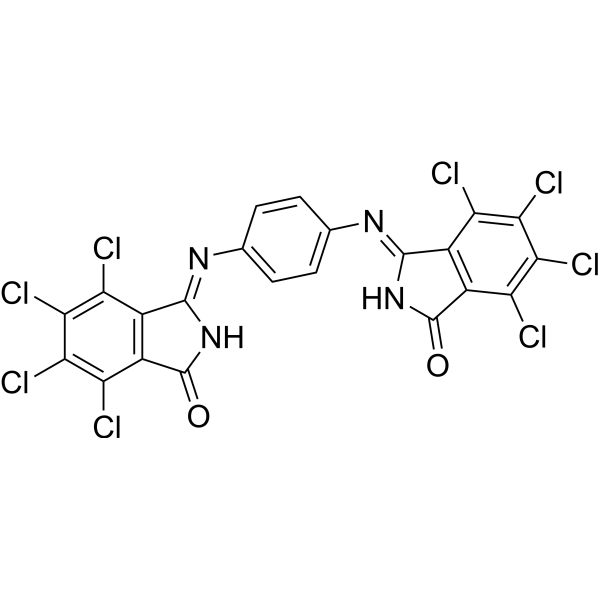
C.I. Pigment yellow 62 is the most important colorant used to add color or change the color of something and is chemically essentially unaffected by the carrier or medium into which it is incorporated. It can be widely used in textile, medicine, food, cosmetics, plastics, paint, ink, photography and paper industries.
|
-
- HY-D0408
-
|
|
Fluorescent Dyes
|
|
C.I. Pigment red 38 is the most important colorant used to add color or change the color of something and is chemically essentially unaffected by the carrier or medium into which it is incorporated. It can be widely used in textile, medicine, food, cosmetics, plastics, paint, ink, photography and paper industries.
|
-
- HY-D0392
-
|
|
Fluorescent Dyes
|
|
C. I. Pigment yellow 16 is the most important colorant used to add color or change the color of something and is chemically essentially unaffected by the carrier or medium into which it is incorporated. It can be widely used in textile, medicine, food, cosmetics, plastics, paint, ink, photography and paper industries.
|
-
- HY-D0433
-
|
Navy Blue G
|
Fluorescent Dyes
|
|
C.I. Vat Blue 16 is the most important colorant used to add color or change the color of something and is chemically essentially unaffected by the carrier or medium into which it is incorporated. It can be widely used in textile, medicine, food, cosmetics, plastics, paint, ink, photography and paper industries.
|
-
- HY-D0431
-
|
|
Fluorescent Dyes
|
|
C.I. Pigment blue 56 is the most important colorant used to add color or change the color of something and is chemically essentially unaffected by the carrier or medium into which it is incorporated. It can be widely used in textile, medicine, food, cosmetics, plastics, paint, ink, photography and paper industries.
|
-
- HY-D0415
-
|
|
Fluorescent Dyes
|
|
C.I. Vat blue 22 is the most important colorant used to add color or change the color of something and is chemically essentially unaffected by the carrier or medium into which it is incorporated. It can be widely used in textile, medicine, food, cosmetics, plastics, paint, ink, photography and paper industries.
|
-
- HY-D0441
-
|
|
Fluorescent Dyes
|
|
C.I. Pigment red 23 is the most important colorant used to add color or change the color of something and is chemically essentially unaffected by the carrier or medium into which it is incorporated. It can be widely used in textile, medicine, food, cosmetics, plastics, paint, ink, photography and paper industries.
|
-
- HY-N1442R
-
|
Orange II (Standard); D&C Orange NO. 4 (Standard)
|
Fluorescent Dyes
|
|
Acid orange 7 (Standard) is the analytical standard of Acid orange 7 (HY-1442). This product is intended for research and analytical applications. Acid Orange 7 (Orange II; D&C Orange NO. 4) is an azo dye widely used in the textile, food and cosmetic industries. Acid Orange 7 is mainly used as a colorant by combining with fibers and other substances through azo bonds. Acid Orange 7 has a maximum absorption wavelength at 484-485 nm, and the concentration is measured using a UV-visible spectrophotometer. Acid Orange 7 is difficult to degrade and has a certain degree of toxicity. Acid Orange 7 is often used to study various sewage treatment technologies and photocatalytic degradation reactions, and to evaluate the removal effects of different treatment methods on organic pollutants .
|
| Cat. No. |
Product Name |
Type |
-
- HY-125865
-
Casein
2 Publications Verification
|
Biochemical Assay Reagents
|
|
Casein is an orally active phosphoprotein that can be separated into various electrophoretic components, such as α2-Casein, κ-Casein, β-casein, and γ-casein. Casein has also been blended and grafted with other polymers, cross-linkers, or monomers to improve its functional properties. Casein enhances calcium absorption and reduces the extent of fissure as well as smooth-surface caries. Casein promotes proliferation of prostate cancer. Casein has various applications in the paper, leather, textile, and food industries, serving as coatings, adhesives, and packaging materials .
|
-
- HY-B1937
-
|
Bio-Soft S 101 sodium
|
Biochemical Assay Reagents
|
|
Sodium dodecylbenzenesulfonate (Bio-Soft S 101 sodium) is a nonionic surfactant commonly used in a variety of applications for cleaning and treating industrial equipment. It has good cleaning power and environmental compatibility, and can effectively remove oil, dirt and other forms of contamination. In addition, in textile, paper, leather and other industries, the compound can also be used for fixing and stabilizing dyes and colors. Although the compound has no direct application in the medical field, it plays an important role in industry and laboratory research.
|
-
- HY-D0854
-
|
Acid Violet 19; Acid fuchsin sodium
|
Biochemical Assay Reagents
|
|
Acid Red is a class of synthetic dyes commonly used in the textile, paper and ink industries. They are in the category of acid dyes, which means they are water soluble and have acidic properties. Acid Red dye produces bright, vibrant colors that don't fade easily, but are not as durable as some other dyes. They can be used to dye a wide variety of fibers including wool, silk and nylon, as well as paper and leather.
|
-
- HY-W015915R
-
|
Thiourea dioxide (Standard)
|
Biochemical Assay Reagents
|
|
Aminoiminomethanesulphinic acid (Thiourea dioxide) (Standard) is the analytical standard of Aminoiminomethanesulphinic acid. This product is intended for research and analytical applications. Aminoiminomethanesulphinic acid is a solid formaldehyde substitute with both electrophilic and reductive properties. Aminoiminomethanesulphinic acid is commonly used in bleaching processes in the textile industry .
|
-
- HY-B1937R
-
|
Bio-Soft S 101 sodium (Standard)
|
Biochemical Assay Reagents
|
|
Sodium dodecylbenzenesulfonate (Standard) is the analytical standard of Sodium dodecylbenzenesulfonate. This product is intended for research and analytical applications. Sodium dodecylbenzenesulfonate (Bio-Soft S 101 sodium) is a nonionic surfactant commonly used in a variety of applications for cleaning and treating industrial equipment. It has good cleaning power and environmental compatibility, and can effectively remove oil, dirt and other forms of contamination. In addition, in textile, paper, leather and other industries, the compound can also be used for fixing and stabilizing dyes and colors. Although the compound has no direct application in the medical field, it plays an important role in industry and laboratory research.
|
| Cat. No. |
Product Name |
Target |
Research Area |
-
- HY-P1032S
-
|
|
Isotope-Labeled Compounds
Endogenous Metabolite
|
Others
|
|
Angiotensin I- 13C19, 15N3 (human, mouse, rat) is the 13C and 15N labeled Angiotensin I (human, mouse, rat) (HY-P1032). Cellulose (Pectin glycosidase) is a natural high molecular weight polysaccharide found in many plants and organisms. It is widely used in manufacturing industries, such as in paper making, textiles, food and medicine, etc. As a renewable resource, Cellulose is biodegradable and sustainable, and can also be used to manufacture chemicals such as Cellulose Esters, Cellulose Acetate and Cellulose Nitrate. In addition, Cellulose is often used as a food additive to increase the stability and quality of food .
|
| Cat. No. |
Product Name |
Category |
Target |
Chemical Structure |
| Cat. No. |
Product Name |
Chemical Structure |
-
- HY-B2221S1
-
|
|
|
U- 13C Cellulose from chicory is the 13C labeled Cellulose (HY-B2221). Cellulose (Pectin glycosidase) is a natural high molecular weight polysaccharide found in many plants and organisms. It is widely used in manufacturing industries, such as in paper making, textiles, food and medicine, etc. As a renewable resource, Cellulose is biodegradable and sustainable, and can also be used to manufacture chemicals such as Cellulose Esters, Cellulose Acetate and Cellulose Nitrate. In addition, Cellulose is often used as a food additive to increase the stability and quality of food .
|
-
-
- HY-B2221S
-
|
|
|
U- 13C Cellulose high DP from potato is the 13C labeled Cellulose (HY-B2221). Cellulose (Pectin glycosidase) is a natural high molecular weight polysaccharide found in many plants and organisms. It is widely used in manufacturing industries, such as in paper making, textiles, food and medicine, etc. As a renewable resource, Cellulose is biodegradable and sustainable, and can also be used to manufacture chemicals such as Cellulose Esters, Cellulose Acetate and Cellulose Nitrate. In addition, Cellulose is often used as a food additive to increase the stability and quality of food .
|
-
-
- HY-B2221S5
-
|
|
|
U- 13C Cellulose from broccoli is the 13C labeled Cellulose (HY-B2221). Cellulose is a natural high molecular weight polysaccharide found in many plants and organisms. It is widely used in manufacturing industries, such as in paper making, textiles, food and medicine, etc. As a renewable resource, Cellulose is biodegradable and sustainable, and can also be used to manufacture chemicals such as Cellulose Esters, Cellulose Acetate and Cellulose Nitrate. In addition, Cellulose is often used as a food additive to increase the stability and quality of food .
|
-
-
- HY-B2221S3
-
|
|
|
U- 13C Cellulose high DP from maize is the 13C labeled Cellulose (HY-B2221). Cellulose (Pectin glycosidase) is a natural high molecular weight polysaccharide found in many plants and organisms. It is widely used in manufacturing industries, such as in paper making, textiles, food and medicine, etc. As a renewable resource, Cellulose is biodegradable and sustainable, and can also be used to manufacture chemicals such as Cellulose Esters, Cellulose Acetate and Cellulose Nitrate. In addition, Cellulose is often used as a food additive to increase the stability and quality of food .
|
-
-
- HY-P1032S
-
|
|
|
Angiotensin I- 13C19, 15N3 (human, mouse, rat) is the 13C and 15N labeled Angiotensin I (human, mouse, rat) (HY-P1032). Cellulose (Pectin glycosidase) is a natural high molecular weight polysaccharide found in many plants and organisms. It is widely used in manufacturing industries, such as in paper making, textiles, food and medicine, etc. As a renewable resource, Cellulose is biodegradable and sustainable, and can also be used to manufacture chemicals such as Cellulose Esters, Cellulose Acetate and Cellulose Nitrate. In addition, Cellulose is often used as a food additive to increase the stability and quality of food .
|
-
-
- HY-W750212
-
|
|
|
Acid Orange 7- 13C6 (Orange II- 13C6) is the 13C-labeled Acid orange 7 (HY-N1442). Acid Orange 7 (Orange II; D&C Orange NO. 4) is an azo dye widely used in the textile, food and cosmetic industries. Acid Orange 7 is mainly used as a colorant by combining with fibers and other substances through azo bonds. Acid Orange 7 has a maximum absorption wavelength at 484-485 nm, and the concentration is measured using a UV-visible spectrophotometer. Acid Orange 7 is difficult to degrade and has a certain degree of toxicity. It is often used to study various sewage treatment technologies and photocatalytic degradation reactions, and to evaluate the removal effects of different treatment methods on organic pollutants .
|
-
| Cat. No. |
Product Name |
|
Classification |
-
- HY-B2221
-
|
Pectin glycosidase
|
|
Fillers
|
|
Cellulose (Pectin glycosidase) is a natural high molecular weight polysaccharide found in many plants and organisms. It is widely used in manufacturing industries, such as in paper making, textiles, food and medicine, etc. As a renewable resource, Cellulose is biodegradable and sustainable, and can also be used to manufacture chemicals such as Cellulose Esters, Cellulose Acetate and Cellulose Nitrate. In addition, Cellulose is often used as a food additive to increase the stability and quality of food.
|
Your information is safe with us. * Required Fields.
Inquiry Information
- Product Name:
- Cat. No.:
- Quantity:
- MCE Japan Authorized Agent:

