



1-Oleoyl lysophosphatidic acid
Based on 3 publication(s) in Google Scholar
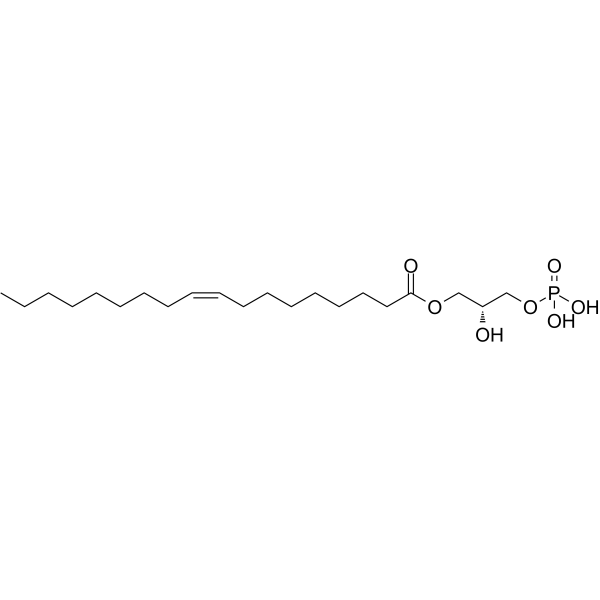
1-Oleoyl lysophosphatidic acid (1-Oleoyl-sn-glycero-3-phosphate) is an abundant lysophosphatidic acid (LPA) species with high biological activity due to its strong affinity for the LPA receptors. 1-Oleoyl lysophosphatidic acid is commonly used in most laboratories as a reagent for LPA receptor activation. 1-Oleoyl lysophosphatidic acid increases SRE-driven β-galactosidase activity.
For research use only. We do not sell to patients.
- Purity : 99.90%
- CAS No.: 65528-98-5
- Formula: C21H41O7P
- Molecular Weight:436.52
-
Storage:
Solution, -20°C, 2 years

To place orders, for customer services and technical support, please contact: MedChemExpress USA
Tel: 609-228-6898 E-mail: [email protected] [email protected]


-
 Biological Activity
-
Chemical Information
- Purity & Documentation
- References
-
 Help & FAQs


-
HY-108496
Sphingosine-1-phosphate -
HY-13689
Go 6983 -
HY-101952
Prostaglandin E2 -
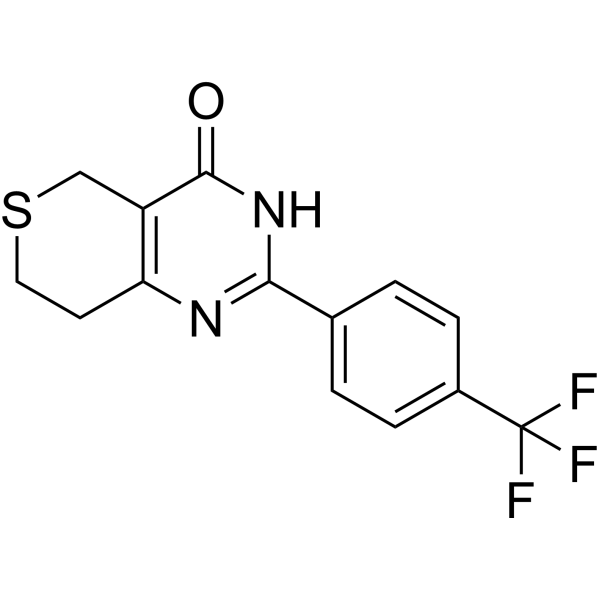
HY-15147
XAV-939 -
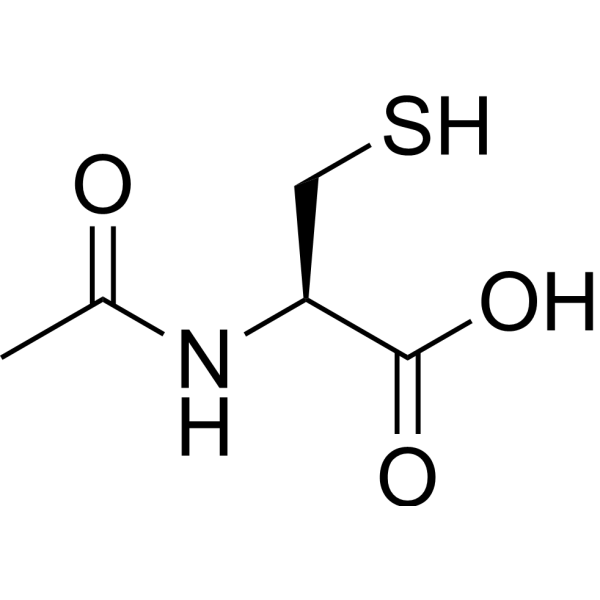
HY-B0215
Acetylcysteine -
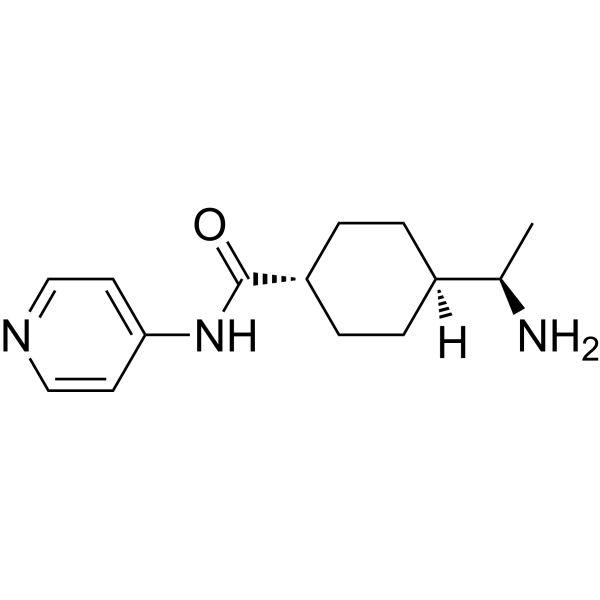
HY-10071
Y-27632 -
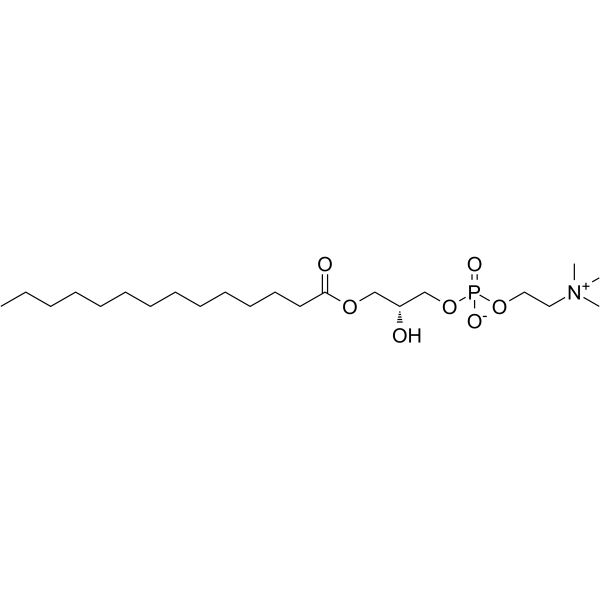
HY-113123
LysoPC(14:0/0:0) -
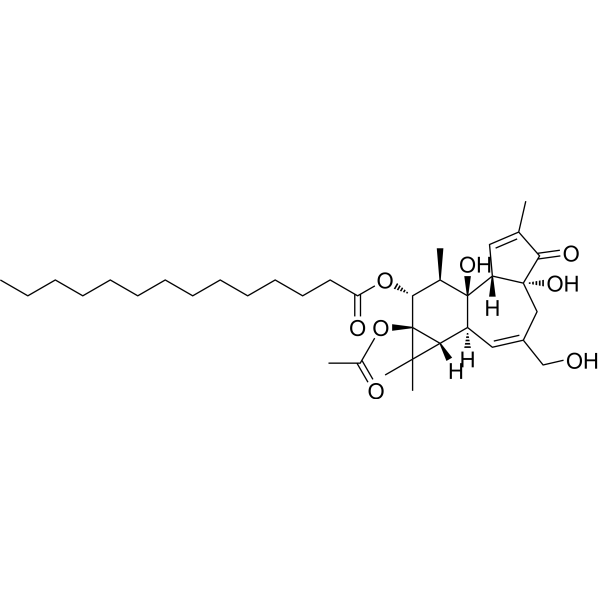
HY-18739
Phorbol 12-myristate 13-acetate -
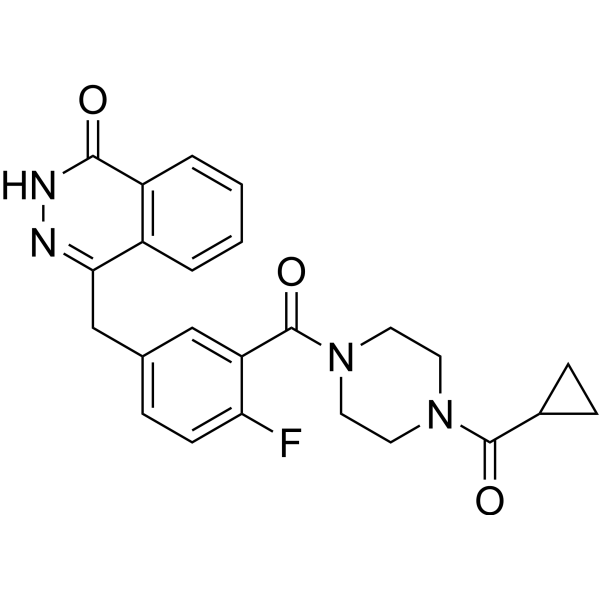
HY-10162
Olaparib -
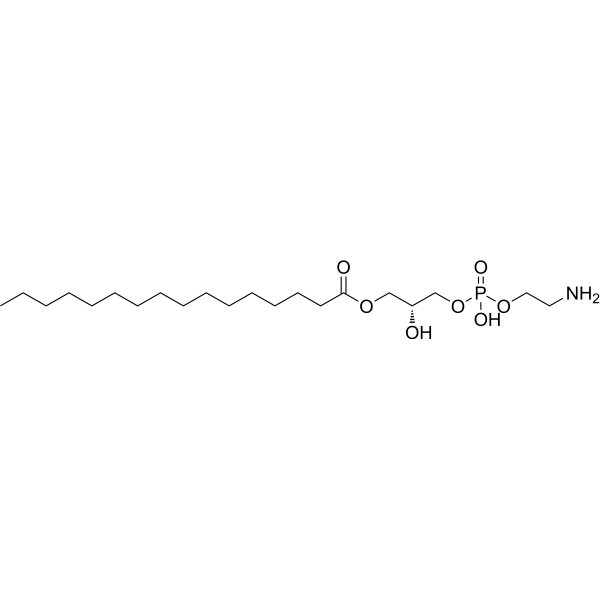
HY-141617
1-Palmitoyl-2-hydroxy-sn-glycero-3-PE -
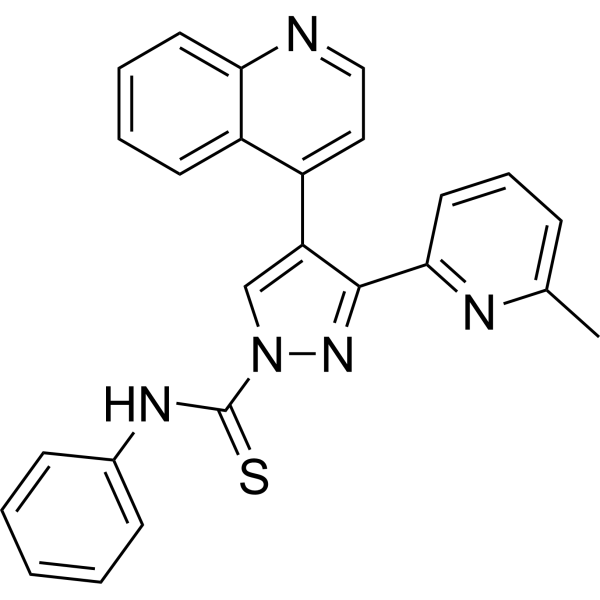
HY-10432
A 83-01 -

HY-D0842A
BSA Protein (Low Endotoxin,Fatty acid free)
Publications Citing Use of MedChemExpress (MCE) 1-Oleoyl lysophosphatidic acid
More Customer Validation & Images

-
WB


Biological Activity
Description
Cellular Effect
|
Cell Line

|
Type | Value | Description | References |
|---|---|---|---|---|
| CHO | EC50 |
0.26 μM
Compound: 1, LPA 18:1
|
Agonist activity at mouse LPA4 expressed in CHO cells by Fura-2AM dye based Ca2+ mobilization assay
Agonist activity at mouse LPA4 expressed in CHO cells by Fura-2AM dye based Ca2+ mobilization assay
|
[PMID: 25100502] |
| HEK293 | EC50 |
18 nM
Compound: LPA (18:1)
|
Agonist activity at human LPA1 receptor transfected in HEK293 cells after 1 hr by TGFalpha shedding assay
Agonist activity at human LPA1 receptor transfected in HEK293 cells after 1 hr by TGFalpha shedding assay
|
[PMID: 23395664] |
| HEK293 | EC50 |
29 nM
Compound: LPA (18:1)
|
Agonist activity at human LPA2 receptor transfected in HEK293 cells after 1 hr by TGFalpha shedding assay
Agonist activity at human LPA2 receptor transfected in HEK293 cells after 1 hr by TGFalpha shedding assay
|
[PMID: 23395664] |
| HEK293 | EC50 |
55 nM
Compound: LPA (18:1)
|
Agonist activity at human LPA5 receptor transfected in HEK293 cells after 1 hr by TGFalpha shedding assay in presence of Ki16425
Agonist activity at human LPA5 receptor transfected in HEK293 cells after 1 hr by TGFalpha shedding assay in presence of Ki16425
|
[PMID: 23395664] |
| HEK293 | EC50 |
77 nM
Compound: LPA (18:1)
|
Agonist activity at human LPA3 receptor transfected in HEK293 cells after 1 hr by TGFalpha shedding assay
Agonist activity at human LPA3 receptor transfected in HEK293 cells after 1 hr by TGFalpha shedding assay
|
[PMID: 23395664] |
| HEK293 | EC50 |
8.1 nM
Compound: LPA (18:1)
|
Agonist activity at human LPA4 receptor transfected in HEK293 cells after 1 hr by TGFalpha shedding assay in presence of Ki16425
Agonist activity at human LPA4 receptor transfected in HEK293 cells after 1 hr by TGFalpha shedding assay in presence of Ki16425
|
[PMID: 23395664] |
| HEK293 | EC50 |
970 nM
Compound: LPA (18:1)
|
Agonist activity at human LPA6 receptor transfected in HEK293 cells after 1 hr by TGFalpha shedding assay in presence of Ki16425
Agonist activity at human LPA6 receptor transfected in HEK293 cells after 1 hr by TGFalpha shedding assay in presence of Ki16425
|
[PMID: 23395664] |
| HEK293 | IC50 |
442 nM
Compound: LPA
|
Inhibition of 6x-histidine-tagged human recombinant ATX expressed in HEK293 cells using bisP-nitrophenyl phosphate as a substrate
Inhibition of 6x-histidine-tagged human recombinant ATX expressed in HEK293 cells using bisP-nitrophenyl phosphate as a substrate
|
[PMID: 20536182] |
| MEF | EC50 |
0.002 μM
Compound: 1, LPA 18:1
|
Agonist activity at human LPA2 expressed in LPA1xLPA2 double knockout mouse MEF cells by Fura-2AM dye based Ca2+ mobilization assay
Agonist activity at human LPA2 expressed in LPA1xLPA2 double knockout mouse MEF cells by Fura-2AM dye based Ca2+ mobilization assay
|
[PMID: 25100502] |
| MEF | EC50 |
0.35 μM
Compound: 1, LPA 18:1
|
Agonist activity at human LPA1 expressed in LPA1xLPA2 double knockout mouse MEF cells up to 10 uM by Fura-2AM dye based Ca2+ mobilization assay
Agonist activity at human LPA1 expressed in LPA1xLPA2 double knockout mouse MEF cells up to 10 uM by Fura-2AM dye based Ca2+ mobilization assay
|
[PMID: 25100502] |
| MEF | EC50 |
0.83 μM
Compound: 1, LPA 18:1
|
Agonist activity at human LPA3 expressed in LPA1xLPA2 double knockout mouse MEF cells by Fura-2AM dye based Ca2+ mobilization assay
Agonist activity at human LPA3 expressed in LPA1xLPA2 double knockout mouse MEF cells by Fura-2AM dye based Ca2+ mobilization assay
|
[PMID: 25100502] |
| N1E-115 | IC50 |
10 nM
Compound: oleoyl-LPA
|
Displacement of [32P]diazirine-LPA from LPA receptor in mouse N1E-115 cells preincubated for 1 hr in dark followed by UV irradiation for 5 mins by scintillation counting analysis
Displacement of [32P]diazirine-LPA from LPA receptor in mouse N1E-115 cells preincubated for 1 hr in dark followed by UV irradiation for 5 mins by scintillation counting analysis
|
10.1039/C4MD00333K |
| RH7777 | EC50 |
0.83 μM
Compound: LPA
|
Agonist activity at LPA1 receptor (unknown origin) stably expressed in rat RH7777 cells assessed as increase in intracellular calcium level by Fluo-4 NW dye based fluorescence assay
Agonist activity at LPA1 receptor (unknown origin) stably expressed in rat RH7777 cells assessed as increase in intracellular calcium level by Fluo-4 NW dye based fluorescence assay
|
[PMID: 31790581] |
| Sf9 | IC50 |
499.8 nM
Compound: 1-O-Oleoyl-LPA
|
Inhibition of human recombinant autotaxin expressed in insect Sf9 cells using FS-3 as substrate preincubated for 10 mins prior substrate addition measured up to 60 mins by FRET-based analysis
Inhibition of human recombinant autotaxin expressed in insect Sf9 cells using FS-3 as substrate preincubated for 10 mins prior substrate addition measured up to 60 mins by FRET-based analysis
|
[PMID: 22460025] |
In Vivo
MedChemExpress (MCE) has not independently confirmed the accuracy of these methods. They are for reference only.
-
Animal Model:9-week-old male Wistar rats[1]
-
Dosage:0.4-2 μg
-
Administration:I.c.v.
-
Result:Reduced open arm exploration under novelty conditions and had no effect under habituated conditions in the EPM.


Chemical Information
-
CAS No. 65528-98-5
-
Appearance Liquid
-
Molecular Weight 436.52
-
Formula C21H41O7P
-
Color Colorless to light yellow
-
SMILES
CCCCCCCC/C=C\CCCCCCCC(OC[C@@H](O)COP(O)(O)=O)=O
-
Synonyms
1-Oleoyl-sn-glycero-3-phosphate; 1-Oleoyl-LPA
-
Shipping
Room temperature in continental US; may vary elsewhere.
-
Storage
Solution, -20°C, 2 years


Publications (3)
-
Journal Impact Factor
-
Most Recent
-
Eur J Pharmacol
Melatonin postconditioning attenuates myocardial ischemia/reperfusion injury by activating YAP to decrease DRP1-mediated mitochondrial fission. [Abstract]2026 Apr 15:1021:178827. PMID: 41912007 -
Neurobiol Stress
Effects of autotaxin and lysophosphatidic acid deficiencies on depression-like behaviors in mice exposed to chronic unpredictable mild stress. [Abstract]2024 Apr 4:30:100632. PMID: 38601361
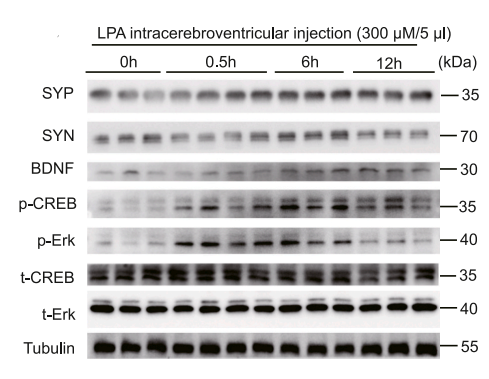
1-Oleoyl lysophosphatidic acid purchased from MedChemExpress. Usage Cited in: Neurobiol Stress. 2024 Apr 4:30:100632. [Abstract]
Western blot analysis showed that in the brains of mice, LPA (1-Oleoyl lysophosphatidic acid) injection into the lateral ventricles affected the expression of synaptic-related proteins in the hippocampus
-


Purity & Documentation
-
Data Sheet (265 KB)
-
SDS (393 KB)
- English - EN (393 KB)
- Français - FR (393 KB)
- Deutsch - DE (393 KB)
- Norwegian - NO (393 KB)
- Español - ES (393 KB)
- Swedish - SV (393 KB)
- Italian - IT (393 KB)
- Korean - KR (393 KB)
- Portuguese - PT (393 KB)
-
Handling Instructions (2659 KB)
References
[1]. Castilla-Ortega E, et al. 1-Oleoyl lysophosphatidic acid: a new mediator of emotional behavior in rats. PLoS One. 2014;9(1):e85348. Published 2014 Jan 7. [Content Brief]
[2]. Perkins LM, et al. Activation of serum response element-regulated genes by lysophosphatidic acid. Nucleic Acids Res. 1994;22(3):450-452. [Content Brief]

Calculators
Concentration (start) × Volume (start) = Concentration (final) × Volume (final)


1-Oleoyl lysophosphatidic acid Related Classifications
HY-137862 Related Classifications
 Powered by Bioz