



Cobicistat
Based on 12 publication(s) in Google Scholar
Cobicistat is a potent and selective inhibitor of cytochrome P450 3A (CYP3A) enzymes with IC50s of 30-285 nM. Cobicistat is a pharmacokinetic enhancer which increases the overall absorption of several HIV medications.
연구목적의 판매만을 진행합니다. 환자를 대상으로 한 판매는 하지 않습니다.
- Purity : 99.49%
- CAS No.: 1004316-88-4
- 화학식: C40H53N7O5S2
- 분자량:776.02
-
보관:Powder -20°C, 3 years , 4°C, 2 years ; In solvent -80°C, 1 year , -20°C, 6 months

To place orders, for customer services and technical support, please contact: MedChemExpress USA
Tel: 609-228-6898 E-mail: [email protected] [email protected]


-
 Biological Activity
-
Chemical Information
-
용액&용해도
- 순도&문서
- References
-
 Help & FAQs


-
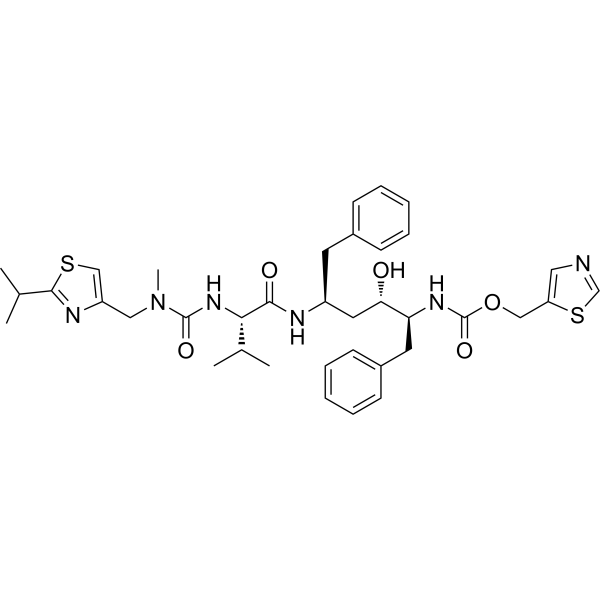
HY-90001
RitonavirHIV Protease Inhibitor -
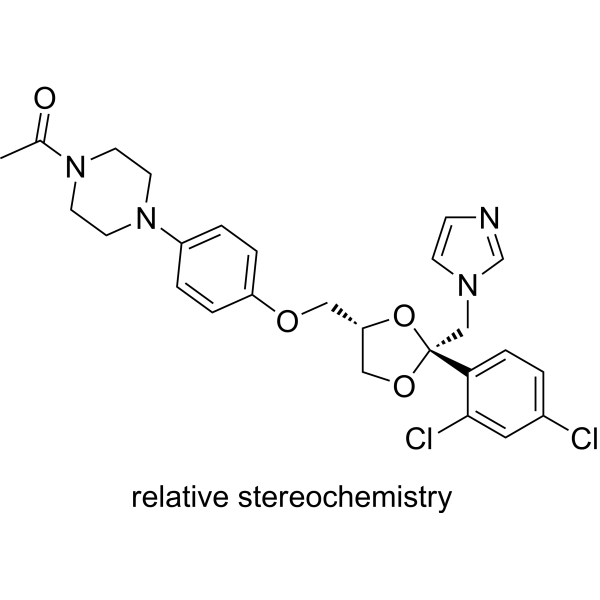
HY-B0105
KetoconazoleCYP3A4 Inhibitor -
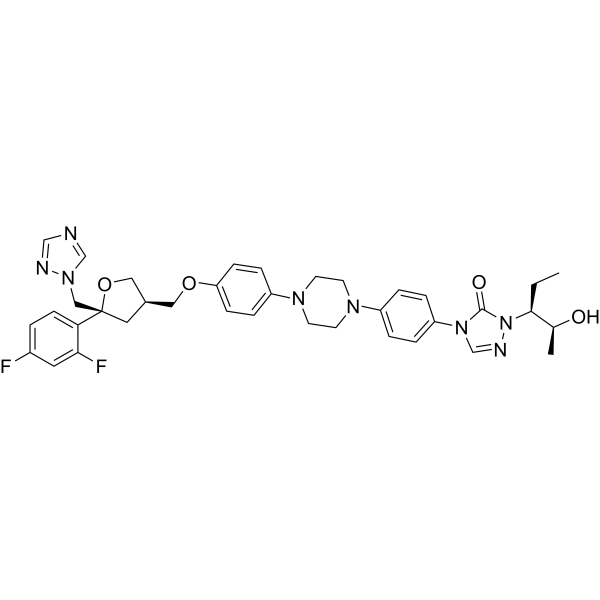
HY-17373
PosaconazoleAnti-fungal Agent -
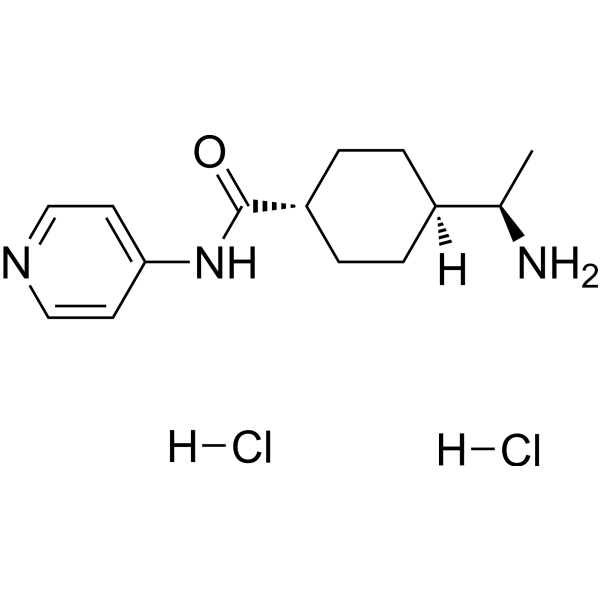
HY-10583
Y-27632 dihydrochlorideROCK Inhibitor -
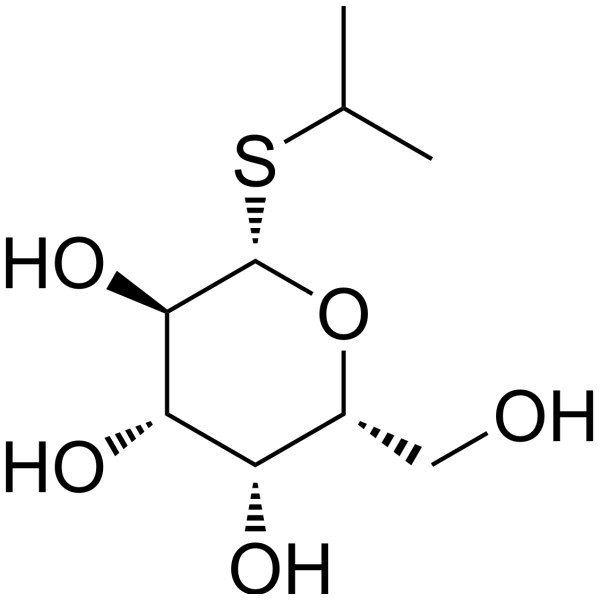
HY-15921
IPTGAllolactose Mimic -
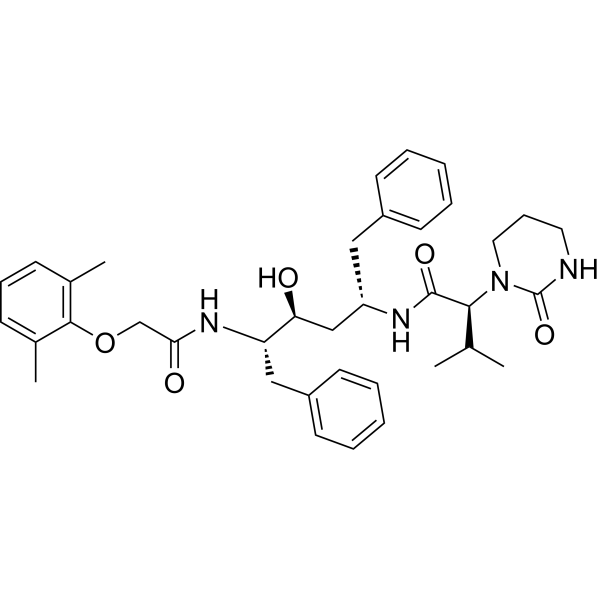
HY-14588
LopinavirHIV-1 Protease Inhibitor -
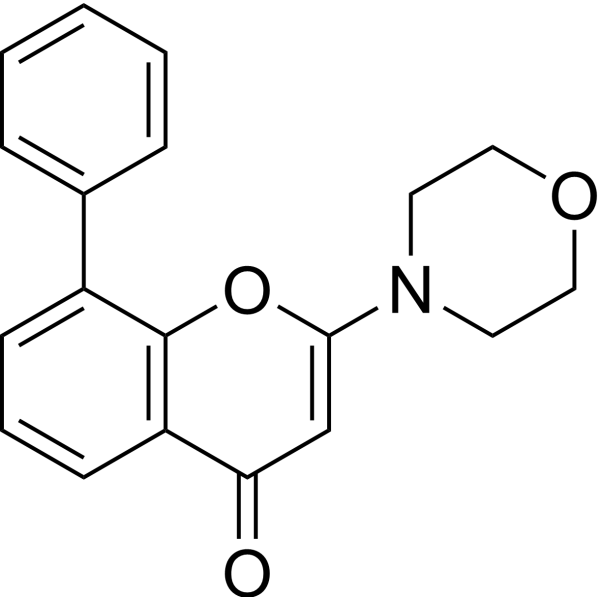
HY-10108
LY294002PI3K Inhibitor -
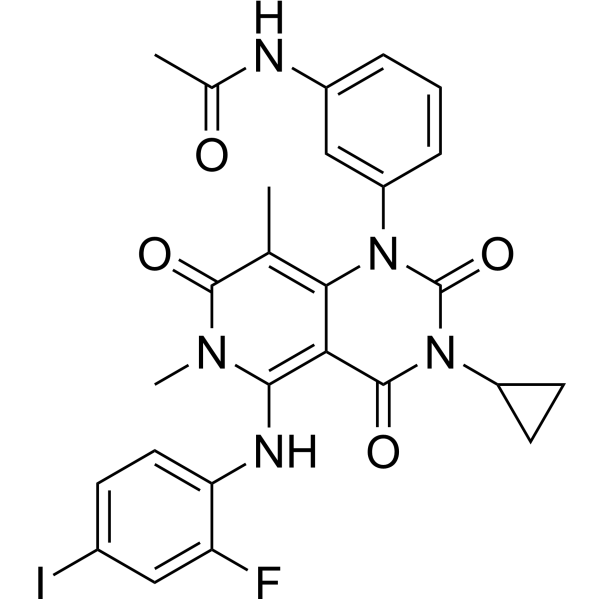
HY-10999
TrametinibMEK Inhibitor -
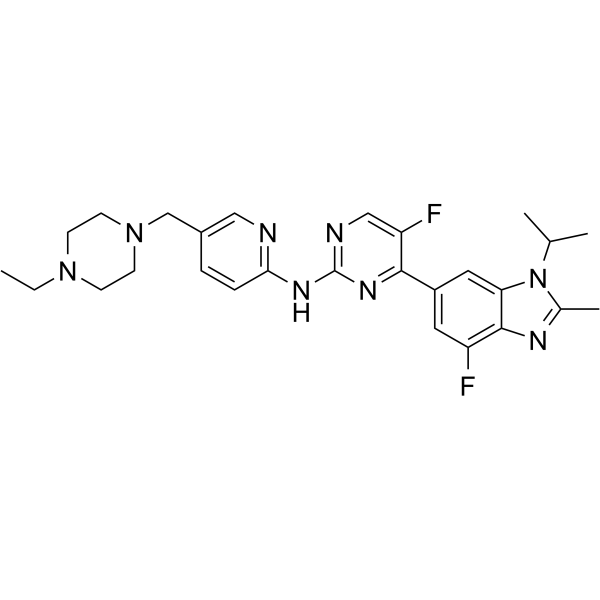
HY-16297A
AbemaciclibCDK4/6 Inhibitor -
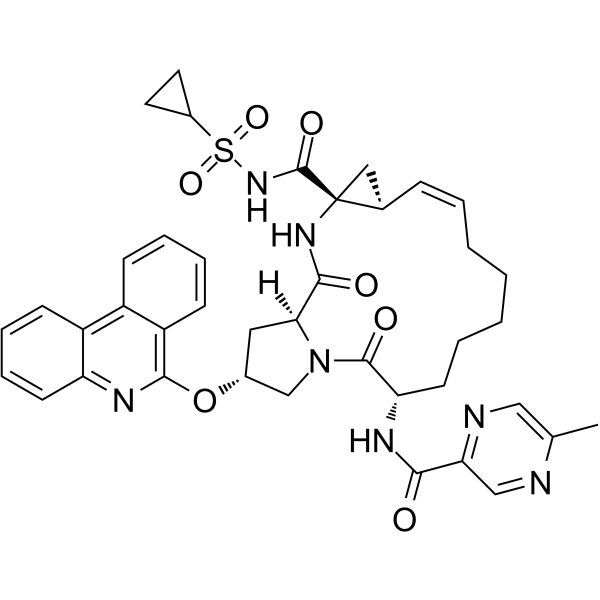
HY-12594
ParitaprevirNS3/4A Protease Inhibitor -
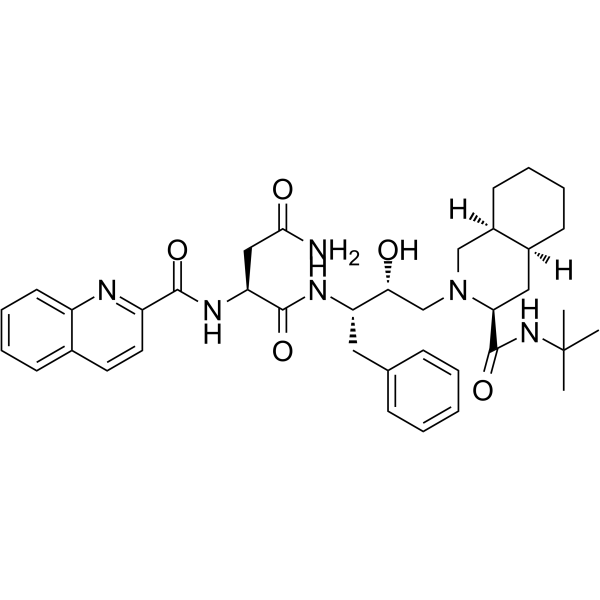
HY-17007
SaquinavirHIV Protease Inhibitor -
HY-15592
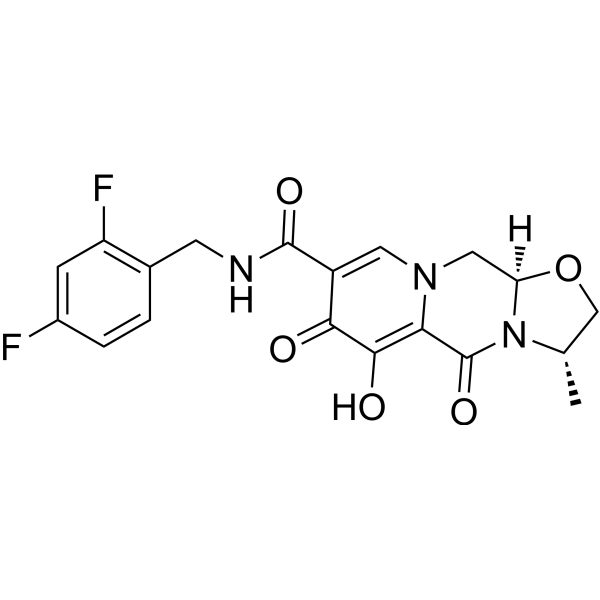
CabotegravirHIV Integrase Inhibitor
Publications Citing Use of MedChemExpress (MCE) Cobicistat
More- ACS Nano. 2025 Sep 30;19(38):33879-33890. [Abstract]
- Acta Pharm Sin B. 2021 Jun;11(6):1607-1616. [Abstract]
- Acta Pharm Sin B. 2021 Mar;11(3):810-822. [Abstract]
- J Exp Clin Cancer Res. 2025 Jan 3;44(1):3. [Abstract]
- Eur J Med Chem. 2020 Oct 15:204:112626. [Abstract]
- Eur J Med Chem. 2020 Aug 15:200:112427. [Abstract]
- Toxicol Sci. 2021 Apr 27;181(1):58-67. [Abstract]
- Expert Opin Drug Metab Toxicol. 2019 Nov;15(11):975-984. [Abstract]
- Cancer Res Commun. 2021 Nov;1(2):79-89. [Abstract]
- Viruses. 2020 Apr 16;12(4):452. [Abstract]
- Chemrxiv. 2021, Jun 10.
- Drug Metab Lett. 2016;10(2):111-23. [Abstract]
 Customer Validation & Images

-
Cell Proliferation/Viability Assay
-
WB
-
In Vivo Imaging
-
Histological Imaging/Staining
-
Flow Cytometry


Biological Activity
제품 설명
IC50 & Target
|
CYP3 |
HIV-1 |
In Vitro
In HIV-1 protease enzymatic assay and antiviral cellular assays. Cobicistat is inactive against HIV-1 protease (IC50>30 μM) . And Cobicistat has no inhibitory effect against HIV replication in a multicycle 5-day MT-2 HIV infection assay (EC50>30 μM). In assays using MT-2 cells, Cobicistat exhibits minimal cytotoxicity, with a CC50 value above 80 μM[1]. The mode of inhibition of human CYP3A by Cobicistat and Ritonavir shares the same mechanism of action for the inhibition of CYP3A. It shows its inhibitory effects on CYP3A may involve directly at the heme group of the CYP3A enzyme[1]. The minimal adverse effects of Cobicistat in these assays suggest a lower potential for toxicity related to altered lipid metabolism. In the lipid accumulation assay with the human adipocytes, Ritonavir shows a clear effect with an EC50 of 16 μM. However, Cobicistat exhibits no effect at a concentration up to 30 μM[1]. In the glucose uptake assay with mouse adipocytes, Ritonavir shows a pronounced effect at the concentration of 10 μM. In contrast, the effects on glucose uptake by Cobicistat (10 μM) is significantly less[1].
MedChemExpress (MCE) has not independently confirmed the accuracy of these methods. They are for reference only.
Clinical Trial
| NCT Number | Sponsor | Condition | Start Date |
Phase

|
|---|---|---|---|---|
| NCT01329991 | 2011-05 | PHASE1 |


Chemical Information
-
CAS No. 1004316-88-4
-
Appearance Solid
-
분자량 776.02
-
화학식 C40H53N7O5S2
-
Color White to yellow
-
SMILES
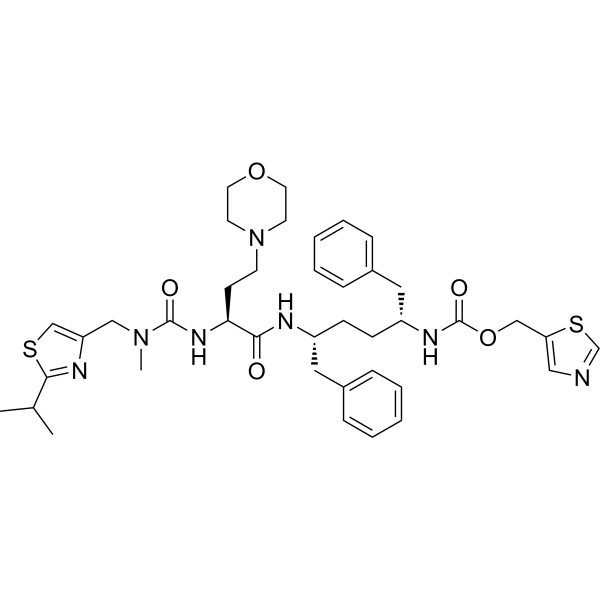
CN(C(N[C@@H](CCN1CCOCC1)C(N[C@@H](CC2=CC=CC=C2)CC[C@@H](NC(OCC3=CN=CS3)=O)CC4=CC=CC=C4)=O)=O)CC5=CSC(C(C)C)=N5
-
Synonyms
GS-9350
-
선적
Room temperature in continental US; may vary elsewhere.
-
보관
Powder -20°C 3 years 4°C 2 years In solvent -80°C 1 year -20°C 6 months


Publications (12)
-
Journal Impact Factor
-
Most Recent
-
ACS Nano
Endolysosomal Sequestration Effects Controlled Release of BRAF Paradox Breaker Nanoparticles. [Abstract]2025 Sep 30;19(38):33879-33890. PMID: 40954128 -
Acta Pharm Sin B
Can remdesivir and its parent nucleoside GS-441524 be potential oral drugs? An in vitro and in vivo DMPK assessment. [Abstract]2021 Jun;11(6):1607-1616. PMID: 34221871 -
Acta Pharm Sin B
Novel PF74-like small molecules targeting the HIV-1 capsid protein: Balance of potency and metabolic stability. [Abstract]2021 Mar;11(3):810-822. PMID: 33777683 -
J Exp Clin Cancer Res
CYP3A5 promotes glioblastoma stemness and chemoresistance through fine-tuning NAD+/NADH ratio. [Abstract]2025 Jan 3;44(1):3. PMID: 39754188
Cobicistat purchased from MedChemExpress. Usage Cited in: J Exp Clin Cancer Res. 2025 Jan 3;44(1):3. [Abstract]
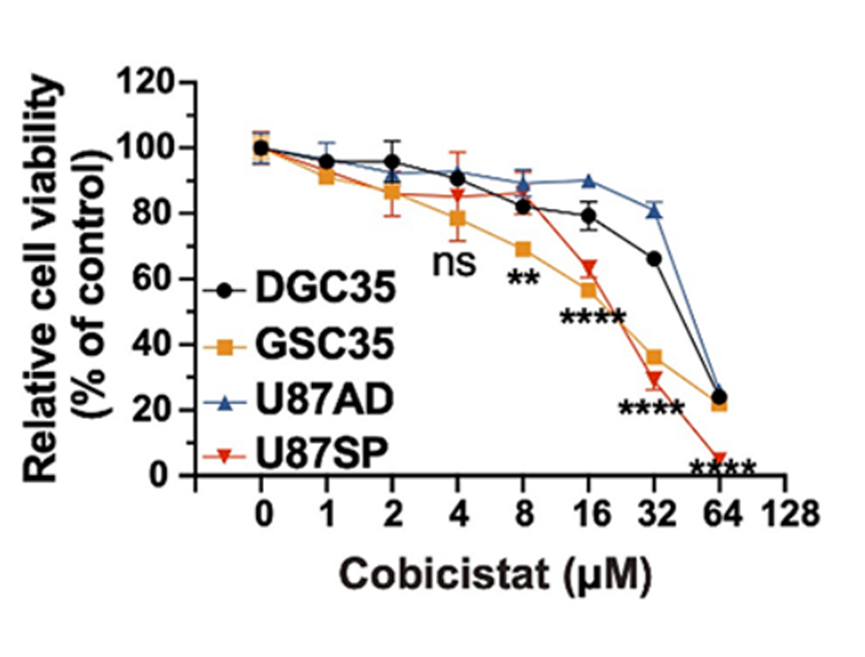
Cell viability assay with the increasing concentrations of Cobicistat (Cobi) (1, 2, 4, 8, 16, 32, 64, 128 μM).
Cobicistat purchased from MedChemExpress. Usage Cited in: J Exp Clin Cancer Res. 2025 Jan 3;44(1):3. [Abstract]
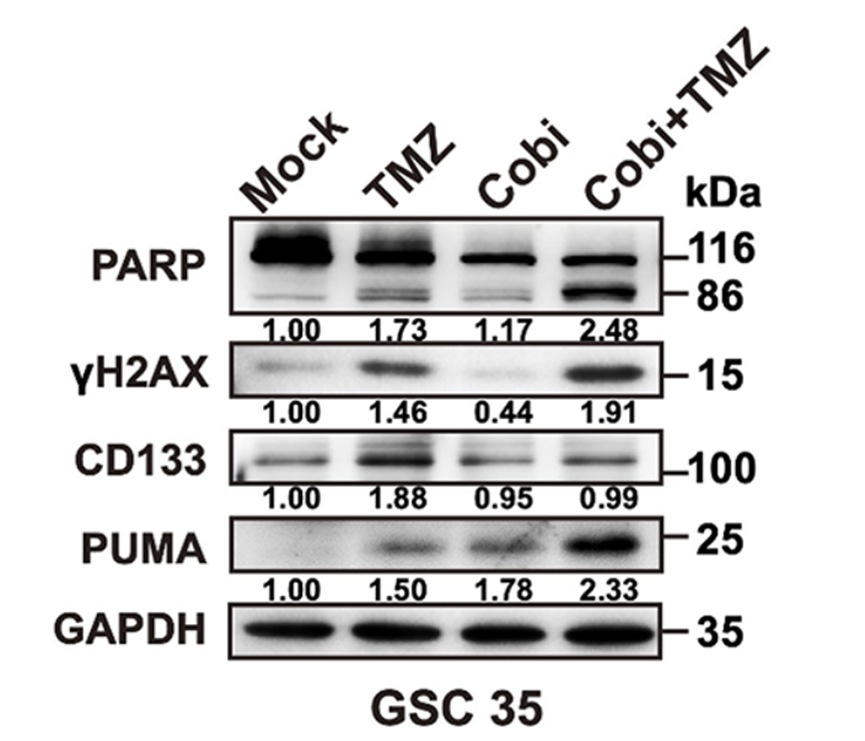
Immunoblots of cleaved PARP, γH2AX, CD133, and PUMA in GSCs treated with Cobicistat (Cobi) and TMZ.
Cobicistat purchased from MedChemExpress. Usage Cited in: J Exp Clin Cancer Res. 2025 Jan 3;44(1):3. [Abstract]
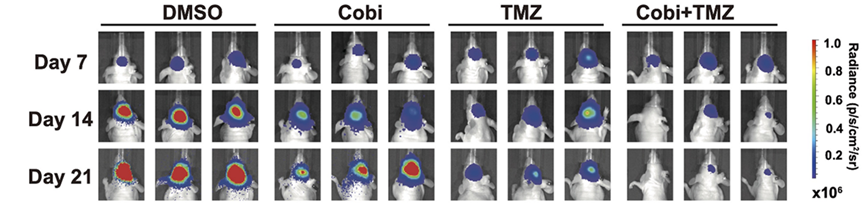
Representative images of bioluminescence intensities of nude mice intracranially implanted with U87MG GSCs in treatment of DMSO, TMZ (5 mg/kg), Cobicistat (Cobi) (10 mg/kg) or TMZ (5 mg/kg) + Cobi (10 mg/kg) by gavage.
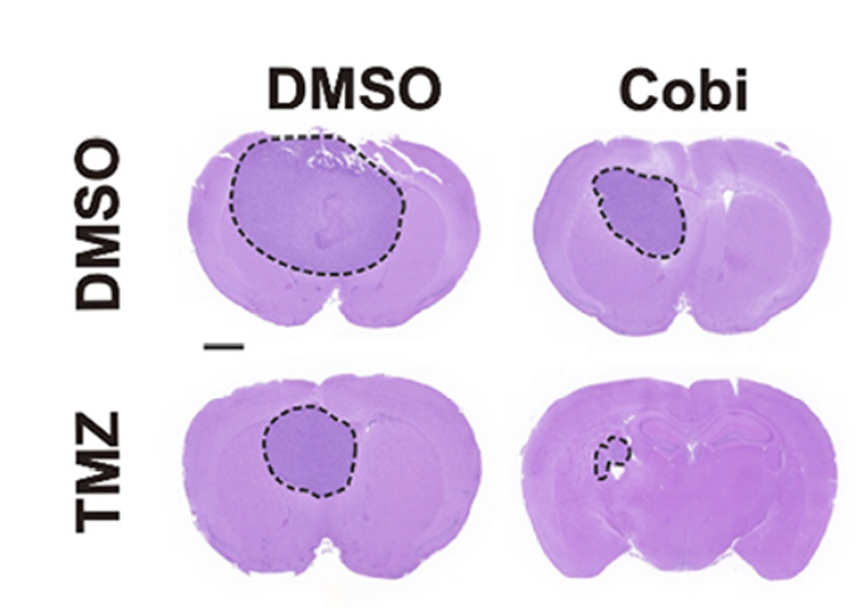
Cobicistat purchased from MedChemExpress. Usage Cited in: J Exp Clin Cancer Res. 2025 Jan 3;44(1):3. [Abstract]
Representative images of H&E staining of tumor sections in treatment of DMSO, TMZ (5 mg/kg), Cobicistat (Cobi) (10 mg/kg) or TMZ (5 mg/kg) + Cobi (10 mg/kg) by gavage.
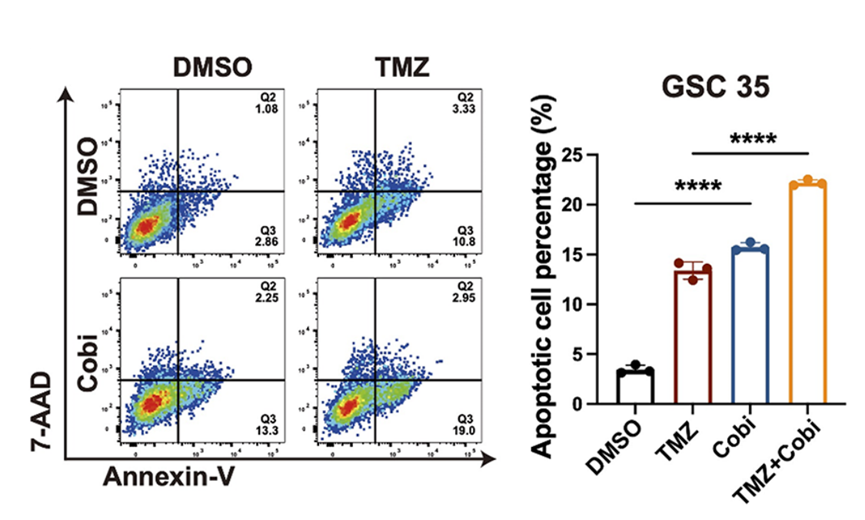
Cobicistat purchased from MedChemExpress. Usage Cited in: J Exp Clin Cancer Res. 2025 Jan 3;44(1):3. [Abstract]
Representative images and quantification of cell apoptosis measured by flow cytometry in treatment of DMSO, TMZ (5 mg/kg), Cobicistat (Cobi) (10 mg/kg) or TMZ (5 mg/kg) + Cobi (10 mg/kg) by gavage.
-
Eur J Med Chem
2020 Oct 15:204:112626. PMID: 32814250 -
Eur J Med Chem
2020 Aug 15:200:112427. PMID: 32438252 -
Toxicol Sci
2021 Apr 27;181(1):58-67. PMID: 33629115 -
Expert Opin Drug Metab Toxicol
In vitro- in vivo correlation of the drug-drug interaction potential of antiretroviral HIV treatment regimens on CYP1A1 substrate riociguat. [Abstract]2019 Nov;15(11):975-984. PMID: 31619082 -
Cancer Res Commun
2021 Nov;1(2):79-89. PMID: 34950932 -
Viruses
Toward Structurally Novel and Metabolically Stable HIV-1 Capsid-Targeting Small Molecules. [Abstract]2020 Apr 16;12(4):452. PMID: 32316297 -
-
Drug Metab Lett
2016;10(2):111-23. PMID: 26935921


용액&용해도
In Vitro:
DMSO : 250 mg/mL (322.16 mM; Need ultrasonic; Hygroscopic DMSO has a significant impact on the solubility of product, please use newly opened DMSO)
Please refer to the solubility information to select the appropriate solvent. Once prepared, please aliquot and store the solution to prevent product inactivation from repeated freeze-thaw cycles.
Storage method and period of stock solution: -80°C, 1 year; -20°C, 6 months. When stored at -80°C, please use it within 1 year. When stored at -20°C, please use it within 6 months.
Please refer to the solubility information to select the appropriate solvent. Once prepared, please aliquot and store the solution to prevent product inactivation from repeated freeze-thaw cycles.
Storage method and period of stock solution: -80°C, 1 year; -20°C, 6 months. When stored at -80°C, please use it within 1 year. When stored at -20°C, please use it within 6 months.
Concentration (start) × Volume (start) = Concentration (final) × Volume (final)
In Vivo:
Select the appropriate dissolution method based on your experimental animal and administration route.
- For the following dissolution methods, please ensure to first prepare a clear stock solution using an In Vitro approach and then sequentially add co-solvents:
- To ensure reliable experimental results, the clarified stock solution can be appropriately stored based on storage conditions. As for the working solution for In Vivo experiments, it is recommended to prepare freshly and use it on the same day.
- The percentages shown for the solvents indicate their volumetric ratio in the final prepared solution. If precipitation or phase separation occurs during preparation, heat and/or sonication can be used to aid dissolution.
Add each solvent one by one: 10% DMSO 40% PEG300 5% Tween-80 45% Saline
Solubility: ≥ 2.08 mg/mL (2.68 mM); Clear solution
This protocol yields a clear solution of ≥ 2.08 mg/mL (saturation unknown).
Taking 1 mL working solution as an example, add 100 μL DMSO stock solution (20.8 mg/mL) to 400 μL PEG300, and mix evenly; then add 50 μL Tween-80 and mix evenly; then add 450 μL Saline to adjust the volume to 1 mL.
Preparation of Saline: Dissolve 0.9 g sodium chloride in ddH₂O and dilute to 100 mL to obtain a clear Saline solution.
Add each solvent one by one: 10% DMSO 90% (20% SBE-β-CD in Saline)
Solubility: ≥ 2.08 mg/mL (2.68 mM); Clear solution
This protocol yields a clear solution of ≥ 2.08 mg/mL (saturation unknown).
Taking 1 mL working solution as an example, add 100 μL DMSO stock solution (20.8 mg/mL) to 900 μL 20% SBE-β-CD in Saline, and mix evenly.
Preparation of 20% SBE-β-CD in Saline (4°C, storage for one week): 2 g SBE-β-CD powder is dissolved in 10 mL Saline, completely dissolve until clear.
In Vivo Dissolution Calculator
Please enter the basic information of animal experiments:
-
-
-
-
Recommended: Prepare an additional quantity of animals to account for potential losses during experiments.
Please enter your animal formula composition:
-
%DMSO +
Recommended: Keep the proportion of DMSO in working solution below 2% if your animal is weak.
-
%+
-
+%Tween-80 + +
-
%Saline +
The co-solvents required include: DMSO, . All of co-solvents are available by MedChemExpress (MCE). , Tween 80. All of co-solvents are available by MedChemExpress (MCE).
Working solution concentration: 0.22 mg/mL
Method for preparing stock solution: mg drug dissolved in μL DMSO. Stock solution concentration: mg/mL.
1. Take μL DMSO stock solution;
2. Add μL .
μL , mix evenly;
3. Then add μL Tween 80, mix evenly;
4. Then add μL
Please ensure that the stock solution in the first step is dissolved to a clear state, and add co-solvents in sequence. You can use ultrasonic heating (ultrasonic cleaner, recommended frequency 20-40 kHz), vortexing, etc. to assist dissolution.


순도&문서
-
Data Sheet (289 KB)
-
SDS (393 KB)
- English - EN (393 KB)
- Français - FR (393 KB)
- Deutsch - DE (393 KB)
- Norwegian - NO (393 KB)
- Español - ES (393 KB)
- Swedish - SV (393 KB)
- Italian - IT (393 KB)
- Korean - KR (393 KB)
- Portuguese - PT (393 KB)
-
Handling Instructions (2659 KB)
References


Complete Stock Solution Preparation Table
Please refer to the solubility information to select the appropriate solvent. Once prepared, please aliquot and store the solution to prevent product inactivation from repeated freeze-thaw cycles.
Storage method and period of stock solution: -80°C, 1 year; -20°C, 6 months. When stored at -80°C, please use it within 1 year. When stored at -20°C, please use it within 6 months.
| Optional Solvent | Concentration Solvent Mass | 1 mg | 5 mg | 10 mg | 25 mg |
|---|---|---|---|---|---|
| DMSO | 1 mM | 1.2886 mL | 6.4431 mL | 12.8863 mL | 32.2157 mL |
| 5 mM | 0.2577 mL | 1.2886 mL | 2.5773 mL | 6.4431 mL | |
| 10 mM | 0.1289 mL | 0.6443 mL | 1.2886 mL | 3.2216 mL | |
| 15 mM | 0.0859 mL | 0.4295 mL | 0.8591 mL | 2.1477 mL | |
| 20 mM | 0.0644 mL | 0.3222 mL | 0.6443 mL | 1.6108 mL | |
| 25 mM | 0.0515 mL | 0.2577 mL | 0.5155 mL | 1.2886 mL | |
| 30 mM | 0.0430 mL | 0.2148 mL | 0.4295 mL | 1.0739 mL | |
| 40 mM | 0.0322 mL | 0.1611 mL | 0.3222 mL | 0.8054 mL | |
| 50 mM | 0.0258 mL | 0.1289 mL | 0.2577 mL | 0.6443 mL | |
| 60 mM | 0.0215 mL | 0.1074 mL | 0.2148 mL | 0.5369 mL | |
| 80 mM | 0.0161 mL | 0.0805 mL | 0.1611 mL | 0.4027 mL | |
| 100 mM | 0.0129 mL | 0.0644 mL | 0.1289 mL | 0.3222 mL |


Cobicistat Related Classifications
HY-10493 Related Classifications
 Powered by Bioz