



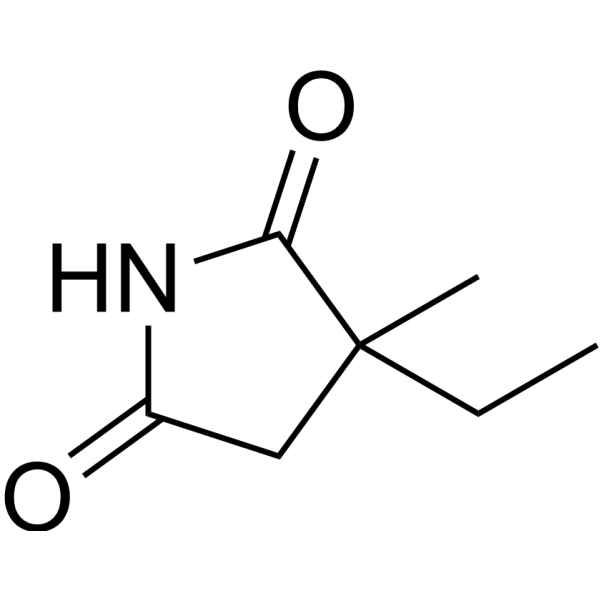
エトスクシミド
Based on 1 publication(s) in Google Scholar
Ethosuximide, a widely prescribed anti-epileptic agent, improves the phenotypes of multiple neurodegenerative disease models and blocks the low voltage activated T-type calcium channel.
商品は「研究用試薬」です。人や動物の医療用・臨床診断用・食品用の製品ではありません。
研究用途以外に使用した場合、当社は一切の責任を負いかねます。
- 純度 : 99.35%
- CAS 番号: 77-67-8
- 分子式: C7H11NO2
- 分子量:141.17
-
保管条件:Powder -20°C, 3 years , 4°C, 2 years ; In solvent -80°C, 2 years , -20°C, 1 year

To place orders, for customer services and technical support, please contact: MedChemExpress USA
Tel: 609-228-6898 E-mail: [email protected] [email protected]


-
 生物活性
生物活性
-
化学情報
-
溶剤 & 溶解度
- プロトコル
- 純度とドキュメンテーション
- 参考文献
-
 Help & FAQs


-
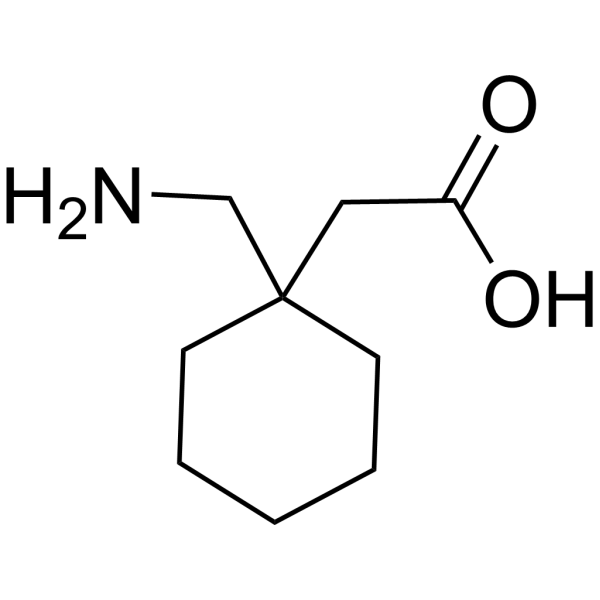
HY-A0057
GabapentinCalcium Channel Blocker. -
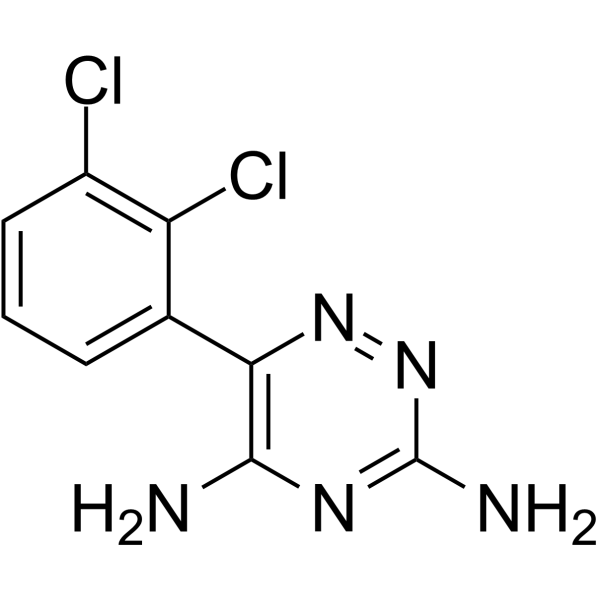
HY-B0495
LamotrigineAnticonvulsant Agent -
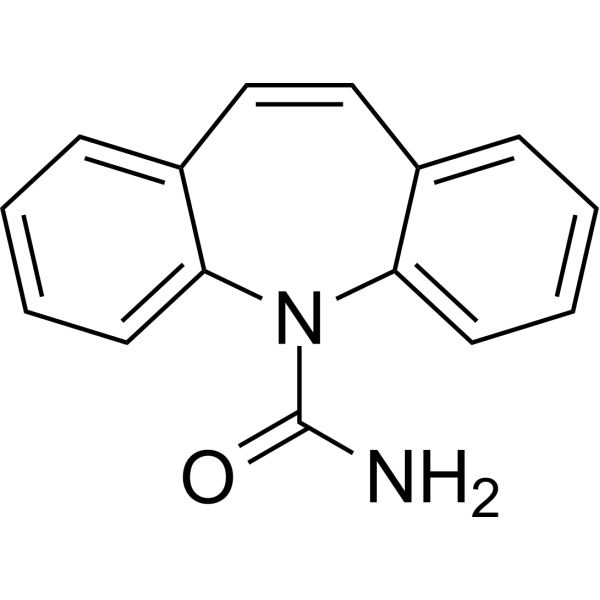
HY-B0246
CarbamazepineAnticonvulsant -
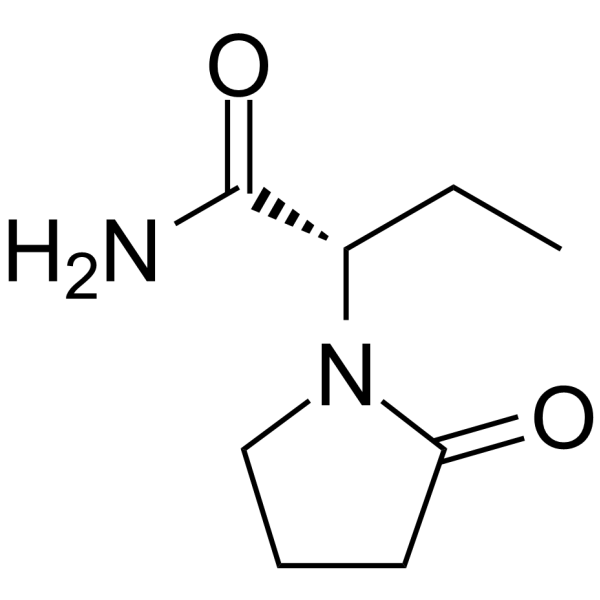
HY-B0106
LevetiracetamAntiepileptic Agent -
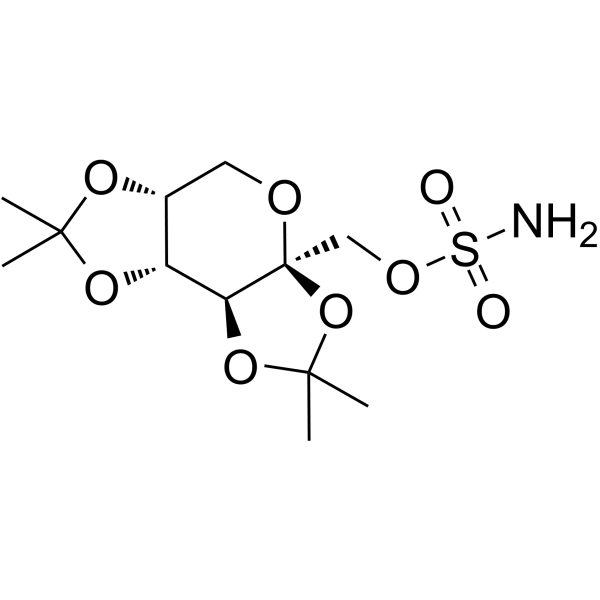
HY-B0122
TopiramateAntiepileptic Agent -
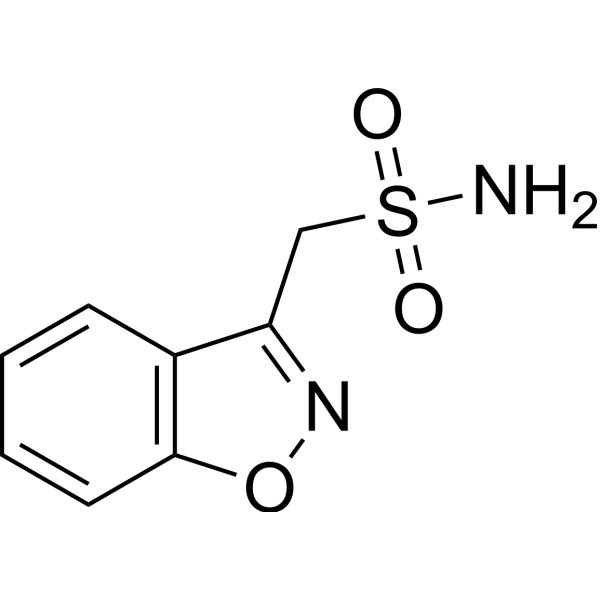
HY-B0124
ZonisamideCarbonic Anhydrase Inhibitor -
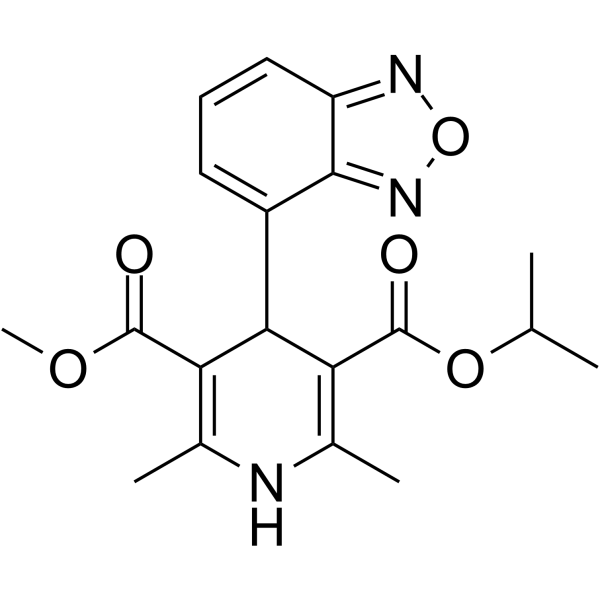
HY-B0233
IsradipineL-type Calcium Channel Blocker -
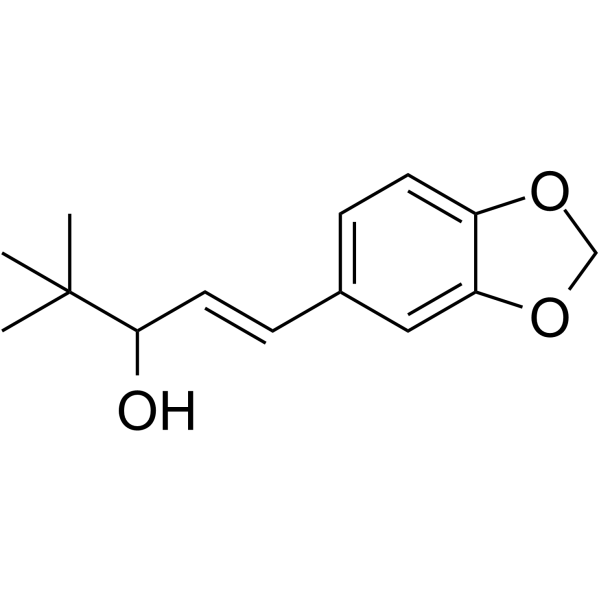
HY-103392
StiripentolAnticonvulsant Agent -
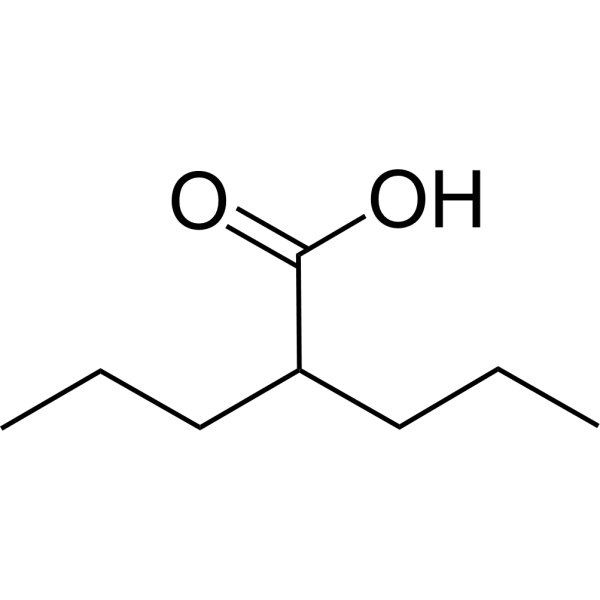
HY-10585
Valproic acidHDAC Inhibitor -
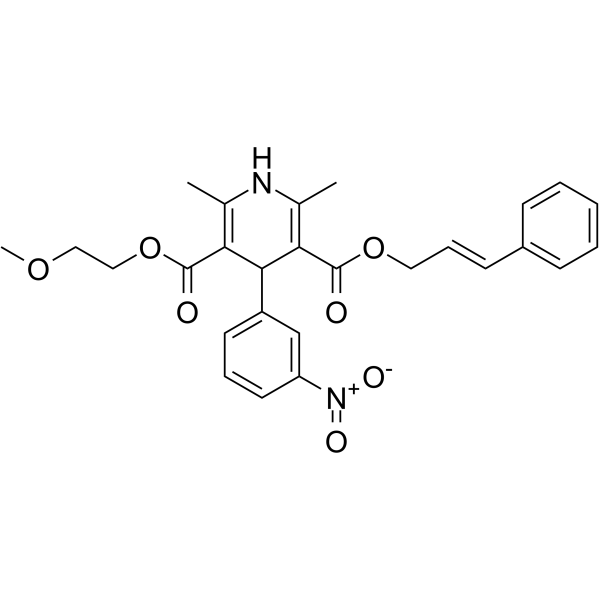
HY-17404
CilnidipineCa Channel Blocker -
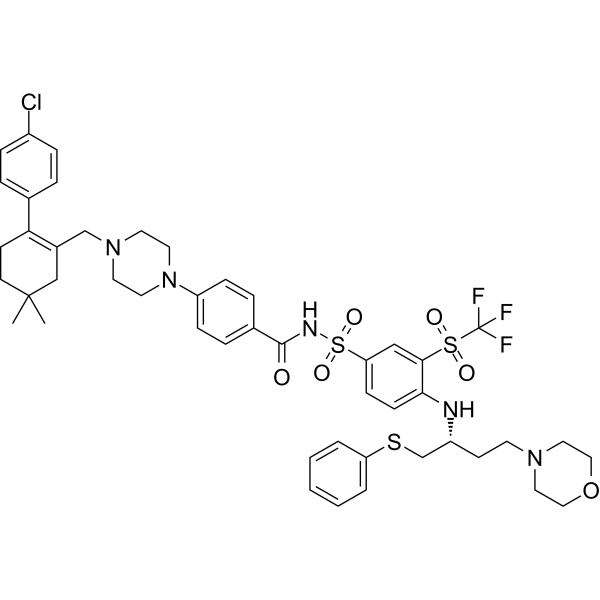
HY-10087
NavitoclaxBcl-2 Inhibitor -
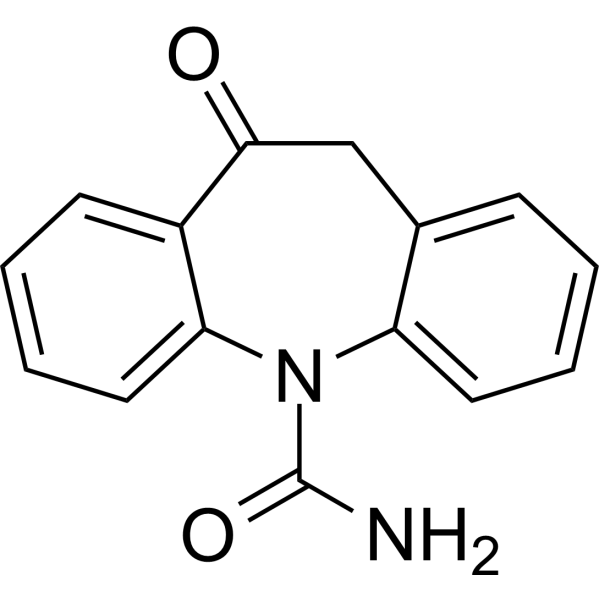
HY-B0114
OxcarbazepineAnti-Epileptic Agent
MedChemExpress(MCE)の使用を引用している文献 Ethosuximide
MoreCalcium Channel アイソフォーム固有の製品をすべて表示
More

生物活性
製品説明
IC50 & Target
|
T-type calcium channel |
体外実験
The efficacy of Ethosuximide in generalized absence epilepsy is thought to be due to blockade of the low voltage activated T-type calcium channel. There is no reduction in total Tau levels in Ethosuximide treated Tau transgenic worms as compare to vehicle controls. The rescuing effect of Ethosuximide is therefore not due to transgene suppression or reduced expression of toxic mutant Tau protein. Quantification of the amount of soluble and insoluble (RIPA-extractable) Tau relative to total Tau levels reveals a significant reduction in aberrantly-folded, insoluble Tau and a corresponding increase in soluble Tau in Ethosuximide-treated compare with untreated worms[1]. Concentrations of 2 μM or more of Ethosuximide not only are found to be less effective than 1 μM concentration of Ethosuximide, but also induce cell toxicity. GABA staining immuno uorescence images show that after treatment with Ethosuximide, GABA positive neuron increases by 3 and 6.5 fold for concentrations of 0.1 and 1 μM, respectively. BrdU staining shows nuclei proliferation after 2 to 3 days of Ethosuximide exposure. The mean of nuclei is 15.98±0.41 for the low concentration of Ethosuximide while it is 25.27±0.48 for the high concentration after Brdu staining. This number is 11.05±0.2 for lithium chloride[2].
MedChemExpress (MCE) has not independently confirmed the accuracy of these methods. They are for reference only.
臨床実験
| NCT Number | Sponsor | Condition | Start Date |
Phase

|
|---|---|---|---|---|
| NCT01329991 | 2011-05 | PHASE1 |


化学情報
-
CAS 番号 77-67-8
-
性状 Solid
-
分子量 141.17
-
分子式 C7H11NO2
-
Color White to off-white
-
SMILES
O=C(C(C)(CC)C1)NC1=O
-
別名
Ethosuximide
-
輸送条件
Room temperature in continental US; may vary elsewhere.
-
保管条件
Powder -20°C 3 years 4°C 2 years In solvent -80°C 2 years -20°C 1 year


Publications (1)
-
Journal Impact Factor
-
Most Recent
-
Cell Death Dis
2025 Jun 2;16(1):426. PMID: 40456737


溶剤 & 溶解度
体外:
H2O : 100 mg/mL (708.37 mM; Need ultrasonic)
DMSO : 100 mg/mL (708.37 mM; Need ultrasonic; Hygroscopic DMSO has a significant impact on the solubility of product, please use newly opened DMSO)
Please refer to the solubility information to select the appropriate solvent. Once prepared, please aliquot and store the solution to prevent product inactivation from repeated freeze-thaw cycles.
Storage method and period of stock solution: -80°C, 2 years; -20°C, 1 year. When stored at -80°C, please use it within 2 years. When stored at -20°C, please use it within 1 year.
* Note: If you choose water as the stock solution, please dilute it to the working solution, then filter and sterilize it with a 0.22 μm filter before use.
Please refer to the solubility information to select the appropriate solvent. Once prepared, please aliquot and store the solution to prevent product inactivation from repeated freeze-thaw cycles.
Storage method and period of stock solution: -80°C, 2 years; -20°C, 1 year. When stored at -80°C, please use it within 2 years. When stored at -20°C, please use it within 1 year.
* Note: If you choose water as the stock solution, please dilute it to the working solution, then filter and sterilize it with a 0.22 μm filter before use.
濃度 (開始) × 体積 (開始) = 濃度 (終了) × 体積 (終了)
体内:
Select the appropriate dissolution method based on your experimental animal and administration route.
- For the following dissolution methods, please ensure to first prepare a clear stock solution using an In Vitro approach and then sequentially add co-solvents:
- To ensure reliable experimental results, the clarified stock solution can be appropriately stored based on storage conditions. As for the working solution for In Vivo experiments, it is recommended to prepare freshly and use it on the same day.
- The percentages shown for the solvents indicate their volumetric ratio in the final prepared solution. If precipitation or phase separation occurs during preparation, heat and/or sonication can be used to aid dissolution.
Add each solvent one by one: 10% DMSO 40% PEG300 5% Tween-80 45% Saline
Solubility: ≥ 2.08 mg/mL (14.73 mM); Clear solution
This protocol yields a clear solution of ≥ 2.08 mg/mL (saturation unknown).
Taking 1 mL working solution as an example, add 100 μL DMSO stock solution (20.8 mg/mL) to 400 μL PEG300, and mix evenly; then add 50 μL Tween-80 and mix evenly; then add 450 μL Saline to adjust the volume to 1 mL.
Preparation of Saline: Dissolve 0.9 g sodium chloride in ddH₂O and dilute to 100 mL to obtain a clear Saline solution.
Add each solvent one by one: 10% DMSO 90% (20% SBE-β-CD in Saline)
Solubility: ≥ 2.08 mg/mL (14.73 mM); Clear solution
This protocol yields a clear solution of ≥ 2.08 mg/mL (saturation unknown).
Taking 1 mL working solution as an example, add 100 μL DMSO stock solution (20.8 mg/mL) to 900 μL 20% SBE-β-CD in Saline, and mix evenly.
Preparation of 20% SBE-β-CD in Saline (4°C, storage for one week): 2 g SBE-β-CD powder is dissolved in 10 mL Saline, completely dissolve until clear.
In Vivo Dissolution Calculator
Please enter the basic information of animal experiments:
-
-
-
-
Recommended: Prepare an additional quantity of animals to account for potential losses during experiments.
Working solution concentration: 0.22 mg/mL
This product has good water solubility, please refer to the measured solubility data in water/PBS/Saline for details.


純度とドキュメンテーション
-
データシート (279 KB)
-
SDS (392 KB)
- English - EN (392 KB)
- Français - FR (392 KB)
- Deutsch - DE (392 KB)
- Norwegian - NO (392 KB)
- Español - ES (392 KB)
- Swedish - SV (392 KB)
- Italian - IT (392 KB)
- Korean - KR (392 KB)
- Portuguese - PT (392 KB)
-
取扱説明書 (2659 KB)
参考文献
[1]. Chen X, et al. Ethosuximide ameliorates neurodegenerative disease phenotypes by modulating DAF-16/FOXO target gene expression. Mol Neurodegener. 2015 Sep 29;10:51. [Content Brief]
[2]. Sondossi K, et al. Analysis of the antiepileptic, ethosuximide impacts on neurogenesis of rat forebrain stem cells. Fundam Clin Pharmacol. 2014 Oct;28(5):512-8. [Content Brief]


Complete Stock Solution Preparation Table
Please refer to the solubility information to select the appropriate solvent. Once prepared, please aliquot and store the solution to prevent product inactivation from repeated freeze-thaw cycles.
Storage method and period of stock solution: -80°C, 2 years; -20°C, 1 year. When stored at -80°C, please use it within 2 years. When stored at -20°C, please use it within 1 year.
| Optional Solvent | Concentration Solvent Mass | 1 mg | 5 mg | 10 mg | 25 mg |
|---|---|---|---|---|---|
| H2O / DMSO | 1 mM | 7.0837 mL | 35.4183 mL | 70.8366 mL | 177.0915 mL |
| 5 mM | 1.4167 mL | 7.0837 mL | 14.1673 mL | 35.4183 mL | |
| 10 mM | 0.7084 mL | 3.5418 mL | 7.0837 mL | 17.7091 mL | |
| 15 mM | 0.4722 mL | 2.3612 mL | 4.7224 mL | 11.8061 mL | |
| 20 mM | 0.3542 mL | 1.7709 mL | 3.5418 mL | 8.8546 mL | |
| 25 mM | 0.2833 mL | 1.4167 mL | 2.8335 mL | 7.0837 mL | |
| 30 mM | 0.2361 mL | 1.1806 mL | 2.3612 mL | 5.9030 mL | |
| 40 mM | 0.1771 mL | 0.8855 mL | 1.7709 mL | 4.4273 mL | |
| 50 mM | 0.1417 mL | 0.7084 mL | 1.4167 mL | 3.5418 mL | |
| 60 mM | 0.1181 mL | 0.5903 mL | 1.1806 mL | 2.9515 mL | |
| 80 mM | 0.0885 mL | 0.4427 mL | 0.8855 mL | 2.2136 mL | |
| 100 mM | 0.0708 mL | 0.3542 mL | 0.7084 mL | 1.7709 mL |
* Note: If you choose water as the stock solution, please dilute it to the working solution, then filter and sterilize it with a 0.22 μm filter before use.


Ethosuximide 関連分類
HY-B1378 関連分類
 Powered by Bioz