



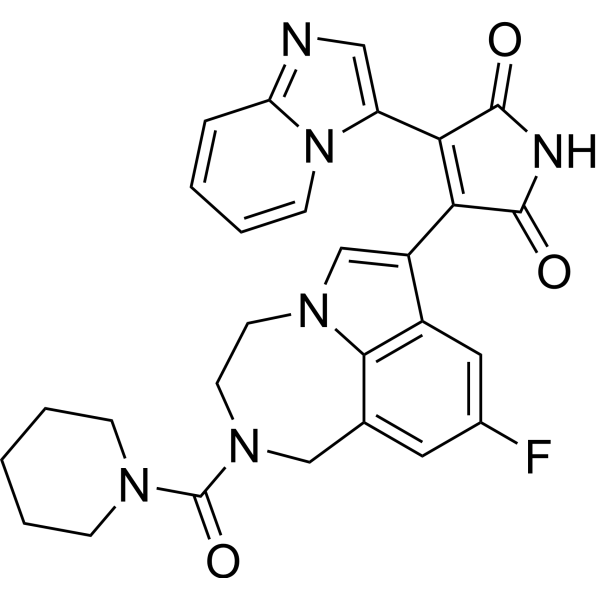
LY2090314
Based on 23 publication(s) in Google Scholar
LY2090314 is a potent inhibitor of glycogen synthase kinase-3 (GSK-3) with IC50 values of 1.5 nM and 0.9 nM for GSK-3α and GSK-3β, respectively.
연구목적의 판매만을 진행합니다. 환자를 대상으로 한 판매는 하지 않습니다.
- Purity : 99.85%
- CAS No.: 603288-22-8
- 화학식: C28H25FN6O3
- 분자량:512.53
-
보관:Powder -20°C, 3 years , 4°C, 2 years ; In solvent -80°C, 1 year , -20°C, 6 months

To place orders, for customer services and technical support, please contact: MedChemExpress USA
Tel: 609-228-6898 E-mail: [email protected] [email protected]


-
 Biological Activity
-
Chemical Information
-
용액&용해도
- 순도&문서
- References
-
 Help & FAQs


-
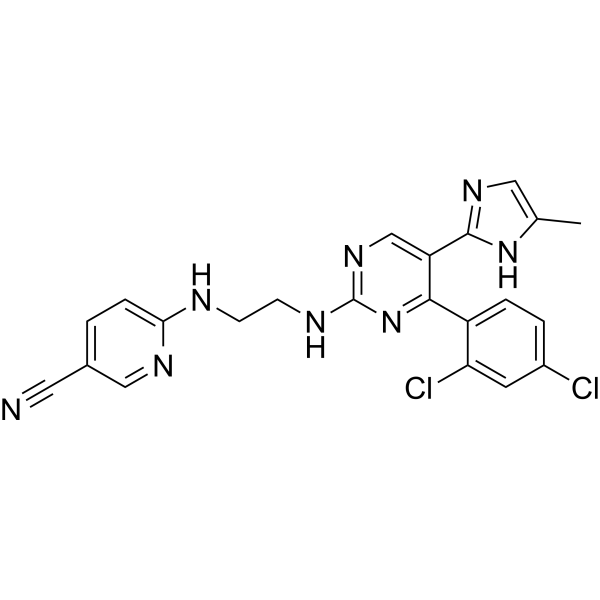
HY-10182
LaduviglusibGSK-3 Inhibitor -
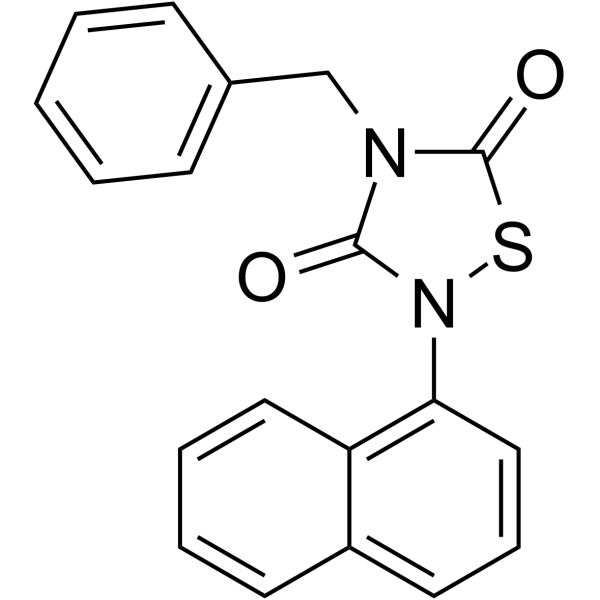
HY-14872
TideglusibGSK-3 Inhibitor -
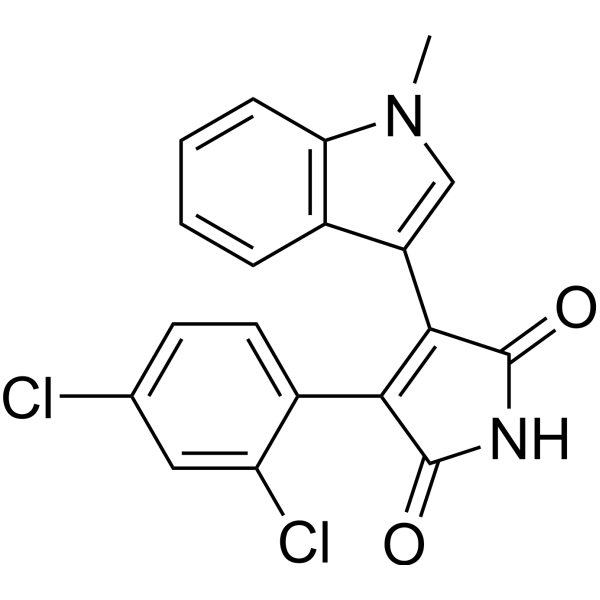
HY-12012
SB 216763Autophagy Inducer -
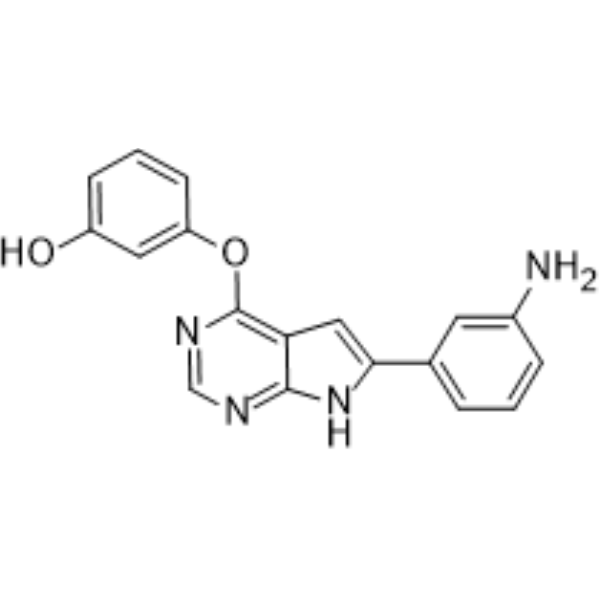
HY-10590
TWS119GSK-3β Inhibitor -
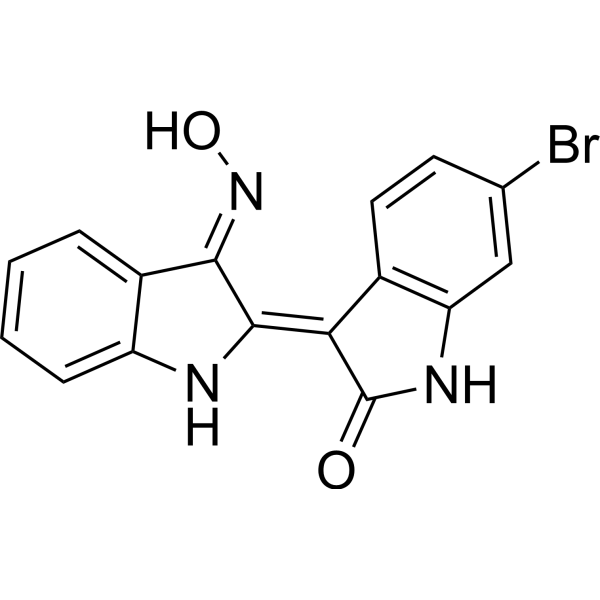
HY-10580
GSK 3 Inhibitor IXATP-Competitive Inhibitor -
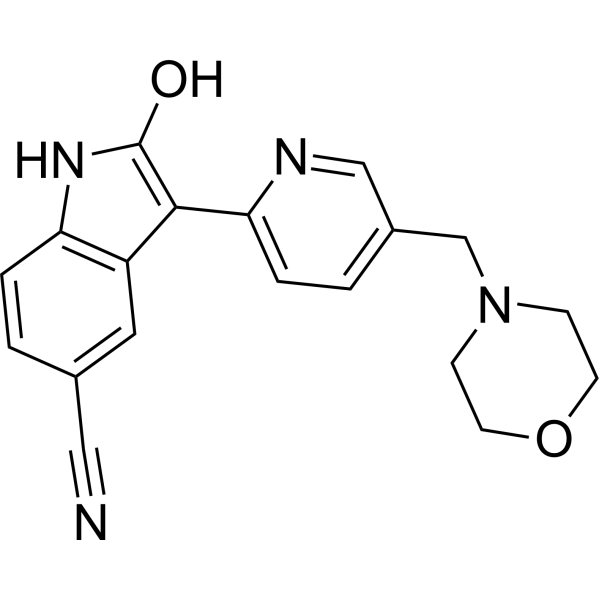
HY-13862
AZD1080GSK-3 Inhibitor -
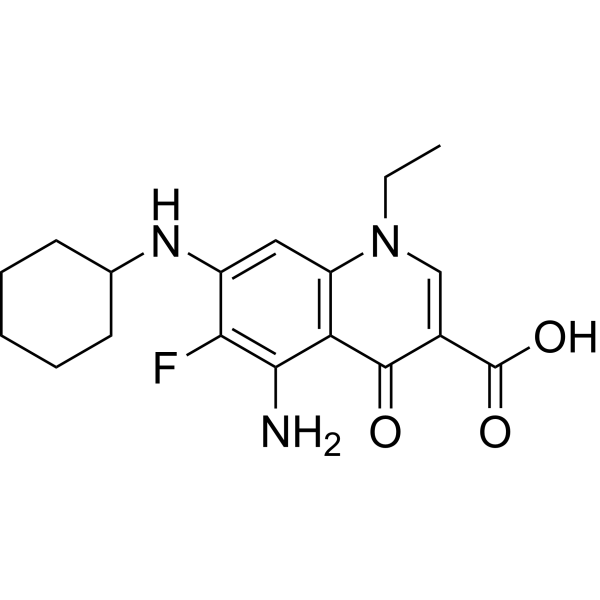
HY-100596
AS1842856Foxo1 Inhibitor -
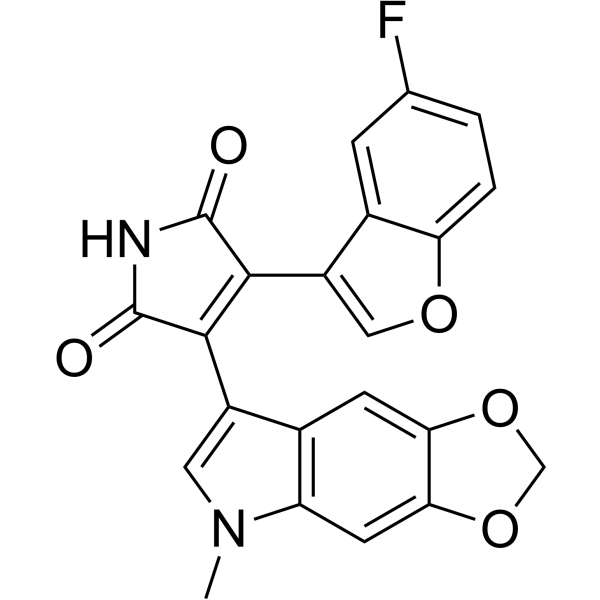
HY-113914
9-ING-41GSK-3β Inhibitor -
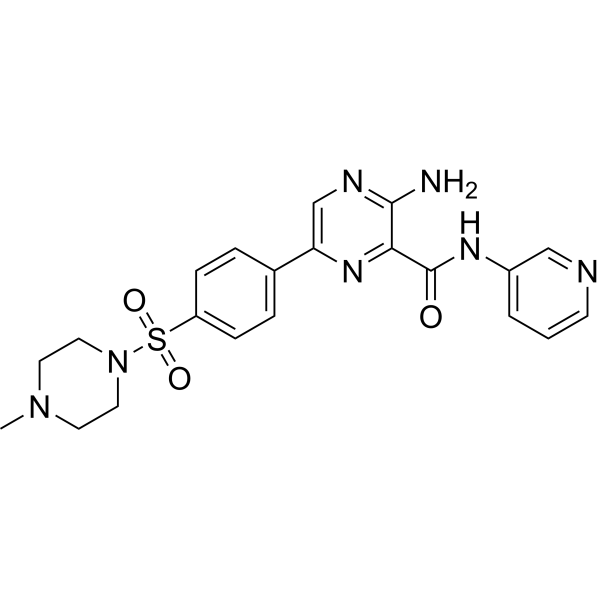
HY-15761
AZD2858GSK-3 Inhibitor -
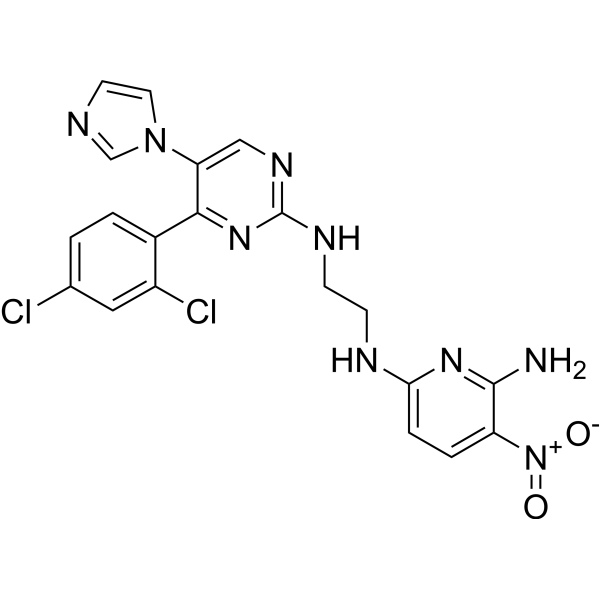
HY-13076
CHIR-98014GSK-3 Inhibitor -
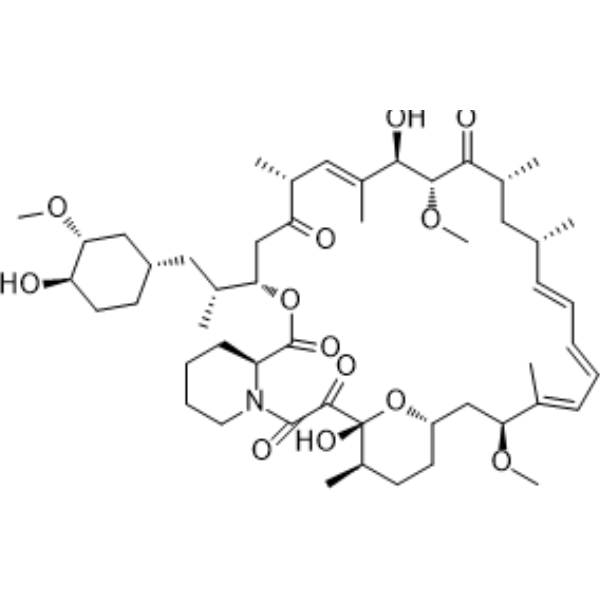
HY-10219
RapamycinmTOR Inhibitor -
HY-10999
TrametinibMEK Inhibitor
Publications Citing Use of MedChemExpress (MCE) LY2090314
More- Nature. 2025 Jun;642(8067):508-518. [Abstract]
- Mol Cancer. 2026 Apr 2;25(1):130. [Abstract]
- Cell Res. 2025 Aug 29. [Abstract]
- Cell Res. 2022 Jun;32(6):513-529. [Abstract]
- Nat Commun. 2019 Sep 25;10(1):4364. [Abstract]
- J Biomed Sci. 2026 May 15;33(1):51. [Abstract]
- Cell Rep. 2025 Sep 29;44(10):116361. [Abstract]
- Sci Data. 2024 Sep 19;11(1):1024. [Abstract]
- Int J Mol Sci. 2022 Jan 24;23(3):1312. [Abstract]
- Int Immunopharmacol. 2019 Sep:74:105703. [Abstract]
- Stem Cell Reports. 2018 Dec 11;11(6):1539-1550. [Abstract]
- Mol Ther Methods Clin Dev. 2021 Jan 20:20:463-472. [Abstract]
- Mol Ther Methods Clin Dev. 2019 Nov 21:17:49-57. [Abstract]
- FASEB J. 2023 Apr;37(4):e22880. [Abstract]
- J Biol Chem. 2024 Aug;300(8):107570. [Abstract]
- J Biol Chem. 2016 Dec 23;291(52):26875-26885. [Abstract]
- SLAS Discov. 2024 Nov 5;29(8):100191. [Abstract]
- bioRxiv. 2026 Aug 28.
- bioRxiv. 2025 Oct 6.
- SSRN. 2025 Jul 25.
- SSRN. 2025 Feb 24.
- Patent. US20230190767A1.
- Elife. 2020 Dec 7:9:e61405. [Abstract]
 Customer Validation & Images

-
WB
-
IHC
-
WB


Biological Activity
제품 설명
IC50 & Target
[1]|
GSK-3β 0.9 nM (IC50) |
GSK-3α 1.5 nM (IC50) |
Cellular Effect
|
Cell Line

|
Type | Value | Description | References |
|---|---|---|---|---|
| A2058 | IC50 |
0.008 μM
Compound: Chemical probe : LY2090314
|
Antiproliferative activity against human A2058 cells harboring BRAF V600E/PTEN null mutation assessed as reduction in cell viability incubated for 72 hrs by CellTitre-Glo assay
Antiproliferative activity against human A2058 cells harboring BRAF V600E/PTEN null mutation assessed as reduction in cell viability incubated for 72 hrs by CellTitre-Glo assay
|
[PMID: 25915038] |
| A-375 | IC50 |
0.008 μM
Compound: Chemical probe : LY2090314
|
Antiproliferative activity against human vemurafenib-resistant A-375 cells harboring BRAF V600E mutation assessed as reduction in cell viability incubated for 72 hrs by CellTitre-Glo assay
Antiproliferative activity against human vemurafenib-resistant A-375 cells harboring BRAF V600E mutation assessed as reduction in cell viability incubated for 72 hrs by CellTitre-Glo assay
|
[PMID: 25915038] |
| A-375 | IC50 |
0.01 μM
Compound: Chemical probe : LY2090314
|
Antiproliferative activity against human A-375 cells harboring BRAF V600E mutation assessed as reduction in cell viability incubated for 72 hrs by CellTitre-Glo assay
Antiproliferative activity against human A-375 cells harboring BRAF V600E mutation assessed as reduction in cell viability incubated for 72 hrs by CellTitre-Glo assay
|
[PMID: 25915038] |
| A549 | IC50 |
9.96 μM
Compound: Chemical probe : LY2090314
|
Antiproliferative activity against human A549 assessed as reduction in cell viability incubated for 72 hrs by CellTitre-Glo assay
Antiproliferative activity against human A549 assessed as reduction in cell viability incubated for 72 hrs by CellTitre-Glo assay
|
[PMID: 25915038] |
| BXPC-3 | IC50 |
0.43 μM
Compound: Chemical probe : LY2090314
|
Antiproliferative activity against human BXPC-3 assessed as reduction in cell viability incubated for 72 hrs by CellTitre-Glo assay
Antiproliferative activity against human BXPC-3 assessed as reduction in cell viability incubated for 72 hrs by CellTitre-Glo assay
|
[PMID: 25915038] |
| CHL-1 | IC50 |
0.11 μM
Compound: Chemical probe : LY2090314
|
Antiproliferative activity against human CHL-1 cells assessed as reduction in cell viability incubated for 72 hrs by CellTitre-Glo assay
Antiproliferative activity against human CHL-1 cells assessed as reduction in cell viability incubated for 72 hrs by CellTitre-Glo assay
|
[PMID: 25915038] |
| COLO 205 | IC50 |
11.3 μM
Compound: Chemical probe : LY2090314
|
Antiproliferative activity against human COLO 205 assessed as reduction in cell viability incubated for 72 hrs by CellTitre-Glo assay
Antiproliferative activity against human COLO 205 assessed as reduction in cell viability incubated for 72 hrs by CellTitre-Glo assay
|
[PMID: 25915038] |
| COLO 320 | IC50 |
>20 μM
Compound: Chemical probe : LY2090314
|
Antiproliferative activity against human COLO 320 assessed as reduction in cell viability incubated for 72 hrs by CellTitre-Glo assay
Antiproliferative activity against human COLO 320 assessed as reduction in cell viability incubated for 72 hrs by CellTitre-Glo assay
|
[PMID: 25915038] |
| DU-145 | IC50 |
5.52 μM
Compound: Chemical probe : LY2090314
|
Antiproliferative activity against human DU-145 assessed as reduction in cell viability incubated for 72 hrs by CellTitre-Glo assay
Antiproliferative activity against human DU-145 assessed as reduction in cell viability incubated for 72 hrs by CellTitre-Glo assay
|
[PMID: 25915038] |
| HCT-116 | IC50 |
10.48 μM
Compound: Chemical probe : LY2090314
|
Antiproliferative activity against human HCT-116 assessed as reduction in cell viability incubated for 72 hrs by CellTitre-Glo assay
Antiproliferative activity against human HCT-116 assessed as reduction in cell viability incubated for 72 hrs by CellTitre-Glo assay
|
[PMID: 25915038] |
| LNCaP | IC50 |
0.15 μM
Compound: Chemical probe : LY2090314
|
Antiproliferative activity against human LNCaP assessed as reduction in cell viability incubated for 72 hrs by CellTitre-Glo assay
Antiproliferative activity against human LNCaP assessed as reduction in cell viability incubated for 72 hrs by CellTitre-Glo assay
|
[PMID: 25915038] |
| M14 | IC50 |
0.007 μM
Compound: Chemical probe : LY2090314
|
Antiproliferative activity against human M14 cells harboring BRAF V600E mutation assessed as reduction in cell viability incubated for 72 hrs by CellTitre-Glo assay
Antiproliferative activity against human M14 cells harboring BRAF V600E mutation assessed as reduction in cell viability incubated for 72 hrs by CellTitre-Glo assay
|
[PMID: 25915038] |
| M14 | IC50 |
0.007 μM
Compound: Chemical probe : LY2090314
|
Antiproliferative activity against human vemurafenib-resistant M14 cells harboring BRAF V600E mutation assessed as reduction in cell viability incubated for 72 hrs by CellTitre-Glo assay
Antiproliferative activity against human vemurafenib-resistant M14 cells harboring BRAF V600E mutation assessed as reduction in cell viability incubated for 72 hrs by CellTitre-Glo assay
|
[PMID: 25915038] |
| MCF7 | IC50 |
>20 μM
Compound: Chemical probe : LY2090314
|
Antiproliferative activity against human MCF7 assessed as reduction in cell viability incubated for 72 hrs by CellTitre-Glo assay
Antiproliferative activity against human MCF7 assessed as reduction in cell viability incubated for 72 hrs by CellTitre-Glo assay
|
[PMID: 25915038] |
| MDA-MB-231 | IC50 |
>20 μM
Compound: Chemical probe : LY2090314
|
Antiproliferative activity against human MDA-MB-231 assessed as reduction in cell viability incubated for 72 hrs by CellTitre-Glo assay
Antiproliferative activity against human MDA-MB-231 assessed as reduction in cell viability incubated for 72 hrs by CellTitre-Glo assay
|
[PMID: 25915038] |
| MDA-MB-468 | IC50 |
0.45 μM
Compound: Chemical probe : LY2090314
|
Antiproliferative activity against human MDA-MB-468 cells assessed as reduction in cell viability incubated for 72 hrs by CellTitre-Glo assay
Antiproliferative activity against human MDA-MB-468 cells assessed as reduction in cell viability incubated for 72 hrs by CellTitre-Glo assay
|
[PMID: 25915038] |
| NCI-H2030 | IC50 |
9.44 μM
Compound: Chemical probe : LY2090314
|
Antiproliferative activity against human H2030 assessed as reduction in cell viability incubated for 72 hrs by CellTitre-Glo assay
Antiproliferative activity against human H2030 assessed as reduction in cell viability incubated for 72 hrs by CellTitre-Glo assay
|
[PMID: 25915038] |
| NCI-H460 | IC50 |
13.25 μM
Compound: Chemical probe : LY2090314
|
Antiproliferative activity against human H460 assessed as reduction in cell viability incubated for 72 hrs by CellTitre-Glo assay
Antiproliferative activity against human H460 assessed as reduction in cell viability incubated for 72 hrs by CellTitre-Glo assay
|
[PMID: 25915038] |
| RKO | IC50 |
>20 μM
Compound: Chemical probe : LY2090314
|
Antiproliferative activity against human RKO assessed as reduction in cell viability incubated for 72 hrs by CellTitre-Glo assay
Antiproliferative activity against human RKO assessed as reduction in cell viability incubated for 72 hrs by CellTitre-Glo assay
|
[PMID: 25915038] |
| SK-BR-3 | IC50 |
>20 μM
Compound: Chemical probe : LY2090314
|
Antiproliferative activity against human SK-BR-3 assessed as reduction in cell viability incubated for 72 hrs by CellTitre-Glo assay
Antiproliferative activity against human SK-BR-3 assessed as reduction in cell viability incubated for 72 hrs by CellTitre-Glo assay
|
[PMID: 25915038] |
| SK-MEL-2 | IC50 |
0.006 μM
Compound: Chemical probe : LY2090314
|
Antiproliferative activity against human SK-MEL-2 cells harboring NRAS Q61R mutation assessed as reduction in cell viability incubated for 72 hrs by CellTitre-Glo assay
Antiproliferative activity against human SK-MEL-2 cells harboring NRAS Q61R mutation assessed as reduction in cell viability incubated for 72 hrs by CellTitre-Glo assay
|
[PMID: 25915038] |
| SK-MEL-28 | IC50 |
>10 μM
Compound: Chemical probe : LY2090314
|
Antiproliferative activity against human SK-MEL-28 cells harboring BRAF V600E mutation assessed as reduction in cell viability incubated for 72 hrs by CellTitre-Glo assay
Antiproliferative activity against human SK-MEL-28 cells harboring BRAF V600E mutation assessed as reduction in cell viability incubated for 72 hrs by CellTitre-Glo assay
|
[PMID: 25915038] |
| SK-MES-1 | IC50 |
>20 μM
Compound: Chemical probe : LY2090314
|
Antiproliferative activity against human SK-MES-1 assessed as reduction in cell viability incubated for 72 hrs by CellTitre-Glo assay
Antiproliferative activity against human SK-MES-1 assessed as reduction in cell viability incubated for 72 hrs by CellTitre-Glo assay
|
[PMID: 25915038] |
In Vitro
LY2090314 (20 nM) promotes a time-dependent stabilization of β-catenin total protein as well as an induction of Axin2. LY2090314 is highly selective towards GSK3 as demonstrated by its fold selectivity relative to a large panel of kinases. LY2090314 potently induces apoptotic cell death in a panel of melanoma cell lines irrespective of BRAF mutation status. Cell death induced by LY2090314 is dependent on β-catenin and GSK3β knockdown increases the sensitivity of cells to LY2090314. LY2090314 remains active in cell lines resistant to PLX4032 and has an independent mechanism of action[2].
MedChemExpress (MCE) has not independently confirmed the accuracy of these methods. They are for reference only.
In Vivo
LY2090314 (25 mg/kg Q3D, i.v.) elevates Axin2 gene expression in vivo, demonstrates single agent activity in the A375 xenograft model of melanoma and enhances the efficacy of DTIC[2].
MedChemExpress (MCE) has not independently confirmed the accuracy of these methods. They are for reference only.
Clinical Trial
| NCT Number | Sponsor | Condition | Start Date |
Phase
|
|---|---|---|---|---|
| NCT01329991 | Plexxikon| | 2011-05 | PHASE1 |


Chemical Information
-
CAS No. 603288-22-8
-
Appearance Solid
-
분자량 512.53
-
화학식 C28H25FN6O3
-
Color Orange to reddish brown
-
SMILES
O=C(C(C1=CN2CCN(C(N3CCCCC3)=O)CC4=CC(F)=CC1=C42)=C5C6=CN=C7C=CC=CN76)NC5=O
-
선적
Room temperature in continental US; may vary elsewhere.
-
보관
Powder -20°C 3 years 4°C 2 years In solvent -80°C 1 year -20°C 6 months


Publications (23)
-
Journal Impact Factor
-
Most Recent
-
Nature
Perturbing LSD1 and WNT rewires transcription to synergistically induce AML differentiation. [Abstract]2025 Jun;642(8067):508-518. PMID: 40240608 -
Mol Cancer
ROCK1 inhibition primes anti-tumor immunity in EGFR-mutant NSCLC by triggering PD-L1 degradation mediated by SMURF2. [Abstract]2026 Apr 2;25(1):130. PMID: 41928228 -
Cell Res
2025 Aug 29. PMID: 40883608 -
Cell Res
Derivation of totipotent-like stem cells with blastocyst-like structure forming potential. [Abstract]2022 Jun;32(6):513-529. PMID: 35508506 -
Nat Commun
Human PI3Kγ deficiency and its microbiota-dependent mouse model reveal immunodeficiency and tissue immunopathology. [Abstract]2019 Sep 25;10(1):4364. PMID: 31554793 -
J Biomed Sci
SARS-CoV-2 membrane protein recruits PP2A to dephosphorylate the nucleocapsid and promote virion production. [Abstract]2026 May 15;33(1):51. PMID: 42141450 -
Cell Rep
2025 Sep 29;44(10):116361. PMID: 41026602 -
Sci Data
High-throughput drug screening identifies novel therapeutics for Low Grade Serous Ovarian Carcinoma. [Abstract]2024 Sep 19;11(1):1024. PMID: 39300112 -
Int J Mol Sci
Toward Xeno-Free Differentiation of Human Induced Pluripotent Stem Cell-Derived Small Intestinal Epithelial Cells. [Abstract]2022 Jan 24;23(3):1312. PMID: 35163236 -
Int Immunopharmacol
Berberine coated mannosylated liposomes curtail RANKL stimulated osteoclastogenesis through the modulation of GSK3β pathway via upregulating miR-23a. [Abstract]2019 Sep:74:105703. PMID: 31261037 -
Stem Cell Reports
Efficient Generation of Small Intestinal Epithelial-like Cells from Human iPSCs for Drug Absorption and Metabolism Studies. [Abstract]2018 Dec 11;11(6):1539-1550. PMID: 30472010
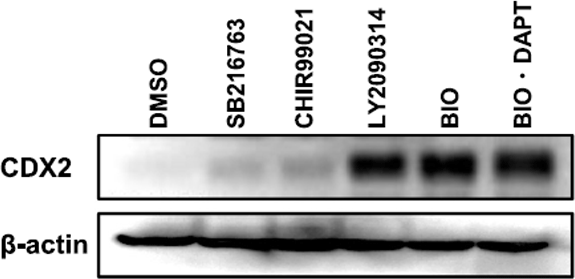
LY2090314 purchased from MedChemExpress. Usage Cited in: Stem Cell Reports. 2018 Dec 11;11(6):1539-1550. [Abstract]
The CDX2 protein expression levels are measured by western blotting analysis in the treatment of SB216763, CHIR99021, LY2090314, BIO and BIO.DAPT.
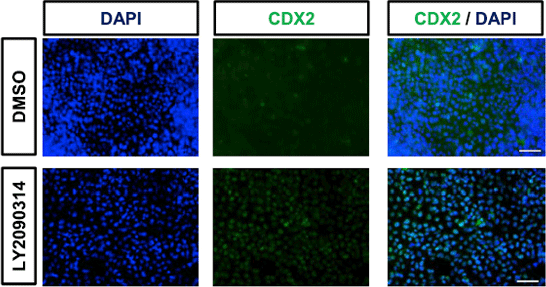
LY2090314 purchased from MedChemExpress. Usage Cited in: Stem Cell Reports. 2018 Dec 11;11(6):1539-1550. [Abstract]
Immunostaining analysis of CDX2 (green) is performed in the human iPSC-derived intestinal progenitor cells in the treatment of LY2090314.
-
Mol Ther Methods Clin Dev
Vinblastine treatment decreases the undifferentiated cell contamination of human iPSC-derived intestinal epithelial-like cells. [Abstract]2021 Jan 20:20:463-472. PMID: 33614822 -
Mol Ther Methods Clin Dev
Establishment of SLC15A1/PEPT1-Knockout Human-Induced Pluripotent Stem Cell Line for Intestinal Drug Absorption Studies. [Abstract]2019 Nov 21:17:49-57. PMID: 31890740 -
FASEB J
Deletion of the tyrosine phosphatase Shp2 in cervical cancer cells promotes reprogramming of glutamine metabolism. [Abstract]2023 Apr;37(4):e22880. PMID: 36943407 -
J Biol Chem
Her4.3+ radial glial cells maintain the brain vascular network through activation of Wnt signaling. [Abstract]2024 Aug;300(8):107570. PMID: 39019216 -
J Biol Chem
Glycogen Synthase Kinase 3 (GSK-3)-mediated Phosphorylation of Uracil N-Glycosylase 2 (UNG2) Facilitates the Repair of Floxuridine-induced DNA Lesions and Promotes Cell Survival. [Abstract]2016 Dec 23;291(52):26875-26885. PMID: 27875297
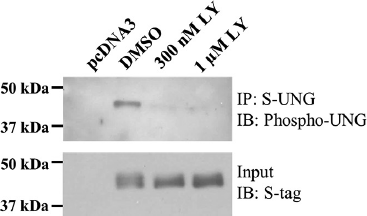
LY2090314 purchased from MedChemExpress. Usage Cited in: J Biol Chem. 2016 Dec 23;291(52):26875-26885. [Abstract]
K562 cells expressing wild-type S-UNG2 are treated with the GSK-3 inhibitor LY2090314 (LY) for 90 min. Phosphorylation of UNG2 is detected with phospho-PLK1 motif antibody (top). UNG2 expression in input cell lysates is detected by Western blotting for the S tag (bottom).
-
SLAS Discov
Development of a live cell assay for real-time monitoring the interactions between the Hippo pathway components 14-3-3 and TAZ. [Abstract]2024 Nov 5;29(8):100191. PMID: 39510350 -
-
-
-
-
-
Elife
2020 Dec 7:9:e61405. PMID: 33284104


용액&용해도
In Vitro:
DMSO : 25 mg/mL (48.78 mM; ultrasonic and warming and heat to 60°C; Hygroscopic DMSO has a significant impact on the solubility of product, please use newly opened DMSO)
Please refer to the solubility information to select the appropriate solvent. Once prepared, please aliquot and store the solution to prevent product inactivation from repeated freeze-thaw cycles.
Storage method and period of stock solution: -80°C, 1 year; -20°C, 6 months. When stored at -80°C, please use it within 1 year. When stored at -20°C, please use it within 6 months.
Please refer to the solubility information to select the appropriate solvent. Once prepared, please aliquot and store the solution to prevent product inactivation from repeated freeze-thaw cycles.
Storage method and period of stock solution: -80°C, 1 year; -20°C, 6 months. When stored at -80°C, please use it within 1 year. When stored at -20°C, please use it within 6 months.
Concentration (start) × Volume (start) = Concentration (final) × Volume (final)
In Vivo:
Select the appropriate dissolution method based on your experimental animal and administration route.
- For the following dissolution methods, please ensure to first prepare a clear stock solution using an In Vitro approach and then sequentially add co-solvents:
- To ensure reliable experimental results, the clarified stock solution can be appropriately stored based on storage conditions. As for the working solution for In Vivo experiments, it is recommended to prepare freshly and use it on the same day.
- The percentages shown for the solvents indicate their volumetric ratio in the final prepared solution. If precipitation or phase separation occurs during preparation, heat and/or sonication can be used to aid dissolution.
Add each solvent one by one: 10% DMSO 40% PEG300 5% Tween-80 45% Saline
Solubility: ≥ 1.25 mg/mL (2.44 mM); Clear solution
This protocol yields a clear solution of ≥ 1.25 mg/mL (saturation unknown).
Taking 1 mL working solution as an example, add 100 μL DMSO stock solution (12.5 mg/mL) to 400 μL PEG300, and mix evenly; then add 50 μL Tween-80 and mix evenly; then add 450 μL Saline to adjust the volume to 1 mL.
Preparation of Saline: Dissolve 0.9 g sodium chloride in ddH₂O and dilute to 100 mL to obtain a clear Saline solution.
Add each solvent one by one: 10% DMSO 90% (20% SBE-β-CD in Saline)
Solubility: ≥ 1.25 mg/mL (2.44 mM); Clear solution
This protocol yields a clear solution of ≥ 1.25 mg/mL (saturation unknown).
Taking 1 mL working solution as an example, add 100 μL DMSO stock solution (12.5 mg/mL) to 900 μL 20% SBE-β-CD in Saline, and mix evenly.
Preparation of 20% SBE-β-CD in Saline (4°C, storage for one week): 2 g SBE-β-CD powder is dissolved in 10 mL Saline, completely dissolve until clear.
For the following dissolution methods, please prepare the working solution directly:
It is recommended to prepare fresh solutions and use them promptly within a short period of time.
The percentages shown for the solvents indicate their volumetric ratio in the final prepared solution. If precipitation or phase separation occurs during preparation, heat and/or sonication can be used to aid dissolution.
Add each solvent one by one: 20% HP-β-CD/10 mM Citrate pH 2.0
Solubility: 10 mg/mL (19.51 mM); Suspended solution; Need ultrasonic
In Vivo Dissolution Calculator
Please enter the basic information of animal experiments:
-
-
-
-
Recommended: Prepare an additional quantity of animals to account for potential losses during experiments.
Please enter your animal formula composition:
-
%DMSO +
Recommended: Keep the proportion of DMSO in working solution below 2% if your animal is weak.
-
%+
-
+%Tween-80 + +
-
%Saline +
The co-solvents required include: DMSO, . All of co-solvents are available by MedChemExpress (MCE). , Tween 80. All of co-solvents are available by MedChemExpress (MCE).
Working solution concentration: 0.22 mg/mL
Method for preparing stock solution: mg drug dissolved in μL DMSO. Stock solution concentration: mg/mL.
1. Take μL DMSO stock solution;
2. Add μL .
μL , mix evenly;
3. Then add μL Tween 80, mix evenly;
4. Then add μL
Please ensure that the stock solution in the first step is dissolved to a clear state, and add co-solvents in sequence. You can use ultrasonic heating (ultrasonic cleaner, recommended frequency 20-40 kHz), vortexing, etc. to assist dissolution.


순도&문서
-
Data Sheet (287 KB)
-
SDS (393 KB)
- English - EN (393 KB)
- Français - FR (393 KB)
- Deutsch - DE (393 KB)
- Norwegian - NO (393 KB)
- Español - ES (393 KB)
- Swedish - SV (393 KB)
- Italian - IT (393 KB)
- Korean - KR (393 KB)
- Portuguese - PT (393 KB)
-
Handling Instructions (2659 KB)
References
[1]. Zamek-Gliszczynski MJ, et al. Pharmacokinetics, metabolism, and excretion of the glycogen synthase kinase-3 inhibitor LY2090314 in rats, dogs, and humans: a case study in rapid clearance by extensive metabolism with low circulating metabolite exposure. Dr [Content Brief]
[2]. Atkinson JM, et al. Activating the Wnt/β-Catenin Pathway for the Treatment of Melanoma--Application of LY2090314, a Novel Selective Inhibitor of Glycogen Synthase Kinase-3. PLoS One. 2015 Apr 27;10(4):e0125028. [Content Brief]


Complete Stock Solution Preparation Table
Please refer to the solubility information to select the appropriate solvent. Once prepared, please aliquot and store the solution to prevent product inactivation from repeated freeze-thaw cycles.
Storage method and period of stock solution: -80°C, 1 year; -20°C, 6 months. When stored at -80°C, please use it within 1 year. When stored at -20°C, please use it within 6 months.
| Optional Solvent | Concentration Solvent Mass | 1 mg | 5 mg | 10 mg | 25 mg |
|---|---|---|---|---|---|
| DMSO | 1 mM | 1.9511 mL | 9.7555 mL | 19.5111 mL | 48.7776 mL |
| 5 mM | 0.3902 mL | 1.9511 mL | 3.9022 mL | 9.7555 mL | |
| 10 mM | 0.1951 mL | 0.9756 mL | 1.9511 mL | 4.8778 mL | |
| 15 mM | 0.1301 mL | 0.6504 mL | 1.3007 mL | 3.2518 mL | |
| 20 mM | 0.0976 mL | 0.4878 mL | 0.9756 mL | 2.4389 mL | |
| 25 mM | 0.0780 mL | 0.3902 mL | 0.7804 mL | 1.9511 mL | |
| 30 mM | 0.0650 mL | 0.3252 mL | 0.6504 mL | 1.6259 mL | |
| 40 mM | 0.0488 mL | 0.2439 mL | 0.4878 mL | 1.2194 mL |


LY2090314 Related Classifications
HY-16294 Related Classifications
 Powered by Bioz