



PP58

Based on 1 Customer Validation
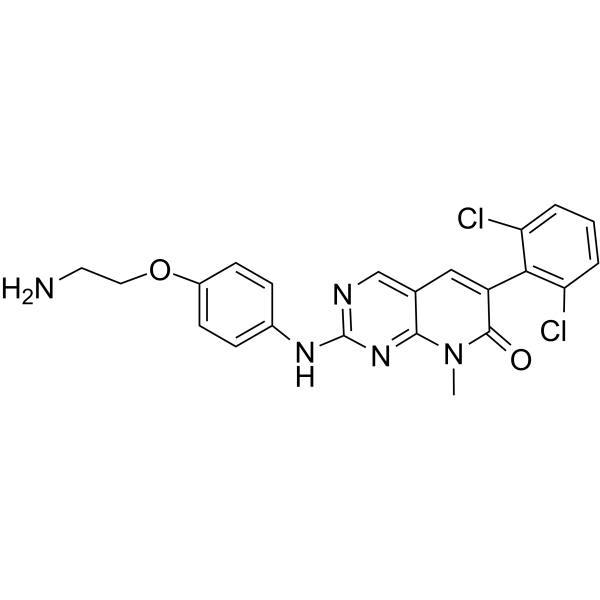
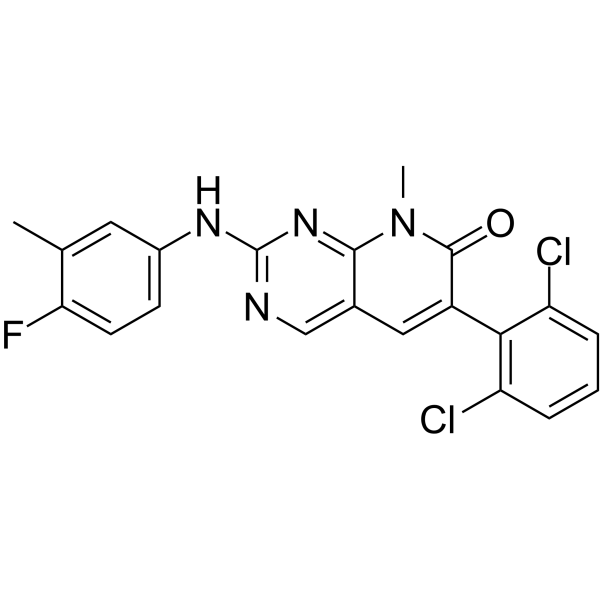
PP58 is a pyrido[2,3-d]pyrimidine-based compound that inhibits PDGFR, FGFR and Src family activities with nanomolar IC50 values.
For research use only. We do not sell to patients.
- Purity : 98.70%
- CAS No.: 212391-58-7
- Formula: C22H19Cl2N5O2
- Molecular Weight:456.32
-
Storage:Powder -20°C, 3 years , 4°C, 2 years ; In solvent -80°C, 2 years , -20°C, 1 year

To place orders, for customer services and technical support, please contact: MedChemExpress USA
Tel: 609-228-6898 E-mail: [email protected] [email protected]


-
 Biological Activity
-
Chemical Information
-
Solvent & Solubility
- Purity & Documentation
- References
-
 Help & FAQs


-
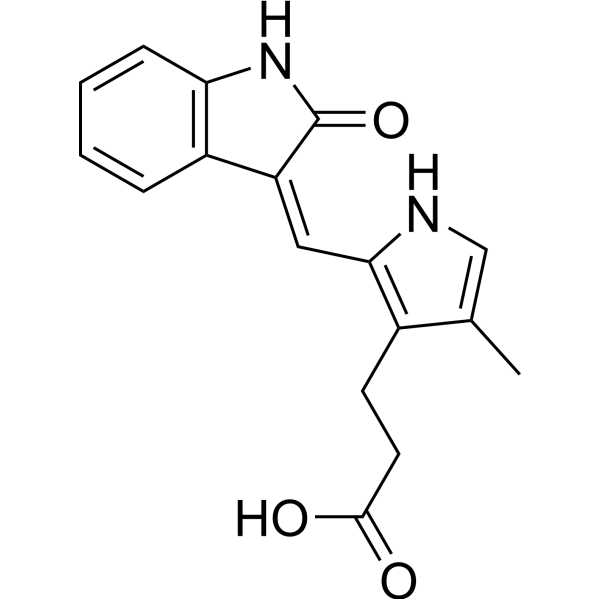
HY-10407
SU 5402Tyrosine Kinase Inhibitor -
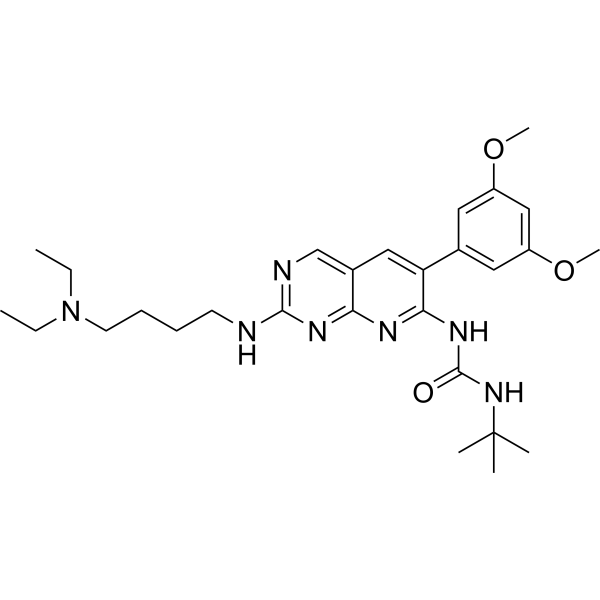
HY-10321
PD173074FGFR1 Inhibitor -
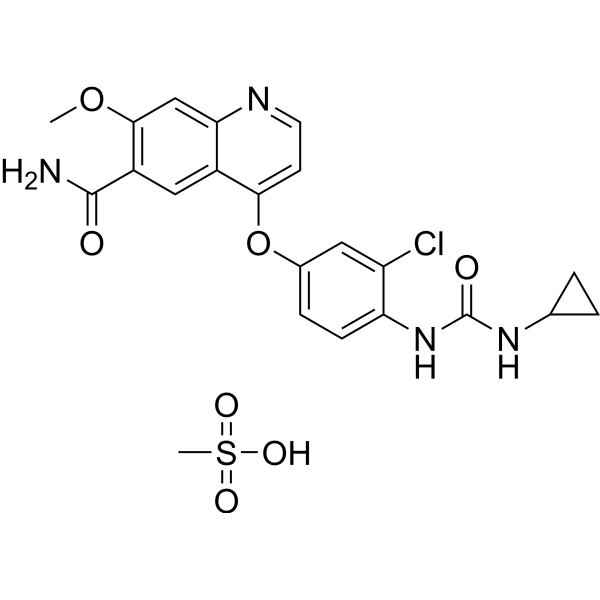
HY-10981A
Lenvatinib mesylatec-Kit Inhibitor -
HY-15141
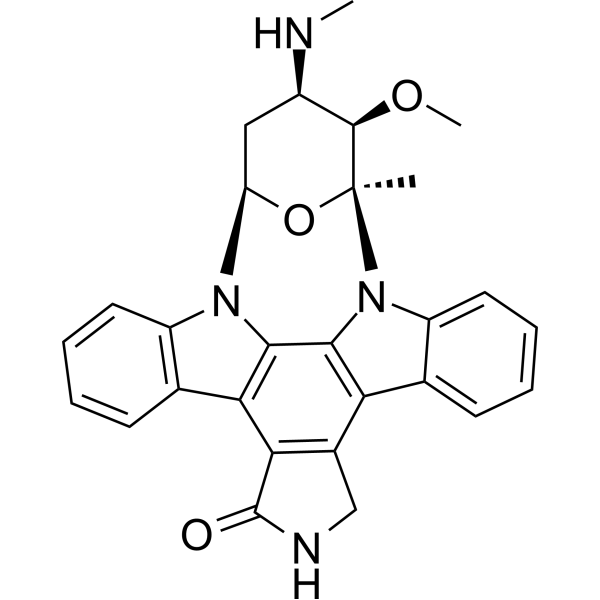
StaurosporinePKC/PKA Inhibitor -
HY-50904
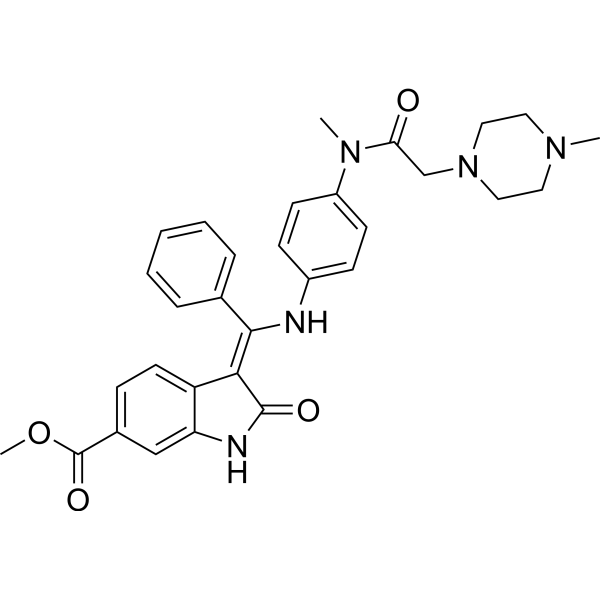
NintedanibPDGFR/VEGFR/FGFR Inhibitor -
HY-10186
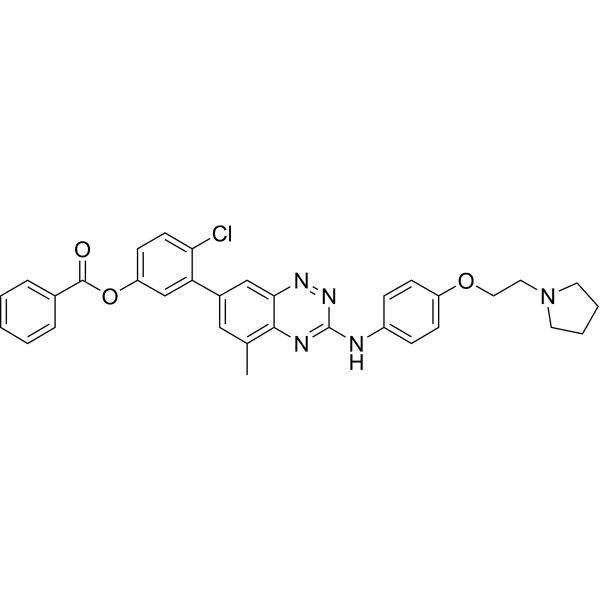
TG 100801Prodrug of TG 100572 -
HY-103274
PD180970p210Bcr-Abl Kinase Inhibitor -
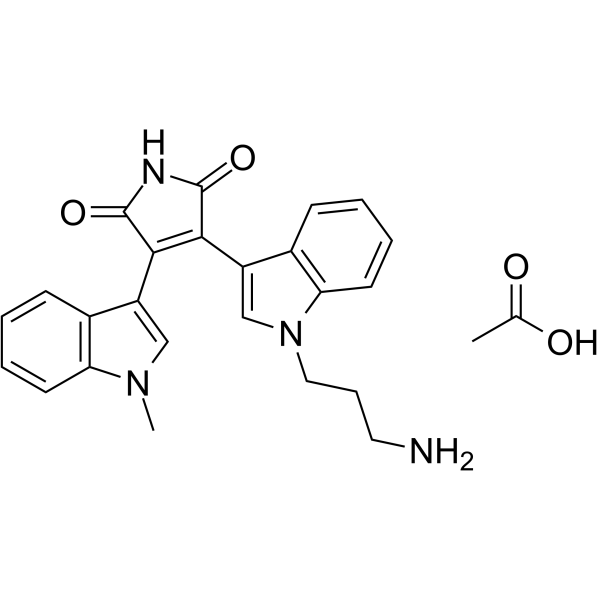
HY-129624A
Bisindolylmaleimide VIII acetatePKC Inhibitor -
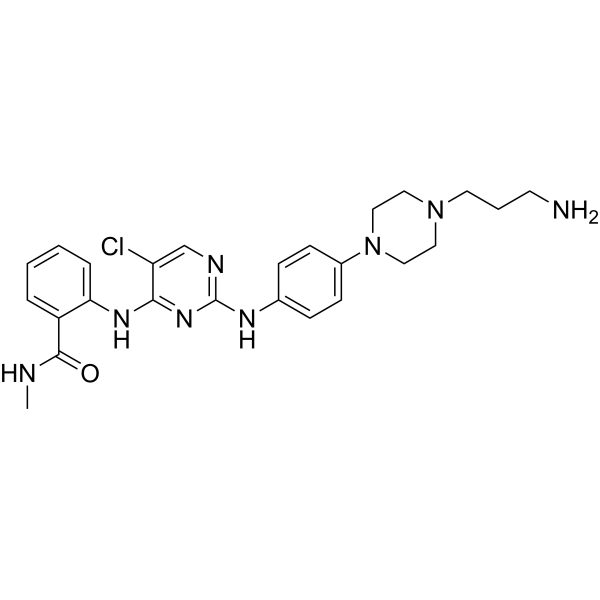
HY-12400
GSK3182571pan-Kinase Inhibitor -
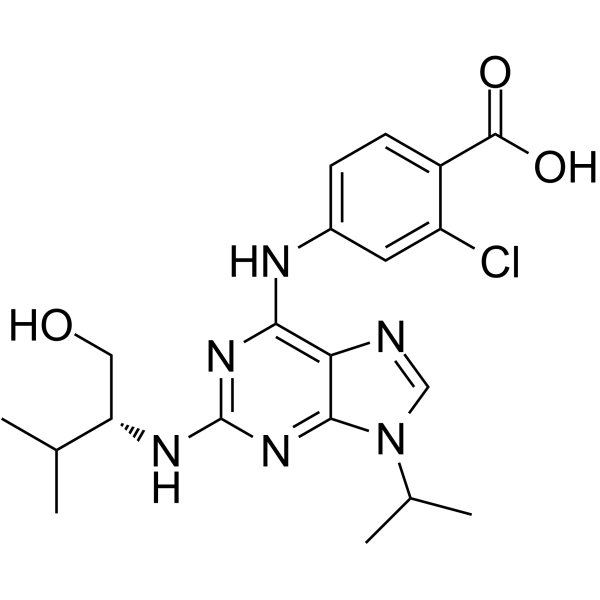
HY-18299
Purvalanol BCDK Inhibitor -
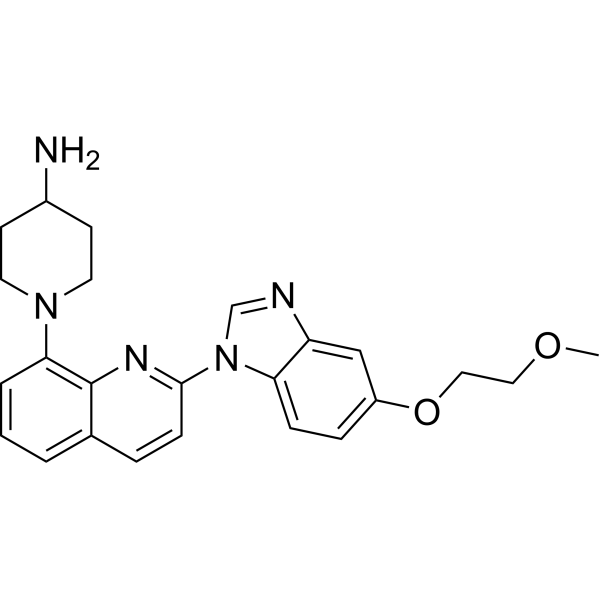
HY-12050
CP-673451PDGFR Inhibitor -
HY-10981
LenvatinibVEGFR/FGFR Inhibitor


Biological Activity
Description
IC50 & Target
[1]|
PDGFR |
In Vitro
PP58 inhibits Src with a subnanomolar IC50 value in the assays. PP58 behaves as a titration reagent at higher Src protein concentrations. As analyzed by immunoblotting with specific antiserum, the PP58 matrix specifically depletes Src from total lysate, whereas binding to the PP58 beads is prevented when free inhibitor is included. The ectopically expressed FGFR1 receptor tyrosine kinase is specifically retained on PP58 beads. PP58 matrix could be a novel affinity reagent for the purification of cellular pyrido[2,3-d]pyrimidine inhibitor targets. PP58 affinity chromatography leads to the identification of protein kinases belonging to various different groups and families, indicating that the pyrido[2,3-d]pyrimidine inhibitor is not selective for a set of phylogenetically related members of the human kinome. The Ki values of PP58 for p38α and JNK2 are 3.8±1.9 nM and 0.32±0.04 μM, respectively. PP58 affinity matrix also serves as an efficient purification reagent for a variety of protein kinases, which lack this structural feature and have much lower affinities for the pyrido[2,3-d]pyrimidine inhibitor PP58. PP58 inhibits anisomycin activated p38 in a dose-dependent manner with an IC50 below 10 nM. LPS-stimulated TNF-α production is potently inhibited by PP58 with a cellular IC50 value of around 3 nM[1]. The T341M mutation abrogates the sensitivity to PP58 inhibition by increasing the cellular IC50 value of about 10 nM by more than 1000-fold. The cellular wild-type FGFR1 activity is potently inhibited by low nanomolar concentrations of PP58, whereas dramatic resistance formation is detected for the FGFR1-V561M mutant. PP58 inhibits CSK activity with an IC50 value of around 100 nM[2].
MedChemExpress (MCE) has not independently confirmed the accuracy of these methods. They are for reference only.
In Vivo
MedChemExpress (MCE) has not independently confirmed the accuracy of these methods. They are for reference only.


Chemical Information
-
CAS No. 212391-58-7
-
Appearance Solid
-
Molecular Weight 456.32
-
Formula C22H19Cl2N5O2
-
Color Light yellow to yellow
-
SMILES
NCCOC1=CC=C(NC(N=C2N3C)=NC=C2C=C(C4=C(Cl)C=CC=C4Cl)C3=O)C=C1
-
Shipping
Room temperature in continental US; may vary elsewhere.
-
Storage
Powder -20°C 3 years 4°C 2 years In solvent -80°C 2 years -20°C 1 year


Solvent & Solubility
In Vitro:
DMSO : 62.5 mg/mL (136.97 mM; Need ultrasonic; Hygroscopic DMSO has a significant impact on the solubility of product, please use newly opened DMSO)
Please refer to the solubility information to select the appropriate solvent. Once prepared, please aliquot and store the solution to prevent product inactivation from repeated freeze-thaw cycles.
Storage method and period of stock solution: -80°C, 2 years; -20°C, 1 year. When stored at -80°C, please use it within 2 years. When stored at -20°C, please use it within 1 year.
Please refer to the solubility information to select the appropriate solvent. Once prepared, please aliquot and store the solution to prevent product inactivation from repeated freeze-thaw cycles.
Storage method and period of stock solution: -80°C, 2 years; -20°C, 1 year. When stored at -80°C, please use it within 2 years. When stored at -20°C, please use it within 1 year.
Concentration (start) × Volume (start) = Concentration (final) × Volume (final)
In Vivo:
Select the appropriate dissolution method based on your experimental animal and administration route.
- For the following dissolution methods, please ensure to first prepare a clear stock solution using an In Vitro approach and then sequentially add co-solvents:
- To ensure reliable experimental results, the clarified stock solution can be appropriately stored based on storage conditions. As for the working solution for In Vivo experiments, it is recommended to prepare freshly and use it on the same day.
- The percentages shown for the solvents indicate their volumetric ratio in the final prepared solution. If precipitation or phase separation occurs during preparation, heat and/or sonication can be used to aid dissolution.
Add each solvent one by one: 10% DMSO 90% (20% SBE-β-CD in Saline)
Solubility: 2.08 mg/mL (4.56 mM); Suspended solution; Need ultrasonic
This protocol yields a suspended solution of 2.08 mg/mL. Suspended solution can be used for oral and intraperitoneal injection.
Taking 1 mL working solution as an example, add 100 μL DMSO stock solution (20.8 mg/mL) to 900 μL 20% SBE-β-CD in Saline, and mix evenly.
Preparation of 20% SBE-β-CD in Saline (4°C, storage for one week): 2 g SBE-β-CD powder is dissolved in 10 mL Saline, completely dissolve until clear.
In Vivo Dissolution Calculator
Please enter the basic information of animal experiments:
-
-
-
-
Recommended: Prepare an additional quantity of animals to account for potential losses during experiments.
Please enter your animal formula composition:
-
%DMSO +
Recommended: Keep the proportion of DMSO in working solution below 2% if your animal is weak.
-
%+
-
+%Tween-80 + +
-
%Saline +
The co-solvents required include: DMSO, . All of co-solvents are available by MedChemExpress (MCE). , Tween 80. All of co-solvents are available by MedChemExpress (MCE).
Working solution concentration: 0.22 mg/mL
Method for preparing stock solution: mg drug dissolved in μL DMSO. Stock solution concentration: mg/mL.
1. Take μL DMSO stock solution;
2. Add μL .
μL , mix evenly;
3. Then add μL Tween 80, mix evenly;
4. Then add μL
Please ensure that the stock solution in the first step is dissolved to a clear state, and add co-solvents in sequence. You can use ultrasonic heating (ultrasonic cleaner, recommended frequency 20-40 kHz), vortexing, etc. to assist dissolution.


Purity & Documentation
-
Data Sheet (275 KB)
-
SDS (393 KB)
- English - EN (393 KB)
- Français - FR (393 KB)
- Deutsch - DE (393 KB)
- Norwegian - NO (393 KB)
- Español - ES (393 KB)
- Swedish - SV (393 KB)
- Italian - IT (393 KB)
- Korean - KR (393 KB)
- Portuguese - PT (393 KB)
-
Handling Instructions (2659 KB)
References
[1]. Wissing J, et al. Chemical Proteomic Analysis Reveals Alternative Modes of Action for Pyrido[2,3-d]pyrimidine Kinase Inhibitors. Mol Cell Proteomics. 2004 Dec;3(12):1181-93. [Content Brief]
[2]. Blencke S, et al. Characterization of a conserved structural determinant controlling protein kinase sensitivity to selective inhibitors. Chem Biol. 2004 May;11(5):691-701. [Content Brief]


Complete Stock Solution Preparation Table
Please refer to the solubility information to select the appropriate solvent. Once prepared, please aliquot and store the solution to prevent product inactivation from repeated freeze-thaw cycles.
Storage method and period of stock solution: -80°C, 2 years; -20°C, 1 year. When stored at -80°C, please use it within 2 years. When stored at -20°C, please use it within 1 year.
| Optional Solvent | Concentration Solvent Mass | 1 mg | 5 mg | 10 mg | 25 mg |
|---|---|---|---|---|---|
| DMSO | 1 mM | 2.1914 mL | 10.9572 mL | 21.9144 mL | 54.7861 mL |
| 5 mM | 0.4383 mL | 2.1914 mL | 4.3829 mL | 10.9572 mL | |
| 10 mM | 0.2191 mL | 1.0957 mL | 2.1914 mL | 5.4786 mL | |
| 15 mM | 0.1461 mL | 0.7305 mL | 1.4610 mL | 3.6524 mL | |
| 20 mM | 0.1096 mL | 0.5479 mL | 1.0957 mL | 2.7393 mL | |
| 25 mM | 0.0877 mL | 0.4383 mL | 0.8766 mL | 2.1914 mL | |
| 30 mM | 0.0730 mL | 0.3652 mL | 0.7305 mL | 1.8262 mL | |
| 40 mM | 0.0548 mL | 0.2739 mL | 0.5479 mL | 1.3697 mL | |
| 50 mM | 0.0438 mL | 0.2191 mL | 0.4383 mL | 1.0957 mL | |
| 60 mM | 0.0365 mL | 0.1826 mL | 0.3652 mL | 0.9131 mL | |
| 80 mM | 0.0274 mL | 0.1370 mL | 0.2739 mL | 0.6848 mL | |
| 100 mM | 0.0219 mL | 0.1096 mL | 0.2191 mL | 0.5479 mL |


PP58 Related Classifications
HY-18622 Related Classifications
 Powered by Bioz