



FGFR1
FGFR1 is a cell-surface tyrosine kinase FGF receptor that mediates biological responses after ligand binding with heparin/heparan sulfate as a cofactor[1]. Mechanistically, FGFR signaling activates downstream MAPK, STAT, PI3K/Akt, PLCγ, DAG-PKC, and IP3-Ca2+ branches that regulate proliferation, differentiation, apoptosis, and migration[2]. In adipocytes, FGFR1c is abundantly expressed in white adipose tissue, where adipocyte FGFR1 supports FGF21-stimulated metabolic transcriptional activity and glucose, insulin, triglyceride, and energy-expenditure responses[1][3]. In neural lineage models, FGF2 activation of FGFR1 inhibits oligodendrocyte progenitor differentiation, while oligodendroglial FGFR1 deletion ameliorates experimental autoimmune encephalomyelitis and reduces myelin and axonal loss[4][5]. Compared with related isoforms, FGFR1/2/3 generate IIIb and IIIc splice variants with distinct ligand-binding specificity, whereas FGFR4 lacks this IIIb/IIIc isoform structure[1]. For experimental applications, the β-Klotho antibody 39F7 specifically activates β-Klotho/FGFR1c signaling, while PD173074 blocks FGFR1 signaling in TGF-β1-induced epithelial-to-mesenchymal transition models[6][7].
References:
- [1]. Ohta H, et al. Fgf signaling in adipocytes as a target for metabolic diseases. Mol Metab. 2012 Dec 14;2(1):3-4. [Content Brief]
- [2]. de Menezes D L, et al. 577 POSTER TKl258 is an effective multitargeted receptor tyrosine kinase (RTK) inhibitor against prostate cancer models via potent inhibition of FGFR kinase[J]. European Journal of Cancer Supplements, 2006, 4(12): 175.
- [3]. Lee S, et al. Structures of β-klotho reveal a 'zip code'-like mechanism for endocrine FGF signalling. Nature. 2018 Jan 25;553(7689):501-505. [Content Brief]
- [4]. Zhou YX, et al. Retroviral lineage analysis of fibroblast growth factor receptor signaling in FGF2 inhibition of oligodendrocyte progenitor differentiation. Glia. 2006 Nov 1;54(6):578-90. [Content Brief]
- [5]. Rajendran R, et al. Oligodendroglial fibroblast growth factor receptor 1 gene targeting protects mice from experimental autoimmune encephalomyelitis through ERK/AKT phosphorylation. Brain Pathol. 2018 Mar;28(2):212-224. [Content Brief]
- [6]. Min X, et al. Agonistic β-Klotho antibody mimics fibroblast growth factor 21 (FGF21) functions. J Biol Chem. 2018 Sep 21;293(38):14678-14688. [Content Brief]
- [7]. Životić M, et al. Modulation of NCAM/FGFR1 signaling suppresses EMT program in human proximal tubular epithelial cells. PLoS One. 2018 Nov 1;13(11):e0206786. [Content Brief]
-
FGFR1 Related Products (17)
Related Products (17)

- 1
-
Efruxifermin
 0 ImagesSynonyms: AKR-001; AMG-876Efruxifermin is an Fc-FGF21 fusion protein (human IgG1 Fc domain linked to a modified human FGF21). Efruxifermin has prolonged half-life and enhanced receptor affinity compared with native human FGF21. Efruxifermin can be used for the research of non-alcoholic steatohepatitis.
-
(R)-9b
 0 Images(R)-9b is an ATP-competitive kinase inhibitor. (R)-9b binds to the ATP-binding site of ACK1/TNK2, inhibiting their kinase activity and autophosphorylation, with a human IC50 of 56 nM. (R)-9b also inhibits JAK2, Tyk2, ALK, c-Src, ABL1, CHK1, FGFR1, LCK, and ROS/ROS1. (R)-9b can be used for research on prostate cancer.
-
BR-cpd7
 0 ImagesCat. No.: HY-163705Purity: 98.01%BR-cpd7 is an orally active, selective PROTAC degrader targeting FGFR1 and FGFR2, with a DC50 of 2.2 nM against FGFR1. BR-cpd7 reduces FGFR signaling. BR-cpd7 induces cell cycle arrest and selectively blocks the proliferation of FGFR1/FGFR2-dependent tumor cells. BR-cpd7 exhibits significant antitumor efficacy in FGFR1-dependent lung cancer animal models, while achieving complete depletion of FGFR1. BR-cpd7 can be used for cancer-related research.
-
DGY-09-192
 0 ImagesDGY-09-192 is a PROTAC FGFR1/2 degrader (FGFR1: DC50 = 4.35 nM; FGFR2: DC50 = 70 nM). DGY-09-192 preferentially degrades wild-type FGFR1/2 and multiple FGFR2 fusion proteins (including FGFR2-PHGDH and FGFR2-OPTN). DGY-09-192 suppresses downstream FGFR signaling (reducing phosphorylation of FRS2 Y196 and ERK1/2 T202/Y204) in vitro and vivo. DGY-09-192 can be used for the study of FGFR-driven cancers.
-
Risimtinib
 0 ImagesCat. No.: HY-184094CAS No.: 2126751-11-7Synonyms: RisimtinibumRisimtinib (Risimtinibum) is a FGFR1 inhibitor with an IC50 of 2.1 nM. Risimtinib inhibits the proliferation of FGFR1-positive cancer cells. Risimtinib is used for the research of myeloid leukemia.
-
SU10944
 0 ImagesCat. No.: HY-135435CAS No.: 515821-11-1SU10944 is a selective, orally active VEGFR inhibitor, with an IC50 of 6 nM against VEGFR-1, an IC50 of 96 nM and a Ki of 21 nM against VEGFR-2. SU10944 only exhibits weak inhibitory activity against PDGFRβ (IC50 = 1 μM), SCFR (IC50 = 1.58 μM) and FGFR-1 (IC50 = 1.6 μM). SU10944 selectively inhibits VEGFR receptor downstream signaling, neovascularization, vascular permeability, VEGF-mediated tissue factor production, and induces tumor growth delay. SU10944 can be used in research related to diabetic retinopathy, exudative age-related macular degeneration or cancer.
-
Dabogratinib (GMP)
 0 ImagesCat. No.: HY-159642GCAS No.: 2800223-30-5Synonyms: TYRA-300 (GMP)Dabogratinib (GMP) is the GMP-grade version of Dabogratinib (HY-159642). Dabogratinib (TYRA-300) is an orally active, selective FGFR3 inhibitor with an IC50 of 11 nM. Dabogratinib exhibits antitumor activity against urothelial carcinoma and solid tumors. Dabogratinib downregulates the FGFR3 and ERK1/2 signaling pathways, and induces tumor growth inhibition and regression in FGFR3-altered xenograft models. Dabogratinib promotes chondrocyte proliferation and differentiation, drives endochondral bone formation and overall body growth, partially restores long bone proportions, and improves craniofacial and spinal morphology. Dabogratinib can be used for the research of metastatic urothelial carcinoma, achondroplasia and hypochondroplasia.
-
FGFR-IN-27
 0 ImagesCat. No.: HY-183780FGFR-IN-27 is an orally active, broad-spectrum FGFR inhibitor, with an IC50 of 0.24 nM against human FGFR1, 0.71 nM against FGFR2, 0.87 nM against FGFR3, and 6.50 nM against FGFR4. FGFR-IN-27 inhibits cancer cell proliferation and blocks tumor growth. FGFR-IN-27 reduces the phosphorylation levels of AKT and ERK, induces apoptosis and ferroptosis, increases ROS levels, and decreases GSH levels. FGFR-IN-27 can be used in the research of hepatocellular carcinoma.
-
FGFR-IN-28
 0 ImagesCat. No.: HY-184250CAS No.: 2634677-16-8FGFR-IN-28 is a FGFR inhibitor with inhibitory activity against multiple subtypes of the FGFR family, with an IC50 of 4.4 nM against FGFR4. FGFR-IN-28 inhibits kinase activity and phosphorylation processes, and blocks the downstream MAPK and AKT signaling pathways. FGFR-IN-28 induces cellular DNA damage, cell cycle arrest, apoptosis and ferroptosis, and reduces the adhesion, invasion and metastasis abilities of cancer cells. FGFR-IN-28 exhibits anti-tumor activity in in vitro experiments on colon cancer cells, and inhibits tumor growth in colon cancer xenograft models. FGFR-IN-28 can be used in colon cancer-related research.
-
PROTAC FGFR1 degrader-1
 0 ImagesCat. No.: HY-170869PROTAC FGFR1 degrader-1 is a PROTAC degrader targeting fibroblast growth factor receptor 1 (FGFR1), with a DC50 of 39.78 nM and an IC50 of 26.81 nM in KG1a cells. PROTAC FGFR1 degrader-1 selectively degrades FGFR1 via the ubiquitin-proteasome system, showing concentration- and time-dependent degradation in cancer cells. PROTAC FGFR1 degrader-1 can be used in studies related to leukemia and breast cancer.
-
FGFR-IN-29
 0 ImagesCat. No.: HY-189241FGFR-IN-29 is an orally active pan-FGFR inhibitor that suppresses the kinase activities of FGFR1, FGFR2, FGFR3, and FGFR4. FGFR-IN-29 blocks the intracellular phosphorylation process of FGFR and arrests downstream tumor cell proliferation signaling. FGFR-IN-29 inhibits tumor growth in solid tumor xenograft mouse models. FGFR-IN-29 is applicable for cancer-related research.
-
NOTA-cRY9M
 0 ImagesCat. No.: HY-P11852NOTA-cRY9M is a reagent targeting FGFR1 with a Kd value of 58 nM, and exhibits subtype selectivity for FGFR2-4. When radiolabeled as [68Ga]Ga-NOTA-cRY9M, it functions as a stabilizer, imaging contrast enhancer, and tumor-targeting agent, and accumulates in FGFR1-positive non-small cell lung cancer xenograft models. NOTA-cRY9M can be used in studies related to non-small cell lung cancer.
-
PD173074 (GMP)
 0 ImagesCat. No.: HY-10321GCAS No.: 219580-11-7PD173074 GMP is PD173074 (HY-10321) produced by using GMP guidelines. GMP small molecules works appropriately as an auxiliary reagent for cell therapy manufacture. PD173074 is an orally active FGFR inhibitor that targets the transphosphorylation of FGFR1 and FGFR2 and blocks the FGF signaling pathway. By reducing the phosphorylation level of SMAD2 and altering the expression of Nodal/Activin target genes, PD173074 eliminates endothelial differentiation potential, thereby inhibiting the formation of capillary-like structures. PD173074 blocks the proliferation and colony formation of tumor cells and increases intratumoral cell apoptosis. PD173074 successfully reverses FGF-2-induced chemoresistance to enhance the effect of cisplatin (HY-17394) in small cell lung cancer models. PD173074 can be applied to research related to critical limb ischemia and small cell lung cancer.
-
FGFR3-IN-12
 0 ImagesCat. No.: HY-181752CAS No.: 3127143-52-3FGFR3-IN-12 is a selective fibroblast growth factor receptor 3 (FGFR3) inhibitor with an IC50 of 6.8 nM. FGFR3-IN-12 shows an IC50 of 19.2 nM against FGFR3V555M and an IC50 of 16.9 nM against TNK1 (Thirty-eight Negative Kinase 1). FGFR3-IN-12 inhibits cancer cells proliferation and induces caspase-mediated apoptosis. FGFR3-IN-12 exhibits antitumor activity in bladder cancer xenografts mice models. FGFR3-IN-12 can be used for the research of cancer, such as bladder cancer.
-
FGFR-IN-12
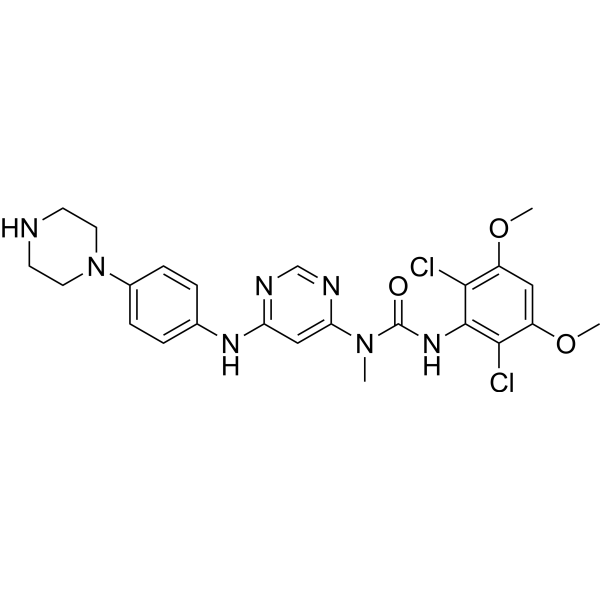 0 ImagesCat. No.: HY-160013CAS No.: 943189-02-4FGFR-IN-12 (example 14), a pyrimidinyl aryl urea derivative, is a potent FGFR inhibitor.
-
CYB-5067
 0 ImagesCat. No.: HY-184598CYB-5067 is a FGFR molecular glue degrader with a DC50 of 27 nM against FGFR2. CYB-5067 inhibits FGFR1, FGFR3, FGFR4 and downstream FGFR signaling pathways, induces antiproliferative activity in vitro, and exhibits sustained target protein inhibition in vivo without obvious hook effect. CYB-5067 shows significant tumor growth inhibitory activity in the ETV6-FGFR2 fusion Ba/F3 xenograft model. CYB-5067 can be used for the research of FGFR-driven cancers.
-
Anti-Mouse Delta-like protein 4/DLL4 Antibody (HMD4-2)
 0 ImagesCat. No.: HY-P990252Anti-Mouse Delta-like protein 4/DLL4 Antibody (HMD4-2) is an anti-mouse Delta-like protein 4/DLL4 IgG monoclonal antibody. Anti-Mouse Delta-like protein 4/DLL4 Antibody (HMD4-2) can reduce angiogenesis and density by blocking the DLL4-Notch signaling pathway. Anti-Mouse Delta-like protein 4/DLL4 Antibody (HMD4-2) reduces inflammatory response by decreasing NF-κB activity and pro-inflammatory factors (IL-1β, iNOS, IL-6) levels. Anti-Mouse Delta-like protein 4/DLL4 Antibody (HMD4-2) can inhibit Th17 cell differentiation and IL-17A production. Anti-Mouse Delta-like protein 4/DLL4 Antibody (HMD4-2) can reduce macrophage infiltration and alleviate insulin resistance. Anti-Mouse Delta-like protein 4/DLL4 Antibody (HMD4-2) can be used for researches on inflammation, metabolic conditions and cancer such as atherosclerosis, pancreatic cancer and asthma.
- 1



