



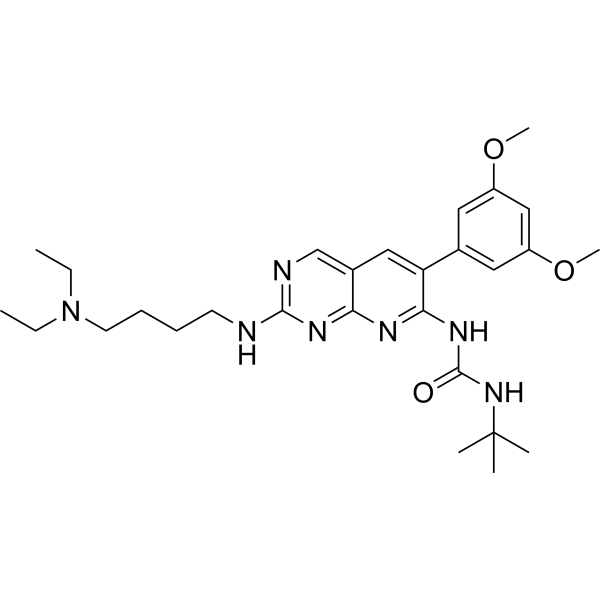
PD173074
Based on 24 publication(s) in Google Scholar
PD173074 is a potent FGFR1 inhibitor with an IC50 of 25 nM and also inhibits VEGFR2 with an IC50 of 100-200 nM, showing 1000-fold selectivity for FGFR1 over PDGFR and c-Src.
연구목적의 판매만을 진행합니다. 환자를 대상으로 한 판매는 하지 않습니다.
- Purity : 99.86%
- CAS No.: 219580-11-7
- 화학식: C28H41N7O3
- 분자량:523.67
-
보관:Powder -20°C, 3 years , 4°C, 2 years ; In solvent -80°C, 1 year , -20°C, 6 months

To place orders, for customer services and technical support, please contact: MedChemExpress USA
Tel: 609-228-6898 E-mail: [email protected] [email protected]


-
 Biological Activity
-
Chemical Information
-
용액&용해도
- 순도&문서
- References
-
 Help & FAQs


-
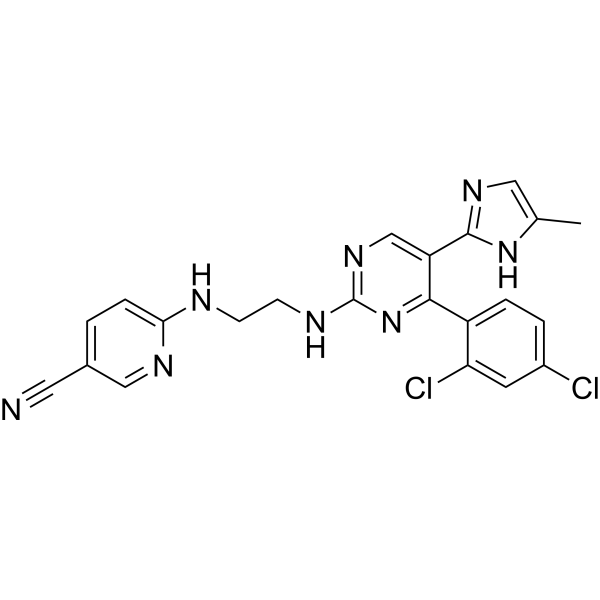
HY-10182
LaduviglusibGSK-3 Inhibitor -
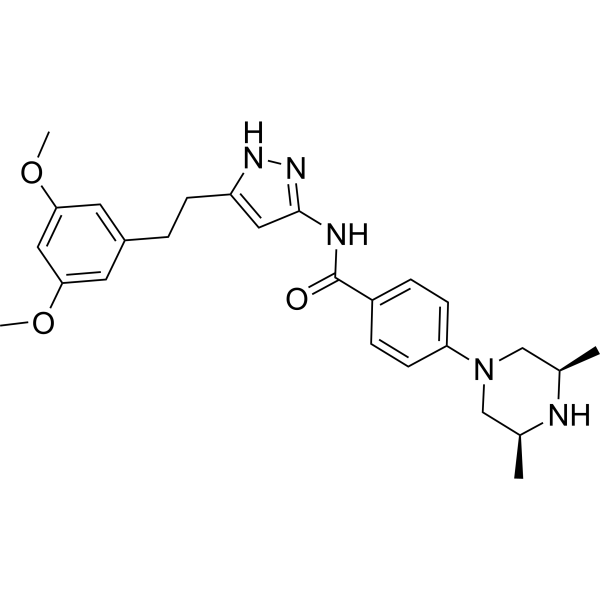
HY-13330
FexagratinibFGFR Inhibitor -
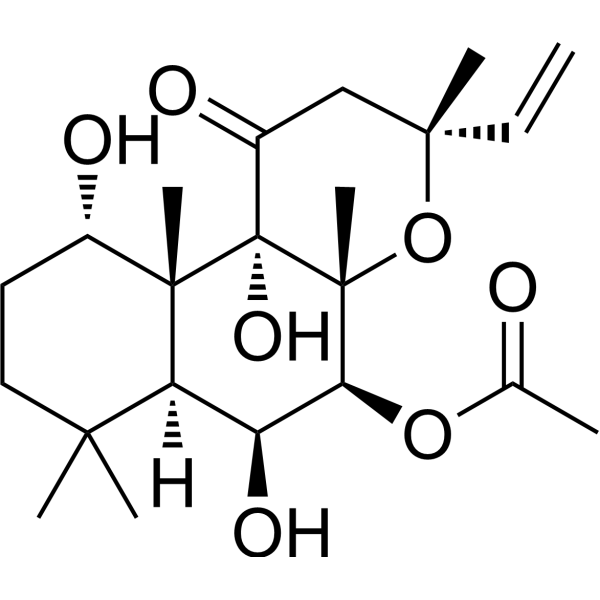
HY-15371
ForskolinAdenylate Cyclase Activator -
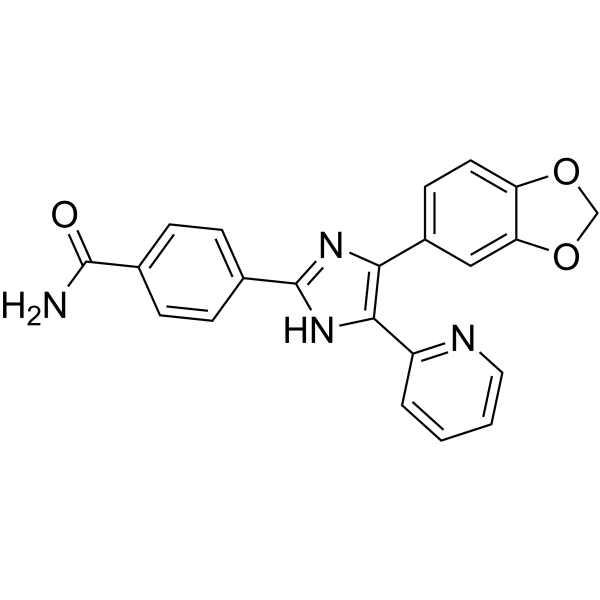
HY-10431
SB-431542TGF-β Receptor Kinase Inhibitor -
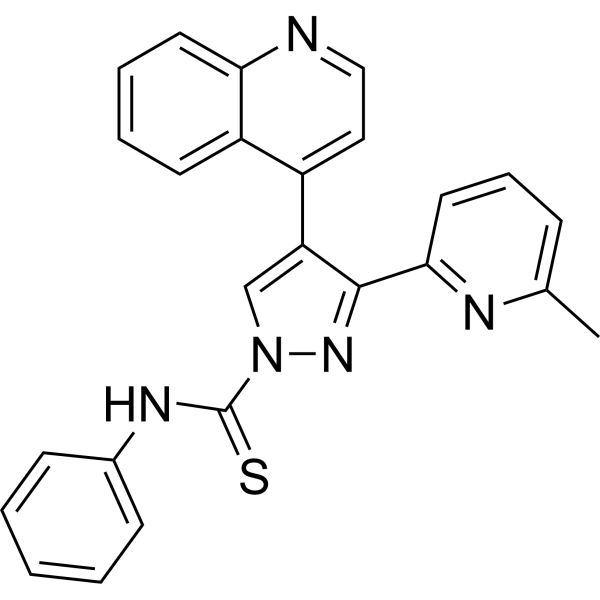
HY-10432
A 83-01ALK4/5/7 Inhibitor -
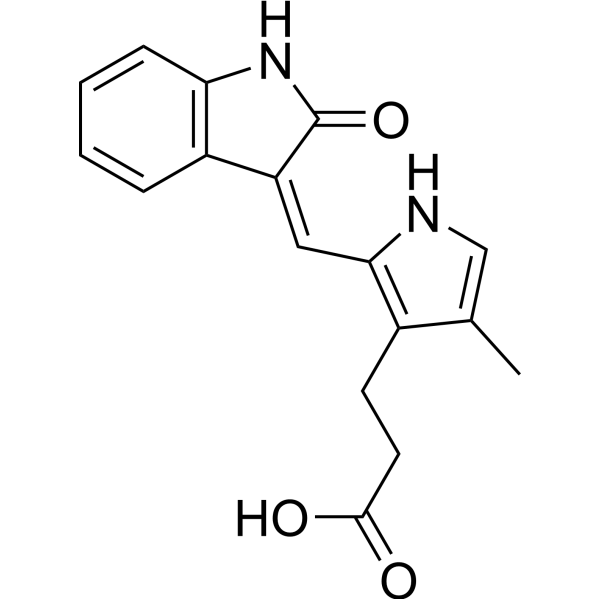
HY-10407
SU 5402Tyrosine Kinase Inhibitor -
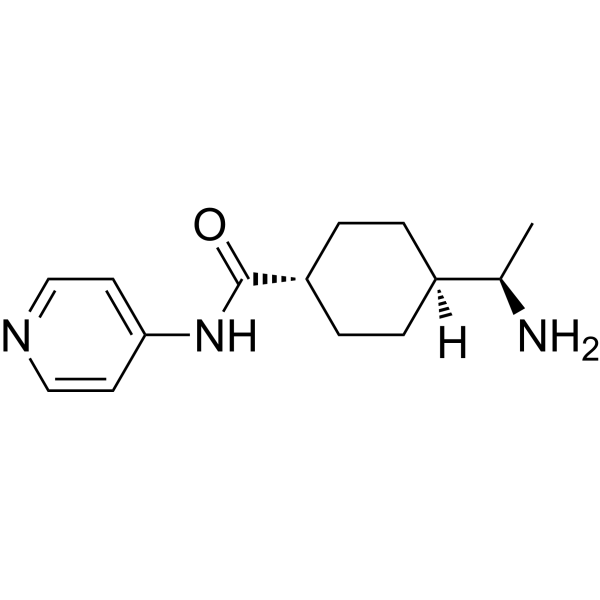
HY-10071
Y-27632ROCK Inhibitor -
HY-15659
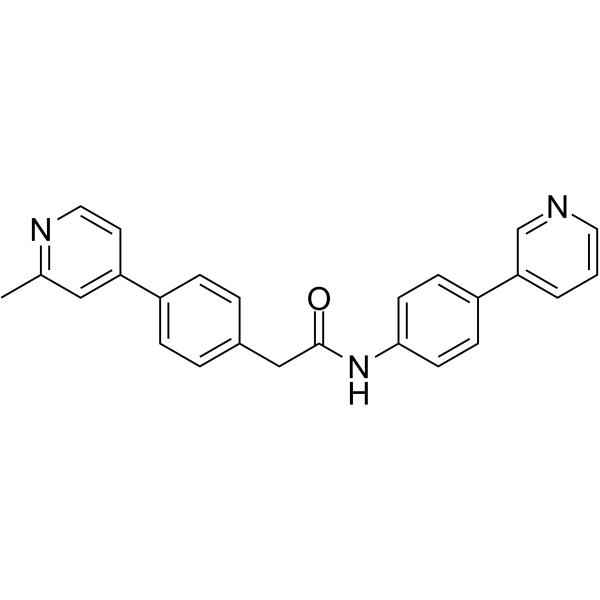
Wnt-C59PORCN Inhibitor -
HY-10254
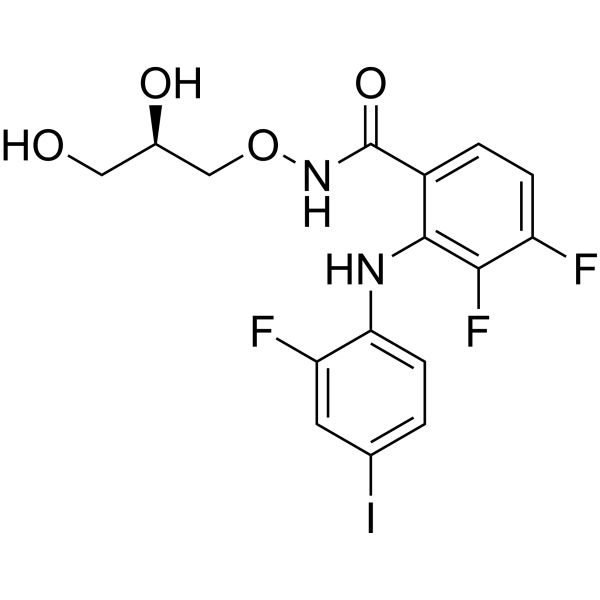
MirdametinibMEK Inhibitor -
HY-15147
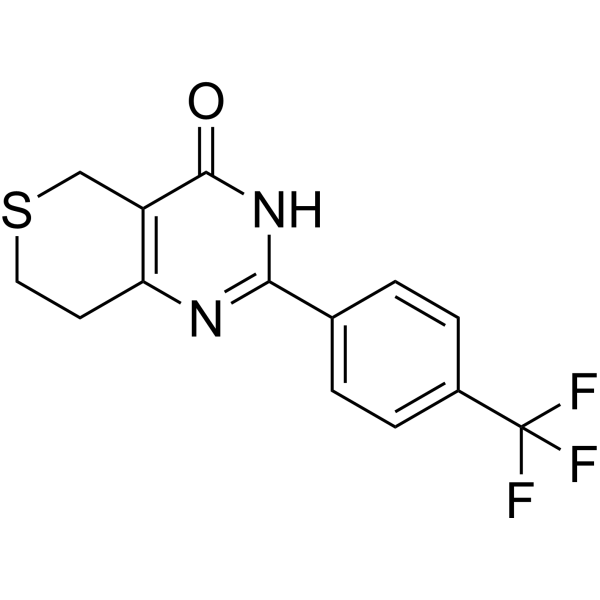
XAV-939Tankyrase Inhibitor -
HY-13311
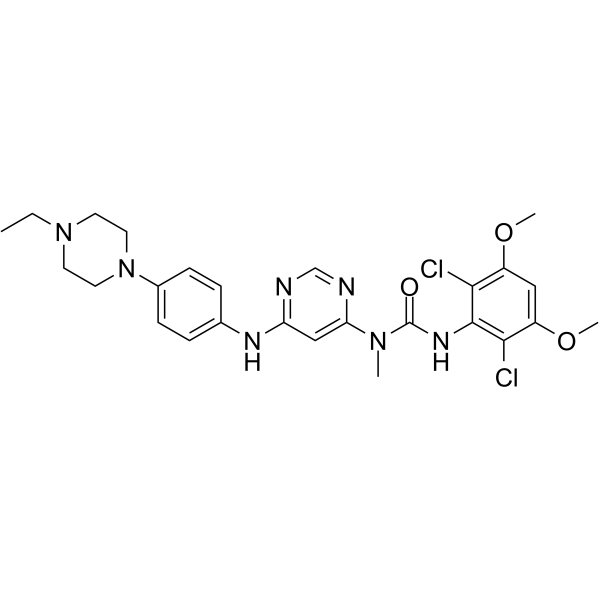
InfigratinibFGFR Inhibitor -
HY-14649
Retinoic acidRAR Agonist
Publications Citing Use of MedChemExpress (MCE) PD173074
More- Nat Commun. 2026 Sep 2;17(1):9407.
- Cell Rep Med. 2025 Oct 21;6(10):102401. [Abstract]
- Chem Eng J. 2025 Sep 15.
- Cell Death Dis. 2021 Nov 27;12(12):1113. [Abstract]
- EMBO Mol Med. 2018 Apr;10(4):e8163. [Abstract]
- Cell Prolif. 2025 Jan;58(1):e13732. [Abstract]
- Br J Pharmacol. 2024 Aug;181(16):2923-2946. [Abstract]
- Atherosclerosis. 2019 Oct:289:132-142. [Abstract]
- JCI Insight. 2022 May 23;7(10):e157874. [Abstract]
- Int J Mol Sci. 2026 Jun 9;27(12):5217. [Abstract]
- Int J Cancer. 2025 May 15;156(10):2024-2038. [Abstract]
- Biochim Biophys Acta Mol Cell Res. 2026 Jul 21;1873(7):120196.
- J Neurosci. 2019 Oct 2;39(40):7947-7957. [Abstract]
- FEBS J. 2019 Nov;286(22):4443-4472. [Abstract]
- J Infect Dis. 2025 Apr 15;231(4):e659-e670. [Abstract]
- Mol Biol Rep. 2024 Apr 21;51(1):562. [Abstract]
- Am J Cancer Res. 2018 Nov 1;8(11):2296-2310. [Abstract]
- J Cardiovasc Pharmacol. 2015 Nov;66(5):504-14. [Abstract]
- SSRN. 2025 Apr 1.
- bioRxiv. 2025 Apr 5:2025.04.03.642851. [Abstract]
- bioRxiv. 2024 November 28.
- bioRxiv. 2024 Jul 11:2024.07.08.602611. [Abstract]
- Patent. US20220305015A1.
- Patent. US20180263995A1.
 Customer Validation & Images

-
In Vivo Efficacy Study
-
Others
-
In Vivo Imaging
-
Histological Imaging/Staining
-
WB
All VEGFR Isoforms
More

Biological Activity
제품 설명
IC50 & Target
[1]|
FGFR1 25 nM (IC50) |
VEGFR2 100 nM (IC50) |
Cellular Effect
|
Cell Line

|
Type | Value | Description | References |
|---|---|---|---|---|
| NCI-H520 | IC50 |
281 nM
Compound: PD173074
|
Antiproliferative activity against human FGFR1-amplified NCI-H520 cells after 7 days by SRB assay
Antiproliferative activity against human FGFR1-amplified NCI-H520 cells after 7 days by SRB assay
|
[PMID: 28521156] |
| RT-112 | GI50 |
0.015 μM
Compound: PD173074
|
Antiproliferative activity against human RT112 cells after 72 hrs by MTT assay
Antiproliferative activity against human RT112 cells after 72 hrs by MTT assay
|
[PMID: 27599742] |
| SUM185PE | IC50 |
20 nM
Compound: 58; PD173074
|
Anticancer activity against human SUM185PE cells assessed as cell growth inhibition incubated for 6 days by CellTiter96 analysis
Anticancer activity against human SUM185PE cells assessed as cell growth inhibition incubated for 6 days by CellTiter96 analysis
|
[PMID: 33650861] |
| SW780 | IC50 |
84.3 nM
Compound: PD173074
|
Antiproliferative activity against human FGFR3-amplified SW780 cells after 5 days by SRB assay
Antiproliferative activity against human FGFR3-amplified SW780 cells after 5 days by SRB assay
|
[PMID: 28521156] |
In Vitro
PD 173074 inhibits autophosphorylation of FGFR1 in a dose-dependent manner with an IC50 in the range 1-5 nM. PD 173074 is an ATP-competitive inhibitor of FGFR1 with an inhibitory constant (Ki) of 40 nM[1]. PD 173074 and SU 5402 produce concentration-dependent reductions in FGF-2 enhancement of granule neuron survival, with IC50 values of 8 nM and 9 μM, respectively. PD 173074 does not inhibit neurotrophic and neuritogenic actions of FGF-2 signalling molecules in cerebellar granule neurons. PD 173074 and SU 5402 concentration-dependently inhibits the neurite growth response, when tested on FGF-2-treated granule neurons growing on polylysine/laminin, with IC50s of 22 nM and 25 μM, respectively[2]. PD173074 effectively antagonizes the effect of FGF-2 on proliferation and differentiation of OL progenitors in culture. Mitogen-activated protein kinase (MAPK) activation, a downstream event after activation of either FGFR or PDGFR, is also blocked by PD173074 in OL progenitors stimulated with FGF-2 but not PDGF[3].
MedChemExpress (MCE) has not independently confirmed the accuracy of these methods. They are for reference only.
In Vivo
MedChemExpress (MCE) has not independently confirmed the accuracy of these methods. They are for reference only.


Chemical Information
-
CAS No. 219580-11-7
-
Appearance Solid
-
분자량 523.67
-
화학식 C28H41N7O3
-
Color Off-white to yellow
-
SMILES
O=C(NC1=NC2=NC(NCCCCN(CC)CC)=NC=C2C=C1C3=CC(OC)=CC(OC)=C3)NC(C)(C)C
-
선적
Room temperature in continental US; may vary elsewhere.
-
보관
Powder -20°C 3 years 4°C 2 years In solvent -80°C 1 year -20°C 6 months


Publications (24)
-
Journal Impact Factor
-
Most Recent
-
-
Cell Rep Med
Single-cell profiles delineate immune cell remodeling and enhanced tumor-fibroblast interaction of hepatoblastoma after chemotherapy. [Abstract]2025 Oct 21;6(10):102401. PMID: 41038160
PD173074 purchased from MedChemExpress. Usage Cited in: Cell Rep Med. 2025 Oct 21;6(10):102401. [Abstract]
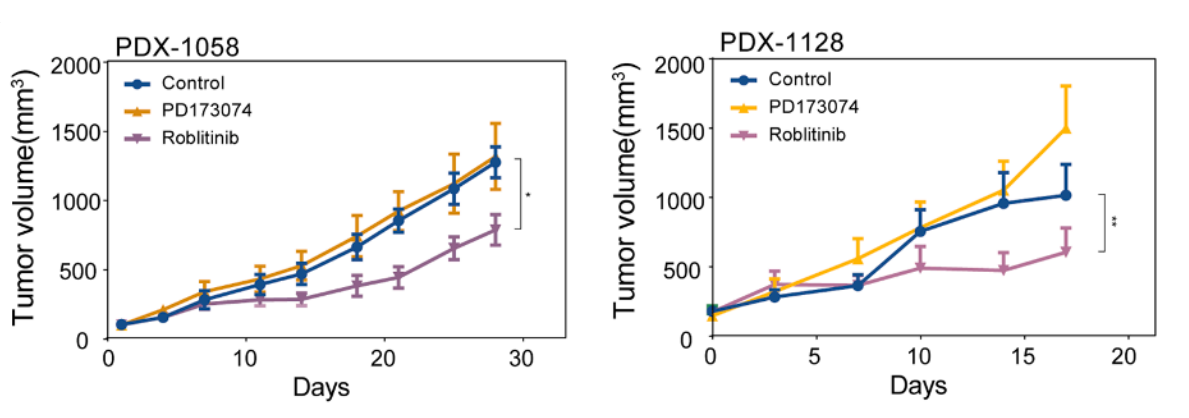
In vivo tumorigenesis assays by vehicle or two TKIs (PD173074, 2 mg/kg, ip; Roblitinib, 50 mg/kg, po) treatment in two subcutaneous PDX models for 30 days.
-
-
Cell Death Dis
ONECUT2 facilitates hepatocellular carcinoma metastasis by transcriptionally upregulating FGF2 and ACLY. [Abstract]2021 Nov 27;12(12):1113. PMID: 34839358
PD173074 purchased from MedChemExpress. Usage Cited in: Cell Death Dis. 2021 Nov 27;12(12):1113. [Abstract]
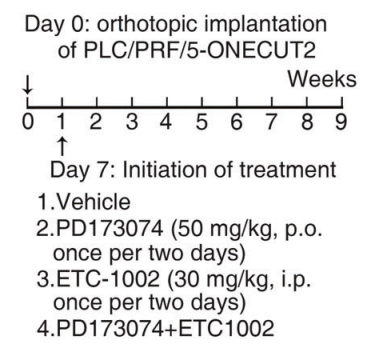
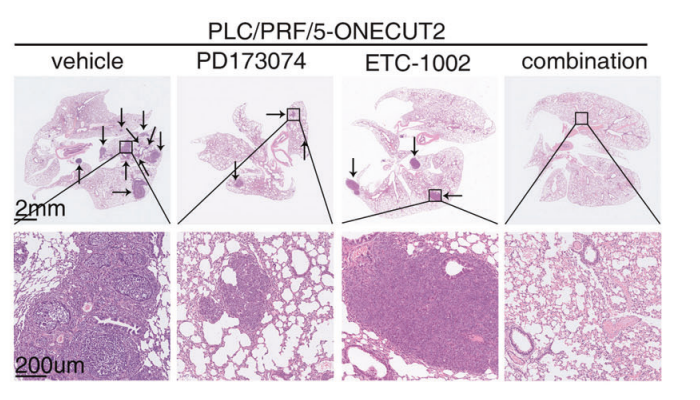
Diagram of the administration strategies in vivo. One week after the orthotopic implantation, the nude mice were administered PD173074 (50 mg/kg), ETC-1002 (30 mg/kg) or PD173074 combined with ETC-1002.
PD173074 purchased from MedChemExpress. Usage Cited in: Cell Death Dis. 2021 Nov 27;12(12):1113. [Abstract]
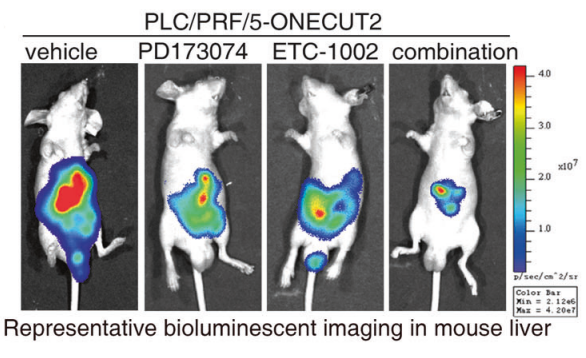
PD173074 combined with ETC-1002 markedly inhibited ONECUT2-enhanced HCC metastasis. Representative bioluminescent imaging.
PD173074 purchased from MedChemExpress. Usage Cited in: Cell Death Dis. 2021 Nov 27;12(12):1113. [Abstract]
PD173074 combined with ETC-1002 markedly inhibited ONECUT2-enhanced HCC metastasis. H&E staining of the lungs among four groups of nude mice treated with different administration strategies (n = 10 in each group) for 8 weeks following orthotopic implantation of PLC/PRF/5-ONECUT2 cells.
PD173074 purchased from MedChemExpress. Usage Cited in: Cell Death Dis. 2021 Nov 27;12(12):1113. [Abstract]
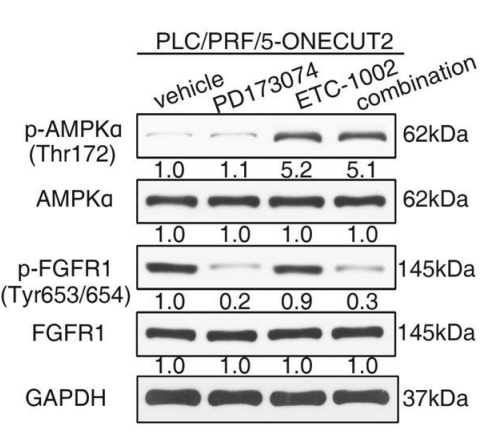
Protein levels of p-AMPKα, AMPKα, p-FGFR1, and FGFR1 were measured in ONECUT2-overexpressing PLC/PRF/5 cells after treatment with PD173074 (5 μM, 12 h), ETC-1002 (100 μM, 12 h) or PD173074 combined with ETC-1002 by western blotting.
-
EMBO Mol Med
An FGFR3/MYC positive feedback loop provides new opportunities for targeted therapies in bladder cancers. [Abstract]2018 Apr;10(4):e8163. PMID: 29463565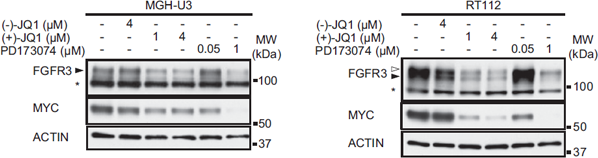
PD173074 purchased from MedChemExpress. Usage Cited in: EMBO Mol Med. 2018 Apr;10(4):e8163. [Abstract]
Western blot analysis of MYC and FGFR3 expression in lysates from MGH-U3 and RT112 cells treated with (+)-JQ1 (1 or 4 μM) for 48 h. Anti-actin antibody is used as a loading control. Pan-FGFR inhibitor, PD173074 (50 nM and 1 μM), and inactive enantiomer (-)-JQ1 (4 μM) are used as controls.
-
Cell Prolif
Flavonoid chrysin activates both TrkB and FGFR1 receptors while upregulates their endogenous ligands such as brain derived neurotrophic factor to promote human neurogenesis. [Abstract]2025 Jan;58(1):e13732. PMID: 39331585 -
Br J Pharmacol
A long-acting FGF21 attenuates metabolic dysfunction-associated steatohepatitis-related fibrosis by modulating NR4A1-mediated Ly6C phenotypic switch in macrophages. [Abstract]2024 Aug;181(16):2923-2946. PMID: 38679486 -
Atherosclerosis
Inhibition of vascular neointima hyperplasia by FGF21 associated with FGFR1/Syk/NLRP3 inflammasome pathway in diabetic mice. [Abstract]2019 Oct:289:132-142. PMID: 31513948 -
JCI Insight
FGF-2 signaling in nasopharyngeal carcinoma modulates pericyte-macrophage crosstalk and metastasis. [Abstract]2022 May 23;7(10):e157874. PMID: 35439170 -
Int J Mol Sci
Inhibition of Fibroblast Growth Factor Receptor 3 Signaling by Ponatinib Reduces Growth and Cytokine Production of Multiple Myeloma Cells. [Abstract]2026 Jun 9;27(12):5217. PMID: 42352940 -
Int J Cancer
FGFR2-RUNX2 activation: An unexplored therapeutic pathway in luminal breast cancer related to tumor progression. [Abstract]2025 May 15;156(10):2024-2038. PMID: 39731522 -
-
J Neurosci
Inhibition of FGF Receptor-1 Suppresses Alcohol Consumption: Role of PI3 Kinase Signaling in Dorsomedial Striatum. [Abstract]2019 Oct 2;39(40):7947-7957. PMID: 31375540 -
FEBS J
Critical role of the fibroblast growth factor signalling pathway in Ewing's sarcoma octamer-binding transcription factor 4-mediated cell proliferation and tumorigenesis. [Abstract]2019 Nov;286(22):4443-4472. PMID: 31155838 -
J Infect Dis
FGF8 protects against polymicrobial sepsis by enhancing the host's anti-infective immunity. [Abstract]2025 Apr 15;231(4):e659-e670. PMID: 39556487 -
Mol Biol Rep
Dapagliflozin promotes browning of white adipose tissue through the FGFR1-LKB1-AMPK signaling pathway. [Abstract]2024 Apr 21;51(1):562. PMID: 38644407 -
Am J Cancer Res
Long non-coding RNA ANRIL promotes tumorgenesis through regulation of FGFR1 expression by sponging miR-125a-3p in head and neck squamous cell carcinoma. [Abstract]2018 Nov 1;8(11):2296-2310. PMID: 30555745 -
J Cardiovasc Pharmacol
Inhibition of FGFR Signaling With PD173074 Ameliorates Monocrotaline-induced Pulmonary Arterial Hypertension and Rescues BMPR-II Expression. [Abstract]2015 Nov;66(5):504-14. PMID: 26535780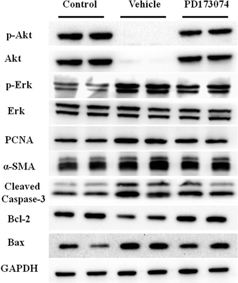
PD173074 purchased from MedChemExpress. Usage Cited in: J Cardiovasc Pharmacol. 2015 Nov;66(5):504-14. [Abstract]
The effects of PD173074 on expression and activation of Akt, Erk1/2, PCNA, and caspase-3 representative immunoblots of Akt, Erk1/2, PCNA, a-SMA, cleaved caspase-3, Bcl-2, and Bax. GAPDH is a loading control.
-
-
bioRxiv
Contribution of S1pr1 -featured astrocyte subpopulation to cisplatin-induced neuropathic pain. [Abstract]2025 Apr 5:2025.04.03.642851. PMID: 40236155 -
-
bioRxiv
2024 Jul 11:2024.07.08.602611. PMID: 39026750 -
-


용액&용해도
In Vitro:
DMSO : ≥ 100 mg/mL (190.96 mM; Hygroscopic DMSO has a significant impact on the solubility of product, please use newly opened DMSO)
* "≥" means soluble, but saturation unknown.
Please refer to the solubility information to select the appropriate solvent. Once prepared, please aliquot and store the solution to prevent product inactivation from repeated freeze-thaw cycles.
Storage method and period of stock solution: -80°C, 1 year; -20°C, 6 months. When stored at -80°C, please use it within 1 year. When stored at -20°C, please use it within 6 months.
Please refer to the solubility information to select the appropriate solvent. Once prepared, please aliquot and store the solution to prevent product inactivation from repeated freeze-thaw cycles.
Storage method and period of stock solution: -80°C, 1 year; -20°C, 6 months. When stored at -80°C, please use it within 1 year. When stored at -20°C, please use it within 6 months.
Concentration (start) × Volume (start) = Concentration (final) × Volume (final)
In Vivo:
Select the appropriate dissolution method based on your experimental animal and administration route.
- For the following dissolution methods, please ensure to first prepare a clear stock solution using an In Vitro approach and then sequentially add co-solvents:
- To ensure reliable experimental results, the clarified stock solution can be appropriately stored based on storage conditions. As for the working solution for In Vivo experiments, it is recommended to prepare freshly and use it on the same day.
- The percentages shown for the solvents indicate their volumetric ratio in the final prepared solution. If precipitation or phase separation occurs during preparation, heat and/or sonication can be used to aid dissolution.
Add each solvent one by one: 10% DMSO 40% PEG300 5% Tween-80 45% Saline
Solubility: ≥ 2.5 mg/mL (4.77 mM); Clear solution
This protocol yields a clear solution of ≥ 2.5 mg/mL (saturation unknown).
Taking 1 mL working solution as an example, add 100 μL DMSO stock solution (25.0 mg/mL) to 400 μL PEG300, and mix evenly; then add 50 μL Tween-80 and mix evenly; then add 450 μL Saline to adjust the volume to 1 mL.
Preparation of Saline: Dissolve 0.9 g sodium chloride in ddH₂O and dilute to 100 mL to obtain a clear Saline solution.
Add each solvent one by one: 10% DMSO 90% (20% SBE-β-CD in Saline)
Solubility: ≥ 2.08 mg/mL (3.97 mM); Clear solution
This protocol yields a clear solution of ≥ 2.08 mg/mL (saturation unknown).
Taking 1 mL working solution as an example, add 100 μL DMSO stock solution (20.8 mg/mL) to 900 μL 20% SBE-β-CD in Saline, and mix evenly.
Preparation of 20% SBE-β-CD in Saline (4°C, storage for one week): 2 g SBE-β-CD powder is dissolved in 10 mL Saline, completely dissolve until clear.
In Vivo Dissolution Calculator
Please enter the basic information of animal experiments:
-
-
-
-
Recommended: Prepare an additional quantity of animals to account for potential losses during experiments.
Please enter your animal formula composition:
-
%DMSO +
Recommended: Keep the proportion of DMSO in working solution below 2% if your animal is weak.
-
%+
-
+%Tween-80 + +
-
%Saline +
The co-solvents required include: DMSO, . All of co-solvents are available by MedChemExpress (MCE). , Tween 80. All of co-solvents are available by MedChemExpress (MCE).
Working solution concentration: 0.22 mg/mL
Method for preparing stock solution: mg drug dissolved in μL DMSO. Stock solution concentration: mg/mL.
1. Take μL DMSO stock solution;
2. Add μL .
μL , mix evenly;
3. Then add μL Tween 80, mix evenly;
4. Then add μL
Please ensure that the stock solution in the first step is dissolved to a clear state, and add co-solvents in sequence. You can use ultrasonic heating (ultrasonic cleaner, recommended frequency 20-40 kHz), vortexing, etc. to assist dissolution.


순도&문서
-
Data Sheet (279 KB)
-
SDS (396 KB)
- English - EN (396 KB)
- Français - FR (396 KB)
- Deutsch - DE (396 KB)
- Norwegian - NO (396 KB)
- Español - ES (396 KB)
- Swedish - SV (396 KB)
- Italian - IT (396 KB)
- Korean - KR (396 KB)
- Portuguese - PT (396 KB)
-
Handling Instructions (2659 KB)
References
[1]. Mohammadi M, et al. Crystal structure of an angiogenesis inhibitor bound to the FGF receptor tyrosine kinase domain. EMBO J. 1998 Oct 15;17(20):5896-904. [Content Brief]
[2]. Skaper SD, et al. The FGFR1 inhibitor PD 173074 selectively and potently antagonizes FGF-2 neurotrophic and neurotropic effects. J Neurochem. 2000 Oct;75(4):1520-7. [Content Brief]
[3]. Bansal R, et al. Specific inhibitor of FGF receptor signaling: FGF-2-mediated effects on proliferation, differentiation, and MAPK activation are inhibited by PD173074 in oligodendrocyte-lineage cells. J Neurosci Res. 2003 Nov 15;74(4):486-93. [Content Brief]
[4]. Trudel S, et al. Inhibition of fibroblast growth factor receptor 3 induces differentiation and apoptosis in t(4;14) myeloma. Blood. 2004 May 1;103(9):3521-8. [Content Brief]
[5]. Mahe M, et al. An FGFR3/MYC positive feedback loop provides new opportunities for targeted therapies in bladder cancers. EMBO Mol Med. 2018 Apr;10(4). pii: e8163. [Content Brief]
[6]. Zheng Y, et al. Inhibition of FGFR Signaling With PD173074 Ameliorates Monocrotaline-induced Pulmonary Arterial Hypertension and Rescues BMPR-II Expression. J Cardiovasc Pharmacol. 2015 Nov;66(5):504-14. [Content Brief]


Complete Stock Solution Preparation Table
Please refer to the solubility information to select the appropriate solvent. Once prepared, please aliquot and store the solution to prevent product inactivation from repeated freeze-thaw cycles.
Storage method and period of stock solution: -80°C, 1 year; -20°C, 6 months. When stored at -80°C, please use it within 1 year. When stored at -20°C, please use it within 6 months.
| Optional Solvent | Concentration Solvent Mass | 1 mg | 5 mg | 10 mg | 25 mg |
|---|---|---|---|---|---|
| DMSO | 1 mM | 1.9096 mL | 9.5480 mL | 19.0960 mL | 47.7400 mL |
| 5 mM | 0.3819 mL | 1.9096 mL | 3.8192 mL | 9.5480 mL | |
| 10 mM | 0.1910 mL | 0.9548 mL | 1.9096 mL | 4.7740 mL | |
| 15 mM | 0.1273 mL | 0.6365 mL | 1.2731 mL | 3.1827 mL | |
| 20 mM | 0.0955 mL | 0.4774 mL | 0.9548 mL | 2.3870 mL | |
| 25 mM | 0.0764 mL | 0.3819 mL | 0.7638 mL | 1.9096 mL | |
| 30 mM | 0.0637 mL | 0.3183 mL | 0.6365 mL | 1.5913 mL | |
| 40 mM | 0.0477 mL | 0.2387 mL | 0.4774 mL | 1.1935 mL | |
| 50 mM | 0.0382 mL | 0.1910 mL | 0.3819 mL | 0.9548 mL | |
| 60 mM | 0.0318 mL | 0.1591 mL | 0.3183 mL | 0.7957 mL | |
| 80 mM | 0.0239 mL | 0.1193 mL | 0.2387 mL | 0.5967 mL | |
| 100 mM | 0.0191 mL | 0.0955 mL | 0.1910 mL | 0.4774 mL |


PD173074 Related Classifications
HY-10321 Related Classifications
 Powered by Bioz