



VEGFR2/KDR/Flk-1
VEGFR2 (KDR/Flk-1) is a receptor tyrosine kinase that serves as a central signal transducer for vascular endothelial growth factor (VEGF)-driven angiogenesis and endothelial cell development[1]. Upon binding VEGF ligands, including VEGF-A and certain processed forms of VEGF-C and VEGF-D, VEGFR2 undergoes activation and tyrosine phosphorylation, initiating downstream signaling pathways that regulate endothelial proliferation, migration, survival, and neovascularization[2]. Mechanistically, VEGFR2 signaling is essential for vascular network formation and maintenance, and it supports endothelial cell survival through anti-apoptotic signaling programs. In pathological settings, VEGFR2 plays a critical role in tumor angiogenesis and other forms of disease-associated neovascularization, making this receptor a major focus of vascular biology and translational research[1]. Compared with the related VEGF receptor isoform VEGFR1 (Flt-1), VEGFR2 functions as the principal mediator of angiogenic signaling, whereas VEGFR1 displays distinct signaling properties and can negatively regulate VEGFR2-dependent responses[2][3]. Experimental studies further demonstrate that blockade of VEGFR2, but not VEGFR1, inhibits VEGF-induced endothelial tube formation, highlighting the dominant role of VEGFR2 in angiogenic processes[4]. Consequently, VEGFR2 has become an important therapeutic and experimental target, and multiple VEGF/VEGFR2 pathway inhibitors have been developed to suppress pathological angiogenesis in cancer and other vascular disorders[1].
References:
- [1]. Grimaldi C, et al. Anandamide inhibits adhesion and migration of breast cancer cells. Exp Cell Res. 2006 Feb 15;312(4):363-73. [Content Brief]
- [2]. Rahimi N. VEGFR-1 and VEGFR-2: two non-identical twins with a unique physiognomy. Front Biosci. 2006 Jan 1;11:818-29. doi: 10.2741/1839. PMID: 16146773; PMCID: PMC1360224. et al. VEGFR-1 and VEGFR-2: two non-identical twins with a unique physiognomy. Front Biosci. 2006 Jan 1;11:818-29. [Content Brief]
- [3]. Waltenberger J, et al. Different signal transduction properties of KDR and Flt1, two receptors for vascular endothelial growth factor. J Biol Chem. 1994 Oct 28;269(43):26988-95. [Content Brief]
- [4]. Koolwijk P, et al. Involvement of VEGFR-2 (kdr/flk-1) but not VEGFR-1 (flt-1) in VEGF-A and VEGF-C-induced tube formation by human microvascular endothelial cells in fibrin matrices in vitro. Angiogenesis. 2001;4(1):53-60. [Content Brief]
-
VEGFR2/KDR/Flk-1 Related Products (347)
Related Products (347)

-
Recombinant Proteins (18)
-
Antibodies (1)
-
Sorafenib
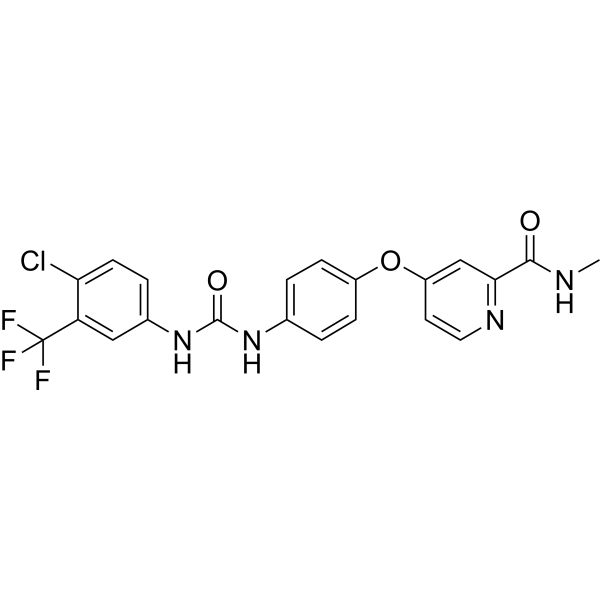 0 ImagesSynonyms: Bay 43-9006Sorafenib (Bay 43-9006) is a potent oral active multikinase inhibitor. Sorafenib blocks autophosphorylation and activity of receptor tyrosine kinases (VEGFR-2, VEGFR-3) and RAF family kinases, thereby suppressing the RAF/MEK/ERK and PI3K/Akt pathways, inhibiting STAT3 phosphorylation, and selectively inhibiting the MAPK pathway in cancer cells. Sorafenib induces cell cycle arrest, autophagy, apoptosis, and PARP cleavage, reduces Bcl-2, Bcl-XL, cyclin D1 levels, and activates Bak and Bax. Sorafenib inhibits tumor growth and metastasis in mouse and rat models. Sorafenib can be used for cancer research, such as colon, breast, non-small-cell lung cancer (NSCLC), ovarian, pancreatic, melanoma, colorectal and hepatocellular carcinoma.
-
Lenvatinib
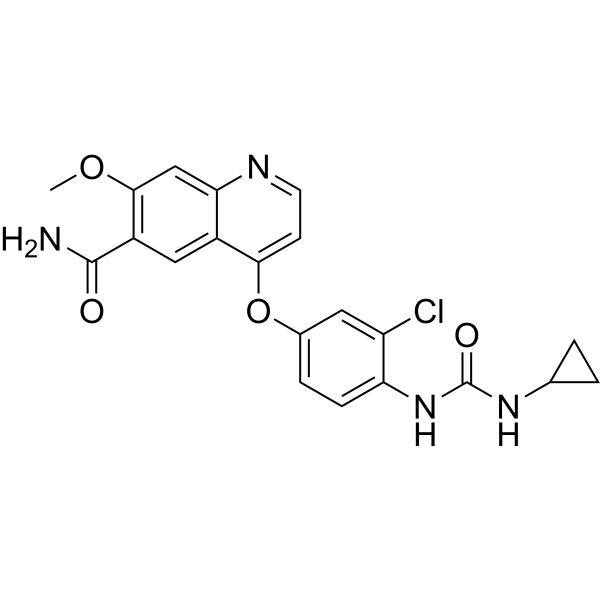 0 ImagesSynonyms: E7080; MK-7902
-
Nintedanib
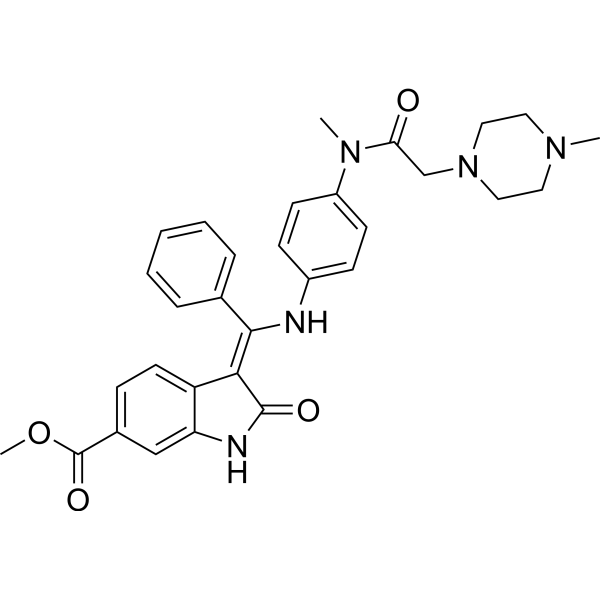 0 ImagesSynonyms: BIBF 1120Nintedanib (BIBF 1120) is a potent triple angiokinase inhibitor for VEGFR1/2/3, FGFR1/2/3 and PDGFRα/β with IC50s of 34 nM/13 nM/13 nM, 69 nM/37 nM/108 nM and 59 nM/65 nM, respectively.
-
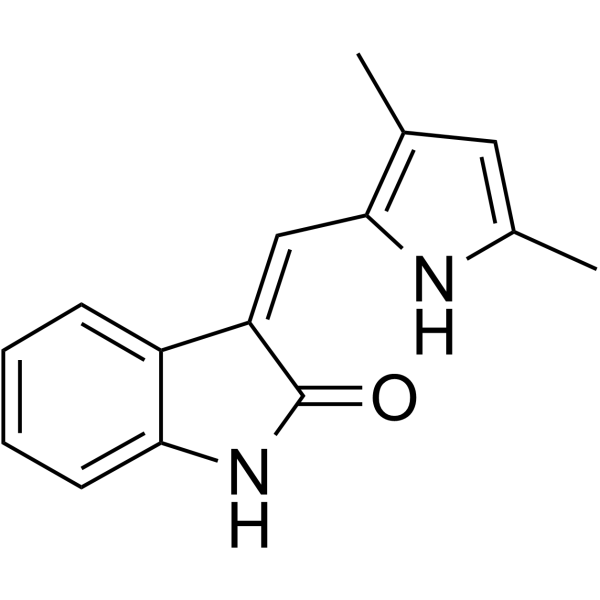
Sunitinib
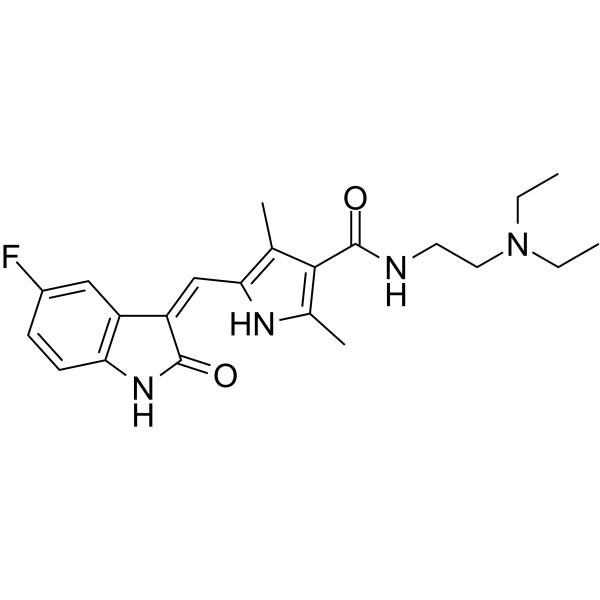 0 ImagesSynonyms: SU 11248Sunitinib (SU 11248) is a multi-targeted receptor tyrosine kinase inhibitor with IC50s of 80 nM and 2 nM for VEGFR2 and PDGFRβ, respectively. Sunitinib, an ATP-competitive inhibitor, effectively inhibits autophosphorylation of Ire1α by inhibiting autophosphorylation and consequent RNase activation.
-
Regorafenib
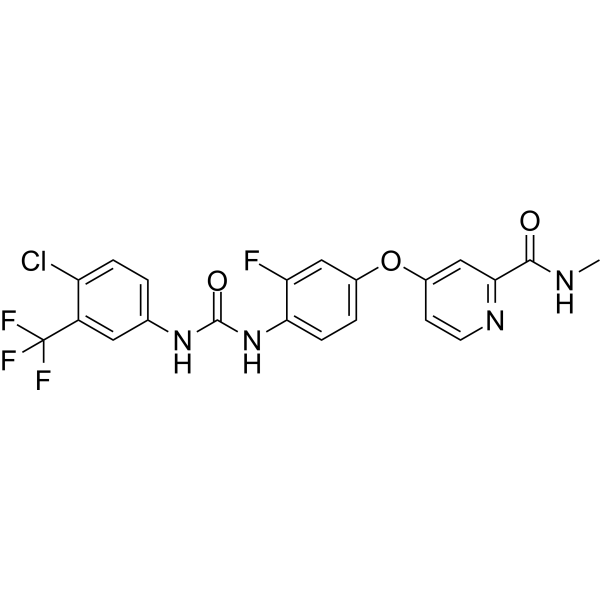 0 ImagesSynonyms: BAY 73-4506
-
Cabozantinib
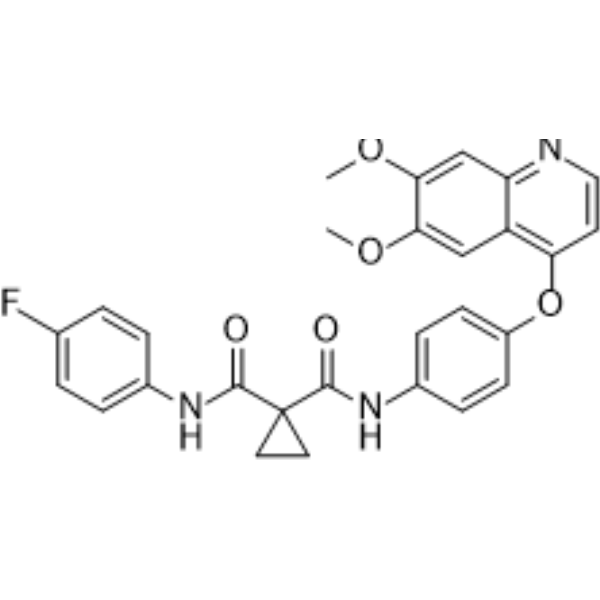 0 ImagesSynonyms: XL184; BMS-907351Cabozantinib is a potent and orally active inhibitor of VEGFR2 and MET, with IC50 values of 0.035, and 1.3 nM, respectively. Cabozantinib displays strong inhibition of KIT, RET, AXL, TIE2, and FLT3 (IC50=4.6, 5.2, 7, 14.3, and 11.3 nM, respectively). Cabozantinib shows antiangiogenic activity. Cabozantinib disrupts tumor vasculature and promotes tumor and endothelial cell apoptosis.
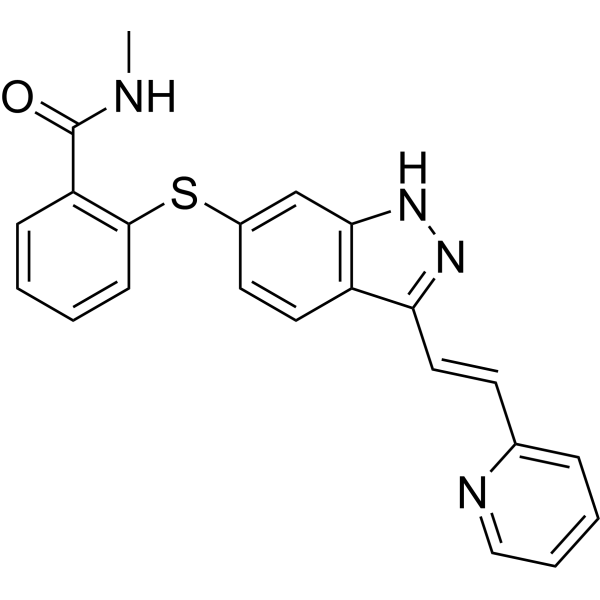
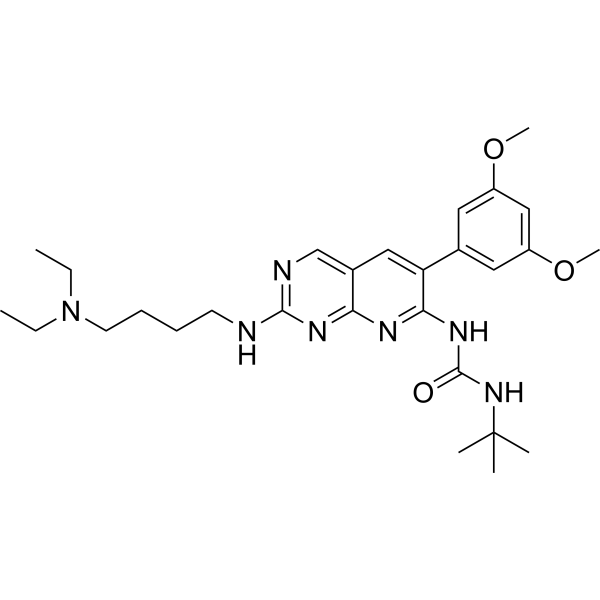
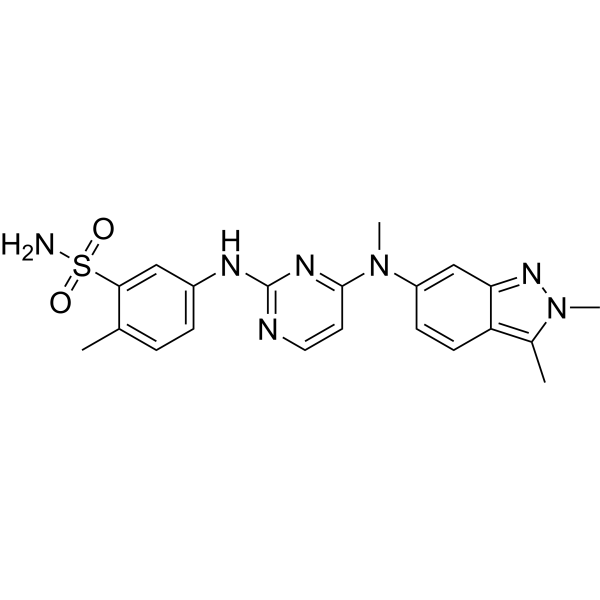
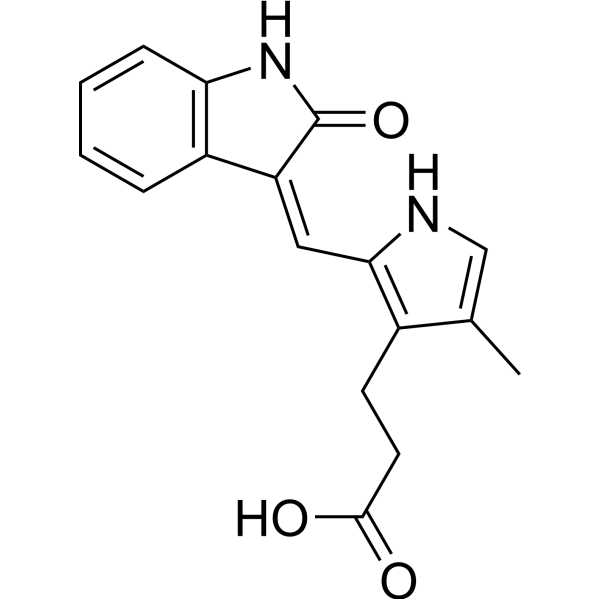
-
Nintedanib esylate
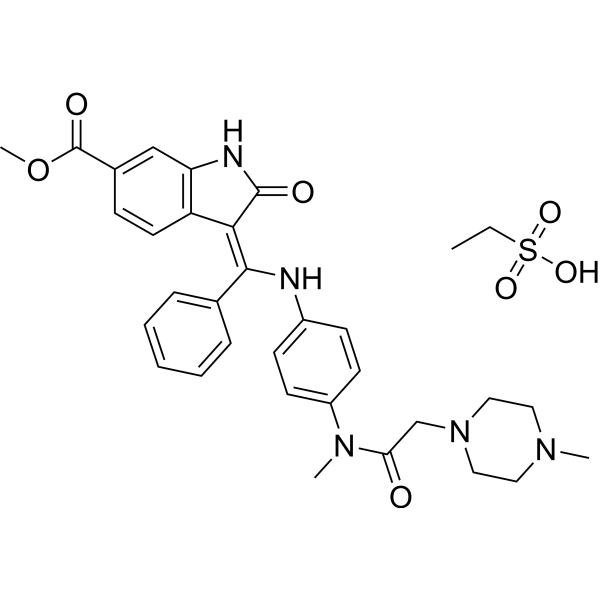 0 ImagesSynonyms: BIBF 1120 esylateNintedanib esylate (BIBF 1120 esylate) is a potent triple angiokinase inhibitor for VEGFR1/2/3, FGFR1/2/3 and PDGFRα/β with IC50s of 34 nM/13 nM/13 nM, 69 nM/37 nM/108 nM and 59 nM/65 nM, respectively.
-
Lenvatinib mesylate
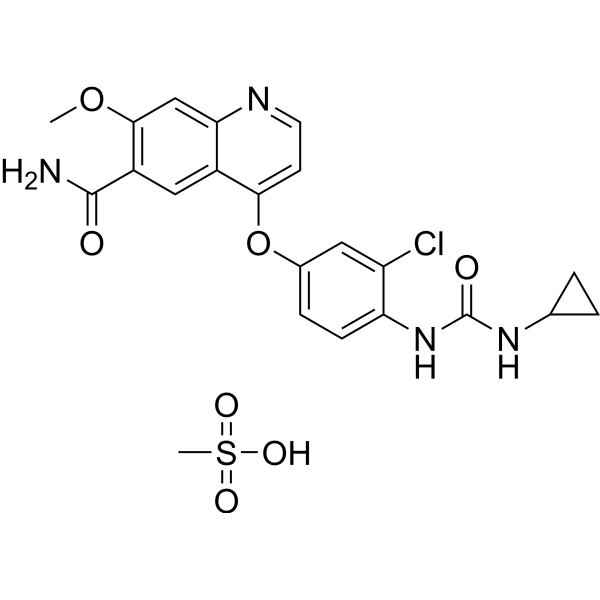 0 ImagesSynonyms: E7080 mesylate; MK-7902 mesylate
-
Vandetanib
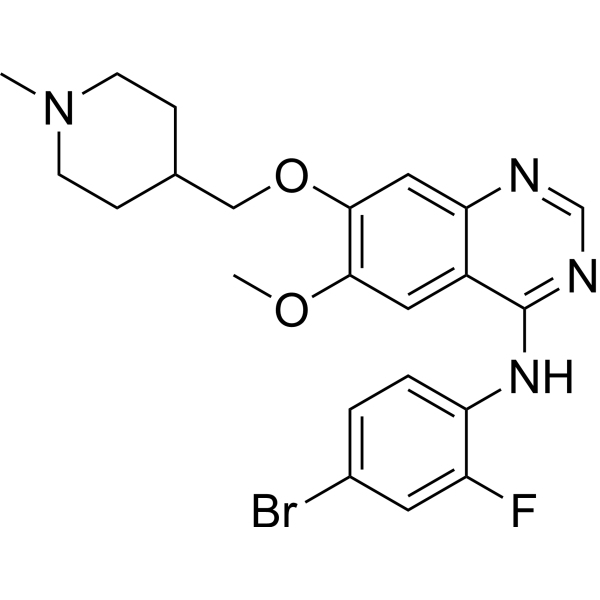 0 ImagesSynonyms: ZD6474Vandetanib (D6474) is a potent, orally active, and blood-brain-barrier penetrate inhibitor of VEGFR2/KDR tyrosine kinase activity (IC50=40 nM). Vandetanib also has activity versus the tyrosine kinase activity of VEGFR3/FLT4 (IC50=110 nM) and EGFR/HER1 (IC50=500 nM).
-
Sunitinib Malate
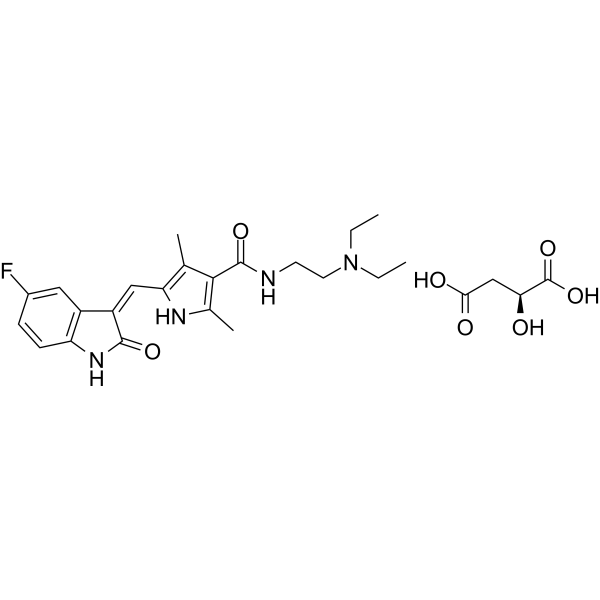 0 ImagesSynonyms: SU 11248 MalateSunitinib (SU 11248) Malat is a multi-targeted receptor tyrosine kinase inhibitor with IC50s of 80 nM and 2 nM for VEGFR2 and PDGFRβ, respectively. Sunitinib Malat, an ATP-competitive inhibitor, effectively inhibits autophosphorylation of Ire1α by inhibiting autophosphorylation and consequent RNase activation.
-
Sorafenib tosylate
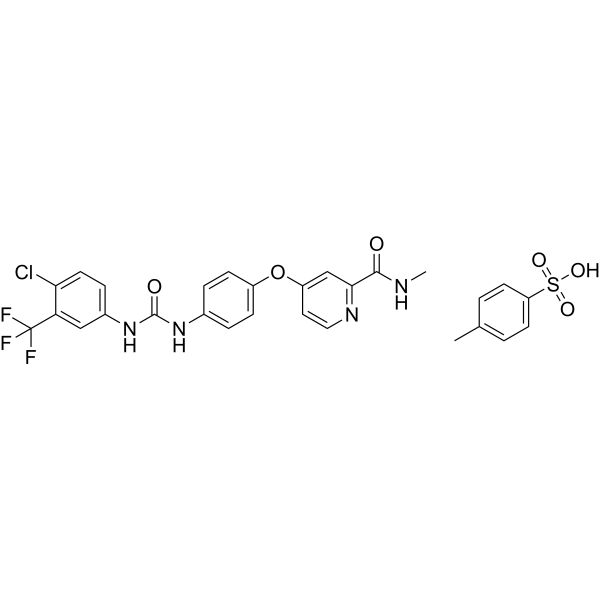 0 ImagesSynonyms: Bay 43-9006 tosylateSorafenib (Bay 43-9006) tosylate is a potent oral active multikinase inhibitor. Sorafenib blocks autophosphorylation and activity of receptor tyrosine kinases (VEGFR-2, VEGFR-3) and RAF family kinases, thereby suppressing the RAF/MEK/ERK and PI3K/Akt pathways, inhibiting STAT3 phosphorylation, and selectively inhibiting the MAPK pathway in cancer cells. Sorafenib tosylate induces cell cycle arrest, autophagy, apoptosis, and PARP cleavage, reduces Bcl-2, Bcl-XL, cyclin D1 levels, and activates Bak and Bax. Sorafenib tosylate inhibits tumor growth and metastasis in mouse and rat models. Sorafenib tosylate can be used for cancer research, such as colon, breast, non-small-cell lung cancer (NSCLC), ovarian, pancreatic, melanoma, colorectal and hepatocellular carcinoma.
-
GW806742X
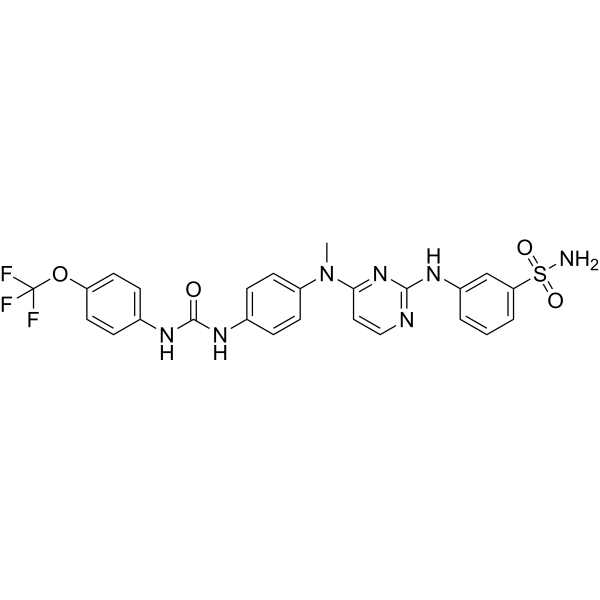 0 ImagesGW806742X, an ATP mimetic and a potent MLKL (Mixed Lineage Kinase Domain-Like protein) inhibitor, binds the MLKL pseudokinase domain with a Kd of 9.3 μM. GW806742X has activity against VEGFR2 (IC50=2 nM). GW806742X retards MLKL membrane translocation and inhibits necroptosis.




