



Tie2
Tie2, encoded by TEK, belongs to the Tie1/Tie2 receptor tyrosine kinase class expressed in developing vascular endothelial cells[1]. Angiopoietin-1 was identified as a secreted ligand for Tie2 and functions as a primary physiological ligand during embryonic angiogenesis[2][3]. Mechanistically, Ang1-Tie2 signaling supports vascular maturation and has angiogenic actions distinct from VEGF[3]. In disease-relevant angiogenesis models, Ang2 acts as a natural antagonist for Tie2, disrupts in vivo angiogenesis, and modulates VEGF-induced postnatal neovascularization with Ang1[4][5]. Compared with Tie1, Tie2 has ligand-defined angiopoietin signaling, whereas Tie1 can negatively regulate Tie2 surface presentation in angiogenic endothelial cells and cooperatively sustain Tie2 signaling in remodeling stalk cells[7]. In adult tissues, Tie2 expression and phosphorylation occur in both angiogenic and quiescent vasculature, supporting roles in vascular growth and maintenance[6]. For experimental applications, VE-PTP inhibition activates Tie2 and stabilizes ocular vessels, making Tie2 activation a practical strategy for vascular leakage and neovascularization models[8].
References:
- [1]. Sato TN, et al. Distinct roles of the receptor tyrosine kinases Tie-1 and Tie-2 in blood vessel formation. Nature. 1995 Jul 6;376(6535):70-4. [Content Brief]
- [2]. Davis S, et al. Isolation of angiopoietin-1, a ligand for the TIE2 receptor, by secretion-trap expression cloning. Cell. 1996 Dec 27;87(7):1161-9. [Content Brief]
- [3]. Suri C, et al. Requisite role of angiopoietin-1, a ligand for the TIE2 receptor, during embryonic angiogenesis. Cell. 1996 Dec 27;87(7):1171-80. [Content Brief]
- [4]. Maisonpierre PC, et al. Angiopoietin-2, a natural antagonist for Tie2 that disrupts in vivo angiogenesis. Science. 1997;277(5322):55-60.
- [5]. Asahara T, et al. Tie2 receptor ligands, angiopoietin-1 and angiopoietin-2, modulate VEGF-induced postnatal neovascularization. Circ Res. 1998 Aug 10;83(3):233-40. [Content Brief]
- [6]. Wong AL, et al. Tie2 expression and phosphorylation in angiogenic and quiescent adult tissues. Circ Res. 1997 Oct;81(4):567-74. [Content Brief]
- [7]. Simões-Costa M, et al. Axud1 Integrates Wnt Signaling and Transcriptional Inputs to Drive Neural Crest Formation. Dev Cell. 2015 Sep 14;34(5):544-54. [Content Brief]
- [8]. Shen J, et al. Targeting VE-PTP activates TIE2 and stabilizes the ocular vasculature. J Clin Invest. 2014 Oct;124(10):4564-76. [Content Brief]
-
Tie2 Related Products (31)
Related Products (31)

- 1
- 2
-
Regorafenib
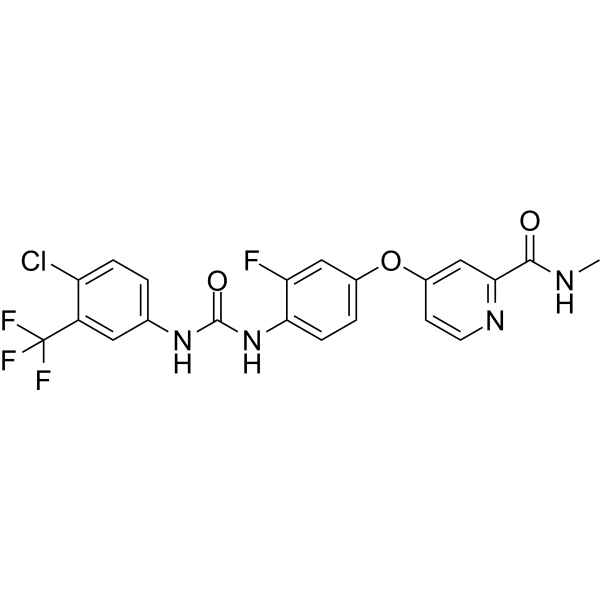 0 ImagesSynonyms: BAY 73-4506
-
Rebastinib
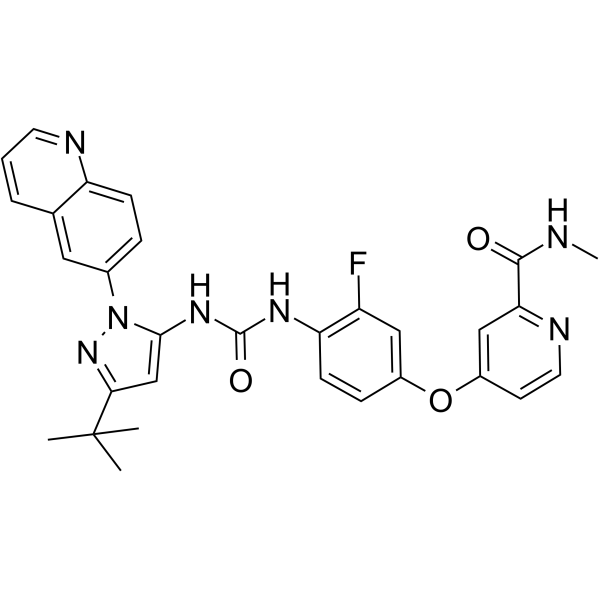 0 ImagesSynonyms: DCC-2036Rebastinib (DCC-2036) is an orally active, non-ATP-competitive Bcr-Abl inhibitor, with IC50 values of 0.8 nM and 4 nM against Abl1WT and Abl1T315I, respectively. Rebastinib potently inhibits CYP2C8 (IC50 = 0.0533 μM) and CYP2C9 (IC50 = 2.54 μM). Rebastinib allosterically inhibits Tie2 with an IC50 of 0.63 nM. Rebastinib inhibits the transcriptional activity of FoxO1. Rebastinib inhibits SRC family kinases, KDR and FLT3 kinases. Rebastinib induces Apoptosis. Rebastinib exerts anti-tumor activity in breast cancer. Rebastinib exerts anti-angiogenic effects. Rebastinib increases myotube diameter and improves reduced contractility. Rebastinib can be used in research related to triple-negative breast cancer, luminal breast cancer, pancreatic neuroendocrine tumors, muscle atrophy, cancer cachexia, chronic myeloid leukemia, and B-lymphocytic leukemia.
-
Pexmetinib
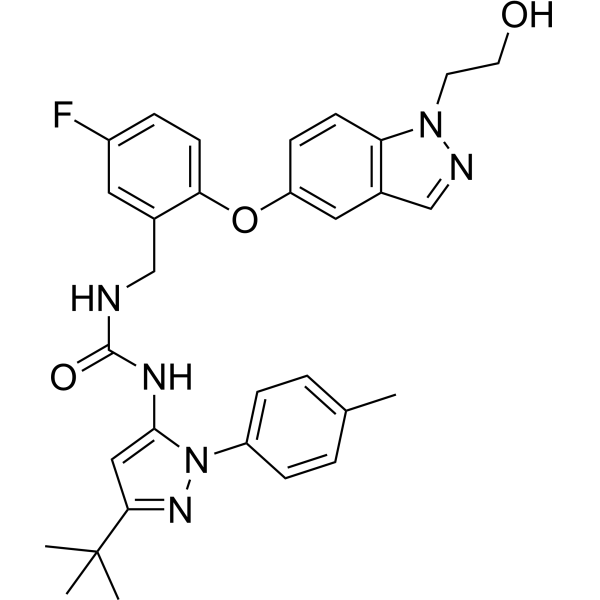 0 ImagesSynonyms: ARRY-614Pexmetinib (ARRY-614) is an orally active dual Tie-2 and p38 MAPK inhibitor. Pexmetinib binds to Tie-2 and p38 MAPK in a "DFG-out" conformation, attenuates the phosphorylation of p38, inhibits STAT3 activation, reduces the promoter-binding activity of NFATc1, and decreases the expression of MMPs. Pexmetinib inhibits leukemia cell proliferation, abrogates TNF-α-mediated myelosuppression of healthy hematopoietic stem cells, stimulates hematopoiesis in primary myelodysplastic syndrome (MDS) samples, inhibits RANKL-induced osteoclast formation and bone resorption, and suppresses migration, invasion and induced osteolysis of breast cancer cells. Pexmetinib can be used in research related to myelodysplastic syndrome, acute myeloid leukemia and breast cancer-induced osteolysis.
-
Regorafenib monohydrate
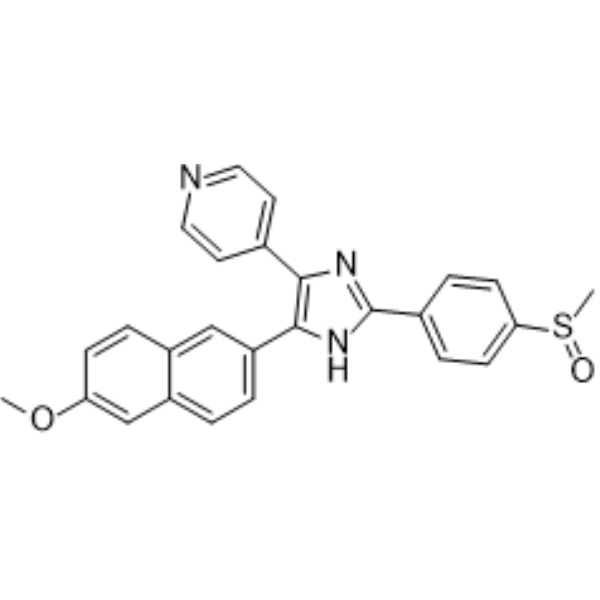
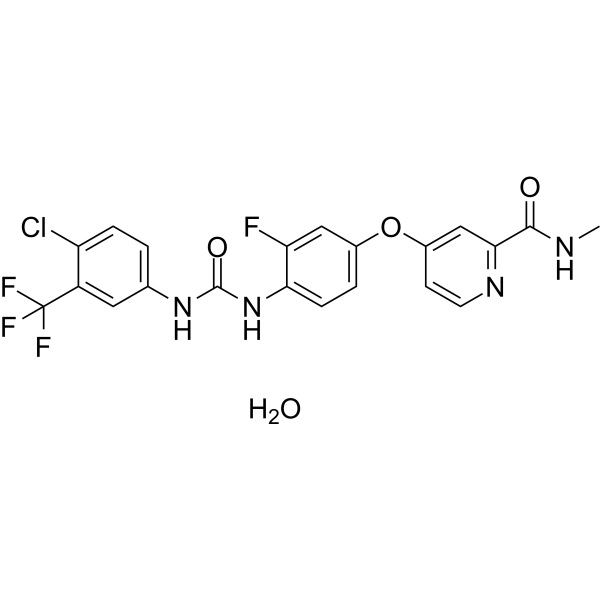 0 ImagesSynonyms: BAY 73-4506 monohydrateRegorafenib (BAY 73-4506) monohydrate is an orally active and potent multi-targeted receptor tyrosine kinase inhibitor, with IC50 values of 13/4.2/46, 22, 7, 1.5 and 2.5 nM for VEGFR1/2/3, PDGFRβ, Kit, RET and Raf-1, respectively. Regorafenib monohydrate shows very robust antitumor and antiangiogenic activity.
-
CEP-14513
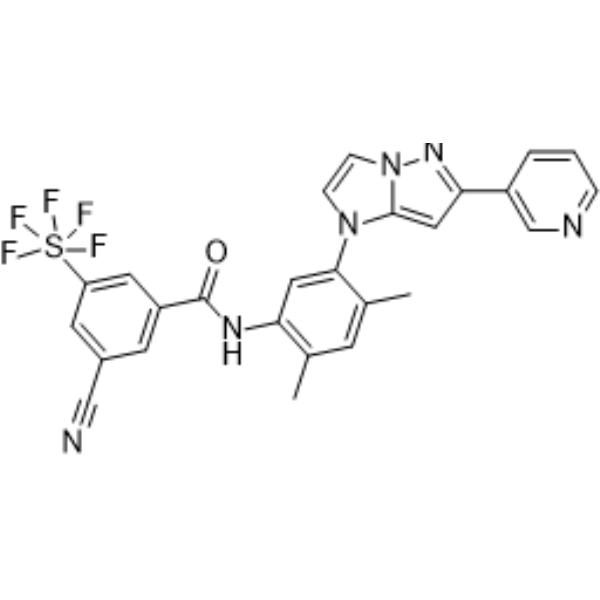
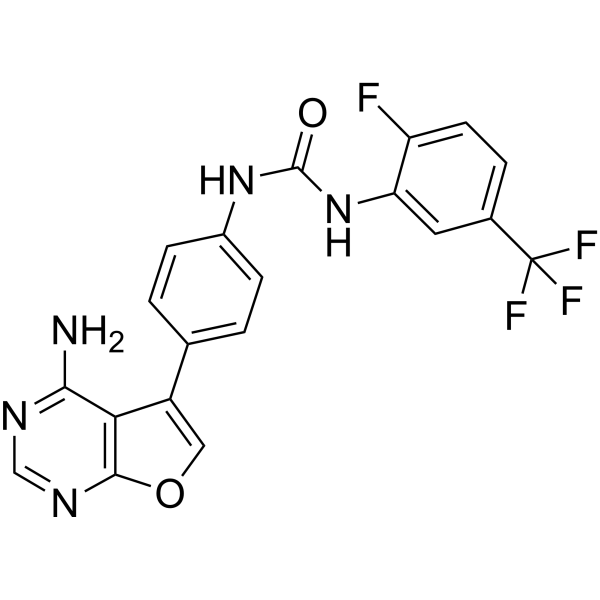
 0 ImagesCat. No.: HY-111277CAS No.: 856693-04-4CEP-14513 is an ALK inhibitor with an IC50 of 4 nM. CEP-14513 also inhibits insulin receptor, VEGFR2, TIE2 and DLK kinases, but does not inhibit MET, IKKβ, or CDK1/2/5. CEP-14513 induces cancer cell apoptosis. CEP-14513 is applicable to research related to non-small cell lung cancer, anaplastic large cell lymphoma, inflammatory myofibroblastic tumor, and diffuse large B-cell lymphoma.
-
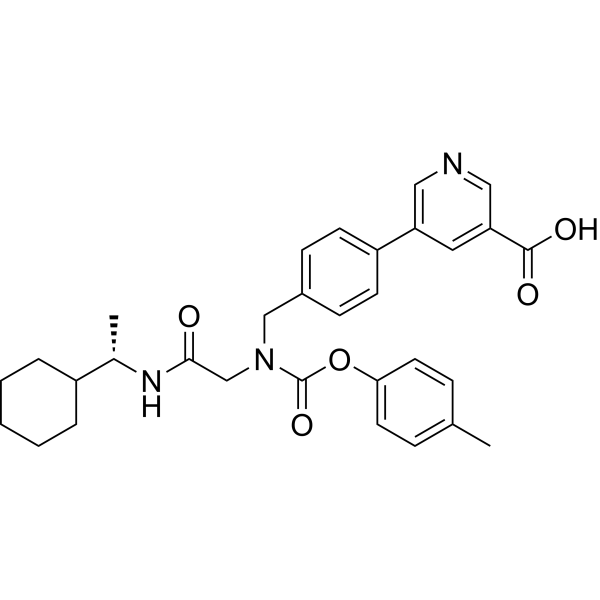
NVP-BAW2881
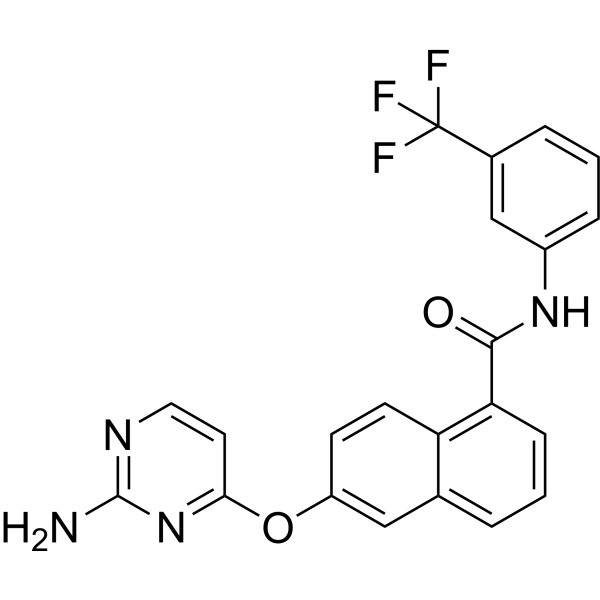 0 ImagesSynonyms: BAW2881NVP-BAW2881 (BAW2881) is a potent and selective VEGFR2 inhibitor with an IC50 of 9 nM.
-
Gersizangitide
 0 ImagesCat. No.: HY-P3369CAS No.: 2417491-82-6Synonyms: AXT-107Gersizangitide (AXT107) is an anti-angiogenic peptide consisting of 20 amino acids, derived from collagen IV. Gersizangitide is an inhibitor of VEGF-A and VEGF-C and an activator of Tie2. Gersizangitide can block VEGF receptor signaling, inhibit vascular leakage, neovascularization and inflammation. Gersizangitide can be used in the research of diseases related to ocular neovascularization and angiogenesis.
-
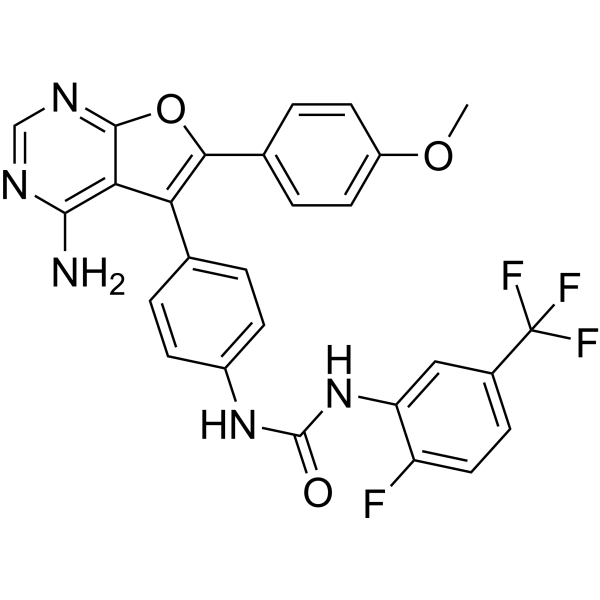
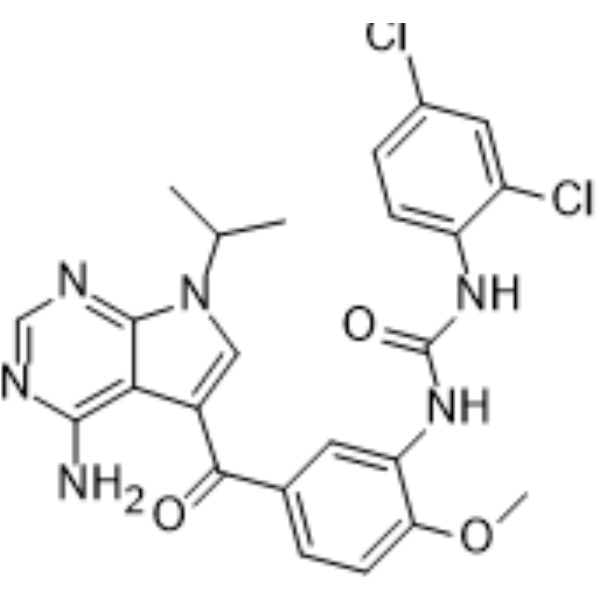
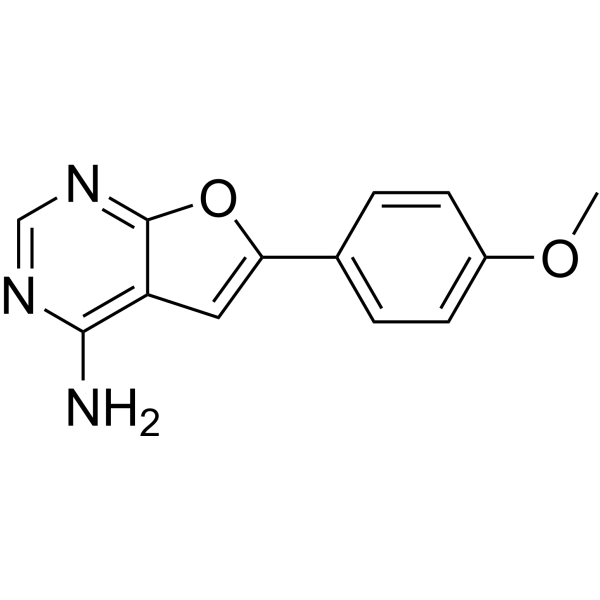
Pegevongitide
 0 ImagesSynonyms: AV-001Pegevongitide (AV-001) is a Tie2 agonist. Pegevongitide resists the increased endothelial cell permeability induced by SARS-CoV-2 infection. Pegevongitide activates the angiogenin (angiogenin)/Tie2 signaling pathway. Pegevongitide reduces perivascular space dilation and upregulates perivascular Aquaporin-4 expression. Pegevongitide decreases the expression of TNF-α, PAI-1, CXCL9 and P-selectin, improves white matter integrity, enhances cognitive function and exerts neuroprotective effects. Pegevongitide improves white matter integrity in middle-aged rats with vascular dementia induced by multiple microinfarctions. Pegevongitide can be used in related research on diseases such as COVID-19 and vascular dementia.

-
Regorafenib mesylate
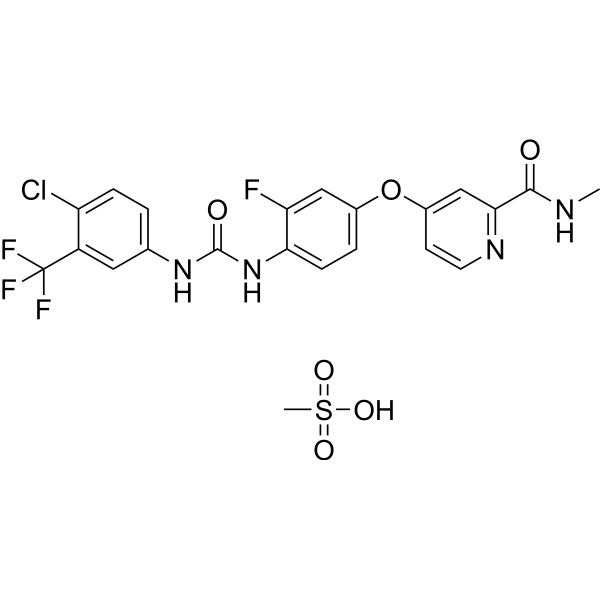 0 ImagesCat. No.: HY-10331BCAS No.: 835621-08-4Synonyms: BAY 73-4506 mesylateRegorafenib (BAY 73-4506) mesylate is an orally active and potent multi-targeted receptor tyrosine kinase inhibitor, with IC50 values of 13/4.2/46, 22, 7, 1.5 and 2.5 nM for VEGFR1/2/3, PDGFRβ, Kit, RET and Raf-1, respectively. Regorafenib mesylate shows very robust antitumor and antiangiogenic activity.
-
Rebastinib tosylate
 0 ImagesCat. No.: HY-13024ACAS No.: 1033893-29-6Synonyms: DCC-2036 tosylateRebastinib tosylate (DCC-2036 tosylate) is an orally active, non-ATP-competitive Bcr-Abl inhibitor, with IC50 values of 0.8 nM and 4 nM against Abl1WT and Abl1T315I, respectively. Rebastinib tosylate potently inhibits CYP2C8 (IC50 = 0.0533 μM) and CYP2C9 (IC50 = 2.54 μM). Rebastinib tosylate allosterically inhibits Tie2 with an IC50 of 0.63 nM. Rebastinib tosylate inhibits the transcriptional activity of FoxO1. Rebastinib tosylate inhibits SRC family kinases, KDR and FLT3 kinases. Rebastinib tosylate induces Apoptosis. Rebastinib tosylate exerts anti-tumor activity in breast cancer. Rebastinib tosylate exerts anti-angiogenic effects. Rebastinib tosylate increases myotube diameter and improves reduced contractility. Rebastinib tosylate can be used in research related to triple-negative breast cancer, luminal breast cancer, pancreatic neuroendocrine tumors, muscle atrophy, cancer cachexia, chronic myeloid leukemia, and B-lymphocytic leukemia.
-
6-Hydroxy-2,2′,4,4′-tetrabromodiphenyl ether
 0 ImagesCat. No.: HY-N17788CAS No.: 79755-43-46-Hydroxy-2,2′,4,4′-tetrabromodiphenyl ether is a selective inhibitor of Tie2 kinase, with an IC50 value of 2.1 μM. 6-Hydroxy-2,2′,4,4′-tetrabromodiphenyl ether interacts with the ATP binding site of Tie2 kinase, inhibiting kinase activity and subsequently blocking tumor angiogenesis. 6-Hydroxy-2,2′,4,4′-tetrabromodiphenyl ether can be isolated from sponges of the genus Dysidea.
-
TIE-2/VEGFR-2 kinase-IN-5
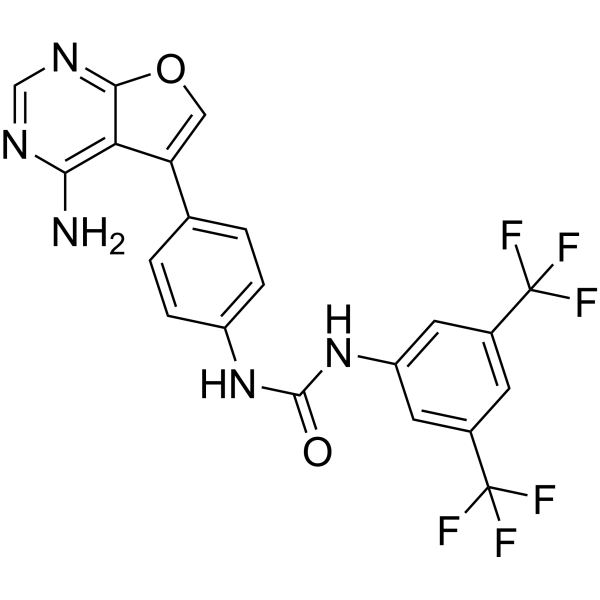 0 ImagesCat. No.: HY-156638CAS No.: 1014407-83-0TIE-2/VEGFR-2 kinase-IN-5 is an anti-angiogenic agent. TIE-2/VEGFR-2 kinase-IN-5 also is a potent TIE-2 and VEGFR-2 tyrosine kinase inhibitor with pIC50 values of 7.78 nM and 8.11 nM, respectively. TIE-2/VEGFR-2 kinase-IN-5 can be used for the research of angiogenesis.
- 1
- 2



