



Rebastinib tosylate
Based on 13 publication(s) in Google Scholar
Rebastinib tosylate (DCC-2036 tosylate) is an orally active, non-ATP-competitive Bcr-Abl inhibitor, with IC50 values of 0.8 nM and 4 nM against Abl1WT and Abl1T315I, respectively. Rebastinib tosylate potently inhibits CYP2C8 (IC50 = 0.0533 μM) and CYP2C9 (IC50 = 2.54 μM). Rebastinib tosylate allosterically inhibits Tie2 with an IC50 of 0.63 nM. Rebastinib tosylate inhibits the transcriptional activity of FoxO1. Rebastinib tosylate inhibits SRC family kinases, KDR and FLT3 kinases. Rebastinib tosylate induces Apoptosis. Rebastinib tosylate exerts anti-tumor activity in breast cancer. Rebastinib tosylate exerts anti-angiogenic effects. Rebastinib tosylate increases myotube diameter and improves reduced contractility. Rebastinib tosylate can be used in research related to triple-negative breast cancer, luminal breast cancer, pancreatic neuroendocrine tumors, muscle atrophy, cancer cachexia, chronic myeloid leukemia, and B-lymphocytic leukemia.
For research use only. We do not sell to patients.
- CAS No.: 1033893-29-6
- Formula: C37H36FN7O6S
- Molecular Weight:725.79
-
Storage:
Please store the product under the recommended conditions in the Certificate of Analysis.


To place orders, for customer services and technical support, please contact: MedChemExpress USA
Tel: 609-228-6898 E-mail: [email protected] [email protected]


-
 Biological Activity
-
Chemical Information
- Purity & Documentation
- References
-
 Help & FAQs


Publications Citing Use of MedChemExpress (MCE) Rebastinib tosylate
More- Nat Commun. 2021 Jan 25;12(1):504. [Abstract]
- Sci Transl Med. 2018 Jul 18;10(450):eaaq1093. [Abstract]
- J Clin Invest. 2026 Jan 6;136(4):e193758. [Abstract]
- J Exp Clin Cancer Res. 2022 Apr 21;41(1):149. [Abstract]
- Brain. 2025 May 13;148(5):1723-1739. [Abstract]
- J Exp Med. 2026 May 4;223(5):e20251374. [Abstract]
- J Med Chem. 2015 Jan 8;58(1):466-79. [Abstract]
- J Cell Sci. 2026 May 28:jcs.264977. [Abstract]
- Anticancer Drugs. 2024 Jan 1;35(1):46-54. [Abstract]
- Res Sq. 2025 Sep 1.
- bioRxiv. 2025 August 23.
- University of Washington. 2025.
- Patent. US20170349880A1.
 Customer Validation & Images

-
Histological Imaging/Staining
-
Histological Imaging/Staining
-
Histological Imaging/Staining
-
Histological Imaging/Staining
-
Cell Imaging/Staining


Biological Activity
Description
|
CYP2C8 0.0533 μM (IC50) |
CYP2C9 2.54 μM (IC50) |
Tie2 0.63 nM (IC50) |
Abl1WT 0.8 nM (IC50) |
Abl1T315I 4 nM (IC50) |
FOXO1 |
In Vitro
Rebastinib (10-10 M-10-4 M; 72 h) tosylate potently inhibits the proliferation of breast cancer MCF7 and MDA-MB-231 cells. After 72 h of incubation, its IC50 is 2.22 μM against MCF7 cells and 1.63 μM against MDA-MB-231 cells[1].
Rebastinib (0.5-8.0 μM; 48 h) tosylate induces dose-dependent apoptosis in MCF7 and MDA-MB-231 cells after 48 h of incubation; the total apoptosis rate reaches 16.87% in MCF7 cells at a concentration of 8.0 μM, and 21.62% in MDA-MB-231 cells at a concentration of 6.4 μM[1].
Rebastinib (0.3-30 μM) tosylate exerts no significant inhibitory effect on hERG potassium channel currents in HEK 293 cells, with a maximum average inhibition rate of 31.50% at 30 μM[1].
Rebastinib (5-45 min) tosylate potently inhibits CYP2C8 (IC50=0.0533 μM) and CYP2C9 (IC50=2.54 μM), whereas it exhibits only extremely weak inhibition or no inhibition against CYP1A2, CYP2B6, CYP2C19, CYP2D6, and CYP3A4 at concentrations up to 40 μM[1].
Rebastinib tosylate potently inhibits recombinant non-phosphorylated Tie2 kinase, with an IC50 of 0.63 nM and a dissociation half-life as long as 10 h[2].
Rebastinib (multiple concentrations) tosylate inhibits Ang1-induced HUVEC migration with an IC50 of 0.022 nM[2].
Rebastinib (24 h) tosylate potently inhibits the transcriptional activity of FoxO1 in HEK293T cells, with an IC50 of 2.1 × 10⁻⁷ M[3].
Rebastinib (0.1-3 μM; 24 h) tosylate dose-dependently inhibits the Dexamethasone (HY-14648)-induced upregulation of atrophy-related genes (atrogin-1, MuRF-1) and C/EBPβ mRNA, and modulates the mRNA levels of FoxO1/FoxO3 in C2C12 myotubes[3].
Rebastinib (1 μM; 24 h) tosylate reduces atrogin-1 protein levels in C2C12 myotubes without altering the phosphorylation status of FoxO1 or FoxO3[3].
Rebastinib tosylate potently inhibits multiple forms of recombinant ABL1 kinase, including the drug-resistant ABL1T315I and ABL1H396P mutants, via a non-ATP-competitive mechanism. It exhibits a prolonged kinase residence time and also inhibits a specific subset of other kinases[4].
MedChemExpress (MCE) has not independently confirmed the accuracy of these methods. They are for reference only.
-
Cell Line:human breast carcinoma MCF7, MDA-MB-231 cell lines
-
Concentration:10-10 M-10-4 M
-
Incubation Time:72 h
-
Result:Inhibited cell proliferation in both cell lines in a concentration-dependent manner, with an IC50 of 2.22 μM for MCF7 cells and 1.63 μM for MDA-MB-231 cells.
-
Cell Line:human breast carcinoma MCF7, MDA-MB-231 cell lines
-
Concentration:0.5-8.0 μM (MCF7 cells); 0.8-6.4 μM (MDA-MB-231 cells)
-
Incubation Time:48 h
-
Result:Induced dose-dependent apoptosis in both cell lines.
In MDA-MB-231 cells, total apoptosis increased from 7.95% (control) to 9.8% (0.8 μM), 9.95% (1.6 μM), and 21.62% (6.4 μM), driven primarily by increases in early-stage apoptosis.
In MCF7 cells, total apoptosis increased from 6.88% (control) to 8.2% (0.5 μM), 10.91% (2.0 μM), and 16.87% (8.0 μM), with increases in both early and late-stage apoptosis.
-
Cell Line:mouse C2C12 skeletal muscle myotubes
-
Concentration:0.1-3 μM (co-treated with 1 μM DEX)
-
Incubation Time:24 h
-
Result:Significantly and dose-dependently reduced DEX-induced upregulation of atrogin-1, MuRF-1, and C/EBPβ mRNA.
Decreased basal FoxO1 mRNA levels and the DEX-induced increase in FoxO3 mRNA levels.
-
Cell Line:mouse C2C12 skeletal muscle myotubes
-
Concentration:1 μM (co-treated with 1 μM DEX)
-
Incubation Time:24 h
-
Result:Significantly reduced DEX-increased atrogin-1 protein levels.
Did not alter levels of total FoxO1, phosphorylated FoxO1, total FoxO3, or phosphorylated FoxO3 compared to DEX-treated vehicle controls.
In Vivo
Rebastinib (150 mg/kg; intravenous injection; single dose) tosylate exerts no significant inhibitory effect on the growth of MDA-MB-468 triple-negative breast cancer xenografts in female SCID mice, with only reversible body weight changes observed[1].
Combination of tosylate salt of Rebastinib (10 mg/kg; p.o.; daily; twice weekly; once weekly) with Eribulin (HY-13442) reduces primary breast tumor growth by 75%, inhibits lung metastasis by 72%, and prolongs survival in mice, while reducing Tie2+ macrophage infiltration and impairing TMEM-mediated intravasation of tumor cells[2].
Tosylate of Rebastinib (10 mg/kg; p.o.; once daily; for 4 consecutive weeks) reduces hepatic micrometastases by 75% in PNET models, while decreasing Tie2+ macrophage infiltration, perfused microvessel density, and promoting vascular maturation, without affecting the growth of primary tumors[2].
Rebastinib tosylate (100 mg/kg; p.o.; once daily) significantly prolongs the survival and reduces the leukemia burden of Balb/c mice with allogeneic transplants of Ba/F3 cells expressing BCR-ABL1T315I[4].
Rebastinib tosylate (100 mg/kg; p.o.; once daily) significantly prolongs the survival of Balb/c mice with BCR-ABL1T315I-induced chronic myeloid leukemia-like myeloproliferative neoplasms and reduces their circulating white blood cell counts[4].
Tosylate of Rebastinib (60 mg/kg; p.o.; twice daily) significantly prolongs the survival of Balb/c mice with BCR-ABL1T315I-induced B-cell acute lymphoblastic leukemia (B-ALL)[4].
MedChemExpress (MCE) has not independently confirmed the accuracy of these methods. They are for reference only.
-
Animal Model:SCID (female, 5 weeks old, triple-negative breast cancer xenograft via subcutaneous injection of 5×10⁶ MDA-MB-231 cells)[1]
-
Dosage:150 mg/kg
-
Administration:i.v.; single dose
-
Result:Achieved a statistically significant tumor growth suppressive rate of 44.54% (p<0.05) compared to control.
Caused a maximum 12% body weight loss by day 28, which was recovered by day 38 with a net 6% weight gain.
-
Animal Model:SCID (female, 5 weeks old, triple-negative breast cancer xenograft via subcutaneous injection of 5×10⁶ MDA-MB-468 cells)[1]
-
Dosage:150 mg/kg
-
Administration:i.v.; single dose
-
Result:Showed no significant tumor growth suppression compared to control.
Caused a maximum 8% body weight loss by day 28, which was recovered by day 38 with a net 7.7% weight gain.
-
Animal Model:FVB/NJ (female)[2]
-
Dosage:10 mg/kg
-
Administration:p.o.; daily; twice weekly; once weekly
-
Result:Reduced primary tumor growth by 75% (TGI 75%).
Produced an additive effect with paclitaxel, reducing tumor growth by 90% (TGI 90%).
Reduced lung metastases by 72%; in combination with paclitaxel, reduced lung metastases by 93%.
Extended mouse median survival to at least 196-200 days when combined with eribulin after primary tumor resection, compared with 54 days for eribulin alone and 84 days for vehicle.
Significantly decreased total macrophages and Tie2+ macrophages in tumor tissue and stroma.
Counteracted paclitaxel-induced increases in total macrophages, Tie2+ macrophages, and CD31+ microvessel density, reducing microvessel density to below vehicle levels.
Reduced vascular permeability (extravascular dextran area/CD31 area decreased by ~70%).
Increased vascular ZO-1 staining intensity relative to CD31.
Reduced normalized circulating tumor cells (CTCs/mL blood) by ~75%, impairing TMEM function without altering TMEM density.
-
Animal Model:C57Bl6/6J/RIP1-Tag2 (male, 11.5-12.5 weeks old)[2]
-
Dosage:10 mg/kg
-
Administration:p.o.; daily; 4 weeks
-
Result:Did not detectably inhibit primary pancreatic insulinoma growth, but significantly reduced liver micrometastases by 75% compared with vehicle.
Reduced Tie2 staining in PNET tumors; total macrophage (F4/80+ area) levels were unchanged, but intratumoral Tie2+ macrophages (F4/80+/Tie2+ area percentage) were significantly decreased.
Significantly reduced protumoral Mrc1+/F4/80+ macrophages at the tumor invasive front and decreased the density of perfused (lectin-positive) blood vessels in PNET tumors.
Increased vascular maturation by increasing the proportion of pericyte-covered (Ng2+) blood vessels.
-
Animal Model:Balb/c mice (syngeneic recipients)[4]
-
Dosage:100 mg/kg
-
Administration:p.o.; once daily
-
Result:Achieved circulating plasma levels exceeding 12 μM for up to 24 hours.
Inhibited BCR-ABL1ᵀ315ᴵ signaling (phospho-STAT5, phospho-BCR-ABL1) for up to 8 hours in bone marrow and spleen leukemia cells.
Significantly prolonged mouse survival, with survival superior to imatinib at 100 mg/kg twice daily.
Reduced leukemia cell burden in spleens (spleen weight difference was borderline significant, p=0.06).
-
Animal Model:Balb/c mice (male donors, sublethally irradiated recipients)[4]
-
Dosage:100 mg/kg
-
Administration:p.o.; once daily
-
Result:Prolonged median mouse survival from 20 days to 32 days (p=0.007, Wilcoxon test).
Significantly reduced circulating leukocyte counts on day 20 post-transplant (p=0.0002, unpaired t-test).
-
Animal Model:Balb/c mice (sublethally irradiated recipients)[4]
-
Dosage:60 mg/kg
-
Administration:p.o.; twice daily
-
Result:Significantly prolonged median mouse survival to 47 days, with survival superior to vehicle (p=0.0184), imatinib at 100 mg/kg twice daily (p=0.0474), and dasatinib at 10 mg/kg twice daily (p<0.0001, Wilcoxon tests).


Chemical Information
-
CAS No. 1033893-29-6
-
Molecular Weight 725.79
-
Formula C37H36FN7O6S
-
SMILES
O=C(NC1=CC(C(C)(C)C)=NN1C2=CC3=CC=CN=C3C=C2)NC4=CC=C(C=C4F)OC5=CC(C(NC)=O)=NC=C5.O=S(O)(C6=CC=C(C)C=C6)=O
-
Synonyms
DCC-2036 tosylate
-
Shipping
Room temperature in continental US; may vary elsewhere.
-
Storage
Please store the product under the recommended conditions in the Certificate of Analysis.


Publications (13)
-
Journal Impact Factor
-
Most Recent
-
Nat Commun
Caveolae-mediated Tie2 signaling contributes to CCM pathogenesis in a brain endothelial cell-specific Pdcd10-deficient mouse model. [Abstract]2021 Jan 25;12(1):504. PMID: 33495460
Rebastinib tosylate purchased from MedChemExpress. Usage Cited in: Nat Commun. 2021 Jan 25;12(1):504. [Abstract]
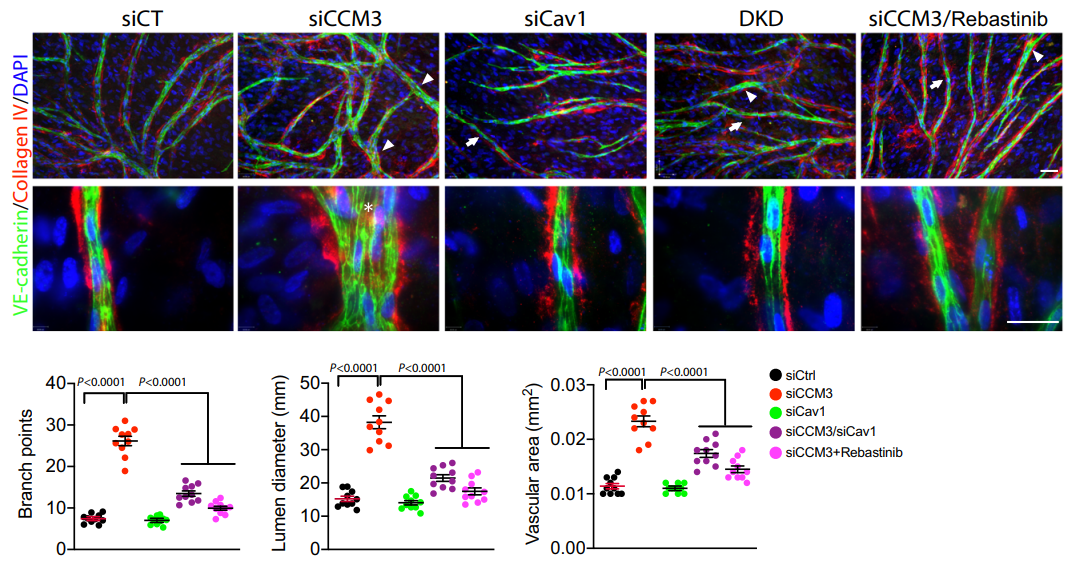
Rebastinib (1 μM) blunted increased EC sprouting and enlarged lumen formation induced by CCM3 knockdown.
Rebastinib tosylate purchased from MedChemExpress. Usage Cited in: Nat Commun. 2021 Jan 25;12(1):504. [Abstract]
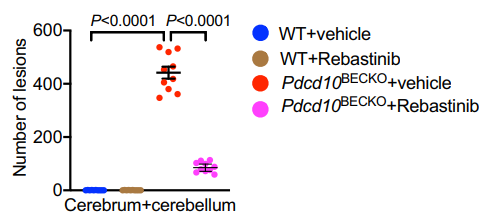
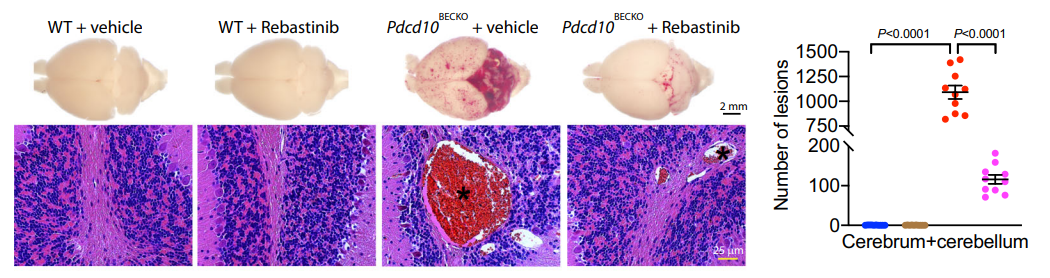
Rebastinib (10 μg/g; s.c.; 11 d) diminished the CCM lesions induced by Ccm3 deletion as visualized by whole-brain imaging and H&E staining compared to vehicle treatment in Pdcd10BECKO mice.
Rebastinib tosylate purchased from MedChemExpress. Usage Cited in: Nat Commun. 2021 Jan 25;12(1):504. [Abstract]
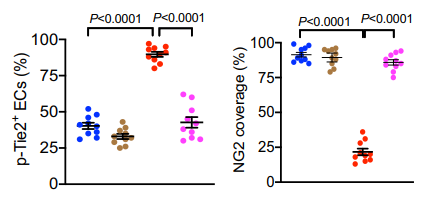
Rebastinib (10 μg/g; s.c.; once daily for 11 d) normalized the NG2+ pericyte coverage of CD31+ microvessels in Pdcd10BECKO mice.
Rebastinib tosylate purchased from MedChemExpress. Usage Cited in: Nat Commun. 2021 Jan 25;12(1):504. [Abstract]
Rebastinib (10 μg/g; s.c.; once daily for 11 d) caussed very fewer CCM lesions in brain of Pdcd10BECKO mice compared to vehicle group even at age of 2 months.
Rebastinib tosylate purchased from MedChemExpress. Usage Cited in: Nat Commun. 2021 Jan 25;12(1):504. [Abstract]
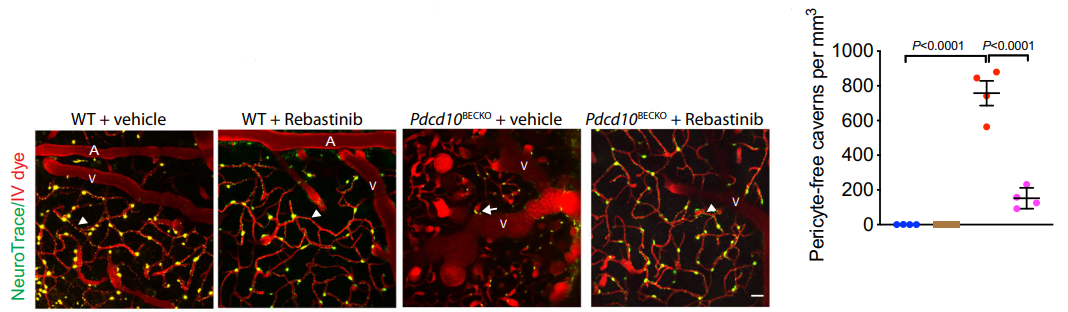
Rebastinib (10 μg/g; s.c.; 11 d) increased pericyte density and diminished pericyte-free caverns in Pdcd10BECKO mice.
-
Sci Transl Med
PP2A inhibition is a druggable MEK inhibitor resistance mechanism in KRAS-mutant lung cancer cells. [Abstract]2018 Jul 18;10(450):eaaq1093. PMID: 30021885 -
J Clin Invest
Vessels encapsulating tumor clusters promote noninvasive metastasis of hepatocellular carcinoma by shaping an immunosuppressive microenvironment. [Abstract]2026 Jan 6;136(4):e193758. PMID: 41493808 -
J Exp Clin Cancer Res
CDK16 promotes the progression and metastasis of triple-negative breast cancer by phosphorylating PRC1. [Abstract]2022 Apr 21;41(1):149. PMID: 35449080 -
Brain
Three-dimensional tissue engineered skeletal muscle modelling facioscapulohumeral muscular dystrophy. [Abstract]2025 May 13;148(5):1723-1739. PMID: 39556762 -
J Exp Med
2026 May 4;223(5):e20251374. PMID: 41891922 -
J Med Chem
Conformational analysis of the DFG-out kinase motif and biochemical profiling of structurally validated type II inhibitors. [Abstract]2015 Jan 8;58(1):466-79. PMID: 25478866 -
J Cell Sci
2026 May 28:jcs.264977. PMID: 42206576 -
Anticancer Drugs
2024 Jan 1;35(1):46-54. PMID: 37449977 -
-
-
-


Purity & Documentation
References
[1]. Feng K, et al. The Suppressive Effect of Rebastinib on Triple-negative Breast Cancer Tumors Involves Multiple Mechanisms of Action. Anticancer research. 2023 Jun;43(6):2609-2624. [Content Brief]
[2]. Harney AS, et al. The Selective Tie2 Inhibitor Rebastinib Blocks Recruitment and Function of Tie2 Macrophages in Breast Cancer and Pancreatic Neuroendocrine Tumors. Molecular cancer therapeutics. 2017 Nov;16(11):2486-2501. [Content Brief]
[3]. Sato T, et al. Rebastinib inhibits FoxO1 activity and reduces dexamethasone-induced atrophy and its-related gene expression in cultured myotubes. The journal of physiological sciences : JPS. 2025 Mar;75(1):100012. [Content Brief]
[4]. Chan WW, et al. Conformational control inhibition of the BCR-ABL1 tyrosine kinase, including the gatekeeper T315I mutant, by the switch-control inhibitor DCC-2036. Cancer cell. 2011 Apr 12;19(4):556-68. [Content Brief]

Calculators
Concentration (start) × Volume (start) = Concentration (final) × Volume (final)


Rebastinib tosylate Related Classifications
HY-13024A Related Classifications
 Powered by Bioz