



Csk
CSK (C-terminal Src kinase) is a non-receptor tyrosine kinase that functions as a central negative regulator of Src family kinases (SFKs) through phosphorylation of their conserved C-terminal inhibitory tyrosine residue, thereby maintaining controlled intracellular tyrosine kinase signaling and suppressing excessive SFK activity[1]. Mechanistically, CSK is recruited to membrane-associated signaling complexes through interactions mediated by its SH2 domain, and this localization enables efficient regulation of SFK-dependent pathways involved in cell proliferation, differentiation, migration, immune signaling, and survival[1][2]. Disruption of the CSK-centered regulatory network, including alterations in scaffold proteins such as Cbp/PAG1 and associated phosphatase systems, can result in sustained SFK activation, a molecular feature frequently observed in cancer and other pathological conditions[1]. Experimental studies further demonstrate that loss of CSK function causes constitutive activation of SFKs in vivo, highlighting its essential role in maintaining signaling homeostasis during development and tissue regulation[1]. Compared with the closely related isoform CHK (CSK-homologous kinase), CSK functions as a highly specific kinase for the inhibitory C-terminal regulatory site of SFKs, whereas CHK exhibits distinct inhibitory properties and mechanistic characteristics despite sharing the common role of SFK suppression[3]. For experimental applications, CSK is widely used as a molecular tool for investigating SFK signaling, kinase regulation, immune receptor pathways, and oncogenic tyrosine kinase networks, while small-molecule CSK inhibitors remain relatively limited compared with the extensive pharmacological targeting of SFKs themselves[2][4].
Verweise:
- [1]. Okada M. Regulation of the SRC family kinases by Csk. Int J Biol Sci. 2012;8(10):1385-97. doi: 10.7150/ijbs.5141. Epub 2012 Nov 1. PMID: 23139636; PMCID: PMC3492796. et al. Regulation of the SRC family kinases by Csk. Int J Biol Sci. 2012;8(10):1385-97. [Content Brief]
- [2]. Zhu S, et al. Regulation, targets and functions of CSK. Front Cell Dev Biol. 2023 Jun 16;11:1206539. [Content Brief]
- [3]. Advani G, et al. Csk-homologous kinase (Chk) is an efficient inhibitor of Src-family kinases but a poor catalyst of phosphorylation of their C-terminal regulatory tyrosine. Cell Commun Signal. 2017 Aug 7;15(1):29. [Content Brief]
- [4]. Database: Guide to pharmacology.
All Product Categories
-
Csk Verwandte Produkte (2)
Verwandte Produkte (2)

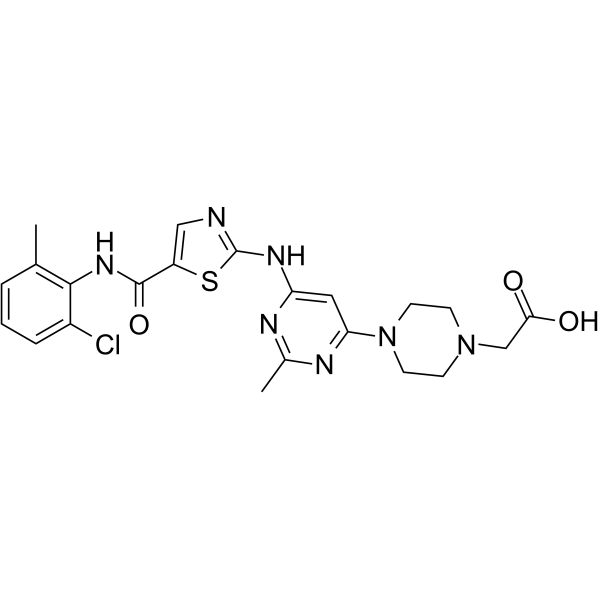
-
DB-3-291
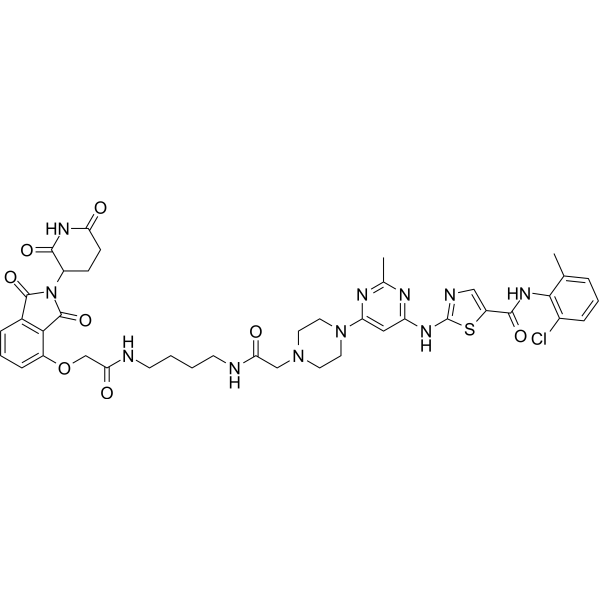 0 ImagesDB-3-291 is a CSK-targeting agent with a human CSK Kd of 1 nM and high selectivity for CSK over other kinases bound by dasatinib. DB-3-291 induces targeted degradation of CSK via a ubiquitin-dependent pathway and incorporates dasatinib as the kinase binding ligand. DB-3-291 can be used for the research of innate immune responses to viral DNA.



