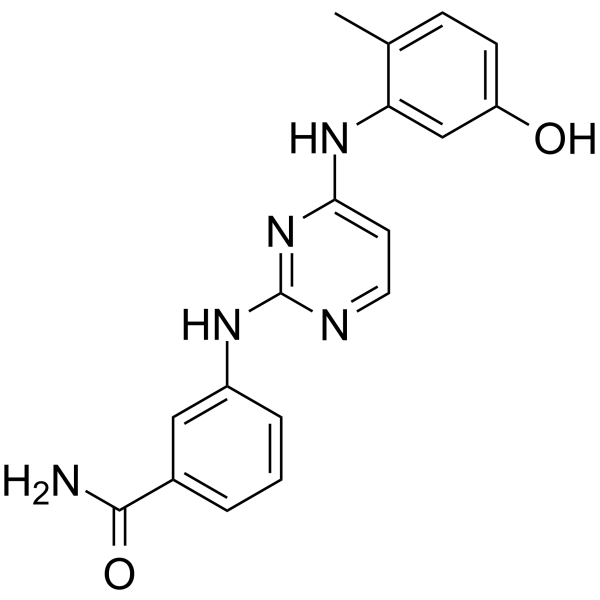
Txk
Txk/Rlk is a Tec-family nonreceptor tyrosine kinase that supports T-cell activation and Th1 effector function by increasing IFN-γ transcription in human T lymphocytes[1]. Mechanistically, activated Txk moves from cytoplasm to nucleus, where it regulates the IFN-γ promoter through a complex with PARP1 and EF-1α[2]. In TCR signaling, Txk augments PLC-γ1-mediated calcium signaling and affects thymocyte selection, linking Txk to T-cell development and activation models[3]. In disease models, excessive Txk expression associates with Th1-skewed cytokine production in Behçet’s disease, including elevated IFN-γ, IL-12, and lesion-infiltrating Txk-positive lymphocytes[4]. Compared with related Tec isoforms, Txk is atypical because it lacks the pleckstrin homology domain, restores PLCγ2/calcium signaling in Btk-deficient cells, but does not restore apoptosis[5]. In T cells, Itk is expressed at higher levels and plays the major TCR-signaling role, while Rlk/Txk contributes to cytokine-producing effector T-cell regulation[6]. For experimental applications, Txk plasmid administration increased antigen-specific IFN-γ and reduced serum IgE in an ovalbumin-sensitized mouse model[7]. PJ34, a PARP1 inhibitor, suppressed IFN-γ but not IL-4 production, supporting pathway-level interrogation of Txk-associated transcriptional machinery[2].
References:
- [1]. Kashiwakura J, et al. Txk, a nonreceptor tyrosine kinase of the Tec family, is expressed in T helper type 1 cells and regulates interferon gamma production in human T lymphocytes. J Exp Med. 1999 Oct 18;190(8):1147-54. [Content Brief]
- [2]. Maruyama T, et al. Txk, a member of the non-receptor tyrosine kinase of the Tec family, forms a complex with poly(ADP-ribose) polymerase 1 and elongation factor 1alpha and regulates interferon-gamma gene transcription in Th1 cells. Clin Exp Immunol. 2007 Jan;147(1):164-75. [Content Brief]
- [3]. Sommers CL, et al. A role for the Tec family tyrosine kinase Txk in T cell activation and thymocyte selection. J Exp Med. 1999 Nov 15;190(10):1427-38. [Content Brief]
- [4]. Nagafuchi H, et al. Excessive expression of Txk, a member of the Tec family of tyrosine kinases, contributes to excessive Th1 cytokine production by T lymphocytes in patients with Behcet's disease. Clin Exp Immunol. 2005 Feb;139(2):363-70. [Content Brief]
- [5]. Tomlinson MG, et al. Reconstitution of Btk signaling by the atypical tec family tyrosine kinases Bmx and Txk. J Biol Chem. 1999 May 7;274(19):13577-85. [Content Brief]
- [6]. Readinger JA, et al. Tec kinases regulate T-lymphocyte development and function: new insights into the roles of Itk and Rlk/Txk. Immunol Rev. 2009 Mar;228(1):93-114. [Content Brief]
- [7]. Takeno M, et al. Th1-dominant shift of T cell cytokine production, and subsequent reduction of serum immunoglobulin E response by administration in vivo of plasmid expressing Txk/Rlk, a member of Tec family tyrosine kinases, in a mouse model. Clin Exp Allergy. 2004 Jun;34(6):965-70. [Content Brief]
All Product Categories
-
Txk 관련 제품 (1)
관련 제품 (1)