Infection
-
Infection Related Products (18904)
Related Products (18904)

-
Antibodies (22)
-
rac cis-Moxifloxacin-d4 hydrochloride
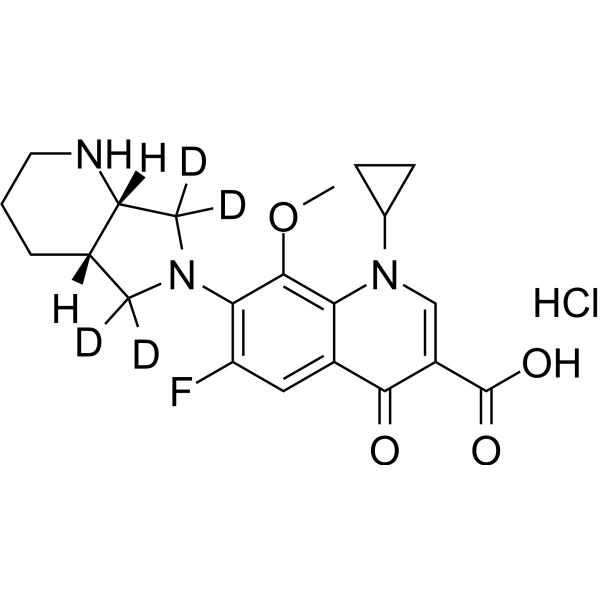 0 ImagesSynonyms: rac cis-BAY 12-8039-d4
rac cis-Moxifloxacin-d4 (hydrochloride) is the deuterium labeled Moxifloxacin hydrochloride. Moxifloxacin Hydrochloride (BAY 12-8039) is an oral 8-methoxyquinolone antimicrobial for use in the treatment of acute bacterial sinusitis, acute bacterial exacerbations of chronic bronchitis, and community-acquired pneumonia.
-
(±)-Pinoresinol
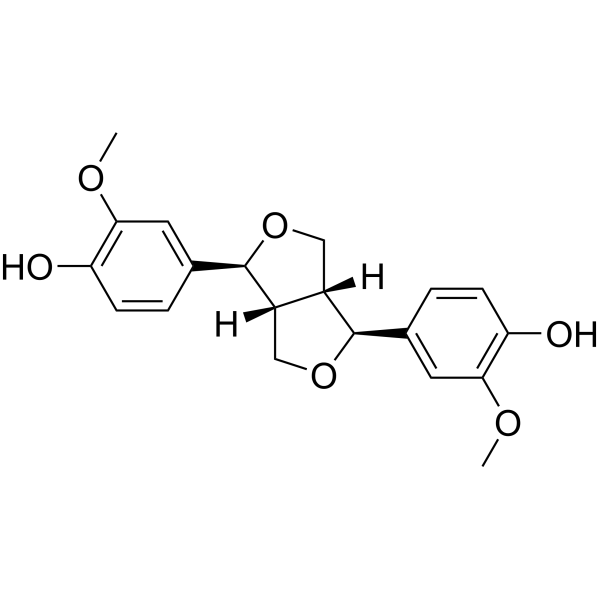 0 Images
(±)-Pinoresinol is a potent antifungal agent. (±)-Pinoresinol shows antifungal activity.
-
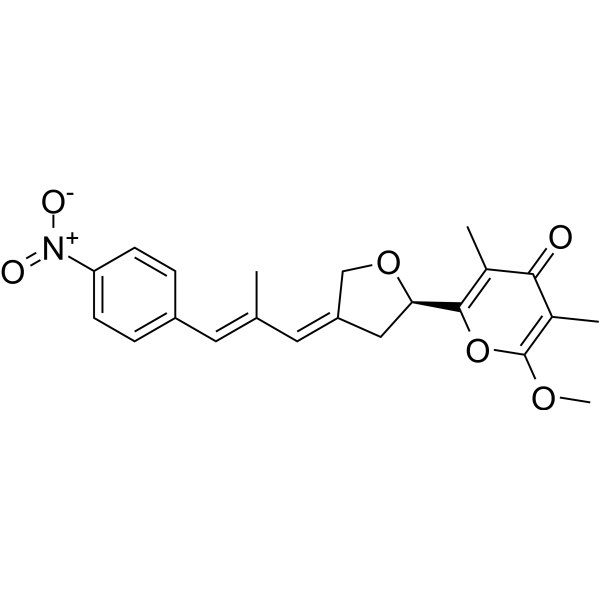
Bipolaricin R
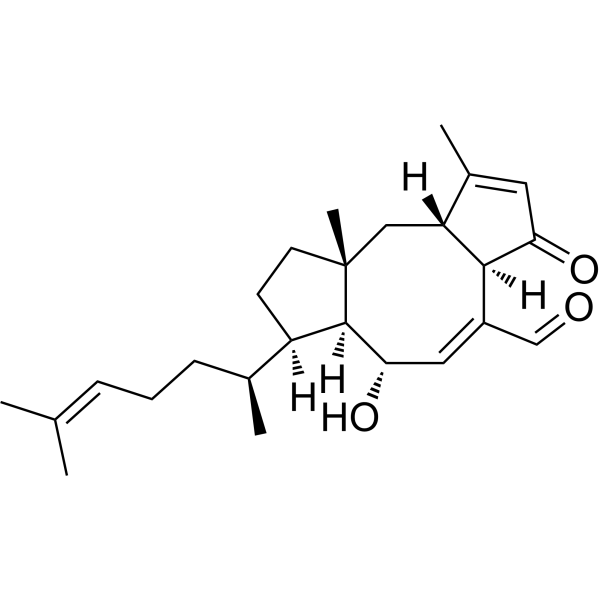 0 ImagesCat. No.: HY-N12617
Bipolaricin R (Compound 6) is a compound that can be isolated from Bipolaris maydis. Bipolaricin R exhibits noticeable antimicrobial ability against Bacillus cereus, Staphylococcus aureus, and Staphylococcus epidermidis. Bipolaricin R has excellent antiproliferation and apoptosis induction effects against A549 cell line.
-
Remdesivir de(ethylbutyl 2-aminopropanoate)
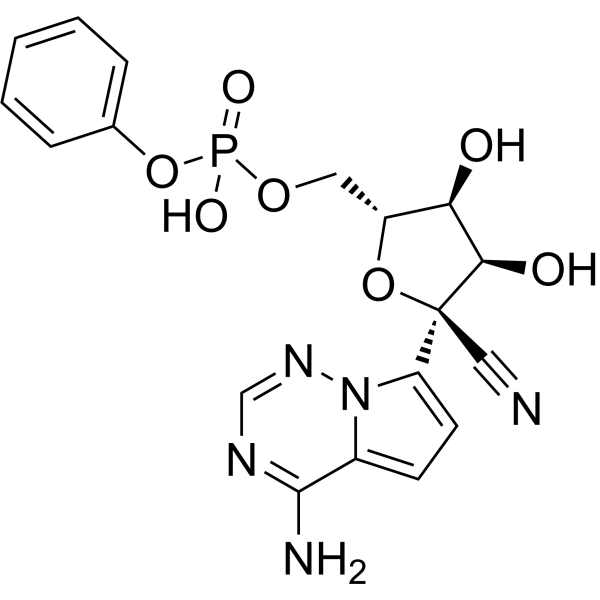 0 ImagesCat. No.: HY-145949CAS No.: 2607871-93-0
Remdesivir de(ethylbutyl 2-aminopropanoate) is an impurity of Remdesivir. Remdesivir, a nucleoside analogue with effective antiviral activity, has EC50s of 74 nM for SARS-CoV and MERS-CoV in HAE cells, and 30 nM for murine hepatitis virus in delayed brain tumor cells. Remdesivir is highly effective in the control of SARS-CoV-2 (COVID-19) infection in vitro.
-
OvCHT1-IN-1
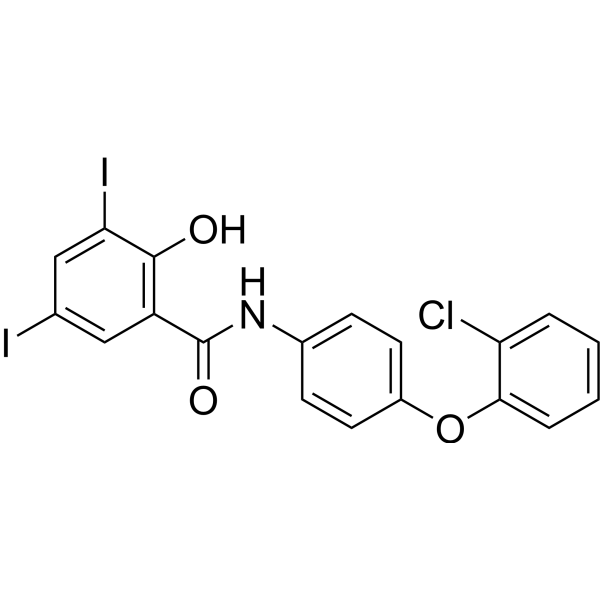 0 ImagesCat. No.: HY-160681CAS No.: 1613336-69-8
OvCHT1-IN-1 (compound 3i) is a potent OvCHT1 inhibitor with IC50 of 0.6 μM .
-
SARS-CoV-2 Mpro-IN-32
 0 ImagesCat. No.: HY-168600CAS No.: 2961016-95-3
SARS-CoV-2 Mpro-IN-32 (Compound 1) is a selective inhibitor of SARS-CoV-2 MPro with an IC50 value of 230 nM. SARS-CoV-2 Mpro-IN-32 can also inhibit the replication of multiple SARS-CoV-2 variants in vitro.
-
3-Methyl-chuangxinmycin
 0 ImagesCat. No.: HY-162861
3-Methyl-chuangxinmycin is an antibiotic. 3-Methyl-chuangxinmycin can affect the translation process in bacteria and mammalian cells by inhibiting the enzyme that synthesizes tryptophan tRNA (TrpRS). 3-Methyl-chuangxinmycin can downregulate genes related to interferon, TNF, and inflammatory responses in RDEB_L1 cells.
-
HCV-IN-40
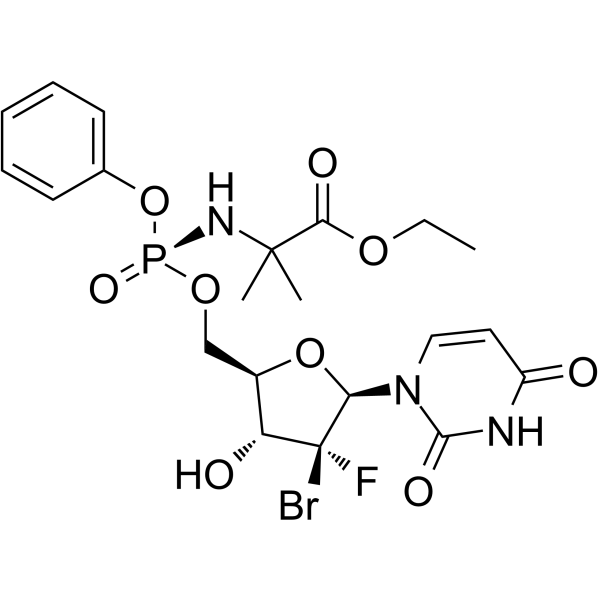 0 ImagesCat. No.: HY-147764CAS No.: 2087916-66-1
-
ER-DRI
 0 ImagesCat. No.: HY-P10802
ER-DRI is a potent peptide inhibitor that tagets EV-A71. ER-DRI directly bounds to 3A and specifically abrogates viral suppressor of RNAi activity, which unlocked the antiviral RNAi response that is suppressed by 3A. ER-DRI also potently inhibits another enterovirus, Coxsackievirus-A16, dependently of RNAi.
-
Netzahualcoyone
 0 ImagesCat. No.: HY-126662CAS No.: 87686-36-0
Netzahualcoyone is a triterpenoid compound isolated from the Celastraceae plant family. Netzahualcoyone exhibits broad-spectrum antibiotic activity against Gram-positive bacteria and yeasts, but is not active against Gram-negative bacteria. Netzahualcoyone can be utilized in the development of antibiotics and for studying antimicrobial mechanisms.
-
Daplusiran sodium scrambled negative control
 0 ImagesCat. No.: HY-177625B
Daplusiran sodium scrambled negative control is the sequence scrambled negative control of Daplusiran sodium.
-
HIV-1 inhibitor-51
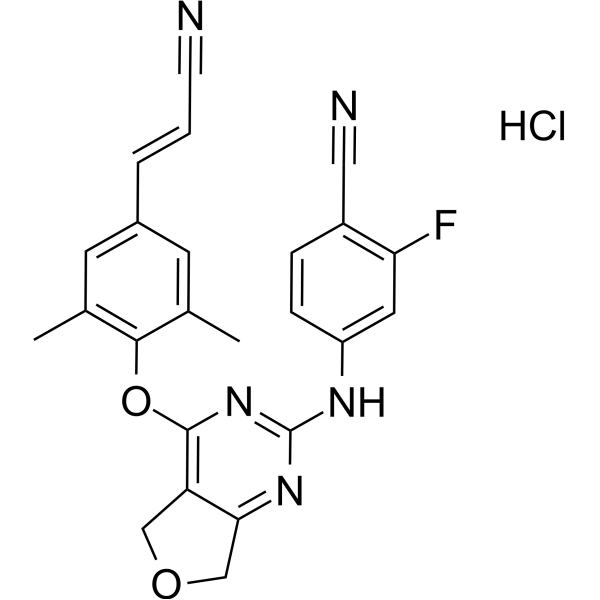 0 ImagesCat. No.: HY-152161CAS No.: 2834087-82-8
HIV-1 inhibitor-51, a non-nucleoside reverse transcriptase inhibitor (NNRTI), exhibits outstanding antiviral activity against WT HIV-1 (IIIB) and a panel of mutant strains. HIV-1 inhibitor-51 has high binding affinity (KD=2.50 μM) and inhibitory activity (IC50=0.03 μM) to WT HIV-1 RT. HIV-1 inhibitor-51 has EC50s of 2.22-53.3 nM for mutant strains (L100I, K103N, Y181C, Y188L, E138K, F227L + V106A, RES056).
-
N-Acetylneuraminate lyase (CgNal)
 0 Images
N-Acetylneuraminate lyase (CgNal) (Sialic acid aldolase (CgNal)) is a rate-limiting enzyme in bacteria metabolism that catalyzes the reversible aldol cleavage of sialic acid, and it regulates the overall metabolism of the bacterial sialic acid catabolic pathway. N-Acetylneuraminate lyase (CgNal) catalyzes the reversible condensation reaction of pyruvate and N-acetyl-d-mannosamine (ManNAc) to produce sialic acid N-acetylneuraminic acid (Neu5Ac). The protein expression of N-Acetylneuraminate lyase is downregulated at the translational level under the regulation of methyl methanesulfonate, and this change significantly impairs the adhesion and invasion abilities of bacteria to eukaryotic cells. N-Acetylneuraminate lyase is a key virulence-related protein in various pathogenic bacteria and is considered an antibiotic drug target. N-Acetylneuraminate lyase (CgNal) can be used in studies of invasive (extraintestinal) infectious diseases, Crohn's disease, and methicillin-resistant Staphylococcus aureus infections.
-
Cytochalasin H
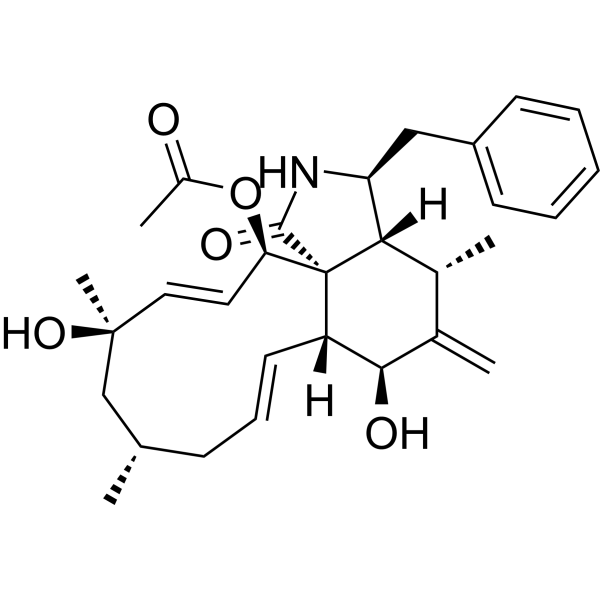 0 Images
Cytochalasin H is a nature product that could be isolated from fungus Phomopsis sp. Cytochalasin H inhibits cell growth and induces apoptosis. Cytochalasin H has anti-angiogenic activity. Cytochalasin H is an antibiotic and has antibacterial activity.
-
Antimycobacterial agent-3
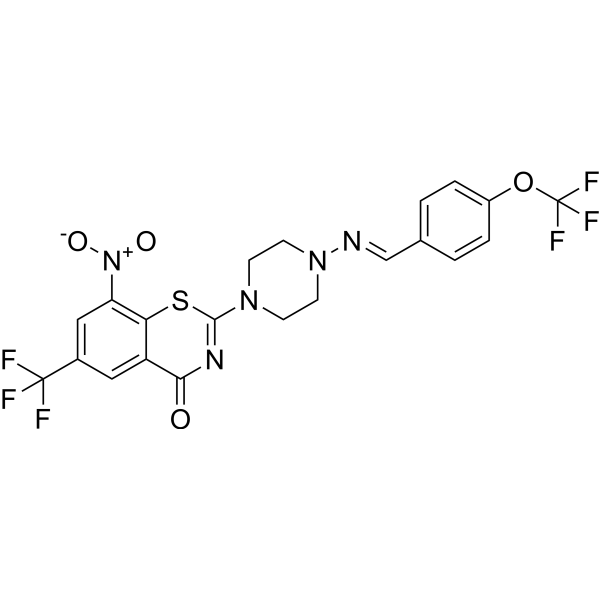 0 ImagesCat. No.: HY-147871CAS No.: 2469881-50-1
Antimycobacterial agent-3 (Compound 1h) is an antimycobacterial agent against both agent-sensitive MTB strain H37Rv and drug-resistant clinical isolates (MIC: < 0.029–0.110 μM). Antimycobacterial agent-3 shows low cell cytotoxicity.
-
Aspergillumarin A
 0 ImagesCat. No.: HY-N16400CAS No.: 1392495-06-5
Aspergillumarin A is a dihydroisocoumarin derivative with various biological activity. Aspergillumarin A inhibits cell proliferation by inducing G0/G1 phase arrest in HepG2 hepatocellular carcinoma cells.. Aspergillumarin A exhibits weak antibacterial activity against Staphylococcus aureus and Bacillus subtilis. Aspergillumarin A can be used for the study of hepatocellular carcinoma (HCC)
-
iDeg-6
 0 ImagesCat. No.: HY-177785
iDeg-6 is a molecular glue degrader that selectively targets IDO1, with a DC50 of 6.5 nM, an IC50 of 16 nM, and a Kd of 1.46 μM. iDeg-6 competes to bind the heme-binding site of apoprotein IDO1, promoting CRL2KLHDC3-mediated polyubiquitination of IDO1 and neddylation-modification-dependent proteasomal degradation. iDeg-6 reduces kynurenine production, abrogates the non-enzymatic pro-tumor migration function of IDO1, and inhibits tumor growth in immunodeficient mice. iDeg-6 can be used in studies of cancer, infection, and neurological diseases (such as melanoma).
-
Fumitremorgin B-13C27
 0 ImagesCat. No.: HY-117313S2
Fumitremorgin B-13C27 is the 13C-labeled Fumitremorgin B (HY-117313). Fumitremorgin B is a tremorgenic mycotoxin. Fumitremorgin B exhibits significant antifungal activities, with MICs of 6.25-50 μg/mL.